I read Robert's email three times before I called Sarah.
The first time, I thought I had misunderstood him.
The second time, I wondered whether he had sent the message to the wrong person.
By the third time, I understood exactly what he was doing.
He was announcing a decision he had no authority to make.
I called Sarah.
She answered after the fourth ring.
"Hey, honey."
"Have you seen your father's email?"
There was a pause.
"What email?"
"The one about June 24."
I heard her moving around.
"Wait. Let me check."
A few seconds passed.
Then she went quiet.
"Michael..."
"Yes?"
"I didn't know about this."
I believed her.
That was important.
I had spent enough time around her family to recognize the difference between Sarah being uncomfortable and Sarah deliberately hiding something.
She sounded genuinely shocked.
"They bought tickets?" she asked.
"Apparently."
"And they invited Richard and Jennifer?"
"Richard, Jennifer, Tom, and Patricia."
"Oh, my God."
I leaned back in my office chair.
"What are we going to do?"
"I don't know. I'll call my mother."
"Sarah, we already know what happens when you call your mother."
She sighed.
"I know."
"She'll say she's hurt. Your father will say we're ruining everything. They'll tell the relatives that we've changed our minds. Then somehow we'll be responsible for their expenses."
"I know, Michael."
Her voice sounded tired.
I softened mine.
"I'm not blaming you."
"I know you're not."
I looked at the email again.
"Listen. I'm going to speak with Jennifer, my attorney. I want everything documented properly."
"Do we really need to do that?"
I didn't answer immediately.
I knew what she was thinking.
She imagined her parents receiving a legal letter and becoming even more upset.
She imagined another long phone call.
Another argument.
Another accusation that I was treating them like strangers.
But I also knew that if we did nothing, they would arrive.
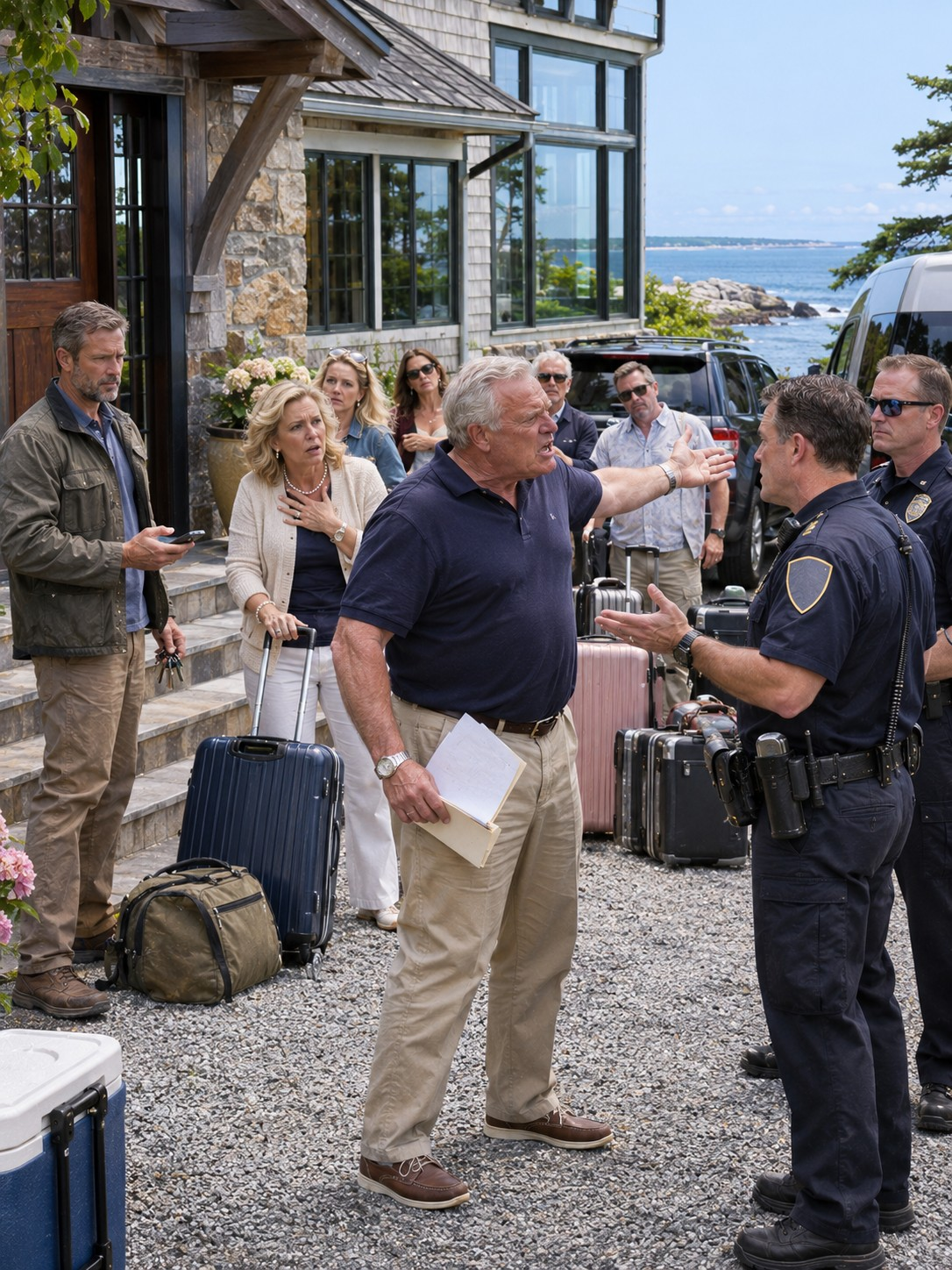
And if they arrived, the argument would happen on our property, in front of Daniel, with suitcases and relatives standing around.
That was precisely what I wanted to avoid.
"Sarah," I said, "I don't want a confrontation. I want to prevent one."
She was quiet.
"Okay."
"Are you comfortable signing the letter with me?"
Another pause.
"Yes."
"Are you sure?"
"Yes, Michael. I'm sure."
That afternoon, I called Jennifer, my attorney.
She had handled several commercial transactions for me and understood that I preferred practical solutions over unnecessary legal drama.
When I explained the situation, she listened without interrupting.
Then she asked one question.
"Have you explicitly told them that they cannot enter the property?"
"Yes. Several times."
"Do you have anything in writing?"
"I have emails and text messages."
"Good. Send them to me."
I forwarded everything.
The original conversation with Carol.
The email from Robert announcing the trip.
My response.
The messages between Sarah and me.
And the details of the property management agreement.
Jennifer reviewed everything.
Then she called me back.
"Michael, I want to be clear about something. You don't need to argue with them about whether they're being reasonable. You need to make your position unmistakable."
"That's what I want."
"Then we'll send a formal written notice."
She explained what the letter should contain.
It would identify the property as privately owned.
It would state that neither Robert nor Carol nor the invited relatives had permission to enter or occupy the house.
It would clarify that no family relationship created an automatic right of access.
It would also state that any permission to visit would have to be expressly granted in writing by the owner.
I asked her to include the names of the people Robert had invited.
"All four relatives?"
"Yes."
"Even though they haven't personally contacted you?"
"Especially because they haven't personally contacted me. I want everyone to understand that the invitation didn't come from me."
Jennifer agreed.
She drafted the letter that evening.
Sarah and I read it together.
It was direct.
Professional.
And completely free of the emotional language that had dominated our conversations with her parents.
There was no accusation that Carol was manipulative.
There was no criticism of Robert.
There was no discussion of the anniversary dinner or the lake property or the years of unexpected visits.
Just the facts.
The Maine house was private.
The proposed family vacation was not authorized.
No one had permission to enter or stay.
Unauthorized access would be handled through the appropriate property and legal procedures.
Sarah read the last paragraph twice.
"Do you think my mother will understand?"
I looked at her.
"I think she'll understand what it says."
"That's not what I mean."
"I know."
She placed the letter on the kitchen counter.
"She's going to say we're treating her like a criminal."
"We're treating her like someone who needs to understand that our property isn't available."
Sarah rubbed her forehead.
"I wish this didn't have to be so difficult."
"So do I."
I reached for her hand.
"I don't want to fight with your family. I want us to have a place where we can be together without feeling like someone is waiting to come through the door."
She nodded.
Then she picked up the pen.
We both signed.
The next morning, the letter went out by certified mail.
I kept the receipt.
I saved the tracking number.
I also emailed a copy to Robert and Carol so there could be no argument about whether they had received it.
For the first twenty-four hours, nothing happened.
I almost began to hope that the letter had accomplished what our conversations could not.
Then Robert called.
I was leaving a meeting when his name appeared on my phone.
I answered.
"Robert."
"Michael. We received your letter."
"I assumed you would."
There was a long silence.
Then he said, "We're shocked."
I walked toward my car.
"Okay."
"You sent an actual legal notice to your wife's parents."
"I sent a written clarification of the property rules."
"We're family."
"I understand."
"Do you?"
"Yes."
He took a breath.
"Carol is devastated."
I closed my eyes.
"Robert, I don't want her to be devastated. I also don't want unauthorized guests staying in my house."
"You've turned a simple vacation into something ugly."
"No. You announced a vacation after I told you the property wasn't available."
"We thought you'd reconsider."
"Why?"
"Because people make compromises for family."
I looked across the parking lot.
There was a time when that argument would have made me uncomfortable.
I would have started explaining myself.
I would have tried to soften my answer.
I might even have offered another weekend somewhere else.
But I was beginning to understand that every explanation gave Robert another opportunity to argue.
So I said nothing.
He continued.
"Your mother-in-law and I have spent years welcoming you into this family."
"I appreciate that."
"And this is how you repay us?"
"Robert, the property is private."
He sighed dramatically.
"Sarah agrees with us."
I straightened.
"What did you say?"
"Sarah understands that we're family."
"I'll discuss Sarah's position with Sarah."
"You're making her choose."
I felt my jaw tighten.
"No. You're asking her to make a decision that belongs to her marriage."
He raised his voice.
"You can't separate her from her parents."
"I'm not trying to."
"Then let us come."
"No."
Another silence.
Then I said the words slowly.
"Do not come to this property."
He laughed once.
It was a short, unpleasant sound.
"You should be ashamed of yourself."
"My position isn't changing."
I ended the call.
For several minutes, I sat in my vehicle without starting the engine.
I wasn't angry because Robert disagreed with me.
People could disagree.
People could dislike decisions.
What bothered me was that he seemed incapable of recognizing that another adult could make a decision he didn't like and still expect it to be respected.
When I arrived home that evening, Sarah was sitting on the couch.
Her phone was beside her.
She looked exhausted.
"Your mother called?" I asked.
She nodded.
"How long?"
"Almost an hour."
I sat beside her.
"What did she say?"
Sarah stared at the television without turning it on.
"She said you were trying to destroy the family."
I exhaled.
"What else?"
"She said she couldn't believe you would send a letter like that."
"Did you explain why we sent it?"
"Yes."
"And?"
"She said the house was too big for two people."
I looked at her.
"That's her argument?"
"She said we have six bedrooms. She said we don't use all of them. She said the family could make memories there."
I shook my head.
"Sarah, it's not about the number of bedrooms."
"I know."
"It's about permission."
"I know."
She turned toward me.
"She asked whether I was happy."
I waited.
"She said she didn't understand why I would let my husband treat my parents this way."
I reached for her hand.
"What did you tell her?"
Sarah swallowed.
"I told her that the house was private and that I agreed with you."
I looked at her.
She continued.
"Then she started crying."
I didn't interrupt.
"She said she had never imagined her daughter would become someone who kept her own mother away from a beautiful home."
Sarah's voice trembled slightly.
"I told her that she wasn't being kept away from our lives. She just wasn't being invited to stay at the property."
"What did she say?"
"She hung up."
Sarah looked down.
For the first time in a long while, she seemed less concerned about convincing me that her family meant well.
She seemed exhausted by having to defend a decision she knew was reasonable.
I put my arm around her.
"You did the right thing."
She leaned against me.
"I hope so."
The following morning, I received an email from Richard.
It was short.
He said he had been told there was some confusion about the vacation arrangements.
He wanted to know whether the problem was really serious or whether Robert and I had simply had a disagreement.
I read it twice.
Then I replied with a single paragraph.
I explained that the property was privately owned, that I had never approved the vacation, and that the formal notice had been sent to prevent any misunderstanding.
I attached the letter.
Richard replied within ten minutes.
"Understood. I wasn't aware of all this."
That was the first reasonable response I had received from anyone in Sarah's family.
I thanked him.
Then I thought the matter might finally be settled.
I was wrong.
Three days later, Daniel called me from Maine.
I was in the middle of reviewing a development proposal when his name appeared.
"Michael, do you have a minute?"
"Of course. What's going on?"
He lowered his voice.
"I wanted to let you know that someone has contacted the property."
"Who?"
"Your father-in-law."
I sat back.
"What did he want?"
"He asked whether I could arrange early access for the family."
I closed my eyes.
"What did you tell him?"
"That I couldn't authorize anything without your written approval."
"Good."
There was a pause.
Then Daniel said something that made me sit forward.
"He also asked whether the security system could be temporarily disabled."
I stared at my desk.
"Why?"
"He said he didn't want the relatives having trouble with the alarm while they were carrying luggage inside."
I felt the temperature in the room change.
"Daniel, did you give him any information about the system?"
"No."
"Did he ask for the access code?"
"Yes."
"And?"
"I refused."
I stood up.
"Daniel, listen carefully. Nobody gets access unless I authorize it. Not Robert. Not Carol. Not anyone."
"Understood."
"Keep the doors locked. Don't give out codes. If anyone shows up, call me immediately."
"I will."
I ended the call.
For the first time, I wondered whether this was no longer simply about a family vacation.
I opened the email Robert had sent.
I looked at the itinerary again.
June 24.
11:30 a.m.
Then I looked at the certified delivery confirmation.
He had received the letter.
He knew the property was private.
He had even acknowledged receiving the notice.
Yet he was still trying to arrange access.
I called Jennifer.
She listened carefully.
Then she said, "Michael, document this conversation. Don't confront him. Make sure your property manager understands that he has no authority to grant access."
I agreed.
Before ending the call, she added one more thing.
"If they arrive, don't let the situation become a personal argument. Let the people responsible for the property handle it."
I thanked her.
That evening, I told Sarah what Daniel had reported.
She covered her mouth.
"He asked for the alarm code?"
"Yes."
"Why would he do that?"
"I don't know."
She shook her head.
"Maybe he thinks if he can get inside, we'll eventually let them stay."
I looked at her.
"That's exactly what I'm worried about."
She picked up her phone.
"Then I'm calling him."
I watched her walk into the kitchen.
She called Robert.
I couldn't hear every word, but I heard enough.
"Why did you contact Daniel?"
Silence.
"That's not what the letter said, Dad."
Another pause.
"No. Michael didn't give you permission."
Her voice became firmer.
"Please stop trying to get into the house."
Then I heard Robert's voice rise through the phone.
Sarah closed her eyes.
She listened for several seconds.
Finally, she said:
"Because it's not yours, Dad."
The call ended.
She stood in the kitchen holding her phone.
I walked toward her.
"What happened?"
She looked at me.
"He said something."
"What?"
Her expression changed.
"He said that once the whole family was standing there, you wouldn't have the courage to turn them away."
I felt a chill run through me.
Sarah placed the phone on the counter.
Then another message arrived.
It wasn't from Robert.
It was from Carol.
And the first sentence read:
WE'VE ALREADY MADE OTHER ARRANGEMENTS WITH DANIEL.






Comments 0