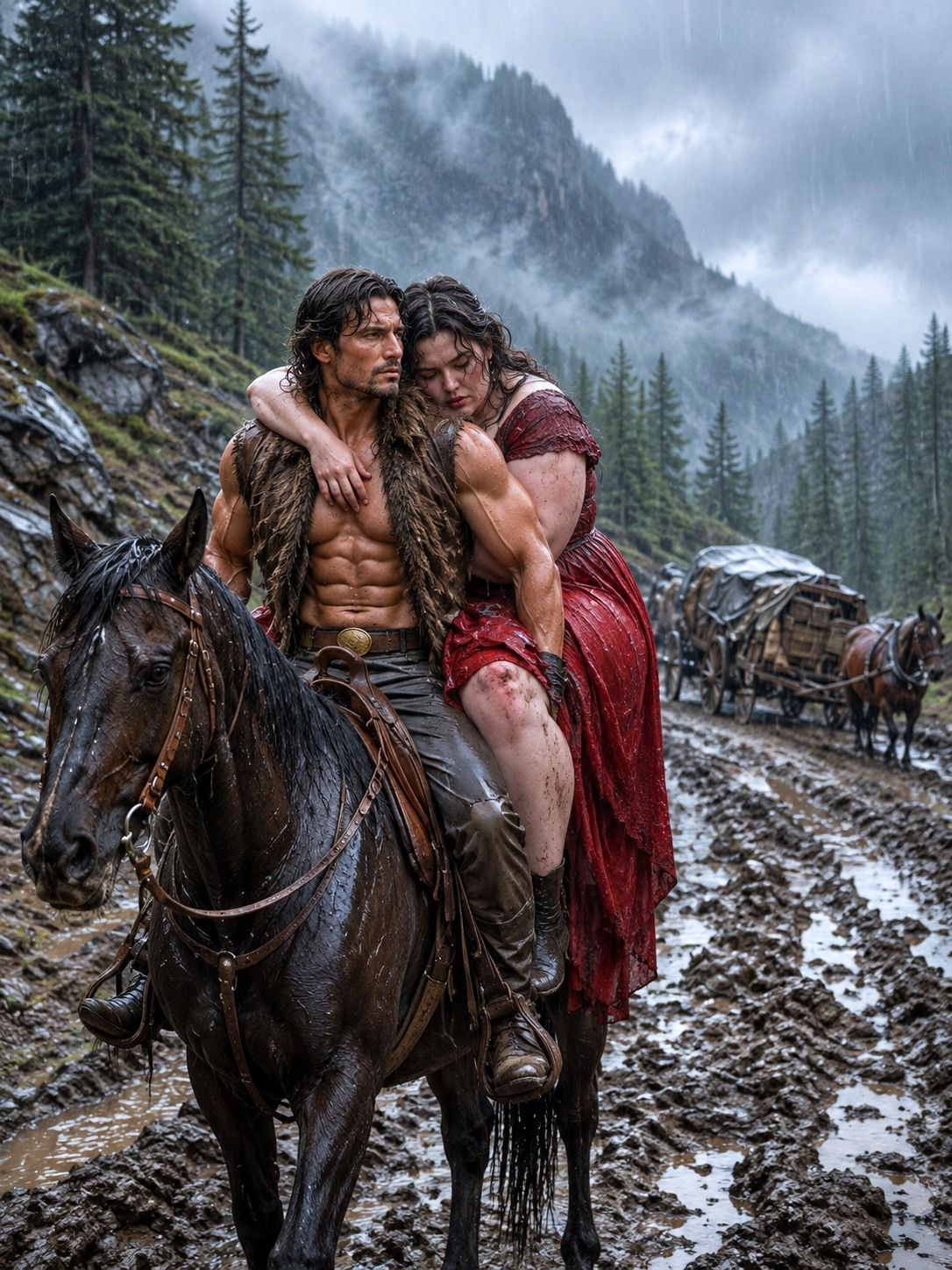
Judson Ridge read the letter three times before he finally lowered it.
His fingers had gone cold.
The handwriting was unmistakable. The narrow letters, the delicate curves, even the small mark Eleanor always made beneath her signature. He had seen them thousands of times during her lifetime. He had kept every letter she had ever sent him.
But this one was different.
It had been hidden beneath the music box for eleven years.
And somehow, his sister had written the name of a woman Judson had only met that evening.
Cora Bennett.
He turned the paper over, searching for a date.
There was none.
Only three sentences.
Judson, if a woman named Cora Bennett ever comes to this house, do not send her away.
She will arrive carrying more grief than she should have to bear.
And whatever happens, do not let Silas find her.
Judson read the final sentence again.
Silas.
His jaw tightened.
He hadn't heard that name spoken in years.
Silas Mercer had been his father's business partner, a man who had helped establish the original timber operation before disappearing from the valley under circumstances nobody discussed.
Judson folded the letter carefully.
His sister had known something.
Something serious enough to make her leave a warning.
But how could she possibly have known Cora Bennett?
He walked toward the desk and examined the music box.
Its lid was still open.
The little silver dancer inside stood motionless.
Judson touched the winding key.
A faint melody began to play.
He immediately stopped it.
Eleven years earlier, Eleanor had played that tune whenever she felt frightened.
She had told him it reminded her that even the darkest winter eventually ended.
He had never understood why she had been so afraid during the final months of her life.
Now, standing in the room he had kept untouched, he wondered whether her death had been as accidental as everyone claimed.
A floorboard creaked behind him.
Judson turned sharply.
Nobody stood in the doorway.
But the hallway was no longer completely dark.
A thin line of warm light appeared beneath the guest bedroom door.
Cora was awake.
He folded the letter and slipped it inside his waistcoat.
Whatever Eleanor had discovered, he would not frighten a grieving widow with an eleven-year-old mystery.
Not tonight.
He closed the locked bedroom door.
Then he returned downstairs.
Cora Bennett woke before sunrise.
For several seconds, she couldn't remember where she was.
The bed was too soft.
The room was too warm.
And there was no sound of the wind slipping through the cracks around the windows.
Then she remembered.
The broken wagon.
The rain.
The enormous dark horse.
And the man who had lifted her into the saddle as though she weighed nothing.
She sat up slowly.
Her traveling dress had dried near the fireplace, and someone had placed a small bowl of warm water beside the washstand.
Cora looked at the folded nightgown she had borrowed.
She had no idea whether Judson had asked someone to prepare it or whether the house simply contained everything a person might need.
She washed her face, brushed her copper-auburn hair, and braided it loosely.
Then she dressed.
Her boots were still muddy, but at least her coat was dry.
She descended the staircase quietly.
The smell of fresh coffee reached her before she entered the kitchen.
Judson stood near the stove.
He had changed into a dark charcoal shirt, brown waistcoat, and clean trousers. His sleeves were rolled to his forearms.
A newspaper lay folded beside his coffee cup.
He looked up.
"Morning."
"Good morning."
"Did you sleep?"
"Better than I have in months."
He nodded.
"There's breakfast."
Cora approached the table.
Two plates had been prepared.
Eggs, fried potatoes, biscuits, and thick slices of bacon sat beneath a clean linen cloth.
She stopped.
"You made all this?"
"Cook left yesterday."
"Then who usually prepares your meals?"
"I manage."
She glanced at the plates.
"Apparently rather well."
Judson pulled out a chair.
"Sit down before the food gets cold."
Cora smiled faintly at his practical manner, though she quickly lowered her eyes.
They ate in silence for several minutes.
It wasn't uncomfortable.
At least, not entirely.
Judson seemed to prefer quiet conversation, while Cora had spent so long speaking only to her horse that she wasn't certain how to behave around another person.
Eventually, he placed his fork down.
"I sent a message to my foreman. He'll bring two men to recover your wagon this morning."
Cora looked up.
"You really did that?"
"I said I would."
"Thank you."
"Your horse made it home?"
"I hope so."
"One of my men can check the stable when he goes down."
Cora shook her head.
"You've already done enough."
Judson regarded her.
"Do you always count every kindness as a debt?"
The question caught her off guard.
She looked at her hands.
"I learned to."
"From your husband?"
"No."
She paused.
"From everyone else."
Judson leaned back slightly.
Cora took a breath.
"When Arthur was alive, people treated us differently. We weren't wealthy, but we were together. If a fence broke, he repaired it. If I needed help lifting something, he was there. After he died, people started looking at me as though I had become an opportunity."
Judson listened without interrupting.
"The feed merchant raised his prices. The bank sent men to inspect the property. A neighbor offered to buy my land for less than half its value."
"Who?"
"Does it matter?"
"It might."
Cora looked directly at him.
"Mr. Ridge, I'm not asking you to solve my problems."
"I didn't say you were."
"I want to keep my home."
"Then keep it."
She let out a humorless breath.
"That's easy for a man with thousands of acres to say."
Judson's expression remained composed.
"Money doesn't make every problem disappear, Mrs. Bennett."
"No. But it makes some of them easier."
He looked at her for a moment.
Then he nodded.
"You're right."
The unexpected agreement made her pause.
Most wealthy men she had encountered preferred explaining why poor people were responsible for their own troubles.
Judson simply returned to his breakfast.
After a while, Cora asked about the house.
"How long have you lived here?"
"Since I was twenty-seven."
"And you've always lived alone?"
"Not always."
She remembered what he had said the previous night.
His sister had died eleven years ago.
"What was she like?"
Judson's fork stopped.
"Eleanor?"
Cora nodded.
"She must have been special."
A faint change crossed his face.
"She was stubborn. Talkative. Always asking questions nobody wanted to answer."
Cora smiled.
"She sounds familiar."
Judson glanced at her.
For a moment, something almost like amusement appeared in his eyes.
"She would have liked you."
The words surprised him as much as they surprised Cora.
He looked away.
Cora noticed.
She also noticed the way his hand briefly moved toward the pocket of his waistcoat.
But she said nothing.
By nine o'clock, the rain had weakened.
Cora stood on the front porch, looking toward the distant mountains.
The clouds were beginning to separate, revealing patches of pale blue sky.
A wagon approached the estate from the lower trail.
Two men rode beside it.
Judson stepped outside.
"That's my foreman, Thomas."
The older man dismounted and removed his hat.
"Morning, sir."
"How's the trail?"
"Still ugly. Wagon's sitting exactly where you left it."
"Get it moving. Make sure the flour stays dry."
Thomas nodded.
Then he looked at Cora.
"Mrs. Bennett?"
"Yes."
"Your gelding made it home last night. Found him in the barn when we passed your property."
Cora released a breath she hadn't realized she was holding.
"Thank goodness."
"He's a stubborn old fellow."
"He's the best horse I've ever had."
Thomas smiled.
"Your barn roof needs attention, though."
Cora's expression changed.
"I know."
"Looks like one side has started giving way."
She turned toward Judson.
"I was going to repair it this week."
Judson looked toward his foreman.
"Have the men check the structure while they're there."
Cora immediately shook her head.
"No."
Judson turned.
"Mrs. Bennett—"
"I said no."
Thomas looked between them, suddenly very interested in the wagon.
Cora stepped closer to Judson.
"I appreciate your help, but I cannot have your men repairing my property without knowing what it will cost."
"They'll be paid by me."
"Exactly."
He studied her.
She continued, her voice controlled but firm.
"I have spent fourteen months trying to keep my home. I won't wake up one morning and discover that I've somehow become indebted to another wealthy man."
The words hung between them.
Judson didn't appear offended.
Instead, he nodded slowly.
"Then we'll do it differently."
Cora waited.
"I'll have the men inspect the roof and give you an estimate. You decide whether you want the work done."
She searched his face.
"Nothing more?"
"Nothing more."
She finally nodded.
"All right."
Judson turned to Thomas.
"Do that."
The foreman tipped his hat.
"Yes, sir."
Cora watched the men prepare to leave.
Then she looked toward the mountain trail.
"I should go home."
Judson followed her gaze.
"The wagon won't be ready for another hour."
"I can wait."
"You can also have another cup of coffee."
She looked at him.
"Is that an order?"
"No."
"Good."
He opened the front door.
"Because I wouldn't obey it."
This time, Judson actually smiled.
It was brief.
Almost invisible.
But Cora saw it.
An hour later, the wagon was ready.
The men had secured the damaged wheel well enough to get it down the trail.
Cora climbed onto the driver's seat.
Judson stood beside the horse.
"Take the lower road," he instructed. "The upper switchback is still dangerous."
"I know the roads around my property."
"I assumed you did."
She adjusted the reins.
Then she looked down at him.
"Thank you for last night."
Judson placed one hand on the side of the wagon.
"You're welcome."
"And breakfast."
"You're welcome."
"And the tarp."
He raised an eyebrow.
"Are you planning to thank me for every knot?"
Cora almost laughed.
"Perhaps."
He stepped back.
She clicked her tongue, and the horse began moving.
After several yards, she looked over her shoulder.
Judson remained on the porch.
A tall, solitary figure against the enormous house.
For some reason, she felt a strange reluctance to leave.
She turned forward.
Her homestead was waiting.
So was the bank.
And so were the repairs she could no longer postpone.
She couldn't afford to become distracted by a wealthy mountain man with an empty house and mysterious habits.
The ride down took nearly forty minutes.
When Cora finally reached her property, she felt relief.
Her little house stood on a rocky slope overlooking a narrow creek.
The barn was old, the fence needed replacing, and the roof had a visible sag near the eastern corner.
But it was hers.
She had helped Arthur build the porch.
She had planted the apple trees beside the kitchen window.
She had spent years turning the rocky ground into something that could sustain them.
She climbed down and hurried to the barn.
Barnaby greeted her with a tired whinny.
Cora embraced his neck.
"Well, you made it home before me."
The old horse nudged her shoulder.
She smiled.
Then she noticed something.
The stable door had been left open.
She was certain she had closed it before leaving.
Cora stepped inside.
A muddy footprint marked the floor.
It wasn't hers.
It was too large.
And beside it lay a small piece of folded paper.
She picked it up.
There was no greeting.
No signature.
Only a single sentence.
Sell the property before the end of the month, Mrs. Bennett. Your husband's mistakes are about to become your problem.
Cora read it twice.
Her stomach tightened.
She looked toward the open stable door.
Someone had been inside her barn.
Someone who knew about Arthur.
Someone who knew she had been away overnight.
She hurried into the house and locked the front door.
Then she checked the windows.
Everything appeared normal.
But when she entered the kitchen, she noticed that the small wooden drawer beneath the table was open.
The drawer where Arthur had kept his old business papers.
Cora pulled it out.
The documents were scattered.
A leather ledger was missing.
She searched the floor.
Nothing.
Then she noticed a faint line in the dust where something heavy had recently been moved.
She knelt and examined it.
A floorboard beside the kitchen cabinet had shifted.
Cora pressed her fingers against its edge.
It lifted.
Beneath it was a narrow wooden compartment.
Inside lay an envelope wrapped in faded brown cloth.
Her name was written across the front.
Not in Arthur's handwriting.
In a handwriting she had never seen before.
She opened the envelope.
A photograph slipped into her palm.
It showed a young woman standing beside a stone staircase.
A man stood behind her.
Cora recognized him immediately.
Judson Ridge.
But the woman beside him was not Eleanor.
It was someone else.
Someone who looked almost exactly like Cora.
And beneath the photograph, written in dark ink, were five words:
"Arthur never told you everything."
Then someone knocked three times on her front door.
Cora froze.
A man's voice came from outside.
"Mrs. Bennett? We need to talk about your husband."






Comments 0