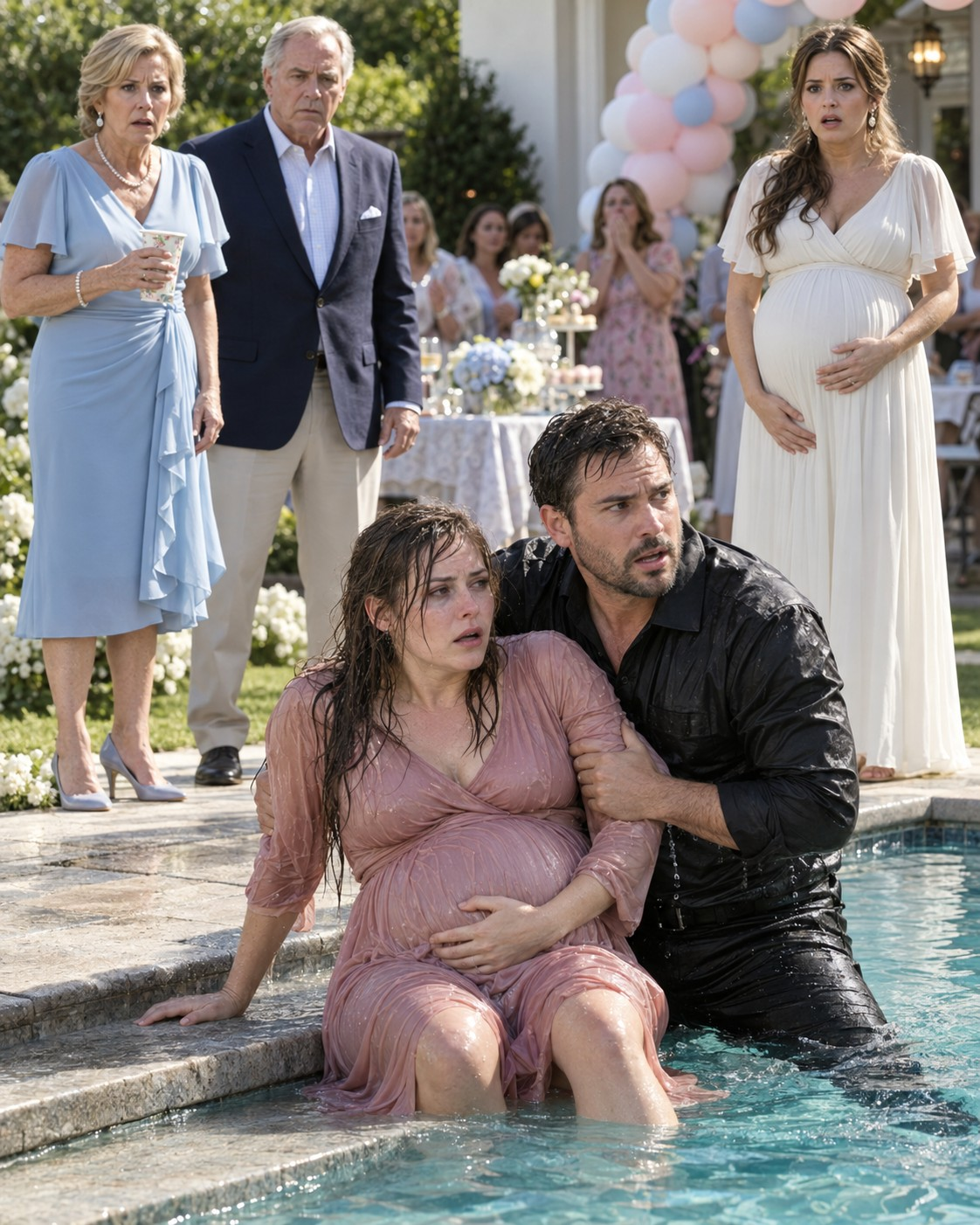
The first paragraph of the email made my blood run cold.
URGENT: REQUEST FOR EMERGENCY FAMILY FINANCIAL AUTHORIZATION.
I read it once.
Then again.
The sender was a law firm my parents had used for years. The attorney, Martin Caldwell, had represented my father's company in several business transactions. I recognized his name immediately.
The email claimed that my parents were facing an urgent financial crisis and needed temporary access to certain family funds to prevent significant losses.
My name appeared in the document.
So did Beth's.
The final paragraph requested my electronic authorization within twenty-four hours.
I stared at the screen.
My mother had punched me in the stomach, watched me fall into a swimming pool, and left me there while my father told everyone I deserved it.
Now, before I had even recovered from emergency surgery, they were asking me to sign a financial authorization.
I scrolled down.
The attached document was titled FAMILY ASSET PRESERVATION AGREEMENT.
It contained several pages of legal language, references to outstanding obligations, and a proposed transfer of funds.
My eyes stopped at one particular sentence.
The undersigned parties acknowledge their shared responsibility for the preservation and repayment of all outstanding family obligations.
I read it again.
Shared responsibility.
That was what they wanted.
They wanted me to become legally connected to debts I had never agreed to assume.
And they wanted my signature.
I immediately took screenshots of the email, downloaded the attachment, and saved both to a separate evidence folder.
Then I called Detective Valerie Norman.
She answered after two rings.
"Anna?"
"I received something from my mother's attorney."
"What kind of something?"
"A request for emergency financial authorization. They want me to accept responsibility for outstanding family obligations."
There was a pause.
"Did you sign anything?"
"No."
"Good. Don't sign anything. Don't reply to the attorney yet. Forward the original email to me, including the attachment and the full message headers."
I nodded, even though she couldn't see me.
"Can you tell whether this is connected to the loan applications?"
"Not without examining it. But I want you to understand something. A request like this doesn't automatically prove wrongdoing. We need to establish what the document does, who prepared it, and why your signature is being requested."
"I understand."
"Are you able to access your financial records?"
"Yes."
"Then preserve everything. Don't alter the original files."
I glanced at the hospital clock.
It was nearly ten.
"Detective, I think they're trying to move money."
"Why do you think that?"
"Because three weeks ago, I found two loan applications with forged signatures. I traced the funds to accounts connected to my father's company. Now they're asking me to accept responsibility for family debts."
Valerie became quiet.
Then she said something that made me sit straighter.
"Anna, did your grandmother leave behind a trust?"
My stomach tightened.
"Yes."
"Who currently administers it?"
"I need to check the documents."
"Do that. And don't contact anyone in your family about this investigation."
I looked at the photograph of Kayla beside my bed.
"I won't."
"One more thing. You need to focus on recovering. We can work through the financial records carefully. You don't have to solve everything tonight."
I almost laughed.
For six years, I had helped other people discover where their money had gone.
Now my own family had turned my life into an investigation.
"Thank you, Detective."
"You're welcome. I'll contact you tomorrow."
The call ended.
I returned to the email.
At the bottom, beneath the attorney's signature, was a final note.
Please understand that any delay may expose all family members to unnecessary financial and legal consequences.
I knew that language.
It was designed to frighten people into signing before they had time to understand what they were agreeing to.
My mother had used the same tactic for years.
She never asked.
She created urgency.
She made refusal sound like betrayal.
Then she blamed the person who refused.
This time, I wasn't going to play along.
The next morning, Margaret helped me sit upright.
My body was still weak, and every movement reminded me of the emergency surgery.
She checked my medication and asked whether I had slept.
"A little."
"That's better than nothing."
She noticed the phone beside my pillow.
"Have you been receiving stressful messages?"
I hesitated.
"From my family."
Her expression changed.
"Do you want me to ask the hospital about limiting calls?"
"Not yet."
"All right. But remember, you can decide who gets access to you."
I looked at her.
That simple sentence felt unfamiliar.
For most of my life, I had believed family members automatically deserved access to my time, my money, my attention, and my forgiveness.
I had never considered that I could simply say no.
"Margaret?"
"Yes?"
"Has anyone asked about my daughter?"
"The neonatal team has been monitoring her closely. You can visit her again when your doctor approves."
I swallowed.
"And has anyone from my family come?"
She glanced at the chart.
"No."
I looked down.
"Not even my mother?"
"No, sweetheart."
I nodded.
I didn't want to cry in front of her.
Margaret placed a warm hand over mine.
"Your little girl has people looking after her. And you do too."
I closed my eyes.
For a moment, I imagined what it would have been like if my mother had been sitting beside my bed.
I imagined her holding my hand.
I imagined her asking whether Kayla was breathing.
I imagined her apologizing.
But those were things I wanted, not things she had done.
There was a difference.
And I was beginning to understand how much pain that difference could cause.
At noon, I was allowed another short visit to the NICU.
Kayla looked slightly different.
Her skin had gained a little color, although she remained incredibly small.
The neonatal nurse explained that she was still receiving intensive care and needed close monitoring.
I stood beside her incubator.
"Hi, sweetheart."
I placed my fingertips where the nurse showed me.
"I'm back."
The monitor continued its steady rhythm.
I watched my daughter's tiny chest rise and fall.
Every breath mattered.
Every movement mattered.
I thought about the $18,000.
My mother had called me selfish for protecting that money.
But the truth was that the money represented something much larger.
It represented the promise I had made to my daughter before she was born.
I would never allow her to grow up believing that love meant surrendering everything to people who refused to respect her.
I leaned closer.
"Mommy is going to make sure you have a safe future."
The nurse smiled.
"She already has a very determined mother."
I smiled faintly.
When I returned to my room, I opened the email from Martin Caldwell again.
Something about the document bothered me.
Not just the wording.
The timing.
My mother had demanded my savings at the baby shower.
The next day, an attorney was requesting my signature on an agreement involving family obligations.
The document also referred to a financial institution I recognized.
It was the same lender connected to one of the suspicious applications I had discovered three weeks earlier.
I opened my laptop.
My company had provided me with secure access to several archived files related to the investigations I had been conducting before my medical emergency.
I was careful not to access anything outside my authorization.
Then I opened the folder containing the loan application records I had previously preserved.
The first application showed a loan of $146,000.
The second showed a credit facility of $82,500.
Neither had been authorized by me.
I examined the dates.
Both applications had been submitted within a twelve-day period.
I opened the supporting account information.
The first loan had been deposited into a business account associated with my father's company.
The second had been routed through an intermediary account.
I had previously identified several transfers from that account to a company Beth controlled.
Now I needed to understand why my parents wanted me to accept shared responsibility.
I downloaded the new agreement.
I opened the document properties.
The file contained an author field.
I leaned closer to the screen.
The author was not Martin Caldwell.
It was listed as:
EVELYN HARRIS.
My mother.
I stared at the screen.
That didn't necessarily mean she had prepared the agreement herself. Someone might have created the document using her computer or account.
But it was another detail worth preserving.
I saved a copy.
Then I checked the creation date.
The document had been created two days before the baby shower.
Two days.
Before my mother demanded the money.
Before she punched me.
Before I fell into the pool.
I felt my heartbeat accelerate.
Had the entire demand been planned around a financial arrangement they already intended to make?
I didn't know.
But the timeline was no longer making sense.
At 2:36 p.m., my phone rang.
The caller was Beth.
I stared at her name.
For several seconds, I considered letting it go to voicemail.
Then I answered.
"Hello?"
Her voice sounded unusually cheerful.
"Anna! Finally. I've been trying to reach you."
I said nothing.
"How are you feeling?"
I looked at my bandaged abdomen.
"Recovering."
"Oh, good. Mom said you were being dramatic at the hospital, but I told her you probably just needed rest."
My fingers tightened around the phone.
"Beth, I was in emergency surgery."
"I know. Nobody's denying that."
She sighed.
"I just think everyone needs to stop making this bigger than it is."
I stared at the wall.
Bigger than it is.
My daughter had been delivered prematurely.
I had suffered severe internal bleeding.
I had nearly drowned.
And my sister believed the problem was that people were discussing it.
"What do you want?"
There was a brief silence.
Then her voice changed.
"I heard about the financial agreement."
Of course.
"Who told you?"
"Mom."
I waited.
"Anna, you need to sign it."
I closed my eyes.
"Do you understand what it says?"
"It's just paperwork."
"It makes me responsible for family obligations."
"Well, we're family."
"That doesn't answer my question."
She exhaled impatiently.
"Look, Dad's business is going through a difficult period. Mom is trying to keep everything together. You have savings. You have a good job. You can help."
"My savings are for Kayla."
"You're always using that baby as an excuse."
The words landed like a slap.
I looked at the photograph of my daughter.
"Beth, you watched Mom hit me."
Silence.
"You watched me fall into the pool."
She didn't answer.
"You laughed."
Her voice became colder.
"Oh, please. I wasn't laughing at you. I was laughing because the whole situation was ridiculous."
I couldn't believe she was saying this.
"What part was ridiculous?"
"Everyone panicked. You were making such a scene."
I closed my eyes.
"Did you see my daughter after she was born?"
Beth paused.
"Mom said she's in an incubator."
"She's fighting for her life."
"Well, I hope she gets better."
There was no warmth in her voice.
Then she returned to the subject she actually cared about.
"Can you just sign the agreement? It would make things easier for everyone."
I felt something inside me become very still.
"No."
She laughed.
"You're unbelievable."
"Goodbye, Beth."
"Anna, don't hang up."
I ended the call.
My hands were shaking.
Not because I was afraid of her.
Because I was finally hearing the truth without trying to soften it.
Beth didn't want to know whether I was alive.
She wanted my signature.
That evening, Detective Norman called again.
"Anna, I reviewed the information you sent."
I sat up.
"What did you find?"
"The loan applications contain several inconsistencies. We are going to request additional records from the lending institutions."
"Does the agreement matter?"
"It may. Particularly if it attempts to assign responsibility for obligations you didn't authorize."
I opened the document.
"There's something else. The author field lists my mother, and the creation date is two days before the baby shower."
Valerie paused.
"Can you send me the original file?"
"I already did."
"Good. Don't modify it."
"Detective, I found another transfer connected to Beth."
"What kind?"
"Money moved from an account connected to my father's company into a business she controls."
"How much?"
I checked my notes.
"At least $64,000 in the transactions I've identified so far."
Valerie became quiet.
"Do you have documentation showing the source and destination?"
"Yes."
"Preserve it. We'll need to verify the account ownership and obtain the appropriate records."
I nodded.
Then I asked the question that had been bothering me.
"Why would my mother want me to accept shared responsibility for these debts?"
"That's one of the things we're going to investigate."
I looked at the email.
"Do you think they know I've found the forged applications?"
"It's possible. But we shouldn't assume that until we have evidence."
I understood.
Evidence mattered.
I had spent years teaching that principle to other people.
Now I needed to follow it myself.
Before ending the call, Valerie said something else.
"Anna, I also want to discuss the assault at the baby shower. Have you made a formal statement?"
"Not yet."
"That's all right. When you're medically able, we can arrange an interview. The hospital's documentation may also be important."
I looked toward Margaret's evidence folder.
"I have photographs of the injuries being taken."
"That's good. Please keep copies of any messages or social media posts related to the incident."
"I have Beth's post."
"Send it to me."
I forwarded the screenshots.
Then I remembered something.
"Detective?"
"Yes?"
"My father told everyone to leave me in the pool."
"Did anyone else hear him?"
"Several guests. Derek heard him. I believe other people did too."
"Do you have Derek's contact information?"
I checked my messages.
"Yes."
"Don't approach anyone about their statements yet. We'll handle witness interviews appropriately."
"Understood."
When the call ended, I sat quietly for several minutes.
For the first time, the situation felt larger than a family argument.
There were forged documents.
Suspicious loans.
Potentially misused trust assets.
A physical assault.
And a baby who was still receiving intensive care because of what had happened.
My parents had spent years teaching me that family problems should remain private.
But privacy was not the same as protection.
And silence was not the same as forgiveness.
The following morning, I received a message from Martin Caldwell.
Martin Caldwell: Anna, I understand you're recovering. Your parents have expressed concern about the financial situation. We urgently need your cooperation. Please contact my office today.
I didn't respond.
A second message arrived.
Martin Caldwell: I would strongly advise against involving outside parties before this matter has been resolved internally.
I read it twice.
Then I forwarded it to Detective Norman.
Within minutes, she replied.
Valerie Norman: Do not sign anything or agree to any meeting without independent legal advice. We will discuss the appropriate next steps.
I put the phone down.
Then I opened my grandmother's old trust folder.
I had received copies of several documents after her death.
At the time, I had reviewed them only to confirm the distribution of assets.
But now I wanted to understand exactly what Beth had pledged.
I searched for the original trust agreement.
The document was several years old.
My grandmother had appointed an independent trustee to oversee the assets.
Neither my mother nor my father had authority to withdraw money freely.
That was important.
I opened the annual statements.
There were several withdrawals I didn't recognize.
Some were labeled administrative expenses.
Others were described as investment transfers.
I began comparing the dates with the records I had already collected.
Then I noticed a transaction from six months earlier.
A large amount had been transferred to a financial institution connected to Beth's mortgage.
The reference field contained a code.
I searched my archived documents.
The same code appeared in a loan application.
I leaned closer.
This wasn't simply a matter of Beth borrowing money.
Someone had represented that the trust assets could be used as collateral.
I opened the next page.
There was a signature beneath the authorization section.
It belonged to the trustee.
But the signature looked different from the one on the original trust documents.
I enlarged the image.
Then I compared them side by side.
The handwriting was similar.
But the letter formations were inconsistent.
I took a screenshot.
My hands began to tremble.
I had spent years studying financial documents.
I knew that a suspicious signature was not proof of forgery.
But I also knew that this deserved immediate examination.
I called Valerie.
She answered quickly.
"Anna?"
"I found something involving my grandmother's trust."
"What did you find?"
"A transaction that appears to have used trust assets as collateral for Beth's mortgage."
"Do you have the original statement?"
"Yes."
"And the authorization?"
"Yes. The signature may be inconsistent with the trustee's known signature."
"Send everything to me. Don't contact the trustee directly until we've reviewed the records."
I sent the files.
Valerie took a moment to respond.
Then she said:
"Anna, I want you to look at one more thing."
"What?"
"Check the name of the financial institution listed on your mother's emergency authorization."
I opened the document.
I found the name.
Then I opened Beth's mortgage records.
The same institution appeared there too.
My stomach tightened.
Valerie spoke again.
"Anna, the company listed on that agreement is also connected to the lender that issued one of the suspicious loans."
I stared at the screen.
Three financial arrangements.
Two forged loan applications.
A trust transaction.
And an emergency agreement that my mother wanted me to sign.
The pieces were beginning to connect.
Then another email arrived.
This one was from the hospital administration.
The subject line read:
REQUEST FOR RELEASE OF PATIENT INFORMATION AND MEDICAL RECORDS.
I opened it.
The request had been submitted by someone claiming to be my legal family representative.
I scrolled down.
The authorization listed my father's full name.
But the signature at the bottom was mine.
And beneath it was a date that made my blood run cold.
The request had been submitted while I was unconscious in emergency surgery.






Comments 0