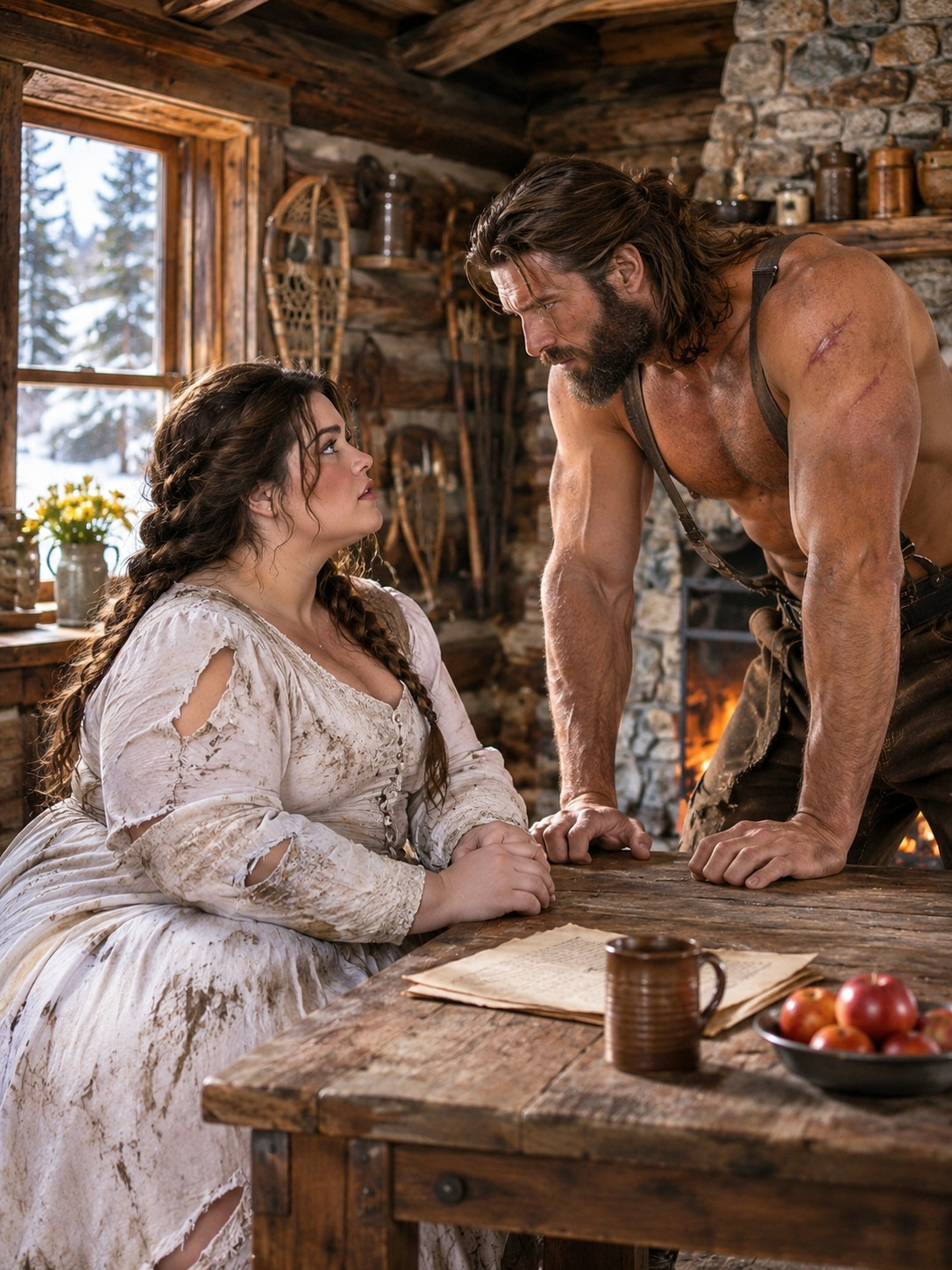
"Get away from me!" Abigail Preston screamed, swinging the iron fire poker toward the armed man blocking the doorway.
Harrison Caldwell's personal detective, Floyd Walsh, stumbled against a mahogany desk, knocking a leather-bound ledger onto the floor.
A folded telegram slipped from its pages.
Across the bottom were four words written in Caldwell's own hand:
Make Samuel Preston disappear.
Abigail had not discovered a business secret.
She had discovered her brother's murderer.
For one terrible second, nobody moved.
Then Floyd Walsh spat blood onto Harrison Caldwell's expensive Persian carpet.
"You stupid little bitch," he growled.
Abigail backed toward the door, the iron poker trembling in her hands.
Walsh was a massive man, with a broken nose, a thick neck, and the cold eyes of someone who had spent his entire adult life hurting people for money. He wore a dark wool coat over a leather shoulder holster, and the silver Pinkerton badge pinned inside his lapel had frightened half the miners in Wallace into silence.
But his badge did not frighten Abigail anymore.
Not after what she had read.
Not after learning what Harrison Caldwell had done to Samuel.
"You killed him," she whispered.
Walsh wiped his mouth.
"Your brother should've kept his nose out of Mr. Caldwell's business."
The words struck harder than any fist.
Six months.
For six months, Abigail had believed her older brother died because of a tragic accident at the Silver Star Mine.
For six months, she had watched her mother sit beside an empty chair at supper.
For six months, she had listened to her father blame himself for encouraging Samuel to take the job that eventually killed him.
And now this man stood before her, speaking about Samuel's murder as though it were an overdue bill.
"You knew," Abigail said.
Walsh's expression changed.
He realized his mistake.
"Put that poker down."
"No."
"Miss Preston, you're about to make a very expensive mistake."
Abigail glanced at the open ledger.
There were dates.
Payments.
Names.
A notation beside Samuel's name recording a payment of two hundred dollars for the removal of structural supports from the western shaft.
Her brother's life had been reduced to an accounting entry.
Two hundred dollars.
She looked back at Walsh.
"How much did he pay you?"
"Enough."
"To kill my brother?"
Walsh's right hand moved toward his revolver.
Abigail swung.
The poker connected with his jaw with a sickening crack.
He crashed backward against the desk, sending papers flying.
His revolver struck the floor.
Abigail stood frozen, breathing hard.
Walsh groaned.
He was alive.
But he would not stay unconscious for long.
She dropped the poker.
Then she seized the folded telegram, shoved it into the hidden pocket of her wedding gown, and ran.
Twelve hours earlier, Abigail Preston had believed she was making the greatest sacrifice of her life.
She had been wrong.
The greatest sacrifice would have been staying.
At twenty-six, Abigail had already learned that poverty could make respectable people accept terrible arrangements.
Her father, Thomas Preston, had once owned the most successful freight company between Wallace and the northern mining camps.
Preston Freight had carried everything from lumber and machinery to flour, medicine, and letters from families back East.
Samuel had worked beside their father since he was sixteen.
Abigail had kept the books.
Their mother had managed the household.
They had never been wealthy, but they had been happy.
Then Harrison Caldwell arrived.
He purchased three copper mines.
Then five.
Then the bank that held the freight company's loans.
Within eighteen months, nearly every business in Wallace owed him money.
Thomas Preston was no exception.
A gambling debt, supposedly incurred during a private card game, had placed the family's remaining assets under Caldwell's control.
Thomas insisted he had been cheated.
Nobody believed him.
Or perhaps nobody dared.
Caldwell offered a solution.
He would forgive every debt.
He would restore the freight business.
He would ensure Abigail's parents lived comfortably for the remainder of their lives.
All he wanted was Abigail.
Not as an employee.
Not as a mistress.
As his wife.
Abigail had refused at first.
Then her father suffered a stroke.
The bank threatened foreclosure.
Her mother began selling family silver to purchase medicine.
And Caldwell returned with a diamond engagement ring.
"You could save them all," he told Abigail.
She had stared at the ring.
"What happens if I say no?"
Caldwell smiled.
"Then your father learns what happens to men who cannot pay their debts."
So Abigail agreed.
She told herself marriage was survivable.
She told herself Caldwell's reputation had been exaggerated.
She told herself that a man who wanted her badly enough to spend a fortune obtaining her might eventually learn to treat her kindly.
She had believed many foolish things.
But she had never imagined he was responsible for Samuel's death.
Until that morning.
The wedding was scheduled for four o'clock.
Caldwell had invited the territorial governor, three judges, a railroad executive, and nearly every wealthy family within a hundred miles.
The ceremony would take place in his mansion.
The reception would follow beneath imported chandeliers.
Abigail's wedding gown had cost three hundred dollars.
Caldwell mentioned the price whenever anyone admired it.
"Only the finest for my bride," he would say.
But Abigail understood the message.
Everything had a price.
Even her.
The gown was made from heavy ivory silk, with elaborate lace sleeves, pearl buttons, and a sweeping train.
It was beautiful.
It was also impossible to move in.
Her mother had cried when she first saw Abigail wearing it.
"You look like an angel."
Abigail had forced a smile.
"I feel like a prisoner."
Her mother pretended not to hear.
At eleven that morning, Abigail discovered that one of her pearl earrings was missing.
A maid suggested she might have left it in Caldwell's private study during the previous evening's rehearsal dinner.
Abigail went looking.
The study door was unlocked.
Inside, sunlight fell across a massive mahogany desk.
A glass-fronted cabinet held expensive rifles.
Maps of mining claims covered one wall.
The air smelled of tobacco and polished leather.
Abigail searched beside the desk.
Then beneath a chair.
Finally, she noticed a pearl glinting near a stack of papers.
She reached for it.
Her elbow caught the corner of an open ledger.
The book fell.
Several telegrams scattered across the carpet.
Abigail bent to collect them.
And saw her brother's name.
Samuel Preston.
Her breath stopped.
The telegram was dated three days before the Silver Star Mine collapse.
It had been sent from Caldwell's private office to the mine superintendent.
Labor agitation continues. Preston remains the principal obstacle. The western shaft must be closed permanently before the inspection.
Abigail stared at the words.
A second telegram lay beneath it.
Structural supports can be compromised without attracting suspicion. Ensure the shift includes Preston.
She read it twice.
Then a third time.
Her hands began to shake.
Samuel had not died in an accident.
He had been murdered because he was organizing miners against Caldwell.
Abigail remembered her brother's final visit home.
He had brought their mother a bag of oranges.
He had teased Abigail about her handwriting.
And when their father asked whether the mine was safe, Samuel had looked away.
"Somebody has to stand up to Caldwell," he had said.
Three days later, thirty-seven miners were buried beneath tons of rock.
Samuel was among the dead.
Abigail pressed the telegram against her chest.
Then she heard footsteps.
Floyd Walsh appeared in the doorway.
"What are you doing in here?"
She tried to hide the papers.
Too late.
His gaze moved from her face to the ledger.
Then to the telegram.
The room became very quiet.
"Give me that," he ordered.
Abigail stepped backward.
"Did Caldwell order my brother killed?"
Walsh shut the door.
That was when Abigail understood she might not leave the study alive.
She ran through the mansion's rear corridor with blood on her wedding gown.
A kitchen maid carrying a tray of bread stopped in astonishment.
"Miss Preston?"
Abigail grabbed her arm.
"Where's the stable boy?"
"Out back, miss. What happened?"
"Tell nobody you saw me."
The maid looked at the blood.
Her face went white.
Abigail released her and hurried toward the servants' entrance.
Behind her, a man's voice roared from the study.
"STOP HER!"
Walsh.
Already conscious.
Abigail threw open the kitchen door.
Cold air struck her face.
A stable boy was leading a roan gelding toward the carriage house.
"Miss Preston?"
"I need that horse."
"Mr. Caldwell said—"
She pulled the pearl necklace from her throat.
The clasp broke.
Pearls scattered across the frozen ground.
She shoved the remaining strand into the boy's hands.
"Take it. Please."
He stared at the jewelry.
Then at her bloodstained dress.
Something in his expression changed.
"Can you ride?"
"Yes."
"Not in that dress."
"Then help me."
He brought the horse beside a mounting block.
Abigail gathered her skirts and climbed awkwardly into the saddle.
The boy pressed the reins into her hands.
"There's a logging trail north of the creek," he whispered. "It climbs into the Bitterroots."
"Thank you."
"Miss?"
She looked down.
"Don't take the main road."
Abigail nodded.
Then she kicked the horse forward.
Behind her, the mansion doors burst open.
A gunshot cracked through the morning air.
The horse lunged.
Abigail nearly lost her seat.
Another shot followed.
She bent low over the animal's neck.
The stable yard disappeared behind her.
She did not look back.
By sunset, Abigail had lost the road.
By midnight, she had lost the horse.
And by the following morning, she was beginning to lose the feeling in her hands.
The storm had arrived without warning.
One moment, the mountains were dark with pine trees.
The next, snow erased everything.
Abigail had followed the logging trail until it narrowed into a frozen path between enormous boulders.
The gelding grew increasingly nervous.
Then a wolf howled somewhere above the ridge.
The horse reared.
Abigail screamed.
She grabbed the saddle horn, but her frozen fingers slipped.
She fell into the snow.
The gelding bolted.
She heard its hooves striking rock.
Then nothing.
Abigail lay on her back, staring into a white sky.
For a moment, she considered remaining there.
Her body hurt.
Her legs trembled.
Her lips had turned blue.
But then she remembered Samuel.
Not the man buried beneath the mine.
The boy who had once carried her across a flooded creek when she was seven.
"Don't you dare quit on me, Abby," he had said.
She could almost hear him now.
Abigail rolled onto her stomach.
Then pushed herself upright.
"Not yet," she whispered.
She began walking.
The wedding gown dragged behind her like a frozen sail.
She tore away the heavy crinoline.
Then the lace overskirt.
She wrapped the surviving fabric around her legs.
Every step became a battle.
The wind drove ice into her face.
Branches scraped her cheeks.
Her boots filled with snow.
She had no food.
No water that was not frozen.
No idea where she was going.
And somewhere behind her, Harrison Caldwell's men were searching.
She touched the hidden pocket sewn into her gown.
The telegram remained there.
She had folded it inside a scrap of oilcloth stolen from the stable.
If she survived, she would make sure the world learned what Caldwell had done.
If she died, the truth would die with her.
That frightened her more than the cold.
The first sign of the cabin was not its roof.
It was the smell.
Woodsmoke.
Abigail stopped walking.
She lifted her head.
At first, she thought her mind was playing tricks on her.
The snow was so thick that even the nearest trees appeared as shadows.
Then she saw it.
A faint orange glow.
A window.
She stumbled forward.
Her boot caught beneath a buried root.
She fell hard.
Pain shot through her knee.
For several seconds, she could not move.
Then she began crawling.
The cabin slowly emerged from the storm.
It stood beneath a granite cliff, protected from the worst of the wind.
Its walls were built from massive pine logs.
Snow covered the roof.
A thin ribbon of gray smoke rose from the chimney.
Abigail dragged herself onto the porch.
Three wooden steps.
They might as well have been a mountain.
She climbed the first.
Then the second.
Her vision blurred.
At the door, she lifted one hand.
Knocked.
Once.
Twice.
"Please," she whispered.
No answer.
She tried again.
"Help me."
The door remained closed.
Her knees gave way.
She collapsed against the wood.
And the world went black.
Warmth.
That was the first thing Abigail noticed.
Not light.
Not sound.
Warmth.
Something heavy covered her body.
A fire crackled nearby.
The air smelled of pine smoke, coffee, and leather.
She opened her eyes.
Rough wooden ceiling beams stretched above her.
A fur blanket covered her shoulders.
She was lying on a narrow cot.
Her wedding gown was gone.
Abigail sat upright.
Panic struck immediately.
She looked down.
Someone had dressed her in an oversized woolen union suit.
The sleeves covered her hands.
The collar hung loosely around her throat.
Her heart began pounding.
"Where am I?"
A man's voice answered from the shadows.
"Somewhere you wouldn't have reached without help."
Abigail turned.
A giant of a man sat beside the stove.
He was broad across the shoulders, with powerful arms, weathered hands, and a thick sandy-blond beard.
A pale scar crossed his left cheek.
He wore a dark wool shirt beneath a worn leather vest.
Across his knees rested a Winchester rifle.
He was cleaning it with an oiled cloth.
His steel-blue eyes lifted toward her.
"Don't move too quickly," he said. "Your body's still recovering."
Abigail clutched the blanket.
"Who are you?"
"Caleb McCoy."
"Where am I?"
"My cabin."
"Did you take off my dress?"
He glanced toward the fireplace.
"Had to."
Her cheeks burned.
"Without asking?"
"You were unconscious."
"That doesn't give you the right—"
"Your clothes were frozen solid, and your breathing was getting worse."
His voice remained flat.
"I dried you off, got you warm, and gave you something that wasn't soaked through. If I'd waited for permission, you'd be dead."
Abigail looked toward the fireplace.
Her ruined wedding gown hung from a wooden drying rack.
The silk had turned gray with mud.
A dark stain marked the left sleeve.
Walsh's blood.
Caleb followed her gaze.
"That blood yours?"
"No."
He stopped cleaning the rifle.
"Whose?"
Abigail swallowed.
"A man who tried to kill me."
Caleb studied her for several seconds.
Then resumed working.
"That explains the wedding dress."
She stared at him.
"You're not going to ask what happened?"
"Would you tell me?"
"No."
"Then I won't waste the breath."
Abigail looked around the cabin.
Snowshoes hung beside the door.
A double-barreled shotgun rested above the mantel.
Tin cups stood on a shelf.
A heavy wooden table occupied the center of the room.
The cabin was small but orderly.
Everything had a place.
Everything served a purpose.
Including, she suspected, the rifle across Caleb's knees.
"How long have I been here?" she asked.
"Since last night."
"Did anyone come looking for me?"
"No."
"Are you sure?"
His eyes lifted.
"Lady, there hasn't been another human being on this ridge in six weeks."
Abigail felt the first small flicker of relief.
Then Caleb added, "But that doesn't mean nobody's coming."
He brought her coffee.
Not in a porcelain cup.
In a battered tin mug.
Abigail accepted it with both hands.
The heat burned her fingers pleasantly.
She drank.
It was bitter.
Strong.
Wonderful.
Caleb returned to his chair.
"What's your name?"
She hesitated.
He noticed.
"You can lie if you want. Won't change the weather."
"Abigail."
"Abigail what?"
"Preston."
His hands stopped moving.
The silence that followed felt different.
He looked up slowly.
"Preston?"
She nodded.
"From Wallace?"
"Yes."
Caleb set the rifle aside.
"Thomas Preston's daughter?"
Abigail's stomach tightened.
"You know my father?"
"Know of him."
"How?"
Caleb did not answer immediately.
Instead, he studied her with renewed interest.
"Your father ran freight wagons."
"He still does."
"Not according to what I've heard."
Abigail lowered her gaze.
"Caldwell took the company."
The mountain man's expression hardened.
"Harrison Caldwell?"
She looked up sharply.
"You know him?"
Caleb leaned back.
The firelight caught the scar on his cheek.
"Everybody who works these mountains knows Caldwell."
Abigail's grip tightened around the mug.
"Then you know what kind of man he is."
"Better than most."
Something in his voice made her uneasy.
"Did you work for him?"
"No."
"Then how do you know him?"
Caleb looked toward the window.
For a moment, Abigail thought he would refuse to answer.
Then he said, "Some men leave scars you can see. Others leave scars you can't."
Abigail glanced at his cheek.
He noticed.
"Don't ask."
She looked away.
The cabin fell silent.
Outside, the storm continued to rage.
Abigail drank the last of her coffee.
Then whispered, "He killed my brother."
Caleb's head turned.
"Who?"
"Harrison Caldwell."
For the first time since she had awakened, the mountain man's composure cracked.
Not dramatically.
He did not shout.
He did not rise.
But his eyes changed.
"Samuel Preston?"
Abigail stared.
"You knew Samuel?"
Caleb's jaw tightened.
"I knew he was trying to organize the miners."
"He was murdered."
"That's a serious accusation."
"I have proof."
She pointed toward her wedding gown.
"There's a telegram sewn into the hidden pocket."
Caleb stood.
He crossed the room, found the pocket, and removed the oilcloth packet.
He unfolded the paper.
Abigail watched his face.
He read the telegram once.
Then again.
The muscles in his jaw tightened.
"Where did you get this?"
"Caldwell's study."
"Does he know you took it?"
"His detective caught me."
"What happened?"
"I hit him with a fire poker."
Caleb looked up.
"Which detective?"
"Floyd Walsh."
For several seconds, he simply stared at her.
Then a low, surprised chuckle escaped him.
"You hit Floyd Walsh?"
"He was reaching for his gun."
"Good."
Abigail blinked.
"Good?"
"Walsh has needed somebody to knock his teeth loose for years."
The amusement vanished.
Caleb looked down at the telegram again.
"Trouble is, now Caldwell has two reasons to find you."
Abigail's relief disappeared.
"He won't stop, will he?"
"No."
"Even if I cross the territory?"
"No."
"Even if I go to the governor?"
Caleb gave her a grim look.
"Caldwell helped put that governor in office."
Abigail stared at the fire.
Her hands began trembling again.
"Then there's nowhere I can go."
Caleb folded the telegram carefully.
He returned it to the oilcloth.
"Didn't say that."
She looked at him.
"Do you know somewhere safe?"
He hesitated.
"Maybe."
"Where?"
Instead of answering, he walked toward the window.
He pulled back the curtain.
Snow struck the glass.
"First, we need to get through this storm."
That night, Abigail dreamed of Samuel.
He stood at the entrance to the Silver Star Mine, holding a lantern.
His face was covered in coal dust.
He smiled when he saw her.
"Abby."
She ran toward him.
But the ground shook.
The lantern fell.
And the mountain collapsed between them.
Abigail woke with a gasp.
The fire had burned low.
The cabin was dark except for the faint glow of embers.
Caleb sat beside the window.
He was awake.
The rifle rested across his knees.
"Bad dream?" he asked.
Abigail pressed a hand against her chest.
"Yes."
He nodded.
Nothing more.
She watched him for a moment.
"Do you ever sleep?"
"When I need to."
"You've been sitting there all night."
"Storm's changing."
Abigail listened.
The wind had weakened.
Snow still tapped against the window, but the terrible howling had faded.
"Is that good?"
"Depends."
"On what?"
"Who's waiting for the weather to clear."
Abigail pulled the blanket tighter.
"You think they're coming."
Caleb did not answer.
He did not have to.
By the second morning, the storm had broken.
Sunlight poured through the window.
The mountains glittered beneath fresh snow.
Abigail had regained enough strength to stand.
Caleb had given her a faded dusty-blue dress from a storage chest, explaining that it had belonged to a relative who no longer lived there.
He offered no further details.
She had also borrowed a heavy green shawl and a pair of worn leather boots.
The clothing fit imperfectly, but it was warm.
For the first time in days, Abigail felt like a person instead of a fugitive wrapped in silk.
She helped prepare breakfast.
Caleb made coffee.
She fried potatoes.
They ate at the wooden table.
Neither spoke much.
But the silence no longer felt entirely hostile.
After breakfast, Caleb checked the snow outside.
Then returned with a brass spyglass.
He stood beside the window for a long time.
Abigail watched him.
"What do you see?"
"Trees."
"Caleb."
He lowered the spyglass slightly.
"Tracks."
Her heart tightened.
"Animal tracks?"
"Some."
"And the others?"
He did not answer.
Abigail stood.
The chair scraped across the floor.
"How many?"
Caleb raised the spyglass again.
Then lowered it.
"Five riders."
Abigail felt the blood drain from her face.
"Are they coming here?"
"They're following the lower ridge."
"Could they be hunters?"
"Not with that formation."
She stepped closer.
"Can you recognize them?"
Caleb's expression hardened.
"One of them rides like Deputy Amos Higgins."
Abigail remembered the name.
Higgins was Caldwell's favorite lawman.
A man who had arrested striking miners for trespassing on property they had worked for years.
A man who had once dragged a fourteen-year-old boy through Wallace by the collar because the child had thrown a stone at Caldwell's carriage.
"He's come for me," Abigail whispered.
Caleb collapsed the spyglass.
"Looks that way."
"What do we do?"
He crossed toward the gun rack.
Abigail followed.
"Caleb."
He checked the shotgun.
"Stay away from the windows."
"Are we going to fight?"
He looked at her.
"Not if I can help it."
"Then give me a gun."
His eyebrows rose.
"Can you shoot?"
"My brother taught me."
"At what distance?"
"Close enough."
Caleb shook his head.
"Five armed men against two people in a wooden cabin isn't a battle. It's a funeral."
Abigail's eyes flashed.
"Then I won't let you die for me."
She moved toward the door.
Caleb caught her arm.
"Where do you think you're going?"
"Up the mountain."
"You'll freeze."
"I survived once."
"Barely."
"I won't let Caldwell kill another person because of me."
Caleb's expression changed.
He released her arm.
"Listen carefully, Abigail. Caldwell killed your brother because your brother threatened his power. If he comes here, that's Caldwell's choice. Not yours."
Her eyes filled.
"I don't know what to do."
Caleb looked at her for a long moment.
Then he crossed to the table.
He placed both hands against the wood.
"There's something you need to understand about Caldwell."
Abigail looked up.
"What?"
"He's not powerful because he owns guns."
She waited.
"He's powerful because he owns paper."
"Paper?"
"Contracts. Debts. Mining claims. Judges willing to pretend those papers mean whatever he wants them to mean."
Abigail frowned.
"What does that have to do with me?"
"Your father's debt gave Caldwell leverage. Your marriage was supposed to secure it."
"Yes."
"But you're not married to him."
"No."
"And under the laws he's been using against your family, another marriage could interfere with his claim."
Abigail stared.
"What are you saying?"
Caleb looked toward the window.
The riders were drawing closer.
He turned back.
"I'm saying Caldwell has spent years using the law as a weapon."
He paused.
"Maybe it's time somebody used it against him."
Abigail's heart began pounding.
"How?"
Caleb opened his mouth.
Then stopped.
A distant sound reached the cabin.
Hooves.
Five horses moving through packed snow.
Caleb turned toward the door.
Abigail followed his gaze.
A shadow crossed the frosted window.
Then came three heavy knocks.
A man's voice shouted from outside.
"CALEB MCCOY! OPEN UP! WE KNOW YOU'VE GOT THE GIRL!"
Abigail froze.
Caleb's expression went cold.
He slowly reached beneath the table and pulled out a folded document.
Across the top, in faded black ink, were the words:
TERRITORIAL MARRIAGE CERTIFICATE.
Abigail looked from the paper to his face.
"What are you going to do?"
Caleb stepped closer.
His voice dropped to a whisper.
"Something I swore I'd never do again."
Outside, Deputy Higgins cocked his revolver.
The door handle began to turn.
And Caleb said the three words Abigail never expected to hear.
"Marry me. Now."






Comments 0