I opened Ava's message again.
"Wish you were here, bro."
The photograph showed her sitting beneath warm golden lights, holding a cocktail while her friends laughed around her. A waiter stood behind them carrying a tray of desserts.
I stared at it longer than I should have.
Then I closed the message.
There was something almost impressive about my sister's ability to make every occasion feel important.
Even an ordinary Saturday night became an event worth documenting.
Ava had always been like that.
When she entered a room, people noticed.
She knew how to tell stories, how to make people laugh, and how to turn small inconveniences into dramatic experiences. She could walk into a restaurant and leave knowing the manager's name.
My parents adored those qualities.
They called her confident.
They called her charismatic.
They called her special.
I was the opposite.
I preferred listening to talking. I liked planning things before doing them. I didn't particularly enjoy being the center of attention.
When people complimented me, I usually changed the subject.
My parents had interpreted those differences as proof that Ava needed more from them.
And I needed less.
The truth was that I had needed plenty.
I had simply learned not to ask.
I remembered one afternoon when I was eleven.
Our school had organized a regional science competition. I had spent almost two months building a small model designed to demonstrate how solar energy could power a miniature house.
My teacher had encouraged me to enter.
I had spent evenings researching electrical circuits, buying inexpensive components, and carefully assembling everything on the dining room table.
Dad had helped me cut a few pieces of wood.
Mom had promised to attend the final presentation.
I remember being nervous that morning.
I had placed the model inside a cardboard box and carried it to school with both hands.
The competition was held in a large gymnasium filled with students and parents.
There were dozens of projects.
Some students had built robots. Others had created elaborate displays about environmental conservation.
I stood beside my miniature house and explained how the solar panel transferred energy to the battery.
A judge asked several questions.
I answered all of them.
When the results were announced, I won second place in my age category.
I couldn't believe it.
My teacher shook my hand.
Several classmates congratulated me.
I carried the trophy home as though it were made of glass.
Mom was in the kitchen when I arrived.
"Look what I won!"
She glanced up.
"Oh, Nathan! That's wonderful."
I placed the trophy on the counter.
She smiled.
"Your father will be proud."
Before I could tell her about the competition, her phone rang.
It was Ava.
She was nine at the time and had been practicing for a dance recital.
Mom listened for several seconds.
Then her expression changed.
"Really? They moved your performance to Saturday?"
She looked at me.
"That's wonderful, sweetheart. Of course we'll be there."
I stood beside the counter holding my certificate.
Mom continued talking.
She asked Ava whether she needed a new costume, whether her dance teacher had approved the music, and whether she wanted to invite her friends.
I waited.
Eventually, she ended the call.
"Your sister has a solo next weekend."
I nodded.
"That's great."
"She'll be nervous. We need to make sure everything goes perfectly."
I looked at my trophy.
"Mom?"
"Yes?"
"Did you see that I came second?"
She glanced toward the certificate.
"Of course, honey. That's amazing."
Then she picked up the phone again.
I put the trophy on the bookshelf.
I didn't mention that I had wanted her to ask how the competition went.
I didn't tell her how nervous I had been.
And I certainly didn't tell her that I had looked toward the entrance several times during the awards ceremony, hoping to see her.
That was the first time I remember feeling disappointed and immediately deciding that my disappointment wasn't important.
There were many others.
When Ava was thirteen, she wanted to attend a summer dance program several hours away.
My parents rearranged their schedules and drove her there every morning.
When I was fifteen, I had a school interview for an academic scholarship.
Dad had promised to take me.
That morning, Ava called because she had forgotten an important document for a performance.
Dad drove across town to deliver it.
I took the bus to my interview.
I still received the scholarship.
When I told my parents, they congratulated me over dinner.
Dad raised his glass.
"That's our smart boy."
Then Ava announced that her dance teacher had recommended her for an advanced program.
Everyone started discussing how much potential she had.
I quietly finished eating.
By the time I reached college, I had become exceptionally good at handling things alone.
I learned how to cook inexpensive meals.
I learned how to manage my finances.
I learned how to navigate complicated paperwork.
I learned how to solve problems without asking anyone for help.
My parents were proud of that independence.
They told relatives that they had raised a responsible son.
They didn't realize that some of my independence had come from discovering that asking for help rarely changed anything.
Ava's needs were different.
She could call Mom at midnight because she had argued with a boyfriend.
Mom would stay awake for hours listening.
She could call Dad because her car had a warning light.
He would leave work early to take it to a mechanic.
When she wanted to move apartments, my parents helped with the deposit.
When I moved into my first apartment, I rented a truck and carried everything myself.
They sent a message saying they hoped I liked the new place.
I did.
I was proud of it.
But I remembered carrying a mattress up three flights of stairs with a friend because I hadn't wanted to bother my parents.
I remembered eating dinner on the floor because I couldn't afford a proper dining table yet.
I remembered calling Dad to ask how to assemble a bookshelf.
He explained the instructions over the phone.
Ava later received a fully furnished apartment when she moved downtown.
My parents had paid for the furniture because they wanted her to start her new job comfortably.
I never asked why.
It became easier to believe that people simply had different needs.
That explanation followed us into adulthood.
Ava was twenty-five when she received her first major promotion in public relations.
My parents celebrated for weeks.
Mom invited relatives over for dinner.
Dad bought an expensive bottle of champagne.
They talked about her professional future as though she had already become a household name.
I was happy for her.
I genuinely was.
But when I received a promotion at work the following year, I told my parents during a Sunday phone call.
Dad said, "Good for you, son."
Mom asked whether my salary increase would make it easier to pay rent.
Then she started discussing Ava's upcoming vacation.
I didn't expect a party.
I didn't even expect champagne.
But sometimes I wondered what it would feel like if my achievements occupied more than thirty seconds of a family conversation.
I kept those thoughts to myself.
That was what I had always done.
The strange thing was that Ava wasn't entirely unaware of the difference.
Sometimes she noticed.
Once, when we were both visiting our parents, she found me washing dishes after dinner.
"You know Mom and Dad spoil me, right?"
I glanced over my shoulder.
"Sometimes."
She laughed.
"You're lucky. They never bother you."
I turned off the faucet.
"What do you mean?"
She shrugged.
"They trust you. You're independent. I have to fight for everything."
I almost laughed.
Instead, I handed her a clean plate.
"Maybe."
She didn't notice anything unusual about my response.
She dried her hands and returned to the living room.
I remained in the kitchen.
I wanted to tell her that independence wasn't always something a person chose.
Sometimes it was what happened when nobody noticed you needed help.
But I didn't.
The months passed.
Ava became increasingly successful in her career. Her social media accounts filled with photographs of business events, weekend trips, expensive dinners, and stylish outfits.
My parents followed every update.
Mom often forwarded Ava's photographs to the family group chat.
Dad responded with comments about how proud he was.
I occasionally liked the pictures.
I never posted much about myself.
My life was quieter.
I enjoyed my work, spent time with a few close friends, and had developed a habit of taking long walks whenever I needed to think.
I wasn't unhappy.
I simply didn't feel the need to turn everything into a performance.
But the difference between our lives became impossible to ignore when Ava announced her twenty-fifth birthday plans.
She wanted something memorable.
Something that would look beautiful in photographs.
Something that would bring everyone together.
Our parents immediately offered to help.
Dad suggested renting a rooftop venue.
Mom started looking at decorations.
Ava created a shared planning document.
I received a message from her.
"Hey, Nate! Can you help us with the arrangements? You're always so organized."
I looked at the message while sitting at my desk.
I had several deadlines that week.
But it was my sister's birthday.
I typed:
"Sure. What do you need?"
Her response arrived almost immediately.
"You're the best!"
I smiled.
I still wanted to believe that being useful meant being loved.
I had no idea how much that weekend would eventually cost me emotionally.
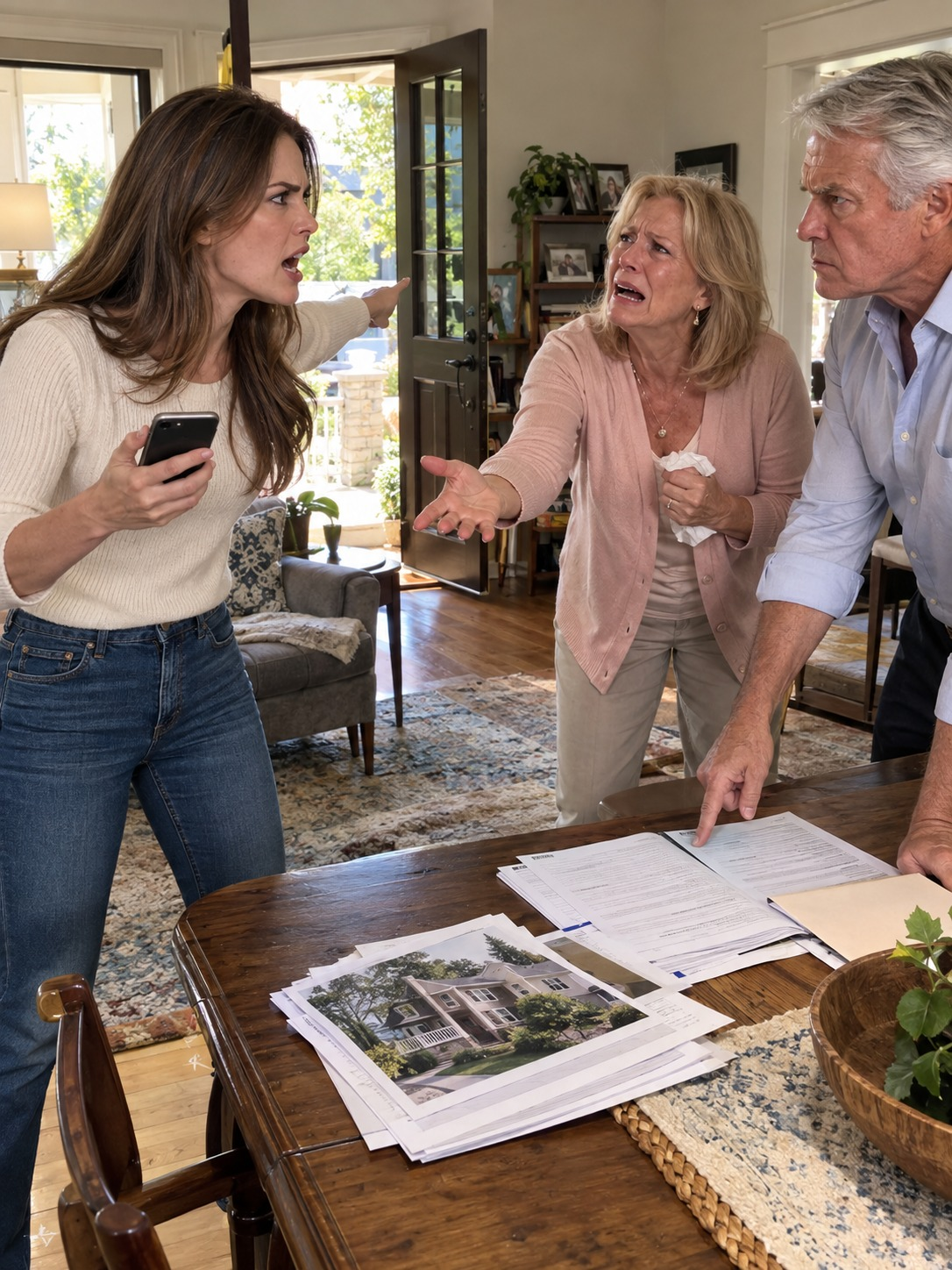
Two days later, I arrived at my parents' house and found Mom sitting at the dining table surrounded by printed venue photographs.
Dad was standing behind her with his laptop.
Ava was on speakerphone.
They were discussing lighting, floral arrangements, catering, transportation, and the possibility of fireworks.
Mom looked up when I entered.
"Perfect timing, Nathan. We need your help with something."
She pushed a thick folder across the table.
Inside were estimates, guest lists, and several photographs of rooftop venues.
I began looking through them.
One photograph showed a beautiful terrace overlooking Manhattan.
Another displayed a long table decorated with flowers and candles.
Dad tapped the third photograph.
"This is the one your sister really likes."
I studied the estimate beneath it.
The price was considerably higher than the others.
"That's expensive," I said.
Mom smiled.
"It's her twenty-fifth. It's a milestone."
Ava's voice came through the speaker.
"Come on, Nathan. It's only once."
I looked at the photograph again.
Then I glanced at the handwritten guest list.
There were more than a hundred names.
I recognized most of them.
Relatives.
Family friends.
Ava's colleagues.
People who had known her for years.
I looked for my name.
It wasn't there.
I assumed there was another page.
I turned the paper over.
Nothing.
I didn't say anything.
Dad handed me the laptop.
"Can you check whether the venue has availability for September fourteenth?"
I opened the booking website.
Ava's voice came through the speaker again.
"And can you help me organize the photographer, too? I want someone who knows how to capture the whole night."
I began typing.
I didn't yet understand that I was helping organize the very celebration that would eventually make my own birthday feel so painfully small.
Then my phone vibrated.
A message from Ava appeared.
It contained an updated guest list.
And beneath the list was a note that made me stop scrolling...






Comments 0