"Marcus, where did Jennifer get my signature?"
I stood outside my office with my car keys in one hand and my phone pressed against my ear.
My brother didn't answer immediately.
That silence frightened me more than an argument would have.
"What signature?" he finally asked.
"The one on the venue agreement Jennifer sent to a wedding planner."
"Sarah, I don't know what you're talking about."
"June just forwarded me a copy."
Another silence.
Then he sighed.
"Jennifer was probably putting together a sample document."
"With my signature?"
"Maybe she copied it from something."
"From what, Marcus?"
"I don't know."
I closed my eyes.
There was only one document I could think of.
Six months earlier, Marcus had asked me for a copy of the family estate paperwork because he wanted to review how our grandparents had divided their assets.
I had sent him a scanned copy of the inheritance documents.
My signature appeared on the final acknowledgment page.
It was the only family document I could remember sharing with him.
"Did you give Jennifer the inheritance paperwork?" I asked.
"Why does that matter?"
"Because I want to know whether she copied my signature."
"You're overreacting."
"Answer the question."
He exhaled sharply.
"She might have seen it."
I leaned against the office wall.
"Marcus."
"What?"
"That isn't a small mistake."
"Nobody's actually using it."
"She sent it to a wedding planner."
"Then talk to her."
"I've been trying to talk to her for three months."
He sounded exhausted.
"So come to the café. We'll straighten everything out."
I looked down at June's photograph.
The document wasn't identical to the agreement Jennifer would later push across the café table. This version was a vendor-facing confirmation, with Riverside's name printed at the top and my copied signature beneath an authorization statement.
It was not a legitimate booking.
But someone unfamiliar with our business might have believed it was.
"Marcus, I'm forwarding this to Kinn."
"Do you really need to involve your lawyer again?"
"Yes."
"You're treating Jennifer like a criminal."
I looked at the copied signature.
"I'm treating this like a serious problem."
He hung up.
For several seconds, I stood motionless.
Then I forwarded the photograph to my attorney.
Jennifer appears to be using my signature without authorization. Please preserve this with the other records.
Kinn replied almost immediately.
Do not sign anything. Do not surrender any original documents. Call me after the meeting.
I should have called her before going.
I should have insisted on meeting at her office.
But I had spent so much time trying to keep the peace that I was still thinking like a sister instead of someone protecting herself from a threat.
And that was the problem.
I kept giving Jennifer the benefit of the doubt long after she had stopped deserving it.
To understand why Riverside had become such a bitter family dispute, you have to go back to my grandparents.
My grandfather, Thomas Bennett, was a carpenter who believed almost anything could be repaired with patience, good tools, and enough determination.
My grandmother, Eleanor, was the practical one.
She could look at a room full of strangers and remember every name before dessert.
Together, they purchased eight acres of waterfront property outside Keepers Falls, Pennsylvania.
The land included an aging nineteenth-century barn, a small farmhouse, and a neglected stretch of riverbank.
Most people saw a property that needed more money than it was worth.
My grandfather saw potential.
My grandmother saw a business.
They began restoring the barn in 1987.
Grandpa repaired the beams himself.
Grandma handled permits, invoices, and eventually reservations.
Their first paid wedding reception was small.
Forty guests.
Folding chairs.
A borrowed sound system.
A wedding cake made by the bride's aunt.
But the couple loved it.
And when the photographs appeared in the local newspaper, people started calling.
By the time I was sixteen, Riverside was hosting weddings almost every weekend during the warmer months.
I spent my summers helping Grandma arrange flowers, polish glassware, and prepare the ballroom.
At first, she paid me twenty dollars a day.
I thought I was rich.
Then she taught me how to read a vendor contract.
That was less exciting.
But far more useful.
"Sarah," she told me once, tapping a document with her pen, "a promise means something only when you're prepared to keep it."
I remembered those words every time I reviewed a wedding agreement.
Grandma believed that when a couple booked Riverside, they weren't merely renting a building.
They were trusting us with one of the most important days of their lives.
That trust was worth protecting.
Grandpa had his own lessons.
He taught me how to repair a loose railing, identify water damage, and recognize when a contractor was charging too much.
He also taught me never to confuse ownership with entitlement.
"Having something doesn't make you better than anyone," he said. "It just means you're responsible for taking care of it."
I didn't realize how important that lesson would become.
When I graduated college, I returned to Riverside full-time.
Marcus went in another direction.
He found work in sales, moved closer to the city, and built a life that had little to do with the estate.
There was nothing wrong with that.
Our grandparents loved us both.
Grandpa attended Marcus's graduation.
Grandma sent him birthday checks long after he had a perfectly good salary.
When he visited, they treated him like a prince.
But Marcus rarely asked how the business was doing.
He didn't know how much we spent on heating the barn in winter.
He didn't know which vendors consistently arrived late.
He didn't know that one heavy storm could destroy an entire season's landscaping budget.
And he certainly didn't know what happened behind the scenes when a wedding went wrong.
I did.
I remembered the Saturday when a caterer's delivery truck broke down thirty miles away.
I remembered calling six restaurants before finding someone willing to prepare dinner for one hundred and eighty guests.
I remembered carrying boxes through the kitchen while wearing heels because I hadn't had time to change.
The bride never knew.
That was the point.
A successful event looked effortless because someone had already handled the problems.
When Grandpa developed Parkinson's disease, everything changed.
At first, he insisted he could continue working.
Then his hands began shaking too badly to hold certain tools.
I found him one afternoon sitting on a bench outside the barn, staring at a broken hinge.
He had been trying to repair it for almost an hour.
"Grandpa?"
He looked up.
"I used to be able to fix something like this in five minutes."
I sat beside him.
"You taught me how."
He smiled faintly.
"Then I guess it's your turn."
I repaired the hinge while he watched.
Afterward, he handed me his old toolbox.
I still kept it in the maintenance office.
When Grandma's health declined, I took over the finances and bookings.
She resisted at first.
Then one evening, she placed her enormous appointment book on my desk.
"I think you've earned the right to use this."
I laughed.
"Grandma, we have scheduling software."
"I know."
She tapped the cover.
"But this one never needs charging."
That book remained in my office long after she died.
So did Grandpa's toolbox.
Those two objects meant more to me than the expensive furniture in the ballroom.
They reminded me that Riverside had been built by people who worked hard, kept their promises, and understood the difference between wanting something and earning it.
When my grandparents passed away, their will was clear.
Riverside Estate belonged to me.
The property.
The business.
The operating accounts.
The equipment.
The associated responsibilities.
Marcus received a substantial investment account and other assets.
He was not disinherited.
He had simply received a different portion of their estate.
Our grandparents had explained their reasoning in writing.
They wanted Riverside to remain under the management of the person who had spent years operating it.
That person was me.
At the attorney's office, Marcus initially seemed disappointed.
But he didn't argue.
He signed the necessary paperwork and shook my hand.
"Guess you're officially the boss now," he joked.
I smiled.
"Only until the next plumbing emergency."
He laughed.
I thought we understood each other.
For years, nothing suggested otherwise.
Marcus visited occasionally.
He brought friends to events.
He sometimes asked whether I could recommend a caterer.
I never imagined he would eventually stand beside someone demanding that I surrender control of the property.
And I never imagined he would help her make that demand.
The first time I met Jennifer, she seemed perfectly pleasant.
Marcus brought her to a family barbecue.
She was beautiful, outgoing, and unusually interested in Riverside.
"Your grandparents owned that entire property?" she asked.
"Yes."
"And now it's yours?"
"That's right."
"Wow."
She looked impressed.
"That must be incredible."
"It's a lot of work."
"But you own it outright?"
I nodded.
"The property is in my name."
She smiled.
"Must be nice."
At the time, I thought she was simply curious.
Later, I remembered how often she returned to the same questions.
How much was the property worth?
How many weddings did we host?
Did I have business partners?
Could family members use it for free?
Did Marcus have any ownership interest?
I answered politely.
I didn't realize she was collecting information.
Or that she might someday use it against me.
After Marcus proposed, Jennifer's interest became more intense.
She began visiting Riverside without appointments.
Sometimes she brought Amber.
Once, June found them measuring the ballroom windows.
When June asked what they were doing, Jennifer said she was planning decorations.
For a wedding that wasn't booked.
I confronted her afterward.
"Jennifer, you can't enter event spaces without permission."
She laughed.
"Sarah, we're family."
"That doesn't mean you can walk into a private event venue whenever you want."
"You're being dramatic."
"We had a client tour scheduled."
"So?"
"So they were paying customers."
Her smile faded.
"There you go again."
"What?"
"Acting like money matters more than family."
I wanted to tell her that money wasn't the point.
Responsibility was.
But Jennifer had already decided what she wanted to believe.
And every attempt to explain the business only made her angrier.
By the time she announced December fourteenth as her wedding date, I had begun documenting our conversations.
Not because I expected violence.
Because I was worried she might interfere with our bookings.
June helped me organize the emails.
Kinn advised me to preserve everything.
The invitation screenshots.
The unauthorized vendor inquiries.
The social media posts.
The messages demanding that I cancel the Morrisons.
I created a folder on my computer labeled JENNIFER—VENUE DISPUTE.
I hated seeing that name on my screen.
It made the conflict feel official.
Permanent.
Like something that could no longer be solved over dinner.
But the more I documented, the more obvious the pattern became.
Jennifer wasn't asking for a favor.
She was behaving as though Riverside already belonged to her.
And Marcus was encouraging her.
He repeatedly told me that she was stressed.
That she had spent money.
That she had already informed her family.
That refusing her would embarrass him.
He never explained why their embarrassment mattered more than my legal obligations.
He never offered to pay the costs of moving the Morrisons.
He never asked whether the Morrisons would even agree.
He simply expected me to solve a problem Jennifer had created.
By late November, the wedding was only three weeks away.
Jennifer had committed thousands of dollars to vendors.
Her invitations were already circulating.
And she still had no venue.
I knew the situation was becoming desperate.
What I didn't know was how desperate she had become.
At 4:52 p.m. on November twenty-third, I finally left my office.
I drove toward Common Grounds, thinking about the unauthorized signature.
The more I considered it, the less sense the meeting made.
Why would Jennifer ask me to negotiate if she was already sending vendors documents suggesting that I had approved her wedding?
Why had Marcus avoided answering my questions?
And why had they insisted that we meet without lawyers?
I parked near the café.
Through the window, I could see Jennifer sitting outside with Amber.
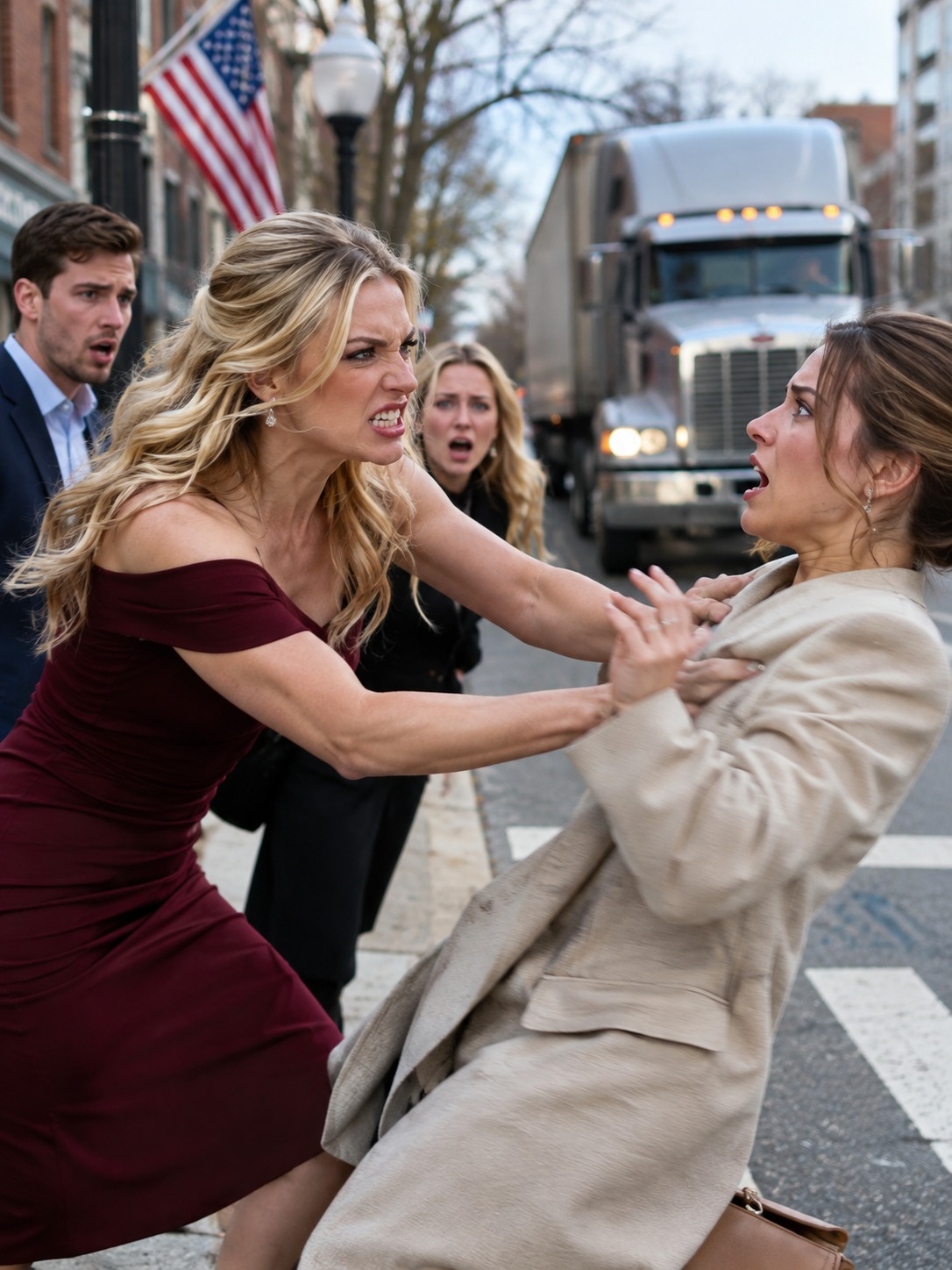
Jennifer wore a cream-colored wool coat over a dark dress.
Amber had her phone on the table.
Marcus's truck was pulling toward the curb.
I checked my phone one last time.
There was a new message from Kinn.
Sarah, I reviewed the document June sent.
I opened it.
The signature appears to have been copied from the estate acknowledgment. Do not accept their explanation without evidence.
I swallowed.
Then another message appeared.
More importantly, the document contains a reference number that should not be there.
I stared at the screen.
What reference number? I typed.
Kinn began replying.
Three dots appeared.
Disappeared.
Then appeared again.
Finally, her message arrived.
Sarah, that number belongs to an old family estate file. I need to ask you something before you meet Jennifer.
My phone rang.
Kinn's name filled the screen.
I answered.
"What's wrong?"
Her voice was unusually serious.
"Sarah, has Marcus ever asked you for the original Riverside ownership documents?"
I looked through the café window.
My brother had stepped out of his truck.
Jennifer was smiling at him.
"Why?"
"Because I just found something in the paperwork."
I gripped the phone.
"What did you find?"
Kinn took a breath.
"Sarah, the document Jennifer sent doesn't just contain your signature."
I looked down at the photograph again.
"Then what else?"
"It's the authorization section. Someone changed the wording."
My heart began pounding.
"Changed it how?"
There was a brief silence.
Then Kinn said, "The new version claims Marcus has authority to act on behalf of Riverside Estate."
I stared at my brother through the café window.
He was laughing at something Jennifer had said.
I could barely hear Kinn's next words.
"And Sarah, there's another page attached to the version the wedding planner received."
"What page?"
"A transfer authorization."
I stopped breathing for a moment.
"Transfer of what?"
Kinn didn't answer immediately.
Then she said, "I need you to listen very carefully."
Across the street, Marcus turned toward my parked car.
He saw me.
His smile disappeared.
And before Kinn could finish her warning, Jennifer stood up, picked up the navy-blue folder, and started walking directly toward me.






Comments 0