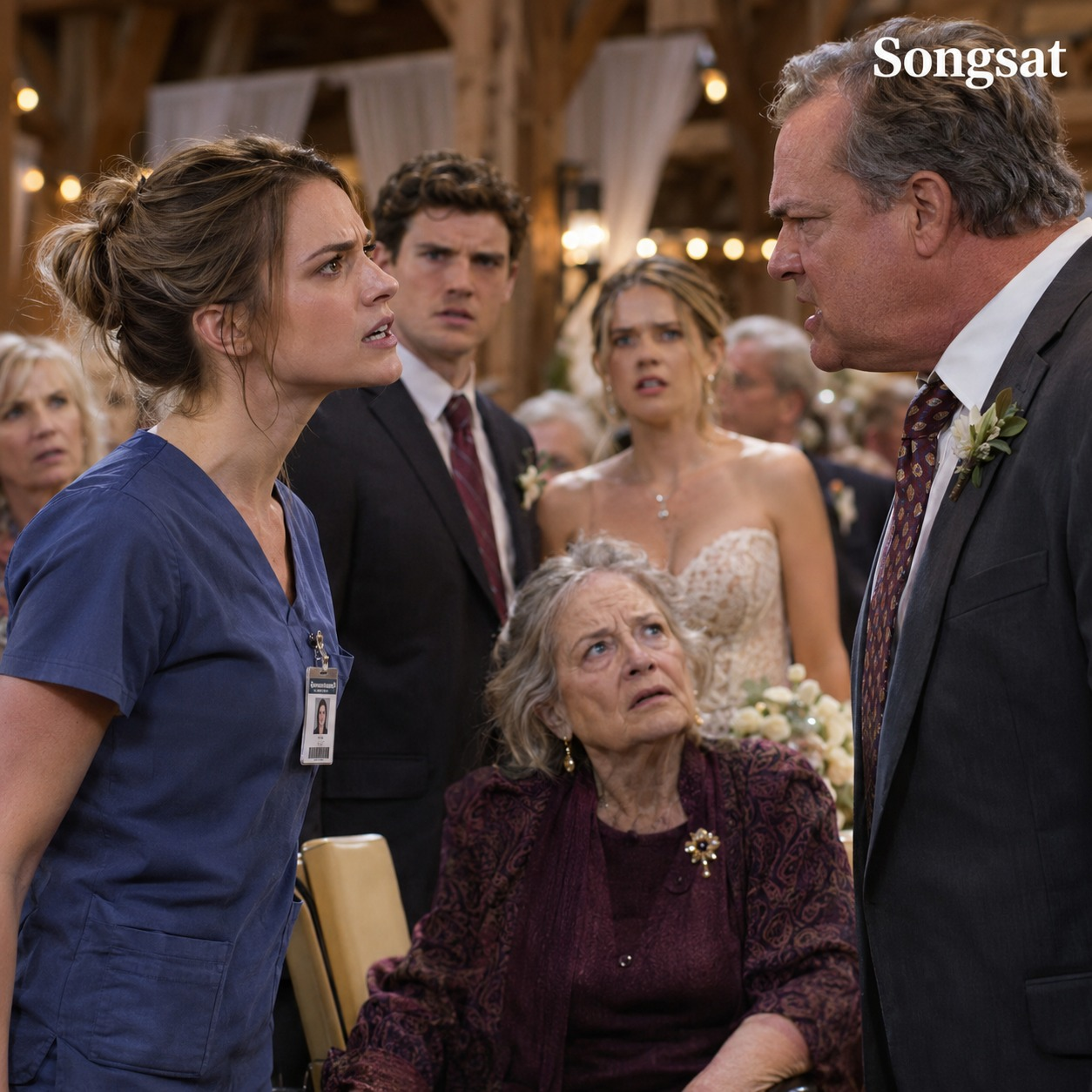
My father ripped my college acceptance letter across the dinner table.
"College is for your brother."
Grandma Ruth slowly pushed her chair backward and stood.
She picked up one torn piece of paper and looked at the scholarship amount printed across the bottom.
Then she turned toward my father.
He had just made the biggest mistake of his life.
I was eighteen years old when it happened.
The letter had arrived that Tuesday afternoon. I had been waiting for it for weeks, checking the mailbox every time I came home from school. When I finally saw the Purdue University return address, my hands started shaking.
I ran inside without even taking off my backpack.
"Mom! Dad! It's here!"
My mother, Diane, was sitting at the kitchen counter, flipping through a grocery advertisement. My brother Tyler was leaning against the refrigerator, eating leftover pizza.
My father, Gary, was at the dining table reviewing paperwork from his hardware store.
Nobody understood why I was so excited.
I tore open the envelope carefully.
The first paragraph confirmed my acceptance into Purdue University's School of Nursing.
I read it twice.
Then I reached the scholarship section.
Eleven thousand dollars every academic year.
A Presidential Scholarship.
For a few seconds, I couldn't speak.
I had spent months studying after school, working weekends, and volunteering at a local nursing home. I had imagined this moment so many times that I had practically memorized what I would say.
"I got in," I whispered.
My mother glanced up.
"Where?"
"Purdue."
I handed her the letter.
She skimmed it and placed it on the counter.
"That's nice, Lena."
That's nice.
I waited for more.
There was nothing.
Tyler laughed softly.
"Guess we have a college girl now."
I ignored him.
My father finally looked up.
"Let me see that."
I carried the letter to him.
He read the first paragraph, then the scholarship information.
His expression changed.
Not into pride.
Not into surprise.
Something colder.
"How much?"
"Eleven thousand a year."
He looked at me.
"And where do you think the rest of the money is coming from?"
"I applied for financial aid. I can work, too. I already checked the nursing assistant programs near campus."
He shook his head.
"You didn't ask me before applying."
"I didn't think I needed permission to apply."
The words came out quietly.
But they changed the atmosphere in the room.
My father put the letter down.
"College is expensive."
"I know."
"Your brother has a future to prepare for."
Tyler stopped chewing.
I looked at him.
"What does that have to do with me?"
Dad leaned back.
"Tyler is going into business. He'll be running the store one day. He needs a proper education."
"I want to become a nurse."
"That's different."
"Why?"
He didn't answer immediately.
Then he picked up my acceptance letter.
I thought he was going to read the scholarship section again.
Instead, he folded it once.
Then he tore it.
The sound was surprisingly small.
A single sharp rip.
I stared at his hands.
He tore it again.
And again.
Four pieces fell beside his dinner plate.
"College is for your brother."
My mother laughed.
Not because something was funny.
She simply laughed as if my disappointment were an amusing inconvenience.
"You can get a job, Lena. Walmart's hiring. Or the store."
I looked at her.
I wanted to ask whether she had ever imagined me doing anything important.
I wanted to ask why Tyler's dreams were considered investments while mine were expenses.
But I couldn't get the words out.
Tyler stared down at his plate.
He didn't defend me.
He didn't even look embarrassed.
Then Grandma Ruth pushed herself away from the table.
She had been visiting that evening and had barely spoken throughout dinner.
At eighty-two, she moved slowly. Her silver hair was pinned neatly behind her ears, and her hands trembled slightly when she reached for her walking stick.
But her voice was perfectly steady.
"Pack her bags."
Dad barely looked up.
"And then what?"
Grandma reached into her handbag and pulled out her old silver flip phone.
"Then I fix what you stole."
Nobody spoke.
I didn't understand what she meant.
Dad gave a short laugh.
"Mother, don't start."
Grandma looked at him for several seconds.
Then she turned toward me.
"Go upstairs, sweetheart. Pack what you need."
I looked at Dad.
He was already reaching for his paperwork.
That was how I left my parents' house.
With my clothes stuffed into a black trash bag, a backpack over my shoulder, and four pieces of a college acceptance letter sitting beside my father's dinner plate.
Grandma didn't cry.
She didn't argue.
She simply drove me away.
It wasn't until we were halfway down the road that she explained what she had meant.
"When you were four years old," she began, "I opened a college savings account for you."
I turned toward her.
"What?"
"Three hundred and fifty dollars every month. Every single month."
I stared at her.
"For me?"
She nodded.
"Your grandfather and I wanted you to have choices. I couldn't give you everything, but I could give you a start."
She explained that the money had been growing for fourteen years.
More than seventy-four thousand dollars.
My heart began pounding.
"Grandma, that's enough for college."
"It was supposed to be."
"What happened?"
Her fingers tightened around the steering wheel.
"Your father was given control of the account when I needed help managing the paperwork."
I remembered Dad mentioning a college fund years earlier.
I had assumed it was for both of us.
Grandma continued.
"He changed the beneficiary."
I felt my stomach tighten.
"To Tyler?"
She nodded.
I looked out the window.
The streetlights passed over the dashboard in slow intervals.
My father hadn't simply refused to help me.
He had taken money that had been saved for my education and redirected it toward my brother.
Grandma glanced at me.
"I should have checked sooner."
I shook my head.
"You didn't know."
"I should have known."
Her voice broke slightly.
For the first time that evening, I reached across the center console and held her hand.
"I'll figure it out."
She squeezed my fingers.
"No, Lena. We'll figure it out."
She took me to her small house outside town.
It wasn't fancy, but there was a spare bedroom with clean sheets, a wooden desk, and a bookshelf filled with old nursing magazines.
The next morning, she called her attorney.
I didn't understand all the financial details at the time.
I only understood that Grandma was no longer willing to let my father make decisions with money that belonged to my future.
There was another consequence.
My father had been relying on Grandma's personal guarantee for a $180,000 business line of credit at his hardware store.
When the credit facility came up for renewal, Grandma withdrew that guarantee.
She didn't shout at him.
She didn't threaten him.
She simply informed the bank that her property and financial standing would no longer support his business obligations.
Dad was furious.
He called her repeatedly.
He called me, too.
"You think you've won something?" he demanded during one phone conversation.
I was sitting at Grandma's kitchen table, filling out financial aid forms.
"I didn't ask you for anything."
"You embarrassed this family."
I looked at the paperwork in front of me.
"No, Dad. You tore up my acceptance letter."
He hung up.
I cried after that call.
Not because I wanted to go home.
Because I had finally understood that the people who were supposed to encourage me had been perfectly comfortable watching me fail.
But I didn't fail.
I enrolled at Purdue.
I worked twenty-eight hours a week as a nursing assistant while carrying a full academic schedule.
There were nights when I studied after twelve-hour shifts.
There were mornings when I slept through my alarm and ran across campus with a half-eaten breakfast in my hand.
I learned to stretch every dollar.
I learned how to take care of patients who were frightened, confused, and in pain.
And I learned that being underestimated could become a strange kind of protection.
People stopped asking what I wanted.
My family stopped expecting anything from me.
They assumed I had disappeared into an ordinary job.
Years passed.
I graduated.
I continued my education.
Eventually, I became a nurse practitioner.
At thirty-four, I managed twenty-two cardiac-care beds during the night shift at Northeast Regional in Fort Wayne.
I had responsibility for patients whose lives could change in a matter of minutes.
I made decisions under pressure.
I coordinated with physicians, supervised staff, and handled emergencies that would have terrified the eighteen-year-old girl who once stood helplessly beside a torn letter.
But whenever my family discussed my career, my father still used the same expression.
"Lena got a job."
I stopped correcting him.
Grandma was the one person who never forgot.
She visited me whenever she could.
I helped with her appointments, managed her medications, and made sure she never felt alone.
In 2022, she made another important decision.
Her attorney prepared financial and healthcare powers of attorney naming me as her agent.
I didn't ask for the responsibility.
She insisted.
"You're the only person I trust to listen when I tell you what I want," she explained.
The original documents remained with her attorney.
Dennis Puit, my father's banker, received copies.
I thought that would be enough.
I was wrong.
Because several months later, my father began calling me more frequently.
His hardware store was struggling.
His business credit line was approaching renewal again.
And he had become increasingly interested in Grandma's twenty-eight-acre farm.
One evening, he called while I was leaving the hospital.
"Your grandmother listens to you," he said.
I stopped beside my car.
"What does that have to do with anything?"
"We need to discuss the property."
I already knew where the conversation was going.
He wanted Grandma to transfer the farm into his name.
He claimed it would help stabilize the business.
"She doesn't want to sell it," I said.
"Nobody said anything about selling."
"Then why does the bank need it?"
He paused.
Then his voice softened.
"You're making this harder than it needs to be. I just need you to talk to her."
I looked at the hospital badge hanging from my neck.
"I'll talk to her."
"Good girl."
I closed my eyes.
I was thirty-four years old.
And he still spoke to me as if I were the eighteen-year-old girl who had once stood in his kitchen holding a broken dream.
That weekend, I visited Grandma.
She was sitting at her dining table when I arrived.
There was a yellow envelope beside her medication organizer.
I recognized the handwriting immediately.
My name.
LENA.
She placed one hand over it.
"Your father has been asking about the farm again," she said.
"I know."
"He wants you to convince me."
"I know that, too."
Grandma studied my face.
Then she slowly pushed the yellow envelope toward me.
"I think it's time you saw everything."
I opened my mouth to ask what she meant.
But before I could speak, my phone vibrated.
A message had arrived from an unknown number.
It contained a photograph of a commercial loan application.
Tyler's signature was visible near the bottom.
And beneath the proposed collateral section were three words:
TRANSFER PENDING.
I looked at Grandma.
She had already seen the photograph.
Her expression changed.
"Where did you get that?" she whispered.
I enlarged the image.
Then I noticed the date.
The application had been submitted before Grandma had even been asked to approve the transfer.
And beside Tyler's signature was a statement about his business education that made my blood run cold.






Comments 0