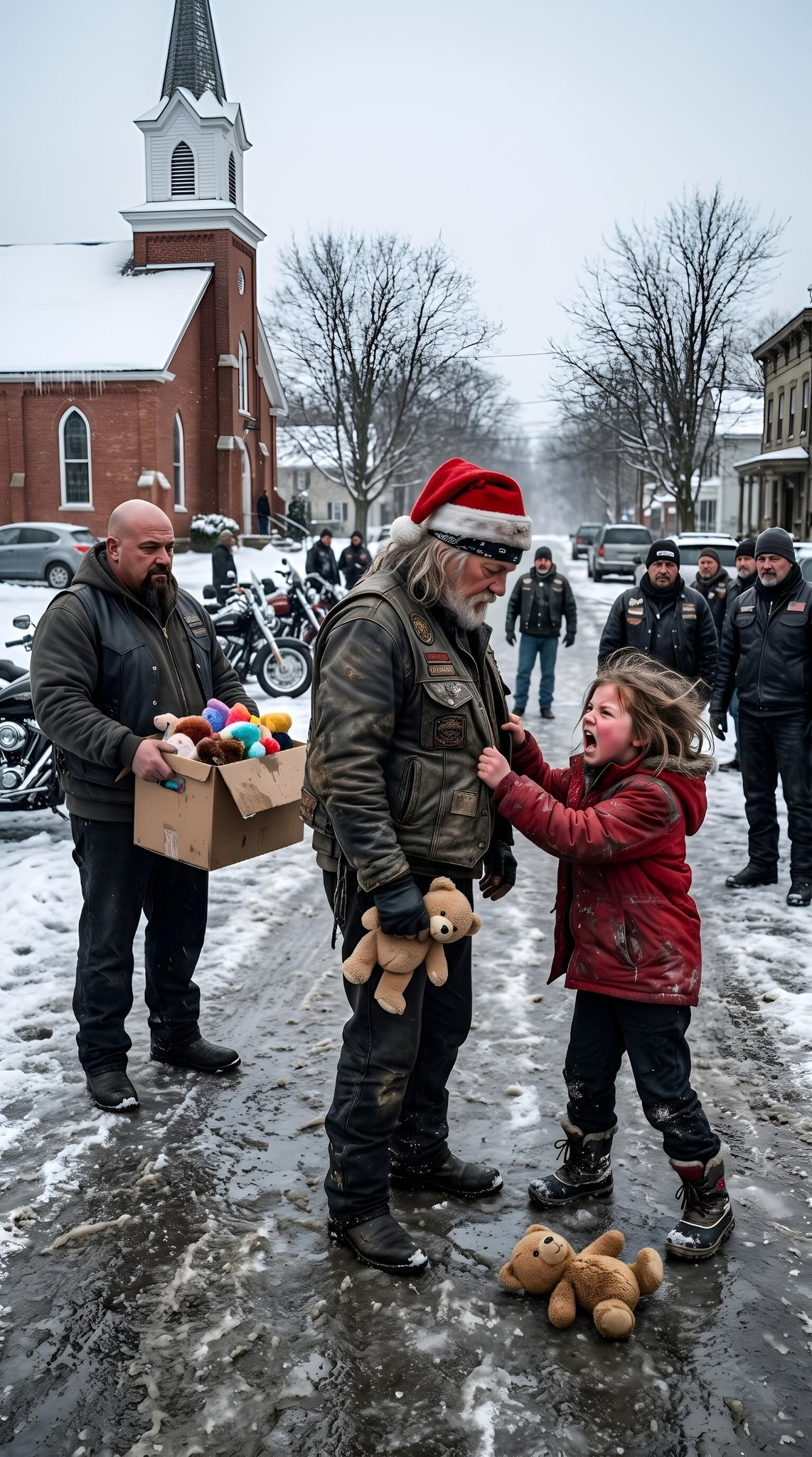
"Jack, I know what happened to your sister."
The woman outside my front door said it again.
This time, her voice was louder.
Hank stood halfway down the hallway, staring at the door as though it might explode.
Chief Richard Miller had his phone pressed against his ear.
Emily was sitting at my kitchen table, her face pale, both hands wrapped around a coffee cup she hadn't touched.
And I was standing in my own house, holding a little girl's teddy bear, trying to understand how a detective who had supposedly disappeared six months earlier knew something about a woman who had died twenty-two years ago.
"Jack," Chief said firmly. "Stay where you are."
I looked at him.
"Richard, she knows about Margaret."
"I heard her."
"Then we need to talk to her."
"We will. Carefully."
Another knock.
Three sharp blows against the wood.
"Mr. Sullivan, please. I don't have much time."
Chief raised his hand, signaling for silence.
Then he spoke toward the door.
"Detective Collins?"
There was a pause.
"Who's asking?"
"Richard Miller. Retired state police."
Silence.
Then the woman answered.
"Chief Miller?"
Richard's expression changed.
"You know me?"
"I worked with Captain Harris. He told me about you."
Chief glanced at his phone.
"Then you know I can verify that."
"Please do."
He turned away and made a call.
I stared at the door.
Through the narrow window beside it, I could see the outline of a woman standing on my porch.
She wore a dark coat.
Her hair was pulled back.
One hand rested against the railing.
She wasn't trying to break in.
She wasn't shouting threats.
She looked like somebody who had been running for a very long time.
And had finally reached the last place she could think of going.
Hank moved closer.
"Jack."
I turned.
"Yeah?"
"Whatever happens, don't let her talk you into doing something stupid."
I almost laughed.
"That narrows my options."
He didn't smile.
Neither did I.
Chief returned from the kitchen two minutes later.
His expression was grim.
"Captain Harris confirmed Collins worked on a county corruption investigation."
I stared at him.
"And?"
"She disappeared while following a lead. Her disappearance was reported, but the investigation remained open."
"Is she really out there?"
"We haven't established that."
He looked toward the door.
"Detective Collins, I need you to show identification through the window."
The woman stepped into view.
She held up a badge wallet.
Chief examined it.
Then asked several questions.
Names.
Dates.
A case number.
Things I didn't understand.
She answered each one without hesitation.
Finally, Chief lowered his phone.
"All right."
Hank looked at him.
"You're opening it?"
"With precautions."
Chief turned to me.
"Jack, stay back."
I didn't argue.
He opened the door a few inches.
The woman outside looked younger than I'd expected.
Maybe thirty-eight.
Dark hair.
Tired brown eyes.
A small cut near her eyebrow.
She looked at Chief.
"Richard Miller?"
He nodded.
"Sarah Collins?"
"Yes."
"Where have you been?"
Her eyes moved past him.
Toward me.
"Trying to find the evidence that would make somebody believe me."
Chief studied her.
"Come inside."
She stepped across the threshold.
Hank closed the door.
And suddenly, the missing detective was standing in my hallway.
Sarah Collins didn't waste time.
She refused coffee.
Refused food.
Asked whether anyone else was in the house.
Chief explained that Emily Reed was present, along with Hank and me.
Sarah went still.
"Emily Reed?"
Emily appeared in the kitchen doorway.
The two women stared at each other.
Emily's face changed.
"You."
Sarah nodded.
"Hello, Emily."
I looked between them.
"You know each other?"
Emily swallowed.
"She tried to help me."
Sarah lowered her eyes.
"I tried."
The way she said it made the room feel colder.
Chief gestured toward the kitchen.
"Let's sit down."
Sarah shook her head.
"First, I need to know whether the child is safe."
I stepped forward.
"Ava's at the hospital."
Sarah looked directly at me.
"With Karen Whitmore?"
"No."
Her shoulders dropped.
For the first time since she'd entered, she seemed to breathe.
"Thank God."
I stared at her.
"How do you know Ava?"
Sarah looked at Emily.
Then at Chief.
"I've been investigating the placement network that put her in Karen Whitmore's home."
Chief pulled out a chair.
"Start at the beginning."
Sarah sat.
She placed a small black notebook on the table.
Then looked at me.
"Mr. Sullivan, before I explain anything, I need to tell you something."
My stomach tightened.
"What?"
"Your sister's death may have been connected to the same people who interfered with Ava's placement."
I felt the room tilt.
Emily covered her mouth.
Hank slowly sat down.
Chief didn't move.
I stared at Sarah.
"Margaret died in a car accident."
Sarah nodded.
"That's what the official report says."
"That's what happened."
"Possibly."
I leaned forward.
"Don't do that."
Sarah looked at me.
"Do what?"
"Walk into my house and start turning my sister's death into some kind of mystery unless you've got a reason."
She didn't flinch.
"That's fair."
She opened her notebook.
"I have a reason."
Sarah told us she'd spent nearly two years investigating irregularities in a group of foster-care placements handled through private contractors.
At first, the complaints seemed unrelated.
Missing paperwork.
Parents unable to schedule visits.
Children moved between homes without clear explanations.
Case files containing signatures that didn't match official records.
Several complaints had been dismissed as administrative errors.
But Sarah noticed something.
The same contractor appeared repeatedly.
Daniel Mercer.
I felt my hands tighten.
"That man was at the church."
Sarah nodded.
"I know."
"How?"
"Because I've been trying to locate him."
Chief leaned forward.
"Why didn't you contact local authorities?"
Sarah looked at him.
"I did."
She opened the notebook.
"Some reports went nowhere. Others were closed without explanation. Eventually, I began working with investigators outside the county."
Chief's expression hardened.
"You're suggesting someone inside the system was helping him."
"I'm saying the records indicate unauthorized changes that require investigation."
I respected the distinction.
She wasn't making accusations she couldn't support.
She was telling us what she knew.
And what she didn't.
Sarah continued.
"Six months ago, I discovered a group of placement files containing false family-contact information."
I looked at her.
"Margaret's name."
She nodded.
"Yes."
Emily leaned forward.
"Why would they use my mother's identity?"
Sarah looked at her.
"Because her death record was old, and her family information was already connected to yours."
I felt cold.
Sarah continued.
"Someone appears to have used that identity to create the impression that relatives had been contacted or had declined involvement."
I stared at her.
"Declined?"
She nodded.
"In several records, family members were listed as unavailable or unwilling to provide support."
I thought about Ava.
About her asking whether I had a kitchen.
Whether I locked my basement.
Whether she could sleep on my floor.
"Nobody contacted me," I said.
Sarah looked at me.
"I believe you."
I shook my head.
"No. You don't understand. Nobody called. Nobody wrote. Nobody came to my house."
She nodded.
"That's why your name matters."
Chief leaned forward.
"Sarah, what does any of this have to do with Margaret's accident?"
Sarah was quiet for a moment.
Then she opened her notebook to a page marked with a red tab.
"Daniel Mercer was working for a private family-services agency twenty-two years ago."
Emily stared at her.
"What?"
Sarah nodded.
"Not in his current role. He was a junior administrative employee."
I remembered the old photograph.
Mercer standing behind our family at the barbecue.
Watching Emily.
My stomach tightened.
"He knew my sister."
Sarah looked at me.
"According to the records I've found, he had contact with her during a custody dispute involving Emily."
Emily shook her head.
"I don't remember him."
"You were young," Sarah said gently.
I stared at the table.
Margaret had been fighting with Thomas Reed.
There had been court hearings.
Letters.
Arguments.
Things she never fully explained.
And now a man from that time had appeared in Ava's life.
Twenty-two years later.
I looked at Sarah.
"Are you saying Mercer caused Margaret's accident?"
She shook her head.
"No. I don't have evidence of that."
I exhaled.
"Then what are you saying?"
"That Margaret had raised concerns about documents connected to her daughter's custody case shortly before she died."
Emily covered her mouth.
Sarah continued.
"And one of those concerns involved Daniel Mercer."
The room went silent.
I wanted to be angry.
Anger was familiar.
Easy.
It gave a man somewhere to put his hands.
Something to do with his voice.
But sitting at that kitchen table, listening to Sarah Collins explain how my sister's name had been used after her death, I felt something worse.
Regret.
Margaret had called me three days before her accident.
I remembered it suddenly.
Not the whole conversation.
Just pieces.
She'd sounded tired.
She asked whether I could come over that weekend.
I told her I had a charity ride.
She said it was important.
I promised I'd call Monday.
She died Sunday.
For twenty-two years, I'd told myself it was just another missed conversation.
Families had those.
People got busy.
Nobody knew which phone call would be the last.
But now I wondered what she'd wanted to tell me.
I looked at Sarah.
"Did Margaret leave anything behind?"
She nodded slowly.
"Possibly."
My heart pounded.
"What?"
"That's part of what I came to discuss."
Chief raised a hand.
"Before we go further, we need to notify the active investigators that you're here."
Sarah nodded.
"I expected that."
She looked toward the front window.
"There's something else."
I felt my stomach tighten.
"What?"
"Someone has been following me."
Hank stood immediately.
"Who?"
"I don't know."
Chief reached for his phone.
Sarah continued.
"I was staying out of sight while trying to preserve records. Two nights ago, I noticed a vehicle outside the place where I was staying."
"What kind?" Chief asked.
"Dark SUV. No visible markings."
"License plate?"
"Couldn't get it."
I looked toward the front porch.
The package.
The threatening text.
The footprints.
"Somebody knew you were coming here," I said.
Sarah looked at me.
"What do you mean?"
I showed her the message.
She read it.
Her expression changed.
"Who sent this?"
"Unknown number."
She looked at Chief.
"Have you preserved it?"
He nodded.
"Yes."
Sarah stared at the screen.
Then looked toward the kitchen window.
"We need to make sure nobody is watching this house."
Chief was already dialing.
The next hour moved slowly.
A patrol unit arrived.
The officers checked the property.
The suspicious package remained outside until the appropriate personnel could examine it.
Sarah spoke privately with investigators.
Emily sat on my couch, wrapped in a blanket.
Hank ordered more coffee because apparently he believed caffeine could solve any problem short of death.
I stood in the kitchen, staring at Ava's teddy bear.
Its ribbon was still crooked.
I straightened it again.
Then again.
I didn't know what else to do.
Eventually, Emily came into the room.
She stopped beside me.
"Uncle Jackie?"
I looked up.
"Yeah?"
She hesitated.
"Are you mad at me?"
The question caught me off guard.
"Why would I be?"
She looked down.
"Because I let Ava go with Karen."
I felt my chest tighten.
"Emily—"
"I should've known."
I shook my head.
"You were trying to get help."
She wiped her face.
"But I signed the papers."
"You were told it was temporary."
"I believed him."
I looked at her.
"Emily, listen to me."
She raised her eyes.
"You made decisions with the information you had. That doesn't excuse what happened to Ava. But it doesn't mean you wanted her hurt."
Her lips trembled.
"I should've fought harder."
"You are fighting now."
She shook her head.
"What if it's too late?"
I didn't answer immediately.
Because I knew better than to promise that everything would be fixed.
Instead, I pulled out a chair.
"Sit."
She sat.
I sat across from her.
"Tell me something about Ava."
Emily blinked.
"What?"
"Something good."
She stared at me.
Then gave a small, sad smile.
"She loves strawberries."
I nodded.
"Okay."
"And she hates peas."
"Smart kid."
Emily laughed softly.
"She likes books about animals. Especially horses."
I smiled.
"That explains why she asked about my dog."
Emily frowned.
"You have a dog?"
"No."
She laughed again.
Then her expression softened.
"She used to sleep with a stuffed rabbit."
I looked at the bear.
"What happened to it?"
Emily swallowed.
"I don't know."
She looked down.
"She had it when she went to Karen's house."
I felt my stomach tighten.
Emily continued.
"She called it Mr. Buttons."
I nodded slowly.
"Mr. Buttons."
"Yeah."
She wiped her eyes.
"She used to make him sit at the table during breakfast."
I smiled.
"Sounds like a demanding rabbit."
Emily laughed through her tears.
Then she looked at me.
"She would've liked you even before today."
I swallowed.
"Think so?"
Emily nodded.
"She likes people who tell bad jokes."
I almost smiled.
"Then I'm qualified."
For a moment, we sat together quietly.
Not as strangers.
Not as people who had lost twenty-two years.
But as family.
Damaged.
Confused.
Still trying.
The following morning, Laura Mitchell called.
I answered before the second ring.
"Jack Sullivan."
"Mr. Sullivan, this is Laura."
"How's Ava?"
"She's stable. The medical team has completed the initial evaluation."
I exhaled.
"Thank God."
Laura continued.
"She'll remain under appropriate supervision while the county finalizes a safe placement."
I looked at Emily, who was standing beside the coffee machine.
"Can Emily see her?"
"We're arranging a supervised meeting after the necessary reviews."
Emily pressed a hand against her chest.
I nodded.
"Okay."
Laura hesitated.
"Mr. Sullivan, I'd also like to discuss your interest in becoming an approved caregiver."
My heart began pounding.
"Yes."
"Are you still interested?"
I looked at the teddy bear.
"Absolutely."
She took a breath.
"I need to be clear that approval is not automatic, even if Ava is related to you."
"I understand."
"There are requirements."
"I'll do them."
"Background screening."
"Fine."
"Home assessment."
"Fine."
"Training."
"Fine."
"References."
"Give me a list."
Laura was quiet.
Then she laughed softly.
"Mr. Sullivan, you haven't even heard the full process."
I looked at the empty hallway.
"Ma'am, I've spent forty years fixing things people said couldn't be fixed."
I paused.
"I know a little girl isn't a motorcycle."
Laura didn't interrupt.
"And I know this isn't something I can solve with a wrench."
I swallowed.
"But if there's a legal, safe way for me to be part of her life, I want to try."
Laura's voice softened.
"That's why I'm calling."
Two days later, a county worker arrived at my house.
Her name was Denise Parker.
She carried a clipboard and wore sensible shoes.
She looked around my living room.
Then at the hallway.
Then at the kitchen.
Finally, she looked at me.
"Mr. Sullivan, how long have you lived here?"
"Twenty-five years."
She nodded.
"Do you live alone?"
"Yes."
"Any regular overnight guests?"
"No."
"Pets?"
"No."
"Firearms in the home?"
I answered her questions honestly and showed her the secured storage she asked about.
She made notes.
Then asked to see the spare bedroom.
I hesitated.
She noticed.
"Is there a problem?"
I rubbed my jaw.
"Depends how you feel about boxes."
She smiled faintly.
"Let's take a look."
I opened the door.
The room was full.
Old tools.
Christmas decorations.
Motorcycle parts.
A broken chair.
Three boxes of tax records.
A treadmill I'd bought seven years earlier and used exactly twice.
Denise stared.
I stared.
Then I said, "Well, this isn't my finest work."
She laughed.
"At least you're honest."
I looked at her.
"Can I fix it?"
She nodded.
"Of course. This is an initial visit. We'll explain the requirements and assess what changes are needed."
I felt relief.
Then she added, "But I need you to understand something."
I nodded.
"Go ahead."
"Providing a safe home is only one part of the process."
I looked at her.
"What else?"
"Children who have experienced abuse may have needs that aren't immediately obvious."
I nodded slowly.
"Such as?"
"Difficulty sleeping. Fear of making mistakes. Trouble trusting adults. Strong reactions to ordinary household situations."
I thought about Ava asking whether she could spill milk.
Whether she could cry.
Whether she could sleep on my floor.
Denise continued.
"She may need specialized support. Consistency. Patience. Professional care."
I looked down.
Then back at her.
"Can an old man learn those things?"
Denise smiled gently.
"That depends on the old man."
I nodded.
"Then I guess we'd better find out."
That afternoon, Hank showed up with six club members.
They carried toolboxes.
Trash bags.
Cleaning supplies.
And enough lumber to build a small barn.
I stood on the porch.
"What the hell is all this?"
Hank grinned.
"Home improvement."
I stared at him.
"Who told you?"
"Chief."
I sighed.
"Of course."
Red stepped forward.
He was holding a paint roller.
"Where's the kid's room?"
I looked at him.
"Nobody said she's coming here."
Red nodded.
"Then we're making sure the room is ready if she does."
I stared at the men.
Big.
Bearded.
Leather vests.
Tattooed arms.
Men who looked like they'd scare half the neighborhood just by walking into a grocery store.
And every one of them had shown up to clean a spare bedroom for a little girl they barely knew.
I swallowed.
"Fellas—"
Hank raised a hand.
"Don't."
I looked at him.
"What?"
"Don't make a speech."
Red nodded.
"Yeah. We're not in the mood."
I laughed.
Then stepped aside.
"All right. Get to work."
They did.
For four hours, my house sounded like a construction site.
Boxes moved.
Furniture scraped.
The broken chair disappeared.
The treadmill was carried into the garage.
Somebody fixed the loose hallway light.
Somebody checked the smoke alarms.
Somebody repaired the bathroom faucet.
Hank found a small bookshelf in my garage and decided it needed sanding.
Red painted the spare bedroom a soft green.
I watched the first coat go onto the wall.
And remembered Ava's voice.
Green is safe.
My throat tightened.
Hank noticed.
He didn't say anything.
He just handed me a paintbrush.
"Here."
I took it.
"What's this for?"
"You're not getting out of helping."
I smiled.
Then started painting.
By evening, the room looked different.
Not finished.
But different.
The floor was clear.
The walls were green.
The window opened properly.
There was space for a bed.
A desk.
A bookshelf.
Maybe a little lamp.
Maybe a place for stuffed animals.
I stood in the doorway.
Hank came beside me.
"Well?"
I looked around.
"Not bad."
"Not bad?"
I glanced at him.
"All right. Pretty good."
He grinned.
"That's better."
I looked toward the empty corner.
"She likes horses."
Hank nodded.
"Then we'll find some horse books."
"She likes strawberries."
"Then buy strawberries."
"She hates peas."
Hank looked at me.
"Jack, you're going to spoil that kid."
I stared at the green walls.
"Maybe."
He put a hand on my shoulder.
"Just remember, spoiling her isn't the same as making her feel safe."
I nodded.
"I know."
He looked around.
"She'll need rules too."
"Yeah."
"Bedtime. School. Chores. All that."
I sighed.
"Hank, I haven't had a bedtime since 1978."
He laughed.
"Then you're both going to learn."
I smiled.
For the first time in years, my house felt like it might become something other than a place where I slept between motorcycle rides.
The next morning, I attended an orientation session for prospective caregivers.
I was the oldest person in the room.
By a considerable margin.
There were young couples.
Single parents.
A woman who worked as a nurse.
A retired teacher.
And me.
An old biker with a scarred eyebrow and a notebook I'd bought at the gas station.
The instructor explained the approval process.
Safety assessments.
Training.
Background checks.
Medical information.
References.
Trauma-informed caregiving.
I wrote everything down.
My handwriting was terrible.
I didn't care.
At one point, the instructor asked why we wanted to become caregivers.
A young couple spoke about wanting to help children.
The retired teacher talked about her years working in schools.
Then the instructor looked at me.
"Mr. Sullivan?"
I cleared my throat.
"Well."
Everybody turned.
I hated that.
I rubbed my beard.
"There's a little girl."
The room became quiet.
"She came up to me at a Christmas charity event."
I swallowed.
"She asked me not to let somebody take her home."
Nobody spoke.
I looked down at my notebook.
"I don't know if I'll ever be approved to care for her."
My voice tightened.
"But I know she deserves a safe place to sleep."
I looked up.
"And I figured if I wanted to help, I ought to learn how to do it right."
The instructor nodded slowly.
"That's a good reason to be here."
I looked down again.
And kept writing.
That afternoon, Laura called.
She had news.
Not the kind I'd hoped for.
"Mr. Sullivan, I need to discuss a concern raised during the preliminary review."
My stomach tightened.
"What concern?"
"Your age and household support arrangements."
I stared at the wall.
"Okay."
"Also, the agency needs to review whether you can meet Ava's specific needs."
I nodded.
"Fair enough."
She hesitated.
"There's another issue."
I felt cold.
"What?"
"Someone submitted a statement questioning your suitability."
I went still.
"Who?"
"I'm not able to disclose that at this stage."
I rubbed my face.
"What does it say?"
Laura paused.
"It alleges that your motorcycle club involvement could expose a child to unsafe circumstances."
I stared at the phone.
Then laughed once.
A short, bitter sound.
"Of course."
"Mr. Sullivan—"
"Those men raised thousands of dollars for children last month."
"I understand."
"They've spent two days fixing up my house."
"I understand."
"And somebody thinks that makes me dangerous?"
Laura's voice remained calm.
"The allegation will be reviewed. It doesn't automatically disqualify you."
I took a breath.
"Okay."
She continued.
"But I need you to be prepared for additional questions."
I looked toward the green bedroom.
"Ask whatever you need."
"Thank you."
We ended the call.
I stood there for a long time.
Then I called Chief.
He answered immediately.
"Jack?"
"Somebody filed a complaint."
A pause.
"About what?"
"My club."
Chief was silent.
Then he said, "Interesting."
I frowned.
"Interesting?"
"Because I just received a call from the investigator."
My stomach tightened.
"What happened?"
"They found evidence that someone accessed your preliminary caregiver file."
I stared at the phone.
"Who?"
"That's being investigated."
I looked toward the front window.
"Richard."
"Yeah?"
"Tell me this isn't Mercer."
Chief didn't answer.
And that silence told me enough.
That evening, I sat alone in the green bedroom.
The paint had dried.
The floor was clean.
A small bed frame leaned against the wall, waiting to be assembled.
Hank had gone home.
Emily was staying in temporary accommodation arranged through a support service while her case was reviewed.
Chief was meeting with investigators.
And I was sitting on the floor, holding Ava's teddy bear.
I looked around.
At the empty room.
At the green walls.
At the little bookshelf.
I thought about what Denise had said.
That a child who'd been hurt might struggle to trust.
Might wake up frightened.
Might expect punishment for ordinary mistakes.
I thought about Ava asking whether she could cry.
Whether she could spill milk.
Whether she could sleep on my floor.
And I realized something.
I didn't need to be perfect.
I needed to be patient.
I needed to learn.
I needed to keep showing up.
My phone rang.
Laura Mitchell.
I answered immediately.
"Jack Sullivan."
"Mr. Sullivan, I have an update."
I stood.
"Is Ava okay?"
"She's doing better. She's been moved to a temporary approved placement while the investigation continues."
I exhaled.
"Good."
"She's also asked about you."
My chest tightened.
"She has?"
"Several times."
I looked at the bear.
"Can I see her?"
"We're arranging a supervised visit."
I closed my eyes.
"Thank you."
Laura hesitated.
"There's something else."
I felt my stomach tighten.
"What?"
"Ava has been told that her mother is alive and working with the county."
I sat down slowly.
"How did she take it?"
"She was emotional. We're supporting her through that."
I nodded.
"Okay."
"And Mr. Sullivan?"
"Yeah?"
"She asked whether you were still going to keep your promise."
I stared at the green walls.
My eyes burned.
"What did you tell her?"
"That you were taking the steps required to help."
I swallowed.
"Thank you."
Laura's voice softened.
"She said something I thought you should know."
I waited.
"What?"
"She said she hoped you weren't fixing your house just because you felt sorry for her."
I closed my eyes.
I could hear Ava's little voice in my mind.
I don't eat much.
I can clean.
I know how to be quiet.
I took a breath.
"Tell her something for me."
"Of course."
"Tell her I'm fixing the house because every child deserves a safe place to sleep."
Laura was quiet.
Then she said, "I will."
We ended the call.
I sat there holding the bear.
And for a moment, I let myself imagine a different Christmas.
A tree in the living room.
Pancakes in the kitchen.
A little girl laughing at Hank's terrible jokes.
Emily sitting at the table.
Maybe even a dog.
Then I stopped myself.
Because nothing had been decided.
And hope could hurt when it got too far ahead of reality.
The next morning, Chief arrived before breakfast.
He didn't call first.
That was unusual.
He stood on my porch wearing his old state police jacket.
His expression was serious.
I opened the door.
"Richard?"
He stepped inside.
"We need to talk."
My stomach tightened.
"About what?"
He looked toward the green bedroom.
Then back at me.
"Your caregiver application."
I felt cold.
"What happened?"
Chief took a breath.
"Someone submitted additional documents."
I stared at him.
"What documents?"
He held out a folder.
I opened it.
Inside were photocopies.
Old photographs.
A police report.
And a statement alleging that I'd been involved in a violent incident more than twenty years earlier.
I stared at the pages.
My hands began shaking.
"That's not what happened."
Chief nodded.
"I know."
I looked up.
"Then why is it here?"
"Because somebody wants the county to believe you're dangerous."
I turned the page.
There was a photograph of me standing beside a damaged motorcycle.
Blood on my shirt.
A younger Hank beside me.
I remembered that night.
A highway accident.
A drunk driver.
A stranger we'd pulled from a burning car.
The report had been closed.
No charges.
No wrongdoing.
But the photocopy had been altered.
The section explaining what actually happened was missing.
I stared at it.
"Somebody cut out the conclusion."
Chief nodded.
"Yes."
I looked at him.
"Who sent this?"
He hesitated.
Then said, "It was submitted anonymously."
I closed the folder.
"Mercer."
Chief didn't answer.
I looked toward the green bedroom.
My chest tightened.
"They're trying to stop me from helping her."
Chief placed a hand on my shoulder.
"Then we respond with the full record."
I nodded.
"Okay."
He continued.
"We get certified copies. We provide references. We let the county verify the facts."
I looked at him.
"And if that's not enough?"
Chief's expression hardened.
"Then we keep following the process."
I took a breath.
Then another.
"All right."
Chief nodded.
"Good."
But before he could say anything else, his phone rang.
He looked at the screen.
County investigator.
He answered.
"Miller."
He listened.
Then slowly turned toward me.
His expression changed.
"What do you mean she asked for Jack?"
I felt my stomach tighten.
"Who?"
Chief raised a hand.
He listened again.
Then said, "Is she safe?"
A pause.
"All right. We're coming."
He ended the call.
I stared at him.
"Richard."
He looked at me.
"What?"
"Who asked for me?"
Chief took a breath.
"Ava."
My heart jumped.
"Is she okay?"
"She's safe."
"Then what's wrong?"
Chief looked toward the door.
"She told her caseworker she remembered something about the blue room."
I felt cold.
"What?"
He hesitated.
"Something she says she hid there."
I stared at him.
"What did she hide?"
Chief shook his head.
"She won't tell anyone else."
I swallowed.
"Why not?"
He looked directly at me.
"Because she says it belongs to you."
I stared at him.
"To me?"
Chief nodded.
"And she says Karen will do anything to stop you from finding it."
My phone vibrated.
Unknown number.
A photograph appeared.
It showed the green bedroom.
My green bedroom.
Taken from outside the window.
I froze.
Beneath the photograph was a message.
YOU CAN PAINT THE ROOM. YOU CAN BUY THE BED. BUT YOU WILL NEVER BE HER FATHER.
I stared at the screen.
Chief stepped closer.
"Jack?"
I slowly turned the phone toward him.
His expression hardened.
Then another message arrived.
This one contained a photograph of Ava.
She was sitting at a small table in an unfamiliar room.
Holding her teddy bear.
The photograph was recent.
Too recent.
My heart stopped.
Chief reached for his phone.
But before he could dial, a third message appeared.
ASK THE COUNTY WHY THEY MOVED HER LAST NIGHT.
I looked at Chief.
His face had gone pale.
Then his phone rang.
He answered immediately.
"Miller."
He listened.
His eyes widened.
"What?"
A pause.
Then his voice sharpened.
"Where is she?"
I stepped forward.
"Richard."
He didn't answer.
"Richard, where's Ava?"
Chief slowly lowered the phone.
He looked at me.
And for the first time in thirty-two years, I saw genuine fear in his eyes.
"Jack," he whispered.
I felt my stomach drop.
"What?"
"The approved foster home where Ava was supposed to be staying..."
He stopped.
His phone buzzed again.
A new message appeared.
Chief opened it.
Read the first line.
Then looked toward the green bedroom.
His voice was barely audible.
"Jack, the woman who signed Ava out last night used a name from Margaret's old custody file."
I stared at him.
"What name?"
Chief turned the phone toward me.
The screen displayed a transfer authorization.
A signature.
A date.
And beneath the signature, one familiar name.
KAREN WHITMORE.






Comments 0