My name was written at the bottom of a financial document I had never seen before.
The signature looked almost right.
Almost.
The first letter had the same sharp angle I used when signing checks. The last name had the same long stroke beneath it. Whoever had written it had clearly seen my handwriting before.
But there was one problem.
I hadn't signed anything.
I sat at my kitchen table, staring at the scanned page on my laptop.
At the top was the name of a financial counseling service. Below that were several paragraphs describing Tyler's income, outstanding debts, and proposed repayment arrangements.
Near the bottom, under a heading labeled FAMILY SUPPORT ACKNOWLEDGMENT, was a sentence that made my stomach tighten.
"The undersigned family contact acknowledges prior financial assistance and agrees to remain available for consultation regarding the client's repayment plan."
Then came my name.
My address.
My phone number.
And that signature.
I read the paragraph three times.
It didn't appear to make me legally responsible for Tyler's debts. At least, not from what I could understand. But it presented me as someone who had willingly participated in his financial planning.
Someone who had agreed to remain available.
Someone Tyler could point to whenever a creditor asked how he intended to pay his bills.
I had agreed to none of it.
For several seconds, I didn't move.
Then I opened the photograph of Grandma that sat beside my laptop.
She was smiling in front of my house, one hand resting on my shoulder.
I remembered how proud she'd been when I told her I planned to use my inheritance for a down payment.
"That money should give you a little freedom," she'd said.
Freedom.
I looked back at the document.
My younger brother had apparently found another way to make my money part of his plans.
Even after I'd told him no.
I reached for my phone.
My first instinct was to call Tyler.
Demand an explanation.
Ask him how he could possibly think this was acceptable.
Then I remembered his words from the previous evening.
"You can't just decide that."
He hadn't been talking about whether I could stop helping him.
Not really.
He'd been talking about whether I had the right to stop being useful.
I put the phone down.
Calling him would give him another opportunity to turn the conversation into an argument about loyalty.
I needed facts.
I opened Melissa Grant's email and typed a response.
"Melissa, I did not sign this document. I did not authorize anyone to sign on my behalf. I have not agreed to provide future financial assistance to Tyler. Please confirm whether this document has been submitted to any creditors or other organizations."
I hesitated.
Then added:
"I would also appreciate a copy of any records showing when and how this document was received."
I clicked Send.
The clock on my microwave read 7:46.
Outside, the street was quiet.
A neighbor walked his dog past my driveway.
Somewhere down the block, a garage door opened.
The ordinary sounds of people living ordinary lives.
I envied them.
Not because I believed their families were perfect.
Because I imagined they could sit down after work without discovering that a relative had put their name on financial paperwork.
My phone vibrated.
An email from Mom.
The subject line was simply:
JAKE.
I almost deleted it.
Instead, I opened it.
"Your father told me you showed everyone a spreadsheet today. I cannot believe you would embarrass your brother by listing everything you've ever done for him. Helping family should come from love, not from a desire to collect evidence. I hope you'll reconsider your behavior before Thanksgiving."
I stared at the screen.
Not one word about showing up at my workplace.
Not one apology for the ultimatum.
Not one acknowledgment that Tyler had spent nearly all of his inheritance.
The problem, apparently, was that I had kept records.
I read the email again.
Then I noticed something that would have escaped me a week earlier.
Mom hadn't asked whether I was okay.
She hadn't asked why I felt the need to create the spreadsheet.
She hadn't even asked whether the total was accurate.
She was upset because the numbers made Tyler look irresponsible.
And because those numbers made it harder to pretend my help had been insignificant.
I closed the email.
Then opened a new document.
At the top, I typed:
FAMILY FINANCIAL HISTORY.
I wasn't preparing another argument.
I was preparing a record.
There was a difference.
I listed the payments I could verify.
Eight thousand dollars toward rent over two years.
Twelve hundred after Tyler's accident.
Thirty-five hundred toward credit card balances.
Two thousand in smaller loans.
Then I added the dates I could remember, the bank references, and the circumstances surrounding each payment.
As I worked, memories returned.
Some made me angry.
Others made me embarrassed.
One made me put down my pen.
It happened five years earlier.
Tyler had called me on a Thursday afternoon, crying.
He said his electricity was about to be disconnected.
He was working part-time and couldn't cover the bill.
I transferred three hundred dollars.
That Saturday, Mom called to tell me Tyler had surprised her with dinner at an expensive restaurant.
She sounded delighted.
"He's such a thoughtful boy," she'd said.
I remembered standing in my kitchen, listening to her praise him.
I hadn't mentioned the electricity bill.
I hadn't wanted to ruin the moment.
Now I wondered how many moments like that I had helped create.
Tyler got to be generous.
Mom got to be proud.
And I got to be dependable.
Nobody saw the transfer that made everything possible.
I continued writing.
Another memory surfaced.
Two years earlier, shortly after Grandma's estate was settled, Tyler had asked for help with his credit card payment.
I had been confused.
He had just received eighty-five thousand dollars.
When I asked why he needed money, he said his inheritance was tied up in investments.
I believed him.
Or maybe I wanted to believe him.
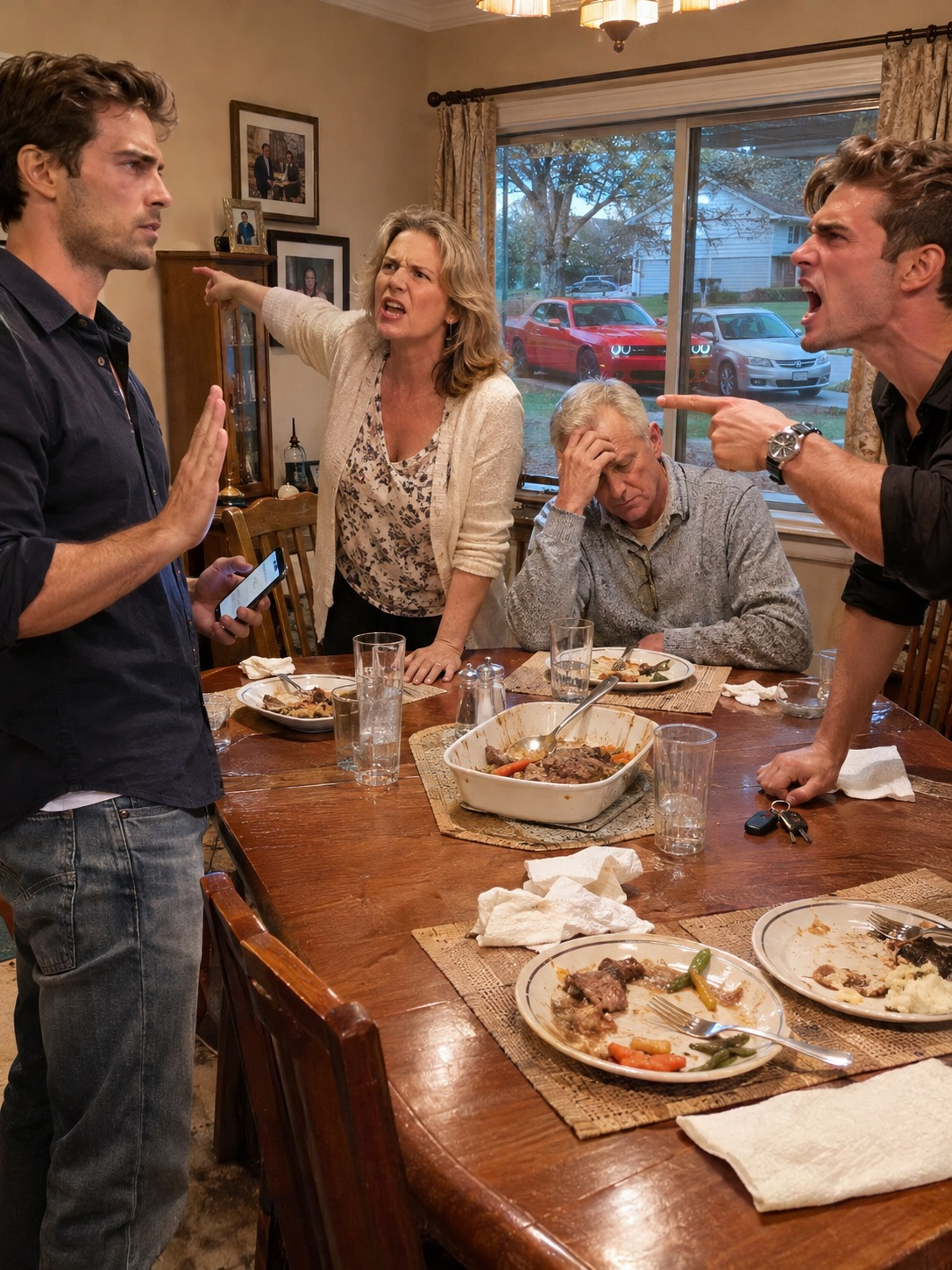
Now I knew about the electronics, the vacations, and the Challenger.
I wondered whether there had ever been investments at all.
The thought made me uncomfortable.
I didn't want to become someone who investigated every decision his brother made.
I simply wanted to stop being responsible for those decisions.
But the signature on the document had changed things.
This wasn't just about saying no anymore.
It was about protecting my name.
At 8:23, Melissa replied.
"Thank you for clarifying, Jake. The document was provided during Tyler's intake appointment. Our office does not consider you financially responsible for his obligations based on this form. I have flagged the signature as disputed and removed you from his listed support contacts pending review."
I exhaled.
At least someone was taking the issue seriously.
A second paragraph followed.
"Because the signature is disputed, I recommend that you retain copies of the documents and consider obtaining independent legal advice if you believe your information has been used without permission."
I read the message carefully.
Then I saved every attachment.
I created a folder on my computer.
TYLER FINANCIAL DOCUMENTS.
I hated the name.
I hated needing the folder.
But I saved everything.
The emails.
The intake form.
The signature page.
The spreadsheet.
The bank records.
Then I printed the disputed document.
The printer hummed in the corner of my office.
When the page emerged, I held it under the light.
My signature was even more obviously wrong on paper.
The first name was too careful.
The last name leaned in a direction mine never did.
It looked like someone had practiced.
I thought about confronting Mom.
The earlier intake form included the note "Confirmed by mother."
Had she signed it?
Had Tyler?
Had someone simply copied my name from another document?
I didn't know.
And I wasn't going to accuse anyone without evidence.
That was another difference between my family and me.
They were comfortable deciding what I should do based on what they wanted.
I needed to know what had actually happened.
I placed the paper in a folder.
Then I went downstairs to make dinner.
Chicken.
Rice.
Steamed vegetables.
Nothing complicated.
As the rice cooked, I checked my personal email again.
Three new messages.
All from Mom.
The first reminded me that Thanksgiving was approaching.
The second said Dad was worried about me.
The third was shorter.
"Tyler says you're refusing to help because you resent his success. I hope that's not true."
I stared at the sentence.
His success.
I thought about the Challenger.
The unpaid insurance.
The financial counselor.
The disputed signature.
Apparently, success had a very different definition in my mother's house.
I didn't respond.
Instead, I created a filter that moved Mom's emails into a separate folder.
I didn't delete them.
I wanted a record.
But I no longer wanted every message to interrupt my day.
After dinner, I sat on the couch with my book.
I managed almost twenty pages.
That felt like an accomplishment.
At nine thirty, my doorbell rang.
I froze.
Nobody had told me they were coming.
I walked toward the front window and looked outside.
Dad's truck was parked at the curb.
He stood on the porch holding a small paper bag.
I considered not answering.
Then I saw his face.
He looked tired.
Not angry.
Not demanding.
Just tired.
I opened the door.
"Hey, Dad."
"Hey, son."
He lifted the bag.
"Your mother made banana bread."
I looked at it.
Of course she had.
In my family, food often arrived when an apology should have.
"Thanks."
He handed it to me.
For a moment, neither of us spoke.
Then he said, "Can I come in?"
I stepped aside.
Dad entered and looked around the living room.
He had helped me install the ceiling fan three years earlier.
He had also helped repair the back fence.
We had good memories together.
That was what made everything difficult.
My father wasn't a cruel man.
He was simply a man who had spent most of his adult life avoiding conflict.
And his avoidance had consequences.
"Coffee?" I asked.
"No, thanks."
He sat in the armchair near the window.
I remained standing.
"Mom send you?"
He looked uncomfortable.
"She knows I'm here."
"That's not what I asked."
He sighed.
"She wanted me to talk some sense into you."
I nodded.
"About the insurance."
"About everything."
I sat across from him.
Dad rubbed his hands together.
"Jake, I don't like what's happening."
"Neither do I."
"Your mother is upset. Tyler's upset. Thanksgiving is coming."
"I know."
"Can't we find a compromise?"
I looked at him.
"What compromise?"
He hesitated.
"Maybe you help with one month instead of three."
I felt a strange calm settle over me.
"Seventy dollars a week?"
He frowned.
"What?"
"That's roughly what you're asking me to contribute if I cover one month. Why not have Tyler put aside seventy dollars a week?"
Dad looked down.
"He's having trouble."
"Then he should sell the car."
He sighed.
"Jake, you know how proud he is of it."
"Why is his pride more important than my money?"
Dad didn't answer.
I leaned forward.
"Dad, do you know what happened after you left my office today?"
He looked up.
"What?"
"I received an email from a financial counselor."
His expression changed slightly.
"About Tyler?"
"Yes."
I watched him carefully.
"She sent me paperwork with my name listed as a source of financial support."
Dad frowned.
"Well, you've helped him before."
"That's not the problem."
I reached for the folder on the coffee table.
I removed the signature page and handed it to him.
"Someone signed my name."
Dad stared at the paper.
For several seconds, he didn't speak.
Then he adjusted his glasses.
"Are you sure?"
I felt a sharp flash of frustration.
"Dad, I know my own signature."
"Of course. I just meant—"
"I didn't sign it."
He looked back at the page.
"Maybe Tyler misunderstood something."
"How do you misunderstand signing someone else's name?"
Dad swallowed.
I watched him study the document.
Then something happened.
His expression changed.
Not dramatically.
Just a slight tightening around his mouth.
A pause that lasted too long.
"Dad?"
He looked up.
"Yes?"
"Have you seen this before?"
"No."
The answer came quickly.
Too quickly.
I waited.
He looked back at the document.
"At least, not this exact page."
My stomach tightened.
"What does that mean?"
He removed his glasses.
"Your mother mentioned Tyler was speaking with someone about his finances."
"When?"
"A few weeks ago."
"Did she mention me?"
Dad hesitated.
"She said he needed to show he had family support."
I stared at him.
"And what did you say?"
He rubbed his forehead.
"I told her you had already helped him a lot."
"Did you tell her I would keep helping?"
"No."
I waited.
Dad looked away.
"I don't think I did."
I felt the room grow very quiet.
"Dad, I need you to be honest with me."
"I am."
"Did Mom know my name was being used?"
He stared at the floor.
Finally, he said, "I don't know exactly what she knew."
It wasn't an answer.
But it was more than he'd admitted before.
I took the document back.
"Someone used my name without permission. I'm going to find out who."
Dad nodded slowly.
"That's fair."
I was surprised.
It was the first time he'd agreed with me without immediately defending Tyler.
Then he added, "Just don't do anything that would ruin your brother's future."
I stared at him.
There it was again.
Even now.
Even with a disputed signature in front of him.
Tyler's future was the priority.
"What about mine?" I asked.
Dad looked confused.
"What?"
"What about my future? My savings? My credit? My name?"
He opened his mouth.
Then closed it.
I stood.
"Dad, I love you. But I need you to understand something."
He looked up.
"I'm not paying Tyler's insurance. I'm not agreeing to be responsible for his debts. And I'm not going to keep pretending this is normal."
Dad nodded.
"I hear you."
"Do you?"
He looked tired.
"I think I'm starting to."
For a moment, I wanted to believe that was enough.
Then he glanced toward the door.
"Your mother won't take this well."
I almost laughed.
"That's not something I can control."
He stood.
I walked him to the porch.
Before leaving, he turned toward me.
"Jake, I really do want us all together for Thanksgiving."
"I know."
"Your mother loves you."
"I know that too."
He looked relieved.
Then I added, "But I'm not paying eight hundred forty dollars to prove I love her back."
His expression fell.
He nodded once.
Then walked to his truck.
I watched him drive away.
When I returned inside, the banana bread sat untouched on the kitchen counter.
I put it in the refrigerator.
Then I opened my laptop.
I searched for a local attorney who handled consumer financial disputes.
I wasn't ready to accuse anyone of fraud.
But I wanted to understand my rights.
I wrote down two names.
Saved their phone numbers.
Then checked my credit reports through the appropriate reporting services.
Nothing unusual appeared.
No unfamiliar accounts.
No unexpected inquiries that I could identify.
I felt some relief.
The disputed form might have been nothing more than an attempt to make Tyler's finances look better.
But I wasn't going to assume that.
I placed a reminder on my calendar to follow up with Melissa the next morning.
Then I opened my email one final time.
Mom had sent another message.
"Your father says you showed him some paperwork. Please stop making your brother's situation worse. He's already under enough pressure."
I stared at it.
She knew.
Dad had barely left my house, and she already knew about the document.
I typed a response.
"Mom, someone signed my name on a financial form without my permission. This is serious. I need to know whether you or Tyler had anything to do with it."
I waited.
No answer.
I checked the time.
10:14 p.m.
I was exhausted.
I closed the laptop.
Then I heard my phone vibrate.
An unfamiliar number.
I ignored it.
A second message arrived.
Then a third.
I opened the conversation.
The first message read:
"Jake, this is Tyler. I'm using a friend's phone because you blocked me."
The second:
"You need to stop talking to people about my finances."
The third:
"Mom told me what you're doing. You're going to make everything worse."
I stared at the screen.
Then another message appeared.
"Just call me. We can work this out."
I didn't respond.
I blocked the number.
A minute later, another unfamiliar number called.
I let it go to voicemail.
Then another.
I turned my phone to Do Not Disturb.
For ten years, Tyler had relied on persistence.
If I didn't answer, he called again.
If I refused, he involved Mom.
If Mom couldn't convince me, Dad appeared.
Every boundary became a challenge.
Every refusal became a negotiation.
This time, I wasn't negotiating.
I opened my contacts and checked the blocked numbers.
Mom.
Dad.
Tyler.
Then I checked my email filters.
Everything was in place.
I wasn't disappearing to punish them.
I was creating enough distance to think clearly.
There was a difference.
I turned off the kitchen light.
Walked upstairs.
Changed into pajamas.
And climbed into bed.
For a while, I lay awake listening to the house settle.
I thought about Thanksgiving.
The empty chair.
Mom's anger.
Dad's disappointment.
Tyler's resentment.
I wondered whether they would eventually understand.
Or whether they would simply find someone else to blame.
I didn't know.
What I did know was that I couldn't keep living the way I had been.
My phone remained silent on the nightstand.
I closed my eyes.
At 11:37 p.m., the doorbell rang.
I sat up.
A second ring followed.
Then a third.
I reached for my phone and opened the security camera feed.
The porch light illuminated the front steps.
Nobody was standing directly in front of the door.
But a white envelope lay on the welcome mat.
I frowned.
Then movement appeared at the edge of the camera.
Someone stepped out of the shadows beside my garage.
I leaned closer to the screen.
The person turned toward the camera.
And I recognized the face immediately.
It was Melissa Grant.
She looked directly into the lens, raised a thick folder toward the camera, and said something I couldn't hear.
Then she pointed toward the street.
A car was parked across from my house.
Its headlights were off.
The driver's door opened.
And someone began walking toward my porch.






Comments 0