My father's signature was sitting above mine on a document I had never seen before.
And according to the final paragraph, I owed the bank more than $600,000.
I stared at the screen.
Read the sentence again.
Then a third time.
ADDITIONAL GUARANTOR: SLOAN WHITMORE
My full legal name.
My date of birth.
The last four digits of my Social Security number.
And beneath everything, a signature that looked disturbingly similar to my own.
For thirty-six months, I had quietly sent my parents three thousand dollars to help them keep their mansion.
Now someone was claiming I had personally guaranteed a massive portion of their debt.
There was only one problem.
I had never signed that agreement.
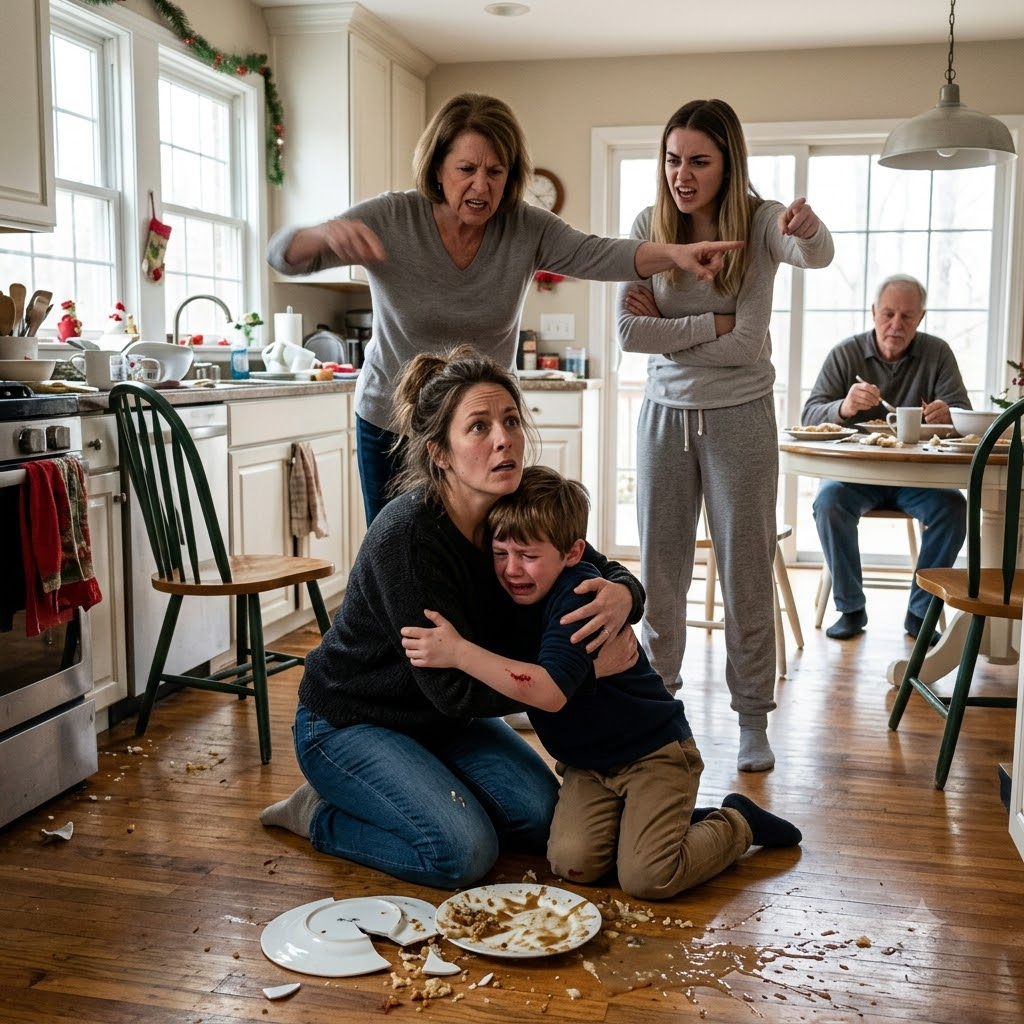
And the person who would have benefited most from it was the same man who had told my bleeding son to eat outside or starve.
My father.
I didn't scream.
I didn't throw my laptop.
I didn't call Tobias and demand an explanation.
I did what fifteen years of working with financial documents had trained me to do.
I checked the details.
The document was dated September 14, three years earlier.
That was two days after my father had first called asking for help with the mortgage.
I remembered that week clearly.
Knox had just started first grade.
I'd been working late on a complicated commercial lending review.
My father had called three times before I finally answered.
"Sloan, sweetheart, I'm embarrassed to ask."
That was how he'd begun.
Not with an explanation.
Not with a statement of his finances.
With embarrassment.
He knew exactly which emotion would make me vulnerable.
I'd spent my entire childhood trying to earn his approval.
And when he finally sounded as though he needed me, I mistook desperation for love.
I opened my original email from that September.
There it was.
Dad: Just sign this acknowledgment so my accountant can record the payments properly. Nothing complicated. Love you.
I remembered clicking the electronic signature link.
I remembered seeing a short agreement confirming that my monthly transfers were voluntary family assistance.
I had never agreed to guarantee the mortgage.
Never agreed to assume my father's debt.
And certainly never agreed to place my own assets at risk.
Yet the document on my screen said otherwise.
I scrolled to the final page.
The signature block was accompanied by an electronic certificate.
My name.
A timestamp.
An IP address.
And a device identification code.
I copied everything into a separate file.
Then I opened the properties of the PDF.
The document had been created six months after the date printed on its first page.
I stopped breathing for a moment.
That didn't automatically prove fraud.
Documents could be rescanned, reissued, or compiled later.
But it was a discrepancy.
And discrepancies were where investigations began.
I saved the original email and attachment without modifying them.
Then I looked at the sender.
Halden Advisory.
The name was familiar.
Not because I'd worked with them.
Because my father had mentioned their senior accountant at nearly every family gathering for the past decade.
Martin Halden.
His golf partner.
His financial adviser.
The man who supposedly helped Tobias manage his investments.
I opened a new email.
Who are you, and how did you obtain this document?
I hesitated.
Then added:
If you believe my signature was used without authorization, I need the original records and an explanation of your involvement.
I clicked send.
The reply came less than a minute later.
Ms. Whitmore, I cannot explain everything by email. But please do not contact your father until we speak. There are documents he believes were destroyed.
I stared at the message.
Then I heard a small voice behind me.
"Mom?"
I slammed the laptop halfway closed.
Knox stood in the kitchen doorway.
His hair was messy.
His Christmas pajamas hung loosely from his shoulders.
He held his injured arm against his chest.
"Hey, buddy."
He rubbed his eyes.
"Are you working?"
"Just finishing something."
He looked at the laptop.
"Is it because of Grandma?"
I felt something tighten inside me.
"No, sweetheart. This isn't your responsibility."
He stepped closer.
"Are you in trouble?"
I pushed my chair back and opened my arms.
He came immediately.
I held him against me.
"No," I whispered. "I'm not in trouble."
It wasn't entirely true.
But I intended to make it true.
I made Knox a cup of warm milk and sat with him on the couch until he fell asleep again.
His little hand stayed wrapped around two of my fingers.
I watched him breathe.
Nine years old.
Nine years of scraped knees, school projects, birthday candles, and bedtime stories.
Nine years of teaching him that kindness mattered.
That mistakes could be forgiven.
That people who loved you didn't deliberately humiliate you.
And in one Christmas dinner, my parents had challenged every lesson I'd tried to give him.
I looked at the bandage on his arm.
Then at his sleeping face.
My family had spent decades convincing me that obedience was the price of belonging.
I wasn't going to let them teach my son the same lesson.
When Knox was settled safely in bed, I returned to the kitchen.
It was almost midnight.
My phone showed seven missed calls.
Three from Genevieve.
Two from Blair.
Two from Tobias.
I had muted their notifications after leaving the mansion.
There were messages too.
The first came from my mother.
GENEVIEVE: Your behavior tonight was disgraceful. Your father is furious.
The second:
GENEVIEVE: You will apologize before coming back into this house.
Then Blair.
BLAIR: Seriously? You're ignoring everyone now? Grow up.
Another message followed.
BLAIR: And I still need you to confirm the business payment. Don't punish me because your kid misbehaved.
I read that one twice.
Then I opened my father's message.
It was shorter.
TOBIAS: We need to discuss the mortgage payment schedule tomorrow. Call me.
No mention of Knox.
No question about his injury.
Not one word about what had happened at dinner.
Just money.
I placed the phone beside my laptop.
For the first time, I wondered whether my family had ever seen me as anything other than a source of funds.
The following morning, I woke before sunrise.
Knox was still sleeping.
I made coffee, opened my financial records, and began reconstructing every payment I had made to my parents.
Not just the mortgage.
Everything.
I created a spreadsheet.
Date.
Amount.
Recipient.
Purpose.
Supporting documentation.
The first mortgage transfer had been three thousand dollars.
So had the second.
And the third.
Thirty-six payments.
One hundred and eight thousand dollars.
Then there were the emergency expenses.
A property tax shortfall.
Seven thousand four hundred dollars.
A homeowners insurance payment.
Four thousand eight hundred.
A replacement heating system.
Nine thousand two hundred.
My mother's medical deductible, which she later described as an unnecessary inconvenience.
Three thousand six hundred.
And an emergency payment for a supposed investment account problem.
Eleven thousand dollars.
I leaned back.
I had never added them together before.
I had been too busy solving each crisis as it arrived.
The total was already approaching one hundred and fifty thousand dollars.
And that didn't include Blair.
I opened the folder containing her business documents.
BLAIR WHITMORE — LUXURY PAW SPA
The name still irritated me.
Blair had spent six months choosing a logo and approximately six days researching whether her business could actually make money.
When she first announced her plan, my parents had celebrated as though she'd been appointed CEO of a Fortune 500 company.
My mother had hosted a champagne dinner.
My father had called Blair his entrepreneurial daughter.
I remembered sitting quietly at the table.
Nobody mentioned that I had just received a promotion at work.
Nobody asked how my career was going.
Then, four months after opening, Blair called me crying.
Her equipment financing had fallen through.
She needed a guarantor.
Twenty thousand dollars.
"Please, Sloan. You're the only one who understands finance."
I'd said no at first.
Then my mother called.
Then my father.
By the end of the week, I'd signed the guarantee.
Now I opened the most recent statement.
The loan was behind.
Two payments.
Not one.
Two.
Blair had told me everything was current.
I checked the lender's notification history.
There had been a notice sent to the email address I used for the guarantee.
I had missed it among dozens of work-related messages.
The account was already at risk of default.
My stomach sank.
Unlike the mortgage, which I had merely been helping to pay, Blair's business loan involved a guarantee I knew I had signed.
That meant I couldn't simply walk away from the obligation.
I would need to speak with the lender and protect myself through the proper process.
I opened another spreadsheet tab.
LEGAL EXPOSURE
Then I typed two words beside Blair's loan.
CONFIRMED GUARANTEE.
Beside the mysterious mortgage document, I typed:
DISPUTED SIGNATURE.
There was a world of difference between the two.
And I intended to make sure the bank understood it.
At eight-thirty, my phone rang.
Dad.
I let it ring.
He called again.
I answered on the third attempt.
"Sloan."
His voice was clipped.
"Good morning, Dad."
"Don't take that tone with me."
"What tone?"
"You know exactly what I'm talking about."
I took a sip of coffee.
"How can I help you?"
He exhaled sharply.
"Your mother is very upset."
"Is Knox okay? Did anyone ask about his arm?"
Silence.
Then:
"That's not the issue."
"It is to me."
"Sloan, I'm not going to debate parenting with you. Your mother has expectations in her home."
"And I have expectations about how my child is treated."
He laughed without humor.
"You're becoming very difficult."
I looked at the financial spreadsheet.
One hundred and fifty thousand dollars.
That was what my difficulty had cost me.
"Is there something specific you wanted, Dad?"
"Yes. The mortgage payment."
I said nothing.
"The bank processes it at the beginning of the month. I need to know the funds will be there."
"I canceled the recurring transfer."
Silence.
Not the ordinary silence of someone considering a response.
The complete absence of sound that follows an unexpected disaster.
Then:
"You did what?"
"I canceled it."
"Why?"
"Because I'm no longer paying your mortgage."
His voice hardened.
"Don't be ridiculous."
"I'm serious."
"You made a commitment."
"I agreed to help you temporarily. I've been helping for three years."
"You cannot simply stop."
"I can stop voluntary payments from my own account."
Another pause.
Then he said something that made the hairs on my arms rise.
"That may not be entirely true."
I sat straighter.
"What does that mean?"
"Nothing. You're emotional. We'll discuss this when you've calmed down."
"Dad."
"What?"
"Did you ever put my name on a mortgage document?"
He didn't answer.
I waited.
"Why would you ask something like that?"
"Because I received a document last night."
A sharp breath.
"What document?"
"Schedule B."
The silence that followed was different.
This time, I heard movement.
A chair scraping.
A door closing.
When my father spoke again, his voice was lower.
"Where did you get that?"
My fingers tightened around the phone.
"So you know what it is."
"Sloan, listen carefully. Do not discuss family financial matters with outsiders."
"Did you sign my name?"
"You're making accusations you don't understand."
"Then explain it."
He ignored the question.
"Who sent you that document?"
I stared at the wall.
"Was it Martin Halden?"
My father cursed under his breath.
I had never heard him sound like that.
Not frightened exactly.
But suddenly uncertain.
"Sloan, you need to bring whatever you received to the house."
"No."
"Today."
"No."
"This is serious."
"I know."
"You could damage this family."
I looked toward Knox's bedroom.
The door was slightly open.
His stuffed dinosaur sat on the dresser.
"You should have thought about that yesterday."
My father's breathing grew heavier.
"You're letting one unfortunate dinner incident cloud your judgment."
"One incident?"
"Your mother lost her temper. It happens."
"She threw a plate at a nine-year-old."
"Don't exaggerate."
"Knox was bleeding."
"He wasn't seriously injured."
Something cold settled inside my chest.
"How would you know? You never checked."
He said nothing.
Then, quietly:
"You have no idea what you're risking."
I looked at the mysterious document on my screen.
"Then maybe it's time I found out."
I ended the call.
My hands were steady.
That frightened me more than anger would have.
At nine-fifteen, I contacted an attorney.
Her name was Rebecca Ellis.
We had worked together on several commercial financing matters.
She specialized in financial disputes, contractual liability, and fraud-related civil litigation.
I trusted her judgment.
More importantly, I trusted her to tell me things I didn't want to hear.
When I explained the situation, she didn't interrupt.
I told her about the voluntary mortgage payments.
The missing page.
The electronic signature.
The disputed guarantee.
The suspicious PDF creation date.
And my father's reaction.
When I finished, Rebecca was silent for several seconds.
Then she said, "Sloan, I need you to understand something."
"I'm listening."
"If your signature was forged, that's serious. But we cannot assume a document is enforceable merely because it has your name on it."
"I know."
"We need the lender's actual records, the original signing audit trail, and the complete agreement."
"Can you help?"
"Yes. But don't contact the person who sent the document again until we verify who they are."
I glanced at the email.
"Why?"
"Because we don't know whether they're a whistleblower, a legitimate records custodian, or someone trying to manipulate you."
That possibility hadn't occurred to me.
Rebecca continued.
"Preserve everything. Don't delete messages. Don't alter the files. And don't sign anything your father sends you."
"I won't."
"Also, the fact that you've been making payments doesn't automatically make you liable for the mortgage."
"I understand."
"Good. Because I suspect someone wants you to believe otherwise."
I swallowed.
"Can we meet today?"
"Two o'clock. Bring everything."
I thanked her and ended the call.
For the first time since Christmas dinner, I felt as though I had taken a step toward solid ground.
Then my phone buzzed.
A message from Blair.
BLAIR: Dad says you're threatening the family financially. Are you seriously this petty?
Another message appeared.
BLAIR: You know my business depends on those cards, right?
I stared at the screen.
She wasn't worried about my son.
She wasn't worried about our relationship.
She was worried about losing access to money.
I typed a response.
BLAIR: Your business is your responsibility. I will address my existing legal obligations, but I won't provide additional funding.
Three dots appeared immediately.
Then disappeared.
Then appeared again.
Finally:
BLAIR: Mom was right about you. You're selfish.
I didn't answer.
Five minutes later, she sent another message.
BLAIR: You'll regret embarrassing Dad.
I took a screenshot.
Saved it.
And returned to my records.
At ten-thirty, Knox came into the kitchen wearing his dinosaur slippers.
"Mom, can we have pancakes?"
I closed the laptop.
"Absolutely."
He climbed onto a stool.
"With chocolate chips?"
"Especially with chocolate chips."
He smiled.
A real smile.
The first one I'd seen since Christmas dinner.
I mixed the batter while he counted chocolate chips into a small bowl.
For twenty minutes, we were simply a mother and son making breakfast.
No mortgage.
No lawyers.
No threats.
Just pancakes.
When I placed his plate in front of him, he looked down.
Then he hesitated.
"Mom?"
"Yeah?"
"If I spill something, will you get mad?"
I froze.
The question was so quiet I almost missed it.
I set the spatula down.
"Knox, look at me."
He lifted his eyes.
"If you spill something, we clean it up. That's all."
"Even if it's a lot?"
"Even if it's the whole glass."
He considered that.
Then he nodded.
"Okay."
He picked up his fork.
And began eating.
I turned toward the sink so he wouldn't see the tears gathering in my eyes.
My parents had done more than ruin Christmas dinner.
They had made my son afraid to make a mistake in his own home.
I could forgive many things.
But I would never forget that.
After breakfast, I arranged for Knox to spend the afternoon with my trusted neighbor, Mrs. Carter, who had watched him occasionally since he was a toddler.
Then I prepared for my meeting with Rebecca.
I printed the payment records.
Organized the emails.
Saved copies of the disputed documents.
I was placing everything into a folder when another message arrived from the unknown sender.
Ms. Whitmore, your father knows you received Schedule B. He contacted our office this morning.
I read it twice.
A second message followed.
He demanded that the original signing records be destroyed.
My stomach tightened.
I typed:
Who are you?
The reply came immediately.
My name is Evelyn Price. I handled document processing for Halden Advisory. I have copies of the original audit records.
I stared at the screen.
Then another message appeared.
There is something else you need to know. The disputed guarantee was not the only document submitted using your identity.
My pulse quickened.
I reached for my phone to call Rebecca.
Before I could, Evelyn sent one final message.
I am coming to your attorney's office at two. Please make sure you're there. I will bring the original file.
I forwarded the exchange to Rebecca.
Her response arrived a few minutes later.
Do not meet her alone. I'll arrange for my office to verify her identity and receive the documents securely.
I agreed.
Then I looked at the clock.
Eleven forty-seven.
Just over two hours until the meeting.
I thought about calling my father again.
Demanding answers.
Telling him I knew someone had used my identity.
But Rebecca had warned me not to.
And for once, I was going to follow advice instead of my family's demands.
I closed the folder.
Placed it in my bag.
And went to check on Knox.
He was sitting on the living room rug, building a spaceship out of plastic bricks.
"Mom?"
"Yes, sweetheart?"
"Are we still going to have Christmas?"
I sat beside him.
"Of course."
"But Christmas was yesterday."
I smiled.
"Then we'll have our own Christmas."
He thought about that.
"With pizza?"
"With pizza."
"And a movie?"
"Definitely a movie."
He leaned against me.
"Just us?"
I kissed the top of his head.
"Just us."
For a moment, I felt something I hadn't experienced in years.
Relief.
Not because the problems were solved.
They weren't.
But because I no longer had to pretend that my parents' approval was the most important thing in my life.
My son was safe.
And I was finally doing something to keep him that way.
At one-fifty, I arrived at Rebecca's office in Midtown Atlanta.
The receptionist directed me to a conference room.
Rebecca was already waiting.
She wore a navy blazer and had three legal pads arranged neatly beside her laptop.
"How's Knox?" she asked.
The question nearly undid me.
"He's okay. Physically."
Rebecca nodded.
"That's what matters first."
I placed my folder on the table.
She reviewed the documents carefully.
Then she opened the disputed guarantee.
Her expression changed.
"What?" I asked.
She pointed toward the signature certificate.
"This document references an authentication method that doesn't match the service listed on your original agreement."
I leaned forward.
"Meaning?"
"Meaning we need to determine whether this certificate is genuine, incomplete, or fabricated."
She looked at the document again.
"And there's another discrepancy."
"What?"
"The guarantor identification section lists an address."
I frowned.
"That's my parents' address."
"Exactly."
"I've never lived there as an adult."
Rebecca looked up.
"Then we need to establish why that address was used for your supposed authorization."
Before I could respond, the conference room telephone rang.
Rebecca answered.
"Yes?"
She listened.
Her expression tightened.
"Send her up."
She hung up.
"Evelyn Price is here."
My stomach twisted.
Rebecca stood.
"Remember, Sloan. We listen first. We verify everything."
I nodded.
Footsteps approached outside.
Then someone knocked.
Rebecca opened the door.
A woman in her late forties stood in the hallway, holding a thick brown envelope against her chest.
Her face was pale.
She looked from Rebecca to me.
"Are you Sloan Whitmore?"
"Yes."
She swallowed.
"I worked on your father's account."
Rebecca stepped aside.
"Please come in."
Evelyn entered.
She placed the envelope on the conference table.
Her hands were trembling.
"I shouldn't have kept these," she whispered. "But when I saw what happened to the records, I knew someone would eventually need them."
Rebecca pulled out a chair.
"Before we discuss the contents, I need to confirm your identity and how you obtained these materials."
Evelyn nodded.
"I understand."
She reached into her purse and produced identification, an old employee badge, and a letter bearing Halden Advisory's name.
Rebecca examined them.
Then Evelyn placed one finger on the envelope.
"Your father didn't just submit a guarantee, Ms. Whitmore."
My mouth went dry.
"What else did he submit?"
Evelyn looked at Rebecca.
Then back at me.
"There's a reason the bank believes you authorized more than monthly payments."
She slowly opened the envelope.
Inside were several documents.
A signature log.
A loan amendment.
And a sealed statement bearing my full name.
Evelyn lifted the statement.
"Before you read this, you need to understand that I tried to stop it."
Rebecca leaned forward.
"Stop what?"
Evelyn's eyes filled with tears.
She turned the statement toward me.
At the top was a date from three years earlier.
Below it was a photograph of an identification document.
My identification document.
But the photograph attached to the authorization record wasn't mine.
I stared at the unfamiliar woman's face.
Rebecca reached for the page.
Evelyn whispered, "That's the person who appeared at the signing appointment."
My heart slammed against my ribs.
Then Evelyn turned to the final page.
"There was a witness," she said. "Someone from your family."
She placed her finger over the witness's printed name.
Slowly, she moved it away.
And I saw the first letter.






Comments 0