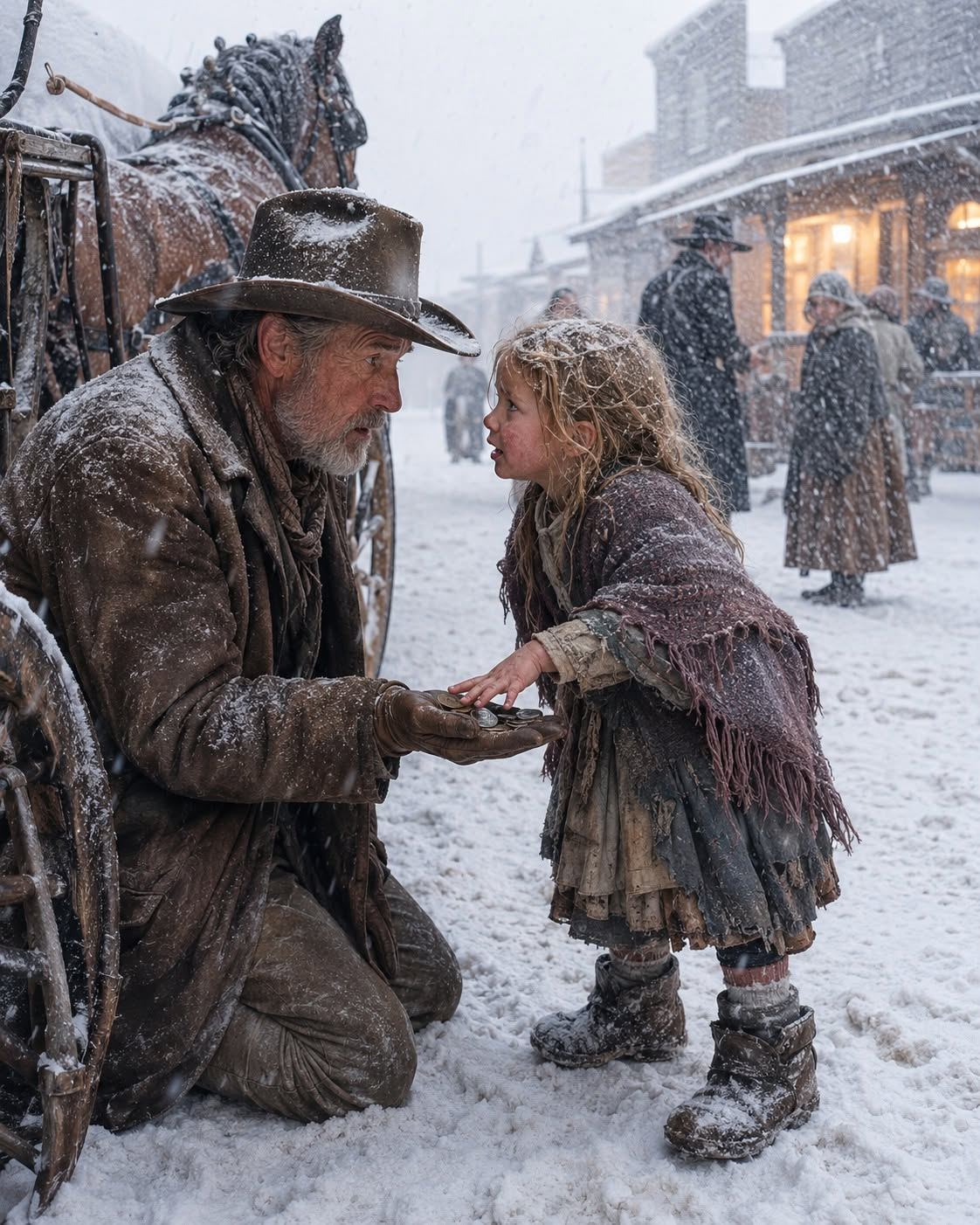
"Thomas, I believe it's time you learned what happened to your mother."
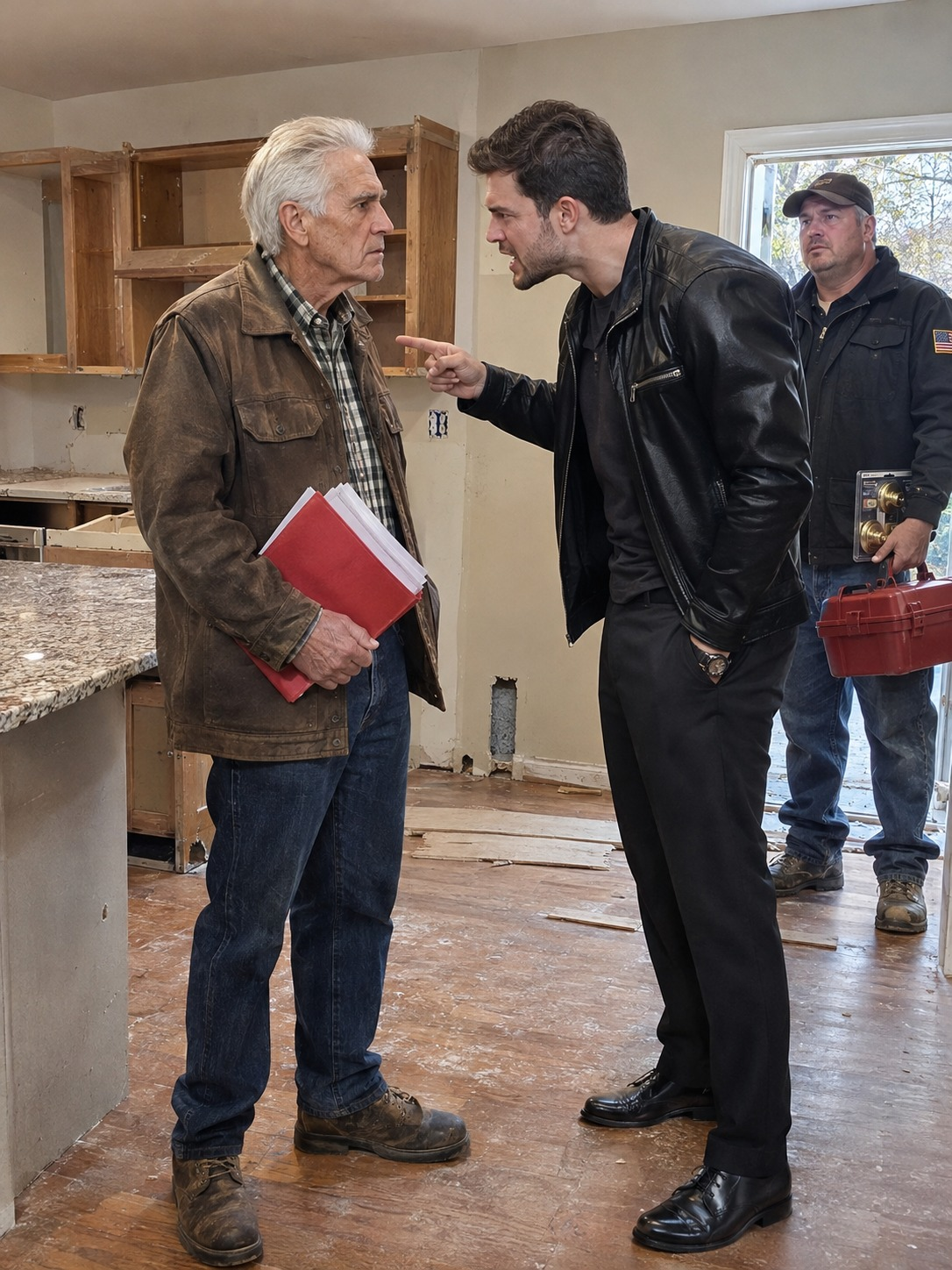
The man standing at the bottom of the basement stairs held an old photograph in his right hand. His silver hair was neatly combed, his black overcoat was spotless, and his expression carried the confidence of someone who had spent a lifetime believing nobody could challenge him.
Thomas raised his rifle.
"Put the photograph down."
The man smiled.
"Still pointing guns at people before asking questions. You really are William's son."
Thomas's jaw tightened.
"Who are you?"
The stranger stepped into the light.
"My name is Arthur Bennett. I was the county registrar for thirty-two years."
Thomas glanced at the old birth register.
The name matched the signature.
Arthur looked toward Grace.
"And you must be the girl everyone has been trying to find."
Grace stepped behind Caleb.
Arthur sighed.
"After all these years, you still make things difficult."
Caleb moved between them.
"You're not taking her anywhere."
Arthur looked at him.
"Your father said the same thing."
Thomas felt his anger rise.
"Tell me what happened to my mother."
Arthur examined the photograph in his hand.
"Margaret Calder was a stubborn woman. She believed that doing the right thing was more important than protecting her family."
"Answer me."
"She discovered the arrangement Edward had created. She found the original records, learned about the false guardianships, and threatened to expose everyone."
Thomas took another step forward.
"Did you kill her?"
Arthur smiled faintly.
"No. Your mother was already ill. But I made certain she couldn't interfere with our plans."
Thomas felt his stomach turn.
"What did you do?"
"I altered her medical records. I arranged for her letters to disappear. I made certain William believed that she had become increasingly confused."
Thomas stared at him.
"You separated my parents?"
"Your father was already suspicious. It was easier to let him believe she was unstable than to allow them to work together."
Caleb clenched his fists.
"You destroyed our family."
Arthur shrugged.
"Your family destroyed itself."
Thomas shook his head.
"No. You did."
Arthur's expression hardened.
He looked toward the staircase.
"Where is Nathan?"
Nobody answered.
Arthur seemed to understand.
"Briggs was supposed to meet me here."
Walter stepped forward.
"He's been arrested."
Arthur laughed.
"Then you've accomplished very little."
He reached inside his coat.
Thomas raised the rifle.
"Don't."
Arthur stopped.
For the first time, uncertainty crossed his face.
Thomas pointed toward the register.
"You're going to explain every signature in that book."
Arthur looked at Grace.
Then at Helen.
Then at the others.
"You have no idea how many people will be ruined if those records become public."
Margaret Ellis spoke from behind Thomas.
"Perhaps they should have thought about that before ruining the lives of children."
Arthur turned sharply.
Margaret stood at the bottom of the stairs.
She had arrived with Samuel and two ranch hands.
Behind them were several townspeople.
And among them stood Sheriff Briggs, his hands restrained.
Arthur's expression changed.
"How did you get here?"
Margaret looked at him.
"Because this time, nobody is staying silent."
Arthur attempted to reach for the door.
Thomas stepped in front of him.
"Don't move."
Arthur looked toward the men behind Margaret.
"You cannot arrest me without a warrant."
Walter held up the register.
"We have evidence of forged birth records, false guardianships, financial fraud, and the disappearance of children."
Margaret added several documents.
"And we have witnesses."
Arthur laughed bitterly.
"Children's stories. Old letters. A few photographs. You think that will be enough?"
Grace stepped forward.
"I remember you."
Arthur turned.
She was trembling, but her voice remained steady.
"You were at the mill when William Calder died."
Arthur said nothing.
"I saw you standing beside Silas. I heard you tell him to move the body."
Thomas looked at Grace.
Arthur's expression changed.
"That girl was seven years old. She remembers nothing."
Grace shook her head.
"I remember everything."
She looked at Thomas.
"I remember William telling me to hide behind the machinery. I remember him telling me that if anything happened, I should find Caleb."
Caleb lowered his eyes.
Grace continued.
"I remember the sound of the iron tool hitting the floor. I remember Silas dragging him outside. And I remember you telling Edward that the old man would never speak again."
Arthur stepped backward.
"Enough."
Grace did not stop.
"I also remember something else."
She reached into her coat and removed a small folded paper.
"My mother gave me this before she died."
Thomas took it.
It was a handwritten statement.
The writing belonged to William Calder.
I know who ordered the murder.
I know who changed the birth records.
I know who arranged the transfers.
It was Arthur Bennett.
Thomas looked up.
Arthur's face had gone pale.
The registrar tried to speak.
But Margaret stepped forward.
"William made copies of everything. The original documents were hidden at the mill. We have them now."
Arthur looked around the room.
For the first time, he seemed to understand that he had lost.
Samuel moved toward him.
"You're coming with us."
Arthur did not resist.
Briggs lowered his head.
Silas and Edward were already in custody, and now the man who had helped them conceal the operation was finally being taken away.
Thomas watched as the three men who had controlled so many lives were led upstairs.
He felt no satisfaction.
Only exhaustion.
And grief for everything that could never be returned.
The following morning, Thomas and Caleb traveled to Cheyenne with the documents.
Margaret accompanied them.
Walter Pike brought the financial records, while Helen and Grace gave sworn statements.
Emily agreed to testify about the hidden rooms and the children she had tried to protect.
Rose provided the evidence she had kept from the years she spent helping Grace.
The investigation lasted several months.
The authorities discovered that the operation had involved several properties across Wyoming. Children had been moved under false names, and families had been deceived through forged legal documents.
Edward Whitmore was charged with organizing the illegal transfers, fraud, and conspiracy.
Silas Reed was charged with kidnapping, unlawful confinement, and his role in William Calder's murder.
Nathan Briggs faced charges for falsifying public records, obstruction of justice, and accepting payments to protect the operation.
Arthur Bennett faced additional charges connected to the forged birth registrations and the concealment of evidence.
The old ledger proved essential.
So did William's recording.
Grace's testimony established what had happened at the mill.
The original records confirmed that the men had spent years hiding children behind false identities.
Several families who had been searching for their children finally received answers.
Not every reunion was possible.
Some children had grown up far from the people who loved them. Others had died before the truth came out.
But the missing names were no longer buried.
And nobody could pretend the disappearances had never happened.
For the first time in decades, Dry Creek began speaking openly about what had happened.
The town had not been innocent.
But it had a chance to become something better.
Three months after the arrests, Thomas returned to the northern bridge.
The snow had melted.
The river moved beneath the wooden boards, carrying fallen leaves toward the valley.
Caleb stood beside him.
For a while, neither spoke.
Then Thomas looked toward his brother.
"I keep thinking about Father."
Caleb nodded.
"Me too."
"Do you think he knew we would find everything?"
"I think he hoped we would."
Thomas looked at the water.
"He spent years trying to fix what happened."
"He made mistakes."
"So did we."
Caleb smiled faintly.
"That's what families do."
Thomas turned toward him.
"I should have listened when you tried to tell me."
Caleb looked at the river.
"I should have found a way to come home."
Thomas extended his hand.
Caleb looked at it for a moment.
Then he pulled his brother into an embrace.
Neither man tried to hide his tears.
They had lost twenty-four years.
No apology could bring those years back.
But they could decide what happened next.
And that was enough to begin.
Spring arrived slowly at the Calder ranch.
The white roses behind the main house began to bloom again.
Thomas had repaired the garden wall and replaced the old wooden bench where his mother used to sit.
He kept her letters in a small box inside his office.
Not hidden.
Not locked away.
They were part of the family history now.
The main house also changed.
The dining room, once a place where Thomas had eaten alone, became the center of the household.
Martha prepared meals for everyone.
Caleb moved into the old guest room and began helping Thomas manage the cattle operation.
Emily stayed at the ranch while she recovered from the years she had spent running and hiding.
Rose and Clara moved into a small cottage near the garden.
Annie was enrolled in the local school.
Lily helped Margaret organize a charitable program for children who needed safe homes and proper legal protection.
Grace chose to stay in Dry Creek.
She wanted to help identify the children whose records had been altered and reconnect them with their families whenever possible.
Helen remained close to her.
The two women had spent years protecting one another.
Now they finally had a place where they could live without looking over their shoulders.
One afternoon, Thomas found Clara sitting beside the white roses.
She was holding a small notebook.
He sat beside her.
"What are you writing?"
Clara showed him the page.
She had drawn a picture of the ranch.
There were horses in the pasture, flowers beside the house, and several people standing together.
Thomas recognized every face.
Rose.
Emily.
Annie.
Martha.
Caleb.
And himself.
He smiled.
"That's a good picture."
Clara looked at him.
"Do you think my mother will stay here?"
Thomas nodded.
"If she wants to."
"What about Emily?"
"She can stay too."
Clara considered that.
Then she pointed to the figure beside Thomas.
"Who's that?"
Thomas looked.
The drawing showed an older man standing beside him.
He recognized William.
"My father."
Clara nodded.
"Do you miss him?"
Thomas looked toward the garden.
"Every day."
"Was he a good man?"
Thomas thought carefully.
"He made mistakes. Some of them were very serious. But he loved his family, and when he understood what was happening, he tried to make things right."
Clara looked at the drawing.
"Then he was brave."
Thomas smiled.
"Yes. I think he was."
The ranch held its first family supper that spring.
The long dining table was filled with food.
Martha had prepared roasted chicken, potatoes, fresh bread, and apple pie.
Nobody sat according to rank or importance.
The children chose their own places.
Caleb sat beside Thomas.
Rose helped Clara with her plate.
Emily sat near Annie.
Grace and Helen shared stories from the old days, while Margaret laughed at something Walter said.
For the first time in many years, the house sounded like a home.
Thomas stood briefly and raised his glass.
"I want to say something."
Everyone looked toward him.
"I spent a long time believing that a family was something you inherited. A name. A property. A collection of memories."
He looked at Caleb.
"Then I learned that people can steal those things. They can change records, hide the truth, and make you believe that the people you love are gone."
He paused.
"But they cannot decide who deserves to be loved."
His eyes moved toward the children.
"Nobody at this table has to earn a place here. Nobody has to be grateful for being safe. And nobody will ever be treated as though they belong to someone else."
Rose wiped her eyes.
Martha smiled.
Thomas raised his glass.
"To the people who came home."
Everyone lifted their glasses.
"To home."
Later that evening, Thomas walked through the garden alone.
The air was warm.
The roses were opening beneath the evening light.
He stopped beside the largest bush and knelt.
He placed his mother's final letter beneath a small wooden marker.
It read:
Margaret Calder.
Beloved mother.
She taught us that love is stronger than blood, fear, or silence.
Thomas stood.
Caleb appeared beside him.
"Ready?"
Thomas nodded.
They walked toward the house together.
Before entering, Thomas glanced once more at the garden.
He thought about his mother.
His father.
His brother.
The children who had been lost.
And the people who had finally found their way home.
He could not change what had happened.
But he could make certain that the ranch would never again become a place where children disappeared.
The next morning, Thomas and Caleb opened the old cottage.
They removed the locked door, repaired the windows, and cleared the hidden room beneath the floor.
Instead of leaving it as a reminder of what had happened, they decided to turn the building into a small learning center for children who needed help with reading, writing, and schoolwork.
Clara suggested naming it the White Rose House.
Everyone agreed.
The first children arrived a few weeks later.
Annie helped them with their books.
Lily organized the shelves.
Emily taught the older children to write letters.
And Rose made certain there was always something warm to eat.
The ranch gradually became known for something entirely different.
Not for its wealth.
Not for its cattle.
But for being a place where children were welcomed, protected, and treated with dignity.
Thomas and Caleb continued running the property together.
Their relationship was not perfect. They sometimes disagreed, and old memories occasionally returned.
But they no longer allowed silence to grow between them.
They talked.
They listened.
And when something troubled one brother, the other stayed.
One evening, Thomas stood at the porch watching the children run through the garden.
Caleb came outside carrying two cups of coffee.
He handed one to his brother.
"Father would have liked this."
Thomas looked toward the white roses.
"I think he would."
Caleb followed his gaze.
"And Mother?"
Thomas smiled softly.
"She would have been proud."
Inside the house, Martha called everyone to supper.
Clara ran toward the porch.
"Thomas! Caleb! You're going to be late!"
The brothers laughed.
Thomas placed his cup on the railing and followed her inside.
For years, he had believed that his family had been taken from him.
Now he understood that family was not simply the people whose names appeared in a birth register or on a legal document.
It was the people who stayed.
The people who protected one another.
The people who told the truth, even when the truth hurt.
And most importantly, it was the people who made room at the table for someone who had nowhere else to go.
That night, every chair was occupied.
Every plate was filled.
And nobody was left waiting outside in the cold.
Comments 0