"She's right."
My father's words remained in the air.
For several seconds, I couldn't hear anything else.
The hospital entrance stood just outside the windshield. People walked through the automatic doors, carrying coffee, medical folders, and ordinary worries. Somewhere inside that building, I had once worked twelve-hour shifts, comforted frightened patients, and believed I understood what it meant to save a life.
Now I was sitting in a car with a man who had admitted to ordering the murder of the woman who had raised me.
I turned toward him.
"Say that again."
James looked down.
"I ordered the operation that led to Margaret's death."
Adam immediately stopped the car.
"What did you just say?"
My father closed his eyes.
"I didn't intend for her to die."
I stared at him.
"That doesn't change what you did."
He nodded.
"No. It doesn't."
Catherine sat motionless behind him. Her face had lost its color.
"James, you promised me you would never tell her like this."
He looked at her.
"I have no more lies left."
I opened the car door.
Adam caught my hand.
"Leah, wait."
I looked at him.
"I need to hear the truth."
He nodded and stepped out with me.
My father followed.
For the first time, I didn't feel the need to protect him from the consequences of his actions.
I wanted answers.
And I wanted them all.
We entered the hospital through the main doors.
Daniel had already contacted the local police and arranged for officers to meet us. He had also sent copies of the forged property documents, the photographs, and the recordings to a lawyer who specialized in financial crimes.
We found Robert near the administration entrance.
He was standing beside a metal case.
When he saw us, he immediately tried to walk away.
"Robert!" Daniel called.
The lawyer stopped.
"There's nothing to discuss."
Daniel approached him.
"Then you won't mind explaining why you're carrying evidence connected to a murder investigation."
Robert tightened his grip on the case.
"This is private legal property."
"Not anymore."
Before Robert could respond, two uniformed officers entered the corridor.
One approached Daniel.
"Mr. Hayes, we need you to come with us."
Robert looked toward my father.
James stepped forward.
"Tell them what you did, Robert."
Robert laughed nervously.
"You first."
My father nodded.
"You're right."
He looked at the officers.
"My name is James Bennett. I have information about the death of Margaret Whitmore, the attempted fraudulent transfer of her estate, and the accident involving Walter Bennett."
One officer took out a notebook.
"Are you admitting involvement?"
James looked at me.
Then he answered.
"Yes."
I felt Adam's hand tighten around mine.
The officers separated everyone and began collecting the documents.
Robert initially refused to surrender the metal case.
But Daniel produced a copy of the original storage agreement and the security photographs.
The officers opened it.
Inside were several recording devices, financial statements, and a collection of old correspondence.
The original recording was there.
So was another document.
A handwritten statement from Marcus Bennett.
Robert stared at it.
"That isn't supposed to be here."
Daniel examined the paper.
"Apparently, someone wanted the truth preserved."
The statement was dated three weeks before Margaret's death.
It contained a detailed account of the agreement between Marcus, Richard Hayes, and James.
It explained how they had planned to transfer the Whitmore property into a private development company.
It also described the payments made to several individuals who had helped alter the records.
Most importantly, it revealed that Margaret had discovered the scheme.
She had threatened to report them.
And they had decided to silence her.
I looked at my father.
"Did you sign this?"
He nodded.
"Yes."
"Did you know they intended to kill her?"
His eyes filled.
"I knew they were planning something. I didn't stop it."
I stepped away.
That was enough.
The officers took Robert into custody for questioning.
Melissa Grant was located in the administration department.
She agreed to provide a formal statement.
And before the afternoon ended, the original recording had been secured as evidence.
For the first time in years, the truth was no longer hidden inside a locked room.
It was finally in the hands of people who could investigate it.
Three days later, I sat inside a quiet conference room at the hospital.
Across from me sat Melissa Grant.
She looked exhausted.
Her hair was tied back, and her hands were clasped tightly on the table.
For a long time, neither of us spoke.
Finally, I asked:
"Why did you give me that note after the accident?"
She looked down.
"Because I was afraid."
"Of what?"
"Of Marcus."
She explained that she had worked in hospital administration for several years.
During that time, she had discovered unusual requests for patient information connected to the Whitmore estate.
She had initially believed the requests were legitimate.
Then she discovered that my name had been included in a legal appointment I had never accepted.
She began investigating.
When she learned that I had been injured while saving Walter, she recognized my name from the forged documents.
She realized that someone might try to use my medical records to locate me.
So she left the anonymous note.
It was intended as a warning.
"Why didn't you tell the police?"
She looked ashamed.
"Because I had signed documents under pressure. I thought I would be accused of participating in the fraud."
"Did you?"
"I never knowingly forged your signature. But I did help transfer files without properly verifying their authorization."
I studied her face.
"Do you regret it?"
She nodded.
"Every day."
I didn't immediately forgive her.
But I understood that fear had made several people in this story do terrible things.
I also understood that understanding someone wasn't the same as excusing them.
Melissa agreed to cooperate fully with the investigation.
She provided access records, internal correspondence, and copies of the original hospital appointment forms.
Those records established that my professional identity had been used without my consent.
My nursing license was cleared of any connection to the fraudulent transactions.
The hospital also issued a formal statement confirming that I had never authorized the property transfer.
It was a small victory.
But after everything, it mattered.
The investigation lasted several months.
The authorities eventually confirmed that Marcus Bennett had survived his supposed death and had continued operating under false identities.
He had worked with Richard Hayes and Evan Coleman to manipulate the Whitmore estate records.
Kyle had helped arrange access to Walter's financial information and had driven the SUV during the accident.
Robert had concealed evidence and assisted in preparing fraudulent legal documents.
James had knowingly participated in the original scheme and had later helped conceal Margaret's death.
The evidence also established that Marcus had arranged the confrontation that led to the highway accident.
Kyle had driven the vehicle aggressively, causing the collision.
Walter had been trapped inside.
I had stopped to help.
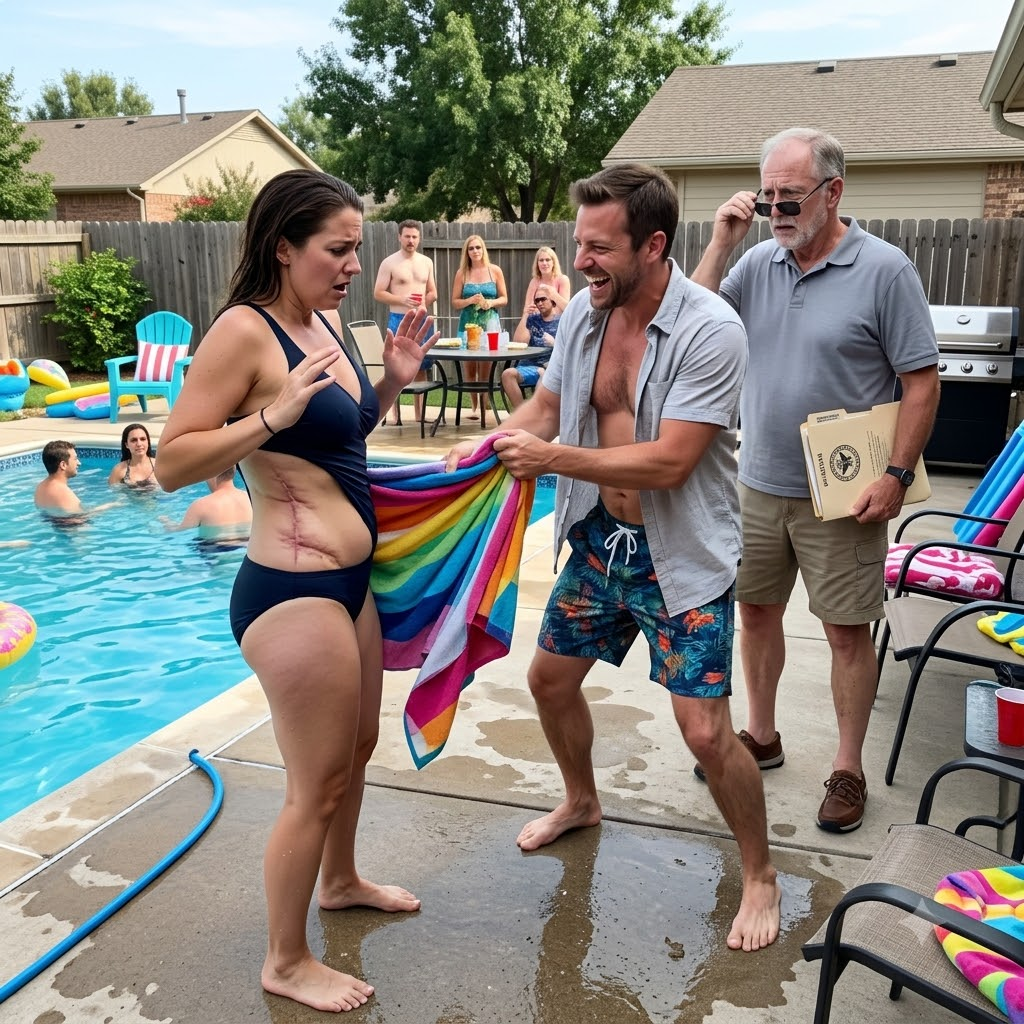
And the injuries that left me with twenty-three stitches had become an essential part of the evidence.
The newspaper clipping Walter had carried for years became one of the most important pieces of the investigation.
It proved that I had been the nurse who rescued him.
The hospital records established the date and extent of my injuries.
The recovered recordings connected the people involved.
And Margaret's original trust agreement exposed the fraudulent property transfers.
Marcus was eventually arrested.
Richard Hayes was located and charged.
Robert entered into a cooperation agreement after providing additional financial records.
Kyle admitted his involvement.
His confession confirmed that he had known about the planned confrontation but had underestimated how dangerous it would become.
The charges were serious.
The legal proceedings took time.
But the people responsible could no longer hide behind family relationships, false names, or missing documents.
The property was frozen while the courts reviewed the original trust.
And the hospital remained protected from the fraudulent transfer.
For the first time, I could breathe without wondering who might be watching me.
The hardest part was deciding what to do about my father.
James remained in custody while the investigation continued.
He had cooperated with the authorities, but cooperation did not erase his actions.
One afternoon, I visited him.
He looked smaller than I remembered.
His hair had become almost entirely gray.
He stood when I entered.
"Leah."
I sat across from him.
For several seconds, neither of us spoke.
Then he said:
"I don't expect you to forgive me."
I looked at him.
"Good."
He nodded.
"I deserve that."
I placed a photograph on the table.
It showed him holding me as a newborn.
Beside him was Catherine.
He stared at it.
"Where did you get that?"
"From the storage facility."
He touched the edge of the photograph.
"I remember that day."
"Then why did you take so much from me?"
He closed his eyes.
"I convinced myself that I was protecting you."
"You let me believe my mother was dead."
"I know."
"You let me visit your grave."
His face crumpled.
"I know."
"You let me build my entire life around a lie."
He wiped his eyes.
"I am sorry, sweetheart."
I looked down at my hands.
"I loved you."
He nodded.
"I know."
"I still remember you teaching me how to ride a bicycle. I remember you waiting outside my school. I remember you sitting beside me when I had my first surgery."
He listened without interrupting.
"Those memories were real, Dad. But so was what you did."
He lowered his head.
I stood.
"I don't know whether I can forgive you."
He didn't ask me to.
And that was the first honest thing he had given me in years.
Before leaving, I turned toward him.
"I hope you tell the truth about everything. Not because it will make things easier for you. Because the people you hurt deserve to know."
He nodded.
"I will."
I walked out.
I didn't look back.
But I didn't hate him either.
I simply understood that loving someone did not mean allowing them to destroy your life.
Catherine and I began rebuilding our relationship slowly.
We didn't suddenly become mother and daughter in the way people imagined.
Thirty-three years of separation could not disappear because of a single conversation.
There were awkward silences.
Unanswered questions.
Memories she carried that I couldn't share.
And memories I had that she had never witnessed.
But we tried.
She told me about my birth.
About the first time I opened my eyes.
About the tiny fingers that wrapped around hers.
She told me that Margaret had held me for hours when I was a baby because she was afraid to put me down.
She told me how my grandmother used to sing while preparing breakfast.
And she told me that my father had once promised to bring me back to her when the danger passed.
That promise had never been fulfilled.
One afternoon, Catherine invited me to her home.
It was a modest little house with a small garden.
There were flowers beside the front steps.
A photograph of Margaret stood on the living room shelf.
Beside it was another photograph.
Me.
At my nursing school graduation.
I stared at it.
"Where did you get this?"
Catherine smiled.
"Someone sent it to me."
I looked at her.
"Who?"
"Your father."
I sat down.
She placed a cup of tea in front of me.
"I watched you grow up from a distance."
I looked at the photograph.
"Why didn't you come to my graduation?"
Her eyes filled.
"Because I was afraid of bringing danger into your life."
I took her hand.
"I understand why you were afraid."
She looked at me.
"But?"
"But I wish someone had trusted me enough to tell me the truth."
She nodded.
"You're right."
We sat together for a long time.
Then she opened a drawer and removed a small wooden box.
Inside were birthday cards.
Thirty-three of them.
One for every year of my life.
Some were handwritten.
Others contained small photographs.
None had ever been mailed.
I picked up the first card.
It was addressed:
To my little Leah, on your first birthday.
I began crying.
Catherine sat beside me.
"I never stopped being your mother."
I leaned against her shoulder.
For the first time, I didn't feel as though I was searching for someone who had disappeared.
I had found her.
And we had time to begin again.
The legal settlement was finalized several months later.
The court restored the Whitmore estate to the original family trust.
The fraudulent transfer was declared invalid.
The hospital retained its rightful protection under the charitable agreement.
And because Margaret had explicitly named me as the successor beneficiary, I became responsible for overseeing the estate.
I didn't want to turn it into a private fortune.
I wanted to honor what Margaret had intended.
With Catherine's support, I established the Margaret Whitmore Emergency Care Foundation.
Its purpose was simple.
To provide financial assistance to people who needed urgent medical treatment but couldn't afford it.
The first program covered emergency transportation, trauma treatment, and temporary support for families during long hospital stays.
We also funded nursing scholarships.
Walter contributed part of his personal investment income.
Despite everything that had happened, he wanted to help.
Daniel became an independent financial adviser to the foundation.
He ensured that every payment was documented and every account remained transparent.
The first scholarship was awarded to a young nursing student named Emily Carter.
She came from a working-class family and had nearly abandoned her education because of medical bills at home.
When I handed her the award letter, she began crying.
I smiled gently.
"You don't have to give up your dream."
She hugged me.
And I realized that Margaret's legacy had finally become what she wanted it to be.
Not a fortune.
Not a piece of land.
A chance for someone else to have a better life.
Kyle's legal proceedings were more difficult.
Adam struggled with the fact that his brother had participated in the events surrounding Walter's accident.
He had spent weeks avoiding family gatherings.
Eventually, he agreed to meet Kyle through the appropriate legal arrangements.
I didn't attend.
That was something Adam needed to handle himself.
When he returned home, he sat beside me on the sofa.
"He's admitted everything," he said.
I looked at him.
"How do you feel?"
He took a long breath.
"Angry."
I nodded.
"And?"
"Sad."
He looked down.
"I keep remembering when we were kids. He used to wait for me after school. He taught me how to drive."
I placed my hand over his.
"You can remember the good things without pretending the bad things didn't happen."
He looked at me.
"Do you think I'll ever forgive him?"
"Maybe. But you don't have to decide today."
He nodded.
Then he leaned back.
"I don't want our family to be defined by what he did."
I smiled faintly.
"Neither do I."
We began building a life that wasn't centered on the Bennett family disputes.
Adam returned to work.
I returned to nursing.
We moved into a quieter apartment with a small balcony and enough room for a home office.
For the first time since our wedding, we could enjoy ordinary days.
Breakfast together.
Evening walks.
Quiet conversations.
No unexpected visitors.
No mysterious envelopes.
No hidden documents.
Just us.
One year after the pool party, Walter invited everyone to a small gathering at the foundation's new medical assistance center.
The building stood on part of the original Whitmore property.
The remaining land had been preserved, and the hospital development was moving forward under the charitable trust.
A large plaque had been installed near the entrance.
It read:
THE MARGARET WHITMORE EMERGENCY CARE CENTER
Beneath the name was a smaller inscription:
For every life worth saving.
I stood beside Catherine and Walter as the guests gathered.
Adam approached with two glasses of water.
"Ready?"
I smiled.
"Almost."
Walter looked at me.
"I wish Margaret could see this."
Catherine touched the plaque.
"She would have been proud."
Walter nodded.
"She would have been proud of Leah."
I looked at him.
"Thank you."
He smiled.
"Don't thank me. You did the difficult part."
I shook my head.
"We all did."
He looked toward the entrance.
Then he spoke quietly.
"There's something I want you to know."
I turned toward him.
"What?"
"That day at the pool party, when Kyle pulled your towel away, I recognized your scar immediately."
I nodded.
"I remember."
Walter continued.
"I had spent six years wondering how I could ever thank the woman who saved my life. But when I saw everyone laughing at you, I realized something."
"What?"
"People often recognize courage only when they see the scars it leaves behind."
I looked down.
The scar along my ribs was still there.
It would always be there.
But it no longer felt like something I needed to hide.
It reminded me that I had survived.
That I had helped someone.
And that the truth, no matter how painful, could eventually set people free.
Later that afternoon, Adam and I walked through the garden behind the center.
The sun was beginning to set.
Catherine was talking with several nurses near the entrance.
Walter was greeting visitors.
Daniel was checking the foundation's financial reports.
For once, everything felt peaceful.
Adam stopped beside a small wooden bench.
"Do you ever think about what would have happened if you hadn't stopped that day?"
I looked at him.
"Sometimes."
"Would you do it again?"
I considered the question.
Then I nodded.
"Yes."
He smiled.
"Even knowing everything?"
"Especially knowing everything."
He took my hand.
We stood together for a while.
Then he reached into his pocket and removed a small velvet box.
I frowned.
"Adam?"
He opened it.
Inside was a delicate silver necklace.
A small heart-shaped pendant hung from the chain.
It looked almost identical to the one Catherine had given me.
But this one had a different engraving.
HOME IS WHERE YOU ARE.
I looked at him.
"What is this?"
"A wedding anniversary present."
I laughed softly.
"Our first anniversary isn't until next month."
"I know."
"Then why now?"
He smiled.
"Because I wanted to give you something before the official date."
I looked at the necklace.
Then at him.
"Thank you."
He fastened it around my neck.
I touched the pendant.
For years, I had believed my life was built around a family that had abandoned me.
Then I discovered that some had lied, some had betrayed me, and some had loved me from a distance.
The truth had hurt.
But it had also brought me back to the people who genuinely cared.
I looked toward the center.
Catherine caught my eye.
She waved.
I waved back.
Walter stood beside her, smiling.
Adam slipped his arm around my waist.
And for the first time in a very long time, I felt completely at peace.
The scar remained.
The memories remained.
And the people responsible for the pain had faced the consequences of their actions.
But my life was no longer controlled by their secrets.
I had my mother.
I had a husband who stood beside me.
I had a family I had chosen.
And I had found a way to turn the worst chapter of my life into something that could help others.
As we walked back toward the center, Catherine reached for my hand.
"Come on, sweetheart. Everyone is waiting."
I smiled.
Then I walked beside her.
Not as a stranger.
Not as a woman searching for answers.
But as her daughter.
The woman who had once been humiliated beside a swimming pool, whose scar had become the punchline of a cruel joke, had finally discovered that her greatest strength was never something she needed to hide.
It was the life she had saved.
The truth she had uncovered.
And the love she had found again.






Comments 0