"Daniel must never discover that..."
My mother reached for the document.
But Mr. Collins moved it out of her reach.
"Please don't touch the evidence, Mrs. Helen."
Nobody spoke.
I stood beside the conference table, staring at the handwritten statement.
My father's name was at the bottom.
Marian's signature appeared beneath his.
And my mother's name was written beside a date I recognized.
The date was three months before Marian died.
"Mom," I said quietly. "What does this mean?"
She looked at me.
For the first time in my life, I saw something in her expression that I had never seen before.
Fear.
Richard closed his folder.
"I think this discussion should continue privately."
Mr. Collins shook his head.
"Not until we establish the origin of these documents."
Richard looked toward my mother.
She lowered her eyes.
I pulled out a chair and sat down.
"I'm not leaving until somebody tells me the truth."
My mother remained silent.
Then Paige spoke.
"Mom, you need to tell him."
Helen looked at her daughter.
"You have already said enough."
"No," Paige replied. "I haven't."
She took a breath.
"Daniel deserves to know what happened."
My mother slowly sat down.
For several seconds, she stared at the paper.
Then she began speaking.
"Your father helped buy this house."
I felt my chest tighten.
"I thought you bought it together."
"We did."
"Then why have you always told me it was yours?"
She looked away.
"Because I was the one who kept it after he died."
I waited.
She continued.
"Your father paid most of the original deposit. Marian helped with the remaining amount. After he passed away, I struggled to keep up with the mortgage."
I remembered the years after my father's death.
The financial difficulties.
The arguments.
The way Marian had quietly helped my mother.
"Why didn't you tell me?"
"Because I wanted you to have a normal childhood."
I shook my head.
"That doesn't explain why you hid the ownership records."
My mother pressed her lips together.
Richard finally spoke.
"The original arrangement included a financial contribution from Marian. There were conditions attached to it."
Mr. Collins looked at him.
"Do you have authority to explain those conditions?"
Richard hesitated.
"No."
"Then I suggest you allow Mrs. Helen to speak."
My mother looked exhausted.
She picked up the document.
"After your father died, Marian helped me manage the property. She believed that the house should remain a place where the family could gather."
I nodded.
"I understand that."
"But she also wanted certain protections."
"What protections?"
My mother looked at Paige.
Then she looked back at me.
"She wanted your father's original contribution and her own financial assistance properly recorded."
I stared at her.
"Was that ever done?"
"Yes."
"Then why did Richard bring this document here?"
My mother didn't answer.
Mr. Collins examined the papers.
"Because the ownership record appears to have been altered."
He pointed toward a signature.
"This endorsement requires independent verification."
My mother immediately became defensive.
"I didn't steal anything."
Nobody had accused her of that.
But her reaction made the room even quieter.
I looked at her.
"What happened to the original records?"
She lowered her head.
"Richard said he could help reorganize them."
I turned toward him.
"Why?"
He adjusted his tie.
"Mrs. Helen wanted to simplify the property's financial arrangements."
"By changing the ownership?"
"That was one possibility."
Mr. Collins interrupted.
"Was the transfer completed?"
Richard shook his head.
"Not formally."
I looked at my mother.
"Who was supposed to receive the property?"
She didn't answer.
Paige did.
"Me."
I turned toward her.
She looked devastated.
"Mom said she wanted to put the house in my name because I lived closer."
I stared at my mother.
"And you agreed?"
Paige shook her head.
"At first. But I thought it was only about helping her manage the property. I didn't understand the ownership documents."
I looked back at Helen.
"You were going to transfer a house that I had been helping you pay for, without telling me about my father's contribution or Marian's conditions?"
My mother finally looked up.
"I was afraid."
"Of what?"
"Of losing everything."
Her voice broke.
"After your father died, I spent years trying to keep that house. I was terrified of losing it. Then the mortgage became difficult again, and I didn't know what to do."
I listened.
For the first time, I could hear the fear beneath her anger.
But fear didn't excuse what she had done.
"You could have told me."
"I thought you would stop helping."
I looked at her.
"You were right about one thing."
She raised her eyes.
"I might have stopped."
She flinched.
"Because I would have wanted to understand the situation before giving you more money."
My mother began crying.
I didn't feel victorious.
I felt tired.
Mr. Collins gathered the documents.
"We will need to review the original ownership records, the mortgage history, and the signatures. No transfer should proceed until those questions are resolved."
He looked toward Richard.
"And any proposed guardianship arrangement should be suspended pending clarification of the statements submitted."
Richard closed his folder.
"I think my involvement has been misunderstood."
I looked at him.
"Then explain why you were arranging private meetings with my daughter."
He remained silent.
"Explain why she was given a necklace and encouraged to keep conversations secret."
He looked toward my mother.
She didn't help him.
Mr. Collins spoke firmly.
"Any further communication concerning Emma should take place through her father or his legal representative."
Richard stood.
"I believe we're finished here."
He collected his belongings.
Before leaving, he looked at me.
"You're making a mistake by turning this into a conflict."
I answered calmly.
"No. The mistake was believing nobody would notice."
He walked out.
My mother remained seated.
Paige was crying quietly.
And for the first time, there was no Richard to speak for her.
No document to hide behind.
No excuse to offer.
Just the three of us.
My mother looked at me.
"Daniel, can we go home and talk?"
I shook my head.
"Not today."
"Please."
"I need time."
She nodded slowly.
I collected my documents.
Then I turned toward Paige.
"Come with me."
She looked surprised.
"Where?"
"Somewhere we can talk without Mom."
She followed me out.
We stopped at a small coffee shop across the street.
For several minutes, neither of us spoke.
Then Paige began crying again.
"I'm sorry."
I looked at her.
"I know."
"I should never have signed that declaration."
"No."
"I should have told you about the meetings."
"Yes."
She wiped her eyes.
"I let Mom convince me that you were the problem."
I stirred my coffee.
"Why?"
Paige stared at the table.
"Because I was afraid of disappointing her."
I looked at her.
"Emma was seven years old, Paige."
"I know."
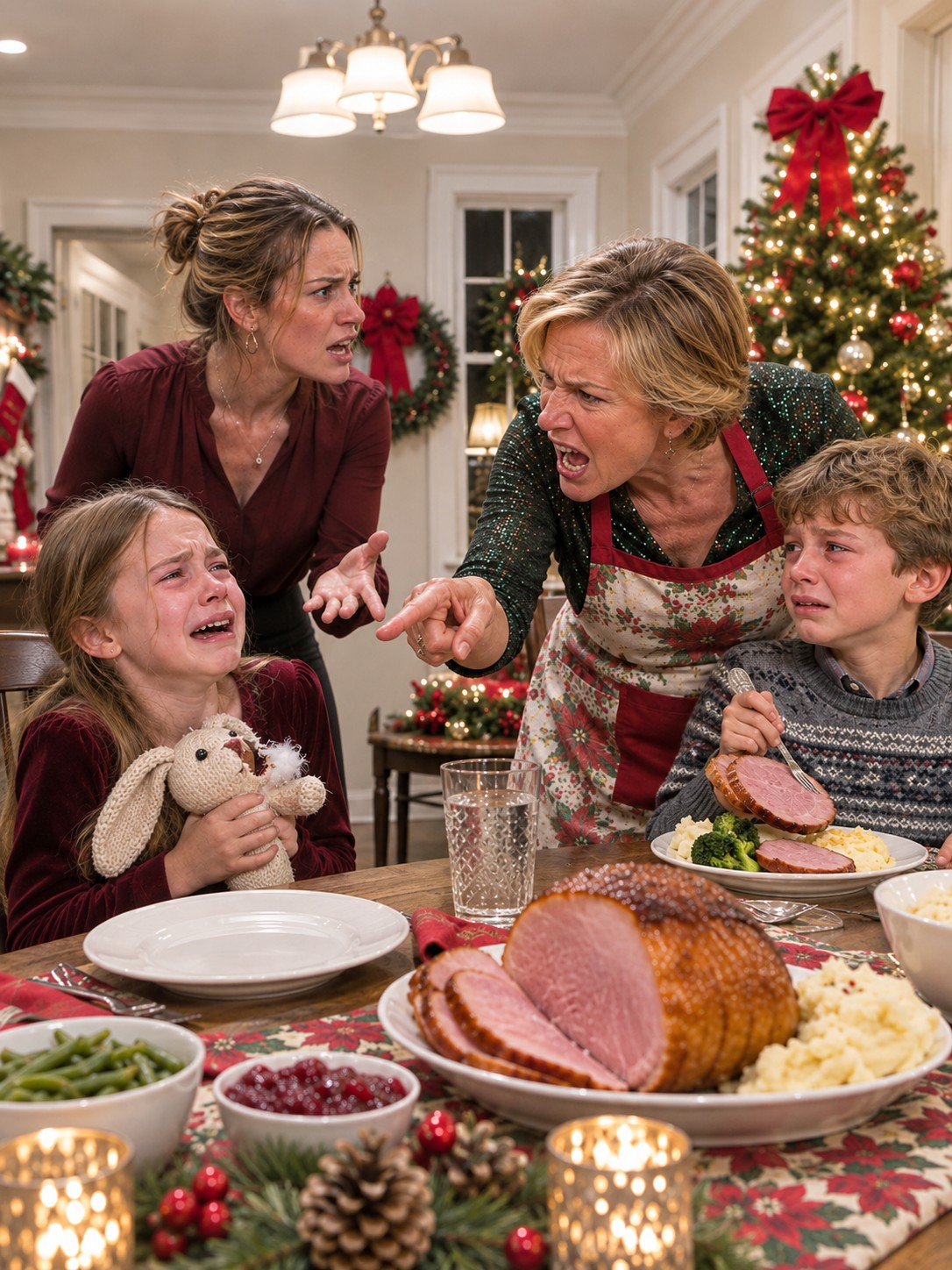
"She was sitting at Christmas dinner with a broken rabbit, watching Logan receive more food while her plate was taken away."
Paige covered her face.
"I know."
"And you watched it happen."
She nodded.
"I've thought about that every day."
I waited.
Then she said something I hadn't expected.
"After Christmas, I went into Logan's room and asked him what happened."
I looked up.
"What did he say?"
"He told me he had grabbed Fern because he wanted to see it. He said Emma hadn't done anything to him."
I felt anger rise again.
"Did Mom know?"
"Yes."
"Did she admit it?"
Paige shook her head.
"She said Logan was only little and that Emma should have shared."
I looked down.
There was no excuse left.
Paige reached across the table.
"I don't expect you to forgive me immediately. I just want you to know that I'm going to correct everything I signed."
I studied her face.
"Will you tell the truth even if Mom gets angry?"
"Yes."
"Will you give my attorney every document you have?"
"Yes."
"Will you stop making decisions about Emma without speaking to me?"
She nodded.
"Yes."
I believed she meant it.
But believing someone wanted to change was not the same as trusting them again.
"We'll see," I said.
Paige nodded.
For the first time, she didn't argue.
Over the following weeks, the truth came out.
My attorney requested the original property records.
The financial institution provided copies of the mortgage statements.
The signatures were examined.
The documents showed that my father had contributed a substantial amount toward the original purchase of the house.
Marian had also provided financial assistance under a written family arrangement.
My mother had been responsible for the remaining mortgage payments after my father's death.
The house had never been as straightforward as she had always claimed.
More importantly, the proposed transfer to Paige had never been properly completed.
The financial agreement submitted using my signature was withdrawn.
My mother was required to correct the records and provide a full accounting of the payments she had received from me.
We eventually agreed that I would no longer make informal mortgage contributions.
If my mother needed financial assistance in the future, she would have to discuss it openly and provide the relevant information.
I was not going to continue paying money into an arrangement I couldn't verify.
The inheritance documents were also reviewed.
Marian had established a protected account for Emma.
The account was intended to support her education and future needs.
My mother had never been appointed to manage it.
The request she had submitted was withdrawn.
My attorney arranged for the account to be administered according to Marian's original instructions.
I was formally recognized as the person responsible for protecting Emma's interests until she reached the appropriate age.
Richard's involvement ended.
The guardianship consultation was closed without any change to my parental rights.
The photographs were reviewed in context.
There was no evidence that Emma had been neglected.
There was no professional assessment supporting the allegations.
Paige submitted a corrected statement explaining that her earlier declaration had not accurately reflected what she had witnessed.
She acknowledged that I had never been unable to care for Emma.
She also confirmed that the Christmas dinner incident had been misrepresented.
My mother eventually admitted that she had exaggerated her concerns because she believed I was becoming unwilling to support her financially.
The admissions did not erase what had happened.
But they ended the false story she had been trying to build.
One afternoon, Claire visited my house.
She carried a small wooden box.
"I think this belongs here," she said.
I opened the lid.
Inside were Marian's photographs, a few handwritten notes, and several small keepsakes.
At the bottom was a yellow envelope.
My name was written on the front.
I recognized Marian's handwriting immediately.
I opened it.
The letter was short.
Dear Daniel,
If you are reading this, I hope it means you have finally found the answers you needed.
I know how much you love Emma. I have never doubted that.
I also know that families sometimes confuse being close with having control. They sometimes believe that because they love someone, they are entitled to make decisions for them.
Please remember that Emma is not responsible for keeping adults happy.
Let her grow up knowing that she can say no without losing someone's love.
Keep the photographs. Keep the memories. Keep Fern.
And most importantly, keep being her father.
With all my love,
Marian.
I read the letter twice.
Then I folded it carefully.
Claire watched me.
"She loved that little girl very much."
I nodded.
"She did."
Claire smiled.
"She would be proud of you."
I looked toward the living room.
Emma was sitting on the rug, trying to repair Fern's ear with a piece of soft yellow thread.
I smiled.
"I hope so."
Three months passed.
Spring arrived.
Emma returned to her usual routine.
School.
Playdates.
Saturday pancakes.
And bedtime stories.
The subject of Christmas gradually became less painful.
She still remembered the broken rabbit.
But she no longer asked whether she had done something wrong.
We had taken Fern to a local seamstress who specialized in repairing old toys.
The woman carefully restored the damaged seam and replaced some of the stuffing.
She even found a piece of cream yarn that matched the original.
But Emma insisted that the yellow foot remain exactly as it was.
"That's Fern's special part," she explained.
The seamstress smiled.
"Then we'll keep it."
When we collected the rabbit, Emma hugged it tightly.
"She's better!"
I smiled.
"She certainly looks happy."
Emma kissed the top of Fern's head.
"Now she can come to dinner again."
I felt my throat tighten.
"Of course she can."
That evening, we had a small dinner at home.
Emma placed Fern in her usual chair.
There were no arguments.
No accusations.
No one took her plate away.
After dinner, she helped me wash the dishes.
Then she asked whether we could invite Paige and Logan over the following weekend.
I looked at her.
"Would you like that?"
She nodded.
"Logan said he wanted to say sorry."
I considered it.
"Then we can invite them."
Emma smiled.
She had no obligation to forgive anyone.
But I wasn't going to teach her that one painful experience had to define every relationship forever.
If Paige wanted to rebuild trust, she would have the opportunity to do so.
Slowly.
Honestly.
And with Emma's comfort coming first.
The following Saturday, Paige arrived with Logan.
She brought a small gift bag.
Before giving it to Emma, she knelt down.
"Emma, I want to tell you something."
Emma looked at her.
"I'm listening."
Paige took a breath.
"I'm sorry I didn't stop what happened at Christmas. I should have made sure you were treated fairly."
Emma looked down at Fern.
Then she looked at Logan.
Logan stepped forward.
"I'm sorry I pulled Fern's ear."
Emma held the rabbit closer.
"You broke her."
"I know."
Logan looked embarrassed.
"I shouldn't have done it."
Emma considered him for a moment.
Then she said, "You can play with her again, but you have to ask first."
Logan nodded.
"Okay."
Paige looked at me.
There were tears in her eyes.
I didn't say anything.
But I let them come inside.
We spent the afternoon in the backyard.
The children played with a ball.
Paige and I sat on the porch.
For the first time in months, we talked without arguing.
She told me she had started seeing a counselor.
She wanted to understand why she had allowed our mother to influence her decisions.
I told her I was glad she was taking responsibility.
We didn't pretend everything was repaired.
We didn't need to.
Some relationships needed time.
And some apologies needed to be followed by actions.
Before leaving, Paige handed me a small envelope.
"What is this?"
"Something I found among Mom's old papers."
I opened it.
It contained a copy of the original photograph of Marian holding Fern.
On the back was a handwritten note.
For Emma, who knows that even imperfect things can be loved.
I smiled.
"Thank you."
Paige nodded.
"Marian was right about that."
I looked at her.
"About what?"
"About Emma."
She glanced toward the backyard.
"She's stronger than any of us realized."
I followed her gaze.
Emma was laughing.
Fern was sitting on the garden bench.
And Logan was carefully arranging a blanket around the rabbit.
For the first time in a long while, I felt that things were moving in the right direction.
My relationship with my mother took longer to repair.
Several weeks after the legal matters were settled, she asked whether we could meet.
I agreed to a conversation at a neutral location.
She arrived carrying a small gift bag.
Inside was a knitted scarf she had made for Emma.
She placed it on the table.
"I wanted to give her something."
I nodded.
"Thank you."
My mother looked nervous.
"I've been thinking about what happened."
I waited.
She continued.
"I was wrong to take Emma's plate away."
I looked at her.
"Yes."
"I was angry, and I blamed her for something Logan had done."
"Yes."
She lowered her eyes.
"I was also wrong to use Marian's belongings to pressure you."
I didn't interrupt.
"And I was wrong to make financial decisions without telling you."
She took a breath.
"I don't expect you to forget any of it."
That was the first apology I had heard from her that didn't include an excuse.
I looked at the scarf.
"Emma deserves to feel safe around the people who love her."
My mother nodded.
"I understand."
"That means no secrets. No gifts that come with conditions. No conversations about her future without me."
"I understand."
"And she will never be punished for something another child does."
My mother began crying.
"I know."
I sat quietly.
Then she asked, "Can I see her?"
I thought about it.
"Not today."
She nodded.
I continued.
"If you want to rebuild your relationship with her, it has to happen slowly. You need to show her that your love doesn't depend on her doing what you want."
My mother wiped her eyes.
"I'll try."
I stood.
"Then start there."
We parted without an argument.
It wasn't a perfect reconciliation.
But it was honest.
And that was a beginning.
On Emma's eighth birthday, we held a small celebration at home.
There were balloons in the living room.
A chocolate cake on the dining table.
And a handmade banner that Emma had decorated herself.
Paige and Logan came.
Claire came too.
My mother sent a birthday card.
Inside, she had written a simple message.
Happy birthday, Emma. I love you. Grandma.
There were no demands.
No conditions.
No mention of the past.
Emma placed the card beside Marian's photograph.
Then she asked me to help light the candles.
I stood behind her while everyone gathered around.
"Make a wish," Paige said.
Emma closed her eyes.
She thought carefully.
Then she blew out all eight candles.
Everyone clapped.
After the cake, Emma brought Fern into the living room.
The rabbit was wearing a new yellow ribbon.
She placed it beside Marian's photograph.
"Daddy?"
"Yes, sweetheart?"
"Do you think Grandma Marian can see my birthday?"
I looked at the photograph.
Marian was smiling in it.
"I think she would have loved this party."
Emma nodded.
"I wish she could have come."
I put my arm around her.
"Me too."
She leaned against me.
Then she looked toward the dining table.
"Can Fern have another piece of cake?"
I laughed.
"Of course."
Emma smiled.
I cut a tiny piece and placed it on a small plate beside the rabbit.
Everyone laughed.
But I found myself looking at the empty chair at the end of the table.
The same place where Emma had once sat with a broken rabbit and no dinner.
That chair no longer represented rejection.
It represented something else.
A promise.
No child in my home would ever have to earn a place at the table.
Not through obedience.
Not through silence.
Not through making adults comfortable.
Love would never be a reward for behaving exactly as someone demanded.
That evening, after everyone had gone home, Emma fell asleep on the sofa.
Fern rested against her shoulder.
I carried her upstairs and tucked her into bed.
Before turning off the light, she opened her eyes.
"Daddy?"
"I'm here."
"Thank you for believing me."
I sat beside her.
"You never had to prove anything to me, sweetheart."
She smiled sleepily.
"Even when I cried?"
"Especially then."
She closed her eyes.
I kissed her forehead.
Then I turned off the light.
Downstairs, Marian's photograph remained on the shelf.
Beside it sat the repaired rabbit, a small box of family photographs, and the letter she had left behind.
The inheritance would help Emma one day.
The house records had finally been corrected.
The false financial agreement had been withdrawn.
The guardianship proposal had ended.
Paige had taken responsibility for her actions.
My mother had begun the difficult work of rebuilding trust.
And Emma had her home, her father, her childhood, and the freedom to grow up without carrying the weight of other people's mistakes.
I returned to the kitchen.
On the table were three clean plates.
Mine.
Emma's.
And a little one for Fern.
I smiled.
Then I switched off the light.
For the first time since that Christmas dinner, there was nothing left to fight over.
There was only a family learning how to love each other properly.
And Emma would never again have to ask whether she deserved a place at the table.
Make the legal resolution more concrete Tie Richard’s role to a clear consequence






Comments 0