"I'm your twin. And I know which one of us was supposed to die."
The woman standing in the doorway looked exactly like me.
The same dark eyes.
The same shape of the face.
The same small birthmark beneath the left ear.
But there was something different about her expression. She looked like someone who had spent a lifetime carrying a secret that had become too heavy to hold.
I couldn't move.
Luca stood beside me, one hand resting protectively against my back.
My father slowly raised his head.
"Margaret," he whispered.
The woman nodded.
"Hello, Father."
My heart seemed to stop.
Father.
She had called him Father.
I looked at the woman who had just entered.
Then at the photograph in Arthur's briefcase.
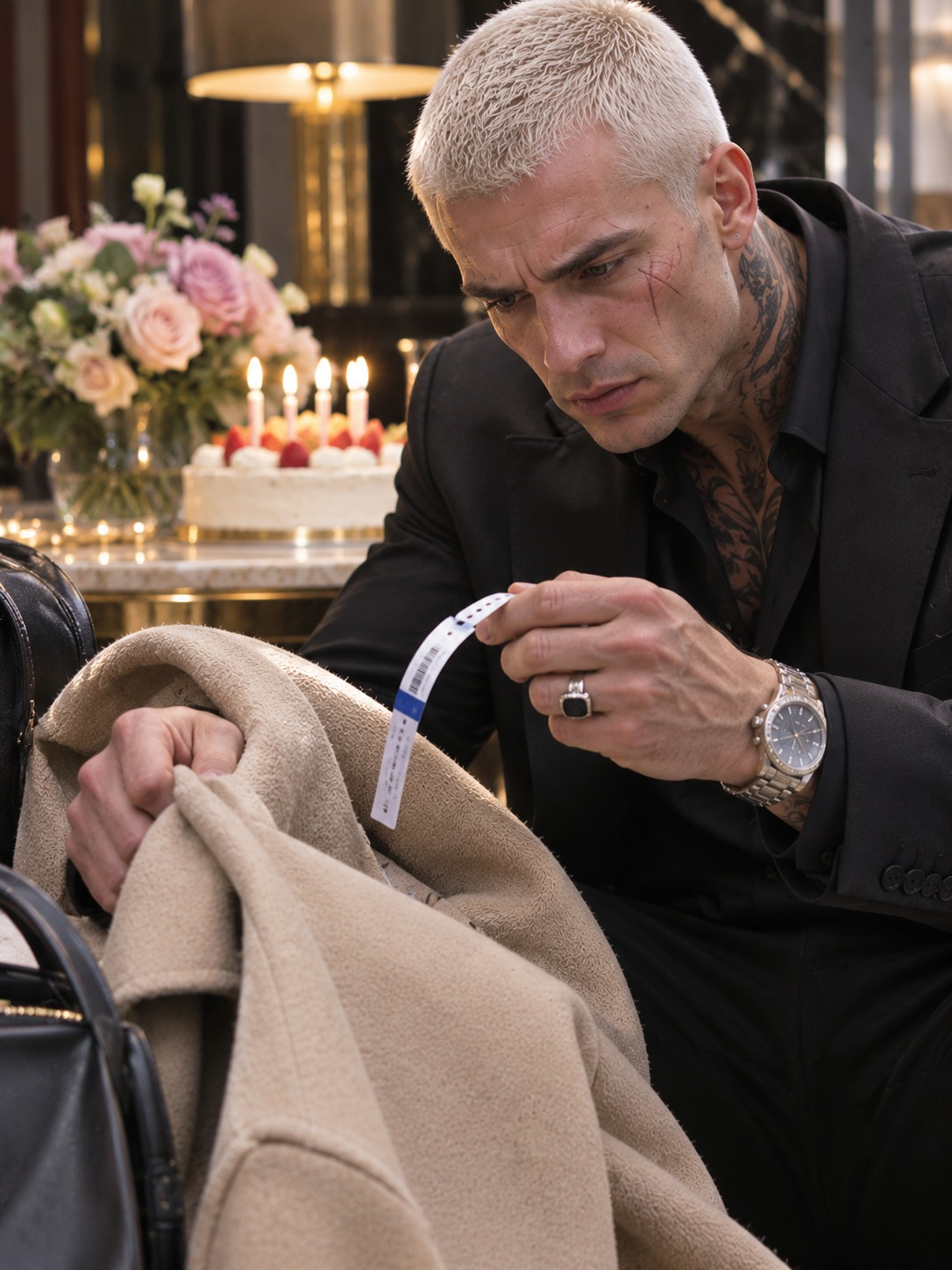
Then at the hospital bracelet in her hand.
"What's your name?" I whispered.
She stepped closer.
"Margaret Quinn. But the family who raised me called me Maggie."
I stared at her.
"You're my twin?"
She nodded.
I felt tears gathering.
"Why didn't you find me?"
Her expression broke.
"I tried."
She looked at the hospital bracelet.
"I tried for twenty-nine years."
Maggie sat beside me.
For several minutes, neither of us spoke.
I couldn't stop looking at her.
It was like looking into a mirror that remembered a different childhood.
She explained that she had been adopted shortly after birth by a couple in Boston.
They had been told that her biological parents were unable to care for her.
Her adoptive mother had died when she was fourteen.
Her adoptive father had passed away several years later.
Before his death, he gave her a sealed envelope containing the original adoption documents.
Inside was a photograph of two newborn girls.
And a letter.
The letter had been written by Margaret Quinn.
Not the woman who had recently appeared at Blackstone Hill.
The real Margaret.
My biological twin sister had spent years believing that the woman who raised her was her aunt.
She had only recently discovered that the adoption had been arranged through a private intermediary.
"Why did you come now?" I asked.
Maggie took a breath.
"Because I received a letter from Dr. Behan."
I turned toward Luca.
"What did it say?"
Maggie removed a folded paper from her handbag.
"It said that the original hospital records had finally been recovered. It also said that someone had been using my name to alter the family documents."
I looked toward the other Margaret.
The woman who had claimed to be my aunt.
She lowered her head.
Maggie continued.
"He told me that if I wanted to know the truth about my birth, I needed to come here."
I looked at the hospital bracelet.
"What does it mean?"
Maggie placed it on the table.
The name was clearly visible.
NORAH FERRARO.
I stared at it.
Then she placed another bracelet beside it.
MARGARET QUINN.
I looked up.
"Which one belonged to me?"
Maggie took my hand.
"The first one."
I swallowed.
"And the second?"
"Hers."
She pointed toward the woman who had been pretending to be Margaret.
I turned toward her.
"Then who is she?"
My father answered.
"Vivienne."
I felt my stomach tighten.
My biological mother.
The woman who had spent years manipulating the family from a distance.
The woman whose name appeared on the original birth documents.
Vivienne looked at me.
Her eyes filled with tears.
"Norah."
I stepped backward.
"Don't."
She stopped.
For once, she had nothing to say.
Maggie explained everything.
The night we were born, Anthony Ferraro had discovered that his brother intended to change the family inheritance.
He believed the children could become bargaining pieces.
Vivienne, who had been involved with Anthony, agreed to help conceal the births.
But when she learned that one of the babies might be taken away permanently, she changed the arrangement.
She arranged for Maggie to be adopted by a family in Boston.
I was placed with the Quinn family.
The original hospital identities were altered.
The surviving children were given new records.
And the family was told that one baby had died.
The woman calling herself Margaret Quinn had helped arrange the transfer.
She had been paid to keep the original records hidden.
But she had never been my biological aunt.
She had been an intermediary.
A woman who had used the real Margaret's identity to make the adoption appear legitimate.
I looked at her.
"Why?"
She began crying.
"Because I was promised money."
"How much?"
She shook her head.
"Enough to disappear."
"Did you know what would happen to us?"
She nodded.
I felt anger rising.
"You let two babies grow up without knowing each other."
"I know."
"You let my mother believe one of her daughters was dead."
She looked toward Vivienne.
"I know."
"And you let my sister believe she had been abandoned."
She lowered her eyes.
"I am sorry."
I stared at her.
An apology could not restore twenty-nine years.
It could not give Maggie her childhood back.
It could not return the years I had spent wondering why my family always seemed incomplete.
But at least now I knew who had done it.
Luca stepped forward.
"The authorities will receive every document. Nobody is going to alter these records again."
The woman nodded.
For the first time, she didn't argue.
Dr. Behan arrived later that afternoon with a lawyer.
He looked exhausted.
When he saw Maggie, he stopped.
"You came."
She nodded.
"You asked me to."
Behan placed a folder on the table.
"I owe all of you an explanation."
Luca folded his arms.
"Start talking."
Behan admitted that he had been involved in the original record alterations.
He had been a young physician when the children were born.
Anthony had approached him with a request to correct the family records.
Behan had agreed, believing the changes would protect the babies.
But after discovering that the children had been separated without their mothers' consent, he regretted his involvement.
He tried to reverse the changes.
By then, the original documents had disappeared.
He spent years trying to locate them.
When he finally found the old archive box, he contacted Maggie.
He also admitted that he had been the person who arranged the recent identity correction.
But he had not signed it to declare me dead.
He had signed it to restore the original birth records.
Someone had altered the submitted document afterward.
Vivienne.
She had wanted the inheritance transferred to the child she believed was entitled to it.
"Why didn't you tell us?" I asked.
Behan looked ashamed.
"Because I was afraid that revealing the truth would expose my involvement."
Luca's voice became cold.
"You let my wife believe she was dying without telling her that her medical history was connected to an investigation."
"I know."
"You knew she had been donating platelets."
Behan nodded.
"Yes."
"Why didn't you stop her?"
Behan looked at me.
"Because she was donating to a registered medical program. I believed she was helping someone she loved. I didn't know how often she was doing it until I examined her."
I remembered the exhaustion.
The hospital visits.
The needle marks.
The birthday dinner I had spent alone.
Luca looked at me.
"Who were you donating for?"
I swallowed.
Then I answered.
"Maggie."
Everyone turned.
Maggie looked stunned.
I explained that I had been donating platelets for a patient whose identity had been kept confidential.
I had been told the patient was a young woman with a rare blood disorder.
I had never been given her name.
The program had arranged everything.
Maggie began crying.
"That was me."
I stared at her.
"What?"
She nodded.
"I was being treated at Saint Bridget's. I had a complicated condition, and the doctors needed compatible donors."
I couldn't speak.
She reached for my hand.
"Someone at the hospital told me a donor had repeatedly volunteered without knowing who I was."
I began crying.
"You needed help."
Maggie nodded.
"And you gave it to me."
For the first time, I understood why my father had been so devastated when he found the hospital wristband.
I had been searching for my sister without knowing I was already helping her survive.
Vivienne eventually told the authorities everything.
She admitted that she had used the false Margaret identity to protect the inheritance arrangement.
She had also paid Arthur and several intermediaries to keep the original records hidden.
She had believed that the Ferraro estate would eventually pass to the child registered under the correct family name.
But the original will told a different story.
The inheritance had never belonged to one child alone.
My grandfather had created a trust for all surviving grandchildren.
The trust had been concealed because Anthony and his brother had disagreed about its administration.
The original ledger contained the details.
It also documented the payments made to hide the children.
Arthur's involvement was confirmed.
He had helped maintain the false identities and had knowingly withheld information about Isabella's disappearance.
He cooperated with the investigation and provided the remaining documents.
Nathan Whitmore was also questioned.
His claim to the Ferraro inheritance was unsupported.
He eventually admitted that Vivienne had promised him a portion of the estate if he helped recover the ledger.
He had never been my father's biological son.
His adoption had been genuine.
But the family ring had been given to him as part of a separate agreement.
The financial dispute was finally settled through the courts.
The illegal transfers were investigated.
The family trust was restored.
And every original birth record was corrected.
For the first time in twenty-nine years, our names belonged to us.
Three months later, I returned to Saint Bridget's.
Not as a patient.
Not as a donor.
But as a woman who finally knew where she came from.
Maggie was waiting in the hospital garden.
She looked healthier.
Her hair had grown longer, and she was wearing a cream sweater.
She smiled when she saw me.
"You're late."
I laughed.
"Traffic."
She shook her head.
"Some things never change."
I sat beside her.
We had spent the previous months learning about each other.
Our favorite foods.
The books we liked.
The music we listened to.
The little habits that had developed in completely different homes.
We discovered that we both hated olives.
We both preferred coffee with too much sugar.
And we both had a habit of apologizing when we bumped into furniture.
Sometimes we laughed.
Sometimes we cried.
But we never ran out of things to say.
"Do you think we'll ever feel like sisters?" Maggie asked.
I looked at her.
"We already are."
She smiled.
Then she rested her head against my shoulder.
For twenty-nine years, we had lived separate lives.
Now we were finally building one relationship of our own.
Not because a document told us to.
Not because an inheritance required it.
But because we wanted to.
Luca's life changed too.
He began spending time with Isabella.
At first, their conversations were difficult.
He had too many questions.
She had too many regrets.
But they kept meeting.
She told him about his childhood.
About the first time he walked.
About the little shoes she had saved.
About the songs she used to sing.
One evening, he returned home holding an old photograph.
It showed him as a baby.
Isabella was holding him beside Anthony.
He placed it on the mantelpiece.
I watched him.
"Are you all right?"
He nodded.
"I think so."
He looked at the photograph.
"For years, I thought my mother had abandoned me."
I approached him.
"And now?"
"Now I know she was trying to find me."
He turned toward me.
"That's enough for tonight."
I wrapped my arms around him.
He held me close.
We had both lost years we could never recover.
But we had found something neither of us expected.
A future that no longer depended on the decisions of our parents.
My father recovered slowly.
He apologized to all of us.
Not once.
Many times.
He wrote individual letters to each child, explaining the decisions he had made and accepting responsibility for the damage they caused.
He never asked us to forgive him.
That mattered.
Claire visited him regularly.
Maggie began calling him every Sunday.
Luca remained cautious, but he eventually agreed to visit.
And I returned too.
Not because everything was forgiven.
But because I wanted to know my father as he really was.
A man who had loved his children and made terrible decisions.
A man who had spent years believing secrecy was protection.
A man who finally understood that love without honesty could become another kind of prison.
One afternoon, he gave me the original hospital bracelets.
Both were clean and carefully preserved.
I placed them inside a small wooden box.
Then I gave one to Maggie.
"Keep this," I told her.
She looked at the bracelet.
"Are you sure?"
I nodded.
"We each deserve to know where our story began."
She hugged me.
And for once, neither of us cried.
Ellie became the center of our family again.
She was healthy, happy, and completely uninterested in the complicated history of the adults around her.
She wanted ice cream.
She wanted stories.
She wanted someone to help her build a blanket fort.
Claire became one of her favorite people.
Maggie taught her how to draw.
Isabella brought her books.
My mother began visiting regularly, although rebuilding our relationship took time.
I didn't pretend that the past had disappeared.
She had hurt me.
She had hidden things.
She had made choices that had changed my life.
But she was trying.
And I was learning that forgiveness didn't mean forgetting.
It meant allowing the future to become something different from the past.
One Sunday afternoon, Ellie climbed onto my lap.
"Aunt Norah?"
"Yes?"
"Can I call Maggie Aunt Maggie?"
I smiled.
"Of course."
"Can I call Isabella Grandma?"
I looked toward Isabella.
She was sitting beside Luca, smiling.
"Absolutely."
Ellie considered this.
"That's a lot of family."
I laughed.
"It is."
She wrapped her arms around my neck.
"I like it."
I kissed her forehead.
"So do I."
Six months after the discovery, Luca took me back to Delfina's on Atwells Avenue.
The same restaurant where I had once waited alone for a husband who never came.
I recognized the table immediately.
The same corner.
The same view of the street.
The same warm lighting.
But this time, Luca was sitting across from me.
There were no unanswered messages.
No business emergency.
No empty chair.
He reached across the table.
"I'm sorry."
I smiled faintly.
"For what?"
"For that night."
I looked at him.
"You can't change it."
"I know."
He paused.
"But I can make sure there are no more nights like that."
I squeezed his hand.
The waiter arrived.
We ordered dinner.
Then Luca removed a small velvet box from his jacket.
I looked at him.
"What is that?"
"Something I should have given you a long time ago."
He opened it.
Inside was a simple gold ring.
Not an expensive family heirloom.
Not a symbol of business.
Just a ring.
He looked at me.
"Our marriage began as an agreement between families. I know that."
I nodded.
"But I don't want to live the rest of my life as if someone else wrote the terms."
He took a breath.
"I want to choose you every day. Not because of a contract. Not because of an inheritance. Because I love you."
My eyes filled.
He continued.
"You don't owe me an answer tonight. You don't owe me anything."
I looked at him.
Then I smiled.
Not the polite smile I had once used to hide my disappointment.
A real one.
"I choose you too."
He slipped the ring onto my finger.
And for the first time, our marriage belonged entirely to us.
A year later, we gathered at Blackstone Hill.
The old house had been restored.
The dark basement archive had been converted into a family library.
The documents were preserved in a secure collection.
The photographs had been returned to the walls.
And above the fireplace hung a new family portrait.
My father sat in the center.
Isabella was beside him.
My mother stood behind Claire.
Maggie stood beside me.
Luca held my hand.
Ellie sat in front, holding her purple rabbit.
Nobody had been left out.
Nobody had been erased.
Before dinner, my father raised his glass.
"I spent too many years believing that protecting a family meant controlling its secrets."
He looked around the room.
"I was wrong."
His voice trembled.
"Family is not a name on a document. It is not an inheritance. It is not a promise made by someone who thinks they know better."
He looked at each of us.
"Family is the people who choose to stay, even after learning the truth."
Nobody spoke.
Then Ellie raised her glass of orange juice.
"To everyone being together!"
We laughed.
Glasses touched.
And I looked around the table.
For years, I had believed my life was defined by what had been taken from me.
My identity.
My childhood.
My sister.
My mother.
My chance to know where I came from.
But that evening, I understood something.
The past had taken many things.
It had also brought us to the truth.
I looked at Maggie.
She smiled.
I looked at Luca.
He squeezed my hand.
Then Ellie climbed into my lap and whispered:
"Can we have dessert now?"
I laughed.
"Yes, sweetheart. We can."
Outside, the evening settled over Blackstone Hill.
Inside, the house was filled with conversation, laughter, and the sound of people who finally knew they belonged together.
There were no more false names.
No more hidden hospital records.
No more locked rooms containing secrets.
And no more empty chairs waiting for someone who might never return.
For the first time in our lives, we were not trying to discover who belonged to whom.
We simply belonged to each other.






Comments 0