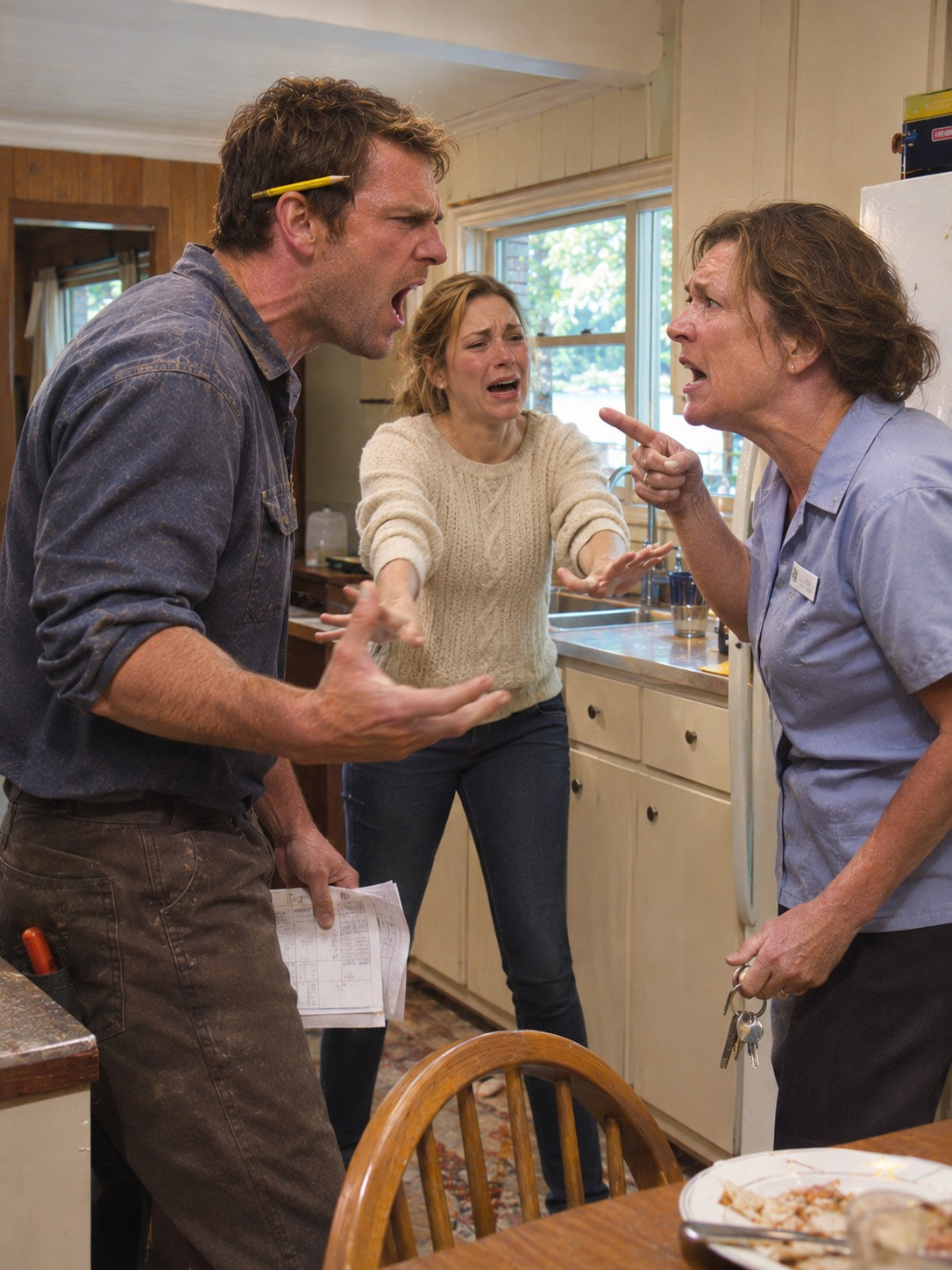
Mother didn't cry when she learned that her position was being eliminated.
She read the message twice.
Then she stood and began washing the coffee mugs.
"Mom," Chloe said.
"I'm listening."
"Put those down."
"They need washing."
I recognized the behavior.
When our father left, she had cleaned the refrigerator.
When Grandpa was hospitalized, she had reorganized the linen closet.
Whenever something happened that she couldn't control, she found something she could.
This time, it was four coffee mugs.
I took the sponge from her hand.
She stared at me.
Then she sat.
The message explained that several positions would be eliminated during the ownership transition.
Mother would receive formal information on Monday regarding her final working date and any applicable benefits.
Twenty-three years.
Reduced to a paragraph.
"What am I supposed to do now?" she asked.
It was the first time I could remember hearing her say those words.
Maya pulled out a chair.
"We'll look at your options."
Mother shook her head.
"Nobody wants to hire a woman my age."
"You have twenty-three years of experience," Maya replied.
"I don't have a college degree."
"You have experience."
"That's not the same."
"No," Maya said. "Sometimes it's more useful."
Chloe opened her laptop.
She began searching for pharmacy positions and administrative jobs in nearby towns.
Mother watched her.
I called Pete.
He answered while eating dinner.
I apologized.
Then I explained that someone was living in the house and asked whether the downstairs rooms could remain occupied during construction.
He said he would need to review the work carefully.
"If there's mold or significant damage, that changes things."
"Understood."
"I'll come by Monday."
I thanked him.
Mother listened to the conversation.
When I hung up, she looked ashamed.
"I'm making everything harder."
"You're making us adjust a schedule."
"That's not all."
"No," I admitted. "It isn't."
I didn't want to lie to her.
Helping would require money, time, and changes to plans Maya and I had been making for months.
But difficulty wasn't the same thing as disaster.
We could manage it together.
The following morning, I helped Mother carry several boxes downstairs.
She had brought surprisingly little from our childhood home.
Clothes.
Photographs.
Kitchen utensils.
A sewing machine.
The ceramic Christmas village she had collected for twenty years.
"Where's everything else?" I asked.
"Sold some. Donated some."
"What about Dad's old cabinet?"
"Sold it."
"The dining table?"
"That too."
I remembered eating thousands of meals at that table.
Birthday cakes.
Thanksgiving dinners.
Arguments over homework.
It had apparently disappeared while I was working in New York.
"Why didn't you ask whether we wanted anything?"
Mother folded a sweater.
"I didn't think you had room."
"We could've figured something out."
She nodded.
Another small decision she had made alone.
Another piece of family history gone.
Chloe found a box containing our school photographs.
She sat on the floor and began sorting them.
For the next hour, we laughed at terrible haircuts and remembered teachers we hadn't thought about in years.
Mother smiled.
Occasionally, she corrected a date or reminded us of something that had happened immediately after a photograph was taken.
She remembered everything.
I realized she had carried our childhood with her even when she couldn't afford to keep the furniture.
That afternoon, Maya and I prepared to return to New York.
I had work Monday.
Mother stood beside the truck.
"You don't need to come back next weekend."
"I know."
"I can handle the contractor."
"I know."
"I don't want you driving all that way."
"Mom."
She stopped.
"I'll be back Saturday."
She nodded.
On the drive home, Maya and I discussed finances.
We had savings intended for the dock, vacations, and eventually a larger apartment.
The roof would consume a substantial portion.
Helping Mother could consume more.
"We need an actual budget," Maya said.
I agreed.
We calculated the expenses that evening.
Property taxes.
Insurance.
Roof repairs.
Utilities.
Travel.
Emergency savings.
I had been thinking about the lake house emotionally.
Now I needed to think about it practically.
Maya helped me establish limits.
We could assist Mother temporarily without jeopardizing our own financial stability.
We could not promise unlimited support.
We could not ignore the roof.
And we certainly couldn't fund Chloe's entire wedding.
I called Chloe the following night.
She immediately offered to cancel the wedding at the lake.
"No."
"Liam, you've got enough expenses."
"The lawn is free."
"What about everything else?"
"We'll figure out what you can afford."
She hesitated.
"Ethan says the same thing."
"Smart man."
"He also says we should help Mom together."
"Within reason."
"Right."
For the first time, we were discussing our mother's situation without secrecy or accusation.
It felt strange.
It also felt necessary.
Mother attended her meeting with management on Monday.
Her position would end in four weeks.
She would receive a modest severance payment and information about continuing certain benefits.
It wasn't enough to solve her problems.
But it gave us time.
Chloe helped update her résumé.
Maya suggested nearby medical offices that might value her experience with customers, insurance paperwork, and medication inventory.
I contacted the estate lawyer to make sure any longer-term housing arrangement at the lake house would be properly documented.
I wanted to protect Mother.
I also wanted to protect Maya and myself.
There would be no more vague understandings.
No more assumptions.
On Thursday, Pete called.
He had inspected the downstairs rooms.
"The back room should work temporarily," he said.
"That's good."
"But there's something else."
I picked up a pen.
He explained that the moisture had traveled farther than expected.
A section of the upstairs wall needed opening before he could finalize the scope.
"Can you handle that?"
"Sure."
"How much more?"
"Can't tell until we look."
I rubbed my forehead.
"Anything else?"
He hesitated.
"Your grandfather made some repairs years ago. I found something behind the loose panel near the landing."
"What?"
"An old metal box."
I stopped writing.
"What's inside?"
"Didn't open it. Figured it wasn't mine."
I asked him to leave it in the kitchen.
Then I called Mother.
She hadn't known about the box.
Neither had Chloe.
I drove to Maine on Saturday with a revised budget, a bag of groceries, and a growing sense that Grandpa's house contained more unfinished business than I had imagined.
Mother greeted me at the kitchen door.
She looked better.
Not happy, exactly.
But less frightened.
She had applied for three jobs.
Chloe and Ethan were arriving later to help move furniture.
I set the groceries on the counter.
"Where's the box?"
Mother pointed toward the dining table.
It was small, rectangular, and made of dark green metal.
Grandpa had used similar containers for nails and fishing equipment.
This one had a lock.
I examined it.
Mother brought the keys from the desk.
None fit.
I turned the box over.
A piece of masking tape had been attached underneath.
The handwriting belonged to Grandpa.
I read the words aloud.
"For the house. Not for the sale."
Mother stared at me.
I retrieved a small screwdriver from my toolbox and carefully loosened the damaged latch.
The lid opened.
Inside were receipts, bank statements, and a folded document bearing Grandpa's signature.
I unfolded the document.
Mother leaned closer.
Then she saw the amount written beside his name.
And grabbed my arm.






Comments 0