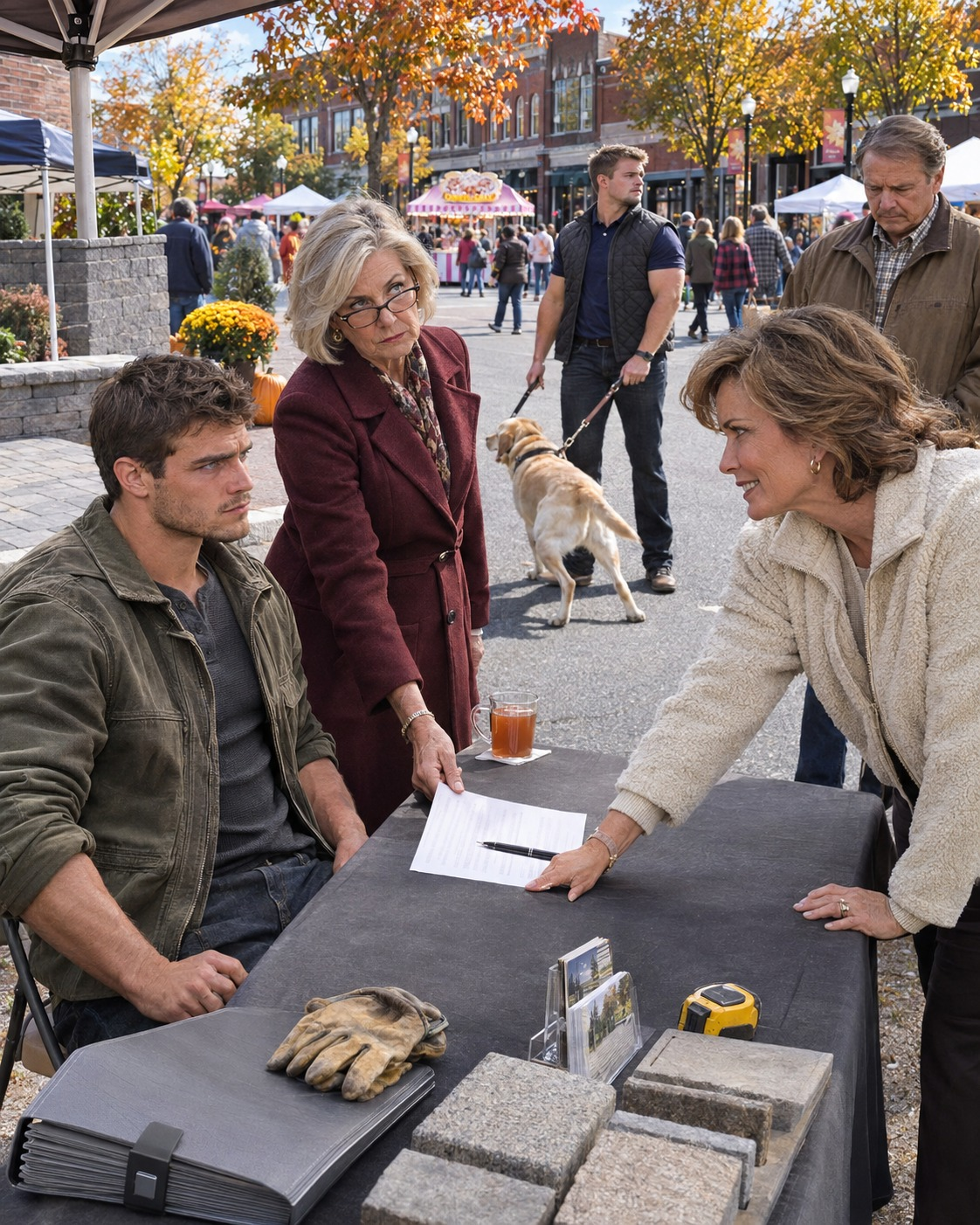
"Wyatt, that money was supposed to be used for the garage and the property improvements."
Mrs. Whitcomb's words kept repeating in my head.
Twenty-eight thousand five hundred dollars.
I sat at my kitchen table with my grandfather's original survey spread in front of me.
The number seemed almost unreal.
My parents had spent years telling me money was tight. Dad complained about repair bills. Mom talked about grocery prices. Colton constantly needed help covering something.
And somehow, there had been $28,500 set aside specifically for improvements to the property.
Money I had never heard about.
"Mrs. Whitcomb," I said, trying to keep my voice steady, "who received it?"
She took a breath.
"That's what I was hoping you would ask."
I pulled a notebook toward me.
"Please tell me."
"Your grandfather arranged for the funds to be released after the original survey was completed. There were specific conditions attached."
"What conditions?"
"The money was intended for improvements benefiting the property and preserving the access arrangement. It wasn't a personal gift."
I wrote that down.
"Who signed for it?"
She hesitated.
Then she answered.
"Your father, Robert Halverson."
My pen stopped moving.
Dad.
Of course.
I stared at the name on the page.
"Was Colton involved?"
"Not when the original paperwork was completed."
"When was the money released?"
"October 2008."
I calculated the year in my head.
I would have been seven.
Colton would have been eleven.
"What was the money supposed to pay for?"
"Improvements to the garage, drainage work, repairs along the access strip and certain structural changes."
I looked through the kitchen window.
The garage at my parents' house was still standing.
The same concrete floor.
The same old water heater.
The same bare studs.
The same handprint I had made when I was six.
I swallowed.
"Mrs. Whitcomb, none of that work was ever completed."
"I know."
"How do you know?"
"Because I reviewed the follow-up records."
I leaned forward.
"What did they show?"
"Only part of the proposed work was documented. The final inspection was never completed, and the remaining funds were supposed to be accounted for."
"Supposed to be?"
"Yes."
"Was there an accounting?"
She went quiet.
Then she said something that made my stomach tighten.
"Your grandfather requested one before he died."
"And?"
"He never received it."
I closed my eyes.
My grandfather had died believing someone would eventually finish the job.
Instead, the money had disappeared into a family argument nobody had bothered to explain to me.
"Do you have copies?"
"I have some."
"Could you send them to me?"
"I can provide copies of the records I retained. But Wyatt, I need you to understand something."
"What?"
"These documents don't automatically establish wrongdoing. They show that money was released for a specific purpose and that the final accounting appears incomplete."
I nodded.
"I understand."
"Good. I don't want you accusing anyone before you know the entire story."
I looked at the photograph of my grandfather.
"I won't."
Before ending the call, Mrs. Whitcomb gave me an address.
She wanted me to visit her the following afternoon.
She said she had kept a separate folder containing correspondence that never made it into the county file.
I thanked her.
Then I sat in silence.
For the first time, I understood why Colton had been so interested in my grandfather's papers.
It wasn't just about the garage.
It was about money.
And somebody was afraid I would discover where it had gone.
I didn't sleep much that night.
At around eleven, I opened my laptop and started searching through old family photographs.
I wasn't looking for anything specific.
I just wanted to see whether there were pictures of the garage from around 2008.
Eventually, I found a folder labeled FAMILY — OLD.
Inside were dozens of photographs.
Christmas mornings.
Birthday parties.
School events.
A picture of Colton standing beside his first car.
Another of me holding a concrete finishing tool that looked almost as large as my arm.
Then I found a photograph dated October 2008.
Dad was standing beside the garage.
Mom was holding a small envelope.
Colton was sitting on the hood of his bicycle.
I was standing near the driveway.
The garage door was open.
I enlarged the picture.
The concrete floor looked exactly as I remembered it.
But there was something else.
A large stack of building materials sat beside the garage.
Lumber.
Concrete bags.
Several metal drainage pipes.
I zoomed in.
The materials appeared new.
Then I noticed a handwritten label on one of the boxes.
BRANDT BUILDING SUPPLY.
I recognized the name.
It was the same local supplier I had worked with during my early concrete jobs.
I saved the photograph.
Then I checked the date again.
October 2008.
The same month the money had been released.
I wondered whether the materials had actually been purchased for the garage.
Maybe Dad had started the work.
Maybe something had happened.
Maybe there was a reasonable explanation.
I didn't want to assume the worst.
But I also couldn't ignore the fact that the garage had never received the improvements my grandfather had intended.
My phone buzzed.
A message from Nate.
Nate: You still awake?
I replied.
Wyatt: Yeah. Found something interesting.
I sent him the photograph.
A few minutes later, he called.
"That's your parents' garage?"
"Yes."
"What's all that material?"
"That's what I'm trying to figure out."
He studied the picture through the video call.
"Looks like they were planning some serious work."
"Exactly."
"Could the money have gone toward those supplies?"
"Maybe."
"Do you know whether the work started?"
"Not really."
Nate leaned back.
"Then find out."
I nodded.
"I have an appointment tomorrow with the woman who handled the original records."
"Good."
He paused.
"Wyatt, there's something else."
"What?"
"Your brother has been calling people."
I sat up.
"Who?"
"One of the guys from your old crew."
"What did he say?"
"Apparently, Colton told him you're trying to take your parents' property."
I rubbed my forehead.
"That's ridiculous."
"I know."
"What exactly did he say?"
"That you found some old paperwork and are threatening to sue your father."
I stared at the screen.
"I haven't threatened anyone."
"I figured."
I looked toward the window.
My parents' garage was dark.
"He's trying to get ahead of the story."
"That's what I think."
I took a breath.
"Let him talk."
Nate nodded.
"Just make sure you keep copies of everything."
"I will."
After we hung up, I returned to the photograph.
I enlarged the stack of building materials again.
Something about the image bothered me.
There were at least twenty concrete bags.
But the garage floor had already been poured the previous year.
Why would they need that much concrete?
I saved the image to the gray folder.
Then I noticed another photograph from the same day.
This one showed Dad standing beside his truck.
The passenger door was open.
Inside was a large brown envelope.
I couldn't read the writing.
But I recognized the envelope.
It looked almost identical to the one my mother had given me.
I sat back.
The money.
The materials.
The envelope.
And the missing accounting.
For the first time, I wondered whether my mother had known exactly what was inside that brown envelope all along.
The following afternoon, I drove to Mrs. Whitcomb's house.
She lived in a small brick home with a white picket fence and a narrow driveway.
A wind chime hung beside the front door.
She opened it before I reached the porch.
"You must be Wyatt."
"Yes, ma'am."
She smiled.
"Come in."
Her living room was full of bookshelves and framed photographs.
Several old filing boxes were stacked beside a desk.
She led me toward the dining room.
"I made copies of what I could find."
I placed my gray folder on the table.
She opened the first box.
Inside were neatly organized folders labeled by year.
"Your grandfather was meticulous," she said.
"He always seemed that way."
"He was. He wanted everything documented."
She removed a folder marked 2008.
Then she placed several papers in front of me.
The first was a payment authorization.
The second was a receipt.
The third was a handwritten acknowledgment.
I read the payment authorization.
It showed that $28,500 had been released to Robert Halverson.
The stated purpose was property improvement and preservation.
I moved to the receipt.
It listed building materials and labor costs.
But the total was only $8,740.
I frowned.
"Where's the rest?"
Mrs. Whitcomb folded her hands.
"That's what your grandfather asked."
I looked at her.
"Did your father provide an explanation?"
"He provided a handwritten statement."
She pulled out another page.
I read it.
Dad claimed that additional work had been completed through private contractors.
But there were no contractor names.
No invoices.
No inspection reports.
No detailed accounting.
Just a statement that the remaining amount had been used for property-related expenses.
I looked up.
"Did anyone verify that?"
"No."
"Why not?"
"Your grandfather became ill shortly afterward. He wasn't able to follow up."
I looked down again.
There was a signature at the bottom.
Robert Halverson.
I knew that signature.
I had seen it on school permission slips, birthday cards and documents from my parents' house.
I turned the page.
A second document showed that my grandfather had requested a formal review.
It was dated three months before his death.
The request had never been completed.
"Was the money supposed to go to my father personally?"
"No."
"Was it supposed to be divided among the family?"
"No."
"Then why did he receive it?"
"Because he was responsible for coordinating the work."
I stared at the documents.
"Did my grandfather ever accuse him of taking the money?"
Mrs. Whitcomb shook her head.
"He was careful with his words. He didn't accuse anyone without evidence."
"What did he say?"
She reached into another folder.
Then she removed a handwritten letter.
"He wrote this to me."
I unfolded it.
My grandfather's handwriting was slower than in the earlier documents.
The letter mentioned his concern that the property improvements had not been completed.
He wrote that he wanted to protect the original agreement and ensure the funds were used as intended.
Then I reached the final lines.
"Robert says everything is taken care of. I want to believe him. But the numbers do not match, and I fear that one day Wyatt will be blamed for a decision he never made."
I stopped.
I read the sentence again.
Then I looked at Mrs. Whitcomb.
"Why would he think I'd be blamed?"
She shook her head.
"I don't know."
I placed the letter on the table.
For several seconds, neither of us spoke.
Finally, I asked:
"Was there another person involved in managing the money?"
Mrs. Whitcomb looked toward the folder.
"There was one more signature."
She removed a final sheet.
The document was dated November 2008.
It showed that an additional amount had been transferred from the improvement account.
The recipient was listed as a local construction supplier.
I recognized the company name.
Brandt Building Supply.
The same company from the photograph.
I leaned closer.
"Can you tell what was purchased?"
She pointed to the description.
"Concrete materials and structural supplies."
I checked the total.
$8,740.
That matched the receipt.
"So the materials were purchased."
"Apparently."
"Then what happened to the rest?"
Mrs. Whitcomb looked at me.
"That is the question your grandfather never got answered."
I sat back.
I wanted to be angry.
I wanted to call Dad and demand an explanation.
But I didn't have enough information.
Not yet.
I took photographs of every page.
Then I asked whether she knew anything about the additional property arrangement Colton had tried to establish.
She nodded slowly.
"Your brother contacted me once."
"When?"
"About a year ago."
My stomach tightened.
"What did he want?"
"He asked whether the old access agreement could be reactivated."
"What did you tell him?"
"That there was no completed permanent agreement to reactivate."
I looked down.
"Did he ask about the money?"
She hesitated.
"Yes."
"What did he ask?"
"He wanted to know whether any of the original improvement funds remained available."
I felt my jaw tighten.
"Why would he think there was money left?"
"I don't know."
She paused.
Then she opened a separate folder.
Inside was a copy of an email.
It had been printed and placed in a plastic sleeve.
The sender was Colton.
The recipient was my father.
The date was March 2025.
I read the subject line.
GARAGE PROJECT — ORIGINAL FUNDING.
My eyes moved to the first paragraph.
Colton had written that he wanted to move forward with converting the garage into a workshop.
He mentioned that the old family improvement funds might still be relevant.
Then he asked whether Dad had located the original paperwork.
My father had replied two days later.
His response was short.
"Don't involve Wyatt. We can handle this ourselves."
I stared at the screen.
Mrs. Whitcomb watched me carefully.
"That's why I wanted you to see the correspondence."
I read the email again.
Then I noticed the final line.
My father had written:
"Once the property access is secured, the remaining issue should be much easier to resolve."
I slowly put the paper down.
My brother hadn't suddenly become interested in the garage.
My father hadn't suddenly become interested in access.
They had been discussing the same plan months before I found the documents.
And they had specifically agreed not to involve me.
I drove home with copies of everything.
The gray folder was heavier than it had been that morning.
I placed it on the kitchen table.
Then I called Nate.
He arrived after work.
I showed him the payment authorization, the incomplete accounting and the emails.
He read everything carefully.
When he finished, he looked at me.
"Your father knew."
"Yes."
"And Colton knew."
"Apparently."
"And they were planning something before you discovered any of it."
I nodded.
Nate rubbed his chin.
"Okay. We need to be careful here."
"I know."
"These documents raise serious questions, but you need a professional to review them before you make any accusations."
"Agreed."
He looked at the old photograph.
"What's this?"
I explained the building materials.
He studied the image.
"Maybe the supplier has old records."
I hadn't thought of that.
The next morning, I called Brandt Building Supply.
The receptionist transferred me to the accounting department.
I explained that I was researching an old family property transaction from 2008.
The woman asked for the business name.
I gave it to her.
She said the records might be archived but that she could check.
I waited.
After several minutes, she returned.
"We found an invoice under Robert Halverson."
My heart started beating faster.
"Can you tell me the date?"
"October 16, 2008."
I looked at my notebook.
"That's the same month the funds were released."
"Yes."
"What was purchased?"
She read the description.
"Concrete materials, drainage pipe, lumber and structural hardware."
"Was it delivered to my parents' property?"
She paused.
"According to the delivery record, yes."
I felt a small sense of relief.
At least some of the money had gone toward the work.
"Can you tell me the amount?"
"$8,740."
I closed my eyes.
Exactly the amount on the receipt.
"Was there another invoice?"
She typed something.
"Let me check."
A few seconds passed.
Then she said:
"Actually, there's a second transaction under the same account."
I sat straighter.
"What date?"
"November 3, 2008."
"What was purchased?"
She began reading.
Then stopped.
"That's unusual."
"What?"
"The second invoice isn't for building materials."
My grip tightened around the phone.
"What is it for?"
She hesitated.
Then she read the description.
"Payment toward a vehicle purchase."
I stared at the wall.
"Whose vehicle?"
"There's a name listed on the transaction."
I waited.
The woman continued.
"Colton Halverson."
I felt my stomach drop.
My brother had received a vehicle payment from the same account that was supposed to fund my grandfather's property improvements.
I asked for the amount.
She checked again.
"Seven thousand five hundred dollars."
I wrote it down.
Then I asked whether there were any other transactions.
She paused.
"There's one more."
"What?"
"Another payment. Same month."
I swallowed.
"How much?"
"Five thousand dollars."
"Who received it?"
She read the name.
I stopped breathing.
Because it wasn't my father.
And it wasn't Colton.
It was my mother.
I ended the call and sat completely still.
Nate was standing across the kitchen.
"What happened?"
I looked at him.
"Colton received a vehicle payment."
"From the improvement account?"
I nodded.
"And another five thousand went to Mom."
Nate pulled out a chair.
"Did they explain why?"
"No."
He looked at the notes.
"How much is accounted for now?"
I did the calculation.
Eight thousand seven hundred and forty dollars for building materials.
Seven thousand five hundred for Colton.
Five thousand for Mom.
That left seven thousand two hundred and sixty dollars unaccounted for.
I wrote the number down.
Then I looked at the old photograph again.
Colton's bicycle.
Dad's truck.
The garage.
The materials stacked beside the driveway.
My mother holding an envelope.
Everything seemed connected.
I called Mrs. Whitcomb and told her about the supplier's records.
She listened without interrupting.
When I finished, she sighed.
"Your grandfather would have wanted to know that."
"Did he ever discover the other payments?"
"Not that I know of."
I looked at the documents.
"Do you think he suspected?"
She was quiet.
Then she said:
"He once told me he was afraid the money had become a family favor instead of a property fund."
I closed my eyes.
A family favor.
That was exactly how Colton had always received things.
A car.
New clothes.
A bedroom.
A place to live.
And apparently, money intended for a project my grandfather had carefully planned.
I thanked Mrs. Whitcomb.
Then I made one final call.
This time, to my father.
He answered after the third ring.
"Wyatt?"
"Dad, we need to talk about the $28,500."
Silence.
Then I heard him breathe out.
"Where did you get that number?"
"Grandpa's records."
Another pause.
"What records?"
"The original payment authorization. The supplier invoices. The correspondence."
His voice became harder.
"Who gave you those?"
"That doesn't matter."
"It matters to me."
I looked at Nate.
He shook his head slightly, reminding me to stay calm.
I continued.
"I found payments to Colton and Mom."
Dad didn't respond.
"Seven thousand five hundred to Colton. Five thousand to Mom. And there's another seven thousand two hundred and sixty dollars I haven't accounted for."
The silence stretched.
Then Dad said:
"You don't understand what happened back then."
"Then explain it."
"That money was used to help the family."
"It was supposed to fund property improvements."
"We had expenses."
"Did Grandpa approve those expenses?"
Dad's voice rose.
"Your grandfather was not easy to deal with."
I stared at the phone.
"That's not an answer."
He sighed.
"Your mother needed help. Colton needed a vehicle. We were trying to keep the family together."
I looked down at the supplier records.
"And the missing money?"
"Some of it went toward other work."
"What work?"
He didn't answer.
I waited.
Finally, he said:
"Wyatt, you need to stop treating old family decisions like they're criminal investigations."
I felt my jaw tighten.
"Then why did you tell Colton not to involve me?"
He went silent.
I continued.
"I read the email."
There was a long pause.
Then Dad said:
"You shouldn't have gone looking for that."
I looked toward the window.
Across the fence, Colton had just stepped outside.
He was holding his phone.
He looked directly at my house.
Then my father spoke again.
"Your brother is coming over tonight. We need to settle this before you make another mistake."
I sat straighter.
"What mistake?"
Dad lowered his voice.
"There's something you haven't seen yet."
"What?"
He took a breath.
Then he said:
"Your grandfather didn't leave that money to the family. He left it to someone specific."
I looked at the papers.
"Who?"
Dad didn't answer immediately.
Instead, I heard a door close on his end.
Then he spoke in a voice I barely recognized.
"Wyatt, the money was never supposed to be yours."
I froze.
And before I could ask what he meant, he added one final sentence.
"Because your grandfather had already named the person who would inherit the entire property improvement fund."
Then Dad told me to look at the signature on the original envelope.






Comments 0