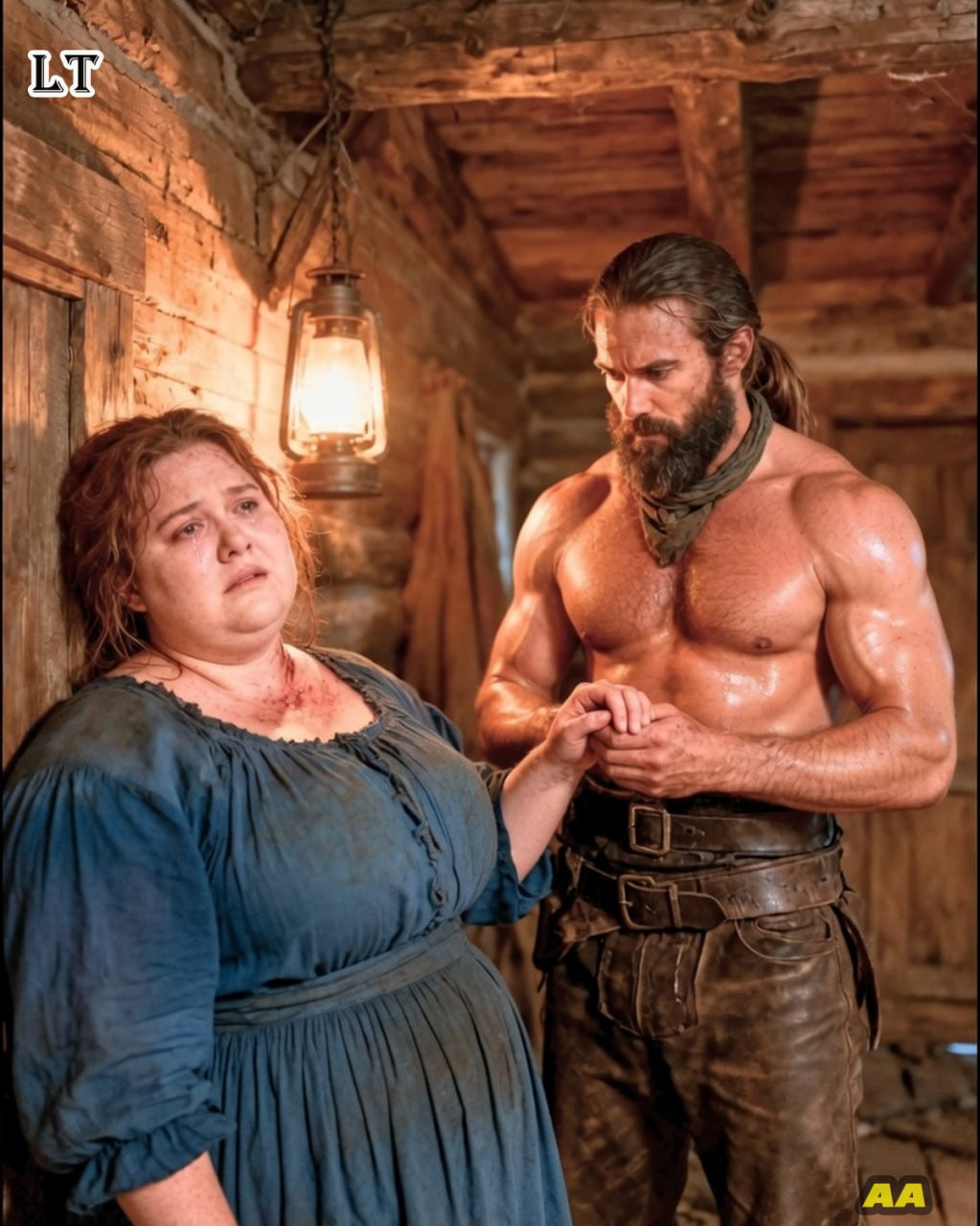
"Margaret Hale. Open this door."
The voice outside the farmhouse was unmistakable.
Eleanor stood beside the kitchen table, clutching her father's letter.
For twenty years, she had believed Henry Voss was dead.
Now two men had arrived with an arrest warrant bearing his name.
Asher moved toward the window and carefully lifted the curtain.
One man wore the dark uniform of a county investigator. The other carried a leather medical case.
Dr. Whitmore.
The doctor who had declared Eleanor contagious.
The doctor who had insisted she was dying.
The doctor whose name appeared on her father's documents.
Margaret closed the wooden box.
"Don't let them inside."
Thomas moved toward the back door.
"There's another way out."
Asher shook his head.
"Not yet."
Eleanor looked at Margaret.
"Why would they issue an arrest order for someone who supposedly died twenty years ago?"
Margaret's expression was grim.
"Because someone has discovered that Henry is still alive."
"Where is he?"
The old woman looked toward the floor.
"I don't know."
Eleanor stared at her.
"You said he left these letters with you."
"He did."
"Then you must know where he went."
Margaret hesitated.
"I know where he was supposed to go. I don't know whether he ever reached it."
A fist struck the front door.
"Margaret! We have legal authority to enter!"
Asher stepped away from the window.
"Stay behind me."
He approached the entrance but did not unlock it.
"What authority?"
The investigator unfolded a document.
"An arrest warrant issued by the county court."
"For whom?"
"Henry Voss."
Asher glanced toward Eleanor.
"He's not here."
"We have reason to believe he is being concealed inside this property."
"Then your information is wrong."
Whitmore stepped closer.
"Mr. Creed, I would advise you not to interfere."
Asher's expression became cold.
"You've given me that advice before."
Whitmore's eyes moved toward the window.
Then he noticed Eleanor.
His expression changed.
For a brief moment, genuine surprise crossed his face.
"Miss Voss."
Eleanor stepped forward.
"Doctor."
Whitmore adjusted his coat.
"You look considerably better."
"Surprised?"
"Your condition is clearly complicated."
"No. It was never complicated. You simply refused to examine the cause."
The doctor glanced toward the investigator.
"She's still confused."
Eleanor held up her hands.
The cotton coverings were gone.
Her skin was healing.
The inflammation had diminished, and the worst of the open wounds had closed.
"Does this look like a contagious disease?"
Whitmore did not answer.
"Five months ago, you told everyone I was dying. You told my neighbors to avoid me. You made my landlord throw me out."
"Your medical condition required isolation."
"Then explain why your treatment failed and Asher's worked."
Whitmore's expression tightened.
"That man has no authority to practice medicine."
Asher stepped forward.
"And you have no authority to diagnose a disease without examining the patient."
The investigator raised his hand.
"Enough. We are here for Henry Voss."
Margaret approached the door.
"You know perfectly well that Henry isn't here."
Whitmore looked directly at her.
"Then you won't mind allowing us to search."
Margaret remained still.
"No."
The investigator unfolded another sheet.
"Mrs. Hale, refusing a lawful search may result in your detention."
"Then bring your warrant."
He held it against the glass.
Margaret examined the document.
Her expression changed.
"This is not a search warrant."
The investigator frowned.
"It authorizes the arrest of Henry Voss."
"Exactly. It doesn't authorize you to search my home."
Asher gave a faint nod.
Whitmore looked increasingly impatient.
"You're wasting everyone's time."
Margaret turned away from the door.
"Then perhaps you should leave."
For several seconds, nobody moved.
Then the investigator stepped backward.
"We'll return with the proper authority."
Whitmore remained on the porch.
He looked at Eleanor one final time.
"You should be careful about the people you trust."
Eleanor met his eyes.
"I finally am."
The doctor turned.
Before leaving, he spoke quietly to the investigator.
"Make certain the other location is secured."
Asher heard him.
So did Eleanor.
The other location.
Margaret went pale.
The moment the visitors disappeared down the road, Asher secured the front door.
Thomas approached the kitchen window.
"They're going toward the eastern road."
Margaret sat down.
Her hands were shaking.
Eleanor placed the old documents on the table.
"What other location?"
Margaret looked at the papers.
"I was afraid this would happen."
"Please tell me."
The old woman took a deep breath.
"Your father kept a second set of records. The original shipment ledgers, inspection results, and correspondence between the manufacturer and the distribution company."
"Where?"
"In an old storage building outside Ashford."
Asher looked up.
"Who owns it?"
"Nobody officially. It belonged to your father's company before it was dissolved."
Eleanor looked confused.
"Why didn't you tell me earlier?"
"Because I didn't know whether the records were still there."
Margaret opened the wooden box and removed a small brass key.
"This was left with me."
Eleanor examined it.
A number had been engraved on the handle.
The same number that appeared on the blue fabric label.
"Does this open the storage building?"
Margaret nodded.
"Your father told me to keep it until someone came asking the right questions."
Asher studied the key.
"And Whitmore knows about it."
"Yes."
Thomas approached the table.
"That's why the men were searching my house last month."
Margaret nodded.
"They're looking for the original records."
Eleanor looked at the photograph of her father.
"Then we need to get there before them."
Asher shook his head.
"Not without knowing what we're walking into."
Margaret looked toward the fireplace.
"There is another problem."
"What?"
"Your father's records aren't the only thing inside that building."
She reached into the box and removed a small envelope.
It was addressed to Henry Voss.
Beneath his name was a handwritten instruction.
To be opened only if Eleanor returns.
Eleanor stared at it.
Her father had expected her to come looking.
Margaret handed her the envelope.
"Your father knew this day might come."
Eleanor carefully opened it.
Inside was a short note.
My dearest Eleanor,
If you have found these papers, then the people who destroyed our family have finally begun to fear the truth. Do not trust the first explanation you hear. The person who helped me hide the records is someone you have known since childhood.
Eleanor read the sentence again.
Someone she had known since childhood.
Her mother?
A family friend?
A neighbor?
She turned the page.
There was another sentence.
And if Margaret is still alive, ask her why she never told you what happened to your mother.
Eleanor's breath caught.
She looked up.
"Margaret?"
The old woman closed her eyes.
"I was hoping you wouldn't find that letter."
For a long moment, the farmhouse was silent.
Eleanor placed the letter on the table.
"What happened to my mother?"
Margaret looked toward the window.
"Your mother knew about the shipment."
Eleanor shook her head.
"No. She was a seamstress. She had nothing to do with the business."
"She knew what your father was investigating."
"Why didn't she tell me?"
"Because she was afraid."
Eleanor felt anger rising.
"Everyone seems to have been afraid. Everyone knew something, and nobody told me."
Margaret accepted the accusation without defending herself.
"Your mother discovered that someone had been using your father's signature to approve payments. She found the records hidden in his study."
"Who?"
"I don't know."
"You knew my father. You knew my mother. You kept their documents for twenty years. Surely you know more than that."
Margaret looked at her.
"Your mother disappeared three weeks before your father."
Eleanor stared.
"What?"
"She told me she was going to meet someone in Ashford. She never returned."
"She died?"
"No one ever found her."
Eleanor gripped the edge of the table.
Her mother had not died peacefully in the house where Eleanor grew up.
She had disappeared.
And the family had been told nothing.
"Why did you let me believe she was dead?"
Margaret lowered her eyes.
"Because I believed it was safer."
"For whom?"
The old woman did not answer.
Eleanor stood abruptly.
"I spent twenty years believing I had lost both my parents. I mourned them. I built my life around that loss. And all this time, you knew there was something more."
"I knew there were people who could hurt you."
"Then you should have trusted me enough to tell me the truth."
Margaret looked genuinely wounded.
But Eleanor could no longer accept another explanation based on fear.
She walked toward the window.
Outside, the evening light was fading.
She thought of her mother.
Her voice.
Her hands.
The way she used to hum while repairing clothes near the fireplace.
Could she still be alive?
Could she have been living somewhere while Eleanor struggled alone?
The possibility was almost unbearable.
Asher approached quietly.
"Eleanor."
She turned.
"I need a moment."
He nodded.
He did not try to comfort her with promises.
He simply remained nearby.
Later that evening, Margaret prepared supper.
Nobody ate much.
Thomas sat near the door, keeping watch.
Asher examined the brass key and the old storage agreement.
The address was written on the reverse.
The building stood near the abandoned railway depot, several miles outside Ashford.
It had once been used to store textile shipments.
The location was isolated but accessible by road.
Asher looked at the document.
"If the original ledgers are there, we may finally have enough evidence."
Samuel would have recognized the importance of the records immediately.
But he was recovering at the cabin.
Asher decided to send Thomas back to the mountain with a message.
"We need Samuel to examine these documents before anyone touches them."
Thomas nodded.
"I'll leave at first light."
Margaret looked at the papers.
"There's something else inside the building."
"What?"
"A small iron cabinet."
Asher waited.
"Your father kept a personal ledger there. It contained payments made outside the company's official accounts."
Eleanor looked up.
"Payments to whom?"
Margaret shook her head.
"I never saw the complete list."
Asher leaned closer.
"Could Whitmore be listed?"
"Almost certainly."
"And Grant?"
"Possibly."
Margaret paused.
"But there was one payment that frightened your father more than the others."
Eleanor looked at her.
"Who received it?"
Margaret's voice dropped.
"Someone responsible for protecting the town."
Asher's expression hardened.
"The judge."
Margaret nodded.
"Judge Nathaniel Crowe."
Eleanor remembered the name from her father's letter.
The same judge who had arranged the funeral.
The same man who had signed the documents declaring her father dead.
She felt her stomach tighten.
"Why would a judge accept money from a textile company?"
Margaret looked at her.
"Because the company had something to hide."
That night, Eleanor could not sleep.
She sat at the small kitchen table with her father's letter.
The fire had burned low.
Every few minutes, she read the same lines again.
Do not trust the first explanation you hear.
The person who helped me hide the records is someone you have known since childhood.
She thought about the people she had known growing up.
Her father.
Her mother.
The judge.
Caleb's family.
Dr. Whitmore.
There was another person.
A woman who had often visited their home.
A family friend named Abigail Turner.
Abigail had helped Eleanor after her mother's disappearance.
She had brought food, repaired dresses, and sometimes stayed overnight when Eleanor was frightened.
She had been the one who told Eleanor that her father had died.
She had also been the one who helped arrange the funeral.
Eleanor suddenly remembered something.
Abigail had once asked her whether she knew where her father kept his business papers.
At the time, Eleanor had thought nothing of it.
Now the memory seemed important.
She looked toward Asher.
He was sitting beside the fireplace, cleaning his revolver.
"Do you know a woman named Abigail Turner?"
He looked up.
"No."
"She was close to my family."
"Why?"
Eleanor explained the memories.
Asher listened carefully.
"Did she ever work for the distribution company?"
"I don't know."
"Did she know Margaret?"
Eleanor turned toward the old woman.
Margaret had been pretending to sleep.
Now she slowly opened her eyes.
"Yes," she said.
Eleanor stood.
"What did Abigail have to do with my father's disappearance?"
Margaret looked toward the door.
"She was the person who carried the first set of documents out of Ashford."
Eleanor felt a chill.
"Then she helped my father."
"Yes."
"Why didn't you tell me?"
Margaret looked at her.
"Because Abigail was the last person your father trusted."
Eleanor waited.
Then Margaret added something that changed everything.
"She was also the person who signed your mother's final medical report."
Eleanor felt as though the floor had shifted beneath her.
"My mother had a medical report?"
Margaret nodded.
"After she disappeared, a document appeared claiming she had died from an illness."
"Where?"
"In Ashford."
"Who signed it?"
"Abigail Turner."
Eleanor shook her head.
"She wasn't a doctor."
"No. But she worked as an administrator in Whitmore's medical office."
Asher stood.
"That changes things."
Eleanor looked at him.
"Could Abigail have helped Whitmore?"
"Possibly."
Margaret slowly rose from her chair.
"Your father believed Abigail was helping him. But after your mother disappeared, he began to suspect she had betrayed them."
Eleanor looked at the photograph again.
"Then why did he write that she helped him hide the records?"
"Because she did."
Margaret paused.
"Before everything fell apart."
The distinction was chilling.
Someone who had once been trusted could later become an enemy.
Or perhaps the truth was more complicated.
Eleanor turned toward the old woman.
"Where is Abigail now?"
Margaret shook her head.
"She still lives in Ashford."
"Does she know I'm alive?"
"I don't know."
Asher looked toward the window.
"Someone will tell her soon."
The following morning, Thomas departed for the cabin.
Asher prepared to travel toward the railway depot with Eleanor and Margaret.
They planned to collect the original records before returning to the mountain.
Margaret insisted on accompanying them.
"I know exactly where the iron cabinet is."
Asher was reluctant.
"You were frightened enough yesterday."
"I'm not leaving those documents behind again."
Eleanor understood.
Margaret had carried the burden for twenty years.
She deserved the chance to see the truth brought into the open.
Before they left, Eleanor examined her hands one final time.
The healing was continuing.
The redness had faded.
She could move her fingers more easily.
She carefully wrapped the remaining sensitive areas with clean cotton.
Asher noticed.
"You're improving."
"I know."
He gave a small nod.
"Good."
Eleanor looked toward the road.
"I want to find my father."
"We will try."
"And my mother."
Asher paused.
"One step at a time."
She understood.
But she was no longer willing to accept that either parent was gone simply because someone had told her so.
The abandoned railway depot stood near a cluster of old warehouses.
Most of the buildings had been empty for years.
The storage facility belonging to Voss Industrial Supply was at the end of a narrow road.
Its wooden doors were weathered.
Several windows had been boarded over.
A rusted sign still carried the company name.
Eleanor stared at it.
She had never seen the building before.
Yet her father's name was written above the entrance.
Asher examined the road.
There were fresh carriage tracks.
He crouched and touched the mud.
"Someone has been here recently."
Margaret looked worried.
"That shouldn't be possible."
"Why?"
"Nobody knows this building still belongs to the company."
Asher stood.
"Apparently, someone does."
Eleanor removed the brass key.
She approached the door.
Before she could insert it, Asher caught her arm.
"Wait."
He examined the lock.
There were fresh scratches around the keyhole.
Someone had already tried to open it.
He slowly drew his revolver.
Then he nodded toward the entrance.
Eleanor inserted the key.
It turned.
The door opened with a long wooden creak.
Inside, dust covered the floor.
Old crates stood against the walls.
Several broken shelves lay near the back.
Margaret led them toward a narrow office.
"The cabinet is in here."
Asher entered first.
The room was empty except for a desk, two chairs, and a metal cabinet.
The cabinet door stood slightly open.
Margaret stopped.
"That's impossible."
Eleanor approached.
The lock had been broken.
Someone had forced it.
Inside were several empty folders.
But one drawer remained closed.
Asher examined it.
The brass key fit.
He unlocked it.
Inside lay a thick ledger wrapped in brown paper.
Eleanor recognized her father's handwriting on the cover.
Private Accounts — H. Voss.
Margaret covered her mouth.
"It's still here."
Asher placed the ledger on the desk.
Eleanor opened it.
The first pages contained dates, payments, and supplier information.
Then she found the entry.
A payment made to Judge Nathaniel Crowe.
Another to Dr. Whitmore.
A third to Elias Grant.
But the largest payment had been made to a woman.
The name was written in full.
Abigail Turner.
Eleanor stared at it.
"She received money too."
Margaret looked over her shoulder.
"Yes."
Asher turned several pages.
Then he stopped.
A folded photograph had been tucked inside the ledger.
He removed it carefully.
The picture showed two women standing beside a railway carriage.
One was Eleanor's mother.
The other was Abigail Turner.
On the back was a date.
And beneath it, in her father's handwriting, were seven words.
The night your mother was taken away.
Eleanor's fingers went cold.
She turned the photograph over again.
Her mother was alive in the picture.
And Abigail was standing beside her.
Then a sound came from outside.
A car door slammed.
Asher immediately closed the ledger.
He moved toward the window.
Two men were approaching the warehouse.
One carried a rifle.
The other carried a leather medical case.
Margaret whispered a name.
"Whitmore."
But Eleanor was no longer looking at the men outside.
She was staring at the photograph.
At the date.
At the handwritten note beneath it.
Because beside the date was another name.
A name she had never expected to find there.
Eleanor Voss.
Her own name.
And beneath it, her father had written one final instruction:
If she is still alive, do not let Abigail reach her first.






Comments 0