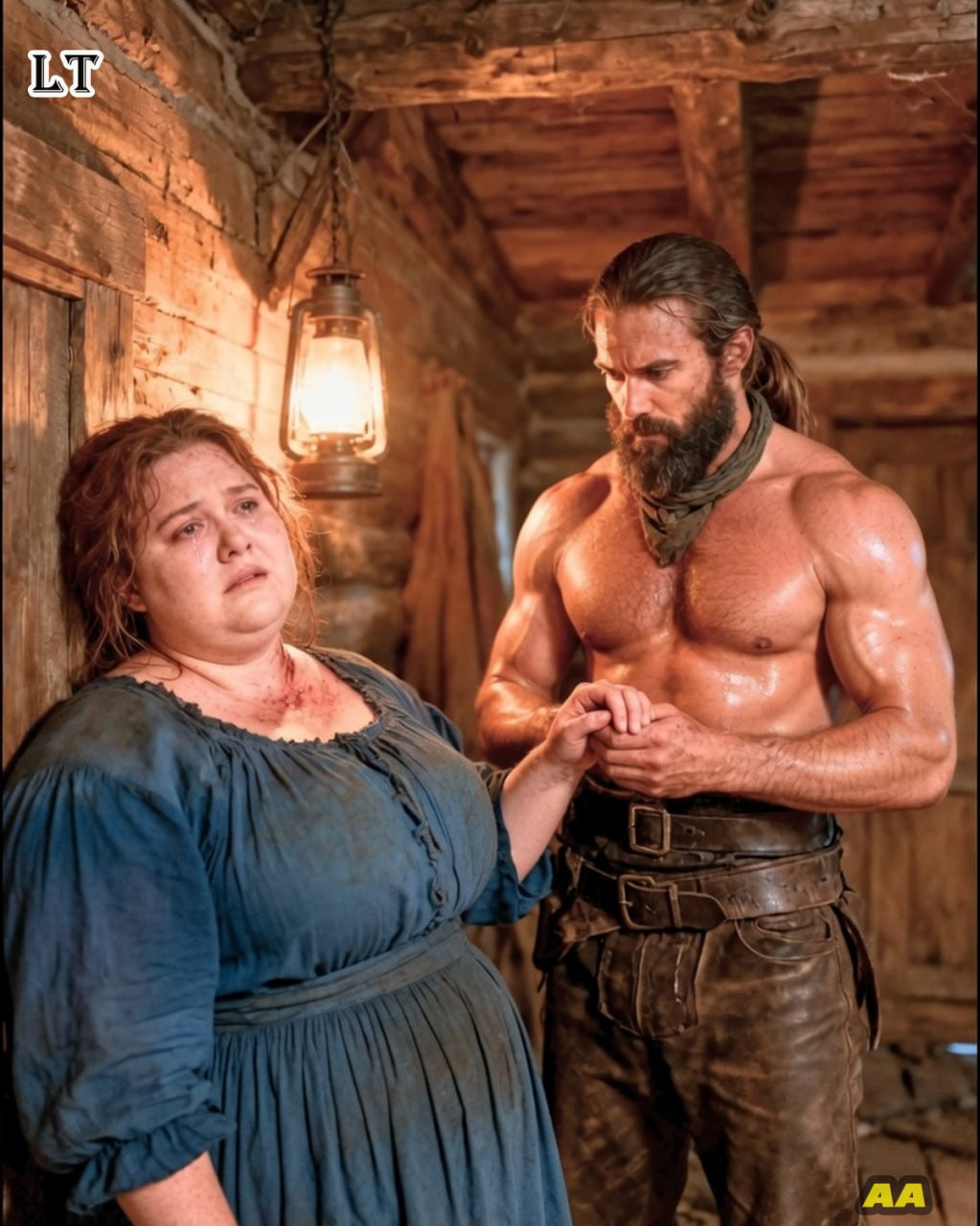
Eleanor dropped the photograph.
It landed faceup on the wooden floor.
Her father stood behind her mother inside Black Hollow.
Older, thinner, and wearing a dark coat, Henry Voss looked directly into the camera.
He was alive.
After twenty years of believing she had lost both parents, Eleanor was staring at proof that they might still be together.
But the date on the photograph was less than a month old.
"Where did you get this?" she demanded.
Dr. Whitmore closed his medical case.
"From a private source."
"Who took it?"
"That information is confidential."
Eleanor stepped toward him.
"Is my father alive?"
Whitmore adjusted his spectacles.
"Your father has been involved in a complicated medical matter for many years."
"That's not an answer."
"Perhaps you should ask him yourself."
Asher moved between them.
"Where is Black Hollow?"
Whitmore smiled faintly.
"You know the location, Captain."
"I know where the old military property stood. I also know it was closed."
"Buildings can be reopened."
"Not without authorization."
Whitmore's expression hardened.
"Some arrangements are beyond your understanding."
Asher looked at the glass vial inside the medical case.
"Then explain the substance."
Whitmore immediately covered it.
"It is a proprietary compound."
"What's in it?"
"That's none of your concern."
Asher leaned closer.
"If it contains the same pigment responsible for Eleanor's injuries, you should be very concerned about explaining it."
Whitmore snapped the case shut.
"Your medical judgment has been questioned before, Captain. I would be careful about repeating your mistakes."
Asher's eyes narrowed.
"Those weren't mistakes."
For a moment, the two men stood silently.
Then Eleanor picked up the photograph.
She looked at her father's face.
"Take me to him."
Whitmore studied her.
"That can be arranged."
Asher immediately objected.
"No."
Eleanor turned toward him.
"He is my father."
"And Whitmore controls the location."
"I can't keep waiting."
Asher lowered his voice.
"I understand. But we don't know what condition your parents are in, or why this man wants you there."
Whitmore gave a quiet laugh.
"Perhaps the captain is afraid of what you might discover."
Eleanor looked at the doctor.
"No. He's afraid because he knows you have something to hide."
For the first time, Whitmore's expression revealed genuine anger.
He turned toward Grant.
"Marshal, I believe we've said enough."
Grant nodded.
But before Whitmore could leave, Eleanor spoke again.
"One question."
The doctor stopped.
"Why is my name written in the original patient register?"
Whitmore looked at her for several seconds.
Then he answered.
"Because you were never supposed to grow up."
Nobody moved.
Margaret covered her mouth.
Asher stepped forward.
"What did you say?"
Whitmore calmly picked up his medical case.
"Ask your father."
Then he walked outside.
The farmhouse door remained open long after Whitmore departed.
Eleanor stood motionless.
His words kept repeating in her mind.
You were never supposed to grow up.
She looked at Asher.
"Was he threatening me?"
"Yes."
"Why?"
"Because he wants you frightened enough to stop asking questions."
Grant remained near the entrance.
He appeared uncomfortable.
"Dr. Whitmore shouldn't have said that."
Eleanor turned toward him.
"Then tell me what he meant."
The marshal rubbed his forehead.
"I don't know everything."
"But you know something."
Grant looked at the photograph.
"Twenty years ago, the military investigation uncovered more than a dangerous shipment. There was evidence that certain manufacturers had been experimenting with chemical compounds intended to preserve treated fabrics."
Asher's expression changed.
"Preserve them from what?"
"Moisture, insects, decay. The usual industrial applications."
"That's not the whole story."
Grant nodded.
"No."
He explained that the manufacturer had also been investigating the effects of prolonged exposure to the compounds.
Some tests had involved animals.
Others had involved workers who handled treated materials.
Several people developed severe skin reactions.
The company initially dismissed the symptoms as unrelated.
But the laboratory reports suggested otherwise.
Eleanor looked at the photograph.
"Why was my name in their records?"
Grant hesitated.
"Your father believed you had been exposed to the material as a child."
Eleanor remembered her childhood home.
Her mother's sewing room.
The blue curtains.
The fabric samples her father sometimes brought home.
"Was I sick?"
"I don't know."
Margaret spoke quietly.
"You had a skin reaction when you were eight."
Eleanor turned.
"What?"
"It was mild. Your mother treated it with ordinary ointment. It disappeared within days."
"Why didn't I remember?"
"You were young."
Eleanor looked toward Asher.
He was studying the original admission document.
"Could that have been the reason for the registration?"
"Possibly," he answered.
"But why would my father hide me?"
Asher looked at Grant.
"Because someone wanted to use her medical history to establish that the compound was harmless."
Grant nodded.
"That is one possibility."
Eleanor's face tightened.
"Meaning they wanted to use me as proof?"
"Or as a controlled patient."
The room became silent.
Margaret sat down.
For twenty years, she had believed that Henry Voss had hidden his daughter to protect her from the people responsible for the shipment.
Now Eleanor understood that her father's fear had been much greater than she imagined.
He had not merely been protecting her from a dangerous doctor.
He had been protecting her from a system that could invent a medical condition, fabricate records, and make a person disappear.
That afternoon, Asher examined the photograph and the medical documents.
He placed the original military report beside Whitmore's clinical notes.
The dates were important.
The earliest record of Eleanor's childhood skin reaction appeared shortly after the military investigation.
The later commercial shipments had been distributed several years afterward.
But the medical terminology in the documents was suspiciously similar.
Asher pointed to one paragraph.
"Look at this."
Eleanor leaned closer.
The report described a condition involving inflammation, damaged skin barriers, and prolonged sensitivity after chemical exposure.
"Is this accurate?"
"Some of it."
Asher explained that severe contact dermatitis could develop after exposure to irritating or allergenic substances.
Repeated exposure could worsen the reaction.
Poor nutrition, damaged skin, and continued contact with the irritant could make recovery more difficult.
"But this document claims the condition is permanent," Eleanor said.
"That isn't necessarily true."
He examined another page.
"And here, they've described your reaction as an inherited disorder."
"Could that be possible?"
"Not from the evidence we have."
He looked at her.
"Your recent symptoms were consistent with severe dermatitis. They don't establish that you inherited anything."
Eleanor considered the implications.
Whitmore had diagnosed her with a contagious disease.
Now he was presenting documents suggesting a lifelong inherited condition.
Both explanations served the same purpose.
They made her illness seem mysterious and untreatable.
And both avoided discussing the blue fabric.
Asher placed the pages down.
"These records need independent examination."
Grant nodded.
"The county laboratory could verify some of the information."
"Could?"
"The laboratory is operated by the same department that approved the original investigation."
Asher gave a bitter smile.
"Convenient."
Eleanor looked toward the marshal.
"Who can we trust?"
Grant remained silent.
Then he spoke.
"There is one person."
"Who?"
"A former county medical examiner named Dr. Samuel Bennett."
Asher looked interested.
"Where is he?"
"Living outside Helena. He resigned after the original investigation."
"Why?"
"Because he refused to sign a report declaring the injuries contagious."
Margaret nodded slowly.
"I remember him."
Grant continued.
"He has been trying to obtain the original laboratory findings for years."
Eleanor looked at the documents.
"Then we need to find him."
Asher agreed.
But first, he wanted to understand why Whitmore had brought the vial.
He suspected the doctor had intended to intimidate them.
The substance might be connected to the original formula.
It might also be evidence.
That evening, Margaret prepared the guest room for Eleanor.
The old woman apologized several times for the condition of the house.
Eleanor assured her that she needed nothing more.
But before going to bed, she returned to the kitchen.
Margaret was sitting beside the window.
"Can I ask you something?"
"Of course."
"Did my father ever mention why he chose you to protect me?"
Margaret looked down.
"Because I was the only person he believed would never hand you over."
Eleanor sat opposite her.
"Did you love him?"
Margaret gave a faint smile.
"Not in the way you mean."
She explained that Henry had once helped her husband after a serious accident.
He had paid for treatment when the family could not afford it.
After her husband died, Henry continued helping her.
She had considered him a good man.
"He trusted me with something important," Margaret said. "And I failed him."
"How?"
"I allowed too many years to pass without telling you the truth."
Eleanor shook her head.
"You were trying to protect me."
"Perhaps. But protection can become another kind of prison when it prevents someone from knowing their own life."
Eleanor thought about that.
Then she asked the question that had troubled her since discovering the photograph.
"Do you think my father knew I would eventually become sick?"
Margaret looked toward the fireplace.
"I think he feared the material would reach you again."
"Why would it?"
"Because your mother kept sewing samples from the original shipments. She had a small collection of them."
Eleanor remembered her mother's sewing room.
The wooden drawers.
The colored fabric.
The little blue scraps she had once used to make dolls' clothes.
"Could the material still be in our old house?"
Margaret nodded.
"Possibly."
Eleanor's expression changed.
The house had been sold after her parents disappeared.
But if the original samples remained inside, they could explain her childhood exposure.
And perhaps reveal how the manufacturer had concealed the danger.
The following morning, Asher received a message from Thomas Bell.
The young messenger had returned to the mountain cabin and found Samuel Pike awake.
Samuel had examined the documents sent from Margaret's farmhouse.
He had identified an important detail.
The old laboratory report contained a reference number connected to a separate investigation.
A number that did not appear in the public records.
Asher read the message twice.
Then he turned toward Eleanor.
"We have another lead."
"What?"
"Samuel believes the original laboratory findings were stored in a military archive."
"Can we access them?"
"Not easily."
"Why?"
"Because the records were classified after the investigation."
Eleanor frowned.
"Twenty years ago?"
"Yes."
"Who classified them?"
Asher looked at the message.
"The judge."
Judge Crowe had used his authority to seal the records.
But there was something else.
Samuel had identified the name of the officer who transferred the documents.
Captain Asher Creed.
He stared at the message.
"I never transferred those files."
Eleanor approached.
"What does that mean?"
"Someone used my military credentials."
Asher read the message again.
A handwritten notation had been added beneath the reference number.
Archive transfer approved under Captain Creed's authority.
He looked at Eleanor.
"I was already under investigation when this document was created."
"Could someone have forged your signature?"
"Yes."
"Then we have another forged record."
Asher nodded.
"And someone has been using my name to conceal the evidence for twenty years."
Later that day, Grant returned to the farmhouse.
This time, he came alone.
He looked exhausted.
Asher met him outside.
"What's happened?"
Grant removed his hat.
"Whitmore has filed another request."
"What now?"
"He wants an emergency hearing to establish Eleanor's permanent medical guardianship."
Asher's expression hardened.
"On what grounds?"
"Her supposed history of inherited chemical sensitivity."
Eleanor appeared in the doorway.
"I never agreed to that."
"I know."
"Then why can he request it?"
Grant looked at her.
"Because the original medical records have been entered into the county system."
Asher stepped forward.
"Those records are disputed."
"Whitmore claims they are authentic."
"And the county accepts his claim?"
"Until someone challenges them."
Eleanor felt anger rising.
"Then I'll challenge them."
Grant nodded.
"The hearing is scheduled for tomorrow morning."
Asher looked surprised.
"That quickly?"
"The doctor has requested an emergency decision."
"Why?"
Grant hesitated.
"Because he's planning to transfer Eleanor to Black Hollow."
Eleanor stared at him.
"Without my consent?"
"The order would authorize it."
Asher's voice became dangerously quiet.
"That will not happen."
Grant looked toward the road.
"Then you need to understand something."
He stepped closer.
"The judge has already signed the preliminary order."
Margaret appeared behind Eleanor.
"Judge Crowe?"
Grant nodded.
"Yes."
Eleanor looked at the marshal.
"Is he involved in the original investigation?"
Grant did not answer.
She understood.
The same man who had helped arrange her father's funeral was now deciding whether she could be taken against her will.
She looked at Asher.
"What do we do?"
He considered the situation.
"We find an independent physician. We challenge the records. And we make sure the original evidence reaches someone the judge cannot control."
Grant nodded.
"There's something else."
"What?"
He removed a small envelope from his coat.
"This arrived at my office last night."
Asher opened it.
Inside was a photograph.
It showed Black Hollow.
The building appeared abandoned.
But one window was illuminated.
A figure stood behind the glass.
Eleanor looked closer.
Her mother.
The woman she had spent twenty years mourning.
The photograph had been taken only two days earlier.
On the back was a handwritten message.
If you want her alive, come without the captain.
Eleanor looked at Asher.
He shook his head immediately.
"Absolutely not."
That evening, Eleanor remained near the fireplace.
She was holding the photograph of her mother.
Asher sat opposite her.
He had spent the last hour studying the new message.
The handwriting was unfamiliar.
The photograph could be genuine.
But the instruction was clearly intended to separate Eleanor from him.
"Someone wants you alone," he said.
"I know."
"They know you're working with me."
"That's why they wrote it."
He placed the photograph on the table.
"We won't follow their instructions."
Eleanor looked at him.
"What if my mother really is there?"
"We'll find another way."
"What if they move her?"
Asher did not answer immediately.
He understood the urgency.
If her mother was alive, every delay could matter.
But walking into Black Hollow without knowing who controlled it would be reckless.
He stood and approached the window.
"We need a plan."
Eleanor nodded.
Then she remembered something.
Her father's letter.
The private account ledger.
The reference to the second formula.
She opened her satchel and retrieved the old photograph from the warehouse.
She examined the back.
There was a small number beneath the date.
The same number engraved on the brass key.
She looked toward Asher.
"Do you remember what Margaret said about the iron cabinet?"
"Yes."
"She said there was another record inside."
He nodded.
"Your father's personal ledger."
"But the photograph was hidden inside it."
Eleanor turned the image toward the light.
A faint mark appeared near the edge.
It looked like a small symbol.
A circle with a line through it.
She had seen it before.
On the medical case.
On the old manufacturer label.
And on the document Whitmore had brought to the farmhouse.
Asher examined it.
His expression changed.
"This isn't a company mark."
"What is it?"
"A military archive symbol."
He reached for the old report.
The same symbol appeared beside the reference number connected to the missing laboratory findings.
Eleanor looked at him.
"Does that mean the records are still somewhere?"
"Possibly."
He compared the markings.
Then he noticed a small handwritten code beneath the symbol.
A location.
Not a town.
Not a street.
A military storage designation.
Asher stared at it.
"I know this place."
"Where?"
He looked toward the fireplace.
"An underground medical archive beneath the old military hospital."
Eleanor felt a surge of hope.
"Could it contain the original formula?"
"More than that. It could contain the original patient records."
He turned the page.
A list of names appeared beneath the code.
Several were military personnel.
Others were civilian workers.
Then he found a final entry.
VOSS, HENRY — PRIVATE WITNESS FILE.
Eleanor covered her mouth.
Her father had left another trail.
And this one might finally lead them to him.
The next morning, Asher prepared to travel.
He planned to take Eleanor to the former military hospital while Margaret remained at the farmhouse.
But before they could leave, Thomas Bell arrived.
His horse was exhausted.
He dismounted and hurried toward the entrance.
"Captain Creed!"
Asher opened the door.
"What happened?"
Thomas looked toward Eleanor.
"Samuel found something else."
He handed Asher a folded report.
The old pharmacist had compared the military records with the commercial shipment ledger.
He had discovered that the second formula had never been approved for public use.
It was intended for a restricted medical experiment.
But the manufacturer had secretly distributed a modified version through commercial fabric.
The purpose was not simply to preserve the material.
It was to test how prolonged exposure affected human skin.
Eleanor read the report.
"People were used as test subjects?"
Asher's expression hardened.
"That's what the records suggest."
Thomas nodded.
"And Samuel found the name of the person who authorized the civilian testing."
Eleanor looked down.
The signature appeared beneath the report.
It was not Whitmore's.
It was not Judge Crowe's.
It belonged to someone who had been present at the farmhouse.
Someone who had claimed to be protecting her family.
Someone whose name appeared repeatedly in her father's private ledger.
Eleanor slowly raised her eyes.
"Abigail Turner."
Thomas nodded.
"Samuel says she wasn't merely helping your father hide the records."
He paused.
"She was the person who originally delivered the second formula to the manufacturer."
Eleanor turned toward the kitchen.
Abigail was gone.
Her coat was missing.
So was the small photograph of Eleanor's mother.
Asher immediately checked the back door.
It stood open.
Outside, fresh carriage tracks crossed the muddy yard.
And beside them lay a folded note.
Eleanor picked it up.
There were only two sentences.
I'm sorry, Eleanor. Your mother asked me to do something twenty years ago.
Today, I'm finally going to finish it.
At the bottom was an address.
Black Hollow.
And a departure time.
Less than one hour away.
Asher looked at Eleanor.
She was already reaching for her coat.
He knew there would be no stopping her.
But when he examined the note again, he noticed something written beneath the address.
A second instruction.
Bring the blue vial.
He looked toward the place where Whitmore had opened his medical case.
The vial was no longer there.
And Eleanor suddenly understood that Abigail hadn't simply disappeared.
She had taken the one thing Whitmore had been desperate to recover.
Meet the required 2,000-word length Strengthen the final cliffhanger






Comments 0