"No. Not you."
Thorne's voice was so quiet that I almost didn't hear it.
But I heard the pain.
I turned toward the rear entrance of the hearing room.
A woman stood between two security officers.
She wore a charcoal-gray coat over a navy dress. Her dark hair was pulled into a neat bun, and a familiar silver bracelet hung loosely around her wrist.
Three charms.
A circle.
A heart.
A key.
For a moment, I couldn't understand what I was seeing.
Then my stomach dropped.
"Lieutenant Mercer?"
Elena Mercer looked directly at me.
She didn't smile.
She didn't apologize.
She simply stood there, her hands folded in front of her, as though she had arrived for another routine assignment.
The woman who had helped coordinate my husband's return.
The woman who had stood outside my hospital room.
The woman who had brought updates about the investigation.
The woman whose aunt had died trying to protect my grandmother.
I stared at her.
"No."
My voice sounded distant.
"That doesn't make sense."
Elena's eyes moved toward Thorne.
"Commander."
He shook his head.
"Tell me this isn't true."
She said nothing.
Daniel Mercer stood beside the witness table, looking as though the floor had disappeared beneath him.
"Elena," he whispered. "Please."
The hearing officer raised her hand.
"Everyone remain seated."
Nobody moved.
Then Detective Sloan approached the security officers.
Elena looked at her.
"I came voluntarily."
Sloan nodded.
"That will be documented."
I gripped Thorne's hand.
"She helped us."
My husband didn't answer.
I looked at Elena.
"You helped me."
Her expression changed.
Only slightly.
But enough.
"Vesper," she said, "I did help you."
I shook my head.
"Then why is he saying you ordered my death?"
The room fell silent.
Elena lowered her eyes.
And for the first time since I had met her, she looked afraid.
The hearing officer suspended the proceeding long enough for counsel and investigators to establish what evidence could properly be considered.
Elena was escorted to a separate interview room.
Daniel Mercer remained.
He sat with his hands clasped together, staring at the table.
Thorne stood beside me.
I could feel his anger.
But beneath it was something worse.
Betrayal.
Again.
I looked at Daniel.
"What do you know?"
He raised his eyes.
"Eleven years ago, my sister Helen died while trying to protect Eleanor."
Grandma closed her eyes.
Daniel continued.
"I believed Adrian Kessler was responsible. I spent years trying to prove it."
I swallowed.
"And Elena?"
"She believed it too."
His voice shook.
"She was young when Helen died. Helen had practically raised her."
I looked toward the door.
Daniel continued.
"Elena joined the military because she wanted access to the kind of records she believed could explain what happened."
Thorne's expression hardened.
"That isn't why she was assigned to my team."
Daniel shook his head.
"No. She was assigned because she was qualified."
He looked down.
"But she used that position to investigate Kessler."
I swallowed.
"Did she find him?"
"Yes."
The room went silent.
Daniel continued.
"She found evidence that Kessler had been using old credentials and intermediaries to communicate with contractors."
Thorne leaned forward.
"Why didn't she report it?"
Daniel looked at him.
"Because she believed the same people who killed Helen controlled the reporting channels."
My stomach tightened.
"And then?"
Daniel's eyes filled with tears.
"She decided to force them into the open."
I stared at him.
"The coin."
He nodded.
"She arranged for the coin to be delivered."
My heart hammered.
"And the message?"
"She prepared it."
I looked down at my hands.
The gray envelope.
The handwritten note.
The words that had made me believe my husband was finally coming home.
I am closer than you think.
I had held that note against my chest.
I had cried over it.
I had believed Thorne wrote it.
I looked at Daniel.
"She forged my husband's message?"
He nodded.
"Yes."
I closed my eyes.
Another lie.
Another person deciding what I was allowed to know.
Daniel continued.
"Elena knew Kessler had arranged a confrontation at the anniversary party. She believed the incident would create enough attention to expose the conspiracy."
I stared at him.
"She knew Cresa planned to hit me?"
Daniel hesitated.
"She knew violence was possible."
My stomach turned.
"And she sent me there anyway?"
He looked ashamed.
"Yes."
I swallowed.
"Why?"
"Because she wanted Kessler to believe the operation was proceeding normally."
Thorne took a step forward.
"She used my wife as bait."
Daniel didn't deny it.
The words hung in the room.
My wife.
Bait.
I looked at my injured hands.
At the bruises along my wrists.
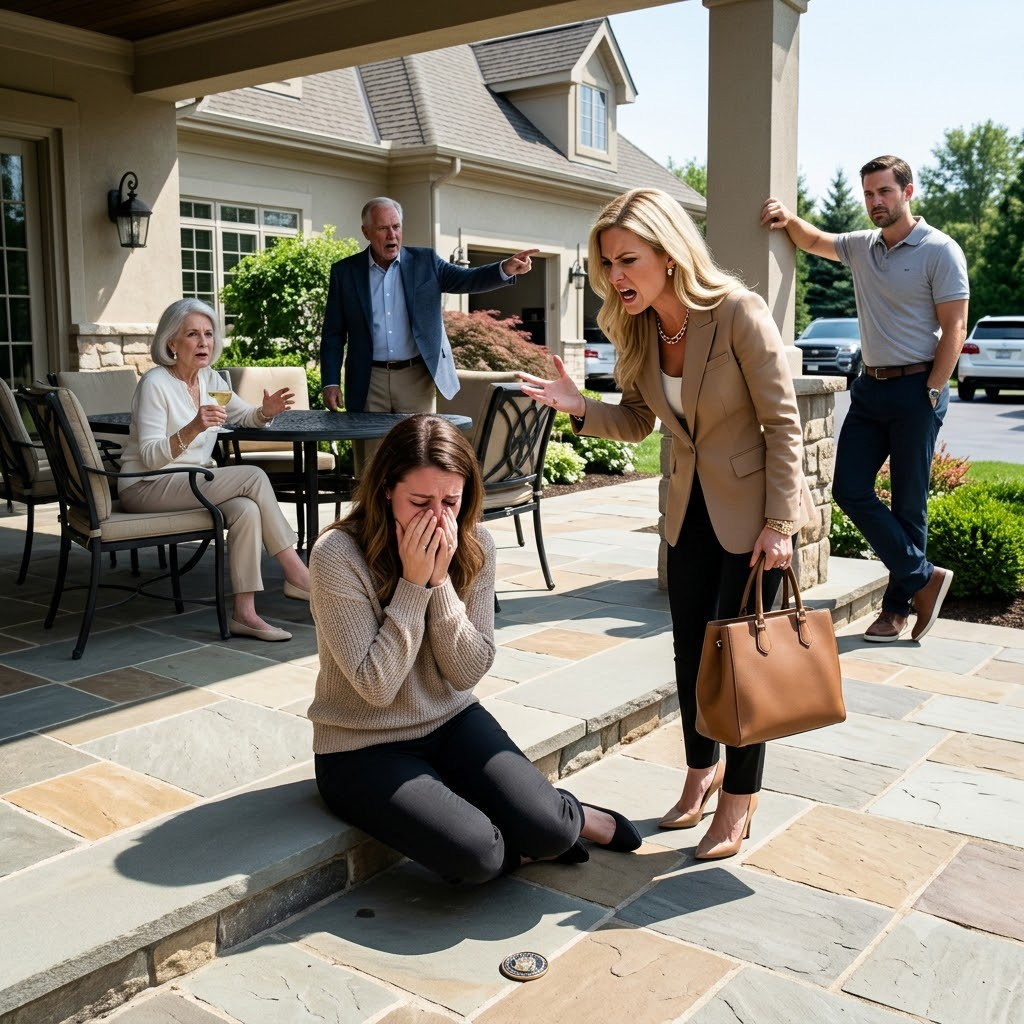
At the faint stains still visible beneath one fingernail where my blood had dried on the patio.
I had nearly died.
Not because I was careless.
Not because I had made some terrible mistake.
But because people kept deciding that my life was an acceptable cost.
My father wanted money.
My mother wanted control.
Cresa wanted a larger house.
Balthazar wanted a defense contract.
Kessler wanted to hide his crimes.
Halden wanted to protect his career.
And Elena Mercer wanted revenge.
Every one of them had found a reason to sacrifice me.
I looked at Daniel.
"Did she actually order someone to kill me?"
He swallowed.
"She authorized the contingency that made you the target."
My heart stopped.
"What contingency?"
Daniel opened his folder.
He removed a document and placed it on the table.
"Elena believed Kessler would order a fatal attack if the original plan failed. She arranged for a surveillance team to document his involvement."
Thorne's jaw tightened.
"That doesn't answer the question."
Daniel nodded.
"You're right."
He looked at me.
"She also sent an instruction to an intermediary telling them not to stop the operation before Kessler's involvement could be established."
I stared at him.
"Even if I was killed?"
Daniel's eyes filled.
"Yes."
I felt sick.
The hearing officer looked toward the investigators.
Daniel continued.
"Elena later tried to cancel that instruction when she learned Kessler intended to make the attack fatal. But the intermediary had already passed it along."
I swallowed.
"Who was the intermediary?"
Daniel looked at Thorne.
"Someone operating through Kessler's network."
Thorne closed his eyes.
I looked at the document.
My name appeared in the middle of the page.
VESPER THORNE — PRIMARY SUBJECT.
Below it was a line authorizing continued observation despite an elevated risk of violence.
And beneath that—
Elena's electronic approval.
I stared at it.
She hadn't merely failed to protect me.
She had made a decision.
A deliberate decision.
And I had been the person expected to pay for it.
At 11:26 a.m., Detective Sloan returned.
She had been coordinating with federal investigators reviewing Elena's statement.
Her expression was serious.
"Vesper, Elena has acknowledged arranging the unauthorized delivery of the coin and withholding information about the planned confrontation."
I nodded slowly.
"Did she admit the rest?"
Sloan hesitated.
"She disputes that she intended you to die. She says she believed surveillance personnel would intervene before anyone was seriously hurt."
I looked at her.
"But they didn't."
"No."
"Because she told them not to."
Sloan nodded.
"Her instructions appear to have delayed intervention."
I stared at the floor.
For a long time, nobody spoke.
Then I asked, "Why did she help us afterward?"
Sloan looked at me.
"She says she panicked when she learned how badly you were injured. She also says she wanted to preserve evidence against Kessler and Halden."
I swallowed.
"So she helped because she felt guilty."
"That may have been part of it."
I looked toward the door.
"And because she wanted to control what we found."
Sloan didn't answer immediately.
"Investigators are examining that possibility."
I nodded.
That was enough.
I didn't need Elena to be a monster.
I didn't need her to have wanted my death.
She had known I could be hurt.
She had accepted that risk without asking me.
And afterward, she had stood beside my hospital bed pretending to be someone I could trust.
That was betrayal.
Whatever explanation she gave.
The hearing resumed that afternoon.
Elena's counsel advised her regarding the ongoing criminal investigation, and she declined to answer several questions.
But investigators introduced records that established the unauthorized coin delivery, the forged note, and the delayed intervention instruction.
The evidence also showed something important.
Elena had not created the original conspiracy.
Kessler had.
Halden had helped protect it.
My family had participated.
Elena had discovered parts of their plan and then tried to manipulate the outcome for her own purposes.
Her actions had made the danger worse.
But they had not erased the responsibility of the people who first planned to destroy me.
I listened as the hearing officer summarized the evidence relevant to the administrative review.
The deployment extensions were irregular.
The credential approvals required further investigation.
The defense contracting records showed serious discrepancies.
And the attempt to use my trust interests as collateral had no valid authorization from me.
General Halden sat motionless.
For the first time, he looked small.
Not physically.
He was still broad-shouldered.
Still perfectly dressed.
Still carrying himself like a man accustomed to obedience.
But the room no longer belonged to him.
The hearing officer announced that the administrative record would be referred to the appropriate authorities for further action.
Halden's official access had already been restricted pending investigation.
Thorne's deployment records would be independently reviewed.
And the contracting irregularities would be referred for further examination.
It wasn't a courtroom verdict.
It wasn't the end of every investigation.
But it was the first time I had seen people with authority refuse to accept Halden's version of the truth.
I looked at my husband.
His eyes were wet.
I squeezed his hand.
He looked at me.
And for a moment, neither of us needed to speak.
The following weeks were difficult.
There were interviews.
Medical appointments.
Financial reviews.
Calls from attorneys.
Requests for documents.
Days when my headaches were so bad that I couldn't read more than a page.
Nights when I woke from dreams of the patio, certain I could hear Cresa screaming.
Thorne stayed.
Not because his duties disappeared.
Not because the world suddenly became simple.
He stayed because we finally had the chance to build a life that belonged to us.
He accompanied me to medical appointments when he could.
He learned how to make my favorite tea.
He discovered that the kitchen drawer stuck unless you lifted it slightly.
He complained about our bathroom door.
I told him it had character.
He told me it had structural problems.
For the first time in three years, we argued about ordinary things.
The temperature of the apartment.
Whether the milk had expired.
Who had forgotten to take out the trash.
And every time we did, I felt grateful.
Because ordinary disagreements meant we were finally living in the same place.
Not surviving on letters.
Not waiting for permission.
Not wondering when we would see each other again.
Together.
Six weeks after the hearing, Detective Sloan called.
I was sitting at the kitchen table with a cup of coffee.
Thorne was making breakfast.
Grandma and Elara were coming over that afternoon.
When Sloan's name appeared on my phone, my stomach tightened.
I answered.
"Detective?"
"Vesper, I wanted to update you personally."
I held my breath.
"Okay."
"Adrian Kessler has been located and taken into custody."
I closed my eyes.
For a moment, I couldn't speak.
Thorne noticed.
He turned off the stove.
Sloan continued.
"Kessler was arrested following an investigation involving the financial transactions, unauthorized credential activity, and threats connected to the case."
I swallowed.
"Where?"
"At a private property in Maryland."
I looked at Thorne.
His expression changed when I mouthed Kessler's name.
Sloan continued.
"Investigators also recovered additional records."
I sat straighter.
"What kind?"
"Communications, financial documents, and material relevant to Helen Mercer's death."
My heart tightened.
"Does that mean they can prove what happened?"
"Investigators have developed substantial evidence, including witness statements and records that contradict the original account."
I swallowed.
"And Elena?"
"Her case is proceeding separately. She's cooperating in some respects, but her actions remain under investigation."
I nodded.
"What about Halden?"
"He's facing formal proceedings arising from the administrative and criminal investigations. I can't predict the outcome."
I looked at Thorne.
He took my hand.
Sloan's voice softened.
"I know this has been a long road."
I swallowed.
"Is it almost over?"
There was a pause.
Then she said, "The legal process will take time. But the immediate threats that brought you into this investigation have been addressed."
I closed my eyes.
For the first time in months, I allowed myself to breathe.
The criminal cases did take time.
Longer than I wanted.
Longer than Thorne wanted.
Longer than Grandma deserved.
But eventually, the evidence was tested in court.
Witnesses testified.
Documents were authenticated.
Financial records were traced.
The recordings were examined.
And the people who had spent years hiding behind money and influence were forced to answer for what they had done.
Adrian Kessler was convicted on charges arising from the fraud, obstruction, and conspiracy, along with crimes connected to Helen Mercer's death and the threats against me. The court imposed a substantial prison sentence.
General Marcus Halden was convicted in separate proceedings involving corruption, false statements, and obstruction connected to the deployment and contracting scheme. His military career ended in disgrace.
Elena Mercer accepted responsibility for her unauthorized actions, including the reckless decisions that exposed me to violence. Her cooperation helped establish parts of the conspiracy, but it did not excuse what she had done. She was removed from her position and sentenced under the applicable proceedings.
I attended part of her sentencing.
Not because I wanted to see her suffer.
Because I wanted to hear her tell the truth.
She stood before the court and looked at me.
"I told myself I was protecting people," she said.
Her voice shook.
"But I was protecting my own need for revenge."
I sat beside Thorne.
Elena continued.
"I knew Vesper could be hurt. I convinced myself I could control what happened."
She began crying.
"I was wrong."
I watched her.
For a moment, I remembered the woman who had stood beside my hospital bed.
The one who had brought updates.
The one who had looked concerned.
The one I had trusted.
I didn't forgive her that day.
I didn't know if I ever would.
But I believed she understood what she'd done.
And that was more than my family had offered for most of my life.
My father pleaded guilty to offenses involving forged financial documents, obstruction, and his participation in the scheme against me.
He also cooperated with investigators.
His cooperation mattered.
But it didn't erase his choices.
At his sentencing, he asked to speak.
I almost left.
Then I stayed.
He looked directly at me.
"Vesper, I spent my life believing that providing for a family meant controlling it."
His voice shook.
"I was wrong."
I stared at him.
He continued.
"I wanted money. I wanted status. I wanted people to believe I was successful."
He swallowed.
"And when my daughter needed me, I chose myself."
Tears filled his eyes.
"I don't expect forgiveness."
I looked down.
For years, I had imagined my father saying those words.
Now that he had, I realized something.
An apology could be real.
And still not repair what had been broken.
He received a sentence reflecting his conduct and cooperation.
When the hearing ended, I didn't approach him.
I walked outside with Thorne.
The sun was shining.
People were crossing the courthouse steps.
Cars moved through traffic.
Life continued.
I stood beside my husband and felt the strange weight of an ending I had once thought impossible.
My mother's case was different.
Morwena had coordinated documents, participated in the plan to provoke me, and helped create the false narrative that I couldn't manage my affairs.
She tried to claim she had only followed my father's instructions.
The evidence told another story.
Her handwriting appeared beside the incapacity clause.
Her messages showed repeated pressure.
Her voice was on Nina's recording.
And the financial records showed her involvement in the disputed transactions.
She ultimately entered a plea agreement and received a sentence that included confinement, restitution obligations, and restrictions on her financial activities.
Before sentencing, she sent me a letter.
I read it once.
She wrote that she loved me.
That she had made mistakes.
That she had been frightened of losing the family.
Then she asked whether I would speak on her behalf.
I folded the letter.
Put it back in the envelope.
And gave it to Margaret.
I didn't write back.
Not because I hated my mother.
But because I finally understood that loving someone didn't require me to protect them from the consequences of hurting me.
Cresa was convicted for her role in the assault and the related conspiracy.
Balthazar faced separate charges involving financial fraud and the contracting scheme.
Blackthorn Freight Holdings lost the disputed business opportunity and became subject to financial and regulatory consequences.
The grand house Cresa had wanted never materialized.
The life she had imagined buying with my money disappeared.
But the person I worried about most was Draven.
He was eight years old when his parents taught him to lie.
Eight years old when they made him believe that helping them hurt me was a game.
Eight years old when he watched his mother strike his aunt.
I didn't want him punished for what the adults had done.
Child welfare professionals and family members worked to ensure he had a safe, stable home while his parents' cases proceeded.
He received counseling.
And eventually, with appropriate arrangements, I was allowed to see him.
We met in a quiet room at a family services center.
He sat across from me, swinging his legs.
For a long time, neither of us spoke.
Then he whispered, "Aunt Vesper?"
I smiled gently.
"Hi, sweetheart."
His eyes filled with tears.
"I'm sorry."
My heart broke.
I leaned forward.
"Draven, look at me."
He raised his eyes.
"You were a little boy doing what adults told you to do."
He began crying.
"I knew it was wrong."
I swallowed.
"Sometimes children know something feels wrong, but they don't know how to stop it."
He wiped his face.
"Are you mad at me?"
I shook my head.
"No."
He stared at me.
"Really?"
"Really."
He began crying harder.
I opened my arms.
He came to me.
I held him carefully, mindful of my healing face.
And for the first time since the patio incident, I felt that something good might still grow from what had happened.
Not because the past could be erased.
But because Draven wouldn't have to carry his parents' mistakes for the rest of his life.
The trust was finally settled.
Not through the forged assignment.
Not through my parents.
Not through Balthazar's financing arrangements.
Through the independent administrators and the original legal documents.
Grandma's intentions were honored.
Elara's rights were recognized.
My interests were confirmed.
The suspicious transactions were addressed through the appropriate proceedings, including recovery efforts and restitution where possible.
Thorne's separate trust remained protected under its governing terms.
For the first time, I understood exactly what belonged to me.
And what didn't.
I sat in Margaret's office one afternoon, looking at the final documents.
"That's a lot of money," I whispered.
Margaret smiled.
"Yes."
I looked at her.
"I don't know what to do with it."
"You don't have to decide everything today."
I laughed.
"Everyone keeps saying that."
"Because it's true."
I looked down.
For years, my family had treated money like proof of worth.
They had measured people by houses.
Cars.
Jewelry.
Business connections.
And the size of the checks they could write.
I had spent so long believing I was a disappointment because I didn't have those things.
Now I had financial security beyond anything I'd imagined.
And the first thing I wanted to do was go home and eat dinner with my husband.
I looked at Margaret.
"I want to keep working."
She smiled.
"Then keep working."
"I like indexing."
"I know."
I laughed.
"I know it sounds boring."
Margaret shook her head.
"After everything your work uncovered, I don't think anyone should call it boring."
I smiled.
Then I signed the documents.
Not because someone pressured me.
Not because I was afraid.
Not because I wanted approval.
Because I understood them.
Because I had chosen.
Because my name finally belonged to me.
Elara and I took time to become sisters.
We didn't pretend that thirty-one years of separation could disappear over coffee.
We asked questions.
We told stories.
We compared childhood photographs.
We discovered that we both hated mushrooms.
That we both loved old bookstores.
That we both organized our kitchen cabinets by categories nobody else understood.
One afternoon, she came to my apartment carrying a cardboard box.
"What's that?" I asked.
She smiled.
"Something Grandma gave me years ago."
Inside were photographs.
Letters.
Birthday cards.
And a small silver necklace.
I picked it up.
The pendant was shaped like a star.
"Grandma gave you this?"
Elara nodded.
"When I graduated."
I smiled.
Then she reached into the box again.
"And this is yours."
She handed me a small envelope.
My name was written across the front.
In Grandma's handwriting.
I opened it.
Inside was a photograph of me at age six.
I was standing in a garden, holding a yellow balloon.
Grandma stood beside me.
On the back, she'd written:
For Vesper, who will always find her own way.
I began crying.
Elara moved closer.
"She kept it all these years."
I nodded.
Then I looked at my sister.
"I'm glad you found me."
Her eyes filled.
"I'm glad you let me stay."
I hugged her.
And for the first time, the word sister felt like something warm.
Not something I had to survive.
Grandma moved into a small house near us.
Not a mansion.
Not an estate.
A bright little house with a garden and a porch swing.
She planted roses.
White ones.
Pink ones.
Yellow ones.
She said she was tired of living behind locked doors.
One afternoon, Thorne and I helped her plant a young magnolia tree.
Elara brought lemonade.
Draven visited with his caregiver.
And Grandma stood in the sunlight, directing everyone as though she had never missed a day.
I watched her laughing.
Eleven years stolen.
Eleven years of fear.
Eleven years of believing she had been forgotten.
And now she was surrounded by people who loved her.
I walked over.
"Grandma?"
She looked at me.
"Yes, sweetheart?"
"Are you happy?"
She smiled.
"More than I expected to be."
I hugged her.
She held me tightly.
Then whispered, "Your grandfather would have loved this."
I closed my eyes.
For once, the past didn't feel like a wound.
It felt like something we could carry without letting it destroy us.
Thorne's career required its own reckoning.
The review of his deployment found that legitimate operational needs had been mixed with improper interference.
Some of the assignment had been necessary.
Some extensions had not.
The administrative records were corrected.
The people responsible for the improper actions were held accountable through the appropriate processes.
Thorne was offered the opportunity to continue serving.
He considered it carefully.
We talked for weeks.
Not about what his superiors wanted.
Not about what my family thought.
About what we wanted.
One evening, we sat on our apartment balcony.
The city lights glowed in the distance.
Thorne held a cup of coffee.
I leaned against him.
"Do you want to stay?" I asked.
He looked at me.
"In the military?"
I nodded.
He was quiet.
Then he said, "Part of me does."
I swallowed.
"And the other part?"
He looked toward the lights.
"The other part wants to wake up beside you every morning."
I smiled sadly.
"You can do both."
"Not always."
I nodded.
He turned toward me.
"I don't regret serving."
"I know."
"But I regret the time we lost."
My throat tightened.
"So do I."
He took my hand.
"I don't want to make another decision about our future without you."
I smiled.
"Then don't."
He laughed softly.
We talked until midnight.
About assignments.
About boundaries.
About family.
About the kind of life we wanted.
And eventually, Thorne chose a role that allowed him to continue serving while building a stable home with me.
It wasn't the end of his career.
It was the beginning of a different chapter.
One we chose together.
A year after the anniversary party, we moved.
Not because we needed a bigger house.
Because we wanted a fresh start.
We found a home on a quiet street with tall trees and a wide front porch.
The kitchen had windows overlooking the backyard.
The living room had built-in bookshelves.
And the bathroom door closed properly.
Thorne insisted that was the most important feature.
I told him he lacked imagination.
He told me he had spent three years imagining a bathroom door that worked.
We laughed.
Then we bought the house.
On moving day, Grandma arrived with a basket of food.
Elara brought flowers.
Draven helped carry small boxes.
Thorne carried the heavy furniture.
And I stood in the doorway, watching the people I loved fill our home.
No one shouted.
No one demanded money.
No one criticized my clothes.
No one asked why I wasn't more successful.
They simply came.
Because they wanted to be there.
That evening, we ate pizza on the living room floor.
Thorne sat beside me.
Grandma told stories.
Elara laughed.
Draven fell asleep on a pile of cushions.
And I looked around the room.
For the first time in my life, I understood what family was supposed to feel like.
Safe.
Warm.
Ordinary.
Loved.
Three months later, Thorne surprised me.
I came home from work and found him standing in the dining room.
He wore a white shirt.
His sleeves were rolled up.
A small bouquet of white roses rested on the table.
I stopped.
"What is this?"
He smiled.
"Dinner."
I looked at the candles.
The flowers.
The carefully arranged plates.
"Did you cook?"
He looked offended.
"Of course."
I raised an eyebrow.
"Should I call the fire department?"
He laughed.
"Very funny."
I walked closer.
Then noticed a small box beside my plate.
My heart tightened.
"Thorne?"
He took my hand.
"Three years ago, I promised you a life together."
I swallowed.
He continued.
"Then I left."
"You had orders."
"I know."
His eyes filled.
"But I missed birthdays. Holidays. Ordinary Tuesdays."
I felt tears burning behind my eyes.
He smiled sadly.
"And when I came home, I found you bleeding on a patio while people who should have loved you stood around doing nothing."
My throat tightened.
He squeezed my hand.
"I can't give you those years back."
I shook my head.
"You don't have to."
He continued.
"But I can give you every day we have now."
I began crying.
He opened the box.
Inside was a simple gold ring.
Not enormous.
Not flashy.
A delicate band with three small stones.
I stared at it.
"What is it?"
He smiled.
"One stone for every year we spent apart."
My tears fell faster.
"And one promise," he whispered, "that we won't let anyone else decide what our marriage means."
I looked at him.
Then laughed through my tears.
"Are you proposing to your own wife?"
He grinned.
"Apparently."
I held out my hand.
"Then yes."
He slipped the ring onto my finger.
And kissed me.
Not like a soldier returning from war.
Not like a man trying to rescue someone.
Like my husband.
Like the person who knew me better than anyone.
Like someone who had finally come home.
Later that night, we sat on the porch.
The air was cool.
The neighborhood was quiet.
Thorne held my hand.
I looked at the ring.
Then at the stars.
"Do you ever think about that night?" I asked.
He knew which night I meant.
"The patio?"
I nodded.
"Sometimes."
I swallowed.
"Me too."
He turned toward me.
"What do you remember?"
I thought about it.
The cold marble.
The broken glass.
The blood.
My mother's voice.
Cresa's handbag.
My father's silence.
The sound of approaching engines.
Then I looked at my husband.
"I remember thinking nobody was coming."
His expression softened.
I continued.
"I thought I was going to die there."
He squeezed my hand.
I swallowed.
"Then I heard the convoy."
He smiled sadly.
"I remember seeing you."
My throat tightened.
He continued.
"I've never been so afraid."
I leaned against him.
For a long time, we sat quietly.
Then I whispered, "I used to think that was the moment you saved me."
He looked at me.
"And now?"
I smiled.
"Now I think it was the moment I realized I could stop waiting for people who didn't love me."
He kissed my forehead.
I looked toward the house.
Through the window, I could see our bookshelves.
Our photographs.
The little table where we ate breakfast.
The life we had built.
I thought about my parents.
I thought about Cresa.
I thought about the years I'd spent trying to earn their approval.
And I realized I no longer needed them to understand me.
I no longer needed them to apologize perfectly.
I no longer needed them to become the family I'd imagined.
I had grieved that family.
I had let it go.
And in its place, I had found something real.
The following spring, we hosted a family dinner.
Grandma brought a lemon cake.
Elara brought flowers.
Draven brought a drawing he'd made at school.
It showed a house.
A garden.
A dog.
And five smiling people.
I studied it.
"Who's the dog?"
Draven grinned.
"The one you haven't adopted yet."
Thorne laughed.
"That's a pretty strong hint."
Draven looked at him seriously.
"Uncle Thorne, every family needs a dog."
Grandma nodded.
"He's right."
Elara smiled.
"Absolutely."
I looked at my husband.
He raised both hands.
"I can see I've been outvoted."
We laughed.
Later, after dinner, I stood in the kitchen washing dishes.
Thorne came up behind me.
He wrapped his arms around my waist.
"Happy?" he whispered.
I looked toward the dining room.
Grandma was laughing at something Elara had said.
Draven was showing her another drawing.
The windows were open.
Warm spring air moved through the curtains.
I leaned back against my husband.
"Yes."
He kissed my cheek.
"Good."
I turned around.
"Thorne?"
"Yes?"
"Thank you for coming home."
His expression softened.
He brushed a strand of hair from my face.
"Thank you for believing I would."
I smiled.
Then he kissed me.
And somewhere in the next room, Draven shouted that we were being embarrassing.
We laughed.
Thorne took my hand.
Together, we walked back to the people waiting for us.
That night, after everyone had gone home, I stood alone in the dining room.
The table was covered with empty plates.
A few crumbs remained beside Grandma's cake stand.
Someone had left a napkin on the floor.
Draven's drawing rested against the window.
I picked it up.
Five smiling people.
A house.
A garden.
A dog.
I smiled.
Then I looked at the gold ring on my finger.
For years, I had believed happiness was something other people decided whether I deserved.
My parents had taught me that love came with conditions.
My sister had taught me that affection could turn into cruelty.
The people behind the conspiracy had treated my future like an asset they could trade.
But none of them had understood something important.
They could take my money.
They could damage my reputation.
They could keep my husband away.
They could make me afraid.
But they couldn't decide who I would become after I survived.
I had taken back my name.
I had taken back my marriage.
I had taken back my future.
And I hadn't done it alone.
I had done it with people who stood beside me when the truth was painful.
People who didn't demand that I become smaller to make them comfortable.
People who loved me without asking what they could take.
Thorne appeared in the doorway.
"Vesper?"
I turned.
He smiled.
"Coming to bed?"
I looked around the room one last time.
The warm lights.
The flowers.
The photographs.
The ordinary mess of a happy evening.
Then I walked toward him.
"Yes."
He held out his hand.
I took it.
And together, we turned off the lights.






Comments 0