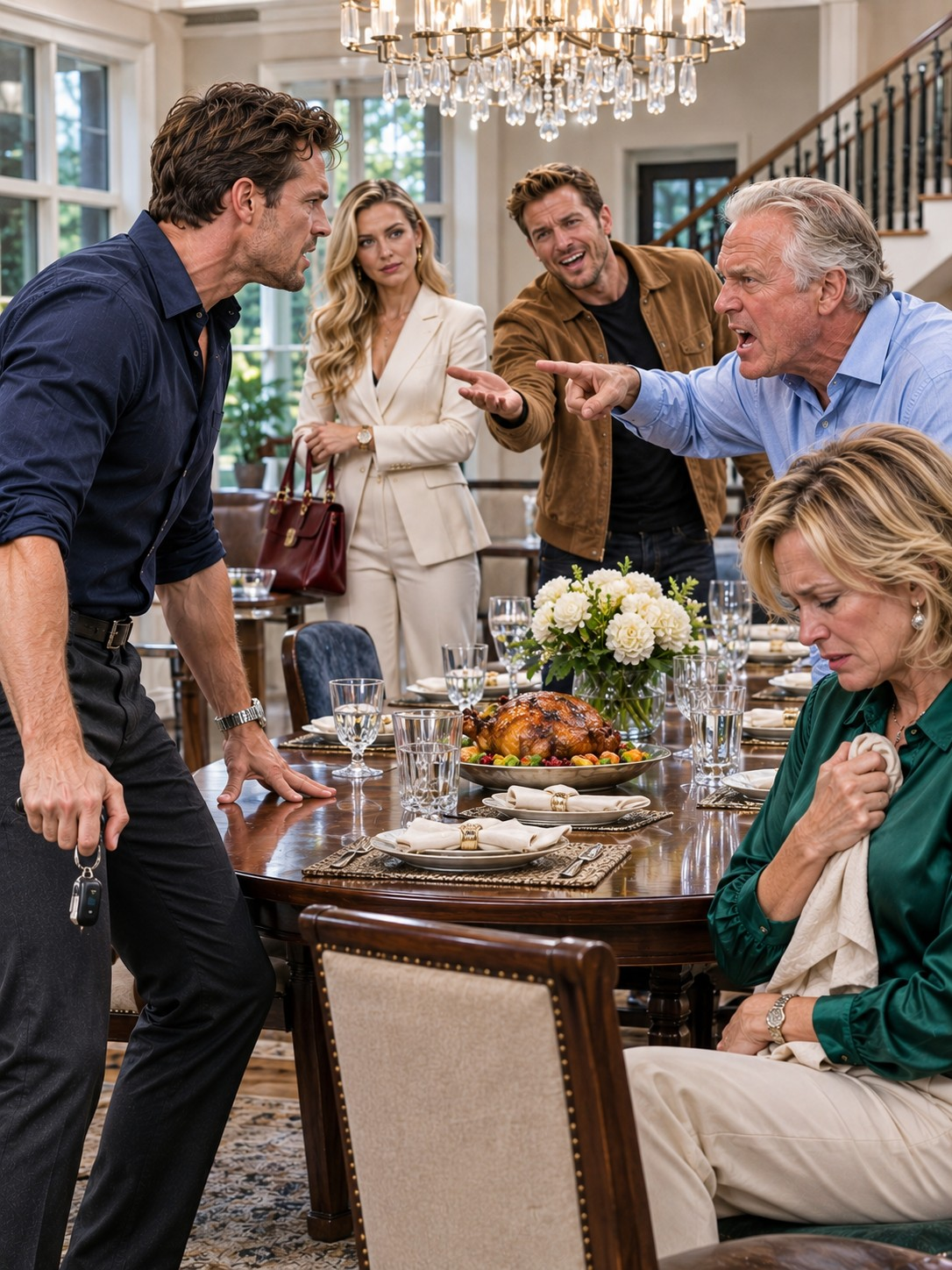
"If you open that box, you'll destroy this family."
I stared at Cameron's message until the words blurred.
For years, my brother had been the person everyone protected.
When he failed, Dad found an excuse.
When he borrowed money, Mom called it a temporary setback.
When he brought Victoria into our home, they rearranged their lives to accommodate her.
But now Cameron was warning me not to discover the truth.
And something about that frightened me more than Victoria's threats ever had.
I called him.
He answered immediately.
"Julian."
His voice sounded exhausted.
"What did you mean?"
Silence.
"Cameron, why are you threatening me?"
"I'm not threatening you."
"Then explain the message."
He exhaled.
"Dad told me about the box."
"What did he tell you?"
"That Grandma left a recording."
"I already know that."
Another pause.
Then Cameron whispered, "He says it's going to ruin him."
I closed my eyes.
"What did Dad do?"
"I don't know everything."
"Then why tell me not to open it?"
His voice cracked.
"Because Mom can't take much more."
I stared at the wall.
"Mom deserves the truth."
"I know."
"And so do I."
He didn't answer.
I swallowed.
"Cameron, I've spent five years protecting this family from the consequences of decisions I didn't make. I'm not doing that anymore."
His breathing became uneven.
"Julian, please."
"No."
The word surprised even me.
It came out quietly.
Firmly.
"No more secrets."
I ended the call.
Then I sat at my kitchen table and looked at Grandma's letter.
The yellowed paper lay beside my laptop.
Her handwriting was still unmistakable.
Careful.
Elegant.
Every letter formed with patience.
I touched the edge of the page.
"Whatever you left me, Grandma," I whispered, "I'm going to find it."
The next morning, I met Harrison Cole outside a bank in downtown Omaha.
The building was older than most of the surrounding offices.
Its stone entrance had been polished smooth by decades of customers.
Harrison carried a leather briefcase.
I carried Grandma's letter.
"Are you ready?" he asked.
I nodded.
"Yes."
He studied my face.
"You understand that we may not be able to access the box today."
"I know."
"We need the bank to verify the records and determine who has legal authority."
"I understand."
He nodded.
"Good."
We entered together.
A branch manager named Margaret Ellis met us in a private office.
She was a woman in her sixties with silver hair and a calm expression.
Harrison explained the situation.
He showed her the estate correspondence.
The safe-deposit reference.
The documents identifying my grandmother.
Margaret examined everything carefully.
Then she looked at me.
"Your grandmother was a longtime customer."
I swallowed.
"You remember her?"
She smiled faintly.
"Very well."
My chest tightened.
"She used to bring cookies to the staff during Christmas."
Margaret nodded.
"She did."
For a moment, I could almost smell Grandma's kitchen.
Cinnamon.
Butter.
Fresh coffee.
Then Margaret's expression became serious.
"Mr. Bennett, the box remains registered under your grandmother's estate arrangements. We have records of a designated successor and access instructions."
My pulse quickened.
"Who?"
She looked at Harrison.
"Before I disclose that, we'll need to complete the verification process."
Harrison nodded.
"Of course."
The next hour felt endless.
Documents were reviewed.
Identities confirmed.
Estate records compared.
Harrison made several calls.
Finally, Margaret returned.
She placed a form on the desk.
"The records identify Julian Matthew Bennett as the designated successor authorized to access the box upon satisfaction of the estate requirements."
I stared at her.
"Me?"
She nodded.
"Yes."
My throat tightened.
Grandma had trusted me.
Even after death.
Even when my own father hadn't.
Harrison reviewed the form.
Then looked at me.
"The bank has confirmed the necessary authority."
I swallowed.
"Then we can open it?"
Margaret nodded.
"Yes."
The safe-deposit room was quiet.
Cool.
Almost unnaturally still.
Margaret led us through a secured doorway.
Rows of metal boxes lined the walls.
She stopped before one near the bottom.
Box 417.
I stared at the number.
Five years.
For five years, this box had been waiting.
Margaret used the bank's key.
Then handed me the customer key that had been preserved with the estate access materials.
My hands trembled as I turned it.
The lock clicked.
Margaret withdrew the metal container and placed it on a private table.
Then she stepped outside.
Harrison stood beside me.
I stared at the box.
"Go ahead," he said quietly.
I lifted the lid.
Inside were three envelopes.
A small velvet pouch.
And a digital voice recorder.
My breath caught.
The recorder was old.
Black plastic.
A small screen.
Grandma had owned one just like it.
She used to record reminders because her handwriting became painful during her final illness.
I picked it up.
A label was attached to the back.
In her handwriting:
FOR JULIAN — WHEN HE IS READY.
My eyes burned.
Harrison looked at me.
"Would you like a moment alone?"
I shook my head.
"No."
I needed someone there.
Someone who wouldn't tell me I was imagining things.
Someone who wouldn't explain away whatever I was about to hear.
Harrison nodded.
I pressed the power button.
The screen flickered.
A recording appeared.
Dated five years earlier.
I pressed play.
For a moment, there was only static.
Then Grandma's voice filled the room.
"Julian, sweetheart."
I covered my mouth.
Her voice.
I hadn't heard it in five years.
And suddenly, I was standing in her kitchen again.
She continued.
"If you're listening to this, then I hope someone finally gave you the truth."
My eyes filled with tears.
"I wanted to tell you myself. But your father begged me to wait."
I stared at the recorder.
Grandma took a slow breath.
"Richard has made mistakes. Serious mistakes. And I'm afraid he's going to let you pay for them."
I felt my chest tighten.
She continued.
"I established an investment account for you because I wanted you to have something that belonged entirely to you."
I closed my eyes.
"Not Cameron. Not Richard. You."
A tear rolled down my cheek.
"I love both my grandsons. But I know you, Julian. You're the one who will give away your last dollar if someone you love says they need it."
I began crying.
Harrison looked away respectfully.
Grandma's voice softened.
"And that's why I needed to protect you."
There was a pause.
Then she said something that made me freeze.
"Your father asked me to authorize the use of your account as collateral. I refused."
I stopped breathing.
Refused.
Grandma had refused.
"Richard was angry," she continued. "He told me the house would be lost. He told me I was choosing money over family."
I stared at the recorder.
"But I told him that protecting your future was not abandoning his."
My hands shook.
"Then I discovered documents had been prepared using your name."
I looked at Harrison.
His expression hardened.
Grandma continued.
"I confronted Richard. He said a financial advisor had arranged everything. He promised nothing had been submitted."
A long pause followed.
"I did not believe him."
I felt sick.
Then Grandma said, "So I made copies. I wrote instructions. And I placed the originals here."
I looked into the box.
The envelopes.
The documents.
Everything she'd preserved.
Her voice grew weaker.
"Julian, if your father has used your name without permission, you must not let him convince you that you owe him silence."
I began sobbing.
"Family should protect you, sweetheart. Not use your love against you."
The recording continued for several seconds.
Then Grandma whispered:
"I hope Richard finds the courage to tell you himself."
A pause.
"I love you, my steady boy."
The recording ended.
I sat motionless.
For five years, I'd wondered whether Grandma would have understood why I kept paying for the house.
Now I knew.
She'd seen the danger before it happened.
And she'd tried to stop it.
Harrison waited until I could breathe normally.
Then we examined the envelopes.
The first contained copies of the original investment account agreement.
The second contained correspondence between Grandma and the financial intermediary.
The third held a signed letter documenting her refusal to authorize the collateral arrangement.
Harrison read it carefully.
Then looked at me.
"This is important."
I swallowed.
"How important?"
"It provides contemporaneous evidence that your grandmother objected to the proposed use of the account."
I stared at him.
"Does it prove Dad forged my signature?"
"Not by itself. But it helps establish that the transaction was disputed before her death."
I nodded.
He continued.
"We'll preserve these documents and arrange for authenticated copies."
I looked at the velvet pouch.
Inside was Grandma's wedding ring.
And a small handwritten note.
"Julian, this belonged to someone who believed promises should mean something. Keep it until you find a promise worth making."
I held the ring in my palm.
It was simple.
Gold.
Worn smooth by decades.
I closed my fingers around it.
For the first time that morning, I felt something other than anger.
I felt loved.
By early afternoon, Harrison had arranged for the documents to be reviewed.
He also contacted the appropriate investigators.
I sat in his office while he made calls.
When he finished, he looked at me.
"Julian, your father wants to meet."
I stared at him.
"Now?"
"Yes."
I looked down at Grandma's ring.
"Does he know we opened the box?"
"He knows."
I swallowed.
"Did you tell him what was inside?"
"Only that the records have been preserved and will be reviewed."
I nodded.
Then I asked, "Do you think he knew about the recording?"
Harrison hesitated.
"He may have suspected it existed."
I looked toward the window.
The afternoon sky was gray.
I thought about Dad standing in the study.
Crying.
Afraid.
Not because he'd lost money.
But because the truth was finally catching up with him.
"Tell him I'll meet."
Harrison nodded.
"Here?"
"Yes."
I took a breath.
"And I want you present."
"Of course."
Dad arrived forty minutes later.
I barely recognized him.
His hair was uncombed.
His face looked thinner.
His shoulders sagged beneath an old brown jacket.
He carried a folded envelope.
When he entered the conference room, he stopped.
I was sitting at the table.
Harrison sat beside me.
Dad looked at us.
Then slowly took a seat.
For several seconds, nobody spoke.
Finally, Dad whispered, "You opened it."
I nodded.
"Yes."
His eyes filled with tears.
"Did you hear her?"
I swallowed.
"Every word."
He lowered his head.
I watched him.
The man who had spent my childhood demanding respect.
The man who had told me the house belonged to him.
The man who had called my financial sacrifices little bills.
He sat across from me looking defeated.
Then he whispered, "I'm sorry."
I didn't answer.
He looked up.
"Julian, I need you to know something."
I stared at him.
"What?"
"I never intended to take your money."
I felt anger rise.
"But you did."
He nodded.
"I know."
"You used my name."
"Yes."
"You let me spend five years paying for a house while you hid what happened to Grandma's account."
He began crying.
"Yes."
I leaned forward.
"Then tell me why."
Dad covered his face.
For a long time, he said nothing.
Then he lowered his hands.
"Because I was ashamed."
I stared at him.
He continued.
"I had failed at everything. The business. The investments. The mortgage. Your mother was frightened. Your grandmother was furious."
His voice cracked.
"And you were doing better than I ever had."
I felt my chest tighten.
He looked at me.
"You had a career. Savings. A future."
I swallowed.
"And that bothered you?"
Dad nodded slowly.
"Yes."
The honesty hurt more than another excuse would have.
He continued.
"I told myself I was borrowing against the account temporarily. That I'd repay everything before you found out."
I stared at him.
"But the money disappeared."
He nodded.
"Vanessa told me the investment would cover the loan."
I felt sick.
"Then Grandma found out."
"Yes."
"And you lied to her."
He began crying harder.
"Yes."
I looked away.
For years, I'd wanted Dad to admit he was wrong.
Now every confession felt like another weight being placed on my chest.
He reached across the table.
I didn't take his hand.
He withdrew it.
Then whispered, "I was supposed to protect you."
I stared at him.
"Yes."
"Instead, I used you."
My throat tightened.
"Yes."
He lowered his head.
"I'm sorry, son."
I sat silently.
Then Dad did something I'd never seen him do.
He stood.
Walked around the table.
And knelt beside my chair.
I froze.
"Dad, get up."
He shook his head.
"No."
Tears ran down his face.
"Please forgive me."
I stared at him.
The man who had once told me to leave his house.
The man who had chosen Cameron's pride over my dignity.
The man who had allowed a stranger to use our family.
He was kneeling beside me.
Begging.
"I don't deserve it," he whispered. "I know I don't."
My eyes burned.
"Then why are you asking?"
He looked up.
"Because you're my son."
I swallowed.
"And I should have treated you like one."
For a moment, I couldn't speak.
Then I said quietly, "Dad, I can't forgive you just because you're finally sorry."
He nodded.
"I understand."
"You have to tell the truth."
"I will."
"You have to cooperate with the investigation."
"I will."
"And you have to stop expecting me to fix everything."
He began crying again.
"I know."
I looked at Harrison.
He remained silent.
I turned back to Dad.
"Get up."
Dad slowly stood.
Then returned to his chair.
I took a breath.
"There's something else."
He looked at me.
"Grandma left me a letter."
His eyes filled with tears.
"I know."
"And a recording."
He nodded.
I swallowed.
"She knew you were going to use my kindness against me."
Dad closed his eyes.
"I know."
For several seconds, neither of us spoke.
Then he whispered, "She was right."
After Dad left, Harrison remained in the conference room.
I stared at the empty chair.
"Do you think he meant it?"
Harrison considered the question.
"I think he expressed genuine remorse."
I nodded.
"But remorse isn't restitution."
"No," Harrison said. "It isn't."
I looked down at Grandma's ring.
"Can we still recover the money?"
"We're making progress."
I looked up.
"How much?"
He hesitated.
"The recent transfers are being examined. Some funds may be subject to preservation or recovery."
I swallowed.
"And the house?"
"That's more complicated."
I nodded.
Of course it was.
Nothing about this had ever been simple.
Harrison continued.
"Your father has agreed to provide records concerning the original financing."
I looked at him.
"All of them?"
"That's what he's represented."
I nodded.
Then Harrison's phone rang.
He glanced at the screen.
His expression changed.
"Excuse me."
He answered.
"Yes?"
He listened.
Then sat upright.
"Are you certain?"
A pause.
Then he looked directly at me.
"Send the document."
He ended the call.
My pulse quickened.
"What happened?"
Harrison opened his laptop.
"There's been a development involving the property."
I felt my stomach tighten.
"What kind?"
He downloaded a file.
Then opened it.
A legal notice appeared.
I leaned closer.
The property address was unmistakable.
My parents' house.
Harrison read silently.
His expression grew grave.
"Julian..."
I stared at him.
"What?"
"The lender has initiated another action."
My chest tightened.
"Foreclosure?"
He hesitated.
"An effort to enforce the debt."
I swallowed.
"Can we stop it?"
"We'll need to review the filing and determine what defenses or objections are available."
I nodded.
Then he scrolled farther.
A second document appeared.
An affidavit.
Signed by Richard Bennett.
My father.
I stared at the date.
Yesterday.
Dad had signed it before coming to apologize.
I looked at Harrison.
"What is that?"
He read the heading.
Then his expression changed.
"Julian, this affidavit contains a statement about your financial contributions."
My heart began pounding.
"What statement?"
He scrolled down.
I leaned closer.
The document listed my mortgage payments.
Property taxes.
Repairs.
Insurance.
Utilities.
The total.
$149,862.47.
My exact spreadsheet total.
I froze.
"How did Dad get that number?"
Harrison didn't answer.
He continued reading.
Then he looked at me.
"Your father has acknowledged that you made those payments."
I stared at him.
"Legally?"
"He has signed a sworn statement describing them."
My chest tightened.
For five years, Dad had dismissed my sacrifices.
Now he'd put them in writing.
I swallowed.
"Does that help?"
"Potentially."
Harrison scrolled farther.
Then stopped.
His expression changed.
I felt my pulse quicken.
"What?"
He looked at the screen.
Then at me.
"There's another provision."
I leaned forward.
"What provision?"
He hesitated.
"Your father has made a statement concerning the ownership of the house."
I stared at him.
"What statement?"
Harrison turned the laptop toward me.
I read the paragraph.
Then read it again.
My hands began shaking.
Dad had acknowledged that Grandma's estate arrangements were intended to protect my financial interest.
He had also stated that he had concealed those arrangements from me.
But the final sentence was something else entirely.
It said:
"I acknowledge that Julian Matthew Bennett has a claim arising from his documented contributions, and I consent to the court's determination of appropriate relief."
I stared at the screen.
Dad had finally admitted I had a claim.
Not simply a reason to be grateful.
Not a favor.
A claim.
I looked at Harrison.
"What happens now?"
He took a breath.
"We prepare the necessary filings and determine what relief can actually be obtained."
I nodded.
Then his phone buzzed.
A new message appeared.
He read it.
His face went pale.
I sat upright.
"What?"
He didn't answer.
He opened another attachment.
A notice from the property records system.
I leaned closer.
A new filing had appeared.
The date was today.
The title read:
NOTICE OF TRUSTEE'S SALE.
My stomach dropped.
I looked at Harrison.
"How soon?"
He read the document.
Then his expression hardened.
"Julian, this is not a final determination of anyone's rights. But the sale process is moving."
I stared at the screen.
"Can we stop it?"
He didn't answer immediately.
Then he said, "We need to act quickly."
My phone buzzed.
A message from Mom.
"Julian, someone is at the house."
I froze.
Another message arrived.
"They say they're here to inspect it before the sale."
I stared at the screen.
Then a photograph appeared.
Two men stood on the front porch.
One held a clipboard.
The other carried a camera.
And behind them, parked at the curb, was a black SUV.
I looked at Harrison.
"Someone's at the house."
He stood.
"Call your mother."
I dialed.
She answered immediately.
"Julian?"
"Mom, don't sign anything."
Her voice trembled.
"They're asking to come inside."
"Tell them you need legal advice."
"I did."
I heard a man's voice in the background.
Then Mom whispered, "They say they have authorization."
My stomach tightened.
"From whom?"
She didn't answer.
I heard footsteps.
Then a door opening.
"Mom?"
Her breathing became uneven.
"Julian, there's another person here."
I stood.
"Who?"
She whispered, "A woman."
My blood ran cold.
"What woman?"
Mom began crying.
"She says she's the new owner."
I stared at Harrison.
He was already reaching for his phone.
Then Mom whispered something that made my heart stop.
"Julian, she has documents with your name on them."
I gripped the phone.
"What documents?"
A pause.
Then a woman's voice came through the speaker.
Calm.
Confident.
"Hello, Julian."
I froze.
I knew that voice.
But it wasn't Victoria.
It was someone I hadn't heard from in years.
Someone connected to Grandma's estate.
Someone who had disappeared shortly after her funeral.
And when she spoke again, she said:
"Your grandmother left you more than money."
The line crackled.
Then she added, "And your father still hasn't told you the most important part."
I stared at the phone.
"Who are you?"
She laughed softly.
"Ask him about the deed."
Then the call ended.
I looked at Harrison.
He was staring at his laptop.
His face had gone white.
"Julian," he whispered, "I just found the original property deed."
I stepped closer.
He turned the screen toward me.
The document was dated five years earlier.
It bore Grandma's signature.
And beneath the legal description of the house was a name.
Not Richard Bennett.
Not Sylvia Bennett.
Not Cameron Bennett.
Mine.
Julian Matthew Bennett.
I stopped breathing.
Then Harrison scrolled to the final page.
There was another signature.
Another date.
And a handwritten amendment.
He stared at it.
Then whispered, "Oh, no."
I grabbed his arm.
"What?"
He looked at me.
"The deed was changed."
My heart hammered.
"By whom?"
Harrison enlarged the signature.
I leaned closer.
And recognized the handwriting immediately.
It belonged to—






Comments 0