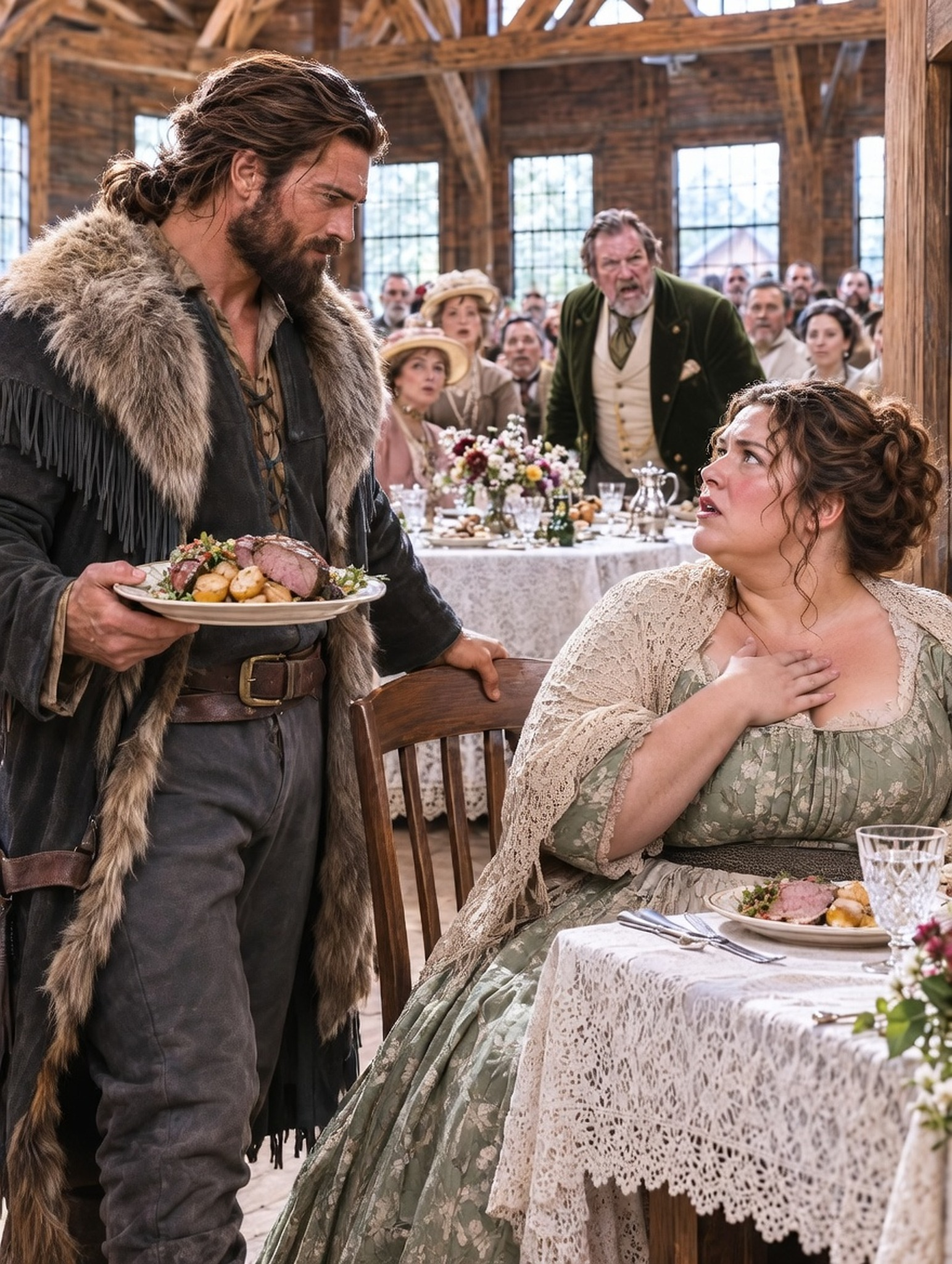
Hallie Nash stared at the three words written on the paper.
LOWER PASSAGE. 317.
Beneath them was Jonah's name.
She read it again, hoping the letters would somehow change.
They did not.
Behind the reception counter, the young bank clerk was pretending to organize a stack of documents. His hands moved too quickly, and every few seconds his eyes shifted toward Hallie.
Elliot Gallagher had already left the building.
He had taken his coat and hurried toward the mine office without explaining why.
Hallie reached for the note.
The clerk placed his hand over it.
"That belongs to Mr. Gallagher."
Hallie looked at him.
"Then perhaps you should explain why my husband's name is written on it."
The young man swallowed.
"I don't know, ma'am."
"Who left it here?"
"I wasn't told."
"Was it delivered this morning?"
He hesitated.
"Yesterday afternoon."
Hallie felt a chill move through her.
Yesterday afternoon.
That was before the messenger had arrived at the community hall.
Before the envelope had been found.
Before the sheriff had come to her shack.
Someone had known about Jonah's name and the number 317 before anyone had told her.
"Who gave it to you?"
The clerk glanced toward the office door.
"Mrs. Nash, I really can't discuss company matters."
Hallie stepped closer.
"I am not asking you about company matters. I am asking you about my husband."
The clerk lowered his voice.
"Please don't make this difficult."
Hallie almost laughed.
She had heard that sentence too many times.
People had said it when she asked for another month to pay the loan.
They had said it when she asked to see the mine report.
They had said it when she tried to retrieve her belongings from the house.
Every time she asked a reasonable question, someone made her feel unreasonable for asking.
She looked at the note once more.
"Tell Mr. Gallagher I saw this."
The clerk nodded nervously.
"And tell him I want the documents I signed when he took my home."
She turned toward the door.
Then the clerk spoke again.
"Mrs. Nash?"
Hallie stopped.
He looked toward the street.
"If I were you, I wouldn't go asking about number 317."
She slowly turned around.
"Why?"
The clerk looked down.
"Because the last person who did disappeared."
Hallie stared at him.
"Who?"
But the young man had already retreated into Elliot's office.
The door closed.
Caleb was waiting across the street.
He stood beside a hitching post, holding the reins of a dark chestnut horse.
When Hallie approached, he studied her face.
"What happened?"
She handed him the note.
Caleb read it.
His expression tightened.
"Where did you get this?"
"On the bank counter."
"Who showed it to you?"
"The clerk."
"Did he say anything?"
Hallie repeated the young man's warning.
Caleb looked toward the bank.
"Did he give you a name?"
"No."
Caleb folded the note.
"Then we need to find out what 317 means."
"Do you know?"
He shook his head.
"But I have an idea."
Hallie looked toward the road leading north.
"Is it connected to the lower passage?"
"Probably."
"Then why would Elliot have a note about it?"
Caleb did not answer.
Instead, he looked at the bank's upper window.
A curtain moved.
Someone was watching them.
Caleb stepped closer to Hallie.
"Let's get off the street."
They walked toward the general store.
Inside, the owner was arranging jars on a shelf. He looked up when they entered.
"Morning, Caleb."
"Morning, Mr. Miller."
The storekeeper's eyes moved toward Hallie.
"Mrs. Nash."
Hallie nodded.
"Good morning."
Miller looked between them.
"Something I can help you with?"
Caleb placed the folded note on the counter.
"Have you seen this mark before?"
The storekeeper examined it.
He turned it over.
Then he pushed it back.
"Where did you get that?"
"Does it mean something?"
Miller looked toward the front window.
"Not something I'd discuss here."
Caleb lowered his voice.
"Then where?"
The storekeeper hesitated.
"Come back after closing."
Hallie frowned.
"Why can't you tell us now?"
Miller looked at her.
"Because this town has a long memory, Mrs. Nash. And some people have longer reach than others."
Caleb nodded.
"We'll return."
As they left, Hallie glanced at the shelves.
She remembered buying flour here with Jonah.
The storekeeper had once allowed them to pay a week late when Jonah's wages were delayed.
Now he looked frightened by a piece of paper.
She wondered how many people in Copper Hollow had been made afraid of the same men.
They walked north until the buildings became scattered.
Caleb led his horse beside him.
Hallie kept the flour sack close to her side.
After several minutes, she spoke.
"You said you had an idea about the number."
Caleb nodded.
"There used to be numbered storage sections beneath the mine office."
"Storage sections?"
"Records, equipment, old tools. Some of the sections were marked by numbers rather than names."
"Could 317 be one of them?"
"Possibly."
"How would Jonah know about it?"
"He might have found something there."
Hallie looked toward the mountain.
The mine entrance was hidden beyond the ridge, but she could see the top of the old office building through the bare trees.
"What could he have found?"
"Records."
"About the timber?"
"Or the payments."
Hallie stopped.
"Payments?"
Caleb turned.
"Every mining company keeps records of supplies, wages, and maintenance."
"Would those records show who canceled the order?"
"They should."
"Then why doesn't the sheriff have them?"
Caleb looked toward the road.
"Because the company controls the office."
Hallie thought about that.
For years, she had believed the mine was simply a place where men worked and earned wages.
She had never considered how many decisions were made above ground before a miner entered the tunnels.
Who ordered the timber.
Who approved the supplies.
Who decided which passages were safe.
Who signed the payroll.
Who decided whether a worker's family received anything after he died.
She had thought Jonah's death belonged to the mine.
Now she wondered whether it belonged to the men who controlled the mine.
"Caleb?"
"Yes?"
"How did you know Jonah?"
He stopped walking.
For a moment, he looked toward the trees.
"I hauled supplies to the mine for several years. Sometimes I worked alongside the men. Sometimes I delivered materials to the office."
"Did you become friends?"
"Not exactly."
"What does that mean?"
Caleb rested one hand on the horse's reins.
"Jonah was the sort of man who spoke when he saw something wrong. He didn't care whether the person listening was important."
Hallie gave a faint nod.
"That sounds like him."
"He helped a young worker once when the foreman refused to pay him for an injury."
"Who?"
"Samuel Price."
Hallie remembered the name.
"Samuel?"
Caleb nodded.
"Jonah argued until the foreman agreed to pay the man's wages."
Hallie looked toward him.
"Why did Samuel leave?"
"I don't know."
"Was he afraid?"
"Perhaps."
Caleb started walking again.
"Samuel had a family. A wife and a little girl. He couldn't afford to lose his wages."
Hallie thought of the name written beside 317.
"Maybe he knows what happened."
"That's what I intend to find out."
The former Nash house stood near the eastern end of town.
Hallie had not planned to walk that way.
But when Caleb suggested returning to the line shack, she found herself turning toward the familiar road.
The house looked almost unchanged.
The white paint on the porch railing had begun to peel.
The front garden was overgrown.
The small wooden bird Jonah had carved was gone from the kitchen window.
Hallie stopped.
She had expected the sight to hurt.
It did.
But the pain was different from what she remembered.
For months, she had imagined the house as something that had been taken away from her.
Now she was beginning to wonder whether the papers that had transferred it were connected to something much larger.
Caleb stood beside her.
"Is this it?"
She nodded.
"Yes."
He looked at the front door.
"How did Gallagher take it?"
Hallie kept her eyes on the house.
"Jonah borrowed money to repair the roof and pay for some medical expenses after I became ill. The bank held the property as security."
"What year?"
"Two years before he died."
"Did you both sign the agreement?"
"Yes."
"Did you understand the terms?"
"I understood that the house secured the loan."
"And when Jonah died?"
"Elliot said the balance became due."
Caleb looked at her.
"Immediately?"
"He said the bank couldn't continue the arrangement."
"Did you have savings?"
"Very little."
"Did the company pay anything after the accident?"
Hallie shook her head.
"Nothing that mattered."
Caleb looked at the house again.
"How much did you owe?"
Hallie told him.
He frowned.
"That doesn't sound right."
"What do you mean?"
"Did the bank provide an itemized statement?"
"No."
"Did they explain how much of the original loan remained?"
"They gave me a final amount."
"Was it the same amount as the original debt?"
Hallie thought carefully.
"No. It was more."
"How much more?"
She told him.
Caleb's jaw tightened.
"That is considerably more."
"Elliot said there were fees."
"What fees?"
"He mentioned legal expenses, late payments, and the cost of maintaining the property."
Caleb looked toward the front windows.
"Did the bank pay anyone to maintain the house?"
"I don't know."
"Did you receive a statement?"
"No."
He was silent for a moment.
Then he asked, "Did you sign the transfer?"
Hallie nodded.
"I signed several papers."
"How many?"
"Three, I think."
"Did you read them?"
"I tried."
"What happened?"
She looked down.
The memory came back with uncomfortable clarity.
The meeting had taken place in Elliot's office four weeks after Jonah's death.
Hallie had arrived wearing her black mourning dress.
She had not slept properly for days.
The banker had offered her a chair and a glass of water.
A stack of papers waited on his desk.
"I'm sorry for your loss, Mrs. Nash."
Hallie had nodded.
"Thank you."
"I understand this is an extremely difficult time."
He had spoken slowly, carefully, as though explaining something to a child.
"The bank has reviewed your husband's outstanding obligations."
Hallie had looked at the documents.
"How much is left?"
Elliot had named a figure.
She remembered feeling confused.
It was far higher than she expected.
"That can't be right."
"There have been additional expenses."
"What expenses?"
"Late charges, legal costs, and property maintenance."
"But I've paid every month."
"Until recently."
"Because Jonah died."
Elliot had lowered his eyes.
"I understand."
She had looked at him.
"Can I have another month?"
"That would not resolve the problem."
"I can take in laundry. I can find more work."
"The bank cannot wait indefinitely."
"Please."
Elliot had folded his hands.
"Mrs. Nash, I am trying to be reasonable."
She had stared at the papers.
The words blurred.
Her head hurt.
She had not eaten that morning.
She had spent the previous night listening to the wind move through the roof.
Elliot pushed a document toward her.
"This will settle the transfer."
Hallie had hesitated.
"What exactly am I signing?"
"An agreement acknowledging the outstanding debt and transferring the property to the bank."
"Will I have time to collect my things?"
"Of course."
"Can I keep the furniture?"
"That will depend on the final inventory."
She had looked at the signature line.
Then at the empty chair beside her.
Jonah should have been there.
He should have been reading the papers.
He should have been asking questions.
Instead, Hallie had signed.
Elliot had taken the documents.
And she had walked out without her house.
Hallie returned to the present.
"Why are you asking about the papers?"
Caleb looked at her.
"Because if the bank increased the debt without proper documentation, there may be a problem with the transfer."
Hallie stared at him.
"Can the house be returned?"
"I don't know yet."
She looked at the porch.
For a moment, she imagined opening the door.
Walking into the kitchen.
Seeing Jonah's jacket hanging behind the chair.
Hearing the old floorboards creak beneath his boots.
Then she remembered that the house no longer belonged to her.
"Even if something was wrong," she said, "Elliot would never admit it."
"Maybe he won't have a choice."
Caleb turned toward the road.
"Let's find the documents."
At the line shack, Hallie placed Jonah's photograph on the table.
She examined the back.
There was a date written in small letters.
The date had been added several months before the accident.
Beneath it was another sentence.
For the days when we forget how lucky we are.
Hallie pressed her lips together.
She remembered Jonah writing it.
He had placed the photograph beside her coffee cup and pretended it was a receipt.
She had laughed when she discovered the message.
Now she traced the words with one finger.
Caleb stood near the stove.
"Are you all right?"
She nodded.
"Yes."
He did not ask again.
Hallie opened the wooden chest.
At the bottom lay a small bundle of folded papers.
She had packed them quickly after losing the house.
She had not examined them.
One was a receipt from the bank.
Another was a list of household expenses.
The third was a document with the Gallagher Trust seal.
Hallie unfolded it.
It was dated three days before she had signed the transfer.
She read the heading.
NOTICE OF OUTSTANDING PROPERTY DEBT.
Below it was the balance Elliot had quoted.
She looked at the number.
Then at the date.
Something was wrong.
The notice claimed that the bank had paid a substantial amount toward property repairs.
But the listed repairs had never happened.
The roof had not been replaced.
The kitchen chimney had not been repaired.
The porch had not been rebuilt.
Hallie looked at Caleb.
"These charges are false."
He came closer.
"What charges?"
She pointed.
"Roof repairs. Chimney work. Structural maintenance."
Caleb examined the document.
"How much?"
Hallie showed him.
He read the figure twice.
"That's a considerable amount."
"None of it was done."
"Do you have proof?"
Hallie looked at him.
"I lived there."
Caleb nodded.
He placed the paper beside the photograph.
"Keep this separate from the other documents."
"Why?"
"Because it may show the bank increased the debt before taking the house."
Hallie stared at the paper.
A new thought began forming.
"What if Elliot wanted the house?"
Caleb did not answer.
"What if the debt was only an excuse?"
"That's possible."
She looked at him.
"Could he have known about Jonah's notes?"
"Possibly."
"Could he have taken the house because Jonah found something?"
Caleb considered the question.
"I don't know."
Hallie lowered her eyes.
The room felt colder.
She had spent months believing she had lost the house because she had failed to earn enough money after Jonah died.
Now she was beginning to wonder whether someone had used her grief to take something she had no intention of surrendering.
She gathered the documents.
Then she placed them in a small wooden box.
"I want to show these to the sheriff."
"We will."
"And I want to find Samuel."
Caleb nodded.
"Then we need to start with Walter Harlan."
That afternoon, they returned to the mine office.
The building stood at the edge of the mining grounds, a two-story structure with narrow windows and a steep wooden staircase.
Several men were working near the supply yard.
When Caleb approached, one of them recognized him.
"Mercer."
Caleb nodded.
"Where's Harlan?"
The man looked toward the office.
"Inside, I think."
"Can you tell him I'm here?"
The worker hesitated.
"He's not taking visitors."
Caleb looked at Hallie.
Then back at the man.
"We'll wait."
They stood beside the fence.
A wagon passed carrying timber.
Hallie watched the men unload it.
The beams were thick and freshly cut.
She wondered whether they were meant for the lower passage.
After several minutes, the office door opened.
Walter Harlan stepped onto the porch.
He was a thin man in his early sixties, with white hair and a narrow face.
He recognized Caleb immediately.
Then he saw Hallie.
His expression changed.
"Mrs. Nash."
Hallie nodded.
"Mr. Harlan."
He looked toward the yard.
"What brings you here?"
Caleb held up the note.
"We need to ask about number 317."
Harlan's face went pale.
He looked at the paper.
Then at Hallie.
"Where did you get that?"
"From my husband's belongings."
Harlan took a step backward.
"That should not have been in your possession."
Hallie frowned.
"Why?"
He glanced toward the office door.
"Because it isn't just a storage number."
Caleb moved closer.
"What is it?"
Harlan looked toward the workers.
Then lowered his voice.
"Room 317 is where the original mine records were kept."
Hallie felt her heart beat faster.
"What records?"
"Maintenance orders. Supply deliveries. Inspection reports."
Caleb looked at him.
"Why were they moved?"
Harlan swallowed.
"They weren't supposed to be moved."
"Who moved them?"
Harlan looked directly at Hallie.
Then he said something that made her hands go cold.
"Your husband didn't just find the missing timber order, Mrs. Nash."
He glanced toward the office window.
"He found the original transfer papers for your house, too."
Add a sharper final cliffhanger Reach the requested 2000 words






Comments 0