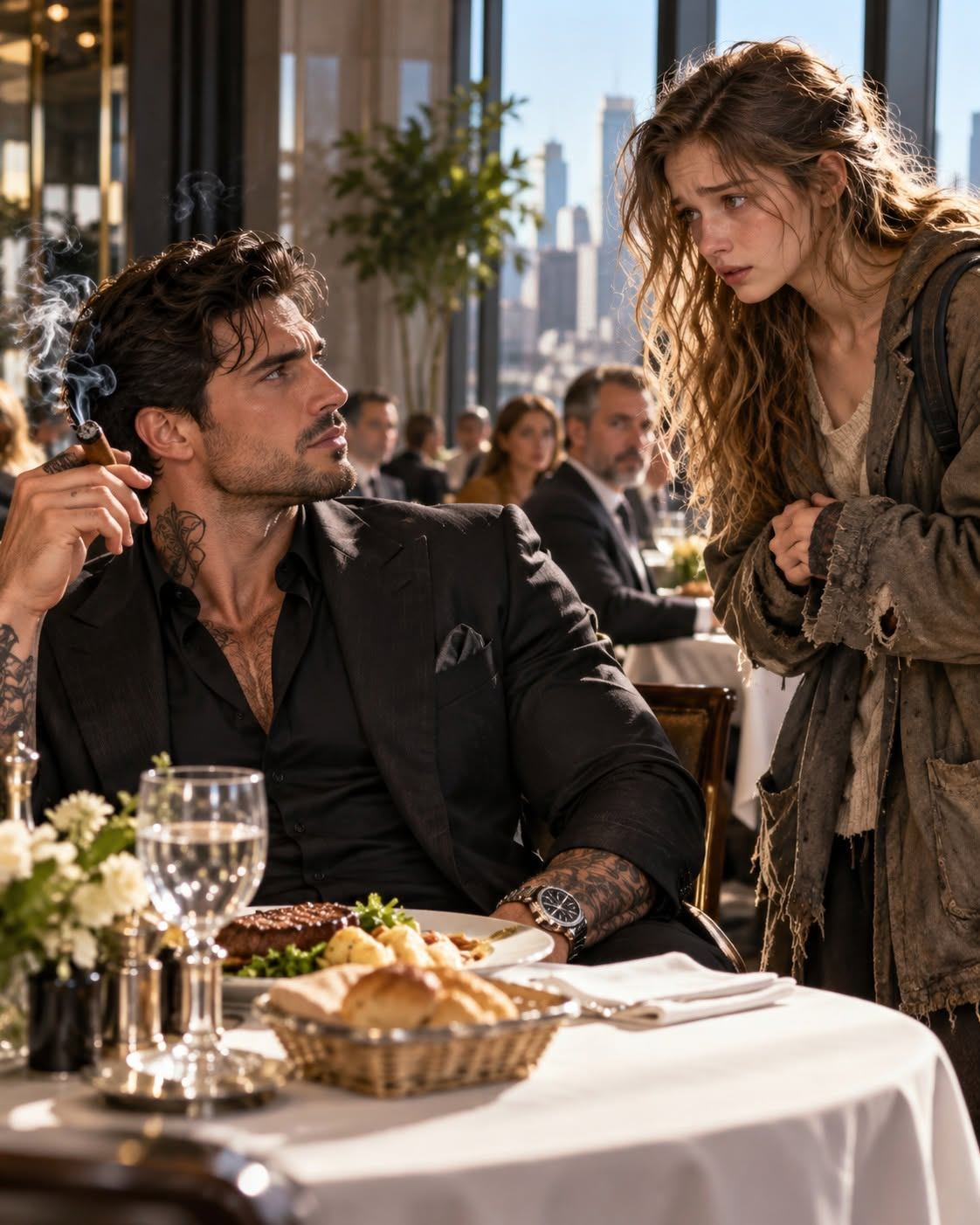
"Son, the person who stole you from me is standing at your door."
My mother's voice trembled through the phone.
Outside the greenhouse, a woman wearing Rebecca Sloan's dark green coat stood beside a black sedan. Her face was partially hidden beneath the shadow of the garden lights.
She raised one hand.
And smiled.
For forty-one years, I had believed that Charles Whitmore was the most dangerous person I'd ever known.
But standing there, watching that woman smile while my biological mother sat frightened inside the car, I finally understood something.
Charles had never worked alone.
"Stay inside, Vincent," Sarah whispered.
I looked toward the sedan.
"Mom, listen carefully. Are you hurt?"
"No."
"Can you move?"
"Yes."
"Then stay where you are. I'm coming to get you."
"No!"
Her voice cracked.
"Please. Don't let her take you too."
The woman outside lowered her hand.
Then she spoke.
"Vincent, there's no reason to make this difficult."
I recognized the voice.
Not Rebecca's.
Not Clara's.
A voice I had heard described repeatedly over the past two days.
Cold.
Controlled.
Accustomed to frightening children into silence.
Margaret Bell.
The former administrator from St. Catherine's.
The woman who had tried to take Emma's necklace.
The woman who had vanished from official records years earlier.
I stared at her.
"Margaret Bell?"
She smiled.
"You're quicker than your father gave you credit for."
Behind me, Emma gasped.
Eleanor moved closer to Jonathan.
Noah took his sister's hand.
I held the phone tighter.
"Sarah, stay calm. Help is already here."
Margaret Bell laughed.
"Always so confident, Vincent."
She stepped beneath the garden light.
Now I could see her clearly.
Her hair was silver beneath a dark wig. Her face was lined with age, and she wore large round glasses.
I remembered Emma describing those glasses.
The woman had frightened her when she was nine years old.
Now she was standing twenty feet away from the girl whose childhood she'd helped destroy.
"Where's Rebecca?" I demanded.
Margaret tilted her head.
"Safe, for the moment."
"What does that mean?"
"It means Rebecca Sloan finally understood that some secrets should remain buried."
I felt my jaw tighten.
"Where is she?"
Margaret reached into her coat.
Jonathan immediately moved forward.
"Hands where we can see them."
She stopped.
Then slowly removed a phone.
"Relax. I'm not here to hurt anyone."
I looked at Sarah's frightened face through the car window.
"You've already done enough."
Margaret's smile disappeared.
"Your mother was supposed to remain at Rosehaven."
"She's not a prisoner."
"That depends on who you ask."
I took a step toward the greenhouse door.
Eleanor grabbed my arm.
"Vincent, wait."
I turned.
Her eyes were filled with fear.
"She's dangerous."
"I know."
"No, you don't."
Eleanor swallowed.
"Margaret was the person who helped Charles falsify the records."
I looked back toward the garden.
"And now she's going to answer for it."
Adrian Cole's voice came through the earpiece I'd kept connected to my phone.
"Vincent, don't approach the vehicle yet."
I kept my eyes on Margaret.
"Why?"
"Officers are moving toward the rear entrance. We have the sedan covered."
I exhaled slowly.
"Understood."
Margaret took another step.
"Vincent, your mother has waited a very long time to see you."
I said nothing.
"Would you really let a few old documents keep you apart?"
I looked at her.
"You're the reason we were apart."
She lowered her eyes.
For a moment, she almost looked ashamed.
Then she shrugged.
"I followed instructions."
I felt anger rise.
"That was your excuse when you took Emma's childhood too?"
Her expression hardened.
"Children were placed where they could be cared for."
Emma stepped forward.
"Is that what you called it?"
Margaret turned.
Emma's voice was steady.
"Moving children between homes? Changing their names? Telling them their parents didn't want them?"
Margaret looked uncomfortable.
"Emma, you don't understand—"
"I understand perfectly."
Emma held up the silver star pendant.
"You tried to take this from me when I was nine."
Margaret stared at it.
"You were supposed to surrender it."
"Why?"
Margaret hesitated.
"Because it contained evidence."
Emma's eyes filled.
"Then you knew."
Margaret said nothing.
"You knew my mother was alive."
Silence.
"You knew my father was looking for me."
Margaret looked away.
Emma stepped closer to the door.
"And you let me believe nobody wanted me."
For the first time, Margaret Bell had no answer.
Then she turned toward the sedan.
"Sarah, tell your son to come outside."
My mother's voice came through the phone.
"No."
Margaret froze.
Sarah continued, stronger now.
"I spent forty-one years being told when to speak and when to stay quiet."
Her voice shook.
"I'm not doing it anymore."
I closed my eyes.
There she was.
My mother.
Not a photograph.
Not a memory.
A living woman who had spent decades fighting to remember the child stolen from her.
Margaret opened her mouth.
Before she could speak, headlights swept across the driveway.
Two police vehicles appeared beyond the gates.
Margaret turned.
Her face drained of color.
"What's this?"
I looked at her.
"The end."
Margaret Bell tried to run.
She made it three steps before officers approached from the garden path.
"Police! Stop!"
She froze.
Her phone fell into the snow.
An officer secured her hands while another moved toward the sedan.
I ran.
I didn't care about the cameras.
The officers.
The people watching from the house.
I only saw the woman sitting in the back seat.
Her white hair was neatly pinned behind her ears.
Her face was thin.
Her hands trembled in her lap.
But her eyes were unmistakable.
My eyes.
The officer opened the car door.
Sarah looked up.
For a moment, neither of us spoke.
Then she whispered, "Vincent?"
I dropped to my knees beside the car.
"Mom."
Her face crumpled.
"Oh, my baby."
She reached for me.
I took her hands.
They were warm.
Real.
Alive.
She touched my cheek.
Then my forehead.
Then my hair.
As though she needed to convince herself I wasn't another dream.
"You're so big," she whispered.
I laughed through my tears.
"I'm forty-one."
She smiled.
"I know."
Then she began crying harder.
"But I still remember you like this."
She held her hands a small distance apart.
"A little boy with dark hair and the biggest eyes."
I couldn't speak.
She touched my face again.
"I used to sing to you."
I nodded.
"I know."
She looked surprised.
"How?"
I swallowed.
"Because Margaret left me letters. And because I've spent my whole life feeling like there was something missing."
Sarah pressed her forehead against mine.
"I'm sorry."
I shook my head.
"No."
"Vincent—"
"You don't have to apologize."
Her hands tightened around mine.
"I tried to find you."
"I know."
"Every year."
"I know."
"I wrote letters."
"I read them."
She began sobbing.
"I thought you'd hate me."
I closed my eyes.
"Never."
Then I wrapped my arms around her.
And held my mother for the first time since I was eleven months old.
For forty years, I'd believed power meant never needing anyone.
Now I was kneeling in the snow, crying like a child.
And I had never felt stronger.
We brought Sarah inside the estate.
Rosa arrived with blankets and hot tea.
A paramedic examined Sarah and confirmed that she was stable, though exhausted and shaken. Her doctors later explained that years of inconsistent treatment and prolonged stress had affected her health, but she was lucid and capable of making her own decisions.
I sat beside her in the old living room.
Emma sat on the carpet near the fireplace.
Eleanor and Jonathan shared the sofa.
Noah stood beside the window, still holding the yellow wooden star.
Clara and Rebecca arrived shortly afterward under police escort.
Rebecca was unharmed.
Margaret Bell had intercepted her near Rosehaven, taken her coat, and used a forged authorization to remove Sarah from the facility. Rebecca had escaped from the vehicle Margaret left her in and contacted Adrian.
When she entered the room, Sarah smiled.
"Rebecca."
Rebecca began crying.
"I'm so sorry."
Sarah shook her head.
"You kept your promise."
Rebecca sat beside her.
"I wish I'd done more."
Sarah took her hand.
"You did what you could."
I looked at both women.
There were still questions.
Important ones.
But for the first time, I didn't feel as though the answers were going to destroy me.
I looked at Sarah.
"Can I ask you something?"
She smiled.
"Anything."
"Did you know Margaret Whitmore?"
Her expression softened.
"Yes."
I swallowed.
"Did you hate her?"
Sarah shook her head.
"No."
I stared.
"Even though she raised me?"
Sarah looked toward the fireplace.
"At first, I was angry."
She paused.
"Then she came to see me."
"In 1997?"
Sarah nodded.
"She brought photographs of you."
My throat tightened.
"What did she say?"
Sarah smiled sadly.
"She told me you loved books. That you were stubborn. That you always tried to protect Eleanor."
I looked at my sister.
She was crying.
Sarah continued.
"Margaret told me she hadn't known how Charles obtained you."
I nodded.
"Rebecca said that."
"She was horrified when she learned."
Sarah looked at me.
"She promised to help me see you."
I closed my eyes.
"And Charles stopped her."
"Yes."
Sarah hesitated.
"But Vincent, I want you to understand something."
I looked up.
"Margaret loved you."
My eyes filled.
"I know."
"She wasn't pretending."
I shook my head.
"I know."
Sarah smiled through her tears.
"You were lucky enough to have a mother who loved you while I couldn't be there."
I stared at her.
Then whispered, "I wish you could have known each other without Charles between you."
Sarah nodded.
"So do I."
I looked toward the portrait above the fireplace.
Margaret Whitmore.
The woman who raised me.
Sarah Bennett.
The woman who gave me life.
Two mothers.
Two different kinds of love.
And neither one diminished the other.
The next morning, Adrian brought us the first complete report from the recovered archive.
We gathered around the dining room table.
Nobody wanted to hear another lie.
But everyone wanted the truth.
Adrian placed several folders before us.
"The original records have been independently preserved," he said. "The police and financial investigators now have certified copies."
I nodded.
"And the children?"
He looked at Emma and Noah.
"The original hospital records confirm that Eleanor Whitmore gave birth to twins on October 14, 1999."
Eleanor gripped Jonathan's hand.
Adrian continued.
"The girl's original name was Emma Margaret Whitmore."
Emma began crying.
"And the boy was Michael Jonathan Whitmore."
Noah looked down.
His hands trembled.
"But am I him?"
Adrian smiled gently.
"We now have the independent genetic results."
The room went silent.
He looked at Eleanor.
"You're his biological mother."
Eleanor covered her mouth.
Jonathan began crying.
Adrian looked at Noah.
"And Jonathan is your biological father."
Noah stared at him.
"Really?"
Adrian nodded.
"Yes."
Noah began crying.
Eleanor crossed the room and wrapped her arms around him.
"My boy."
He held her tightly.
"I thought..."
His voice broke.
"I thought maybe I didn't belong."
She shook her head.
"You always belonged."
Emma joined them.
Jonathan wrapped his arms around all three.
I watched from the other side of the table.
A family that had been separated before it had a chance to begin.
Now finally together.
Adrian continued when everyone had settled.
"The confusion was deliberate. Shaw used duplicate transfer files and false death records to conceal the twins' movements. Noah was placed with the Bennett family under an altered identity."
Noah nodded slowly.
"My adoptive parents loved me."
Eleanor touched his cheek.
"I know."
He looked at her.
"I don't want to lose them."
"You won't."
Her voice was firm.
"They're part of your life. That matters."
I smiled.
For the first time, the word family didn't feel like a competition.
It felt like something that could grow.
Adrian turned another page.
"Richard Vale's records have also been recovered."
Jonathan went still.
"My father?"
Adrian nodded.
"Richard survived the events of 2011. He entered a witness-protection arrangement after providing evidence against several people involved in the program."
Jonathan stared.
"He's alive?"
Adrian hesitated.
"He died peacefully in 2022."
Jonathan lowered his head.
Eleanor took his hand.
Adrian continued.
"Before his death, Richard left a statement explaining why he couldn't contact his family. He feared that revealing his location would expose Emma and Noah."
Jonathan closed his eyes.
For several moments, he said nothing.
Then he whispered, "He never stopped trying."
Adrian nodded.
"No."
I looked at Jonathan.
The man who had spent twelve years working beside me under another name.
The man I'd trusted with my life without knowing he was the father of my niece and nephew.
"I'm sorry," I said.
He looked up.
"For what?"
"For believing your father betrayed mine."
Jonathan shook his head.
"You were told the same lies I was."
I looked at him.
"That doesn't make them easier to live with."
He nodded.
"No."
Then he reached across the table.
And shook my hand.
Not as my employee.
As family.
The investigation continued for months.
Gregory Shaw eventually entered a guilty plea to multiple financial crimes, including fraud, conspiracy, and falsification of records. He also provided investigators with information about the remaining people involved in the children's placement network.
Margaret Bell was charged for her role in altering identities and unlawfully transferring children, along with the offenses connected to Sarah's removal from Rosehaven.
Samuel Cross gave a full statement.
He admitted helping Charles separate Eleanor from her children and participating in the concealment of several records. His testimony helped investigators identify families who had spent decades searching for missing relatives.
He did not ask us to forgive him.
And I did not offer forgiveness on anyone else's behalf.
Daniel Mercer also testified.
He turned over the original copies he had preserved and explained how Room Seventeen had operated.
The name had never referred to one room.
It had been a classification used to conceal children whose identities threatened powerful people.
The program was dismantled.
The remaining records were secured.
And families began receiving answers.
Some reunions were joyful.
Others were painful.
Some parents had died before learning what happened to their children.
Some children, now adults, didn't want contact with the people who had lost them.
We respected those choices.
For the first time, the people whose lives had been controlled by the Whitmore Foundation were allowed to decide what happened next.
As for my father's empire—
I dismantled the parts that had been built on fraud.
It cost me more money than I had ever imagined losing.
Properties were sold.
Trusts were dissolved.
Funds were returned to rightful beneficiaries.
Several companies underwent independent restructuring.
I stepped away from businesses whose histories couldn't be separated from Charles's crimes.
People called me foolish.
Some called me weak.
Others said I was destroying my father's legacy.
They were right about one thing.
I was destroying the legacy he'd left me.
But I wasn't destroying my future.
I was finally building one that belonged to me.
Six months later, I stood inside a small office overlooking downtown Chicago.
Adrian sat across from me.
He placed a document on the desk.
"The restitution fund is operational."
I nodded.
"How much?"
"Enough to begin providing meaningful assistance to the families identified so far."
"And the independent oversight board?"
"Appointed."
I looked at the paperwork.
"No Whitmore family members controlling the claims?"
Adrian shook his head.
"Correct. Independent administrators and representatives of affected families will oversee the process."
I smiled.
"Good."
He studied me.
"You've changed."
I looked up.
"Have I?"
He nodded.
"You used to measure success by how much control you had."
I glanced toward the window.
"And now?"
He smiled.
"Now you seem happier when you give some of it away."
I laughed softly.
"Don't tell anyone."
He stood.
"Your secret's safe."
At the door, he stopped.
"Vincent?"
"Yes?"
"Your mother called."
I smiled.
"Which one?"
Adrian looked confused.
I glanced at the framed photograph on my desk.
Margaret Whitmore.
Then at the second photograph.
Sarah Bennett.
He understood.
"Sarah."
I nodded.
"What did she want?"
"She said you promised to bring dessert."
I checked my watch.
I was late.
For the first time in my life, being late to a family dinner mattered more than being late to a business meeting.
I grabbed my coat.
"Then I'd better go."
The house by the lake was nothing like the Whitmore estate.
It wasn't enormous.
It didn't have marble staircases or private elevators.
There were no armed guards at the entrance.
Just a white porch.
A garden.
A swing beneath an old maple tree.
And a wooden sign beside the front door.
The Vale Family.
Jonathan had chosen the house.
Eleanor had chosen the garden.
Emma had chosen the yellow kitchen walls.
And Noah had insisted on the swing.
I parked in the driveway.
Before I could reach the front door, Emma opened it.
"You're late."
I smiled.
"I brought dessert."
She looked at the bakery box.
"Chocolate cake?"
"Two."
She grinned.
"You're forgiven."
I followed her inside.
The house smelled of roasted chicken and fresh bread.
Sarah sat at the kitchen table beside Clara.
They were laughing about something Rebecca had said.
My mother looked healthier.
Her doctors had adjusted her treatment, and she now lived in a comfortable apartment nearby, with support she chose for herself.
She still had difficult days.
But she was no longer alone.
When she saw me, she smiled.
"There's my boy."
I kissed her cheek.
"Hi, Mom."
She touched my face.
"You look tired."
"Long day."
"Sit down."
I laughed.
"You're getting bossy."
She smiled.
"I've waited forty-one years. I'm entitled."
I sat beside her.
Across the room, Eleanor was setting the table.
Jonathan stood at the stove.
Noah was helping him.
They were arguing about how much garlic belonged in mashed potatoes.
Emma rolled her eyes.
"They've been doing this for twenty minutes."
I smiled.
"Who usually wins?"
"Nobody."
From the kitchen, Jonathan called, "I heard that."
Emma laughed.
I looked around.
At the ordinary furniture.
The mismatched dishes.
The photographs on the walls.
And I felt something I had never felt in my father's mansion.
Peace.
Not the silence of an empty house.
The peace of belonging.
Emma had returned to school.
She was completing the education degree she'd once believed she would never afford.
A scholarship funded through an independently administered educational program helped cover her tuition, while she worked part-time at a neighborhood literacy center.
She refused to let me pay for everything.
"I want to earn my own future," she'd told me.
I respected that.
But I also made sure she never had to wonder where her next meal would come from.
One afternoon, she invited me to visit the classroom where she was completing her teaching placement.
I arrived early.
She stood at the front of the room, helping a group of third graders write stories.
A little boy raised his hand.
"Miss Carter?"
Emma smiled.
"Yes, Tyler?"
"Can my story have a dragon?"
"Of course."
"And a spaceship?"
"Absolutely."
"And a talking dog?"
She laughed.
"Now you're making it interesting."
The children giggled.
I stood in the doorway.
Watching her.
The girl who had once slept behind a laundromat.
The girl who had asked for leftover bread.
Now standing in front of a classroom, helping children believe their imaginations mattered.
She noticed me.
Her smile widened.
"Class, this is my Uncle Vincent."
Twenty small faces turned toward me.
One girl raised her hand.
"Are you famous?"
I hesitated.
Emma laughed.
"Not in this classroom."
The children giggled.
I smiled.
"No. I'm just Emma's uncle."
And for the first time, that title felt more important than any I'd ever held.
That evening, Emma asked me to stay after the children left.
We sat at two tiny desks near the window.
She looked nervous.
"Vincent?"
"Yes?"
"Can I ask you something?"
"Anything."
She hesitated.
"Do you ever regret helping me?"
I stared at her.
"What?"
"That night at the restaurant."
I frowned.
"Why would I regret it?"
She looked down.
"Because everything changed."
I thought about the companies I'd lost.
The money.
The investigations.
The headlines.
The years of lies that had finally been exposed.
Then I looked at her.
"Emma, do you remember what you asked me that night?"
She nodded.
"Could I have your leftover bread?"
I smiled.
"And what did I say?"
She laughed softly.
"You told the waiter to bring another chair."
I nodded.
"That's right."
She looked at me.
I leaned forward.
"For twenty years, I sat at tables surrounded by people who wanted something from me."
"Money?"
"Money. Influence. Favors. Protection."
I paused.
"And then you came along."
She smiled faintly.
"Wanting bread."
"Just bread."
I shook my head.
"You didn't care who I was."
"I didn't know."
"Exactly."
I looked toward the empty classroom.
"You reminded me that I was still capable of being someone other than Charles Whitmore's son."
Emma's eyes filled.
I continued.
"And because of you, I found Eleanor. Jonathan. Noah. Clara."
I swallowed.
"And my mother."
A tear slipped down her cheek.
"So no, Emma."
I smiled.
"I don't regret helping you."
She stood.
Then wrapped her arms around me.
I held her tightly.
"Thank you," she whispered.
I closed my eyes.
"For what?"
"For seeing me."
My throat tightened.
I kissed the top of her head.
"Always."
A year after the night at the restaurant, we gathered at the lake house for a special dinner.
It was Emma and Noah's birthday.
Their first birthday together.
Twenty-eight candles stood on two cakes.
One chocolate.
One vanilla.
Eleanor had insisted on baking both.
Jonathan had insisted on decorating them.
The results were slightly crooked.
Nobody cared.
Noah's adoptive parents joined us.
They had welcomed Eleanor and Jonathan into their lives with kindness and patience.
Noah no longer felt he had to choose between the family who raised him and the family he'd been born into.
He had room for both.
Clara brought flowers.
Rebecca brought photographs.
Sarah brought a handmade blanket she'd spent months knitting.
And I brought something small.
Two wooden boxes.
Emma opened hers first.
Inside was a blue wooden star.
Restored.
Carefully polished.
Noah opened his.
A yellow star.
Its broken point had been repaired.
They stared at the gifts.
Then looked at Eleanor.
She covered her mouth.
"Vincent..."
I smiled.
"I thought they deserved to be together."
Emma began crying.
Noah laughed through his tears.
Eleanor hugged me.
"You always did know how to surprise me."
I smiled.
"Only when it matters."
Later, after dinner, we sat outside beneath the stars.
Sarah rested beside me on the porch swing.
Emma and Noah were laughing near the garden.
Jonathan had his arm around Eleanor.
Clara and Rebecca were talking quietly by the railing.
The air was cool.
The lake was calm.
And for once, there was no threat waiting beyond the darkness.
Sarah took my hand.
"Vincent?"
I looked at her.
"Yes, Mom?"
She smiled.
"Are you happy?"
I thought about the question.
For most of my life, I'd confused happiness with winning.
With being feared.
With having enough money that nobody could ever tell me what to do.
But sitting there, surrounded by people who loved me without needing anything in return, the answer was simple.
"Yes."
Sarah squeezed my hand.
"Good."
I looked toward the garden.
Emma was telling Noah something that made him laugh.
Eleanor was smiling.
Jonathan looked younger than I'd ever seen him.
And for a moment, I imagined Margaret standing beside the porch.
The woman who had raised me.
The woman who had taught me to read.
The woman who had hidden letters because she believed I could become better than my father.
I wished she could have seen us.
Then Sarah spoke.
"Margaret would have loved this."
I turned.
She smiled.
"She told me once that all she ever wanted was for you and Eleanor to be safe."
My eyes filled.
I looked at the family gathered beneath the lights.
"We are."
Sarah rested her head against my shoulder.
And I knew she was right.
That Christmas, we returned to the restaurant where everything had begun.
Not for business.
Not for a celebration of wealth.
But for dinner.
All of us.
The manager recognized me immediately.
"Mr. Whitmore."
I smiled.
"Good evening."
He looked at our group.
"Your usual table?"
I glanced toward the private corner.
The table where I'd once sat alone.
Then I looked at Emma.
She smiled.
"Actually," I said, "we'll need a bigger one."
The manager laughed.
"Of course."
We were seated near the windows.
Snow fell softly outside.
Candles flickered.
The room filled with conversation.
Eleanor told a story about our childhood.
Jonathan laughed.
Noah teased Emma about her cooking.
Clara argued with Rebecca about which Christmas movie was best.
Sarah held my hand beneath the table.
And I sat there listening.
Not directing.
Not controlling.
Just belonging.
Then Andrew, the waiter from that first night, approached.
He looked at Emma.
His expression changed.
"Miss Carter?"
Emma smiled.
"Hello, Andrew."
He stared.
"You look wonderful."
"Thank you."
He glanced at me.
Then at the family.
And smiled.
"I'm glad things worked out."
I nodded.
"So am I."
He placed a basket of warm bread in the center of the table.
Emma looked at it.
Then at me.
For a moment, neither of us spoke.
She reached for a piece.
Broke it in half.
And handed one half to me.
"Here," she whispered.
I smiled.
"Thank you."
She laughed softly.
"Funny, isn't it?"
"What?"
"How everything started with bread."
I looked around the table.
At Eleanor.
Jonathan.
Noah.
Clara.
Rebecca.
Sarah.
At the family I'd never known I was missing.
Then I looked back at Emma.
"Not everything."
She tilted her head.
"What do you mean?"
I smiled.
"It started when someone finally decided to listen."
Emma's eyes filled.
She reached across the table.
And took my hand.
Outside, the snow continued falling over Chicago.
Inside, my family laughed.
And for the first time in my life, I wasn't afraid of what tomorrow might bring.
I had spent twenty years trying to become the most powerful man in the city.
But the greatest thing I ever did wasn't buying a company.
Winning a battle.
Or building an empire.
It was making room at my table for a hungry young woman who believed nobody in the world cared whether she lived or died.
That one small choice had brought my family home.
And when Emma smiled at me across the candlelit table, I finally understood what my mother had tried to teach me all those years ago.
A man isn't measured by how many people fear him.
He's measured by how many people feel safe beside him.
I lifted my glass.
"To family."
Eleanor smiled.
"To second chances."
Jonathan raised his glass.
"To the truth."
Noah grinned.
"To finding each other."
Sarah looked at me with tears in her eyes.
"To coming home."
Emma raised her glass last.
Then she looked around the table and whispered, "To never being alone again."
We touched our glasses together.
And as laughter filled the room, I looked at the empty bread basket between us.
Once, it had been all Emma dared to ask for.
Now she had a home.
Parents who loved her.
A brother who made her laugh.
A future she had chosen for herself.
And an uncle who would never again mistake wealth for love.
I had everything that mattered.
Not because I owned it.
But because we had found one another.






Comments 0