The first word the man said was my name.
"Isabel."
I stood frozen in the courthouse corridor, holding my phone so tightly that my fingers hurt.
The recording crackled.
Then the man's voice continued.
"Isabel must never know what happened that night, Teresa. If she does, Richard will come after everything you own."
My grandmother answered.
"He's already trying."
There was a long silence.
Then the man said something that made my knees weaken.
"I should have gone to the police when Daniel died."
Daniel.
My grandfather.
The man my mother had always called my father.
The man whose photograph had stood on Grandma's mantel for as long as I could remember.
I looked at Rebecca.
Her face had gone white.
"Who is that?" I whispered.
She didn't answer.
I pressed play again.
The man's voice returned.
"I've spent twenty-three years helping you protect her. But she deserves to know."
Grandma sounded exhausted.
"She deserves a life that isn't poisoned by what Richard did."
The recording ended.
I stared at the screen.
Around me, people moved through the courthouse corridor. Attorneys carried briefcases. A clerk called someone's name. Elevator doors opened and closed.
The world continued as though mine hadn't just cracked open.
"Rebecca," I said, "who was speaking?"
She closed her eyes.
"His name is Samuel Navarro."
I stared at her.
"Navarro?"
She nodded.
"Your father's younger brother."
I couldn't breathe.
"My uncle?"
"Yes."
I shook my head.
"I don't have an uncle."
"You do."
"Grandma never told me."
"I know."
I looked at Elena.
She stood beside me, watching carefully.
"Why?"
Rebecca took a shaky breath.
"Because Samuel witnessed something that made him dangerous to Richard Whitcomb."
I stared at her.
"What happened to my father?"
Rebecca looked toward a quiet conference room near the end of the corridor.
"Come inside. I'll tell you everything I know."
The room was small, with a long table and six chairs.
I sat across from Rebecca.
Elena remained beside me.
My phone lay between us.
The audio file was still open.
Rebecca folded her hands.
"First, Isabel, there's something you need to understand. Daniel Navarro was your grandfather. Your father was his son, Rafael."
I stared at her.
"Rafael Navarro."
"Yes."
I knew that name.
It was on my birth certificate.
On a framed photograph in Grandma's bedroom.
But I'd never heard anyone speak about him without sadness.
My mother had told me Rafael died in a highway accident when I was twelve.
Grandma said he had been driving home from a business meeting.
That was all.
"What really happened?" I asked.
Rebecca hesitated.
"Rafael was investigating financial irregularities connected to the old Atlantic financing arrangement."
My stomach tightened.
"Richard?"
"Richard was involved in the transactions Rafael was reviewing."
I looked at the recording.
"And Samuel knew?"
"Samuel worked with Rafael. They were reviewing documents together."
"What happened the night Dad died?"
Rebecca took a breath.
"Rafael was supposed to meet Samuel after collecting records from a storage facility. He never arrived."
I felt cold.
"Because of the accident."
"Yes."
I stared at her.
"Was it really an accident?"
Rebecca looked directly at me.
"The official investigation concluded that Rafael lost control of his vehicle. Your grandmother never obtained evidence sufficient to establish that someone deliberately caused the crash."
I swallowed.
"Then what did Richard do?"
"After Rafael died, certain records disappeared. Richard's representatives demanded repayment of disputed obligations and threatened the company."
I stared at her.
"Grandma believed Richard was responsible?"
"She believed he had pressured Rafael and that someone had interfered with the records. But she couldn't prove Richard caused the accident."
I looked down.
For years, I'd imagined my father's final moments.
Rain on the windshield.
Headlights.
A curve in the road.
Now I had to imagine something else.
A man frightened because he'd discovered something powerful people wanted hidden.
"Where is Samuel?" I asked.
Rebecca was quiet.
Then she said, "He's alive."
I looked up sharply.
"Where?"
"In North Carolina."
I stared at her.
"He's been alive this whole time?"
"Yes."
"And he never contacted me?"
Rebecca lowered her eyes.
"He believed staying away would protect you."
I felt anger rise.
"Everyone keeps saying that."
Rebecca looked at me.
"I know."
"My mother left. My uncle disappeared. Grandma hid documents. Everybody decided what I could handle."
My voice broke.
"Nobody asked me."
Rebecca's eyes filled.
"You're right."
I looked away.
For a moment, I couldn't speak.
Then I asked, "Can I talk to him?"
Rebecca nodded.
"Yes."
Samuel Navarro answered the phone on the second ring.
His voice was exactly like the recording.
Older.
Rougher.
But unmistakable.
"Rebecca?"
"It's Isabel," I said.
Silence.
Then I heard a sharp breath.
"Isabel?"
"Yes."
For several seconds, neither of us spoke.
Then he whispered, "You sound like Rafael."
My eyes filled.
"I don't remember his voice very well."
Samuel made a small, broken sound.
"He had a laugh that filled every room."
I closed my eyes.
"Why didn't you come back?"
He was quiet.
"Because I was afraid."
I waited.
"After Rafael died, I received threats. Someone broke into my apartment. My car was followed. Teresa told me to leave Florida until things settled."
"And you stayed gone."
"Yes."
"Twenty-three years."
"I know."
I swallowed.
"Did Richard kill my father?"
Samuel took a long breath.
"I don't know, Isabel."
I closed my eyes.
"I need the truth."
"Then I'll give you what I know. Rafael found evidence that Richard and Thomas Bell were arranging financing transactions that concealed who received certain fees. He believed some borrowers were being pushed into defaults that benefited related investors."
My stomach tightened.
"The same thing they tried with Navarro."
"That's what it looks like."
"Did Rafael have proof?"
"Some. We copied records. He planned to speak with an attorney and regulators."
"What happened to the copies?"
"Teresa kept part of them. Rebecca has the legal agreements. I kept the correspondence Rafael gave me."
I sat straighter.
"You still have it?"
"Yes."
"Why didn't you use it?"
"Because I didn't have the full records needed to establish what happened. And I was afraid of putting you and Teresa in danger."
I looked at Elena.
She leaned toward the phone.
"Mr. Navarro, this is Elena Price. I'm Isabel's attorney. Would you be willing to provide the records you have and a sworn account of what you witnessed?"
Samuel answered immediately.
"Yes."
I felt my chest tighten.
"Even if Richard finds out?"
Samuel was silent for a moment.
Then he said, "I've spent too long being afraid of him."
Tears slid down my cheeks.
"Me too."
By noon, the pieces of Grandma's history were finally beginning to fit together.
The original financing agreement showed that Laura's inherited funds had helped finance Daniel Navarro's buyout.
Grandma had repaid the underlying obligation but retained contractual information and participation rights that could become relevant if related financing entities later acquired control of Navarro.
The rights didn't automatically cancel Richard's six-million-dollar loan.
They didn't make me the owner of Whitcomb Capital.
They didn't guarantee victory.
But they gave Elena a legitimate basis to demand records about the people and payments behind the attempted takeover.
More importantly, Samuel's documents could help establish whether the same individuals had been using related financing structures for decades.
Michael Reeves joined us by video.
He reviewed the original agreement.
Then he examined the confidential transaction schedule Grant had brought to the warehouse.
"There's something important here," he said.
I leaned closer.
"What?"
"The $920,000 Harbor payment and Vivian's proposed success compensation appear connected."
Elena nodded.
"We have Richard's message to Grant describing the payment as an advance for Vivian."
Michael continued.
"If the payment was actually intended to benefit Vivian or a related entity, rather than Navarro, we need to trace where the money went."
I stared at him.
"Can you?"
"With proper records, yes. We have enough to request them and to ask the bank to review the transaction."
I looked at Elena.
"And the default?"
She leaned forward.
"The September cash balance remains a historical fact. But the circumstances of the payment may support claims against the people responsible and defenses to certain enforcement demands."
I took a breath.
"So we still have to deal with the loan."
"Yes."
I nodded.
For the first time, that didn't frighten me.
I wasn't looking for magic anymore.
I wanted evidence.
And a way to keep the company operating.
At two, Laura called again.
This time, I answered without hesitation.
"Mom."
"Isabel, I heard about the hearing."
"Richard didn't get control."
She began crying.
"Thank God."
I closed my eyes.
"Did you sign the emergency petition?"
"No."
"Did you authorize anyone to file it?"
"No."
I believed her.
Not because she'd suddenly earned my trust.
Because the pattern was becoming clear.
Documents bearing signatures that didn't belong.
A board resolution I hadn't approved.
A trustee appointment I'd never authorized.
And now a petition submitted in my mother's name.
"Mom, Elena needs you to sign a statement explaining what you did and didn't authorize."
"I will."
"And the preliminary acknowledgment?"
"I'll give her the original."
I nodded.
"Good."
Laura hesitated.
"Isabel, there's something else."
I felt my stomach tighten.
"What?"
"I spoke with Samuel."
I stared at the phone.
"When?"
"Last night."
"Why?"
"Because I finally realized Richard was using the same fear that separated our family."
I closed my eyes.
Laura continued.
"I can't change the years I missed. But I can stop lying about them."
I swallowed.
"Then tell me why you really left."
She was silent.
Then she said, "After Rafael died, I found correspondence suggesting Richard's associates were monitoring our family. I became convinced that if I stayed, you would be in danger."
I stared at the table.
"So you left me with Grandma?"
"Yes."
"Without telling me?"
"I was afraid someone would use you to reach me. Teresa agreed to keep you safe while I tried to find help."
My chest tightened.
"And then?"
"I became ashamed. The longer I stayed away, the harder it was to come back. Eventually, fear turned into an excuse."
I closed my eyes.
There it was.
Not a perfect explanation.
Not a heroic sacrifice that erased twenty-three years.
A frightened woman who had made a terrible choice and then kept making it.
"Mom," I whispered, "I needed you."
Laura began crying.
"I know."
"I needed you at school."
"I know."
"At graduation. When Grandma got sick. When I got married."
Her breathing broke.
"I'm so sorry."
I looked toward Grandma's photograph on my phone.
For years, I'd wanted my mother to explain why she left.
Now I finally understood.
And understanding didn't make the hurt disappear.
But it gave us somewhere to begin.
"I can't forgive everything today," I said.
"I don't expect you to."
"But I want you to tell Elena the truth."
"I will."
"And after that..."
I hesitated.
"Maybe we can have dinner."
Laura sobbed.
"I'd like that."
The next several weeks were the hardest of my life.
But they were also the weeks when the Whitcombs' carefully constructed story began to collapse.
Elena filed challenges to the disputed corporate resolution and trustee documents.
Laura formally denied authorizing the emergency petition.
Rebecca produced the executed trust documents and their custody history.
A document examiner identified significant inconsistencies among the disputed signatures.
The bank reviewed the Harbor transfer.
Michael traced the payment through records obtained during the ensuing proceedings.
The money had reached Harbor Mechanical Services.
From there, substantial amounts moved to entities connected to Thomas Bell's business network.
One transfer was associated with an account used for expenses benefiting Vivian.
The exact accounting required further investigation, but the refrigeration invoice was no longer remotely credible.
Eddie's testimony established that Harbor had performed no refrigeration overhaul.
Daniel's logs showed when the invoice description changed.
Grant's messages showed that Richard had instructed him to process the payment before quarter-end.
And the confidential transaction schedule revealed that Bell Atlantic Recovery Partners had been preparing to acquire Navarro's contracts and equipment.
Richard's attorneys argued that the loan default remained enforceable regardless of the payment's purpose.
Elena didn't pretend otherwise.
She focused on the unauthorized transaction, the disputed governance documents, and the attempt to obtain extraordinary control before the facts were resolved.
The court declined to appoint a receiver.
It maintained record-preservation requirements and allowed ordinary operations to continue while the parties litigated.
Then something happened that Richard hadn't expected.
Grant hired his own attorney.
And began cooperating.
He asked to see me one evening at Elena's office.
I agreed.
Only because Elena would be present.
Grant looked thinner.
He wore a plain blue shirt.
No expensive watch.
No confident smile.
He sat across from me with his hands folded.
"Isabel."
I nodded.
He took a breath.
"I've given my attorney the emails and messages I still have."
"I know."
"I also gave him the original files Dad sent me."
I looked at him.
"Why?"
His eyes filled.
"Because I finally understand what I did."
I said nothing.
He continued.
"I told myself I was helping you. I told myself Dad knew better. I told myself the company would be safer if someone else controlled it."
I stared at him.
"And you never asked me."
"No."
"You signed documents about my company."
"Yes."
"You gave your father my signature."
"Yes."
"You authorized a payment that put us in default."
His face crumpled.
"Yes."
I felt tears sting my eyes.
"Do you understand what that cost me?"
He nodded.
But I shook my head.
"No, Grant. I don't think you do."
He looked down.
"I destroyed your trust."
"Yes."
He began crying.
"I'm sorry."
I watched him.
There had been a time when his tears would have made me reach across the table.
That time was gone.
"I believe you're sorry," I said.
He looked up.
"But I can't stay married to you."
His face went still.
"Isabel—"
"I've already spoken with a divorce attorney."
He closed his eyes.
"I understand."
I took a breath.
"I don't want revenge. I want a clean separation. I want you to cooperate with the investigation and take responsibility for your decisions."
He nodded slowly.
"I will."
I stood.
He stood too.
For a moment, we looked at each other.
Two people who had once promised to build a life together.
Now standing on opposite sides of a truth neither could undo.
"Goodbye, Grant," I said.
He lowered his head.
"Goodbye, Isabel."
And I walked away.
The loan dispute eventually ended in a negotiated resolution.
It wasn't quick.
It wasn't easy.
And it didn't happen because a judge suddenly declared Grandma's old documents more powerful than Richard's loan.
It happened because the evidence changed the risks for everyone involved.
Whitcomb Capital faced serious questions about its conduct.
The Harbor payment was under investigation.
The purported governance and trustee documents were disputed.
The planned asset transfer had become impossible to defend as an ordinary lender remedy.
Richard's lawyers wanted the litigation contained.
My lawyers wanted the company protected.
After weeks of negotiations, Whitcomb Capital agreed to withdraw its demands for a fifty-one-percent equity conversion and terminate its pending control-related claims.
The parties arranged a refinancing that repaid the legitimate outstanding principal and agreed interest through an independent commercial lender.
The disputed Harbor payment was addressed separately through a settlement and recovery process that returned substantial funds to Navarro.
I didn't get every dollar back immediately.
But the company remained solvent.
The refinancing gave us manageable terms.
And most importantly, I retained ownership.
One hundred percent.
No Whitcomb board.
No Thomas Bell asset transfer.
No Vivian Whitcomb sitting in Grandma's chair.
The related financial misconduct was referred to the appropriate authorities.
I gave investigators the documents we had preserved.
Rebecca gave her account of Thomas's confrontation.
Carmen provided the threatening message.
Samuel supplied Rafael's correspondence.
The authorities pursued the financial-document and intimidation allegations supported by the evidence.
The historical circumstances of my father's accident were reviewed again, but no reliable evidence established that Richard had caused his death.
I had to accept that distinction.
Richard had done enough that could be proved.
I didn't need to invent what couldn't.
Thomas and Richard faced criminal proceedings arising from the financial scheme and false-document allegations. Both eventually entered guilty pleas to offenses supported by the investigation.
Vivian's financial participation was exposed, and she was required to return funds she had received under the arrangement. She also became a defendant in related civil proceedings.
Her lawyers called the entire affair a misunderstanding.
Nobody in my family believed that anymore.
Three months after the settlement, I stood in the warehouse at six in the morning.
The loading bays were open.
The refrigeration systems hummed.
Drivers checked their routes.
The air smelled of cardboard, cold metal, and fresh flowers.
Carmen stood beside me.
"Quarter-end numbers are ready."
I looked at her.
"How bad?"
She smiled.
"Not bad."
I stared.
"Really?"
She handed me the report.
Revenue was steady.
Operating cash was healthy.
The new financing covenants were satisfied.
And our largest customers had renewed their agreements.
I looked up.
"Carmen."
She laughed.
"Don't cry on the spreadsheet."
I hugged her.
She hugged me back.
For a moment, neither of us spoke.
Then she whispered, "Your grandmother would be proud."
I closed my eyes.
"I hope so."
"She would."
I looked across the warehouse.
Luis was laughing with another driver.
Eddie was checking the refrigeration controls.
Daniel was helping a new employee with the inventory system.
People who had stood by me when they had every reason to be frightened.
I had been so focused on protecting the company that I'd almost forgotten what the company really was.
Not just trucks.
Not just warehouses.
Not just contracts.
People.
Lives.
Families.
A place where hard work meant something.
That afternoon, I drove to Grandma's house.
Samuel was waiting on the porch.
He had flown in from North Carolina the day before.
He was taller than I expected.
Gray hair.
Kind eyes.
And a smile that reminded me of the photograph of my father.
When I stepped out of the car, he stood.
"Isabel."
I walked toward him.
For a moment, we simply looked at each other.
Then I embraced him.
He held me tightly.
"I'm sorry I missed so much," he whispered.
I closed my eyes.
"I know."
He pulled back.
"You look like Rafael."
I smiled through tears.
"Everybody keeps telling me that."
Samuel laughed softly.
"He would have loved that."
We sat on the porch for hours.
He told me stories about my father.
How Rafael used to sing badly while driving.
How he once tried to repair a refrigerator and accidentally flooded Grandma's kitchen.
How he always carried a photograph of me in his wallet.
I laughed.
I cried.
And for the first time, my father became more than a tragedy.
He became a person.
Someone who had lived.
Loved.
Made mistakes.
And adored his daughter.
Before Samuel left, he handed me a small envelope.
Inside was a photograph.
My father holding me as a baby.
On the back, in his handwriting, were four words.
My beautiful little Isabel.
I pressed the photograph against my chest.
Laura came to dinner the following Sunday.
I cooked Grandma's chicken and rice.
Not perfectly.
The rice was slightly too soft.
The chicken needed more salt.
But the kitchen smelled like childhood.
Laura arrived carrying flowers.
White roses.
Grandma's favorite.
She stood in the doorway.
"Hi."
I smiled.
"Hi, Mom."
Her eyes filled.
It was the first time I'd called her that without anger in my voice.
I stepped aside.
"Come in."
We ate at the kitchen table.
We talked about ordinary things.
Her apartment.
My work.
Samuel's visit.
A book she'd been reading.
We didn't pretend the past had disappeared.
We didn't make promises we couldn't keep.
But when dinner ended, she helped me wash the dishes.
And when she left, she hugged me.
I hugged her back.
It wasn't the childhood we'd lost.
Nothing could give us that.
But it was a beginning.
And this time, neither of us was running away.
Six months later, Navarro Floral Logistics held its annual employee celebration.
We rented a beautiful garden venue near Miami.
There were flowers everywhere.
Music.
Food.
Laughter.
Carmen gave a speech that made everyone cry.
Luis told a story about Grandma delivering roses during a hurricane warning.
Eddie joked that the company would survive anything as long as nobody let him near the accounting department.
Even Daniel laughed.
I stood near the entrance wearing a simple emerald-green dress.
Around my neck was Grandma's necklace.
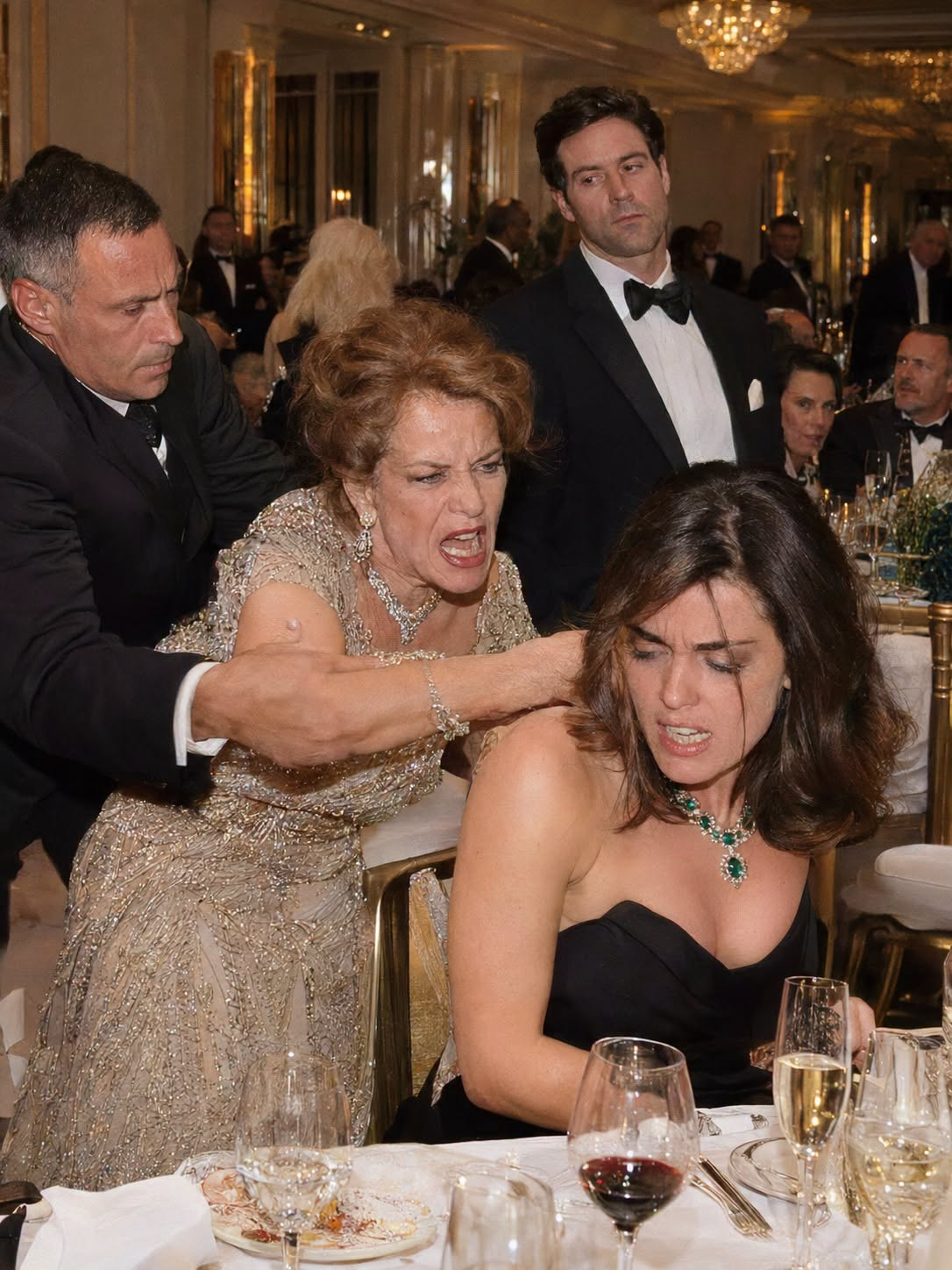
The same necklace Vivian had tried to steal.
The same necklace whose case had hidden the key.
The same necklace that had led me to the documents that helped expose the people trying to take my company.
I touched the emeralds gently.
Then I looked toward the garden.
Rebecca stood beside Samuel.
Laura was laughing with Carmen.
My employees were dancing.
For the first time in a long time, nobody was waiting for a threatening email.
Nobody was trying to seize a warehouse.
Nobody was demanding that I surrender control.
We were simply celebrating.
Carmen approached with two glasses of sparkling cider.
She handed me one.
"To Teresa Navarro," she said.
I smiled.
"To Grandma."
We raised our glasses.
Then Carmen looked at me.
"And to the woman who refused to let anyone steal what Teresa built."
I laughed softly.
"That woman had a lot of help."
"She did."
Carmen touched my arm.
"But she also knew when to fight."
I looked across the garden.
At the people who had stayed.
At the family I was slowly rebuilding.
At the company that was finally secure.
I thought about Richard.
Vivian.
Thomas.
Grant.
For months, they'd occupied every corner of my mind.
Now they felt far away.
Not forgotten.
Not forgiven without consequence.
Just no longer in control of my life.
Later that evening, after the guests had gone, I returned to Grandma's house.
The rooms were quiet.
The kitchen was clean.
The lights glowed softly.
I walked into her old office.
Her desk was exactly where it had always been.
Her photograph stood beside the lamp.
I sat in her chair.
For years, I'd been afraid of sitting there.
It felt like taking something that belonged to her.
But now I understood.
She hadn't left me the chair so it would remain empty.
She'd left it because she believed I could fill it.
I opened the drawer.
Inside was the letter she'd written to me.
My dearest Isabel.
I read it again.
Then I took out a blank sheet of paper.
I wrote a letter of my own.
Dear Grandma,
We kept the company.
It wasn't easy. I made mistakes. I trusted people I shouldn't have. I was frightened more times than I can count.
But Carmen stayed. Rebecca stayed. Our employees stayed.
Mom came back. Samuel came back.
And I finally learned more about Dad.
I paused.
Tears blurred the page.
Then I continued.
You were right about one thing.
The company was never just money.
It was the place you gave us to belong.
I promise I'll take care of it.
And I promise I'll take care of myself, too.
Love, Isabel.
I folded the letter.
Placed it beside hers.
Then I closed the drawer.
Outside, the night was warm.
I stepped onto the porch.
The garden lights illuminated the roses Grandma had planted years earlier.
Some had grown wild.
Some needed pruning.
But they were still blooming.
I touched the emerald necklace.
For so long, I'd believed it represented everything Grandma had left me.
Her success.
Her strength.
Her sacrifice.
Now I understood something else.
She had left me the freedom to choose my own life.
I no longer had to prove I deserved the company.
I had already done that.
I no longer had to earn the love of people who used affection as a weapon.
I could let them go.
And I no longer had to carry every family secret alone.
The truth had been painful.
But it had also brought people home.
I looked up at the stars.
"Good night, Grandma," I whispered.
Then I went inside.
I turned off the porch light.
And for the first time since the night Vivian reached for my necklace, I locked the door without feeling afraid.






Comments 0