"Margaret, before you listen to that recording, there's something you need to know about your husband."
Melissa stood in the doorway of the private room, her face pale and her hands trembling.
Behind her, two bank employees watched nervously.
Thomas Bennett immediately stood.
"Mrs. Whitaker, you need to step outside. We're in the middle of a legal review."
Melissa ignored him.
"Please," she said, looking directly at me. "Just give me five minutes."
I stared at the woman who had once called herself my daughter.
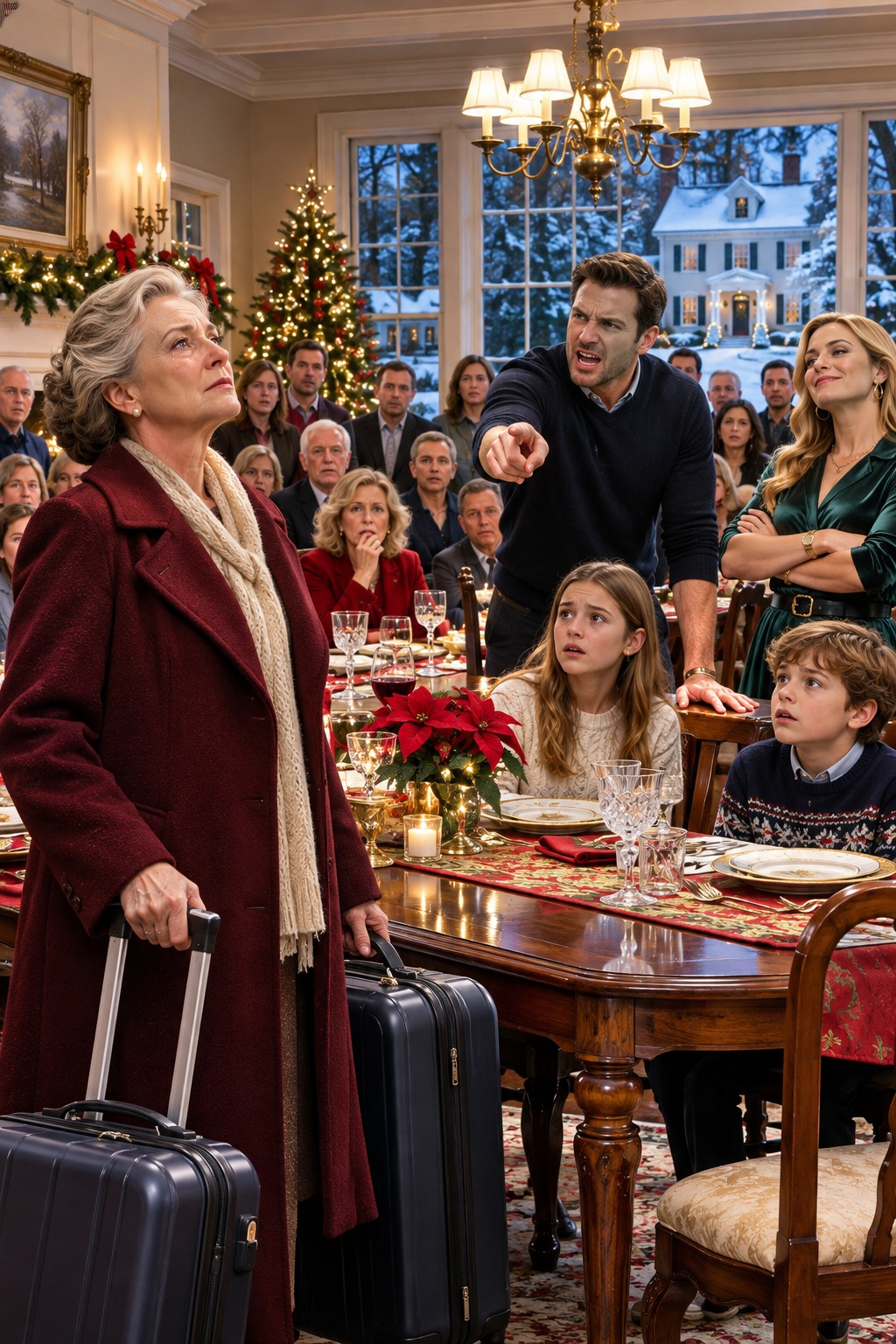
The woman who had raised her wineglass while my son demanded rent from me.
The woman who had hidden my husband's final letter.
The woman who had apparently used my name to pursue money that never belonged to her.
"What could you possibly tell me about Robert that I don't already know?"
Her eyes filled.
"He knew about everything."
I felt my stomach tighten.
"Everything?"
She nodded.
"He knew about the boutique. The townhouse. The money Daniel borrowed. He knew I had signed your name."
Thomas stepped between us.
"That's enough. Any further discussion should take place with appropriate legal representation."
But I raised my hand.
"Let her finish."
Melissa swallowed.
"Robert discovered the forged authorization before he died. He confronted me. He told me he had evidence."
I looked at her.
"Then why did he never tell me?"
"Because Daniel begged him not to."
My heart tightened.
"What?"
Melissa lowered her eyes.
"Daniel said he would fix everything. He promised your husband that the money would be repaid and that you would never be involved."
I stared at her.
"And you believed him?"
She shook her head.
"No. I knew he couldn't repay it."
Silence filled the room.
Then she whispered, "I thought I could keep everything from falling apart."
I looked at the folder on the table.
"You didn't keep anything from falling apart, Melissa. You kept taking money while everyone else carried the consequences."
She began crying.
"I know."
"No. I don't think you do."
I pointed toward the documents.
"Four years ago, I buried my husband. I thought I had lost the most important person in my life. Then I spent six years watching my son struggle, believing every emergency was real and every promise would eventually be fulfilled."
My voice trembled.
"And while I was doing that, you were using my trust against me."
Melissa covered her face.
"I'm sorry."
For the first time, I didn't feel the urge to comfort her.
I simply looked at her.
"Then tell the truth. All of it."
The detective entered the room a few minutes later.
He introduced himself as Detective Harris and explained that Melissa had been located through information connected to the disputed authorization.
She had not yet been charged, but the investigation was ongoing.
Thomas asked her to refrain from discussing the details without her attorney.
Melissa nodded.
Then she looked at me.
"I'll cooperate."
Detective Harris placed a document on the table.
"We have reason to believe the authorization was created using information obtained through an earlier banking-access arrangement."
He turned toward me.
"Mrs. Whitaker, did you ever authorize Melissa to sign financial documents for you?"
"Never."
"Did you give her access to your banking information?"
"No. Daniel helped me with online banking years ago. I trusted him to help me make payments."
The detective nodded.
"That distinction is important."
Thomas examined the documents.
One contained the disputed signature.
Another contained the verification record.
Then the detective placed the small storage device beside the folder.
"This is the recording referenced in the historical correspondence. We have not altered the original."
Thomas asked for it to be reviewed and preserved.
The recording began with a bank representative confirming the identity of the person making the authorization.
A woman's voice answered.
It was Melissa.
The representative asked whether she was Margaret Whitaker.
Melissa said yes.
Then the representative asked her to confirm that she understood the proposed transaction.
She hesitated.
A second voice interrupted.
"Just answer the question."
Daniel.
My heart tightened.
The representative repeated the question.
Melissa answered.
But before the recording ended, another voice could be heard in the background.
Robert.
His voice was weak, but unmistakable.
"That is not Margaret. Stop this immediately."
I covered my mouth.
The recording continued.
There was movement, a chair scraping, and Melissa saying something I could barely hear.
Then Robert spoke again.
"Daniel, look at me. Your mother did not sign that."
The recording ended.
For several seconds, nobody spoke.
I looked at Thomas.
He had gone completely still.
Detective Harris took notes.
Then I whispered, "Robert knew."
Thomas nodded.
"Yes."
I looked down at the table.
My husband had known someone was trying to use my name.
He had tried to stop it.
And I had spent four years believing he had left me without knowing what was happening.
I wiped my tears.
"Did Daniel witness the signature?"
Detective Harris looked at the next document.
"The witness statement identifies Daniel Whitaker."
I closed my eyes.
My own son.
He had stood there while someone signed my name.
He had known.
And he had said nothing.
Daniel arrived at the bank forty minutes later.
He looked as though he hadn't slept.
When he entered the room, he saw the recording device.
Then he saw the document.
He stopped.
"Mom."
I didn't answer.
He looked at Thomas.
"Have you listened to it?"
"Yes," Thomas replied.
Daniel lowered his head.
Then he sat down.
Detective Harris explained that he wanted Daniel's account of the events.
Daniel nodded.
"I'll tell you everything."
He looked at me.
"Mom, I'm sorry."
I remained silent.
He continued.
"Melissa told me she needed temporary access to your financial information because the boutique was struggling. She said she could arrange a short-term loan."
"Using my name?"
He nodded.
"She said it was only paperwork. That you would never be responsible."
I stared at him.
"Did you believe that?"
"No."
His voice broke.
"I knew it was wrong."
"Then why did you sign?"
He covered his face.
"Because I was afraid."
"Of what?"
"Losing everything. The townhouse. The business. Melissa. The life we'd built."
I swallowed.
"And you were willing to risk my home?"
He began crying.
"I didn't think it would go that far."
I looked at him.
"Daniel, it went that far the moment you decided my name could be used without my permission."
He nodded.
"I know."
Detective Harris asked whether Daniel was willing to provide a formal statement.
He agreed.
He also agreed to surrender the remaining financial records and cooperate with the investigation.
Melissa, after speaking with her attorney, made the same decision.
The detective explained that the investigation would continue and that any legal consequences would be determined through the appropriate process.
I didn't ask for revenge.
I wanted the truth documented.
I wanted my name cleared.
And I wanted the people responsible to face the consequences of their decisions.
The weeks that followed were difficult.
The investigation confirmed that the disputed authorization had not been signed by me.
The bank reversed the attempted transfer and permanently restricted the unauthorized access.
The claim against my Bucks County home was challenged successfully, and the lender and relevant authorities received the supporting documentation.
My ownership remained intact.
The townhouse financial records were also examined.
The rental proceeds had been diverted into several accounts, including payments toward Melissa's boutique and other outstanding obligations.
The boutique was eventually closed.
Melissa sold its remaining inventory to help settle legitimate business debts.
Daniel worked with a financial adviser and the mortgage lender.
He stopped pretending that another loan would solve everything.
Eventually, he and Melissa agreed that keeping the townhouse was no longer financially realistic.
They sold it through an ordinary property transaction, using the proceeds to settle the mortgage and address the remaining obligations according to the verified records.
Richard cooperated fully.
He acknowledged his part in the private lending arrangement and provided the documents Thomas needed.
He also apologized to me in person.
"I should have told you years ago," he said.
I looked at him.
"Yes, you should have."
He nodded.
"I know."
I didn't immediately forgive him.
But I accepted his apology.
Some relationships need time to heal.
Others need distance.
I had finally learned that I could choose which one was right.
Daniel and Melissa also began living separately for a period while working through their marriage and finances.
They agreed that the children would remain in their familiar school routine.
Thomas helped establish a reasonable transition arrangement for the family house.
Daniel and Melissa eventually moved out.
They returned the keys.
And for the first time in years, my old home belonged to me again in every practical sense.
I had not needed to throw anyone into the street.
I had simply stopped allowing my generosity to become an obligation.
Three months after Christmas, Daniel came to Lancaster alone.
He stood on my porch holding a paper grocery bag.
I opened the door.
"Hello, Mom."
"Hello, Daniel."
He held up the bag.
"I brought groceries."
I almost laughed.
"Are you trying to pay rent?"
He looked embarrassed.
"No. I just thought you might like some fresh apples."
I stepped aside.
"Come in."
He walked into the kitchen.
For a moment, he looked around as though he were seeing the house for the first time.
The blue curtains.
The little wooden table.
The maple tree outside the window.
Robert's photograph on the mantel.
"It's beautiful here," he said.
"Thank you."
He placed the apples on the counter.
Then he stood quietly.
"Mom, I've been thinking about Dad."
I looked at him.
"So have I."
He swallowed.
"I read his letter again."
I nodded.
"What did you think?"
Daniel looked down.
"He was right."
I didn't answer.
"He wasn't trying to punish me. He was trying to make me responsible for my own life."
His eyes filled.
"I wish I'd listened."
I reached for a chair.
"Sit down."
He sat.
For a few minutes, we talked about Robert.
About his jokes.
His stubbornness.
The way he used to repair things around the house even when he had no idea what he was doing.
Daniel laughed when I reminded him of the time his father had accidentally painted the garden fence the wrong color.
It was the first time we had laughed together without discussing money.
Then Daniel became serious.
"Mom, I don't expect you to trust me immediately."
I looked at him.
"Good."
He gave a small, sad smile.
"I know I have to earn it."
I nodded.
"That's right."
He took a breath.
"I'm sorry I let you believe you needed me when I was the one depending on you."
My eyes filled.
"That hurt more than you know."
"I know."
He reached across the table.
I took his hand.
It wasn't forgiveness for everything.
Not yet.
But it was a beginning.
The following Saturday, Sophie and Ethan came to visit.
They arrived with Caroline, carrying backpacks and enough excitement to fill the entire house.
"Grandma!"
Sophie ran through the doorway and wrapped her arms around me.
Ethan followed.
"I brought my snowman picture!"
I laughed.
"Let me see!"
He pulled a drawing from his backpack.
It showed a crooked snowman beneath a giant tree.
The snowman had three buttons, a carrot nose, and what appeared to be six arms.
"That's wonderful," I said.
"It's supposed to have four arms," he explained.
I looked at the drawing.
"Then it's a very special snowman."
He laughed.
We spent the afternoon baking cookies.
Sophie helped me prepare the dough.
Ethan insisted on measuring the chocolate chips, although several mysteriously disappeared before reaching the bowl.
Later, we sat in the living room.
Sophie looked at Robert's photograph.
"Grandma, is that Grandpa?"
"Yes."
"Can you tell us about him?"
I smiled.
"Which story would you like?"
"The funny ones."
I laughed.
"Then we have a lot of work to do."
I told them about the fence.
The time Robert had fallen asleep during a movie and insisted he had watched the entire thing.
The way he sang terribly in the car whenever one of his favorite songs came on.
The children laughed until Ethan fell sideways against the sofa.
For the first time in months, the house sounded like a home filled with family.
Before leaving, Sophie hugged me tightly.
"Grandma, can we come back next weekend?"
I kissed her forehead.
"Of course."
Ethan raised his hand.
"Can we make another snowman?"
"Even if it has six arms?"
"Especially if it has six arms."
Spring arrived in Lancaster.
The maple tree outside my kitchen window grew fresh green leaves.
I planted flowers along the front porch.
Linda helped me arrange the garden.
We bought two comfortable chairs and placed them beside the window.
I began attending a local book club.
I joined a community gardening group.
I even started volunteering at a neighborhood center where older residents could receive help with basic computer skills.
I taught them how to use email, recognize suspicious messages, and manage their online accounts.
One afternoon, a woman asked me why I had become so interested in financial independence.
I thought about Daniel.
Melissa.
The hidden debts.
The forged documents.
The years I had spent believing love meant saying yes.
Then I smiled.
"Because I spent too long letting other people make decisions for me."
She nodded.
"I understand."
I realized that I wasn't the only woman who had learned that lesson late in life.
And I wasn't too old to begin again.
Six months after Christmas, I received a letter from Daniel.
It wasn't a request for money.
It wasn't a list of emergencies.
It was simply an apology.
He wrote that he had started working for a smaller construction company.
He had sold his expensive truck and bought a practical used vehicle.
He and Melissa had completed their financial arrangements through the proper channels.
Their marriage had not survived the truth, but they were learning to co-parent peacefully.
He had also started attending counseling.
At the end of the letter, he wrote:
Mom, I understand now that you were never supposed to carry my life for me. You were supposed to be my mother, not my bank.
I read that sentence several times.
Then I placed the letter beside Robert's photograph.
I didn't need Daniel to become the perfect son.
I needed him to become an honest man.
And perhaps, slowly, he was doing that.
On the first anniversary of that terrible Christmas dinner, I invited twenty-two relatives to my new home.
This time, nobody demanded rent.
Nobody argued about money.
Nobody treated my generosity as an entitlement.
Linda brought dessert.
Richard brought flowers and apologized once more.
Peter sent a beautiful framed photograph of Robert and me from our early marriage.
Daniel arrived with Sophie and Ethan.
He stood beside me in the kitchen while everyone gathered around the table.
"Mom?"
"Yes?"
"Would you like me to help?"
I smiled.
"Yes. You can carry the plates."
He nodded.
Then he looked around the kitchen.
"Are you happy here?"
I glanced at the maple tree outside.
At the flowers.
At Robert's photograph.
At the grandchildren laughing in the living room.
"Very."
He smiled.
"I'm glad."
Dinner was simple.
Roasted chicken.
Mashed potatoes.
Green beans.
Homemade bread.
And the apple pie Linda had spent the afternoon preparing.
When everyone was seated, Sophie raised her glass of sparkling cider.
"To Grandma's new house!"
Everyone laughed.
I lifted my glass.
"To family."
Then I added something I had learned during the hardest year of my life.
"And to remembering that love should never require someone to lose themselves."
Daniel looked at me.
His eyes filled.
He nodded.
I reached beneath the table and squeezed his hand.
Later, after everyone had gone, I stood alone in the kitchen.
The house was quiet.
But it wasn't the lonely silence I had feared when I first arrived.
It was peaceful.
I walked to the mantel and picked up Robert's photograph.
He was smiling.
I touched the frame gently.
"We made it," I whispered.
I thought about the woman who had stood at her Christmas dinner table, listening to her only son demand eighteen hundred dollars a month to let her remain in her own home.
That woman had believed she was losing her family.
She hadn't understood that she was finally finding herself.
I had lost money.
I had lost illusions.
I had lost the version of my son I thought I knew.
But I had kept my home.
I had protected my grandchildren.
I had reclaimed my independence.
And I had discovered that starting over at seventy-two wasn't impossible.
Sometimes, it was the bravest thing a person could do.
I placed Robert's photograph back on the mantel.
Then I turned off the kitchen light and walked upstairs.
For the first time in many years, I went to bed without worrying about whose bills needed paying, whose emergency would arrive tomorrow, or whether someone would demand another sacrifice.
My home was mine.
My future was mine.
And my family, imperfect as it was, finally had the chance to become a family built on honesty rather than money.
I was seventy-three years old.
I had a little red-brick house, a beautiful garden, two grandchildren who adored me, a sister who never abandoned me, and a son who was finally learning what responsibility meant.
I didn't need a mansion.
I didn't need anyone's permission.
And I certainly didn't need to pay eighteen hundred dollars to belong in my own home.
I was exactly where I was supposed to be.






Comments 0