ERNESTO MOLINA.
That was the name written on Samuel Gabriel Marquez's original birth certificate.
For several seconds, I couldn't breathe.
I stared at the document lying on the conference table.
The letters were clear.
The date was clear.
The hospital seal was clear.
And beneath the father's name was a signature I had seen thousands of times.
Ernesto Molina.
My father-in-law.
The man I had cared for during the final twelve years of his life.
The man who had called me his daughter.
The man who had died with tears in his eyes, begging me to forgive him.
I looked at Elena.
She was crying.
Then I looked at Samuel.
He stood perfectly still, his face drained of color.
Finally, I turned toward Rafael.
He was smiling.
Not because he was happy.
Because he believed he had finally found something that would destroy us.
"Well?" he asked softly. "Nobody has anything to say?"
I looked down at the birth certificate again.
Then at the photograph of Elena holding the newborn.
A terrible thought moved through me.
Ernesto had been married to Isabel.
Elena had been married to Gabriel.
And Samuel was listed as Ernesto's son.
I felt sick.
"Was Ernesto Samuel's father?"
Elena closed her eyes.
Rafael laughed.
"Apparently our saintly father had a few secrets."
"Stop," Elena whispered.
Rafael leaned back.
"Why? It's right there."
Samuel stepped away from the table.
He looked at Elena.
"Is it true?"
She began shaking.
"Samuel, please listen to me."
He swallowed.
"Did Ernesto know?"
Elena nodded.
Samuel looked down.
For a moment, I thought he might collapse.
Then he whispered, "He visited me."
Nobody spoke.
"He came to the clinic. He sat with me. He brought books."
His voice broke.
"He told me stories about fixing tractors and building warehouses."
Tears filled my eyes.
Samuel looked at Elena.
"He never told me he was my father."
Elena covered her mouth.
Rafael smiled.
"Because he was ashamed."
Something inside me snapped.
"Enough."
Rafael turned toward me.
I stood slowly.
For days, I had been frightened of him.
Frightened of his money.
His lawyers.
His threats.
The men he sent to my house.
The power he seemed to hold over everyone around him.
But looking at Samuel's face, I understood something.
Rafael wasn't revealing the truth because Samuel deserved to know.
He was using it as another weapon.
"You're not going to do this anymore," I said.
He laughed.
"Do what?"
"Take someone's pain and use it to make yourself feel powerful."
His smile disappeared.
I pointed toward Samuel.
"That young man spent eleven years believing his family abandoned him."
My voice trembled.
"Elena spent eleven years searching for her daughter. Maria thought Mia was dead. Ernesto died trying to repair what you destroyed."
Rafael stood.
"Be careful, Lucía."
I didn't move.
"No. You be careful."
Rebecca stepped beside me.
"Rafael, sit down."
He looked toward his lawyer.
Mr. Whitmore had been examining the certificate.
Now he raised his head.
"Rafael, where did you obtain this document?"
Rafael hesitated.
"From the family records."
"Which records?"
"That's none of your concern."
Mr. Whitmore's expression hardened.
"It is very much my concern if you're presenting a document of uncertain provenance as evidence."
Rafael stared at him.
Then Elena spoke.
"That certificate isn't the whole truth."
Everyone turned.
She wiped her cheeks.
"Ernesto wasn't Samuel's biological father."
Samuel froze.
I stared at her.
Rafael laughed.
"That's convenient."
Elena looked directly at him.
"You know why his name is there."
For the first time, Rafael's expression changed.
Elena continued.
"Gabriel was Samuel's father."
Samuel looked at her.
"My father was Gabriel?"
She nodded.
"Yes."
"But the certificate—"
"Was changed."
Rafael shook his head.
"Prove it."
Rebecca opened the folder containing Isabel's letter.
"That's exactly what we're going to do."
The truth did not come in one dramatic confession.
It came through documents.
Through dates.
Through signatures.
Through the testimony of people who had spent years afraid to speak.
And through one simple fact Rafael had overlooked.
The birth certificate he brought to the meeting was not the original hospital record.
It was a certified copy of an amended record.
The distinction mattered.
Rebecca placed two documents side by side.
The first was Rafael's certificate.
The second was the original delivery registration recovered from St. Catherine's archived records.
On the second document, Samuel's father was listed as Gabriel Marquez.
I stared at the signatures.
"Why was Ernesto's name added?"
Elena took a shaky breath.
"Because Gabriel was already dead when Rafael began changing the records."
I looked at her.
"Gabriel died before Samuel was born?"
She shook her head.
"No. Gabriel died when Samuel was a young boy."
Samuel frowned.
"Then why was the certificate amended so many years after my birth?"
Rebecca answered.
"That's one of the irregularities. The amendment was filed using documents that purported to establish a legal parentage change, but we have found no corresponding court order."
Elena looked at Samuel.
"Your father loved you."
His eyes filled with tears.
"He did?"
She nodded.
"More than anything."
I watched her struggle to speak.
"Gabriel used to carry you on his shoulders through the warehouse. He taught you how to count the trucks. He said one day you would help us run the business."
Samuel lowered his head.
A tear fell onto the table.
Elena continued.
"After Gabriel died, Ernesto promised he would protect your inheritance."
I looked at Rebecca.
"And Rafael changed the records to interfere with that?"
She nodded.
"The altered documents could have been used to challenge Samuel's relationship to Gabriel and complicate his claim to the Marquez family interests."
Rafael folded his arms.
"You're making assumptions."
Rebecca looked at him.
"Then the investigators can examine the supporting records and the individuals who submitted them."
Mr. Whitmore closed his briefcase.
Rafael turned sharply.
"What are you doing?"
His lawyer stood.
"I cannot continue this meeting as though these discrepancies are irrelevant."
Rafael's face reddened.
"You're my attorney."
"And you need independent criminal counsel concerning these allegations."
For the first time, Rafael looked genuinely frightened.
I turned toward Samuel.
He was staring at Elena.
"Why didn't you tell me?"
Her face crumpled.
"Because I didn't know where you were."
He swallowed.
"Ernesto did."
"Eventually."
Samuel looked away.
Elena reached toward him, then stopped.
"I won't ask you to forgive what happened."
Her voice broke.
"I only want you to know that your father loved you. And I never stopped looking for the truth."
Samuel stood silently for a long moment.
Then he stepped toward her.
"Do you have a picture of him?"
Elena began crying.
"Yes."
Samuel nodded.
"Could I see it?"
She opened her handbag.
Removed an old photograph.
And placed it in his hands.
I watched him look at the face of the father he barely remembered.
Then Elena reached for him.
This time, he let her.
They embraced.
And I cried with them.
Rafael tried to leave before the meeting ended.
He reached the conference room door just as two investigators entered.
They had been waiting nearby after Rebecca notified them that documents relevant to the ongoing investigation might be presented.
One of them addressed Rafael.
"Mr. Molina, we need to speak with you."
Rafael straightened his jacket.
"Talk to my lawyer."
Mr. Whitmore said nothing.
The investigator continued.
"We have questions concerning the Westbrook Clinic, the warehouse fire, and several financial transactions."
Rafael looked toward Victor's empty chair.
For the first time, I saw uncertainty in his eyes.
Then he looked at Daniel.
"Tell them."
Daniel stood slowly.
Rafael's voice sharpened.
"Daniel, tell them what happened."
My husband looked at me.
Then at Samuel.
Then at Elena.
For seventeen years, I had watched Daniel retreat whenever his family became difficult.
He would lower his head.
Change the subject.
Walk away.
But this time, he remained standing.
"I already gave them my statement," he said.
Rafael froze.
"What?"
Daniel swallowed.
"I told them about Sofia."
Rafael's face darkened.
"You're lying."
"I told them about the warehouse."
"Daniel."
"And I told them about the envelope you made me deliver to Maria."
Rafael took a step toward him.
"You ungrateful little—"
The investigator moved between them.
"Mr. Molina, step back."
Rafael stopped.
Daniel's voice trembled.
"I should have told the truth eleven years ago."
He looked at Elena.
"I'm sorry."
Then at Samuel.
"I'm sorry."
Finally, he looked at me.
"I can't undo what I did. But I'm done protecting him."
Rafael stared at his younger brother.
Then laughed bitterly.
"You think they'll forgive you?"
Daniel shook his head.
"No."
He took a breath.
"But they deserve the truth anyway."
I looked at my husband.
For the first time in years, he wasn't asking someone else to carry the consequences of his choices.
It didn't erase the past.
But it mattered.
Rafael was escorted out for questioning.
Teresa remained with her attorney.
Miguel sat quietly beside the window.
Nobody celebrated.
There was too much damage for that.
But the room felt different after Rafael left.
As though everyone could finally breathe.
The investigation continued for months.
It was not quick.
It was not simple.
And it was nothing like the clean endings people expect from stories about hidden fortunes.
There were bank records to reconstruct.
Property deeds to verify.
Hospital documents to authenticate.
Witnesses to interview.
And years of financial transactions that had been deliberately made difficult to follow.
Victor Salazar was arrested after officers located Margaret Shaw at an isolated property outside the county.
She was frightened and dehydrated but alive.
She told investigators that Rafael had threatened her after she began asking questions about Sofia's whereabouts.
She also admitted accepting money years earlier to keep Sofia's identity concealed.
That admission was painful for Elena.
Margaret had been entrusted with her daughter.
Instead of protecting Sofia's right to know her mother, she had allowed Rafael's threats and payments to control her decisions.
Margaret eventually cooperated with the investigation.
Her testimony helped establish how Sofia had been moved between households, given altered records, and raised under a different surname.
Sofia had spent years believing her mother had abandoned her.
Elena had spent those same years believing Sofia was dead.
Their reunion took place in a quiet room at a family services center.
I was there because Elena asked me to come.
Sofia stood near the window.
She was twenty-four now.
Her dark curls fell over her shoulders.
She had the same brown eyes as the little girl in the photograph Ernesto kept.
Elena stopped in the doorway.
For several seconds, neither woman moved.
Then Sofia whispered, "Are you really my mother?"
Elena began crying.
"Yes."
Sofia stared at her.
"They told me you didn't want me."
Elena shook her head desperately.
"No, sweetheart."
Her voice broke.
"I looked for you."
Sofia's eyes filled with tears.
"For how long?"
Elena stepped closer.
"Every day."
Sofia covered her mouth.
Elena continued.
"Every single day."
Then Sofia crossed the room.
She threw herself into Elena's arms.
And the sound Elena made as she held her daughter was something I will remember for the rest of my life.
It was the sound of eleven years of grief finally meeting hope.
I stepped outside to give them privacy.
In the hallway, I leaned against the wall and cried.
Not because everything had been repaired.
It hadn't.
But because they finally had the chance to begin.
Maria's reunion with Mia was quieter.
Mia had learned to survive by trusting very few people.
She had spent years under another identity, moving between supervised arrangements and later living under restrictions imposed by people who controlled her records and finances.
When Maria first approached her, Mia didn't run into her arms.
She sat across the table and asked questions.
Hard questions.
"Why didn't you find me?"
"Did you believe I was dead?"
"Did you ever stop looking?"
Maria answered every one.
Sometimes she cried.
Sometimes she had to stop speaking.
But she never blamed Mia for being angry.
I admired that.
Because love wasn't always a dramatic embrace.
Sometimes love was sitting still while someone told you how badly they had been hurt.
Sometimes it was answering the same question ten times.
Sometimes it was accepting that trust had to be rebuilt.
Three months later, Mia invited Maria to have dinner with her.
Then she invited her again.
Eventually, they began spending Sundays together.
The first time Mia called Maria "Mom," Maria telephoned me afterward.
She was crying so hard I could barely understand her.
"Lucía," she whispered, "she called me Mom."
I sat on my porch and cried with her.
Samuel's recovery took longer.
He had lost eleven years.
Not just freedom.
Ordinary things.
Birthdays.
School friendships.
The chance to choose where he lived.
The chance to know his own family history.
The chance to grow into adulthood without someone controlling his every decision.
He struggled with crowds.
He disliked locked doors.
He became anxious when appointments were changed without warning.
But he was determined.
He began counseling.
He enrolled in classes.
And he spent hours learning about Gabriel Marquez.
Elena gave him photographs.
Old letters.
A toolbox that had belonged to his father.
And a watch Gabriel had worn every day.
Samuel cried when he held it.
Then he asked if he could visit Gabriel's grave.
Elena went with him.
I did too.
We stood beneath a maple tree while Samuel placed flowers beside the headstone.
He remained there for a long time.
Then he whispered, "I wish I'd known you."
Elena put her arm around him.
"You did, sweetheart. You were young, but you knew him."
Samuel looked at her.
"Was he kind?"
She smiled through her tears.
"Very."
He looked down at the watch.
"Then I want to be like him."
I turned away.
Because some moments were too beautiful to watch without crying.
The truth about Ernesto's fortune emerged gradually.
The original Molina–Marquez business had been built through decades of legitimate work.
Ernesto, Elena, and Gabriel had expanded a small repair operation into a successful company with warehouses, agricultural equipment contracts, commercial properties, and financial reserves.
The gold was real.
The land was real.
The bank accounts were real.
But not every dollar belonged to Ernesto.
That distinction became important.
Some assets belonged to the company.
Some belonged to trusts.
Some represented Gabriel's interest, which had been preserved for his heirs.
Others were subject to claims arising from Rafael's unauthorized transfers.
Rebecca worked with forensic accountants, investigators, and the court-appointed estate representatives to separate the records.
The process uncovered shell companies, forged authorizations, and transfers that had moved money away from its rightful owners.
Rafael had used the family's trust in him to create the appearance of legitimate transactions.
He had also used my identity.
That was one of the hardest discoveries.
The company called Lucía Molina Family Trust Services had been registered using information Rafael obtained from documents I had signed while helping Ernesto with medical and household matters.
I had never authorized its creation.
I had never controlled its accounts.
And I had never received the money that passed through it.
For months, I worried that I would somehow be blamed.
Rebecca helped me cooperate with investigators and provide records showing where I had actually been and what I had been doing during the disputed transactions.
I gave them bank statements.
Employment records.
Medical appointment schedules.
Receipts.
Even the little notebook where I had recorded Ernesto's medications and daily expenses.
That notebook, which I once thought was only a reminder of my exhausting routine, helped establish that I had spent those years caring for Ernesto rather than conducting the business activities attributed to me.
Eventually, the evidence supported my account.
The fraudulent company was separated from my legitimate interests, and the disputed transactions were addressed through the investigation and court proceedings.
The reserve account was preserved during the review.
The attempted transfer involving Miguel never completed.
Miguel admitted that he had submitted the authorization after Rafael threatened Hannah.
He cooperated fully and accepted responsibility for his role.
Teresa also gave investigators the records she had retained.
She admitted preparing documents without verifying their legitimacy and helping Rafael conceal information.
Neither sibling escaped consequences simply because they were frightened.
But their cooperation helped recover evidence and assets.
Rafael and Victor faced criminal proceedings.
After lengthy investigations and court hearings, Rafael was convicted of offenses involving fraud, forgery, and unlawful confinement connected to the scheme. Victor was convicted for his participation in the confinement and intimidation.
The warehouse fire was also reinvestigated.
Investigators established that it had been deliberately set as part of an effort to destroy records and conceal wrongdoing.
Victor's testimony and surviving financial evidence connected Rafael to the planning.
For years, Elena had believed she would never see anyone held accountable.
When the verdicts were announced, she sat beside me in court.
She didn't smile.
She simply closed her eyes.
Then whispered, "Gabriel, we finally told them."
The mystery of the photograph dated twenty-four years earlier was resolved too.
There had been three infants photographed at St. Catherine's during a hospital fundraising event.
Sofia.
Mia.
And Samuel.
All three were connected to families with protected interests in the Molina–Marquez business.
The photograph had later been used in a file concerning those interests.
My name appeared on one attached document, but not because I was one of the babies.
I had been seventeen at the time.
My mother, who worked at the hospital, had helped preserve copies of the records after discovering discrepancies.
My name had been entered years later into a guardianship-related file that Rafael altered.
The handwritten reference made it appear as though I had been involved in the original arrangements.
I hadn't.
My mother had been trying to protect evidence.
Ernesto knew her because she had cared for Isabel during a difficult pregnancy years earlier.
The two women became friends.
My mother had also helped Elena during a medical emergency.
That was why Elena's name appeared in old family records.
And that was why Ernesto recognized me when Daniel first brought me home.
I remembered that evening.
Ernesto had stared at me for a long moment.
Then asked, "What's your mother's name?"
When I told him, his expression changed.
I thought he was simply being polite.
Now I understood.
He had known my mother.
He had known she was brave.
And perhaps, in some quiet way, he had hoped I would be brave too.
I visited my mother's grave after the investigation ended.
I brought white flowers.
Then sat beside her headstone.
For years, I had wondered why she was so private about her past.
Now I knew she had spent part of her life protecting people who couldn't protect themselves.
"Mom," I whispered, "I wish you'd told me."
The wind moved gently through the trees.
I wiped my cheeks.
"But I understand why you were afraid."
I stayed until the sun began to set.
Then I stood.
And for the first time since her death, I felt as though I understood a part of her I had never known.
The final estate accounting took nearly a year.
When Rebecca called to tell me the court had approved the relevant distributions, I was standing in Ernesto's kitchen.
I had been repainting the cabinets.
My hair was tied back.
There was blue paint on my wrist.
And I was wearing the same old sneakers I had worn while caring for him.
"Lucía," Rebecca said, "it's finished."
I stopped painting.
"What?"
"The estate administration and trust distributions we've been waiting on have been approved."
I sat down.
My knees suddenly felt weak.
"Everything?"
"The matters affecting your distribution have been resolved."
I closed my eyes.
For a moment, I couldn't speak.
Rebecca continued.
"The farmhouse is yours."
Tears filled my eyes.
I looked around the kitchen.
The worn table.
The window above the sink.
The doorway where Ernesto used to stand.
"Mine?"
"Yes."
I began crying.
Rebecca waited.
Then she said, "And the funds Ernesto left you have been transferred into accounts under your control."
I wiped my cheeks.
"How much?"
She told me.
I stared at the wall.
It was more money than I had ever imagined having.
Not the entire fortune.
That had never been Ernesto's to give.
The protected interests belonging to Sofia, Mia, and Samuel had been preserved and distributed according to their verified rights.
Elena received the business interests and restitution owed to her.
Recovered company assets remained subject to their proper ownership.
But Ernesto's personal estate, including the farmhouse and his lawful share of certain investments, provided me with a secure future.
For the first time in my adult life, I didn't have to calculate whether I could afford groceries and a medical bill in the same week.
I didn't have to worry about losing the house.
I didn't have to wonder how I would survive if I became ill.
Rebecca spoke gently.
"Lucía?"
I swallowed.
"Yes?"
"Are you all right?"
I looked at the old chair where Ernesto used to sit.
Then whispered, "I think I am."
Money changed my circumstances.
But it didn't erase the years I had lived.
For a while, I struggled to spend anything.
I still compared grocery prices.
Still saved coupons.
Still worried when the electric bill arrived.
Once, I stood in a store holding a new winter coat.
Mine was worn at the cuffs.
The lining had torn.
I could easily afford a replacement.
But I stood there for twenty minutes, unable to buy it.
Then I remembered Ernesto.
He used to say, "Lucía, you take care of everybody except yourself."
I looked at the coat.
And bought it.
I cried in my car afterward.
Not because it was expensive.
Because it was the first thing I had bought for myself without feeling guilty in years.
I also made a decision about the farmhouse.
I wasn't going to sell it.
Not because I couldn't imagine leaving.
But because I wanted to choose what happened to it.
For twelve years, the house had been a place of responsibility.
Now I wanted it to become a place of joy.
I repaired the porch.
Replaced the damaged windows.
Planted flowers along the walkway.
And turned Ernesto's old bedroom into a small library and sitting room.
I kept his favorite chair.
His Bible.
His photographs.
And the little wooden cross above the doorway.
But I opened the curtains.
Let sunlight fill the room.
And placed a vase of fresh flowers beside the window.
The first time Elena visited after the renovations, she stood in the doorway and smiled.
"He would have loved this."
I looked around.
"I hope so."
She took my hand.
"He loved you, Lucía."
Tears filled my eyes.
"I know."
Then she added softly, "He should have told you the truth sooner."
I nodded.
"Yes."
We stood together in silence.
Loving Ernesto did not require pretending he had been perfect.
He had made serious mistakes.
He had allowed fear to silence him.
And innocent people had paid for that silence.
But he had also tried, in his final years, to preserve evidence and repair some of the damage.
His last gift had not erased his failures.
It had given us the means to confront them.
My marriage to Daniel did not return to what it had been.
For a long time, I thought that meant I had failed.
Seventeen years was a long time to love someone.
We had shared holidays.
Anniversaries.
Ordinary mornings.
Private jokes.
And the grief of losing our first pregnancy.
There were memories I couldn't simply throw away.
But there were also years of loneliness.
Years of excuses.
Years when Daniel knew I needed help and chose to stay away.
After the investigation, he began counseling.
He took responsibility for his actions.
He stopped defending Rafael.
He found steady work and began repaying debts he had ignored.
He visited Ernesto's grave regularly.
And he apologized to me without asking me to reassure him.
One evening, six months after the estate was settled, he came to the farmhouse.
I met him on the porch.
He held a small envelope.
"What's that?" I asked.
He handed it to me.
Inside were divorce papers.
Already signed.
I looked at him.
"Daniel."
His eyes filled with tears.
"I don't want to lose you."
I swallowed.
He continued.
"But I don't want you to stay because you feel responsible for me."
For a long moment, I couldn't speak.
Then I sat down.
He sat beside me.
We watched the sun sink behind the trees.
Finally, I said, "I loved you."
He nodded.
"I know."
"I still care about you."
A tear slipped down his cheek.
"But I can't go back to the life we had."
He closed his eyes.
"I understand."
I looked at the papers.
Then at him.
"Are you sure?"
He gave a sad smile.
"For once, I want to do something because it's right for you, not because it's easier for me."
I began crying.
He reached for my hand.
I let him hold it.
We sat together for a long time.
Then I signed the papers.
Our divorce was finalized without another fight.
Daniel moved into a small apartment across town.
He continued rebuilding his relationships with Elena, Samuel, and Sofia, accepting that they might never fully trust him.
He also began volunteering with a community organization that helped families dealing with elder care.
When he told me, I smiled.
"Ernesto would have liked that."
Daniel looked down.
"I hope so."
We were no longer husband and wife.
But we had finally learned to speak to each other without hiding.
And that was more peaceful than our marriage had been for years.
I used part of my inheritance to establish a small nonprofit called the Ernesto and Isabel Molina Caregiver Fund.
It helped people caring for elderly relatives who couldn't afford respite services, transportation, or emergency household expenses.
I wanted to help women like the woman I had been.
Women who stayed awake at night worrying about medication.
Women who gave up work because someone needed them.
Women who loved their families but were slowly disappearing beneath the weight of responsibility.
I hired experienced professionals to manage the fund.
Rebecca helped establish its legal structure.
Elena joined the advisory board.
And Hannah, Miguel's daughter, volunteered during school breaks.
At our first community event, a woman approached me.
She looked exhausted.
Her hair was pulled into a messy bun.
She held a folder filled with medical papers.
"My mother has dementia," she whispered.
I nodded.
"I understand."
She began crying.
"I haven't slept properly in months."
I took her hand.
"Come sit with me."
We sat together.
She told me about the appointments.
The bills.
The guilt.
The way her siblings always promised to help but never came.
I listened.
Then I told her something I wished someone had told me twelve years earlier.
"You deserve care too."
She began crying harder.
I handed her a tissue.
And helped her meet the coordinator who could arrange support.
That afternoon, when I returned home, I sat in Ernesto's old chair.
I looked at his photograph.
And whispered, "We're doing something good with it, Papa."
For the first time, saying his name didn't make me cry.
It made me smile.
One year after the reading of the will, we gathered at the farmhouse for dinner.
Not everyone came.
Rafael was serving his sentence.
Victor was no longer a threat.
Teresa was rebuilding her life after accepting the legal consequences of her actions.
Miguel was working hard to repair his relationship with Hannah and the people he had hurt.
But Elena came.
Maria came.
Sofia came.
Mia came.
Samuel came.
Rebecca came.
And Daniel stopped by briefly with a homemade pie before leaving us to enjoy the evening.
The kitchen was filled with laughter.
Sofia helped me prepare the salad.
Mia arranged flowers on the table.
Samuel carried chairs from the porch.
Elena stood beside the stove, arguing cheerfully with Maria about how much garlic belonged in the sauce.
I watched them.
For years, this house had been filled with silence.
Now it was filled with people who wanted to be here.
Samuel walked toward me.
He held a small wooden box.
"Lucía?"
I turned.
"Yes?"
He smiled.
"I made something for you."
I opened the box.
Inside was a beautifully carved wooden plaque.
On it were the words:
THE MOLINA HOUSE
A HOME FOR THOSE WHO STAY
My eyes filled with tears.
"Samuel."
He smiled shyly.
"I used some of Ernesto's old tools."
I ran my fingers over the letters.
"It's beautiful."
He looked toward the porch.
"I thought we could hang it beside the door."
I hugged him.
"That's exactly where it belongs."
We carried it outside together.
Samuel attached it beside the entrance.
Then everyone gathered on the porch.
Elena took a photograph.
Maria laughed because Samuel had sawdust on his shirt.
Sofia leaned against her mother.
Mia stood beside Maria, holding her hand.
And I stood beneath the sign, smiling through tears.
Later, after dinner, I brought out Ernesto's old photo album.
We sat around the table.
I showed Samuel pictures of the warehouse.
Elena told stories about Gabriel.
Maria remembered Isabel's kindness.
Sofia laughed at Ernesto's terrible fashion choices.
And for the first time, the past felt like something we could remember without allowing it to control us.
When everyone finally left, I stood alone in the kitchen.
The dishes were stacked beside the sink.
There were crumbs on the table.
Someone had forgotten a sweater on the back of a chair.
The house smelled of garlic, fresh bread, and coffee.
I looked around.
Then I began laughing softly.
For twelve years, I had cleaned this kitchen because someone needed me to.
Tonight, I cleaned it because people I loved had filled it with happiness.
I washed the dishes.
Turned off the lights.
And walked into Ernesto's old sitting room.
His photograph stood beside the window.
He was smiling.
I picked it up.
For a long moment, I studied his face.
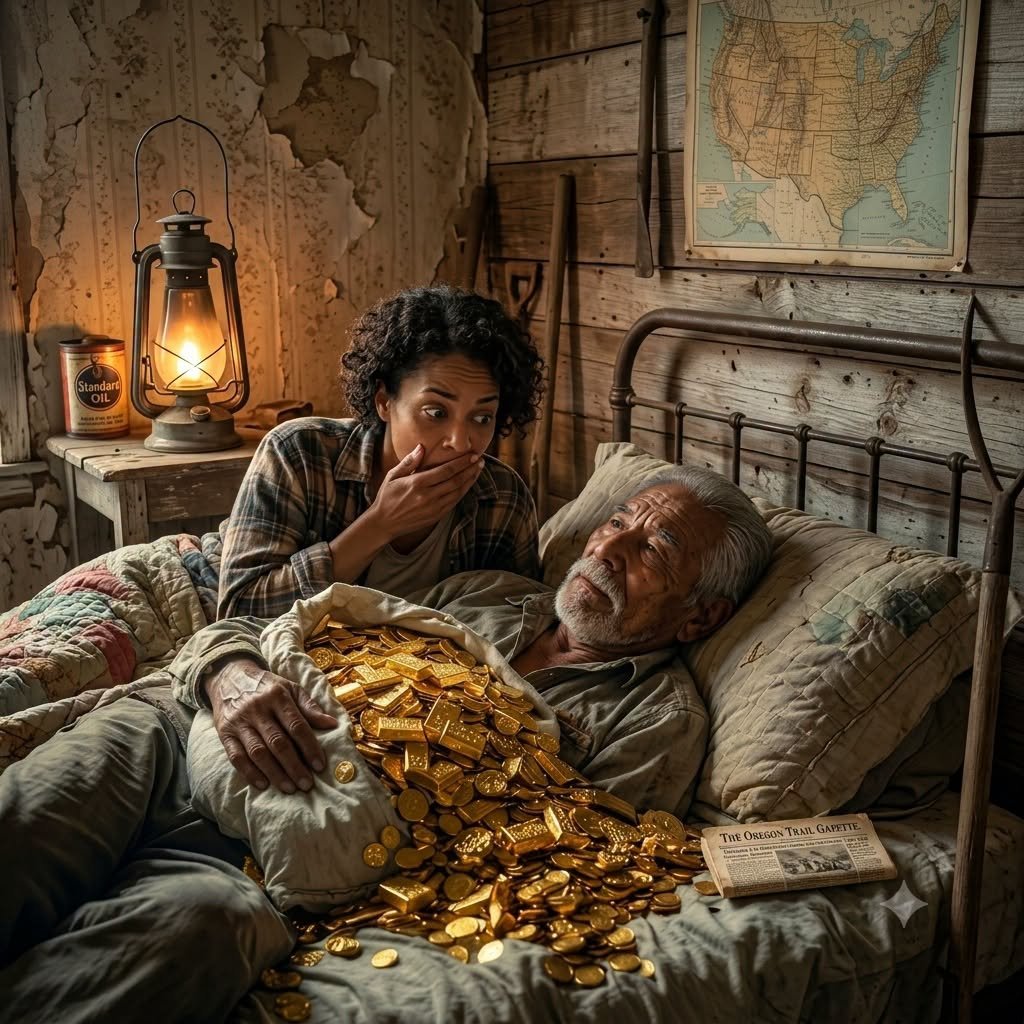
I remembered the night he gave me the pillow.
His trembling hands.
His tired eyes.
His whispered words.
You were the only one who stayed.
I had thought the pillow was worthless.
Old.
Stained.
Something his children didn't want.
But hidden inside were the pieces of a story none of us understood.
Gold.
Letters.
Documents.
Names.
Evidence.
And the truth about a fortune built through years of hard work and nearly destroyed by greed.
I placed the photograph back on the shelf.
Then I whispered, "I finally understand."
Not everything.
There would always be questions I wished I could ask him.
There would always be moments when I wondered whether he could have acted sooner.
But I understood why he had trusted me with the pillow.
He knew I wouldn't simply take the gold and run.
He knew I would look for the people connected to it.
He knew I would keep asking questions.
And he knew that when the truth became painful, I wouldn't walk away.
I looked toward the window.
The moonlight fell across the garden.
The flowers were blooming.
The porch light glowed warmly beside the new wooden sign.
For the first time in many years, I didn't feel trapped inside the life I had built for someone else.
I had choices.
I had friends.
I had meaningful work.
I had a home.
And I had a future.
I walked to the front door.
Opened it.
And stepped onto the porch.
The night air was cool.
The trees moved gently in the breeze.
I looked at the plaque Samuel had made.
A HOME FOR THOSE WHO STAY.
I smiled.
Then I thought about the woman I had been when Ernesto died.
Forty-one years old.
Exhausted.
Frightened.
Certain that the best years of her life had already passed.
I wished I could reach back through time and tell her something.
That she would survive.
That the truth would come out.
That the people who had been hurt would find one another.
That the money would be recovered.
That she would never again have to beg for help from people who refused to give it.
And that one day, she would stand on this porch without feeling afraid of tomorrow.
I looked up at the stars.
"Thank you, Papa Ernesto."
My voice was soft.
"Not just for the house."
I touched the wooden railing.
"Not just for the money."
I smiled through my tears.
"Thank you for seeing me."
Then I went back inside.
I turned off the porch light.
And walked toward my own bedroom.
Not because someone was calling for help.
Not because there were medications to prepare.
Not because I was afraid of what the morning might bring.
But because I was tired after a beautiful evening.
And tomorrow belonged to me.
For twelve years, I had been the woman who stayed.
Now I was finally the woman who could choose where she wanted to go.
And for the first time in my life, I knew that wherever I went, I would never have to abandon myself again.






Comments 0