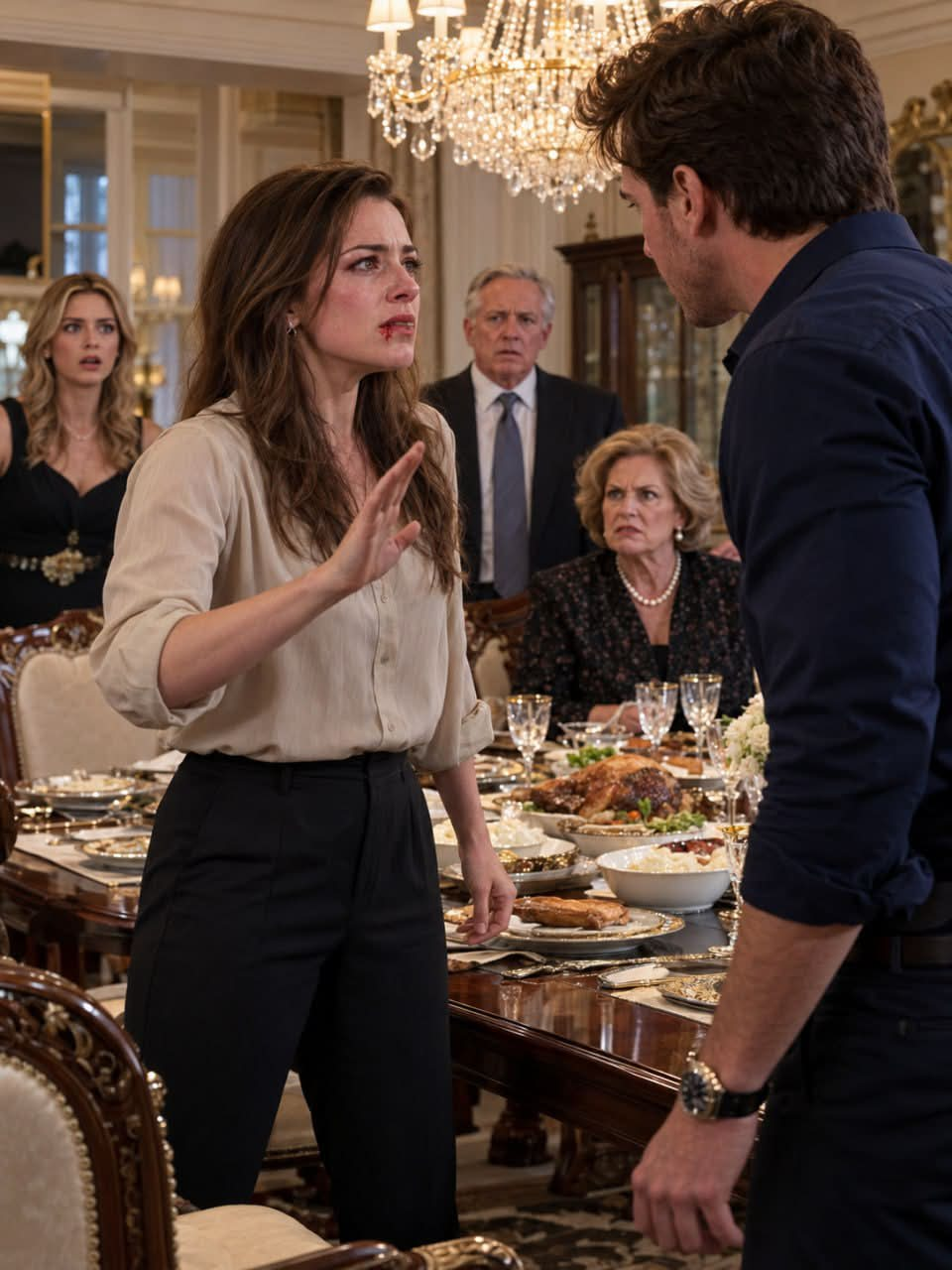
"Linda, it's time Megan learned why Patricia Whitmore chose her before she was even born."
The woman standing across from me placed the letter on the table.
My mother stood in the doorway.
Her face had lost all its color.
For a moment, nobody moved.
I stared at the birth certificate.
My name was printed across the top.
Megan Carter.
The date was correct.
The hospital was correct.
But the name in the space marked MOTHER had been altered.
The original entry was difficult to read beneath the correction.
I looked up.
"Who are you?"
The woman swallowed.
"My name is Catherine Bell."
My heart began pounding.
"Bell?"
She nodded.
"I'm Margaret's younger sister."
I stared at her.
Margaret Bell had been my great-aunt.
I'd grown up hearing stories about her family, but Catherine had never been part of them.
I looked toward my father.
He stood beside Linda, his face filled with shame.
"Dad?"
He closed his eyes.
I turned back to Catherine.
"Are you saying you're my mother?"
She shook her head.
"No."
I felt a rush of confusion.
"Then what are you saying?"
Catherine looked toward Linda.
"I'm saying your mother has been carrying a secret for twenty-nine years."
Linda began crying.
I felt anger rise.
"Then somebody needs to tell me what it is."
Catherine opened the letter.
"Your biological mother was a woman named Sarah Bennett."
The room seemed to tilt.
I stared at her.
"Sarah Bennett?"
Catherine nodded.
"She was Linda's younger sister."
I turned toward my mother.
Linda covered her mouth.
I remembered hearing that name once.
When I was eleven, I'd found an old photograph of two young women standing beside a red pickup truck.
One was Linda.
The other had dark hair and a bright smile.
I'd asked who she was.
My mother had said, "An old friend."
Nothing more.
I looked at Linda.
"Sarah was your sister?"
She nodded through her tears.
"Yes."
"And she was my mother?"
Linda whispered, "Yes."
I sat down.
My knees couldn't hold me.
For twenty-nine years, I'd believed Linda Carter had given birth to me.
She had raised me.
Held me when I was sick.
Helped me with homework.
Taught me to bake.
Cried at my wedding.
And now I was learning that another woman had carried me into the world.
I looked at Catherine.
"What happened to Sarah?"
Her eyes filled with tears.
"She died when you were six weeks old."
I swallowed.
"How?"
Catherine glanced toward Detective Avery.
Then back at me.
"In a car accident."
My stomach tightened.
Another car accident.
Another death connected to the Whitmores.
I looked at my father.
"Did Patricia have something to do with it?"
Daniel took a shaky breath.
"We don't know that she caused the accident."
I stared at him.
"But?"
He lowered his head.
"Sarah had been investigating financial irregularities involving Whitmore Industrial Services."
I closed my eyes.
Of course.
Everything led back to the same family.
Catherine continued.
"Sarah worked as an accounting assistant for one of the companies handling Whitmore contracts. She discovered payments that didn't match the official records."
I looked at her.
"What payments?"
"Transfers from the Bell family trust into accounts controlled by Patricia and Adrian Vale."
My heart pounded.
I thought about the missing money.
The reserve fund.
The forged signatures.
The secret archive.
The environmental reports.
Sarah had discovered the same scheme Margaret would later try to expose.
I looked at Catherine.
"Did Sarah tell anyone?"
"Yes. Margaret."
I swallowed.
"And then Sarah died."
Catherine nodded.
"She was driving home after meeting with a lawyer. Her car was struck at an intersection."
I stared at Detective Avery.
"Was it an accident?"
He answered carefully.
"The original investigation concluded that it was. We've reviewed the available records. There are troubling circumstances surrounding some related financial documents, but we don't have evidence establishing that her death was deliberately caused."
I nodded slowly.
I didn't like the answer.
But I appreciated that he wasn't inventing certainty.
I looked at Catherine.
"Why was my birth certificate changed?"
She opened another document.
"After Sarah died, Linda and Daniel petitioned to adopt you. They wanted to raise you as their daughter."
I looked toward my parents.
Linda was crying openly.
Daniel's eyes were red.
Catherine continued.
"The adoption itself was lawful. But the copy of your birth certificate that Patricia later obtained had been altered to conceal Sarah's name."
I frowned.
"Who altered it?"
"Adrian's office prepared the false copy."
I stared at her.
"Why?"
Catherine took a breath.
"Because Patricia knew Sarah had left you something."
My heart tightened.
"What?"
"A legal interest in the Bell family trust."
I stared at her.
"Margaret's trust?"
Catherine nodded.
"Sarah was a beneficiary through her mother's side of the family. When she died, her interest passed to you under the trust provisions."
I looked at the documents.
"So Margaret left me the land because I was Sarah's daughter?"
"Partly," Catherine said. "Margaret loved you. She also wanted to protect the interest you'd inherited."
I swallowed.
For years, I'd believed Margaret had simply been generous.
Now I understood that she'd been trying to protect something that already belonged to me.
Catherine continued.
"Patricia knew your identity because Sarah's beneficiary records had been copied during the early trust transactions."
I frowned.
"Then why wait until I was grown to send Brad after me?"
"Because Patricia couldn't simply take your interest while you were a child. She tried to redirect trust funds, but the land remained protected. Once you became an adult, she needed your consent—or paperwork that appeared to contain it."
I stared at the forged agreement.
"And marriage was the easiest way to get close enough."
Catherine nodded.
"Yes."
I looked at Linda.
"Why didn't you tell me?"
She stepped forward.
"Megan, we wanted to protect you."
My eyes filled with tears.
"Everyone keeps saying that."
She stopped.
I continued.
"Margaret wanted to protect me. Dad wanted to protect me. You wanted to protect me. Elizabeth wanted to protect me."
My voice broke.
"And somehow, the only person who never got to make a decision about my life was me."
Linda began sobbing.
I looked away.
For a moment, I couldn't bear to see her.
Then Daniel spoke.
"You're right."
I turned toward him.
He looked older than I'd ever seen him.
"We were wrong."
I swallowed.
He continued.
"We should have told you about Sarah when you were old enough to understand. We should have told you about Elizabeth. We should have warned you about Brad."
His voice broke.
"We let fear make decisions that belonged to you."
I stared at him.
For once, he wasn't offering an excuse.
He was accepting responsibility.
I looked at Linda.
"Did you love Sarah?"
She nodded immediately.
"More than anything."
I swallowed.
"Then why did you erase her?"
Linda shook her head.
"I thought if you knew, you'd feel like you didn't belong to us."
I stared at her.
"You were afraid I'd stop loving you?"
She nodded.
I felt tears run down my face.
"Mom, you raised me."
She covered her mouth.
I continued.
"You stayed up with me when I had pneumonia. You taught me how to drive. You helped me move into my first apartment."
My voice shook.
"Knowing about Sarah wouldn't have taken any of that away."
Linda began crying harder.
"I know that now."
I looked down at the birth certificate.
Two women.
One who gave me life.
One who raised me.
Neither had to erase the other.
But Linda's fear had allowed Patricia to use the truth as a weapon.
I folded the document carefully.
Then looked at Catherine.
"Why did you stay away?"
She lowered her eyes.
"After Sarah died, Patricia's lawyers threatened to involve me in allegations of financial misconduct. They claimed I had helped Sarah remove company records."
I frowned.
"Had you?"
"I helped her make copies."
I stared at her.
"That wasn't theft."
"Not necessarily. But I was young, frightened, and couldn't afford a legal fight."
She swallowed.
"Margaret told me to keep the original evidence safe and stay out of Patricia's reach."
I looked at the metal box.
"And you did."
Catherine nodded.
"For twenty-nine years."
I stared at her.
"Why come forward now?"
"Because Margaret is alive. Because Elizabeth came forward. Because Adrian is cooperating."
Her voice steadied.
"And because I couldn't watch another woman in our family lose her life to Patricia Whitmore's lies."
I looked at the letter.
"May I read it?"
Catherine nodded.
"It's yours."
I unfolded the paper.
The handwriting was unfamiliar.
Careful.
Rounded.
My darling Megan,
If you are reading this, it means the people who love you have finally found the courage to tell you the truth.
My throat tightened.
Your mother, Sarah, was brave. She believed numbers should tell the truth, even when powerful people wanted them to lie.
I swallowed.
She loved you from the moment she knew you existed. She talked about the life she wanted to give you—a life where you would never have to be afraid of asking questions.
Tears blurred the words.
Linda and Daniel have promised to raise you if Sarah cannot. They are good people, though even good people sometimes make mistakes when they are frightened.
I pressed the letter against my chest.
Then I read the final paragraph.
Whatever name appears on your birth certificate, remember this: you belong to yourself. No family, husband, company, or court can decide your worth for you.
I closed my eyes.
For the first time, the truth about my birth didn't feel like something Patricia could use against me.
It felt like something that had been waiting for me to claim.
Three days later, I walked into Margaret Bell's hospital room.
She was sitting beside the window.
A blanket covered her knees.
Her silver hair had been brushed neatly.
She looked smaller than I remembered.
But when she saw me, her face changed.
"Megan."
I stopped in the doorway.
My throat tightened.
"Margaret?"
She smiled.
"Come here, sweetheart."
I crossed the room.
She opened her arms.
And I fell into them.
For several seconds, neither of us spoke.
I cried against her shoulder.
She held me as tightly as her frail arms allowed.
"I'm sorry," she whispered.
I shook my head.
"No."
"I tried to come home."
I pulled back.
Her eyes were filled with tears.
"I know."
She looked toward the window.
"After the accident, I woke up in a hospital I didn't recognize. They told me I'd been confused. That my family had arranged care."
I swallowed.
"Patricia?"
Margaret nodded.
"She came to visit. She told me Daniel believed I was too ill to manage my affairs."
My stomach twisted.
Margaret continued.
"At first, I thought I was recovering from another stroke. I couldn't remember everything clearly."
I held her hand.
"Then?"
"Whenever I asked to go home, they told me I wasn't well enough. Later, I learned the name on my records wasn't mine."
I swallowed.
"Mary Bell."
She nodded.
"Yes."
I looked at her.
"Why didn't anyone believe you?"
Margaret's expression darkened.
"Some staff did. But the people controlling my records and payments kept telling them I was confused."
I thought about Helen Price.
The nurse who had remembered Margaret saying her family believed she was dead.
Margaret continued.
"Over the years, I tried to send letters. Some were returned. Others disappeared."
I squeezed her hand.
"I'm sorry."
She shook her head.
"Don't apologize for what they did."
I swallowed.
Then asked the question that had haunted me.
"Did you know Patricia was going to use Brad to marry me?"
Margaret shook her head.
"Not specifically."
I nodded.
"But you warned me in your letter."
"I knew Patricia wanted the land. And I knew she preferred controlling people to negotiating with them."
She looked at me.
"When I wrote those instructions, you were a little girl. I wanted the trustees to recognize the danger if anyone tried to use a personal relationship to obtain your consent."
I swallowed.
"And they didn't."
"Some failed you," she said quietly. "Others tried to help."
I thought about Catherine.
Elizabeth.
Caroline.
Rebecca.
Rachel.
Margaret Shaw.
The people who had preserved evidence despite everything Patricia had done.
I looked at Margaret.
"Did you know about Sarah?"
She nodded.
"Of course."
My eyes filled with tears.
"Was she like me?"
Margaret smiled sadly.
"In some ways."
I leaned closer.
"Tell me."
"She was stubborn."
I laughed through my tears.
"That sounds familiar."
Margaret smiled.
"She loved numbers. She could find a mistake in a ledger faster than anyone I knew."
I swallowed.
"Like me."
"Very much like you."
Margaret looked toward the window.
"And she hated bullies."
I felt my throat tighten.
"Did she know Patricia?"
"Yes."
"Was she afraid of her?"
Margaret considered the question.
"She understood that Patricia was dangerous. But she didn't believe fear was a good enough reason to ignore wrongdoing."
I nodded.
I wished I'd known Sarah.
I wished she'd lived long enough to teach me how to ride a bicycle.
How to bake.
How to recognize a man who was lying.
But I couldn't change what had happened.
I could only decide what to do with the truth.
Margaret squeezed my hand.
"Megan, there's something I want you to know."
I looked at her.
"What?"
"The land was never meant to be a burden."
I swallowed.
"I know."
She shook her head.
"No. Listen."
I nodded.
"I wanted you to have choices. If you wanted to farm it, you could. If you wanted to protect it, you could. If you wanted to sell it someday, that should be your decision."
My eyes filled with tears.
"Not Patricia's."
Margaret smiled.
"Exactly."
I held her hand.
Then I asked, "What was hidden beneath the mansion?"
Her expression grew serious.
"The original records."
I nodded.
"All of them?"
"Most of what I'd been able to gather before my disappearance. Adrian later added records of his own."
I frowned.
"Why would Adrian preserve evidence against Patricia?"
Margaret sighed.
"Because he was frightened of her too. He wanted insurance in case she turned on him."
I thought about the hidden archive.
The black case.
The old ledgers.
The environmental reports.
Margaret continued.
"Patricia believed destroying copies would be enough. But Adrian kept originals because he knew the truth might one day be worth more than his loyalty."
I nodded slowly.
"Did he help keep you hidden?"
"Yes."
My stomach tightened.
"Then I hope he answers for it."
Margaret looked at me.
"So do I."
The investigations continued for months.
They weren't as dramatic as the movies.
There were no sudden confessions in crowded courtrooms.
No single photograph that explained everything.
No magical document that made every problem disappear.
There were interviews.
Subpoenas.
Bank records.
Forensic examinations.
Witness statements.
And long days when it felt as though nothing was moving.
But the evidence was there.
And this time, it wasn't disappearing.
Investigators reconstructed the financial transactions involving North Ridge Development Services, Whitmore Industrial Services, and the Bell family trust.
They found unauthorized transfers.
False invoices.
Forged signature pages.
Payments to companies that had performed little or no legitimate work.
And correspondence showing how Patricia had directed the effort to obtain my property.
Adrian Vale eventually entered into a cooperation agreement with prosecutors.
His testimony was supported by the records he'd preserved.
He admitted participating in fraudulent financial transactions, preparing false documents, and helping conceal Margaret's identity after her reported death.
He also described how Patricia had used the care facility arrangements to keep Margaret isolated.
He did not escape responsibility.
He pleaded guilty to multiple offenses and received a prison sentence.
His cooperation helped investigators recover money that had been moved through several accounts.
Not all of it.
Some had been spent years earlier.
Some had disappeared into failed investments.
But enough was recovered to begin repairing the damage.
The environmental investigation was equally serious.
Independent testing confirmed that industrial waste had been buried at locations associated with the old Whitmore operations.
The records from the hidden archive established that company officials had known about the disposal practices and concealed them.
The north parcel wasn't the source of the family's fortune.
It was evidence of how that fortune had been built.
Regulators required a cleanup plan.
The responsible companies and their insurers became involved in the remediation process.
The contaminated areas were secured, and my family was kept informed about the work.
The old drainage ditch was fenced off.
The soil was tested.
The groundwater was monitored.
And the land that Patricia had wanted to steal was finally being treated with the care it deserved.
Brad was arrested six days after the courthouse hearing.
He had been staying at a property owned by an associate of Adrian's.
He tried to claim that he'd been following his mother's instructions.
He said he hadn't understood the legal consequences of the documents.
He said he had loved me.
That was the part that hurt the least.
Because by then, I understood that Brad's version of love had always required someone else to surrender something.
He eventually pleaded guilty to offenses connected to the fraudulent property documents and financial scheme.
The assault was addressed separately.
The video from the mansion, my photographs, and witness statements were part of that case.
He received a custodial sentence for the financial crimes, along with additional court-imposed conditions arising from the assault proceedings.
I attended the sentencing.
Not because I wanted to see him suffer.
Because I wanted to hear the court acknowledge what he'd done.
Brad looked smaller in the courtroom than he had in the mansion.
Without the expensive surroundings, the family name, and his mother's protection, he was simply a man who had chosen to hurt people.
When the judge gave me the opportunity to speak, I stood.
My hands shook.
But my voice didn't.
"Three days after our wedding, my husband hit me because I refused to apologize for something I hadn't done."
Brad stared at the table.
I continued.
"At the time, I thought that was the moment my marriage changed."
I paused.
"Later, I learned that my marriage had been a lie before it began."
The courtroom was silent.
"He was paid to gain my trust. He used what I told him about my hopes and my family to manipulate me. He helped prepare documents intended to take property that belonged to me."
I looked toward him.
"For a long time, I wanted to know whether any part of his love had been real."
My throat tightened.
"Now I understand that I don't need the answer."
Brad looked up.
I continued.
"What matters is that I trusted him, and he chose to betray that trust."
I took a breath.
"I want the court to understand that this wasn't a misunderstanding between newlyweds. It was a series of deliberate decisions."
Then I sat down.
Rachel squeezed my hand.
And I didn't look at Brad again.
Patricia's trial took longer.
Her attorneys challenged the evidence.
They questioned the witnesses.
They argued that Adrian had acted independently.
They claimed Richard had misunderstood the transactions.
They suggested Elizabeth had invented accusations because of her marriage to Brad.
They even tried to portray Margaret's recollections as unreliable because of her medical history.
But Patricia had made one mistake.
She had kept records.
Not because she believed she would be caught.
Because she believed records gave her power.
And now those same records were being used to establish what she'd done.
Adrian's ledgers showed the money.
The correspondence showed the instructions.
The signature pages showed the fraud.
The care facility records showed how Margaret had been kept under a false identity.
The security footage showed the family's attempts to conceal evidence.
And the testimony of the people she'd intimidated showed the human cost.
Patricia was convicted of multiple financial and fraud-related offenses, along with offenses arising from her role in Margaret's unlawful confinement.
She received a substantial prison sentence.
When the verdict was read, she didn't cry.
She stared straight ahead.
Then she turned toward me.
For one brief moment, our eyes met.
I remembered the dinner table.
The expensive dishes.
The black marble floor.
The way she'd smiled after Brad slapped me.
She had believed I would be frightened enough to obey.
Instead, I had walked away.
And the life she'd built on other people's silence had collapsed.
I looked away first.
Not because I was afraid.
Because there was nothing left I needed from her.
The civil proceedings took another year.
The forged transfer was declared invalid.
The recorded document was canceled.
My interest in the north parcel was confirmed.
The trust accounts were examined, and the court approved the recovery and distribution of funds that could be traced.
Some money remained unrecoverable.
But the final accounting established what belonged to the trust and what had been improperly diverted.
Margaret Shaw helped me understand every step.
She never asked me to sign a document without reading it.
She never told me to trust her simply because she was an attorney.
And whenever I asked a question, she answered it.
That alone felt revolutionary.
The divorce was finalized after the financial matters were sufficiently separated.
I signed the final papers in Margaret Shaw's office.
Rachel sat beside me.
When I finished, I put down the pen.
Margaret Shaw smiled gently.
"That's it."
I stared at the signature.
Megan Carter.
My name.
Mine.
I waited for some dramatic feeling.
Relief.
Grief.
Anger.
Instead, I felt tired.
Then I laughed.
Rachel looked at me.
"What?"
I shook my head.
"I spent months thinking this would feel bigger."
Margaret Shaw smiled.
"Sometimes the most important endings are quiet."
I looked at the papers.
Then at Rachel.
"Can we get lunch?"
She laughed.
"Absolutely."
We went to a little diner near the courthouse.
I ordered a cheeseburger and fries.
Rachel ordered pancakes.
And for the first time in a very long time, we talked about something that had nothing to do with Brad Whitmore.
We talked about movies.
Work.
Her cousin's new puppy.
A ridiculous television show we both loved.
Ordinary things.
Wonderful, ordinary things.
My relationship with my parents took longer to repair.
There were difficult conversations.
There were tears.
There were days when I couldn't bear to answer my mother's calls.
And there were days when I missed her so much that I called before I could stop myself.
Linda told me everything she remembered about Sarah.
She brought me photographs.
Letters.
A small box of jewelry.
A recipe book with Sarah's handwriting in the margins.
I learned that Sarah loved lemon cake.
That she hated cold weather.
That she sang while balancing accounts.
That she'd wanted to travel to the ocean someday.
I learned that she had chosen my name.
Megan.
Not Patricia.
Not Margaret.
Not Linda.
Sarah.
One afternoon, Linda and I sat at the farmhouse kitchen table.
The same table where she'd helped me with homework.
She placed a photograph between us.
Sarah was holding me as a newborn.
Her face was tired.
Her smile was enormous.
I stared at it.
"She looks happy."
Linda nodded.
"She was."
I swallowed.
"Did she know she was in danger?"
Linda's eyes filled with tears.
"She knew the records were important. But she believed the truth would protect her."
I looked down.
"She was wrong."
Linda took my hand.
"She deserved to be safe. So did you."
I nodded.
Then I asked, "Why didn't you tell me about her sooner?"
Linda cried.
And this time, I let her explain.
Not because her explanation erased what she'd done.
But because I wanted to understand the woman who had raised me.
She told me about losing her sister.
About holding a six-week-old baby while trying to plan a funeral.
About being terrified that someone would take me away.
About how one small omission became another.
And how, after enough years, she no longer knew how to tell the truth without destroying the life we'd built.
I listened.
Then I said, "You should have trusted me."
She nodded.
"I know."
I squeezed her hand.
"I love you, Mom."
She began crying.
I continued.
"But I need you to understand something."
She looked at me.
"Love doesn't mean you get to decide what truths I can handle."
She nodded.
"I understand."
I believed her.
Not because she promised.
Because she had finally stopped defending the lie.
Margaret came home the following spring.
Not to the old farmhouse.
She chose a small cottage near the edge of town.
It had a porch.
A garden.
And a kitchen with windows overlooking the trees.
She said she'd spent enough years inside buildings where other people decided when she could go outside.
She wanted sunlight.
Fresh air.
And a front door she could open whenever she pleased.
I visited her every Sunday.
Sometimes we cooked.
Sometimes we looked through photographs.
Sometimes we sat on the porch and said nothing at all.
Her memory wasn't perfect.
There were days when she forgot appointments.
Days when she repeated stories.
Days when she needed help organizing her medications.
But she was home.
She had people who loved her.
And her medical care was now guided by her own wishes, with independent professionals helping her make informed decisions.
One afternoon, she handed me an old photograph.
It showed Sarah standing beside Catherine.
Both were laughing.
Margaret smiled.
"Your mother was a wonderful woman."
I nodded.
"Which one?"
She looked at me.
Then laughed.
"Both of them, sweetheart."
I smiled.
And for the first time, that answer didn't hurt.
Elizabeth and Sophie began building a new life too.
Elizabeth no longer had to hide.
She found a house in a quiet neighborhood.
Sophie started school.
Caroline helped them settle in.
Rebecca visited often.
The legal questions surrounding Sophie's protective arrangement were resolved through proper proceedings, with Elizabeth represented by independent counsel.
The false release documents Patricia had prepared were rejected.
Sophie's interests were protected.
And no one was allowed to use her as leverage in a business dispute.
Brad's claims concerning paternity were addressed through the appropriate legal process.
The records and testing established that he was not Sophie's biological father.
Elizabeth had been telling the truth.
Sophie remained safely with her mother, and the people responsible for protecting her made sure her future was determined by her needs, not by the Whitmore family's demands.
I visited them one Saturday.
Sophie opened the door wearing pink sneakers and carrying a stuffed rabbit.
She looked up at me.
"Are you Megan?"
I smiled.
"Yes."
She studied me seriously.
"Mom says you're brave."
I laughed softly.
"Your mom is brave too."
Sophie nodded.
"I know."
Then she took my hand.
"Do you want to see my room?"
I looked at Elizabeth.
She smiled.
"Go ahead."
Sophie led me upstairs.
Her room was full of books.
Drawings.
Stuffed animals.
A small desk beside the window.
She showed me a picture she'd made of her family.
Elizabeth.
Sophie.
Caroline.
Rebecca.
A dog they hoped to adopt.
And a bright yellow sun.
I looked at the drawing.
"It's beautiful."
Sophie smiled proudly.
"Mom says families can be made lots of different ways."
My throat tightened.
"She's right."
Sophie looked at me.
"Do you have a family?"
I thought about my parents.
Margaret.
Catherine.
Rachel.
The people who had helped me survive.
I smiled.
"Yes."
She nodded.
"Good."
Then she handed me a purple crayon.
"You can draw yourself in ours too."
I sat beside her.
And I did.
Richard Whitmore lost control of the company.
The mansion was sold as part of the financial restructuring and civil recoveries.
The business assets were examined, debts were settled where possible, and the remaining legitimate operations were transferred or closed.
Richard faced consequences for his own role in approving transactions and failing to act when he knew wrongdoing was occurring.
He cooperated with investigators and accepted a negotiated resolution that included financial penalties and restrictions on his future business activities.
He didn't escape responsibility simply because he eventually told the truth.
But he also stopped protecting Patricia.
And for Kelsey's sake, I was grateful.
Kelsey moved into a small apartment.
She found a job at a local nonprofit.
She stopped using the Whitmore name professionally.
One afternoon, she came to see me.
We sat on the porch of my new house.
She looked nervous.
"Megan, can I ask you something?"
I nodded.
"Of course."
"Do you hate my family?"
I considered the question.
"I hate what they did."
She looked down.
"That's fair."
I reached for her hand.
"But you aren't responsible for every choice your parents made."
Her eyes filled with tears.
"I should have helped you sooner."
I squeezed her fingers.
"You helped when you could."
She nodded.
Then whispered, "I want to be different from them."
I smiled.
"Then be different."
She laughed through her tears.
"I guess it's that simple."
I shook my head.
"No. It's not simple."
I looked toward the garden.
"But it is possible."
Two years after my wedding, I stood in the north field.
The morning air was cool.
The sky was clear.
The old drainage ditch had been restored.
The contaminated areas had been cleaned and independently tested.
The remediation work wasn't something I could forget.
There were still monitoring requirements.
Still reports.
Still responsibilities.
But the land was no longer a secret someone else controlled.
I had worked with environmental specialists, attorneys, and my parents to establish a long-term management plan.
Part of the property remained agricultural.
Another section was placed under a conservation arrangement.
And a small portion near the road became the site of something I'd never imagined when I was married to Brad.
A community education center.
I called it the Sarah Bennett and Margaret Bell Center.
It offered financial literacy classes.
Basic bookkeeping workshops.
And free educational programs for people who wanted to understand contracts, household finances, and property rights.
I knew a community center couldn't prevent every act of fraud.
But I wanted people to have the knowledge I'd once lacked.
I wanted them to feel comfortable asking questions.
And I wanted them to know that understanding a document was not an insult to the person asking them to sign it.
Rachel helped organize the first workshops.
Elizabeth volunteered.
Caroline managed community outreach.
Rebecca helped develop a program for women rebuilding their finances after abusive relationships.
Margaret Shaw offered occasional legal education sessions, carefully explaining when people needed individual legal advice.
And Margaret Bell attended the opening ceremony.
She sat in the front row.
Wearing a blue dress.
Smiling.
When I stepped to the microphone, I looked at her.
Then at my parents.
At Catherine.
At Elizabeth and Sophie.
At Rachel.
At Kelsey.
At all the people who had helped me reclaim my life.
I took a breath.
"Two years ago, I believed I was beginning a marriage."
The room grew quiet.
"I thought I'd found someone who loved me. I thought I was joining a family that would welcome me."
I paused.
"Instead, I discovered that people I trusted had made plans for my life without my knowledge or consent."
I looked toward Margaret.
"But I also discovered something else."
My throat tightened.
"I discovered that the truth can survive a very long time when people are brave enough to preserve it."
I thought about Sarah.
The records she'd copied.
The questions she'd asked.
The life she'd lost too soon.
I thought about Margaret.
Twenty years of confinement.
Twenty years of being told she was confused.
Twenty years of refusing to forget who she was.
I continued.
"This center is named for two women who believed ordinary people deserved to understand the decisions affecting their lives."
I smiled.
"That's what we're going to help people do."
The room filled with applause.
I looked at Margaret.
She was crying.
So was Linda.
And for the first time, the tears didn't feel like grief.
They felt like something being returned.
That evening, after everyone had gone home, I walked back through the field.
The sun was setting.
The grass moved gently in the wind.
I stopped near the old fence.
The same fence my father had repaired when I was a child.
The same place Margaret had once told me never to let anyone make me feel small because I came from a farming family.
I stood there for a long time.
Then I heard footsteps.
Rachel approached carrying two paper cups.
"Coffee?"
I smiled.
"Always."
She handed me one.
We stood beside the fence.
For a while, neither of us spoke.
Then she looked at me.
"Do you ever think about him?"
I knew who she meant.
Brad.
I considered the question.
"Sometimes."
She nodded.
"Does it still hurt?"
I looked toward the horizon.
"Not the way it used to."
Rachel waited.
I continued.
"I used to think about all the things he said. All the promises. All the moments I thought were real."
I swallowed.
"Now I think about how much I changed after I left."
Rachel smiled.
"You changed a lot."
I laughed softly.
"I had to."
She shook her head.
"No. You chose to."
I looked at her.
She continued.
"You could have let them convince you that fighting was pointless."
I smiled faintly.
"Believe me, there were days when I wanted to."
"I know."
I looked toward the center.
The lights were still on inside.
Through the windows, I could see the tables where people had sat that afternoon.
The bookshelves.
The classroom.
The photographs of Sarah and Margaret near the entrance.
I took a slow breath.
"Do you know what the strangest part is?"
Rachel looked at me.
"What?"
"I used to think getting married meant my life was finally beginning."
She smiled.
"And now?"
I looked at the field.
At the farmhouse in the distance.
At the road leading toward town.
At the life I'd built with my own decisions.
"Now I know it already had."
Rachel leaned against the fence.
"Any plans to fall in love again?"
I laughed.
"Maybe someday."
She grinned.
"That's not a no."
"No," I admitted. "It isn't."
I thought about the future.
A future that no longer frightened me.
I had my own home.
My own work.
My own savings.
Friends I trusted.
A family that was learning how to tell the truth.
And a piece of land that belonged to me.
If love came again, I would welcome it.
But I would never again confuse being chosen with being valued.
And I would never surrender my voice to keep someone else's peace.
The following Sunday, I visited Margaret.
She was sitting on her porch with a cup of tea.
I sat beside her.
She looked at me.
"How was the opening?"
I smiled.
"Wonderful."
She nodded.
"Your mother would have been proud."
I swallowed.
"Sarah?"
Margaret nodded.
"Yes."
I looked toward the garden.
"I wish she could have been there."
Margaret reached for my hand.
"I know."
We sat quietly.
Then she asked, "Are you happy, Megan?"
I thought about the question.
Not the kind of happiness I'd imagined on my wedding day.
Not the perfect house.
The perfect husband.
The perfect family photograph.
Something quieter.
Something stronger.
I thought about waking up in a home where nobody frightened me.
About signing documents because I understood them.
About calling my mother without feeling that I had to pretend.
About laughing with Rachel.
About watching Sophie run through the grass.
About seeing Margaret sit in the sunlight after twenty years of being kept away from it.
I smiled.
"Yes."
Margaret studied my face.
Then smiled too.
"Good."
She squeezed my hand.
"That's all I ever wanted for you."
I leaned my head against her shoulder.
For a long time, we watched the evening light move across the garden.
And I thought about the woman I had been three days after my wedding.
Standing in a beautiful dining room.
My cheek burning.
My lip bleeding.
My husband demanding obedience.
His mother smiling.
I had believed my life was falling apart.
In a way, it was.
But what fell apart was the life other people had built around me.
The lies.
The control.
The fear.
The belief that love required silence.
What remained was mine.
My name.
My choices.
My future.
I looked at Margaret.
"Thank you for leaving me the land."
She shook her head.
"I didn't give you your future, sweetheart."
I smiled.
"No?"
She squeezed my hand.
"I just tried to make sure nobody could steal it."
I looked out across the garden.
At the open gate.
At the road beyond it.
At the wide, beautiful world waiting outside.
And for the first time in my life, I didn't need anyone to tell me I was allowed to walk toward it.
I already knew.






Comments 0