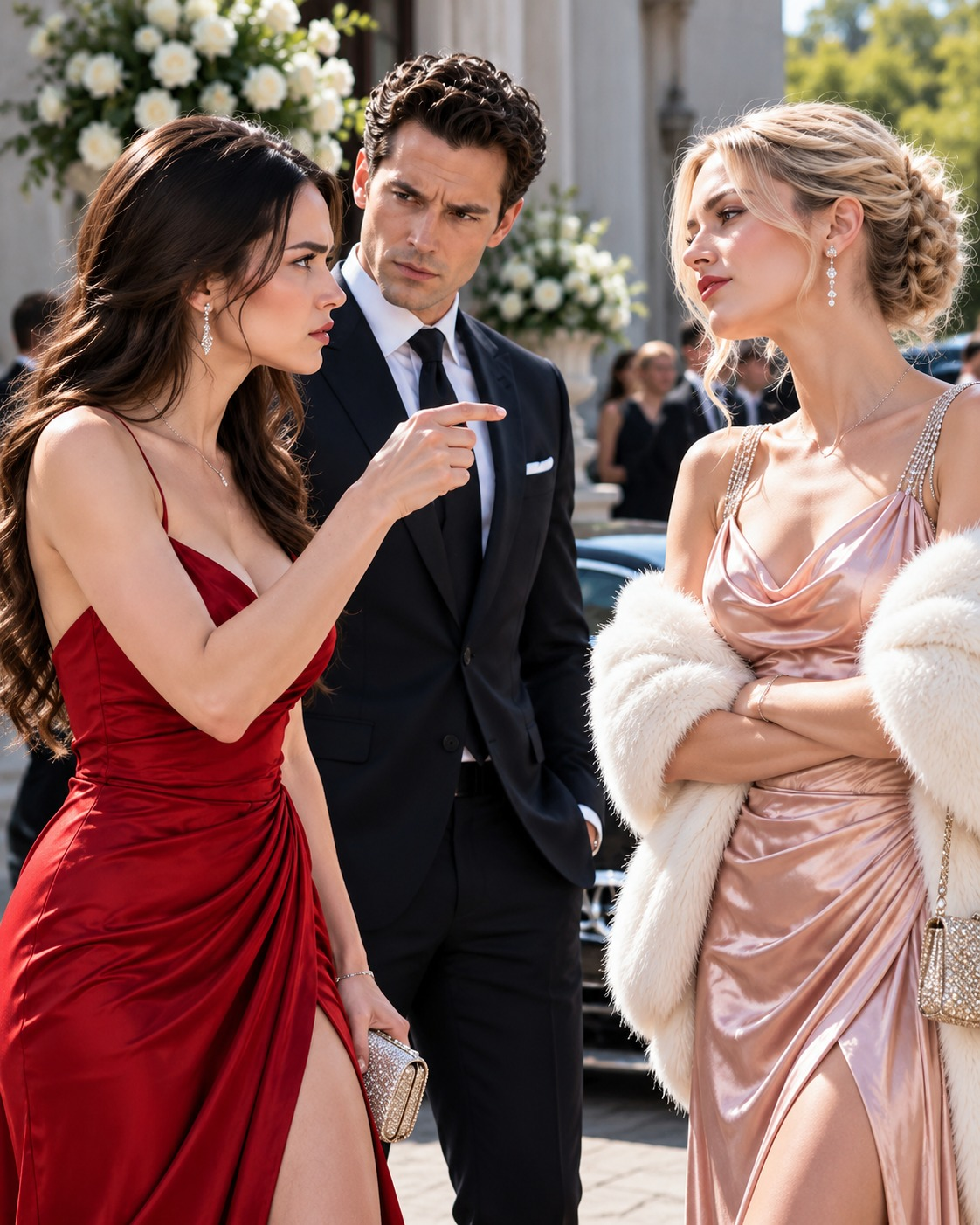
The nurse looked directly into the hidden camera.
“Mrs. Carrington must never know.”
I replayed the recording three times, hoping I had misunderstood her.
I hadn't.
Her voice was quiet, almost pleading, but the words were unmistakable. Preston stood beside her in Emma's bedroom, holding the same thick folder I had seen in the photograph. He glanced toward the door, then toward the dresser, as if he were checking whether anyone had followed him.
The nurse clutched the folder against her chest.
Preston said something I couldn't hear.
She shook her head.
Then he reached for the papers.
She resisted for a moment before finally releasing them.
I paused the video.
My daughter had been dead for three years, yet the people who claimed to love her were still hiding something about the night she died.
And I was beginning to understand that the secret was much bigger than a stolen bracelet.
I sat on the edge of Emma's bed, the phone trembling in my hands. The bedroom felt suddenly unfamiliar. Every object seemed to carry a question I had never thought to ask.
The stuffed rabbit on the pillow.
The empty space where the memory box had stood.
The porcelain angel concealing the camera.
Even the framed photograph of Emma seemed different now. I had taken it during the final month of her treatment, when she still believed she would be well enough to return to school.
She had asked me to put it on her dresser.
“That's where you'll see me every morning, Mommy,” she'd said.
I had smiled and promised.
I had never imagined that one day I would sit in that same room, searching for evidence that the people closest to me had lied about her final hours.
My phone vibrated.
A message from an unknown number appeared.
The nurse's name is Rebecca Hale. She worked the night shift on October 12. Find her before Preston does.
I read it twice.
Then I looked at the recording again.
The nurse's face was partially visible when she turned toward Preston. She appeared to be in her forties, with dark hair pulled into a tight bun and a small crescent-shaped birthmark beneath her left ear.
I remembered seeing that mark before.
Not at Emma's memorial.
At the hospital.
I had been sitting in a consultation room after Emma's condition worsened when a nurse entered carrying a stack of forms. She had spoken gently and asked me to sign several pages.
I remembered being exhausted.
I remembered Preston telling me that the paperwork was routine.
And I remembered signing without reading everything.
Had that been Rebecca?
I couldn't be certain.
But I knew one thing.
If she had been present that night, she might be able to tell me what had happened.
I saved the recording to a private folder and sent a copy to an encrypted account I had created months earlier for the foundation's financial documents. Then I checked the bedroom door.
It remained closed.
Preston had gone downstairs.
I could hear him moving around in his study, opening drawers and placing objects on his desk.
I slipped the photograph into the inside pocket of my bag and went downstairs.
I needed to act normally.
If Preston suspected that I had seen the entire recording, he would erase whatever evidence remained.
And if Lydia was right that he had deliberately allowed me to find Emma's letter, then I needed to understand why.
Preston was standing beside his desk when I entered the study.
The room smelled of leather, polished wood, and the expensive cologne he wore every day. His computer was open, but the screen had gone dark.
He looked up.
“Feeling better?”
“A little.”
“Good. You should eat something.”
“I will.”
He nodded toward the chair opposite his desk.
“Sit down. There's something we need to discuss.”
I sat.
He folded his hands on the desk, adopting the patient expression he used during foundation meetings.
“I've been thinking about the letter.”
I kept my face neutral.
“What about it?”
“I don't believe Emma wrote it.”
The statement struck me harder than I expected.
I looked at him carefully.
“Why not?”
“Because the handwriting looks wrong.”
“It looks exactly like hers.”
“You're emotional. You may not be seeing it clearly.”
I wanted to throw the letter at him.
Instead, I asked, “Then why did you keep it?”
He paused.
“I found it among some old papers. I thought it might help you.”
“Help me understand what?”
“That you don't need to keep searching for answers that don't exist.”
I leaned back.
“You keep telling me there are no answers. But you never explain why.”
His jaw tightened.
“Because we've already discussed this.”
“No, Preston. You've told me what to believe. That's different.”
For several seconds, he stared at me.
Then he stood and walked toward the window.
“You think I'm the enemy.”
“I think you're hiding something.”
He turned.
“After everything I've done for you?”
The question was delivered with genuine indignation.
I remembered the hospital bills he had paid, the foundation he had organized, and the endless hours he claimed to have spent managing our affairs while I struggled to get through each day.
I also remembered the money that had disappeared from the foundation's accounts.
The missing keepsakes.
The bracelet on Vanessa's wrist.
The nurse in Emma's bedroom.
“I don't know what you've done,” I replied. “That's the problem.”
He looked away.
“You need to rest.”
“I need the original hospital records.”
His shoulders stiffened.
“What?”
“The original records from October 12. I want to see them.”
“Why?”
“Because I don't remember everything clearly, and I want to understand what happened.”
He turned toward me slowly.
“The hospital gave us everything we needed.”
“Then it should be easy to get another copy.”
“It's unnecessary.”
“Why?”
His expression darkened.
“Because those records contain private medical information, Celeste. You don't need to reopen that wound.”
“Emma was my daughter.”
“And she was mine!”
His voice cracked through the room.
For one brief moment, I saw the anger beneath his carefully maintained composure.
Then he seemed to realize he had raised his voice.
He took a breath and lowered it.
“I'm sorry. I didn't mean to shout.”
I watched him.
He had not shouted because he was grieving.
He had shouted because I had asked for something he did not want me to have.
“I'm going to contact the hospital tomorrow,” I said.
“No.”
The word came instantly.
We both froze.
Preston's face changed.
He had answered before he could stop himself.
I stood.
“Why not?”
“Because I don't want you making decisions while you're upset.”
“I'm not asking for permission.”
He walked toward me.
“Celeste, listen to me. There are things you don't understand about what happened that night.”
My heart began to pound.
“What things?”
He stopped.
For a moment, I thought he was going to tell me the truth.
Then his eyes shifted toward the door.
“I'm talking about the medical situation. Emma was very ill. The doctors explained that to us.”
“Then explain it to me again.”
He shook his head.
“Not tonight.”
I left before he could say anything else.
Behind me, I heard him call my name.
I didn't turn around.
At eleven that night, I called the hospital.
I asked for the medical records department and explained that I was Emma's mother. I gave them her full name, date of birth, and the date of her final admission.
The woman who answered was polite but cautious.
“I'm sorry, Mrs. Carrington. Some of those records are archived.”
“How long would it take to retrieve them?”
“That depends on the request.”
“I need the original discharge documentation and any amendments made to the file.”
There was a pause.
“Amendments?”
“Yes. Any corrections or supplementary notes.”
The woman typed something.
Then she stopped.
“Mrs. Carrington, I can see a note indicating that the file was reviewed after the original admission.”
My fingers tightened around the phone.
“Reviewed by whom?”
“I can't disclose that information without verifying your identity and authorization.”
“I can provide whatever you need.”
She gave me instructions for submitting a formal request.
Before ending the call, I asked one final question.
“Was a nurse named Rebecca Hale assigned to Emma's ward on October 12?”
The woman fell silent.
I heard the keyboard stop.
“Why do you ask?”
“Because I need to speak with her.”
“Ms. Hale no longer works here.”
“Do you know where she works now?”
“I'm afraid I can't provide personal information.”
I thanked her and ended the call.
I had learned very little.
But I had learned enough to know that Emma's file contained a later review.
Someone had gone back through her medical records after the night she died.
Someone had changed or added something.
And Preston had known.
I opened my laptop and searched the foundation's archived emails. I had access to the account because I had established the organization with Preston and remained one of its original directors, although he had gradually taken over most of the administration.
I searched for Rebecca Hale.
Nothing.
I searched for October 12.
Several emails appeared, including a message from Preston to the foundation's former legal adviser.
The subject line read: Urgent—Private Medical Documentation.
The email had been sent at 2:43 a.m.
I opened it.
The message contained only two sentences.
Please ensure the revised paperwork is filed separately from the original records.
No copy is to be sent to Celeste.
I read it again.
Then I checked the attachment.
It had been deleted.
My hands began to shake.
I forwarded the email to my private account and printed a copy.
At the bottom of the message was a reference number.
I wrote it on a piece of paper.
Then I searched for the legal adviser's name.
Sabine Lockridge.
I recognized it immediately.
Sabine had handled the foundation's original paperwork and had attended Emma's funeral. She had offered her condolences, hugged me, and told me that if I ever needed help, I should call her.
I had not spoken to her in almost two years.
I found her number in the foundation directory and called.
She answered after the fourth ring.
“Hello?”
“Sabine, it's Celeste Carrington.”
The silence that followed was so long that I checked whether the call had disconnected.
“Celeste,” she finally said. “I wasn't expecting to hear from you.”
“I need to ask you about an email Preston sent on October 12 three years ago.”
Another pause.
“What email?”
I read the subject line.
Her breathing changed.
“Where did you find that?”
“In the foundation archive.”
“You shouldn't be looking through those files.”
The words were spoken with such immediate urgency that I felt a chill move through me.
“Why?”
“Because you don't understand what you're dealing with.”
“Then explain it to me.”
She said nothing.
“Sabine, the email says revised medical paperwork was filed separately from the original records. It also says no copy should be sent to me. Why?”
“I can't discuss this over the phone.”
“Then I'll come to your office.”
“No.”
The answer was so sharp that I sat back.
Sabine lowered her voice.
“Celeste, please listen to me. There are people who have spent a great deal of time making sure this matter stays closed.”
“People like Preston?”
She did not answer.
“Was Emma's medical file changed?”
“I can't tell you that.”
“Did Preston ask you to hide documents from me?”
“Celeste—”
“Did he?”
Her voice broke.
“I am sorry.”
The call ended.
I sat motionless, listening to the dial tone.
She had not denied it.
I printed the email again, along with the reference number, and placed both pages inside my bag.
Then I returned to Emma's bedroom and opened the camera application.
I wanted to see the nurse's face clearly.
The recording from October 12 showed Preston entering the room at 12:19 a.m. Rebecca followed him, holding the folder.
They spoke for several minutes.
Then Rebecca placed a small object on the dresser.
I enlarged the image.
It was a hospital identification badge.
The name was barely visible, but the lettering beneath the photograph was clear enough to read.
REBECCA HALE — PEDIATRIC WARD.
I paused the recording.
A second detail caught my attention.
The nurse had placed the badge beside a small envelope with a blue seal.
The same kind of seal used by the hospital's medical records department.
Preston picked up the envelope and put it inside his jacket.
Then Rebecca looked directly toward the hidden camera.
Her lips moved.
I increased the volume and replayed the moment.
This time, I heard her clearly.
“Mrs. Carrington must never know.”
The recording continued.
Preston leaned toward her and whispered something.
Rebecca shook her head.
Then she said another sentence, barely audible.
“If she ever sees the original report, she'll know the child was transferred.”
I stopped the video.
Transferred.
My heart hammered against my ribs.
Emma had not simply been receiving treatment in the hospital room I remembered.
Something had happened that required a transfer.
I opened the hospital's patient portal and searched through the documents I already had. There were discharge notes, medication summaries, and a final report bearing a physician's signature.
But there was no transfer record.
No destination.
No explanation.
Only a line stating that Emma's condition had deteriorated rapidly before her death.
I stared at the screen.
If the nurse was telling the truth, there was another document.
A document Preston and Sabine had gone to extraordinary lengths to hide.
My phone vibrated.
An incoming message appeared from the same unknown number that had warned me about the camera.
Rebecca Hale is ready to speak. She says she can prove the original report was replaced.
Before I could reply, another message arrived.
But she refuses to meet you unless you come alone.
I looked toward the bedroom door.
Then I read the final line.
She says Preston has just arrived at her house.






Comments 0