
"Don't touch anything," Richard warned.
I barely heard him.
The painting stood against a wooden storage rack, partially covered by a white cloth.
Near the bottom right corner, written in dark blue paint, was a name I recognized immediately.
Eleanor Mitchell.
I stepped closer.
Richard grabbed the edge of the cloth and pulled it away.
A woman stood beside a kitchen window, holding a basket of freshly washed clothes.
Outside, two children played beneath a tree.
The woman's face was turned slightly toward the sunlight.
There was something peaceful about her expression, but her eyes suggested she was thinking about something far beyond the room.
I recognized those eyes.
They belonged to my grandmother.
"Is that her?" I whispered.
Richard folded his arms.
"It's a self-portrait."
I looked at him.
"You told me she was an amateur."
"She was."
"Then why have you kept this painting locked away?"
He didn't answer.
I examined the canvas again.
It was beautiful.
Not because I understood the technical qualities that professional collectors discussed at expensive dinners.
Because I could feel something when I looked at it.
The woman in the painting seemed caught between two different lives.
One inside the kitchen.
Another somewhere beyond the window.
I wondered how often Eleanor had felt that way.
Behind me, my mother began crying.
"I haven't seen that painting in years."
I turned toward her.
"You knew it was here?"
She nodded.
"Your grandmother painted it when Richard and I were young."
"Are those children supposed to be you?"
"Yes."
I looked back at the painting.
Richard was one of the children playing outside.
The same man who had spent his adult life dismissing his mother's artistic ability had once been the little boy she painted with such tenderness.
The thought made me uncomfortable.
"Why isn't this hanging somewhere?" I asked.
Richard shrugged.
"It has sentimental value. Nothing more."
"Then why keep it behind a locked door?"
"Because this is a private storage area."
I looked around.
The room was larger than I had expected.
Several wooden racks stood against the walls.
Paintings of different sizes rested inside protective coverings.
There were boxes of documents, empty frames, old exhibition materials, and cabinets with numbered drawers.
A temperature-control unit hummed quietly near the ceiling.
This wasn't an ordinary storage closet.
It was a carefully maintained collection.
I walked toward another covered canvas.
Richard immediately stepped in front of me.
"I said don't touch anything."
"How many of Grandma's paintings are in here?"
"That's irrelevant."
"Then why did you bring me inside?"
"To show you that I haven't destroyed her work."
I stared at him.
"Is that supposed to make me grateful?"
His expression hardened.
"Your grandmother's paintings would have deteriorated if I hadn't preserved them."
"Preserving something and hiding it aren't the same thing."
Jessica stood near the doorway, watching us.
She looked unusually uncomfortable.
"Uncle Richard," she said quietly, "maybe you should just explain everything."
He turned toward her.
"This doesn't concern you."
"Apparently, it concerns all of us."
He ignored her.
I noticed a familiar frame near the back of the room.
Dark wood.
Decorative gold corners.
I had seen it in photographs from Richard's charity receptions.
"The Open Window."
Richard followed my gaze.
"Yes."
I walked toward it.
This time, he didn't stop me.
The painting was resting upright against a padded support.
For the first time, I stood directly in front of the artwork that had started so many unanswered questions.
A dark room.
An open window.
A brilliant yellow flower.
The original was more powerful than any photograph.
The flower seemed almost luminous against the surrounding shadows.
I thought about Emily's painting.
The similarities were unmistakable, but so were the differences.
Eleanor's flower rested on the windowsill.
Emily's flower was held by a child who seemed determined to reach the light.
Two women separated by generations had expressed something remarkably similar.
One had been silenced.
The other was finally learning to speak.
I examined the small identification label attached to the frame.
Arthur Bellamy.
I felt anger rising inside me.
"Take that off."
Richard frowned.
"What?"
"That name."
"Sarah, don't be ridiculous."
"It's Grandma's painting."
"That hasn't been conclusively established."
I turned toward him.
"You're standing in a room full of her artwork, and you're still saying that?"
"Art attribution is complicated."
"Not when the person who painted it told you herself."
My mother covered her face.
Richard looked toward the doorway.
"We should continue this conversation outside."
"No."
I pointed toward the painting.
"I want to know why another person's name is attached to something your mother created."
He stared at me for several seconds.
Then he walked back into the study.
"Fine. You want answers? Come with me."
We followed him.
He opened a drawer in his desk and removed a thick leather folder.
Inside were contracts, receipts, handwritten notes, and photographs.
He placed several documents on the desk.
"Your grandmother entered into a commercial arrangement with Arthur Bellamy's representatives."
I picked up the first page.
"What kind of arrangement?"
"She provided artistic assistance."
"Assistance?"
"Preparatory work. Studies. Compositions. Occasionally, more substantial contributions."
I looked at the document.
It described an arrangement involving studio services and compensation.
But the language was vague.
There were no individual paintings identified.
No photographs.
No clear explanation of what Eleanor had agreed to produce.
"Are you saying Grandma worked for Bellamy?"
"That's essentially what happened."
"Did she paint entire canvases?"
Richard hesitated.
"Sometimes artists collaborate."
"Did she paint entire canvases?"
He adjusted his glasses.
"It's possible."
I nearly laughed.
For someone who considered himself an expert, Richard suddenly seemed incapable of answering simple questions.
I examined the signatures.
Eleanor's name appeared at the bottom.
Beside it was a date.
1982.
I looked up.
"The Open Window was exhibited in 1979."
Richard's expression changed.
"This agreement came three years later."
He reached for the document.
I pulled it closer.
"How could a contract signed in 1982 explain why a painting she exhibited in 1979 was later attributed to somebody else?"
"Earlier arrangements existed."
"Where are they?"
"Not everything was documented."
"Convenient."
Richard slammed his palm against the desk.
"Do you have any idea what the art market was like in those days?"
My mother flinched.
I didn't.
"No. But I know what a date is."
Jessica looked down, hiding an expression I couldn't quite identify.
Richard paced toward the fireplace.
"Your grandmother had no established commercial reputation. Bellamy did. His representatives could sell paintings that otherwise might never have attracted serious buyers."
"So they sold her work under his name?"
"You're oversimplifying."
"Then correct me."
He turned away.
My mother finally spoke.
"Richard, she's going to find out."
He looked at her sharply.
"Not another word."
My mother lowered her head.
Watching them, I suddenly remembered dozens of family gatherings.
Richard speaking.
My mother becoming quiet.
Richard making decisions.
My mother explaining why those decisions were necessary.
I had always assumed she respected him.
Now I wondered how much of that respect had actually been fear.
I picked up another document.
It contained a list of payments made to Eleanor over several years.
The amounts were surprisingly small.
A few hundred dollars here.
A few hundred there.
Then I noticed a separate transaction involving a painting identified as inventory number twenty-three.
The sale amount was considerably larger.
I looked at Richard.
"How much did Grandma receive from this sale?"
He didn't answer.
I compared the dates.
There was no corresponding payment on Eleanor's list.
"Richard?"
"Those records are incomplete."
"Then show me the complete ones."
He gathered the papers.
"This conversation is over."
I stood.
"You invited me here."
"And I've shown you enough."
"No. You've shown me exactly why the gallery needs to investigate."
His face reddened.
"You have absolutely no understanding of what I've built."
I stared at him.
"Then tell me how you built it."
Nobody moved.
The room became painfully quiet.
Richard looked toward my mother.
She was staring at the floor.
Finally, he spoke.
"Everything this family has enjoyed over the years exists because I made difficult decisions."
"What decisions?"
"Decisions your grandmother couldn't make."
"Because she refused to give away her own work?"
"Because she didn't understand business!"
His voice echoed through the study.
My mother began trembling.
Richard continued.
"She thought painting was enough. She believed people would simply recognize talent and reward it. That's not how the world works."
I thought about Emily.
About her asking whether her paintings were good enough.
About Richard telling her that children of failures couldn't create art.
Suddenly, his words sounded different.
Perhaps he hadn't been speaking only about Emily.
Perhaps he had been repeating something he had believed about his own mother for decades.
"Did you ever tell Grandma she wasn't talented?" I asked.
Richard stopped pacing.
"What?"
"Did you ever tell her that painting was a waste of time?"
He looked away.
"That's irrelevant."
"Did you?"
My mother whispered, "Sarah, please."
I turned toward her.
"Did he?"
She pressed a tissue against her mouth.
Then she nodded.
I felt something inside me sink.
Richard walked toward his desk.
"She had a family to support. She couldn't spend every afternoon chasing some impossible dream."
My mother looked up.
"She supported us."
Richard froze.
It was the first time that evening she had openly contradicted him.
"She worked," my mother continued. "She cleaned houses. She took sewing jobs. She did whatever she could."
Richard glared at her.
"That's enough."
"And she painted at night."
My mother's voice broke.
"After everyone went to bed."
I looked at her.
"Why didn't you ever tell me that?"
She began crying harder.
"Because we stopped talking about it."
"Why?"
She shook her head.
Richard closed the leather folder.
"I will not stand here while you turn your grandmother into some misunderstood genius."
"Nobody asked you to."
I picked up my purse.
"I came here because you said you wanted to explain something. Instead, you've given me more reasons to question everything."
He stepped toward me.
"Sarah, listen carefully."
I stopped.
"If you continue cooperating with that gallery, there could be consequences for your mother."
I looked at him.
"What kind of consequences?"
"Legal complications. Financial complications. Things you are not equipped to handle."
My mother closed her eyes.
I understood immediately.
Richard wasn't simply defending himself.
He was reminding my mother that she had something to lose.
"Are you threatening her?"
"I'm explaining reality."
"Then explain it without frightening her."
He laughed bitterly.
"You think you're protecting everyone. You have no idea what you're doing."
I looked toward my mother.
"Do you want to leave with me?"
Richard's head snapped toward her.
She stared at her hands.
"Mom?"
She didn't move.
I waited.
Finally, she whispered, "Not tonight."
I felt disappointed, but I understood that I couldn't force her to walk away.
I gathered my folder and headed toward the door.
Jessica followed me into the hallway.
"Sarah."
I turned.
She looked back toward the study before speaking.
"I didn't know about most of that."
I studied her face.
"Most of it?"
She hesitated.
"I knew there were paintings Richard didn't display."
"Did you know they belonged to Grandma?"
"No. Not really."
"Jessica, what does that mean?"
She looked embarrassed.
"Sometimes he mentioned that she had helped artists when she was younger. I never thought much about it."
I nodded.
She took a step closer.
"Do you really think he did something wrong?"
"I think the records deserve to be examined."
She folded her arms.
"He's always been good to me."
"I know."
"He helped me buy my first apartment. He introduced me to people who helped my career."
"That doesn't mean he's incapable of hurting someone else."
She looked down.
For a moment, I saw the cousin I remembered from childhood.
Before expensive dinners, career comparisons, and Richard's approval became so important to her.
Then she asked, "How's Emily?"
The question surprised me.
"She's doing well."
"I heard about the exhibition."
"Yes."
"That's actually pretty impressive."
I waited.
She seemed to struggle with what she wanted to say next.
Finally, she whispered, "I shouldn't have laughed that day."
I looked at her.
"No. You shouldn't have."
Her eyes filled with tears.
"I'm sorry."
It wasn't enough to erase what had happened.
But it was the first genuine apology anyone in our family had offered.
"Tell Emily someday," I said. "When she's ready to hear it."
Jessica nodded.
As I reached the front door, she touched my arm again.
"There's something else."
I turned.
"Earlier today, when Richard was moving paintings, I saw him carrying a small wooden box."
"What kind of box?"
"Old. Dark brown. It had a little brass plate on the lid."
"Where did he put it?"
"I think inside one of the cabinets in that storage room."
"Did you see what was inside?"
"No."
She lowered her voice.
"But Grandma became really upset when he took it."
I glanced toward the study.
"Did she say why?"
Jessica shook her head.
"She kept telling him it wasn't his."
I thanked her and left.
On the drive home, I couldn't stop thinking about the wooden box.
Something about it sounded familiar.
I remembered visiting Eleanor when I was a little girl.
She had kept a wooden box beside her sewing machine.
Sometimes she opened it to retrieve photographs, letters, or small pieces of paper.
She never allowed anyone to throw those papers away.
I wondered whether it was the same box.
And if it was, why Richard wanted to keep it hidden.
When I arrived at Linda's house, Emily was sitting at the dining room table with Linda's daughter.
They were decorating cupcakes.
Emily had managed to get pink frosting across her cheek.
"Mom!"
She ran toward me.
"Look what we made!"
I smiled.
For the first time that evening, I felt my shoulders relax.
"Those look delicious."
"Mine's supposed to be a flower."
I examined the cupcake.
It looked more like an exploding star.
"It's very artistic."
Emily laughed.
Linda handed me a small container of leftovers.
"Everything okay?"
I nodded.
"Getting there."
She didn't ask for details.
I appreciated that.
On our way home, Emily talked excitedly about the cupcakes, her science assignment, and a funny conversation she'd had with Mrs. Anderson.
I listened.
I wanted to keep those ordinary moments separate from everything Richard had revealed.
But when we arrived home, Emily noticed the folder beneath my arm.
"Is that about Great-Grandma?"
"Some of it."
"Did you find out more about her paintings?"
I placed the folder on the kitchen counter.
"She painted more than we realized."
Emily smiled.
"Maybe I get it from her."
"Maybe you do."
She considered that for a moment.
"Do you think she would've liked my painting?"
I felt my throat tighten.
"I think she would've loved it."
Emily grinned and went to prepare for bed.
Later, after the apartment became quiet, I emailed Margaret and Helen.
I explained that Richard had shown me several paintings and documents inside his private storage room.
I described the agreement dated 1982 and its apparent inconsistency with Eleanor's earlier exhibition history.
I also mentioned the three inventory numbers and the payment records.
Helen responded the following morning.
She agreed that the dates required further investigation.
More importantly, she asked whether Richard had shown me any correspondence between Eleanor and Arthur Bellamy.
I replied that he hadn't.
Her next message arrived shortly afterward.
We have been trying to locate several letters referenced in surviving gallery records. If those letters still exist, they may clarify the nature of their working relationship.
I immediately thought about the wooden box.
I called Jessica.
She answered in a whisper.
"I'm at Richard's."
"Can you talk?"
"Not really."
"That wooden box you mentioned. Do you know whether it contained letters?"
"I don't know."
"Could you ask my mother?"
There was a pause.
"She's been acting strange all morning."
"How?"
"She keeps asking Richard to give her something back."
"What?"
"I think it's the box."
I closed my eyes.
"Jessica, don't get yourself into trouble. Just tell Mom I'd like to speak with her."
"Okay."
She disconnected.
The entire day passed without another message.
That evening, I helped Emily choose a simple outfit for our upcoming gallery visit.
She settled on her pink sweater and dark jeans.
Then she asked whether she could bring the original paintings Richard had thrown away.
"Why?"
"I thought Margaret might like to see how I started."
I smiled.
"That's a wonderful idea."
She carefully arranged them inside her portfolio.
Watching her, I remembered Eleanor's statement.
A woman who had spent years trying to prove that her paintings belonged to her.
A woman whose own children had apparently helped bury her name.
I wondered whether anyone had ever stood beside Eleanor and told her that her work mattered.
At eight fifteen, someone knocked on our front door.
Emily was already in her bedroom.
I opened the door.
My mother stood outside.
She looked exhausted.
Her hair was untidy, and her eyes were swollen.
In her arms was a dark wooden box.
I recognized it immediately.
"Mom?"
She glanced behind her.
"Can I come inside?"
I stepped aside.
She walked into the kitchen and placed the box on the table.
Her hands were shaking.
"Richard doesn't know I have this."
I stared at the brass plate on the lid.
Eleanor's initials were engraved into it.
E.M.
"What's inside?"
My mother sat down.
"Things I should have given you a long time ago."
I pulled out a chair.
"Why didn't you?"
She looked toward Emily's bedroom.
"Because I was ashamed."
I remained silent.
She reached into her purse and removed a small key.
Then she unlocked the box.
Inside were photographs, envelopes, folded documents, and several handwritten letters tied together with a faded blue ribbon.
She lifted the bundle.
"Your grandmother wrote these during the last few years of her life."
I reached toward them.
My mother pulled out a separate envelope.
"This one is different."
I examined it.
My father's name was written across the front.
Daniel.
"What is this?"
My mother began crying.
"Your father found out what Richard was doing."
I stared at her.
"Then why did he sign those documents?"
She pushed the envelope toward me.
"Read this first."
I carefully opened it.
Inside was a letter written in my father's familiar handwriting.
The first sentence made my stomach tighten.
Eleanor, I found the original records, and you were right about Richard.
I unfolded the rest of the letter.
My mother suddenly grabbed my wrist.
"Sarah, there's something else you need to know."
Before she could continue, her phone rang.
Richard's name appeared on the screen.
She declined the call.
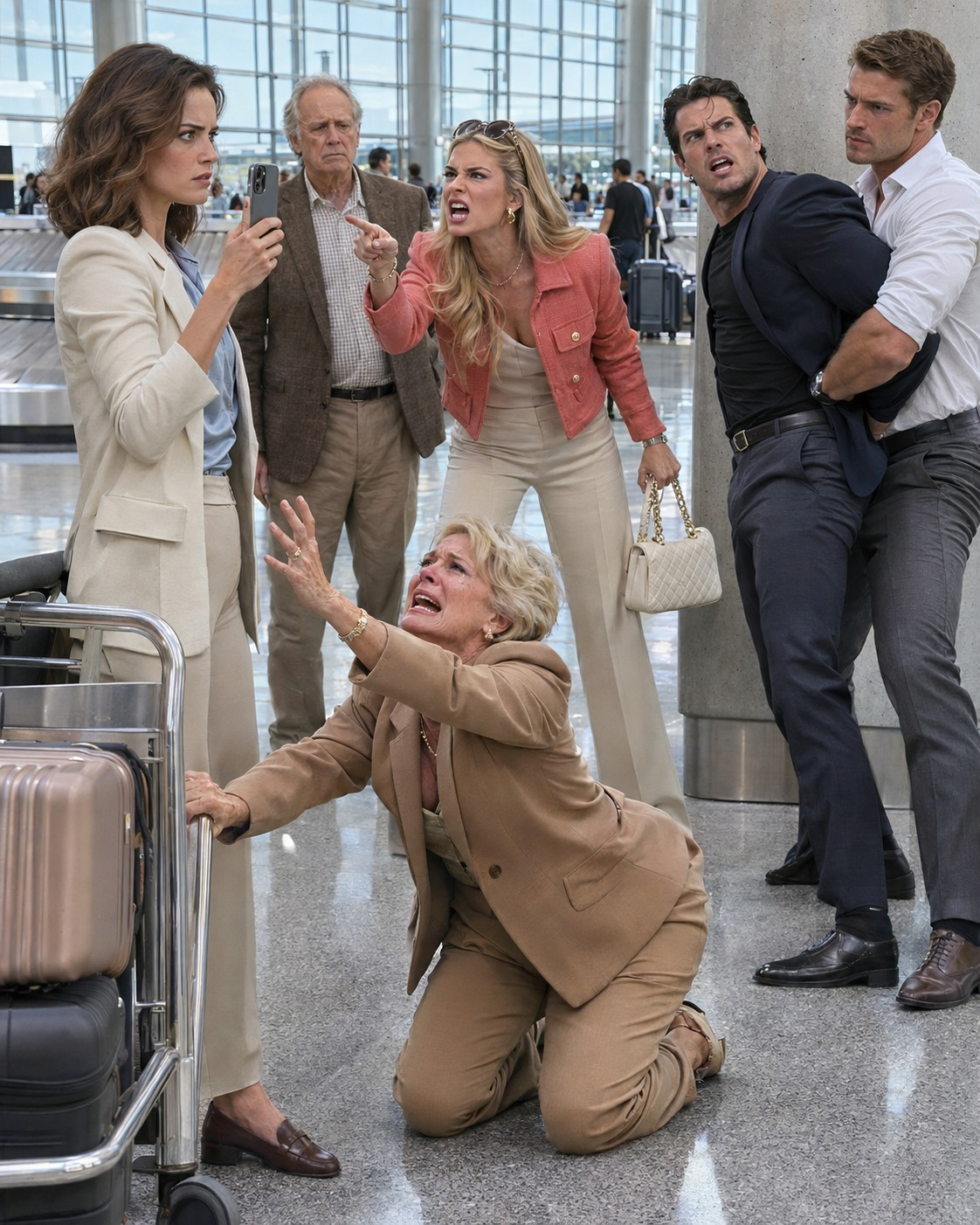
A moment later, someone began pounding on our front door.
My mother went pale.
"He's found out."
I stood.
The pounding stopped.
Then Richard's voice came through the door.
"Sarah, open up. Your mother has something that could send her to prison."





Comments 0