
"Can the conservator stop him?"
I gripped my phone while my mother stood beside me, her face growing increasingly pale.
Helen sighed.
"The conservator has refused to remove the backing without proper documentation. However, Richard can take the painting elsewhere."
"Then we need to do something."
"I've already contacted Margaret. She's reaching out to the gallery's legal advisers."
I looked down at the documents my mother had brought.
Everything was happening too quickly.
Richard was withdrawing his financial support.
He was threatening to expose my mother's involvement in Eleanor's affairs.
And now he was preparing to transfer the painting that might contain the evidence my father had spent years trying to protect.
"Do we know where he's sending it?" I asked.
"Not yet."
"Can Rebecca help?"
"Contact her immediately."
After ending the call, I looked at my mother.
"Did you know Richard was planning to move The Open Window?"
She shook her head.
"He didn't tell me."
"Do you know who might be receiving it?"
"No."
I studied her expression.
"Mom, this isn't the time to protect him."
"I'm not protecting him."
Her voice cracked.
"I'm trying to remember everything."
I took her inside.
Emily was sitting on the living room floor, arranging the brochures she had collected during our gallery visit.
She looked up excitedly.
"Grandma, look! This is where my painting might hang."
My mother accepted the brochure.
For a moment, she simply stared at it.
Then she sat beside Emily.
"That's beautiful, sweetheart."
Emily smiled.
"Do you think you'll come?"
My mother's eyes filled with tears.
"Of course I will."
I watched them from the doorway.
Six months earlier, my mother had looked at the floor while Richard humiliated Emily.
Now she was sitting beside her, holding a brochure that represented everything Richard was trying to prevent.
I hoped she understood that this was her opportunity to make a different choice.
I went into the kitchen and called Rebecca.
She answered despite it being Saturday afternoon.
I explained the situation as quickly as possible.
"Do not attempt to physically prevent the transfer yourself," she said. "We need to establish what legal options are available."
"But what if he destroys the evidence?"
"That's precisely why we need to document the circumstances immediately."
She asked me to forward Helen's information, the settlement proposal, and the communications concerning Richard's collection.
Then she requested permission to contact his attorney directly.
I agreed.
"What about my mother?"
"She needs separate legal representation, especially if her interests may conflict with yours."
I looked toward the living room.
My mother was listening while Emily described the gallery's lighting system.
"Can you recommend someone?"
"Yes."
After ending the call, I began gathering the documents.
Every piece of paper seemed connected to another.
Every answer produced another question.
I had once believed our family's greatest problem was Richard's arrogance.
Now I was discovering that his arrogance had been supported by years of financial dependency, questionable transactions, and carefully maintained silence.
And my mother had spent much of her life trapped inside it.
When Emily went to her bedroom, I asked my mother to join me in the kitchen.
I placed the financial records on the table.
"Tell me about Grandma's money."
She sat down slowly.
"Richard managed her finances during the final years of her life."
"Why?"
"She had difficulty keeping track of certain expenses. Her health wasn't good."
"Did she authorize him to manage everything?"
"I believe so."
"Did she authorize him to give you money?"
My mother looked away.
"I thought the money came from Richard."
"When did you discover it didn't?"
She remained silent.
"Mom?"
"After your father started examining the records."
I felt my stomach tighten.
"What did Dad say?"
"He wanted to return it."
"All of it?"
"Whatever we could."
She explained that some of the payments Richard had presented as personal assistance appeared to have originated from accounts connected to Eleanor's artwork.
At the time, my parents were struggling financially.
They had already spent much of the money on overdue bills.
My father was horrified when he discovered its possible source.
"He told Richard that helping us didn't give him the right to use somebody else's money," my mother whispered.
"What did Richard say?"
"He said the money belonged to the family."
I shook my head.
"That's not the same thing."
"I know."
"Did Grandma know?"
My mother pressed her fingers against her eyes.
"I don't think she knew how much had been taken."
I stood and walked toward the window.
For years, Richard had reminded my mother of everything he had done for her.
He had presented himself as the generous brother who had rescued our family.
But if these records were accurate, some of that generosity might have been funded by the very woman whose artistic achievements he had erased.
The cruelty of it was difficult to comprehend.
"Why didn't you tell me any of this?"
My mother began crying.
"Because I didn't want you to think differently about your father."
I turned around.
"Dad tried to correct it."
"Yes."
"You're the one who kept protecting Richard."
She nodded.
"I know."
There was no defense this time.
No explanation about family loyalty.
No reminder of Richard's generosity.
Just an exhausted woman finally acknowledging what she had done.
I sat beside her.
"I'm angry, Mom."
She looked down.
"You have every right to be."
"But I'm not going to let Richard use that anger to control us."
She looked at me.
"What am I supposed to do?"
"Tell the truth. Get your own attorney. Stop letting him decide what you're allowed to say."
Her lips trembled.
"What if I lose my house?"
"We'll work something out."
"Sarah, you can't afford to support me."
"Maybe not. But we'll find out what options you have."
She began crying again.
I reached for her hand.
Helping her didn't mean excusing her choices.
It meant refusing to become another person who used her fear against her.
At four thirty, Rebecca called back.
She had contacted Richard's attorney and formally requested that relevant artwork and historical materials be preserved while the ownership and attribution questions were investigated.
"Does that mean he can't move the painting?" I asked.
"Not necessarily. Our request isn't a court order."
I closed my eyes.
"So he could still transfer it?"
"Yes. But his representatives are now aware of the dispute and the potential significance of the backing materials."
"What happens if he ignores you?"
"We evaluate the appropriate legal response based on what occurs."
I thanked her.
Then I called Helen.
She had learned that the scheduled transfer involved a private art transportation company.
The destination remained unclear.
However, the original conservator had documented the condition of the painting during the earlier examination.
"At least we have photographs," Helen said.
"But not whatever Dad was looking for."
"That's correct."
I looked toward Eleanor's wooden box.
My father had known something was hidden with the painting.
Ruth remembered him asking about the backing.
Richard was now specifically requesting that it be removed.
The connection seemed too strong to ignore.
At five fifteen, Jessica called.
Her voice sounded nervous.
"Sarah, are you home?"
"Yes."
"Is Grandma with you?"
"She is."
"Good."
I frowned.
"What's happening?"
Jessica lowered her voice.
"Richard is furious. His attorney called him about some preservation request."
"Rebecca sent it."
"Well, he's been walking around the house yelling at people."
"Is the painting still there?"
"I think so."
"Can you confirm?"
"I don't know. The storage room is locked."
I heard a door closing in the background.
Then Jessica whispered, "There are two men downstairs preparing crates."
My heart began racing.
"Art transportation workers?"
"Probably."
"Did Richard tell them where the paintings are going?"
"Not while I was there."
I sat down.
"Jessica, listen to me. Don't interfere with them. Just tell me if you learn anything."
"Okay."
Before ending the call, she said something unexpected.
"Sarah, I think Richard lied to me about my grandmother too."
"What do you mean?"
"I asked him why her paintings were in that room."
"And?"
"He told me she never created anything commercially valuable."
I thought about the eleven marked entries in Eleanor's notebook.
"That's what he's been telling everyone."
Jessica became quiet.
"Then why is he so afraid of losing them?"
I didn't answer.
She already knew enough to begin questioning him herself.
After the call, I checked on Emily.
She was painting at her desk.
A small canvas rested against a stack of books.
"What are you making?"
She turned it toward me.
It showed two women sitting beneath a tree.
One was elderly.
The other was a young girl.
Between them rested a wooden box filled with colorful flowers.
"That's Great-Grandma and me," Emily explained.
I smiled.
"You're imagining what it would have been like to paint together?"
"Yeah."
She pointed toward the older woman.
"I think she would've taught me how to make better shadows."
"Probably."
"And I would've shown her how to use those glitter pens Mrs. Anderson has."
I laughed.
"I'm sure she would've enjoyed that."
Emily returned to her painting.
Then she asked, "Is Grandma staying for dinner?"
"I think so."
"Can we make spaghetti?"
"Absolutely."
She smiled.
I left her room feeling an unexpected determination.
Richard had spent years deciding which parts of Eleanor's life deserved to be remembered.
Emily was remembering her without asking his permission.
And there was nothing he could do about that.
At six o'clock, my mother helped me prepare dinner.
She chopped vegetables while I boiled pasta.
For a while, we didn't discuss Richard.
Emily set the table and told us about a painting she had seen at the gallery.
My mother listened carefully.
When Emily described the mentorship program, my mother smiled.
"You're going to learn so much."
Emily nodded enthusiastically.
Then she asked, "Grandma, did you ever watch Great-Grandma paint?"
My mother stopped chopping.
"Yes."
"Was she really good?"
My mother looked at me.
Then she turned toward Emily.
"She was wonderful."
Emily smiled.
"Why didn't anybody tell me before?"
My mother lowered the knife.
The question seemed to hurt her more than anything I had said that afternoon.
"Because sometimes grown-ups make mistakes," she answered.
Emily considered that.
"Big mistakes?"
My mother nodded.
"Very big ones."
Emily reached across the counter and touched her hand.
"That's okay. You can tell me now."
My mother began crying.
Emily immediately hugged her.
I turned toward the stove.
There were moments when I understood that my daughter possessed a kind of wisdom none of us had managed to acquire.
She wasn't interested in protecting appearances.
She simply wanted people to be kind and tell the truth.
We ate dinner together.
For the first time in months, my mother asked Emily about her artwork without mentioning Richard.
She told her stories about Eleanor mixing colors at the kitchen table and using old jars to hold paintbrushes.
Emily listened with fascination.
Then my phone vibrated.
Jessica.
They're taking the crates out.
I excused myself and went into the hallway.
Another message appeared.
I think The Open Window is in one of them.
I immediately forwarded the information to Rebecca and Helen.
Then I called Jessica.
"Are you sure?"
"I saw the frame before they covered it."
"Did you see where they're taking it?"
"No."
"Did anyone remove the backing?"
"I don't think so. Richard was arguing with one of the men about something."
"What?"
"The man said he was only authorized to transport the artwork."
I felt a small sense of relief.
At least the transportation workers weren't apparently participating in the removal of the backing.
But the painting was still leaving Richard's house.
And once it disappeared into another private collection, finding it could become considerably more difficult.
"Can you find out the destination?" I asked.
"I'll see what I can learn."
"Don't put yourself in the middle of anything."
"I won't."
She disconnected.
I returned to the kitchen.
My mother immediately noticed my expression.
"He's moving it?"
I nodded.
She placed her fork on the table.
Emily looked between us.
"Moving what?"
"One of Great-Grandma's paintings," I explained.
"Where?"
"We're trying to find out."
She frowned.
"Why doesn't he just let the gallery have it?"
I wished the answer were that simple.
After dinner, my mother called the attorney Rebecca had recommended.
She arranged a consultation for Monday morning.
Then she asked whether she could stay with us overnight.
"Of course."
She looked embarrassed.
"I don't want to go home yet."
I understood.
For years, her house had represented the security Richard provided.
Now it probably felt like another reminder of everything he could take away.
Emily helped me prepare the sofa with blankets and pillows.
She even placed her stuffed rabbit beside my mother's pillow.
"In case you get lonely," she explained.
My mother hugged her.
I watched them, wondering whether Eleanor had ever experienced a moment like this.
Whether someone had offered her comfort without expecting anything in return.
At eight forty, Helen called.
"We may have a development."
I stepped into the hallway.
"What happened?"
"The transportation company has acknowledged that it received a notice concerning the disputed artwork."
"Will they stop the transfer?"
"They're seeking clarification from the person who arranged it."
"Richard?"
"Apparently, the shipment was arranged through one of his business entities."
I closed my eyes.
"Does that make things more complicated?"
"Potentially."
She explained that the painting's movement might involve more than a simple sale.
It could be a transfer between entities, a storage arrangement, or delivery to another location.
Until they obtained reliable information, they couldn't determine exactly what Richard intended.
"Rebecca is continuing to communicate with his attorney," Helen said.
"Thank you."
After ending the call, I noticed another message from Jessica.
It contained a photograph.
A transportation crate stood near Richard's front entrance.
A shipping document was partially visible beside it.
The destination appeared to be a private fine-art storage facility in the Chicago area.
I forwarded the photograph to Rebecca.
For the first time that evening, we had a possible location.
Then Jessica called.
"Sarah, something strange just happened."
"What?"
"Richard told the workers to leave one crate behind."
"Which one?"
"The one with The Open Window."
I stood completely still.
"Are you certain?"
"Yes. He had them carry it back into his study."
"Why?"
"I don't know."
I heard Jessica breathing heavily.
"But after they left, he called someone."
"What did he say?"
"He asked whether an independent conservator could come to the house tomorrow morning."
My relief disappeared.
Richard hadn't abandoned his plan.
He had merely postponed it.
I contacted Rebecca again.
She promised to follow up with his attorney and review whether urgent legal measures were available.
Then I put my phone down.
I felt exhausted.
Every hour seemed to bring another attempt by Richard to place the painting beyond our reach.
I wondered what could possibly be hidden inside that frame.
What evidence was valuable enough to justify a half-million-dollar offer?
What could frighten a man who had spent decades cultivating relationships with some of Chicago's most influential people?
I opened Eleanor's wooden box.
Inside were the letters, photographs, and notebook my mother had rescued.
I began reading through them again.
Perhaps we had overlooked something.
Perhaps my father had left instructions somewhere.
I examined the letter he had written to Eleanor.
Keep the original evidence separate from anything Richard can access.
I read the sentence several times.
Then I turned toward my mother.
She was sitting on the sofa, watching television with Emily.
"Mom, did Dad ever keep copies of his records somewhere outside the house?"
She looked surprised.
"He had a filing cabinet at work."
"Do you know what happened to it?"
"His employer returned his personal belongings after he died."
"Did you go through everything?"
She nodded slowly.
"Most of it."
"Most?"
"There were several boxes. Richard offered to help organize them."
I felt my stomach tighten.
"Did you let him?"
My mother looked down.
"Yes."
Of course.
Richard had been given access to my father's belongings.
If Daniel had preserved additional evidence, Richard might have discovered it years ago.
I looked back at the letter.
Perhaps that explained why Eleanor had chosen to hide something with the painting itself.
Nobody would casually discard a valuable canvas.
Especially not Richard.
He would protect it.
Preserve it.
Keep it close.
Without realizing what it contained.
At ten fifteen, my mother went to sleep.
Emily had already returned to her bedroom.
I remained at the kitchen table, surrounded by old documents.
I was examining a photograph of Eleanor's self-portrait when my phone rang.
Richard.
I hesitated before answering.
"Hello?"
"Your attorney has been causing unnecessary problems."
I leaned back.
"She's protecting relevant evidence."
"You're interfering with my property."
"Then stop trying to alter it."
He became quiet.
"Who told you that?"
"It doesn't matter."
"Of course it matters."
"Why do you want the original backing removed?"
He sighed.
"The painting requires maintenance."
"Then why did the conservator refuse?"
"Because people are becoming overly cautious."
"Richard, what did Grandma leave inside that frame?"
Silence.
I waited.
Then he spoke.
"Your father filled her head with ridiculous ideas."
I clenched my jaw.
"My father believed her."
"Your father didn't understand the situation."
"Apparently, he understood enough to find the original records."
Richard didn't answer.
I continued.
"Did you search his belongings after he died?"
His voice hardened.
"You're becoming paranoid."
"Did you?"
"I helped your mother during a difficult time."
"Did you find what you were looking for?"
He disconnected.
I stared at the phone.
His refusal to answer was becoming increasingly revealing.
A few minutes later, Jessica sent another message.
Richard wants me to leave the house.
I replied immediately.
Then leave. You don't need to stay there.
She called instead.
"Sarah, I heard your conversation."
"What?"
"He had you on speaker for part of it."
I felt uneasy.
"Did he say anything after hanging up?"
Jessica hesitated.
"He opened his desk drawer and took out an envelope."
"What kind of envelope?"
"An old one."
"Did you see what was inside?"
"No. But he said something to himself."
I sat upright.
"What did he say?"
"He said Daniel should have left things alone."
I looked toward my father's letter.
My throat tightened.
"Jessica, go home."
"Okay."
Before ending the call, she added, "I don't think he's going to sleep tonight."
Neither was I.
The following morning, Rebecca called shortly after seven.
Richard's attorney had responded to the preservation request.
He denied that Richard intended to destroy evidence and stated that the painting remained in his possession.
However, after further communication, Richard had agreed in principle to permit a limited examination by an independent conservator.
I could hardly believe it.
"Why would he agree now?"
"His attorney may have advised him that refusing all reasonable examination could create additional complications."
"Will Helen be there?"
"We're working on the arrangements."
I thanked her.
Then I called Margaret.
She was already aware of the development.
The gallery had proposed a qualified conservator with no financial connection to Richard or the disputed paintings.
The examination would be documented.
Any materials discovered would be handled carefully.
Richard's representative could attend.
For the first time, there was a genuine possibility of discovering what Eleanor had left behind.
But Richard attached one condition.
He wanted me present.
I frowned.
"Why?"
Margaret didn't know.
Rebecca advised that she would accompany me if I agreed.
I did.
By late morning, the arrangements were confirmed.
The examination would take place that afternoon at Richard's house.
I told my mother.
She immediately stood.
"I'm coming too."
"Are you sure?"
She nodded.
"I've spent enough years pretending not to know."
We arranged for Emily to spend the afternoon with Linda.
Before leaving, Emily handed me a small drawing.
It showed a yellow flower growing through a crack in a stone wall.
"For luck," she said.
I kissed her forehead and placed it inside my purse.
When we arrived at Richard's mansion, Rebecca and Helen were already waiting.
Margaret stood beside an older man carrying a professional equipment case.
Richard opened the door.
He looked as though he hadn't slept.
Nobody exchanged pleasantries.
He led us into the study.
The Open Window rested on a padded examination table.
Its gold-cornered frame looked exactly as I remembered.
Richard stood beside it.
"Let's get this over with."
The conservator photographed the painting and documented its condition before beginning.
We watched quietly.
As he carefully examined the rear of the frame, he identified the previously discovered inventory marking.
Seventeen.
E.M.
Helen recorded the finding.
Then the conservator paused.
"There's something unusual here."
Richard stepped forward.
"What?"
The conservator pointed toward a narrow section of the old wooden frame.
"This appears to have been altered at some point."
My heart began pounding.
He examined the area more closely.
Then he looked at Helen.
"I believe there's something behind this section."
Richard's face went white.
My mother grabbed my hand.
The conservator carefully exposed a small, folded envelope.
It was yellowed with age.
Across the front, written in faded blue ink, were two words.
For Daniel.
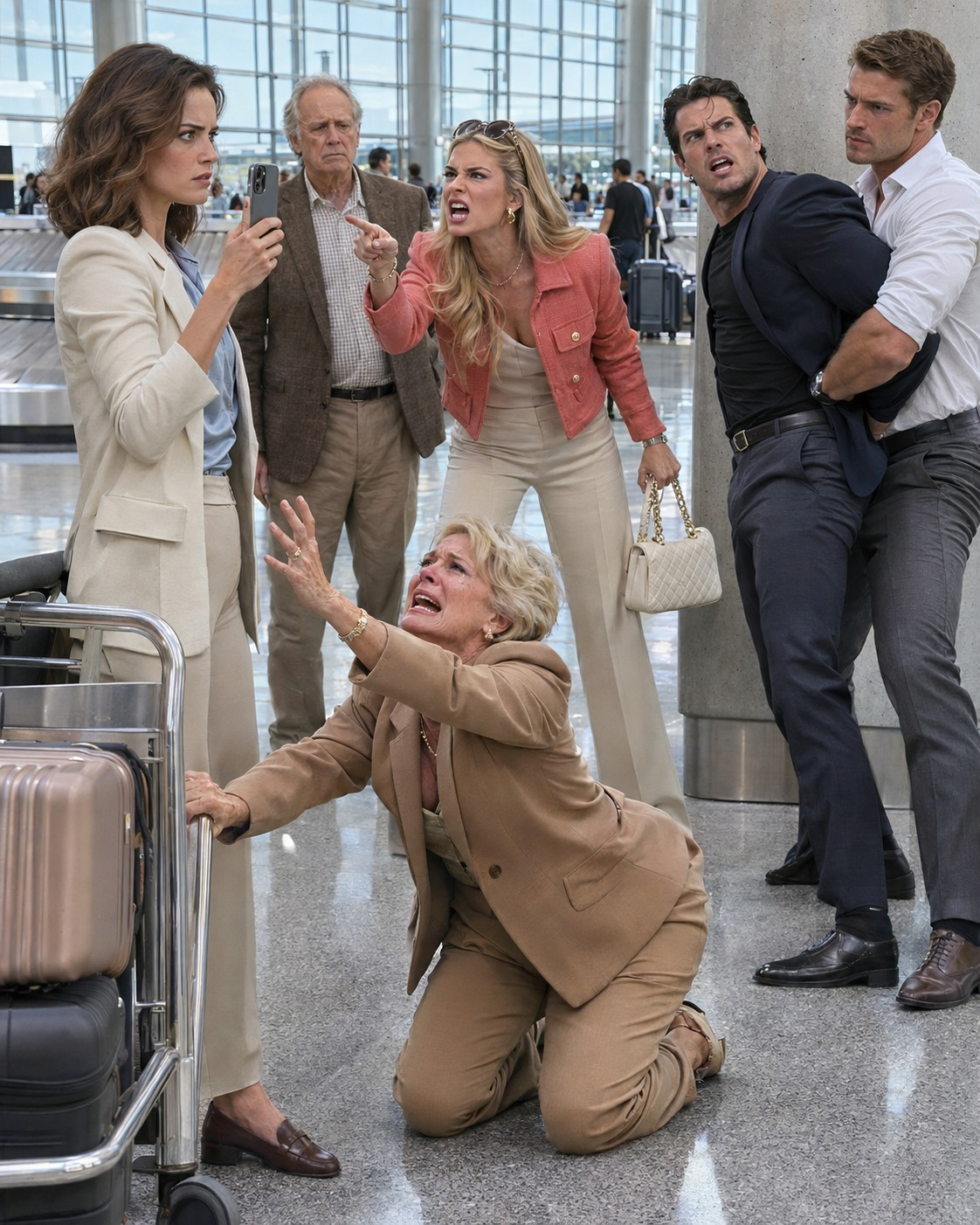
Richard lunged toward the table.
"Don't open that!"





Comments 0