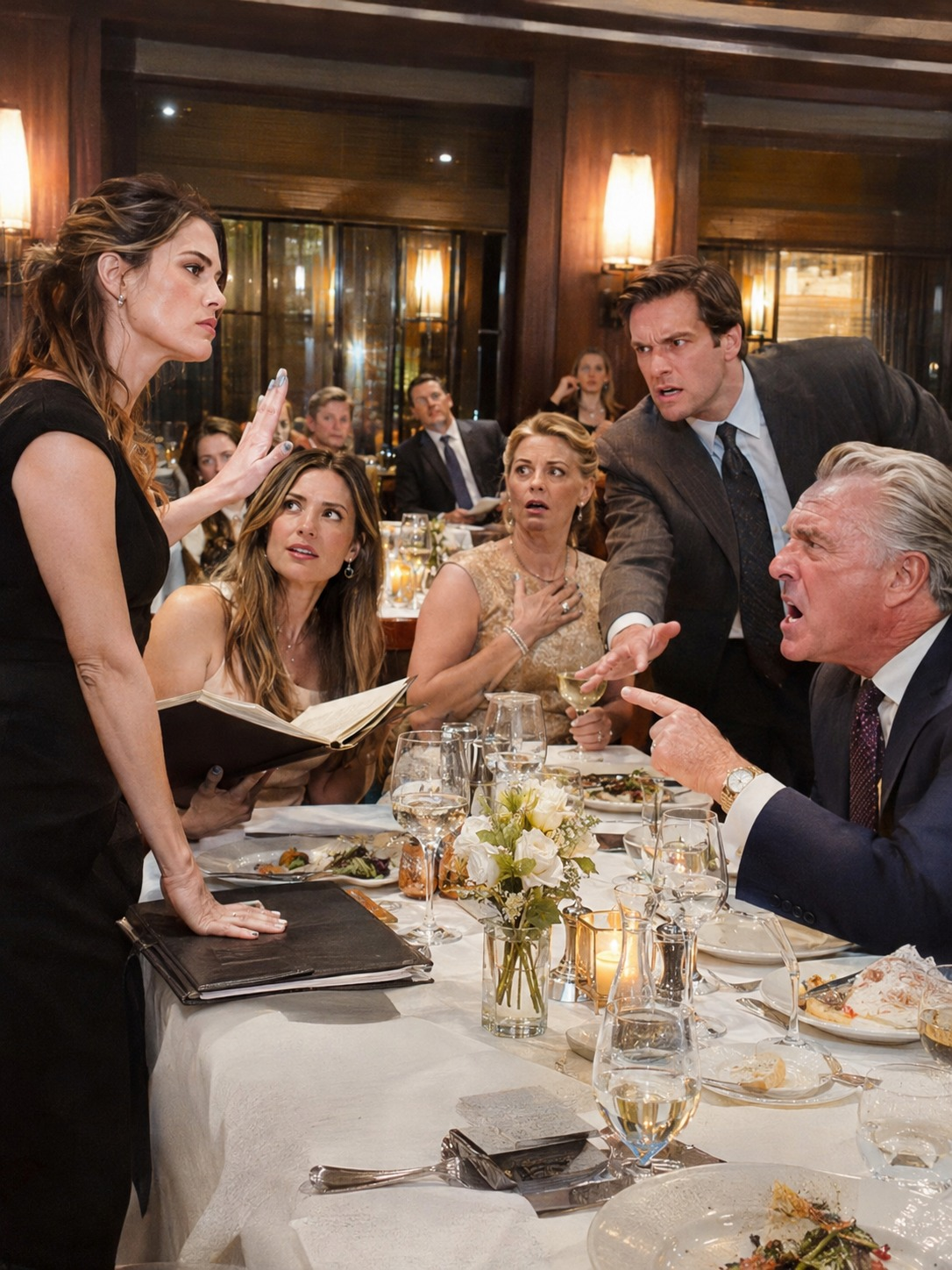
"Before we go any further, I want to know whether Vivian agreed to this."
The woman's voice came through my laptop speakers.
I gripped the edge of my kitchen counter.
I knew that voice.
I had heard it during childhood birthday parties, hospital charity events, and countless afternoons when I waited outside my father's office.
It belonged to Margaret Ellis.
But this was Margaret from years earlier.
Her hair was darker. Her posture was straighter. She sat across from my father with a folder open in front of her.
And she was asking the question nobody in my family had ever bothered to ask.
Had I agreed?
On the recording, Dad leaned back in his chair.
"Margaret, this is a preliminary discussion."
"I understand, Doctor. But the technical materials have Vivian's name on them."
Lyall sat beside him, looking impatient.
"We've already discussed that."
Margaret turned toward my brother.
"With Vivian?"
There was a pause.
Then Lyall smiled.
"She knows I'm working on a hospital technology initiative."
"That wasn't my question."
I felt my chest tighten.
For years, I had remembered Margaret as kind.
I had forgotten how brave she could be.
Dad placed his glasses on the conference table.
"Let's not make this unnecessarily difficult."
Margaret looked at him.
"Then perhaps we should invite Vivian to the next meeting."
My father sighed.
"Ailen is talented with computers, Margaret. Nobody disputes that."
He spoke with the same patient tone he used when explaining something obvious to a child.
"But she doesn't understand the clinical responsibilities involved in bringing technology into a hospital environment."
I stared at the screen.
Even after everything I had discovered, hearing him say it hurt.
Margaret glanced at the folder.
"Then why are we using her diagrams?"
The room went silent.
My brother looked toward Dad.
Dad didn't answer immediately.
Then he said, "Because the concepts are useful."
Five words.
That was all it took.
The concepts were useful.
The daughter who created them apparently wasn't.
Daniel's voice interrupted the recording.
"Vivian, are you all right?"
I realized my hand was trembling.
"Keep playing."
"Are you sure?"
"Yes."
On the screen, Lyall leaned forward.
"Look, nobody is trying to take anything from Ailen. She drew some early diagrams. That's all."
Margaret's expression remained steady.
"Then there should be no problem identifying her as the original contributor."
My brother laughed.
Not because anything was funny.
Because he wanted the suggestion to sound ridiculous.
"Margaret, we're talking about a professional initiative. We can't put every person who ever helped with a sketch on the leadership documents."
I closed my eyes.
A sketch.
That was what he called it.
Not the beginning of a software architecture.
Not months of research.
Not the foundation of a platform Olivia and I would spend years developing.
A sketch.
Dad raised one hand.
"Enough. We can address attribution later."
Margaret looked down at the folder.
"Would you like me to note that the original technical concepts were supplied by Vivian Whitfield?"
My father hesitated.
Then he said, "For internal records, yes."
I leaned closer.
There it was.
A moment I had never known existed.
My father had acknowledged my contribution.
Not publicly.
Not to me.
But in a room where he thought I would never hear it.
Margaret picked up her pen.
"And for the presentation?"
Lyall answered before Dad could.
"Use the family initiative."
Margaret stopped writing.
"Without Vivian's name?"
Lyall looked irritated.
"That's what I just said."
The recording continued for another minute.
They discussed meeting dates, potential hospital partners, and the need to prepare a more polished demonstration.
Then Dad said something that made my stomach turn.
"Once the project has established credibility, we can decide how to involve Ailen appropriately."
I stared at him.
He wasn't confused about my role.
He was postponing it.
He was allowing my brother to stand in front of people with my work while I remained outside the room.
And he called that a plan.
Daniel paused the recording.
I didn't speak.
Neither did he.
Finally, I whispered, "He knew."
Daniel's answer was careful.
"The recording indicates your father knew the original diagrams came from you."
I nodded.
I understood why he chose those words.
A lawyer couldn't turn every painful implication into a legal conclusion.
But I wasn't thinking like a lawyer.
I was thinking like a daughter.
I had spent years believing my father dismissed my work because he didn't understand it.
Now I knew he had understood enough to recognize its value.
He had simply decided that value should be represented by my brother.
"Can you preserve the recording?" I asked.
"We already have the original file in a secure evidence archive. We'll document its source and review whether it has been edited."
"Do we know who sent it?"
"Not yet."
I looked at Margaret's face on the frozen screen.
"She didn't mention having a recording."
"She may not have known one existed."
That possibility made sense.
The camera appeared to be mounted near the back of the conference room.
It might have been part of an ordinary meeting recording system.
I thought about the anonymous package.
The cropped photograph.
The access code.
Someone had been collecting pieces of a story I had never been allowed to hear.
"Daniel?"
"Yes?"
"Can you send Margaret the relevant portion and ask whether she remembers the meeting?"
"I can arrange that through counsel."
I nodded.
Then I closed my laptop.
For a long time, I sat in the silence of my apartment.
I had wanted proof that my family knew about my work.
Now I had it.
And somehow, the truth felt worse than uncertainty.
The next morning, I arrived at Medysync before most of the staff.
I didn't go directly to my office.
Instead, I walked to the reception area and stopped in front of our first-contract photograph.
Olivia and I stood beside Marcus and the other early employees.
We looked exhausted.
Happy.
A little frightened.
I remembered the day perfectly.
The hospital administrator had called at 4:17 p.m.
He told us the pilot review was complete.
Their technical team was satisfied with the improvements.
The hospital wanted to move forward with a long-term agreement.
I had covered my mouth with one hand.
Olivia had grabbed the edge of the desk.
Marcus had whispered, "Are you serious?"
When the call ended, nobody moved.
Then Olivia started laughing.
And suddenly we were all hugging.
That photograph had captured the moment after the celebration began.
It was the first time I understood that our little company might survive.
I studied my younger face.
There was no expensive dress.
No professional makeup.
No polished confidence.
Just a woman who had worked incredibly hard and finally received evidence that the work mattered.
I wondered what that younger version of me would think if she knew her own family would one day question whether she had created it.
"You're early."
Olivia stood behind me holding two coffees.
I turned.
"Couldn't sleep."
She handed me one.
"Again?"
"Again."
We walked toward the conference room.
I told her about the recording.
She listened carefully.
When I finished, she sat down.
"Margaret asked them directly?"
"Yes."
"And your father acknowledged the diagrams were yours?"
"For internal records."
Olivia stared at the table.
Then she said, "That's unbelievable."
I almost smiled.
"Which part?"
"The part where they apparently thought giving you credit privately was enough."
I took a sip of coffee.
"Maybe they thought I'd never find out."
Olivia shook her head.
"Or maybe they never considered that you'd have a reason to ask."
That possibility stayed with me.
My family had always been comfortable deciding what I needed to know.
When I was a child, it was school schedules and family plans.
When I was a teenager, it was which colleges were worth considering.
When I became an adult, it was business decisions involving ideas I had created.
The scale changed.
The habit didn't.
Olivia opened her laptop.
"Daniel wants us to review the early corporate records again."
"Why?"
"Because the recording creates a clearer timeline. If Whitfield Healthtech was discussing your diagrams before Medysync incorporated, we need to distinguish the early research from the later proprietary software."
I nodded.
That distinction mattered.
Ideas could be discussed.
Concepts could overlap.
But our company had spent years developing actual software, security systems, implementation tools, and documentation.
My family couldn't simply point to an old drawing and claim ownership of everything that followed.
We needed to establish that carefully.
For the next two hours, we reviewed our earliest development history.
The first prototype.
The university lab demonstration.
The transition from a student project to a commercial product.
Our initial incorporation documents.
The assignment agreements transferring our independently developed work into Medysync.
The first hospital pilot.
The security assessments.
The product revisions.
Each record told part of the same story.
Olivia and I had built the company.
Not Lyall.
Not Dad.
Not a mysterious family initiative.
Us.
At eleven, Daniel joined us.
He brought a printed timeline.
"Good news," he said.
I looked up.
"I could use some."
"Our documentation is strong. The original patent records identify the relevant inventors, and the company's assignment records establish the rights it received. The disputed declaration still needs investigation, but it doesn't automatically override those records."
I exhaled.
"Thank God."
Daniel sat down.
"There's another matter."
Of course there was.
"What?"
"Horizon has asked whether we can provide a more detailed explanation of your brother's involvement in the early presentations."
I nodded.
"We can."
"They're also interested in the relationship between Whitfield Healthtech and Nathaniel Cross."
Olivia frowned.
"Did they find something?"
"Not conclusively. But Cross appears to have been engaged after the original family initiative began."
I looked at the timeline.
"So he couldn't have created the earliest diagrams."
"Not if the dates are accurate."
I leaned back.
"And yet he's listed as the original system architect."
Daniel nodded.
"That's one of the representations we need clarified."
I stared at the table.
The more we investigated, the stranger the situation became.
My brother had borrowed my diagrams.
My father had acknowledged their origin privately.
My mother had helped organize the initiative.
And years later, a consultant I had never met was being credited with architecture that resembled my work.
It was as though my contribution had passed through several hands until nobody wanted to remember where it began.
At lunchtime, my mother sent me a message.
"Your father is very upset. You need to call him."
I read it without responding.
A second message arrived.
"Lyall says you're involving outsiders in a private family misunderstanding."
I placed the phone facedown.
Olivia looked at me.
"Mom?"
"Yes."
"What now?"
"Apparently I'm involving outsiders."
She raised an eyebrow.
"Your company's attorneys?"
"Those outsiders."
Olivia shook her head.
I picked up the phone and typed a short reply.
"Mom, questions concerning Medysync's intellectual property must be handled through the company and its counsel. I'm not discussing them informally."
I read it twice.
Then I sent it.
Her response came almost immediately.
"You've changed."
I stared at those two words.
For a moment, I felt the familiar urge to explain myself.
To reassure her.
To say I still loved her.
To promise I wasn't trying to hurt anyone.
But I had already explained enough.
I put the phone away.
That afternoon, Medysync held its quarterly company meeting.
We gathered in the largest conference room, with remote employees joining by video.
Olivia reviewed product development.
Our finance director discussed revenue and expenses.
Marcus presented progress on the latest hospital integration.
Then it was my turn.
I stood at the front of the room.
Twenty-seven faces looked back at me.
Some belonged to people who had joined recently.
Others had been with us for years.
I looked at the presentation screen.
The opening slide read:
MEDYSYNC — BUILDING BETTER CONNECTIONS IN HEALTHCARE.
For a moment, I thought about Dad's birthday slideshow.
The photographs.
The applause.
The words "A Legacy Continues."
Then I looked at the people in front of me.
This was a different kind of legacy.
One built through work.
One that included everyone who contributed.
I began speaking.
"Our next phase isn't just about expanding into more hospitals. It's about making sure the systems we support remain reliable, secure, and useful to the people depending on them."
I discussed our goals.
Our challenges.
Our responsibilities.
Then I thanked the teams responsible for recent improvements.
I named engineers.
Client support specialists.
Security analysts.
Implementation managers.
People whose work often happened quietly.
People who rarely stood on stages.
When I finished, Marcus raised his hand.
"Can I say something?"
I smiled.
"Of course."
He stood.
"I just want to point out that Vivian still reviews technical issues with us even though she could probably spend all day in executive meetings."
A few people laughed.
He continued.
"That's one of the reasons I stayed here. The people making decisions understand the work."
I felt my throat tighten.
"Thank you, Marcus."
He sat down.
Olivia looked at me and smiled.
For a brief moment, I forgot about the legal documents.
The family arguments.
The anonymous messages.
I remembered why we had built Medysync.
And I remembered that I wasn't alone.
After the meeting, I returned to my office.
There was a new email from Janelle.
I stared at her name.
We had exchanged contact information at a family gathering months earlier, but she had never emailed me directly.
The subject line read:
A Question About Your Work.
I opened it.
"Ailen,
I hope you don't mind me reaching out. I've been thinking about our conversation at Russell's birthday dinner.
I work with healthcare technology investments, and I realized I know very little about what you actually do.
If you're comfortable, I'd love to learn more about your company sometime.
Best, Janelle"
I read the message twice.
It was polite.
Professional.
And surprisingly direct.
For a moment, I wondered whether Lyall had asked her to contact me.
But the wording didn't sound like him.
It sounded like someone who was genuinely curious.
I considered ignoring it.
Then I remembered the way she had looked at me during dinner.
The way she hadn't laughed at the printer joke.
The way she had asked whether I worked with Medysync.
I typed a careful response.
"Hi Janelle,
Thanks for reaching out. I'd be happy to tell you more about Medysync and the work our team does. We can find a time to talk when our schedules allow.
Best, Vivian"
I hesitated before signing.
Vivian.
Not Ailen.
Then I pressed send.
A few minutes later, she replied.
"Thank you, Vivian. I'd really appreciate that."
I stared at the screen.
There was something strangely comforting about seeing my professional name used correctly by someone connected to my family.
Even if it was only in an email.
That evening, I stopped at a small grocery store near my apartment.
I bought vegetables, bread, and a carton of milk.
Ordinary things.
I wanted one evening that didn't involve legal documents.
When I returned home, I made dinner and sat at the kitchen table.
I didn't open my laptop.
I didn't check the company archive.
I simply ate.
Halfway through, my phone vibrated.
A message from Margaret.
"Vivian, Daniel contacted me about the recording. I remember the meeting. There's something I should have told you yesterday."
I put down my fork.
I called her.
She answered quickly.
"Hello, dear."
"Margaret, what did you remember?"
She sighed.
"The recording reminded me of a conversation afterward."
"With Dad?"
"With your mother."
I sat upright.
"What did she say?"
"She asked whether I had kept copies of the technical materials."
I frowned.
"Why?"
"She said the family needed to be careful about how the project was documented."
I waited.
Margaret continued.
"I told her I had retained the original scans, including the page with your name."
"What did she say?"
"She asked me to send them to her."
"Did you?"
"Yes."
I looked at the wall.
"So Mom had the original copies."
"She did."
"And she knew my name was on them."
"Yes."
I closed my eyes.
Margaret's voice softened.
"Vivian, I don't know what your mother intended. But she knew those materials came from you."
I took a breath.
"Thank you for telling me."
"There's more."
My fingers tightened around the phone.
"What?"
"She asked whether the documents could be used in a family presentation without identifying the original student project."
I stared at the table.
"Why would she ask that?"
"I don't know. I told her the source should remain in the administrative records."
I thought about Dad's birthday slideshow.
The carefully selected photographs.
The complete absence of my name.
My mother had always been skilled at deciding which details belonged in a public story.
Apparently, that skill extended beyond family photographs.
"Margaret," I said quietly, "did she ever ask you to remove my name?"
"Not in those exact words."
I waited.
"She said the presentation should focus on the family initiative rather than individual contributors."
I let out a slow breath.
The wording was familiar.
It sounded reasonable.
Professional.
Almost generous.
Until you realized that the only individual contributor being excluded was me.
"Thank you," I said again.
Margaret hesitated.
"Vivian, are you all right?"
I looked at the half-finished dinner.
The quiet apartment.
The phone in my hand.
"I'm getting there."
After the call, I opened the folder containing the birthday slideshow.
Mom had emailed it to me before the celebration so I could repair the formatting.
I hadn't looked at it since.
Now I opened the original file.
The title slide appeared.
THE WHITFIELD LEGACY.
I clicked through the photographs.
Dad as a medical student.
Lyall as a child.
Lyall at medical school.
Mom at charity events.
Dad and Lyall receiving awards.
I reached the final slide.
A LEGACY CONTINUES.
I stared at it.
Then I opened the file's editing history.
The slideshow had been created from a shared family folder.
Several revisions were visible.
Most involved changing fonts, adjusting image sizes, or correcting dates.
But one revision caught my attention.
It had been made four days before the birthday dinner.
The note beside it read:
Removed duplicate family images.
I clicked the revision.
The presentation changed.
An earlier version appeared.
There were more slides.
More photographs.
And near the middle, I saw something I hadn't expected.
A photograph of me.
I was twenty-three, standing beside Olivia at our university laboratory.
We were holding a small certificate from a student technology competition.
I remembered that day.
We hadn't won first place.
We had received a special recognition award for practical healthcare innovation.
I had sent the photograph to Mom.
She had replied with a heart emoji.
I stared at the image.
It had been included in the slideshow.
Then removed.
I clicked forward through the revision history.
Another photograph disappeared.
Me at college graduation.
Then another.
Me standing beside Dad at a hospital charity event.
Then a fourth.
A family vacation photograph showing both Lyall and me.
The changes weren't random.
Every photograph featuring me had been removed.
I checked the editor information.
The revisions had been made through my mother's account.
I sat back slowly.
At dinner, I had wondered whether Mom simply forgot to include me.
Now I knew the photographs had been there.
Someone had deliberately taken them out.
I looked at the editing note again.
Removed duplicate family images.
Duplicate.
That was what the system called them.
I thought about my mother's speech.
"Everyone needs an Ailen."
The laughter.
The applause.
The way she told me I was making too much of a slideshow.
My eyes filled with tears.
But I didn't cry.
Not this time.
Instead, I saved a copy of the revision history.
I wasn't sure whether it would ever matter to anyone else.
It wasn't part of Medysync's ownership dispute.
It wasn't evidence of a legal violation.
It was simply proof of something deeply personal.
My mother had removed me from the family story before presenting it to everyone we knew.
And when I asked why I wasn't included, she acted as though I had imagined the problem.
I closed the file.
Then I opened a blank email.
For several minutes, I considered writing to her.
I wanted to ask why.
Why remove the photographs?
Why praise Lyall while reducing me to a joke?
Why insist that I was loved while treating my accomplishments like an inconvenience?
But I couldn't find a question that wouldn't turn into another argument.
So I closed the draft without sending it.
The following morning, Daniel called.
"Vivian, we have an update from Horizon."
I sat at my desk.
"Good or bad?"
"Potentially useful."
"That's not reassuring."
He gave a small laugh.
"Fair. Horizon has identified a discrepancy in the ownership materials submitted by Whitfield Healthtech."
I straightened.
"What discrepancy?"
"The declaration bearing your signature references a technical exhibit that appears to have been created after the declaration's stated date."
I stared at the wall.
"How much later?"
"Several years."
I felt my heartbeat quicken.
"How is that possible?"
"That's what they're investigating."
I looked toward the original notebook.
"So the document may have been assembled later?"
"That's one possibility. We need to establish the actual history."
I nodded.
"What happens now?"
"Horizon has requested additional verification from Whitfield Healthtech."
"Do they know we're cooperating?"
"Yes."
I took a breath.
Then Daniel said, "There's another development."
I closed my eyes.
"Of course there is."
"Someone from Whitfield Healthtech contacted Horizon directly yesterday."
"Lyall?"
"No."
"Dad?"
"No."
I sat upright.
"Who?"
Daniel hesitated.
"Janelle."
I stared at the phone.
"Janelle?"
"Your brother's fiancée."
My mind raced.
"Why would she contact them?"
"She apparently requested clarification about the acquisition review."
I remembered her email.
Her questions about Medysync.
Her interest in my work.
"Did she mention me?"
"Yes."
I gripped the edge of the desk.
"What did she say?"
Daniel paused.
"She asked whether Vivian Whitfield, the Medysync co-founder named in the patent records, was the same person as Ailen Whitfield from your family."
I stopped breathing.
For years, my family had treated Vivian and Ailen as though they belonged to different worlds.
Vivian was the executive.
The inventor.
The person whose name appeared in legal documents.
Ailen was the daughter who fixed printers.
The woman who sat outside family photographs.
And now Janelle had connected them.
"Daniel," I whispered, "what did Horizon tell her?"
"They haven't disclosed confidential acquisition details. But she appears to have encountered your name through her professional work."
I looked down at my phone.
A new message had arrived.
From Janelle.
"Vivian, I need to ask you something important. Please don't tell Lyall I've contacted you yet."
I stared at the screen.
Before I could answer, another message appeared.
"I found your name in a file I was never supposed to see."
Then a third.
"There's a photograph attached to it."
I opened the message.
An image began loading.
At first, I saw only the corner of a conference table.
Then the faces appeared.
My father.
My mother.
My brother.
Nathaniel Cross.
And a fifth person seated beside a stack of technical documents.
I leaned closer.
The fifth person was holding a copy of my original notebook.
The photograph was dated years before the family innovation initiative was publicly announced.
I enlarged the image.
Then I noticed the writing on the folder in front of my mother.
It contained my full legal name.
And directly beneath it were three words that made my blood run cold.
PROPOSED RIGHTS TRANSFER.
Before I could read anything else, Janelle sent one final message.
"Vivian, I just discovered who signed the original agreement."
A photograph appeared beneath her words.
I tapped it.
The document opened.
And the first name on the signature page was someone I had trusted with every secret of my childhood...






Comments 0