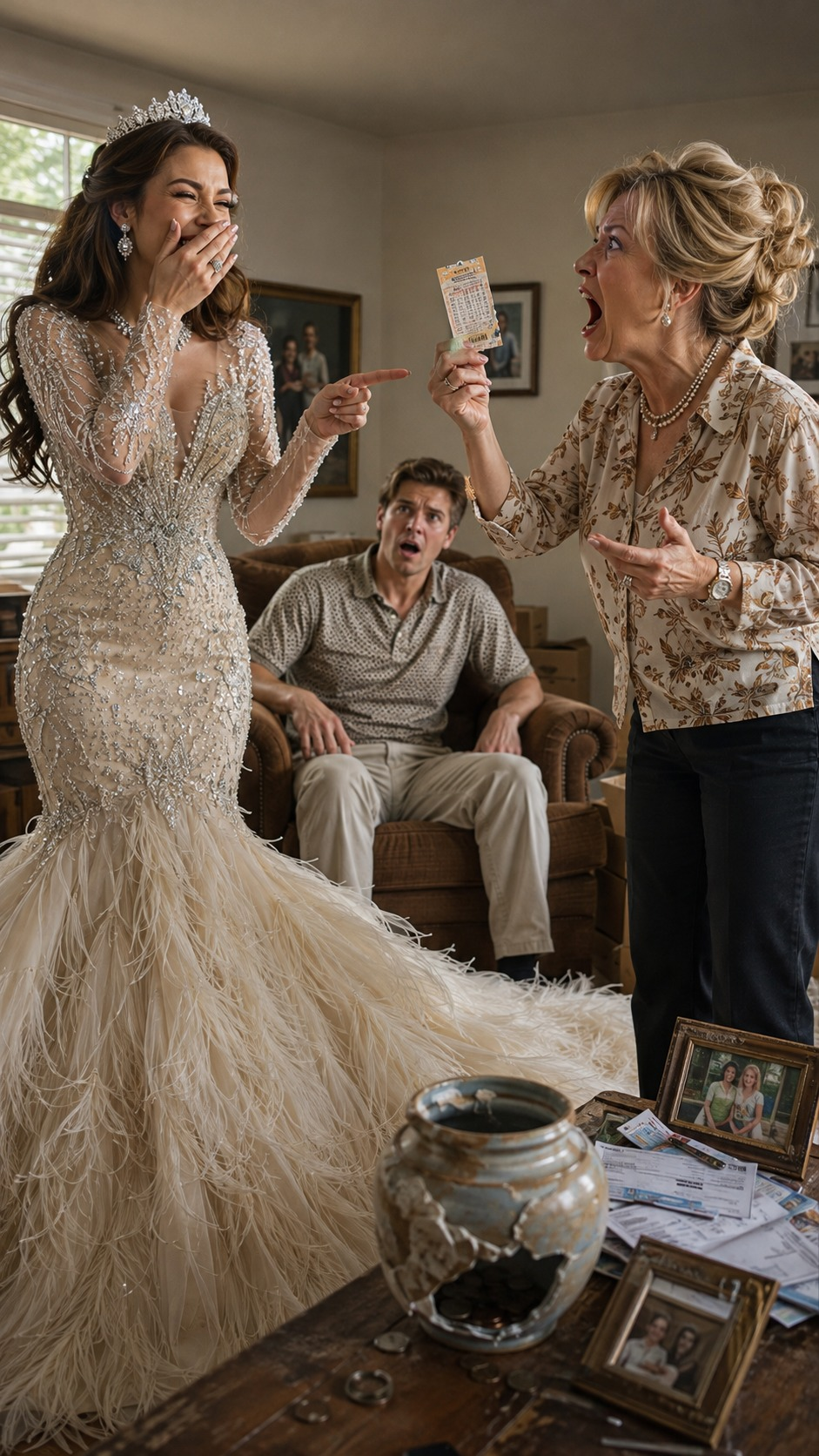
My mother was standing in the hallway when I discovered the money might still exist.
For several seconds, neither of us spoke.
I held my phone in one hand and my father's trust certificate in the other.
The document on my screen showed a transfer from the original family trust into a secondary beneficiary account.
The recipient's name was partially obscured.
But one detail was unmistakable.
Evelyn Bennett.
My mother.
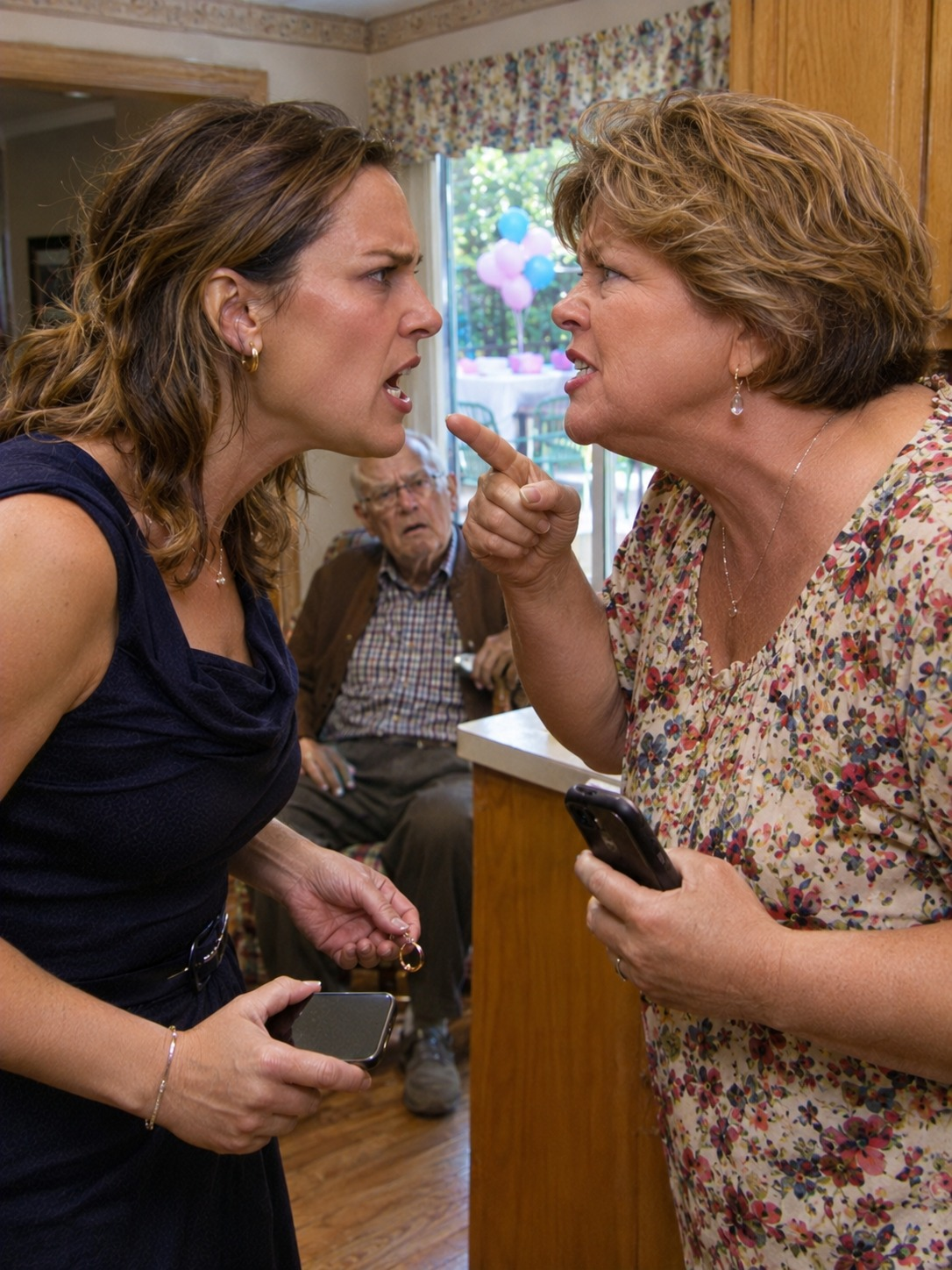
"What's that?" she asked.
I looked directly at her.
"An account you never told us about."
Her face tightened.
"Claire, put your phone away."
"Why?"
"Because you're misunderstanding the paperwork."
I almost laughed.
That was becoming her favorite explanation.
Every time I discovered something she hadn't told me, she insisted I was misunderstanding it.
I turned the screen toward her.
"Did Dad transfer money into an account with your name?"
She stared at the document.
Then she looked away.
"Your father wanted me to have financial security."
I felt my stomach tighten.
"That isn't what the original trust certificate says."
"He changed his mind."
"When?"
She didn't answer.
"Before he died?"
Silence.
"After he died?"
Her eyes filled.
"Claire, please."
I took a breath.
"Did you move the money?"
She finally nodded.
"Yes."
"How much?"
"I don't remember exactly."
"Try."
She looked toward the living room.
Then she whispered:
"About twelve thousand dollars."
I stared at her.
The original trust contained sixty thousand dollars.
Forty-eight thousand had supposedly been used to settle my father's obligations.
And now another twelve thousand appeared to have been transferred into an account under her name.
The numbers added up.
Every dollar.
There was nothing left.
But the question was why.
"Did Dad authorize that transfer?"
My mother pressed her lips together.
"I told you. He wanted me to be protected."
"Then show me the authorization."
She shook her head.
"I don't have it."
"Where is it?"
"I said I don't have it!"
Her voice cracked.
I looked at her.
For the first time, I wasn't interested in arguing.
I wanted documents.
I wanted dates.
I wanted the truth.
I picked up the metal box and carried it toward the living room.
Julian followed me.
"Claire, what are you doing?"
"I'm taking copies of these records."
"Mom isn't going to like that."
I stopped.
"Julian, do you understand that this money was meant for both of us?"
He nodded.
"Yes."
"Did you know she transferred it?"
"No."
I studied his face.
He looked genuinely shocked.
Then he sat down.
"How much did you lose?"
I placed the trust certificate on the coffee table.
"Sixty thousand dollars."
He stared at it.
"All of it?"
"Apparently."
He looked toward our mother.
"Mom?"
Evelyn sat on the sofa.
She seemed suddenly exhausted.
"I did what I had to do."
Julian shook his head.
"That money was supposed to be ours?"
"It was for the family."
"That's not what the document says."
She looked at him sharply.
"Don't start taking her side."
He lowered his eyes.
I watched him.
For once, he seemed to understand that the consequences of our mother's decisions had affected him too.
But I wasn't going to let his sudden realization erase what he had done.
He had still borrowed money.
He had still used my personal information.
He had still signed documents claiming an interest in my lottery winnings.
I turned toward him.
"Julian, we need to separate what Mom did from what you did."
He nodded slowly.
"I know."
"Do you?"
He didn't answer.
I gathered the documents and placed them inside my bag.
My mother stood.
"You're not taking those papers."
I looked at her.
"They concern my financial interests."
"They are private family records."
"I'm part of the family."
She stared at me.
Then she said something that made the room go completely silent.
"Not anymore."
I looked at her for several seconds.
Then I nodded.
"Okay."
I walked toward the front door.
This time, I didn't wait for her permission.
The following morning, Laura called.
I was sitting in the motel lobby with a cup of coffee and the documents spread across the table.
"Claire, I reviewed the trust certificate and the transfer records."
"What did you find?"
"There's a discrepancy."
I sat upright.
"What kind?"
"The transfer into your mother's beneficiary account appears to have occurred after the date of your father's death."
I stared at the document.
"Is that possible?"
"It depends on the trust's governing terms and the authority of the trustee. But the record you've provided doesn't establish that your father personally authorized the transfer."
I looked at the certificate.
"So my mother could have moved it herself?"
"Possibly. We need the original trust agreement and the account statements."
"What happens if she transferred the money without authority?"
"That would require a proper legal review. There may be grounds to challenge the transaction, depending on the documents and applicable limitation periods."
I swallowed.
"Could Julian and I still have a claim?"
"Potentially. But I don't want to promise an outcome before examining the complete records."
I nodded.
Then I remembered something.
"Laura, the secondary account is listed as a beneficiary account. Does that mean the money is still there?"
"Not necessarily. It tells us how the account was categorized, not its current balance."
"Can we find out?"
"We can request the relevant records through the appropriate legal process. First, we need to identify the financial institution and the account holder information."
I looked at the old bank statement.
There was a reference to a regional bank.
I read the name aloud.
Laura paused.
"That bank still operates."
My heart began beating faster.
"Can we contact them?"
"We can ask what documentation they require, but they may not disclose private account information without proper authorization or legal process."
"Understood."
"One more thing. I also reviewed the documents concerning your brother's loan."
I looked at the desk.
"What about them?"
"The proposed assignment of lottery proceeds is separate from your father's trust. I want you to keep those two matters distinct."
"I understand."
"And don't let your family pressure you into signing a settlement simply because they are frightened."
I thought about my mother's visit to the motel.
Her handwritten proposal.
Her insistence that I withdraw the objection.
"I won't."
"Good. We'll proceed carefully."
After the call ended, I looked at the old family photographs I had brought from the storage box.
There was one of my father holding Julian as a baby.
Another showed me sitting on his shoulders at a summer fair.
In both pictures, he was smiling.
I wondered how much he had known about the financial situation.
And whether he had truly believed my mother would protect what he left behind.
Three days later, I received a letter from the lottery office.
The ownership review had progressed.
The office confirmed that the original digital purchase record was linked to my account.
My debit card transaction matched the date and amount.
The account security history also supported my statement that I had not authorized Julian or Evelyn to represent me.
However, my mother's challenge remained under review.
The letter explained that the office had received additional documents from her.
I read the list.
A handwritten declaration.
A copy of the printed ticket.
A statement from Julian.
And a document claiming that my mother had provided the purchase funds.
I frowned.
Provided the purchase funds?
That was false.
I opened my bank account and downloaded the transaction record again.
The payment had come from my personal debit card.
I had already sent this evidence.
Why was she repeating the claim?
Then I noticed the final attachment mentioned in the letter.
A photograph of an old envelope.
I zoomed in.
It was the same type of envelope I had found in the metal document box.
The handwriting on the front belonged to my father.
But the photograph showed a date written in the corner.
A date from the week before his death.
I looked more closely.
There was a handwritten note beneath it.
For Evelyn. Household expenses.
My mother had submitted this as evidence that my father had intended her to control the family money.
But the photograph showed only the front of the envelope.
I remembered finding the envelope inside the box.
It had been sealed.
I hadn't opened it.
My heart began beating faster.
I searched my bag.
The envelope was still there.
I carefully removed it.
My father's handwriting was visible across the front.
I turned it over.
The seal had never been broken.
I took a photograph of it.
Then I called Laura.
"I found an envelope that might be important."
"What does it say?"
I read the words.
She asked me to send a photograph.
I did.
A few minutes later, she called back.
"Claire, don't open it yet."
I frowned.
"Why?"
"Because your mother has submitted a photograph of what appears to be the same envelope as evidence in the lottery ownership dispute."
I felt a chill.
"She has the same photograph."
"Yes. But the copy she submitted shows a different marking."
"What marking?"
"There's a handwritten notation near the flap. It appears to have been removed or covered in the photograph she provided."
I stared at the envelope.
"What does that mean?"
"It means we need to preserve the original carefully. If your mother is relying on this envelope to support her claim, its contents may be relevant."
I looked down.
"Should I open it?"
Laura paused.
"Let's document it first. Then we can examine it properly."
I placed it on the table.
For the first time, I realized that my father might have left more than a letter.
He might have left evidence.
That evening, Julian called.
His voice sounded different.
Less defensive.
More frightened.
"Claire, have you talked to Mom?"
"No."
"She's not doing well."
I rubbed my forehead.
"What happened?"
"Marcus came by."
I sat upright.
"At the house?"
"Yes."
"Why?"
"He wanted payment."
I closed my eyes.
"Did he threaten her?"
"He said the debt had to be settled."
"Whose debt?"
"Mine."
"Then he needs to speak to you."
Julian sighed.
"He said the lottery claim was part of the repayment arrangement."
I gripped the phone.
"There's no repayment arrangement involving me."
"I know."
"Do you?"
"Claire, please. I'm trying to fix this."
I looked at the trust documents.
"Then start by telling the truth."
There was silence.
Finally, he spoke.
"I found something."
"What?"
"An old statement in Mom's bedroom."
I waited.
"It was from the bank where Dad kept the trust account."
My heart began beating faster.
"What did it say?"
"There's a balance."
I sat completely still.
"What balance?"
"I don't know exactly. But the account wasn't empty when Mom said it was."
I felt a wave of disbelief.
"Julian, are you sure?"
"Yes. I took a photograph."
"Send it to me."
"I will."
"Now."
He hesitated.
Then I heard a notification.
I opened the image.
It was a bank statement.
The account number matched the reference in my father's trust certificate.
The statement was dated four months after my father died.
The balance was not zero.
It showed $12,000 remaining.
I stared at the screen.
That was the exact amount transferred into my mother's secondary beneficiary account.
I scrolled down.
There was another line.
TRANSFER OUTGOING — BENEFICIARY ACCOUNT.
The destination account was listed.
I compared it with the old documents.
The last four digits matched.
My mother hadn't simply transferred the money into an account and forgotten about it.
She had kept it.
I looked at Julian's message.
I think there's more.
I called him.
"Where did you find this?"
"In Mom's bedroom."
"Was it in the drawer?"
"No. It was inside an old handbag."
I frowned.
"Why were you searching her things?"
He hesitated.
"Because Marcus asked me about the trust."
I felt my stomach tighten.
"What did he want?"
"He wanted to know whether Mom still had access to the old account."
I stared at the bank statement.
"Why would he care?"
"I don't know."
"Julian, did Marcus tell you to look for the documents?"
He didn't answer.
"Julian?"
Finally, he whispered:
"Yes."
I felt cold.
"Why?"
"He said the account might be connected to an outstanding obligation from Dad's old agreement."
I looked at the statement again.
"Did he say how much?"
Julian swallowed.
"He said the original balance could be worth more than we thought."
I sat down.
"What does that mean?"
"I don't know."
"Then ask him."
"I can't."
"Why?"
His voice cracked.
"Because he told me something else."
I closed my eyes.
"What?"
"He said Dad never actually finished repaying him."
The next day, Laura arranged a meeting at her office.
I brought the original trust certificate, the sealed envelope, and the documents from the metal box.
Julian arrived fifteen minutes later.
He looked exhausted.
Laura greeted us and placed the documents on a conference table.
"Before we begin, I want to make something clear," she said. "We're here to understand the financial records. This is not an opportunity to make accusations without evidence."
I nodded.
Julian nodded too.
Laura examined the bank statement.
"This is important."
She placed it beside the trust certificate.
"The account balance appears to have remained intact for several months after Daniel Bennett's death."
I looked at Julian.
"Mom told us the money was gone."
Laura continued.
"That is one discrepancy. The second is the beneficiary transfer. We need the original bank records to establish who authorized it and when."
Julian leaned forward.
"Can we get the money back?"
"Possibly, depending on what the records show. But we need to be careful."
I placed the sealed envelope on the table.
"My father wrote this for Mom."
Laura examined it.
"Has it been opened?"
"No."
"Good."
She photographed both sides.
Then she looked at me.
"Your mother's ownership challenge is also important. If she submitted a document claiming your father intended her to receive the lottery ticket, we need to know whether she has any actual evidence supporting that statement."
I frowned.
"What does Dad have to do with my lottery ticket?"
Laura looked at the trust certificate.
"Your mother may be attempting to establish a history of family financial arrangements that supports her interpretation of ownership."
I shook my head.
"She never paid for the ticket."
"That is why your transaction records matter."
Julian sat quietly.
After a moment, he spoke.
"Laura, can I ask something?"
"Of course."
"Could Marcus actually take the lottery money because of my loan?"
Laura looked at him directly.
"Not simply because you say he can."
Julian lowered his head.
"What if I signed an agreement?"
"Your signature may create obligations between you and the lender, depending on the agreement. But it does not automatically give you authority over Claire's property or financial accounts."
He nodded slowly.
"Then what happens to my debt?"
"That's a separate matter. You need independent advice about the loan terms and any defenses or remedies available to you."
I looked at him.
For once, he seemed to understand that I wasn't going to rescue him.
Laura continued reviewing the paperwork.
Then she reached the last page of the old financial statement.
Her expression changed.
She read the paragraph twice.
"Claire, did you know your father had a life insurance policy?"
I frowned.
"Yes. My mother told us it was used for funeral expenses."
Laura pointed to a reference number.
"This document appears to list an additional policy or benefit connected to the trust."
Julian leaned forward.
"What does that mean?"
Laura turned the page.
"It may mean there was another financial asset that hasn't been accounted for."
I felt my heart beating faster.
"How much?"
She examined the figure.
Then she looked at us.
"According to this record, the original benefit was substantially larger than the amount your mother described."
I stared at the page.
"Where did it go?"
Laura didn't answer immediately.
Instead, she placed the document beside the sealed envelope.
"There is something else here."
She pointed to a reference number.
It matched the number printed on the envelope.
I looked at her.
"What is it?"
Laura took a careful breath.
"I believe your father left instructions concerning the distribution of that benefit."
I stared at the envelope.
The one my mother had told me not to open.
The one she had photographed and submitted as evidence.
The one she had insisted wasn't meant for me.
Laura gently turned it over.
Then she pointed to a line I hadn't noticed before.
TO BE OPENED ONLY IN THE PRESENCE OF BOTH BENEFICIARIES.
I looked at Julian.
He looked back at me.
Laura placed the envelope in the center of the table.
"Claire, Julian, I think it's time we read what your father actually left for you."
And just as she reached for the seal, my phone began ringing.
The caller's name appeared on the screen.
Evelyn Bennett.
But the message that followed wasn't from my mother.
It was from Marcus Reed.
Don't let Laura open that envelope. Your father left something inside that could change everything.
Reach the requested 2000-word length Strengthen the hidden-account reveal


Comments 0