"Rebecca Hayes."
The name came out of Rebecca's mouth so quietly that I almost didn't hear it.
I stared at her.
"What?"
She was still holding her phone. Her face had lost its color.
"The bank says the original authorization for the forty-eight-thousand-dollar Westbridge payment bears my signature."
For several seconds, neither of us moved.
Then I looked at the documents spread across my father's desk.
The hospital authorization bearing Margaret Sullivan's signature.
The questionable trust amendment.
The loan agreements prepared by Daniel Mercer.
And now a bank authorization supposedly signed by the one attorney my father had trusted above everyone else.
Rebecca Hayes.
The woman who had helped him establish the sixty-eight-million-dollar trust.
The woman who had protected my inheritance when Eleanor Whitmore arrived with her lawyer.
The woman who had stood beside me through every revelation since my marriage collapsed.
I slowly lowered myself into a chair.
"Did you sign it?"
Rebecca looked directly at me.
"No."
Her answer was immediate.
But I had learned something painful over the past several days.
People could lie without hesitation.
My husband had done it.
His mother had done it.
Margaret had concealed things for years.
Even my father had left secrets behind.
I wanted to believe Rebecca.
More than anything, I wanted one person in my life to remain exactly who I thought she was.
But wanting something didn't make it true.
"Then how did your signature get there?" I asked.
Rebecca swallowed.
"I don't know."
Nathan stood near the doorway, watching us.
He looked as shocked as I felt.
Rebecca turned toward him.
"Contact the bank's fraud department. Ask them to preserve the original authorization, authentication records, transaction metadata, and any associated communications."
Nathan nodded.
"Immediately."
"And notify the firm's managing partner."
He hesitated.
"Rebecca, if your signature is involved—"
"I know."
She looked at me.
"Claire, I need to step away from making decisions concerning this particular transaction until an independent attorney reviews it."
My stomach tightened.
"Are you saying you can't represent me anymore?"
"Not necessarily. But I won't put you in a position where you have to rely on my word while my own signature is being questioned."
I stared at her.
She looked exhausted.
And frightened.
Not the kind of fear Michael had shown when his lies were exposed.
Something different.
The fear of someone watching her professional life become part of a scheme she hadn't anticipated.
"Do you think someone forged it?" I asked.
"I think we need to determine whether the signature is authentic, whether it was applied with authority, and whether the underlying payment was legitimate."
I looked down at the bank statement.
Forty-eight thousand dollars.
It wasn't much compared with my father's estate.
But it had been enough to finance the consulting company connected to Richard Caldwell.
Enough to help create the documents Eleanor intended to use against me.
Enough to suggest that someone had been preparing this scheme long before my wedding.
"Rebecca," I whispered, "was the money taken from my father's trust?"
She shook her head.
"Not according to the preliminary description. It appears to have come from a separate account associated with the veterans' foundation."
I felt my chest tighten.
"My father's foundation?"
"Yes."
I stood.
"That's worse."
Rebecca looked at me.
I could feel tears burning behind my eyes.
"My father established that foundation to help veterans and their families. He paid for medical equipment. Emergency housing. Scholarships."
My voice shook.
"And someone may have taken money from it to finance a plan to steal from his daughter?"
Rebecca's expression hardened.
"We don't know the full purpose of the payment yet."
I looked at her.
"But that's what it looks like."
She didn't argue.
And somehow, her silence frightened me more than any denial could have.
By noon, an independent attorney named Caroline Brooks arrived at the mansion.
She was in her early fifties, with short auburn hair, a navy jacket, and the kind of calm expression that suggested she'd spent years dealing with situations other people found unbearable.
Rebecca introduced us.
"Caroline has experience in fiduciary disputes and financial investigations."
Caroline shook my hand.
"Mrs. Bennett."
"Claire, please."
She nodded.
"Claire."
I appreciated that she didn't offer condolences about my marriage or tell me how difficult everything must be.
She simply opened her briefcase and asked for the records.
Within twenty minutes, she had reviewed the transaction summary.
Then she looked at Rebecca.
"Did you have signing authority over the foundation account?"
"Limited authority for certain approved administrative disbursements. But I did not approve this payment."
"Was the authorization electronic?"
"According to the bank."
Caroline examined the document.
"Do you recognize the signature?"
Rebecca leaned closer.
"It resembles my electronic signature."
I felt my stomach tighten.
Caroline nodded.
"That doesn't establish that you personally applied it."
She turned to Nathan.
"Who had access to the firm's document management system?"
Nathan opened his laptop.
"Several authorized employees, depending on the matter."
"Did anyone outside the firm have access?"
"Not officially."
Caroline looked at Rebecca.
"Was Richard Caldwell ever retained by your firm?"
Rebecca frowned.
"No."
"Did he ever work with your clients?"
"Not to my knowledge."
Caroline made a note.
Then asked, "What about Margaret Sullivan?"
Rebecca hesitated.
"Margaret sometimes delivered documents for General Bennett. She was authorized to communicate with us about administrative matters."
"Could she access your electronic signature?"
"No."
"Could she have received a document that already contained it?"
Rebecca paused.
"Possibly."
I looked at Caroline.
"Are you saying Margaret could have used Rebecca's signature?"
"I'm saying there are several possible explanations. We need the audit trail before identifying who did what."
I nodded.
Again.
Evidence.
Not assumptions.
My father would have approved.
But it was getting harder to be patient when every new document seemed to carry the name of someone I loved.
At 1:17 p.m., Caroline received a preliminary response from the bank.
The authorization had been submitted through an online business banking portal.
The account used to initiate it belonged to the veterans' foundation.
The approval had been recorded shortly before midnight.
Four months before my father's death.
I stared at the date.
"Was Dad still managing the foundation then?"
Rebecca nodded.
"He was involved, though he'd begun delegating more responsibilities because of his health."
Caroline continued reading.
"The payment description was 'Strategic Compliance Review.'"
Nathan frowned.
"Westbridge Strategic Advisory."
"Yes."
Caroline looked up.
"The account credentials used for submission belonged to a foundation administrator."
I felt my pulse quicken.
"Who?"
She hesitated.
"Margaret Sullivan."
I closed my eyes.
Of course.
Margaret.
Again.
But Caroline wasn't finished.
"The second approval was recorded under Rebecca's credentials."
Rebecca looked stunned.
"That's impossible."
Caroline turned toward her.
"Do you recall receiving a request to approve a forty-eight-thousand-dollar compliance review?"
"No."
"Any request involving Westbridge?"
"No."
Caroline studied her.
"Then we'll need the authentication records."
Rebecca nodded.
I looked at the screen.
Two approvals.
Margaret Sullivan.
Rebecca Hayes.
One payment.
Richard Caldwell's consulting company.
And somewhere behind all of it, Eleanor Whitmore.
I looked toward the window.
My father's fountain was running in the courtyard.
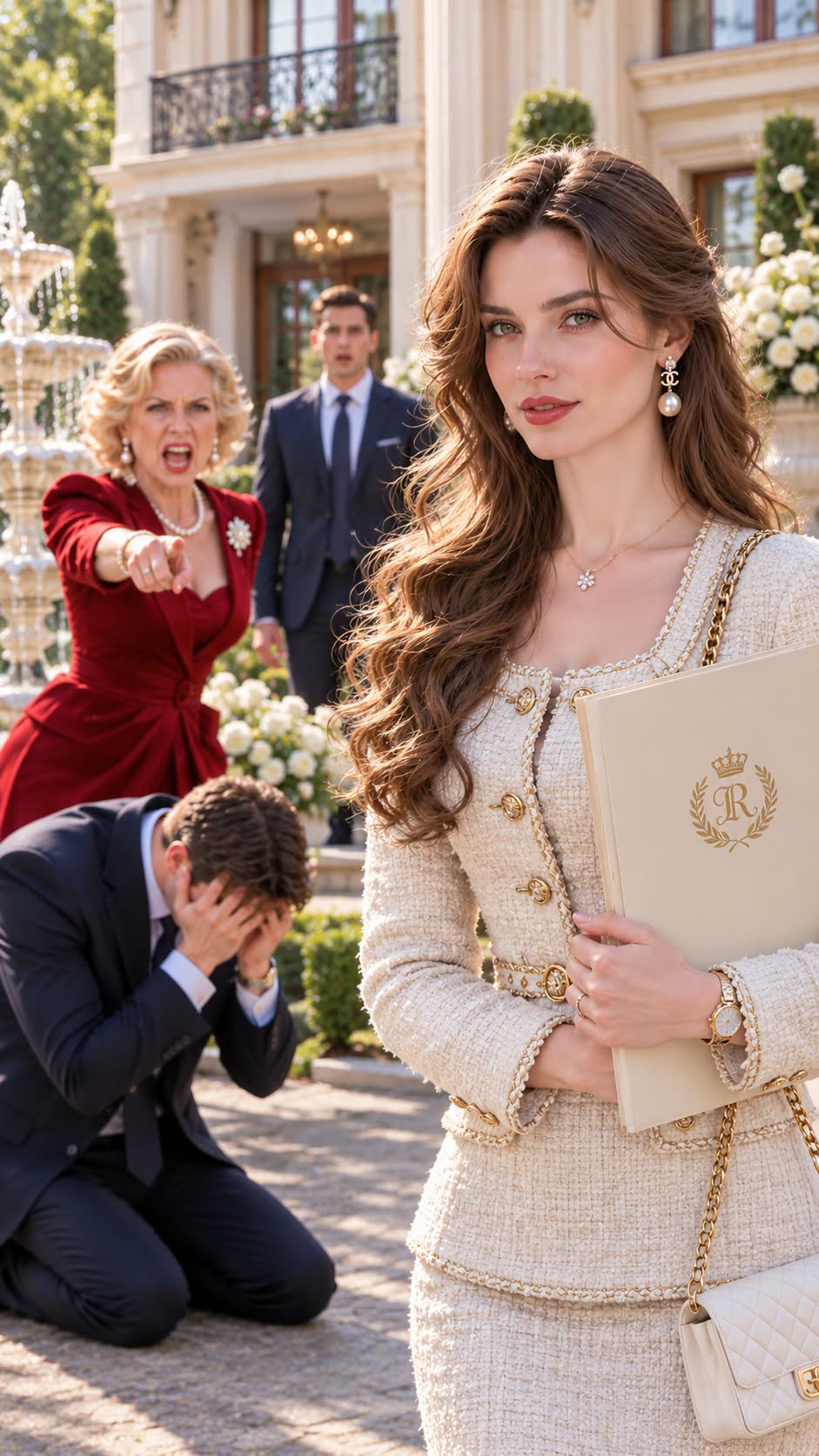
The same fountain where Daniel Mercer had collapsed to his knees after realizing the trust documents couldn't give Eleanor what she wanted.
I remembered his expression.
Not just fear.
Recognition.
As though he'd suddenly understood something about the documents he'd helped prepare.
I turned toward Caroline.
"I want to speak to Daniel Mercer."
Rebecca looked at me.
"Claire—"
"I know. Through counsel."
Caroline nodded.
"That's the right approach."
I folded my arms.
"He's been involved in too many parts of this."
Caroline closed the file.
"Then we should determine whether he's willing to cooperate."
Daniel Mercer agreed to meet that afternoon.
Not at the mansion.
Not at his office.
At Caroline's law firm.
He arrived at 4:30 wearing a gray suit and carrying a battered leather briefcase.
He looked nothing like the confident attorney who had accompanied Eleanor to my home.
His face was drawn.
His eyes were tired.
And when he saw me, he stopped.
"Mrs. Bennett."
I didn't stand.
"Mr. Mercer."
Caroline gestured toward the chair opposite us.
"Thank you for coming."
Daniel sat.
He placed his briefcase beside his feet.
Then looked at me.
"I owe you an apology."
I stared at him.
"You owe me more than that."
He lowered his eyes.
"Yes."
Caroline opened her notebook.
"Mr. Mercer, you've indicated that you're willing to provide information concerning the proposed trust transfer and the financing arrangements involving Eleanor Whitmore."
Daniel nodded.
"That's correct."
"Before we begin, are you represented by counsel?"
"Yes. My attorney has reviewed the scope of this meeting."
Caroline nodded.
"Then let's start with Whitmore Family Holdings."
Daniel rubbed his hands together.
"Eleanor retained me to establish a company she said would manage family investments."
I stared at him.
"Investments belonging to whom?"
He looked uncomfortable.
"She claimed her son would soon have access to substantial marital assets."
"My assets."
"Yes."
I leaned forward.
"Did you know I hadn't authorized anything?"
He hesitated.
"I knew you hadn't signed the proposed management agreement."
"Then why did you prepare it?"
"Because Eleanor represented that you intended to sign after the wedding."
I almost laughed.
"She told you I was going to hand over control of sixty-eight million dollars because I married her son?"
Daniel looked ashamed.
"She said the arrangement had already been discussed."
"It hadn't."
"I understand that now."
I stared at him.
"Did you verify any of it?"
He shook his head.
"Not adequately."
Caroline spoke.
"Mr. Mercer, did you prepare the loan documents referencing anticipated marital access to the Bennett Family Trust?"
"Yes."
My jaw tightened.
"Five months before my wedding?"
He nodded.
"Yes."
"Before Michael proposed?"
Daniel looked at me.
"I wasn't aware of the proposal timeline."
I stared at him.
"But you knew Eleanor was using a possible future marriage to support her debts."
"Yes."
I felt my stomach turn.
Caroline leaned forward.
"Who instructed you to include that language?"
Daniel hesitated.
"Eleanor."
"Anyone else?"
He looked down.
"Adrian Vale."
I sat straighter.
"Adrian?"
Daniel nodded.
"He reviewed several drafts."
I thought about Adrian standing at my gate beside Margaret.
His polished manners.
His careful words.
His claim that he was helping me understand my father's secrets.
He had been involved in Eleanor's financing.
Yet he'd presented himself as someone trying to expose her.
I looked at Daniel.
"Was Adrian working for Eleanor?"
Daniel shook his head.
"Not exactly."
"What does that mean?"
"He was her creditor. But he also had his own interest in the trust documents."
I felt a chill.
"What interest?"
Daniel glanced at Caroline.
Then back at me.
"He believed your father had concealed evidence concerning an old financial settlement."
Charles Whitmore.
The investment partnership.
The dispute twenty-one years earlier.
I leaned forward.
"What evidence?"
Daniel swallowed.
"A beneficiary schedule."
I stared at him.
"Elizabeth Carter?"
His face changed.
And that was answer enough.
Caroline noticed his reaction.
"Mr. Mercer, what do you know about Elizabeth Carter?"
Daniel rubbed his forehead.
"Very little."
I didn't believe him.
"Try."
He looked at me.
"Eleanor claimed Elizabeth was connected to Charles Whitmore."
My pulse quickened.
"How?"
Daniel hesitated.
"She said Charles had supported Elizabeth's family financially."
I remembered the photograph.
My father.
Charles Whitmore.
A woman.
A little girl named Elizabeth.
Charles's hand resting on the back of the woman's chair.
I felt my stomach tighten.
"Was Elizabeth Charles's daughter?"
Daniel looked uncertain.
"I don't know."
"Did Eleanor say she was?"
He nodded.
"Yes."
I stared at him.
Michael's father.
Charles Whitmore.
A little girl named Elizabeth.
If Eleanor believed Charles had another daughter, that could explain why she resented the old financial arrangements.
But it didn't explain why she wanted my father's inheritance.
Caroline leaned forward.
"Did Eleanor provide evidence of Elizabeth's parentage?"
"No."
"Did you verify the claim?"
"No."
I looked at Daniel.
"Then why did you help her use Elizabeth's name?"
He looked ashamed.
"Because I believed the documents she showed me."
I felt anger rise.
"What documents?"
"A letter she claimed was written by General Bennett."
My heart began pounding.
"What did it say?"
Daniel hesitated.
"That your father had agreed to provide financial protection for Elizabeth."
I stared at him.
"That sounds like the special distribution provision."
He nodded.
"Yes."
"But that provision didn't give Eleanor control of my trust."
"I understand that now."
I leaned back.
"Then what did Eleanor think it gave her?"
Daniel looked toward the door.
For a moment, I thought he wouldn't answer.
Then he said, "Leverage."
I felt cold.
"Against me?"
"Against Adrian."
I frowned.
"What?"
Daniel swallowed.
"Eleanor believed Adrian was hiding something about Elizabeth."
My mind raced.
Adrian had brought Margaret to my gate.
He had shown me a photograph.
He had suggested Elizabeth might have a claim.
But he had never explained why.
I looked at Daniel.
"What was Adrian hiding?"
He shook his head.
"I don't know."
I stared at him.
He looked genuinely frightened.
Then he whispered, "But Eleanor said if she found the original beneficiary schedule, Adrian would have to give her everything she wanted."
I felt a chill.
"Everything?"
Daniel nodded.
"Debt forgiveness. Money. Control."
I looked at Caroline.
She was writing quickly.
Then I turned back toward Daniel.
"Why did you fall to your knees in my courtyard?"
His face flushed.
For a moment, he looked as though he might refuse to answer.
Then he said, "Because I recognized the protective provision."
I frowned.
"What protective provision?"
"The one concerning fraudulent attempts to obtain control."
I stared at him.
"You knew about it?"
"Not until you showed me the executed trust documents."
I leaned forward.
"Why did that frighten you?"
He swallowed.
"Because Eleanor had already submitted the disputed hospital authorization as part of her financing package."
My heart began pounding.
"To whom?"
"Adrian's lending company."
I stared at him.
"She used a questionable document involving my dying father to support a loan?"
Daniel nodded.
"And when I saw the trust's protective language, I realized the transaction might trigger a formal review of everything we'd prepared."
I felt my jaw tighten.
"So you weren't crying because you were sorry."
Daniel looked at me.
"I was afraid."
I nodded slowly.
"At least that's an honest answer."
After Daniel left, Caroline and I sat in silence.
Then she closed her notebook.
"He's frightened enough that he may cooperate further."
I looked at her.
"Do you believe him?"
"Parts of his account are consistent with the documents. Other parts need independent verification."
I nodded.
I was getting used to that answer.
But one thing had become clear.
Eleanor wasn't simply a greedy mother-in-law.
She was a woman drowning in debt.
Adrian was more than her creditor.
Richard was more than a consultant.
And Elizabeth Carter was more than a name in an old photograph.
I looked at Caroline.
"What if Elizabeth isn't a threat to my inheritance?"
Caroline studied me.
"What do you mean?"
"What if someone is using her identity to make me afraid?"
She nodded slowly.
"That's possible."
I looked down at my father's notebook.
He had written:
Elizabeth's situation must be resolved independently. No use of her name to pressure Claire.
My father had anticipated this.
He knew someone might use Elizabeth as leverage.
And he had tried to protect both of us.
I closed the notebook.
"I want to find her."
Caroline nodded.
"Then we'll need to do it carefully."
"Why?"
"Because if Elizabeth is being used in a financial dispute, she may be vulnerable too."
I thought about the little girl in the photograph.
Three years old.
Sitting on my father's knee.
Smiling.
I wondered what had happened to her.
Whether she knew my father.
Whether she knew about the trust.
Whether she had spent her life being told stories about people she'd never met.
And whether she was as frightened as I was.
At 7:20 p.m., I returned to the mansion.
Marcus met me at the front door.
"Mrs. Bennett."
"Anything unusual?"
He hesitated.
"Your mother-in-law came by."
My stomach tightened.
"Eleanor?"
"Yes."
"When?"
"About an hour ago."
"What did she want?"
"She demanded to see you."
I closed my eyes.
"Did you let her in?"
"No."
"Good."
Marcus looked uncomfortable.
"She left something."
He handed me a sealed envelope.
My name was written across the front.
Claire Bennett.
In Eleanor's handwriting.
I stared at it.
"Did she say anything?"
Marcus nodded.
"She said you'd understand once you opened it."
I carried the envelope into the study.
Then called Caroline.
She advised me to photograph it, preserve the envelope, and review its contents without responding to Eleanor.
Inside was a single sheet of paper.
A copy of an old newspaper article.
The headline read:
LOCAL INVESTMENT EXECUTIVE DIES AFTER FINANCIAL DISPUTE.
Charles Whitmore.
Michael's father.
I stared at the article.
It said Charles had died following a medical emergency.
The report mentioned a recent business disagreement.
And one sentence caught my attention.
Sources close to the family described ongoing tensions involving a former military officer and a private investment adviser.
I felt my pulse quicken.
My father.
Adrian Vale.
Charles Whitmore.
I turned the page over.
Eleanor had written a message in red ink.
Your father didn't just take our money, Claire. He took my husband.
I stared at the words.
For several seconds, I couldn't move.
Then my phone rang.
Eleanor Whitmore.
I answered.
"What do you want?"
Her voice was cold.
"So you received my letter."
"Yes."
"Then perhaps you finally understand."
I felt anger rise.
"Understand what? That you're blaming my father for your husband's death?"
She laughed bitterly.
"Your father ruined Charles."
"That's not what the records show."
"Records."
She practically spat the word.
"Your father was very good at keeping records that made him look innocent."
I gripped the phone.
"If you have evidence, give it to my attorney."
"I've tried."
"Then why did you come to my house with fraudulent documents?"
Her voice sharpened.
"Because you wouldn't have listened otherwise."
I almost laughed.
"You tried to take control of my inheritance."
"I tried to recover what belonged to my family."
"It never belonged to you."
Silence.
Then Eleanor said something that made my blood run cold.
"You sound just like him."
I stared at the wall.
"Like who?"
"Your father."
I closed my eyes.
"Good."
She inhaled sharply.
"You think that's a compliment?"
"Yes."
For several seconds, neither of us spoke.
Then Eleanor's voice changed.
"Claire, do you know what Charles said before he died?"
I felt my stomach tighten.
"No."
"He said Thomas Bennett had made a promise."
"What promise?"
"That Elizabeth would never be abandoned."
I stared at the photograph on my desk.
"Elizabeth Carter?"
"Yes."
My pulse quickened.
"Who is she?"
Eleanor hesitated.
Then whispered, "Someone your father owed more than money."
I felt cold.
"What does that mean?"
She didn't answer.
"Eleanor."
Her voice trembled.
"You want the truth? Then ask Adrian why he paid Richard to find her."
My heart began pounding.
"Find Elizabeth?"
"Yes."
"Where is she?"
Eleanor gave a bitter laugh.
"That's the problem, Claire."
"What problem?"
"Nobody knows."
I stared at the phone.
"Then how can she have a claim against the trust?"
Eleanor was silent.
Then she whispered, "Because someone has been using her name for years."
I felt a chill.
"Who?"
Eleanor didn't answer.
Instead, she said, "Ask Margaret why she left your father's service for three months twenty years ago."
I frowned.
"What?"
"Ask her where she went."
Then the call disconnected.
I sat motionless.
Margaret.
Twenty years ago.
Elizabeth.
The photograph.
The bracelet.
The missing beneficiary schedule.
I looked at my father's notebook.
There were hundreds of entries.
But I had only read the final section.
I opened it near the beginning.
The pages were dated twenty years earlier.
I turned slowly.
Then found a name.
Margaret Sullivan.
Beside it, my father had written:
Leave approved. Personal matter. No questions.
I frowned.
I turned the page.
Three months later:
Margaret returned. Elizabeth arrangements confirmed. Confidentiality essential.
My heart began pounding.
I read the words again.
Margaret returned.
Elizabeth arrangements confirmed.
I turned another page.
There was a reference to a hospital.
St. Catherine's Medical Center.
And beneath it:
Records transferred to private custody.
I stared at the entry.
A hospital.
A child.
A confidential arrangement.
I looked at the photograph.
Elizabeth Carter.
Age three.
If she was three twenty years ago, she would be twenty-three now.
Old enough to have her own life.
Old enough to have been told the truth.
Unless someone had kept it from her.
I picked up my phone.
Then stopped.
Margaret had lied about the hospital authorization.
She had concealed Richard's visit.
She had kept my father's final request from me.
And now I had reason to believe she had been involved in Elizabeth's life for decades.
I couldn't simply call and expect the truth.
I needed evidence.
I called Caroline instead.
"Eleanor says Margaret disappeared for three months twenty years ago."
Caroline listened carefully.
Then asked, "Do you have documentation?"
"My father's notebook."
"Anything else?"
"He mentions St. Catherine's Medical Center."
Caroline paused.
"That's interesting."
"Why?"
"Because St. Catherine's was involved in a number of military-family assistance programs during that period."
I sat straighter.
"Can we obtain records?"
"Possibly, depending on what they concern and who is authorized to receive them."
I nodded.
"Then let's start with what we can legally access."
Caroline agreed.
Before ending the call, she said, "Claire, one more thing."
"What?"
"Don't assume Elizabeth Carter is the name she's using now."
I felt my stomach tighten.
"Why?"
"Because if someone arranged confidential care or a change in guardianship, her records may reflect a different surname."
I looked at the photograph.
The little girl smiled up at my father.
And suddenly, I realized I might have been searching for someone who no longer existed under that name.
The following morning, Nathan called.
He sounded excited.
"Claire, we found a public record connected to Elizabeth Carter."
I sat up.
"What kind?"
"A guardianship proceeding."
My heart began pounding.
"When?"
"Twenty years ago."
"Where?"
"St. Catherine's County."
I closed my eyes.
"Who was the guardian?"
Nathan hesitated.
"That's the unusual part."
"What?"
"The public index identifies the proceeding, but the substantive file is sealed."
I felt frustration rise.
"Can we request access?"
"Caroline is reviewing the appropriate process."
I nodded.
"Does it say anything else?"
"Only that the proceeding was finalized shortly after Margaret returned from her leave."
My pulse quickened.
Margaret's three-month absence.
The hospital.
Elizabeth.
The guardianship.
Everything was connected.
I looked at my father's notebook.
"Who filed the petition?"
Nathan hesitated.
"A woman named Ruth Carter."
I frowned.
"Elizabeth's mother?"
"Possibly."
I remembered the photograph.
The woman standing beside Charles Whitmore.
The woman wearing the gold bracelet.
"Can you find Ruth?"
"We're trying."
I took a breath.
"Thank you."
I ended the call.
Then opened the photograph again.
Ruth Carter.
Elizabeth Carter.
Margaret Sullivan.
Charles Whitmore.
My father.
Five people.
One old secret.
And a twenty-year trail of documents.
I stared at the little girl's face.
Something about her eyes bothered me.
Not because they resembled mine.
Because they resembled someone else.
Someone I'd seen recently.
I couldn't place it.
Then my phone vibrated.
A message from an unknown number.
Stop looking for Elizabeth.
I stared at the screen.
Another message arrived.
She doesn't know who she is.
My pulse quickened.
I typed:
Who is this?
The reply came immediately.
Someone who doesn't want her hurt.
I stared at the words.
Then another message appeared.
Your father protected her for a reason.
I felt a chill.
What reason?
Three dots appeared.
Disappeared.
Then the answer came.
Because the truth would destroy two families.
I stared at the screen.
Before I could respond, a photograph arrived.
It showed a young woman standing outside a small bookstore.
She had dark hair.
Large brown eyes.
And a familiar smile.
I enlarged the image.
My heart began pounding.
The young woman looked almost exactly like the little girl in my father's photograph.
Elizabeth.
Older.
Alive.
Standing in front of a bookstore somewhere I didn't recognize.
I stared at her face.
Then I noticed the sign above the door.
HARBOR LIGHT BOOKS.
I immediately searched the name.
There were several bookstores with similar names.
But the photograph included part of a street sign.
I enlarged it.
The letters were blurred.
I couldn't read them.
Then another message arrived.
If you want to help her, don't tell Adrian.
I stared at the screen.
Why?
The response came almost instantly.
Because he already knows where she is.
My heart began pounding.
I looked at the photograph again.
Elizabeth.
Alive.
Unaware.
Possibly being watched.
And somewhere, Adrian Vale knew exactly where to find her.
I called Caroline.
She answered immediately.
"Claire?"
"I think someone sent me a current photograph of Elizabeth."
Her voice sharpened.
"Do you know where it was taken?"
"Not yet."
"Forward it to me. Don't respond to the sender."
I nodded.
"I already asked a few questions."
"All right. Preserve the messages."
I forwarded everything.
Then I looked toward the study door.
A soft knock sounded.
"Mrs. Bennett?"
Marcus.
"Come in."
He entered carrying a small package.
"This was delivered at the gate."
I frowned.
"From whom?"
"The courier said he was instructed to leave it personally."
"Did you record the delivery?"
"Yes."
I looked at the package.
Plain brown paper.
No return address.
My name written across the front.
Claire Bennett.
I felt my stomach tighten.
"Put it on the desk."
Marcus did.
Then stepped back.
"Would you like me to contact security?"
"Yes. And ask them to preserve the delivery footage."
He nodded and left.
I stared at the package.
Then called Caroline again.
She advised me not to open it until it could be checked.
Within an hour, the package had been examined and cleared.
Inside was a small wooden box.
And a letter.
The box contained a silver locket.
Old.
Slightly scratched.
The kind a child might wear.
I opened it.
Inside were two photographs.
One showed the little girl.
Elizabeth.
The other showed my father.
I stared at them.
Then unfolded the letter.
It was handwritten.
The first line made my breath catch.
Claire, if you're reading this, someone has finally found Elizabeth.
I froze.
My father's handwriting.
I recognized it immediately.
I continued reading.
I wanted to tell you everything while I was alive. But I made a promise many years ago, and keeping that promise meant protecting a child who had no say in the choices adults made around her.
My eyes filled with tears.
Elizabeth is not responsible for what happened between Charles Whitmore, Adrian Vale, and me.
I swallowed.
She deserves to know the truth about her family, but she must be allowed to learn it safely.
I looked at the locket.
Then read the final paragraph.
There is one person who knows the complete story. I trusted her to keep Elizabeth safe when I could not.
My heart began pounding.
I lowered my eyes to the signature.
Thomas Bennett.
My father.
Below it was a name.
A woman.
Someone I had known for most of my life.
Someone who had worked beside my father for twenty-three years.
Someone who had signed a hospital authorization she claimed not to understand.
Margaret Sullivan.
I stared at the name.
Then noticed a second sheet folded behind the letter.
I opened it.
A photocopy of an adoption-related document.
The child's original name had been Elizabeth Carter.
But the amended name was hidden beneath a strip of black ink.
I turned the page over.
There was a handwritten note.
The original is in the hospital archive. Ask for File 19-C.
I felt a chill.
File 19-C.
St. Catherine's Medical Center.
The place Margaret had visited twenty years ago.
The place where Elizabeth's guardianship had been arranged.
The place my father had kept hidden from me.
I picked up my phone.
Then stopped.
A new message had arrived.
From Margaret.
Claire, I know you found the locket.
My heart began pounding.
Another message followed.
Please don't go to St. Catherine's without me.
I stared at the screen.
Then a third message appeared.
There is something about Elizabeth that your father never put in writing.
I typed:
Then tell me.
The reply came immediately.
Not over the phone.
I closed my eyes.
Where are you?
She sent an address.
A small private residence outside the city.
Then another message.
Come with Rebecca. No one else.
I stared at it.
Rebecca.
The attorney whose signature had appeared on the suspicious bank authorization.
The woman who had been forced to step away from the financial investigation.
Why did Margaret specifically want her there?
I typed:
Why Rebecca?
Three dots appeared.
Disappeared.
Then Margaret answered.
Because she was there the night Elizabeth's name was changed.
I felt my stomach drop.
Rebecca had never mentioned Elizabeth's guardianship.
Never mentioned St. Catherine's.
Never mentioned a name change.
I stared at the message.
Then my phone rang.
Rebecca Hayes.
I answered.
"Claire."
Her voice sounded strained.
"There's something I need to tell you."
I closed my eyes.
"About Elizabeth?"
Silence.
Then she whispered, "Yes."
My heart began pounding.
"Did you know about the name change?"
Another silence.
"Claire, I need you to understand that your father made me promise—"
I interrupted.
"No more promises. No more secrets. Tell me the truth."
Rebecca took a shaky breath.
Then said, "Elizabeth Carter was placed with another family."
I stared at the wall.
"Which family?"
Her voice trembled.
"Claire, the woman who raised her never knew the full story."
I felt cold.
"Rebecca."
A long silence.
Then she whispered, "The family was connected to the Whitmores."
My heart stopped.
"Michael's family?"
Rebecca didn't answer.
I stood slowly.
"Rebecca, are you telling me Elizabeth grew up with someone connected to my husband?"
Her breathing became uneven.
"Claire, please. Let me explain."
I gripped the phone.
"Who adopted her?"
Rebecca began crying.
And for the first time since I'd known her, I heard genuine fear in her voice.
"The adoption wasn't what Eleanor believed it was."
I stared at the photograph of Elizabeth.
The young woman outside the bookstore.
The familiar eyes.
The familiar smile.
Then I understood why her face had bothered me.
I had seen those eyes before.
At my wedding.
In the front row.
Beside Eleanor Whitmore.
I looked at Rebecca.
Or rather, at the phone in my trembling hand.
"Rebecca," I whispered, "who is Elizabeth now?"
She took one breath.
Then another.
And finally said:
"Claire, the woman you know as Elizabeth Carter is actually—"






Comments 0