"She's not Isabella's daughter, Lena."
My mother's voice trembled through the phone.
I stared through the police car window at the little girl standing on the sidewalk.
She couldn't have been older than six.
Her dark hair was braided neatly down her back. She wore a pale yellow coat, white sneakers, and a tiny silver bracelet that caught the morning light.
In her hands was a white envelope.
Three numbers were written across the front.
303.
"Then whose daughter is she?" I whispered.
My mother didn't answer.
Across the street, the black sedan's rear door remained open.
The little girl looked toward the car, then back at me.
Her expression was strangely serious for someone so young.
"Mom?"
A shaky breath came through the phone.
"Her name is Sophie."
I closed my eyes.
"That's not what I asked."
"I know."
"Whose child is she?"
Another silence.
Then my mother said something that made my fingers tighten around the phone.
"She's the reason your father died."
I stopped breathing.
For eleven years, I had believed my father died because his heart simply stopped working.
He had collapsed in his office on a Tuesday afternoon.
The doctors called it a cardiac event.
My mother called it a tragedy.
Cora called it the day our family ended.
And I had spent eleven years believing all three.
Now my mother was telling me that a little girl who couldn't possibly have been born when my father died was somehow responsible.
"That's impossible," I whispered.
"I know how it sounds."
"No, you don't."
"Lena—"
"Dad died eleven years ago. That child is six, maybe seven. How could she have anything to do with him?"
My mother began crying.
"Because the secret started before she was born."
Officer Brooks stepped out of the police car.
He raised one hand toward the little girl.
"Sweetheart, stay right there."
She stopped.
The black sedan's driver-side door opened.
A man in a dark jacket stepped out.
Brooks immediately straightened.
"Sir, keep your hands visible."
The man obeyed.
I could hear my mother breathing through the phone.
"Mom, where are you?"
"Close."
"Are you in that car?"
"No."
I looked toward the sedan.
"Then how do you know what's happening?"
She didn't answer.
A cold sensation moved through my chest.
"Are you watching me?"
"Lena, please listen carefully."
"No. You listen to me."
My voice shook.
"I have spent this entire morning being threatened, lied to, and told that people I trusted were involved in things I didn't understand. My sister was taken. My apartment was entered. And now you're calling me after four years of barely speaking to me, telling me my dead father had some connection to a child standing outside my police car."
I swallowed.
"You don't get to give me another mystery."
My mother was silent.
"Tell me the truth."
For a moment, I thought she had hung up.
Then she whispered, "Sophie is Isabella Vale's niece."
I stared at the little girl.
"What?"
"Isabella's older brother had a daughter. Sophie."
I looked toward the envelope.
"But you said she wasn't Isabella's daughter."
"She isn't."
"Then why does she look like Roman?"
My mother hesitated.
"Because you're looking for him in her."
I didn't know whether that was true.
I didn't know whether anything my mother said could be trusted anymore.
"Why did you tell me she was connected to Dad?"
"Because her family has been guarding something he discovered."
"What did he discover?"
A man's voice sounded faintly in the background.
My mother stopped speaking.
"Mom?"
The line crackled.
Then she whispered, "I shouldn't have called."
"Don't you dare hang up."
"Lena, I'm sorry."
"Mom!"
The call ended.
I stared at the screen.
For a moment, I felt like a child again.
Standing in the kitchen after my father's funeral.
Watching my mother disappear into her bedroom.
Wondering what I had done wrong.
Except this time, I wasn't fifteen.
I was twenty-seven.
And I was pregnant with three children whose father belonged to a family that seemed to have buried half its history beneath lies.
Officer Brooks opened my door.
"Miss Marsh, I need you to stay inside."
I looked at him.
"That little girl has something for me."
"I understand."
"She's just a child."
"Which is why we're going to make sure she's safe, too."
He spoke into his radio.
The man beside the sedan remained motionless.
The little girl looked frightened now.
Her lower lip trembled.
I couldn't bear it.
"Officer, please."
Brooks glanced at me.
"Please don't let anyone hurt her."
His expression softened.
"We won't."
He walked toward the girl.
I watched through the window.
He crouched to her height.
Spoke gently.
She answered.
Then she pointed toward me.
Brooks looked back at the police car.
He said something else.
The little girl shook her head.
Then she held out the envelope.
Brooks took it carefully.
He guided her toward the sidewalk, away from the sedan.
Another officer arrived.
The man in the dark jacket was questioned.
I couldn't hear what they said.
But I saw the moment Brooks looked at the envelope.
His expression changed.
He turned toward me.
And I knew.
Whatever was written inside had something to do with me.
He returned to the car.
"Miss Marsh, the child says someone asked her to deliver this."
"Who?"
"She doesn't know the person's name."
"Is she okay?"
"She's frightened, but she doesn't appear injured. We're contacting her guardian."
I looked toward Sophie.
She was sitting beside a female officer on a low stone wall.
Her feet didn't reach the ground.
"Can I talk to her?"
"Not yet."
I nodded reluctantly.
Brooks held up the envelope.
"With your permission, I'd like to give this to Detective Collins."
I stared at it.
303.
The same number.
Again.
"Yes."
He placed it in an evidence sleeve.
Then he looked at me.
"There's something else."
My stomach tightened.
"What?"
"The child said she was told to give you a message."
I swallowed.
"What message?"
Brooks hesitated.
"She said, 'Tell Lena the woman who sold the secret is still in the family.'"
I stared at him.
"The woman?"
He nodded.
I looked down at my phone.
Cora.
My mother.
Claire.
Isabella.
Every woman connected to this nightmare seemed to be hiding something.
But one of them had apparently sold a secret.
And someone wanted me to know.
I leaned back against the seat.
"Take me to the hotel."
Brooks nodded.
"All right."
As the car pulled away, I looked back.
Sophie was still sitting on the stone wall.
She watched our car disappear.
And for one strange moment, I felt certain I had seen her before.
Not at the clinic.
Not at the wedding.
Somewhere much earlier.
Somewhere I couldn't remember.
The Harrison Hotel was the kind of place I normally walked past without looking inside.
Polished stone floors.
Fresh flowers.
Soft music.
People who looked as though they had never worried about an overdraft fee.
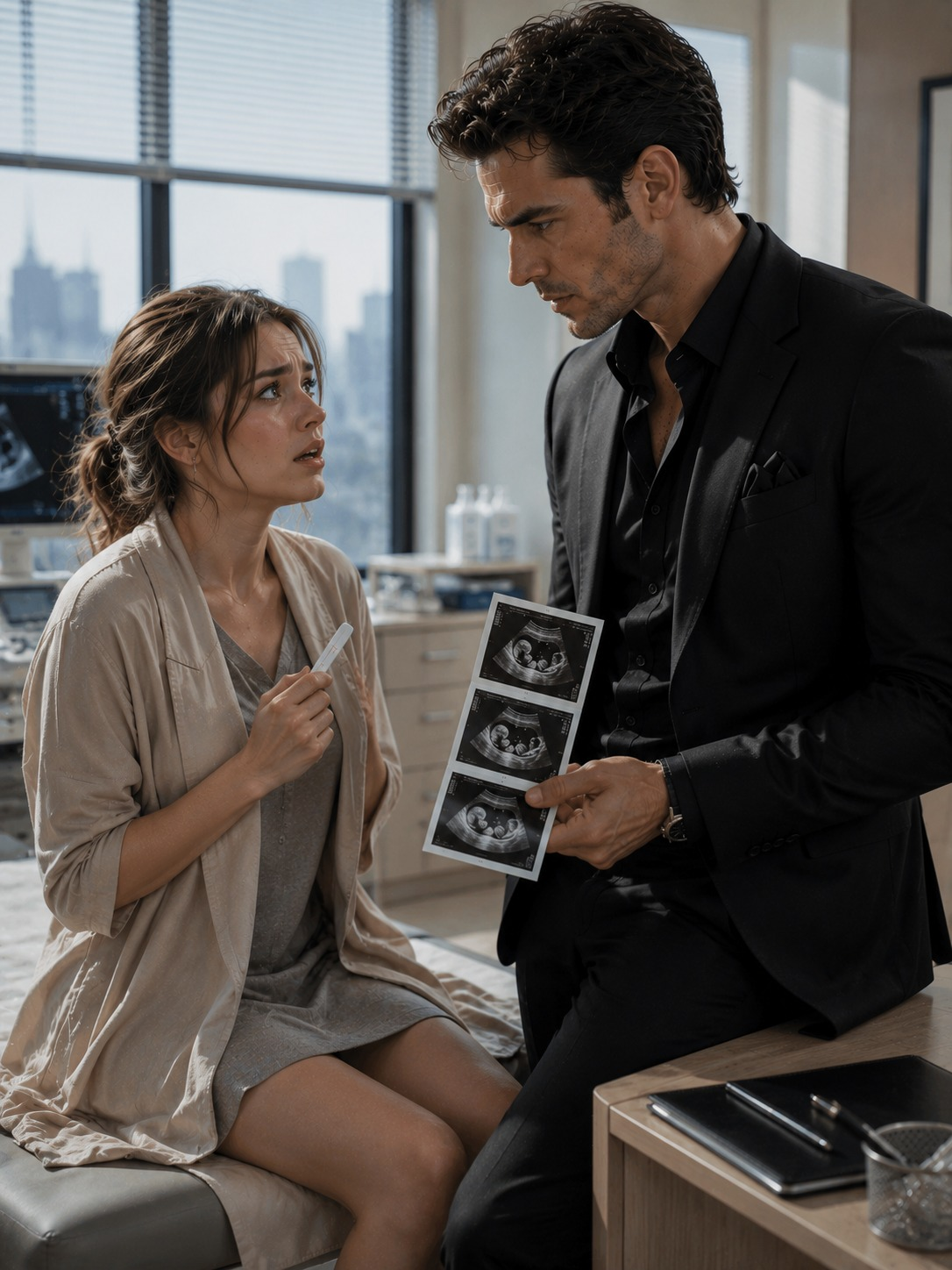
I stood in the lobby wearing my sage-green dress and dusty-blue cardigan, holding a purse containing a pregnancy test, three ultrasound photographs, and a phone full of threats.
I had never felt more out of place.
Officer Brooks spoke with the front desk.
A temporary room had been arranged through victim assistance.
I would have to complete paperwork later.
I nodded at everything.
I barely heard him.
My mind kept returning to the little girl.
Sophie.
Isabella's niece.
My father's secret.
The woman who sold it.
I wanted to call my mother again.
I wanted to call Cora.
I wanted to call Roman.
I wanted to throw my phone into the Chicago River and pretend none of this had happened.
Instead, I followed Brooks to the elevator.
He handed me a card with Detective Collins's number.
"Call if you receive another message."
I nodded.
"Thank you."
He hesitated.
"Miss Marsh, one more thing."
I looked at him.
"Don't open the door for anyone you aren't expecting. Hotel staff will verify visitors through the front desk."
I almost laughed.
"That seems to be the theme of my day."
He gave me a sympathetic look.
Then left.
I entered the room.
It was beautiful.
A king-sized bed.
Cream-colored curtains.
A marble bathroom.
A view of the river.
I put my purse on the desk.
Then sat on the edge of the bed.
And finally, with nobody watching, I cried.
Not because I was weak.
Not because I had decided anything about the pregnancy.
Because I was exhausted.
Because my sister had betrayed me.
Because my mother had returned with more secrets than explanations.
Because the man I had fallen for during one impossible night was connected to a dead fiancée who might not be dead.
And because I was terrified that every choice I made from now on would hurt someone.
I cried until my throat ached.
Then I washed my face.
Looked at myself in the bathroom mirror.
And said quietly, "Enough."
I didn't mean enough fear.
Fear was reasonable.
I meant enough waiting for other people to decide what I deserved to know.
I returned to the desk.
Opened my laptop.
And started making a list.
It was what I did when a design became too complicated.
You separated the problems.
Identified what was known.
Marked what was missing.
Then worked backward.
I opened a blank document.
At the top, I typed:
WHAT I KNOW.
Roman Rinaldi was the father of my pregnancy.
The ultrasound suggested triplets.
Sebastian Rinaldi had paid Cora to arrange our meeting.
Someone had photographed Roman and me at the vineyard.
Someone had accessed my medical information.
Isabella Vale had been pregnant before her disappearance.
Her death might have been staged.
Room 303 connected both nights.
My father had apparently discovered something involving the Vale and Rinaldi families.
And someone had entered my apartment.
I stared at the list.
Then typed another heading.
WHAT I DON'T KNOW.
Almost everything.
I leaned back.
Then I remembered something.
My father.
The old house.
The photograph on my nightstand.
The message.
YOUR FATHER KNEW.
My father had worked as a structural engineer.
Not a famous one.
Not a wealthy one.
He designed commercial buildings, inspected foundations, and occasionally consulted on projects that required specialized knowledge.
He loved blueprints.
He used to bring home discarded architectural drawings and let me color them with pencils.
That was how I fell in love with design.
When he died, I inherited his drafting tools.
His books.
A box of old project files.
And a small wooden case filled with mechanical pencils.
Most of his professional records had gone to his employer.
But I remembered one folder.
A dark blue folder.
Stamped with a company name.
RINALDI DEVELOPMENT GROUP.
My hands went cold.
I stared at the screen.
I hadn't thought about that folder in years.
It had been in the box my mother gave me when she moved away.
I remembered opening it once.
Seeing architectural drawings.
Then putting it aside because the project looked too complicated for a teenager to understand.
The box was in my apartment.
Under my drafting table.
The same apartment someone had entered.
I grabbed my phone.
Called Detective Collins.
She answered on the third ring.
"Collins."
"Detective, I remembered something."
"Go ahead."
"My father worked on a project for the Rinaldi family."
Silence.
Then she said, "Are you certain?"
"I remember a folder. Rinaldi Development Group."
"What kind of project?"
"I don't know."
"Where is the folder?"
"My apartment."
Another pause.
"Miss Marsh, don't go there."
"I wasn't planning to."
"Good. We'll arrange to check the apartment and document anything relevant."
I swallowed.
"Someone was already inside."
"I know."
"Do you think they were looking for that folder?"
"I can't say yet."
I closed my eyes.
"Detective?"
"Yes?"
"Was my father's death ever investigated?"
She was silent.
Then said carefully, "What was his name?"
"Thomas Marsh."
"Date of death?"
I told her.
She typed something.
"I'll look into it."
I stared at the wall.
"Please."
"I will."
I ended the call.
Then I opened a search engine.
Typed my father's name.
Thomas Marsh.
Structural engineer.
Chicago.
Rinaldi Development.
The first results were ordinary.
An old business listing.
A professional association notice.
A small obituary.
Then I found something else.
A construction permit from twelve years earlier.
The project name was familiar.
VALE-RINALDI FAMILY MEDICAL FOUNDATION.
I leaned closer.
The building was a private medical facility.
The architect of record was listed.
The engineering consultant was my father.
And the project address—
I stared at it.
The same street as the clinic I had visited that morning.
I opened another tab.
Searched the clinic's history.
The building had changed ownership several times.
Different names.
Different management companies.
But the original development had been financed through a foundation connected to the Vale and Rinaldi families.
I sat motionless.
The clinic.
The vineyard.
The room.
My father.
None of it felt accidental anymore.
I looked at the ultrasound photographs.
Three tiny shapes.
Three heartbeats.
And I wondered whether the clinic had been chosen because it was convenient.
Or because someone had been waiting for me there.
At two seventeen that afternoon, Roman called.
I stared at his name.
I had saved it reluctantly after the detective asked me to preserve contact information.
I almost ignored him.
Then I answered.
"What?"
A pause.
"Hello to you, too."
His voice was low.
Tired.
I closed my eyes.
"What do you want, Roman?"
"To make sure you're safe."
"I'm at the hotel."
"I know."
My eyes opened.
"How?"
"Detective Collins told my attorney you'd been placed somewhere secure. She didn't give me the location."
I exhaled.
"Good."
"Have you eaten?"
I looked at the untouched room-service menu.
"No."
"Lena."
"Don't."
"You need food."
"I need answers."
He went quiet.
Then said, "Fair."
I sat on the bed.
"Did my father work for your family?"
Silence.
A long silence.
Then Roman asked, "What was his name?"
"Thomas Marsh."
I heard movement.
A chair scraping.
Then his voice changed.
"Thomas Marsh?"
My stomach tightened.
"You know him."
"I know the name."
"How?"
He didn't answer immediately.
"Roman."
"Your father was an engineer?"
"Yes."
"Structural?"
"Yes."
Another silence.
Then he said, "Lena, I need to check something."
"No."
He stopped.
"No more checking things before telling me what you know."
He exhaled.
"Your father's name appears in an old company file."
"What file?"
"A development project."
"The medical foundation?"
Roman went silent.
I felt cold.
"You know about that too."
"Yes."
"Why?"
"Because the foundation was created by my grandfather and Isabella's father."
I stared at the wall.
"What did it do?"
"Originally, it funded medical research and private healthcare facilities."
"Originally?"
"The foundation was later dissolved."
"Why?"
"Financial irregularities."
I laughed bitterly.
"Of course."
"Lena—"
"Did my father discover something?"
"I don't know."
"Did he die because of it?"
Roman was silent.
My throat tightened.
"Roman."
"I don't have evidence of that."
"That's not the same as no."
"No," he said quietly. "It isn't."
I looked at the ultrasound photographs.
"Do you understand how insane this sounds?"
"Yes."
"My father died eleven years ago. Isabella disappeared eight years ago. I met you six weeks ago. And somehow all three things connect to the same family."
"I know."
"How?"
"I don't know yet."
I laughed.
"You're supposed to be this powerful man who knows everything."
"I've never claimed to know everything."
"Well, you certainly act like it."
He was silent.
Then he said something unexpected.
"You're right."
I closed my eyes.
I was beginning to hate how often he admitted that.
It made arguing with him difficult.
"Roman?"
"Yes?"
"Did you love Isabella?"
The question escaped before I could stop it.
He didn't answer immediately.
Then he said, "Yes."
My chest tightened.
"Very much?"
"Yes."
I looked away.
I had no right to be jealous.
He had known me for one night.
Isabella had been his fiancée.
She had apparently carried his child.
And she might still be alive.
But jealousy wasn't always reasonable.
Sometimes it arrived without permission and made a home in places you hadn't invited it.
"Do you still love her?"
Roman was quiet for so long I thought the call had disconnected.
Then he said, "I don't know what love becomes when someone disappears and you spend eight years believing they're dead."
I swallowed.
It was the most honest answer he could have given.
And somehow the hardest to hear.
I looked at the ceiling.
"Why did you kiss me at the wedding?"
He exhaled.
"Because I wanted to."
"That's it?"
"No."
I waited.
"Because you were the first person in years who looked at me without expecting something."
I closed my eyes.
His voice softened.
"You talked about buildings. About your work. About the way people deserve beautiful places even when they don't have money."
I remembered.
The vineyard.
The stone wall.
The lights.
"You made me laugh," he said.
My throat tightened.
"I remember."
"And for a few hours, I wasn't Roman Rinaldi."
I swallowed.
"Who were you?"
"Just a man sitting beside a woman he wanted to know."
I pressed my hand against my stomach.
For one moment, I wanted to believe that was all there had been.
Then I remembered the photograph.
The message.
The room.
And the twenty thousand dollars.
"Someone arranged it," I whispered.
"I know."
"Doesn't that make you wonder whether any of it was real?"
Roman answered immediately.
"No."
I stared at the phone.
"Why not?"
"Because Sebastian could arrange a meeting. He couldn't make me feel what I felt."
I closed my eyes.
I didn't answer.
I couldn't.
Roman waited.
Then said quietly, "Lena, I need to tell you something else."
My stomach tightened.
"What?"
"Adrian Mercer is missing."
I sat up.
"Your security chief?"
"Yes."
"The man who told Isabella's family they couldn't see her body?"
"Yes."
"What happened?"
"He left his office this morning. His phone is off. His car was found abandoned."
I stared.
"Do you think he's involved?"
"I think he knows more than he told me."
I looked toward the window.
"And Sebastian?"
"Still missing."
I swallowed.
"Roman, I'm scared."
The words came out before I could stop them.
For a moment, he said nothing.
Then his voice softened.
"I know."
"I don't know who to trust."
"I understand."
"I don't even know if I can trust you."
"You shouldn't until I've earned it."
I closed my eyes.
That answer hurt.
Because it was exactly what I needed to hear.
And I didn't want to need anything from him.
"I have to go."
"All right."
"Roman?"
"Yes?"
"Please find out what happened to my father."
His voice changed.
"I will."
I ended the call.
Then I sat in silence.
At four thirty, Detective Collins called.
"We found your father's folder."
I stood.
"Where?"
"In your apartment. It was under the drafting table, where you said it would be."
I exhaled.
"Was anything missing?"
"We're still documenting the scene."
"Can I see the folder?"
"Not yet. But there's something you should know."
My stomach tightened.
"What?"
"The folder contained architectural plans for the original medical foundation."
"I know."
"And a handwritten note."
I gripped the phone.
"What did it say?"
She hesitated.
"Miss Marsh, did your father ever mention a room called the nursery?"
I frowned.
"No."
"Are you sure?"
"Yes."
She exhaled.
"The note refers to a restricted area in the foundation building."
"What area?"
"Room 303."
I stopped breathing.
The number again.
The clinic.
The vineyard.
The envelope.
Three-oh-three.
I sat down slowly.
"That's impossible."
"I understand."
"No, you don't. That number was on the envelope. It was my room at the wedding. And now you're telling me it was a room in a medical building my father worked on eleven years ago?"
"That's what the plans indicate."
I stared at the wall.
"What was in the room?"
"We're trying to determine that."
I closed my eyes.
"Detective, please."
She was silent.
Then said, "The room was labeled as a private records nursery."
I frowned.
"A nursery?"
"That's the terminology used on the plans."
My stomach twisted.
"Why would a medical foundation need a private nursery?"
"I don't know."
I looked at the ultrasound photographs.
Three heartbeats.
Three embryos.
A private nursery.
The Rinaldi trust.
I felt sick.
"Detective?"
"Yes?"
"Do you think this has something to do with children?"
She didn't answer immediately.
Then she said, "I think your father may have discovered something involving the foundation's patient records."
I closed my eyes.
My father.
The man who taught me how to draw straight lines.
The man who used to bring home blueprints.
The man who died before I was old enough to understand what he had been working on.
"What happened to him?" I whispered.
Detective Collins's voice softened.
"We're looking into it."
I swallowed.
"Thank you."
I ended the call.
Then I opened my laptop again.
I searched the foundation.
The old building.
The trust.
The Vale family.
And finally—
Isabella Vale.
There were photographs.
News articles.
A charity event.
An engagement announcement.
A memorial notice.
I studied her face.
Dark hair.
Gray-green eyes.
A smile that seemed warm and genuine.
She looked nothing like me.
And yet our lives had somehow crossed the same invisible line.
Roman.
The vineyard.
The room.
The pregnancy.
I scrolled farther.
Then stopped.
A photograph showed Isabella standing beside another woman at a charity event.
The caption identified them.
ISABELLA VALE AND FOUNDATION DIRECTOR ELEANOR MARSH.
My hands went numb.
Eleanor Marsh.
My mother.
I leaned closer.
The photograph was dated twelve years earlier.
My mother stood beside Isabella, smiling.
Her copper-red hair was styled neatly.
She wore an elegant navy dress.
And on her right hand—
a gold ring with a square green stone.
The same ring I had seen in the video from my apartment.
I stared at the screen.
My mother hadn't simply known the Vale family.
She had worked with them.
I opened another article.
The foundation had funded a series of private medical programs.
Eleanor Marsh was listed as administrative director.
My father was the structural consultant.
Both my parents had been involved.
I felt cold.
All my life, my mother had told me she worked in office administration before my father died.
She had never mentioned the Vale family.
Never mentioned the Rinaldis.
Never mentioned the medical foundation.
And now I was pregnant with Roman Rinaldi's triplets.
I stared at the photograph.
Then I remembered something.
The day my father died.
My mother had been in the kitchen.
Crying.
Not because the hospital had called.
That came later.
She had been crying before the call.
I remembered standing in the doorway.
She was holding a white envelope.
And when she saw me, she shoved it into a drawer.
I had forgotten that memory for eleven years.
Now it returned with terrible clarity.
I looked at the screen.
Eleanor Marsh.
Foundation director.
My mother.
The woman who had told me Sophie was connected to my father's death.
The woman who had disappeared from my life.
The woman who had been inside my apartment.
I picked up my phone.
Called her.
Straight to voicemail.
I called again.
Nothing.
I opened our old messages.
The last one was from Christmas.
Merry Christmas, sweetheart. Hope you're doing well.
I had responded with a heart.
She hadn't answered.
I stared at the screen.
Then typed:
Mom, I know about the foundation.
I waited.
A minute passed.
Then two.
Then three.
Finally, the message showed as read.
My heart hammered.
Three dots appeared.
Disappeared.
Appeared again.
Then her response arrived.
You should never have looked into that.
I stared.
Another message.
Your father tried to stop them.
My hands shook.
I typed:
Stop who?
The answer came immediately.
The people who were selling children's identities.
I stopped breathing.
For a moment, I couldn't understand the words.
Selling children's identities.
I read them again.
And again.
My stomach turned.
I typed:
What does that mean?
My mother responded.
The foundation wasn't what you think.
I stared at the screen.
Then another message arrived.
Your father found records of babies being moved between families under false names.
I covered my mouth.
My heart hammered.
The nursery.
Room 303.
The records.
The children.
I felt sick.
I typed:
Did you know?
A long pause.
Then:
Not at first.
I closed my eyes.
Not at first.
The words made me feel physically ill.
I typed:
What did you do when you found out?
No response.
I waited.
Then another message appeared.
I made a mistake.
My throat tightened.
What mistake?
Three dots.
Then nothing.
I waited.
A full minute.
Then another.
Finally, a message arrived.
I thought I could protect our family.
I stared at the screen.
My hands were shaking so badly I could barely type.
Mom. What did you do?
The response came slowly.
I gave them the file your father hid.
I stopped breathing.
The room seemed to shrink around me.
My father had hidden a file.
My mother had given it away.
And somehow he had died.
I typed:
Who did you give it to?
No answer.
I called.
Straight to voicemail.
I tried again.
Nothing.
Then my phone vibrated.
A photograph.
My mother had sent it.
It showed a younger version of herself standing outside the medical foundation.
Beside her was a man.
Tall.
Dark-haired.
Wearing a suit.
I stared at his face.
He looked familiar.
Not Roman.
Not Sebastian.
Someone else.
Someone I had seen recently.
I zoomed in.
The scar above his left eyebrow.
The man outside the clinic.
The man who had watched me from the sidewalk.
The man who had sent me the message saying Roman wasn't following me.
My stomach dropped.
I typed:
Who is he?
My mother's response arrived immediately.
The man who paid me.
I stared.
Another message.
The man who made sure your sister received twenty thousand dollars.
I felt cold.
Another message.
The man who arranged for you to meet Roman.
My hands went numb.
I looked at the photograph again.
The scar.
The eyes.
The expression.
I typed:
Why?
My mother didn't answer.
Instead, she sent one final message.
Because someone needed Roman to have children.
I stared at the screen.
The words made no sense.
Someone needed Roman to have children?
Why?
The trust?
The inheritance?
The succession?
I looked at the ultrasound photographs.
Three tiny heartbeats.
And suddenly the question that had haunted me since the clinic changed.
Not why someone wanted to hurt my children.
But why someone had wanted them to exist in the first place.
My phone rang.
Roman.
I answered.
"Roman."
He heard something in my voice.
"What happened?"
I swallowed.
"My mother worked for the Vale-Rinaldi medical foundation."
Silence.
Then he said, "What?"
"She was the administrative director."
Another pause.
"Lena, are you sure?"
"I found photographs. Articles. Her name."
Roman exhaled sharply.
"Send them to Detective Collins."
"I will."
I hesitated.
"Roman, there's more."
"What?"
"My mother said the foundation was involved in falsifying children's identities."
He went completely silent.
I could hear him breathing.
Then he said, "What exactly did she tell you?"
I repeated the messages.
The hidden file.
The records.
The babies.
The payment.
The man with the scar.
Roman didn't interrupt.
When I finished, he said something that frightened me.
"That man worked for my grandfather."
I closed my eyes.
"Who is he?"
"His name is Victor Hale."
I stared at the photograph.
"Is he dangerous?"
"Yes."
The answer came immediately.
I swallowed.
"How dangerous?"
Roman's voice hardened.
"He's the man my grandfather used when he wanted problems to disappear."
I felt cold.
"And my mother worked with him."
"Apparently."
I looked at the screen.
"Roman, she said someone needed you to have children."
Silence.
Then he said, "Lena, I need you to listen carefully."
My stomach tightened.
"What?"
"Do not contact your mother again until the police have spoken with her."
"Why?"
"Because if Victor Hale is involved, she may be under pressure."
I stared.
"Or she may be part of it."
Roman didn't answer.
That was answer enough.
I sat down.
"My own mother."
My voice broke.
"Roman, my own mother."
He was quiet.
Then he said, "I'm sorry."
I looked at the ultrasound photographs.
Three heartbeats.
Three lives.
And a family history that seemed determined to swallow them.
"I don't know what to do."
Roman's voice softened.
"Then don't decide anything today."
I closed my eyes.
For once, I didn't argue.
"Just breathe, Lena."
I took a breath.
Then another.
"You're not alone."
I wanted to believe him.
God help me, I wanted to believe him.
But trust was becoming a luxury I couldn't afford.
"Roman?"
"Yes?"
"Did your grandfather know my father?"
A long silence.
Then he said, "I think he did."
I swallowed.
"Did he have something to do with his death?"
Roman's voice changed.
"I don't know."
I closed my eyes.
"Find out."
"I will."
I ended the call.
Then I sat in the hotel room, staring at my mother's photograph.
Victor Hale.
The man with the scar.
The man who paid her.
The man who arranged my meeting with Roman.
The man who apparently knew about the pregnancy before anyone should have.
I opened the photograph again.
Zoomed in.
Looked at the background.
The medical foundation building.
A row of windows.
A small sign near the entrance.
And something else.
A woman standing behind them.
Half-hidden by the doorway.
Dark hair.
A pale dress.
I zoomed closer.
The image blurred.
I adjusted the brightness.
The woman's face became clearer.
My heart stopped.
Isabella Vale.
But the photograph was dated three years after her supposed death.
I stared at it.
Three years.
She had been alive.
At least then.
I grabbed my phone.
Called Detective Collins.
No answer.
I called again.
Voicemail.
I opened Roman's contact.
Before I could press call, a knock sounded at the hotel door.
Three slow knocks.
I froze.
Officer Brooks had told me not to open for anyone unexpected.
I stood.
Moved quietly toward the door.
"Who is it?"
A woman's voice answered.
"Room service."
I looked at the desk.
I hadn't ordered anything.
My heart began pounding.
"I didn't order room service."
A pause.
Then the woman said, "Compliments of the hotel."
I stepped backward.
My phone vibrated.
Unknown number.
A message appeared.
Don't open the door.
I stared at the screen.
Another message.
She's not hotel staff.
My blood went cold.
I looked toward the door.
The woman knocked again.
"Lena?"
I stopped breathing.
She knew my name.
I backed away.
Then another message arrived.
Look through the peephole.
I hesitated.
My hands shook.
I approached the door.
Slowly.
Carefully.
I looked through the peephole.
A woman stood outside.
Dark hair.
Elegant navy coat.
A small black suitcase beside her.
She wasn't holding a room-service cart.
She wasn't wearing a hotel uniform.
Her face was turned slightly away.
Then she looked directly at the door.
And I recognized her.
Not from the wedding.
Not from the clinic.
From the photograph on my laptop.
The photograph dated three years after her death.
Isabella Vale.
I stumbled backward.
My phone rang.
Roman.
I answered with shaking hands.
"Roman."
"Lena, where are you?"
"At the hotel."
"Don't open the door."
My heart hammered.
"How do you know?"
His voice was urgent.
"Because Claire just called me."
I stared at the door.
"What did she say?"
Roman took a sharp breath.
"She found Isabella's letter."
I swallowed.
"And?"
His voice dropped.
"Lena, the woman outside your room isn't Isabella."
I froze.
"What?"
He continued.
"Claire says Isabella had an identical twin sister."
My stomach turned.
"A twin?"
"Yes."
I looked toward the door.
The woman knocked again.
Three slow knocks.
Then she spoke.
"Lena, I know you're in there."
I pressed the phone tighter against my ear.
Roman's voice was hard.
"Don't answer her."
The woman outside laughed softly.
Then she said something that made my blood run cold.
"Tell Roman his grandfather's favorite daughter has come home."
I stared at the door.
Roman stopped speaking.
For several seconds, the line was silent.
Then he whispered a name.
"Victoria."
The woman outside smiled.
I could hear it in her voice.
"That's right, Roman."
She leaned closer to the door.
"And I brought something your father stole from mine."
My phone vibrated.
A photograph appeared.
A hospital identification bracelet.
A newborn's tiny wrist.
And beneath the photograph—
a name.
LENA MARSH.
I stopped breathing.
The woman outside spoke again.
"Lena, open the door."
I stared at the bracelet.
My name.
My birth date.
And a hospital I had never heard of.
Then she whispered the words that made my entire world go silent.
"Your mother didn't give birth to you."
I backed away from the door.
My hand moved to my stomach.
The woman knocked once more.
And from the other side came a second voice.
A voice I recognized immediately.
My mother's.
"Lena, sweetheart. Please open the door."
I stared at the handle.
It began to turn.
Slowly.
Then stopped.
A key card beeped.
The lock clicked.
And the door opened from the outside.
Standing beside my mother was the woman who looked exactly like Isabella Vale.
She held a sealed hospital file against her chest.
Across the front were three words.
ORIGINAL BIRTH RECORD.
My mother looked at me.
Her face was wet with tears.
Then she whispered, "Lena, before you read that, you need to know who your real father is."
The woman beside her opened the file.
And the first photograph inside showed...






Comments 0