"Should I show her what I wrote?"
Ben's small voice broke the silence.
Luke stood beside the kitchen table, staring at the folded piece of paper in his nephew's hands. His expression had changed so quickly that I almost wondered whether I had misunderstood something.
A moment earlier, he had been the same quiet rancher who had brought me a warm plate of food.
Now he looked like a man who had just heard something he wasn't prepared to face.
I glanced between them.
"Is everything all right?"
Luke looked at Ben.
"Where did you get that paper?"
"From my room."
"What did you write?"
Ben lowered his eyes.
"I wanted to ask Anna something."
Luke rubbed his jaw.
"Then perhaps you should ask her yourself."
Ben hesitated.
His small fingers carefully unfolded the paper. I could see that the writing was uneven, with several letters written backward. There were a few crossed-out words and a small drawing in one corner.
He held it toward me.
I wiped my hands on my apron before accepting it.
At the top, in large, carefully written letters, were the words:
THINGS I WANT BEFORE CHRISTMAS.
Below them were three sentences.
Someone to make breakfast every morning.
Someone to listen when I talk.
Someone who won't leave without saying goodbye.
I read the list twice.
Then I looked at Ben.
He was watching me with an expression that was far too serious for a little boy his age.
"Did you write this all by yourself?" I asked.
He nodded.
"Thomas helped me spell Christmas, but I wrote the rest."
I smiled gently.
"It's very good."
Ben glanced at Luke.
"Do you think she can?"
Luke didn't answer immediately.
I looked down at the paper again.
The third sentence seemed to carry more weight than the other two.
Someone who wouldn't leave without saying goodbye.
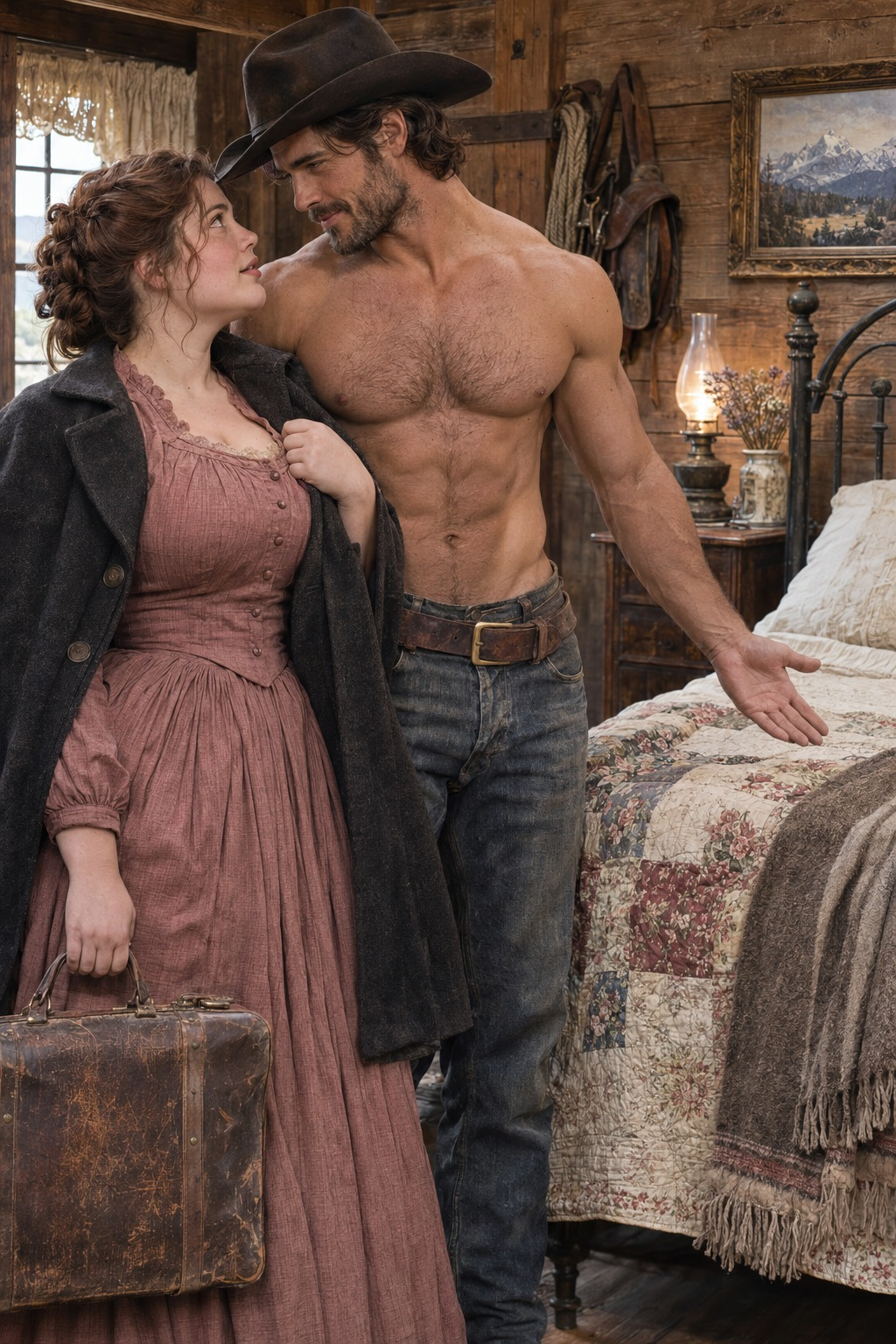
I thought about my own suitcase sitting upstairs. Thirty days. That was what I had agreed to. Thirty days of work, followed by whatever came next.
I couldn't promise a child that I would stay forever.
But I could promise him something honest.
"I can certainly listen when you want to talk," I said. "And I know how to make breakfast."
Ben's face brightened.
"What about the last one?"
I carefully folded the paper along its original creases.
"I don't think anyone should disappear without saying goodbye."
He considered that answer.
Then he nodded as if I had made a very important agreement.
Luke looked away.
For a moment, I noticed something in his expression that I couldn't quite understand. It wasn't anger. It wasn't sadness exactly.
It looked like guilt.
"Ben," he said quietly, "it's getting late."
The boy reached for the paper.
I handed it back.
He tucked it into his pocket and hurried toward the staircase.
"Good night, Anna!"
"Good night, Ben."
His footsteps faded.
Luke remained beside the table.
I picked up my spoon, although I suddenly wasn't very hungry.
"He's a thoughtful boy," I said.
"Yes."
"He seems lonely."
Luke looked toward the staircase.
"He's been through more than a child should."
I waited.
He didn't elaborate.
Instead, he picked up an empty plate and carried it toward the sink.
"Get some rest, Anna. Tomorrow will be a busy day."
I nodded.
"Good night, Luke."
He stopped at the doorway.
"Good night."
Then he disappeared into the hallway.
I sat alone for another minute, looking at the warm food in front of me.
Thirty days.
That was all I had promised.
But something about Ben's little list made those thirty days feel more important than a simple employment agreement.
The next morning, I woke before sunrise.
For a few seconds, I didn't recognize the room.
The bed was softer than the one I had slept in at the boarding house, and the faint smell of wood smoke drifted through the window.
Then I remembered.
High Mesa.
Luke Dawson.
The thirty-day agreement.
I sat up and looked around.
My suitcase stood beside the dresser. I had placed my aunt's photograph on top of it before going to bed.
The picture showed her standing outside the boarding house, smiling at the camera with her hands folded in front of her apron.
I picked it up.
"Well, Aunt Margaret," I whispered, "I found work."
I placed the photograph back and dressed.
Downstairs, the ranch house was quiet.
The kitchen looked considerably better than it had the evening before, but I could already see what needed attention.
I opened the pantry and examined the supplies.
There were sacks of flour, jars of preserved vegetables, dried beans, coffee, sugar, and several pieces of smoked meat.
The shelves were poorly organized.
Some jars had no labels. A sack of flour had been left open. Two containers of dried beans had been mixed together.
I took a breath.
There was enough food to feed an army, but someone needed to bring order to the place.
I started with breakfast.
I prepared biscuits, scrambled eggs, fried potatoes, and coffee. I also made a small pot of oatmeal with brown sugar for Ben.
As the biscuits baked, the kitchen filled with a warm, familiar smell.
It reminded me of mornings at my aunt's boarding house.
She used to say that people could forgive a great many things if they were welcomed with a good breakfast.
I hoped she had been right.
The first ranch hand appeared shortly after six.
He was a lean man in his early fifties, with silver hair and a weathered face. I recognized him as Thomas, the man who had praised the stew the previous evening.
He stopped at the kitchen entrance.
"Well, now."
I turned.
"Good morning."
Thomas sniffed the air.
"Is that fresh bread?"
"Biscuits."
He removed his hat.
"Miss Bennett, I believe you've already become the most popular person on this ranch."
I laughed.
"Breakfast isn't ready yet."
"I can wait."
He pulled out a chair and sat down.
A few minutes later, two other ranch hands arrived.
Then another.
By the time Luke entered, the kitchen was full.
He paused in the doorway, looking at the men gathered around the table.
Thomas was already reaching for a second biscuit.
Luke raised an eyebrow.
"Something happen?"
Thomas swallowed.
"Best breakfast we've had in months."
Luke looked toward me.
I was arranging the last plate.
"Good morning."
He nodded.
"Morning."
His gaze moved over the table.
"You made all this?"
"Most of it."
"How long were you awake?"
"Not long."
Thomas laughed.
"She was awake before the rooster."
Luke gave him a look.
Thomas immediately returned his attention to his food.
I placed a plate in front of Luke.
He sat down.
For a few moments, the kitchen was filled with the ordinary sounds of people eating.
Then Ben appeared.
He was still wearing his nightshirt beneath a pair of trousers, and his hair looked as though he had spent the night fighting his pillow.
He stopped when he saw the table.
"Is there oatmeal?"
I smiled.
"There's oatmeal with brown sugar."
His eyes widened.
"Really?"
"Really."
He climbed into his chair.
Luke watched him.
"Wash your hands first."
Ben sighed.
"I did yesterday."
"And you'll do it today."
The boy disappeared toward the washbasin.
Thomas leaned toward me.
"That one's got his uncle's stubbornness."
Luke didn't look up.
"I heard that."
"Wasn't meant to be a secret."
The men laughed.
For the first time since arriving at High Mesa, I felt something close to normal.
It wasn't quite home.
But it was a beginning.
After breakfast, Luke asked me to meet him in his office.
The room was at the front of the house, overlooking the main pasture.
A large wooden desk stood beside the window. Maps of the ranch were pinned to one wall, and several account books rested on a shelf.
Luke was standing beside the desk with a folded document.
"Sit down, Anna."
I took the chair opposite him.
He placed the paper in front of me.
"Your employment agreement."
I looked at it.
The document was written in clear handwriting, with the terms arranged in several short sections.
Thirty days of work.
Room and meals included.
A weekly wage.
Additional payment if I agreed to continue after the initial period.
There was also a provision stating that I would be paid for every day worked, even if either of us decided to end the arrangement early.
I looked up.
"You've thought this through."
"I don't like misunderstandings."
"Neither do I."
He pushed a small envelope across the desk.
"This is an advance."
I looked at it but didn't touch it.
"I thought we agreed on wages."
"We did."
"Then why an advance?"
"Because you arrived with one suitcase and probably less money than you should have had."
My cheeks warmed.
I disliked being reminded of my circumstances.
But Luke's voice remained matter-of-fact.
"It isn't a gift. It's part of what you'll earn."
I studied him.
"You don't know me very well."
"No."
"Then why trust me with your kitchen?"
He leaned back slightly.
"Because I remember your aunt."
I looked down.
"She was a good woman."
"She was."
Luke's expression softened.
"When my father was alive, he used to stop at your boarding house whenever he traveled through Pine Crossing. He said Margaret Bennett could make a hungry man feel welcome even when she had almost nothing left in her pantry."
I smiled faintly.
"That sounds like her."
"She also once refused to charge him for a meal."
"She probably knew he wouldn't pay her back."
Luke gave a quiet laugh.
"She told him the same thing."
For a moment, the room felt warmer.
Then Luke returned to the agreement.
"Read everything before signing."
I did.
The terms were fair.
More than fair, considering the circumstances.
I signed my name at the bottom.
Luke signed beneath it.
"Thirty days," he said.
"Thirty days."
He handed me a copy.
I placed it carefully inside my coat.
Then I remembered something.
"Mr. Dawson—"
"Luke."
"Luke. May I ask you a question?"
"Go ahead."
"Why has no one stayed here before me?"
He became still.
I wasn't sure whether I should have asked.
After a moment, he walked toward the window.
"People have come and gone."
"Because of the work?"
"Sometimes."
I waited.
He looked out toward the pasture.
"Sometimes because of Ben."
I felt my expression change.
"What do you mean?"
"He's not an easy child to get close to."
"He's only eight."
"That doesn't make things easier."
Luke turned.
"Some people mistake his silence for bad manners. Others think he needs to be disciplined every time he refuses to speak."
I shook my head.
"He's a child."
"Exactly."
There was a long pause.
Then Luke added, "I don't expect you to fix anything. Just do your job and treat him fairly."
I nodded.
"I can do that."
"Good."
I stood and reached for the door.
Before leaving, I glanced back.
"Luke?"
He looked up.
"Ben's list was very important to him."
His face changed.
"I know."
"Perhaps he only wants to feel that someone is glad he's here."
Luke looked down at his desk.
"Perhaps."
I left without asking anything else.
The days that followed were busier than I had expected.
High Mesa was not simply a house with a kitchen.
It was an entire working operation.
There were ranch hands to feed, supplies to organize, meals to prepare, and endless tasks that seemed to appear the moment I finished something else.
Thomas helped me understand the daily schedule.
Breakfast was served before the men rode out.
Lunch had to be ready when they returned from the northern pastures.
Supper was usually the largest meal, especially during winter.
Luke also explained that supplies had to be managed carefully. The ranch was far from town, and a heavy snowfall could make travel difficult for days.
I began keeping a written inventory.
The flour was measured. The preserved vegetables were sorted. The dried beans were stored in labeled jars.
Within three days, the kitchen looked like a completely different place.
The men noticed.
Thomas even told Luke that the ranch had become civilized.
Luke replied that Thomas should concentrate on repairing the northern fence instead of discussing civilization.
The men laughed.
I found myself smiling more often.
But it was Ben who surprised me most.
At first, he appeared only during meals.
He would sit quietly, eat what was placed in front of him, and leave before anyone could ask him too many questions.
I didn't force conversation.
Instead, I started leaving small opportunities for him to participate.
One morning, I placed a bowl of apples on the counter.
"Ben, could you help me?"
He looked up from the wooden horse he was holding.
"With what?"
"These apples need washing."
He glanced toward the bowl.
"All of them?"
"Unless you think I should wash them one at a time."
He smiled.
Then he came over.
I placed a small stool beside the basin so he could reach comfortably.
He washed the apples carefully, although he splashed more water onto the floor than I would have liked.
When we finished, I handed him a clean towel.
"Thank you."
He looked surprised.
"That's all?"
"That's all."
He waited.
Then he asked, "Can I help tomorrow?"
I smiled.
"If you're available."
He nodded seriously.
The following morning, he arrived before breakfast.
By the end of the first week, I had learned several things about High Mesa.
Thomas complained about everything but was secretly kind.
The horses disliked being brushed before sunrise.
Luke drank his coffee without sugar.
Ben preferred oatmeal over eggs.
And no one seemed willing to discuss the woman whose absence hung over the ranch.
I had noticed a framed photograph on the mantel in the main sitting room.
It showed a younger Luke standing beside a beautiful woman with dark hair.
Between them stood a small boy.
Ben.
The woman was smiling at the camera, but there was something distant in her eyes.
I had not asked who she was.
I suspected she had been Ben's mother.
I also suspected that whatever had happened to her was connected to the little boy's fear of people leaving.
One afternoon, I found Ben sitting on the back steps.
He was holding his wooden horse.
The snow had stopped, and the late sunlight rested across the pasture.
"Would you like some hot chocolate?" I asked.
He nodded.
I brought two cups outside and sat beside him.
For a while, neither of us spoke.
Then he looked toward the barn.
"Do you think people can come back after they leave?"
I held my cup with both hands.
"Sometimes."
"What if they don't want to?"
I looked at him.
"Then it isn't the child's fault."
Ben lowered his eyes.
I waited.
He rubbed the wooden horse's worn head with his thumb.
"Someone told me my mother left because I was bad."
The words came so quietly that I almost missed them.
My heart tightened.
"Who told you that?"
He shrugged.
"I don't remember."
"Ben, listen to me."
He looked up.
"Children are never responsible for adults deciding to leave. Whatever happened, it wasn't because you weren't good enough."
His eyes filled with tears.
He quickly turned his face away.
I didn't reach for him immediately.
I simply stayed beside him.
After a moment, he leaned against my arm.
It was such a small movement.
But I understood that it meant something.
That evening, Luke found us in the kitchen.
Ben was sitting at the table, carefully drawing a horse while I prepared supper.
Luke stopped.
"You're still awake?"
Ben looked up.
"I was helping Anna."
Luke glanced at the flour scattered across the table.
"Is that what you call helping?"
Ben grinned.
I laughed.
"He was helping me measure flour."
Luke looked at the boy.
"Did you wash your hands afterward?"
Ben sighed.
"Yes, Uncle Luke."
Luke approached the table and examined the drawing.
"That's a good horse."
"It's supposed to be Thunder."
"Looks like Thunder."
Ben carefully folded the paper.
Then he looked at his uncle.
"Can Anna come with us tomorrow?"
Luke raised an eyebrow.
"Where?"
"To the barn."
I looked at the boy.
"What would I do in the barn?"
"See Thunder."
Luke glanced at me.
"Only if she wants to."
"I'd like that," I said.
Ben smiled.
Luke nodded.
"Then tomorrow morning."
The boy hurried upstairs to put away his drawing.
I returned to the stove.
Luke remained near the table.
"He's been talking more."
"That's good."
"Yes."
He looked toward the staircase.
Then he turned back to me.
"Whatever you're doing, keep doing it."
I smiled.
"I'm only listening."
Luke's expression softened.
"Sometimes that's enough."
The next morning, I accompanied Ben to the barn.
Thunder was a beautiful chestnut horse with a white mark running down the center of his face.
Ben was proud of him.
He showed me how the horse liked to be brushed and which side of the stall he preferred.
I listened carefully.
When Ben finished, he stood beside me with his hands tucked into his pockets.
"Do you think you'll stay longer than thirty days?"
I looked at him.
The question caught me unprepared.
"I don't know yet."
His smile faded slightly.
"Why not?"
"Because I promised to work for thirty days. After that, we'll see."
He looked down.
I wanted to tell him something reassuring.
But I didn't want to make a promise I couldn't keep.
Instead, I placed a gentle hand on his shoulder.
"I'm here today, Ben."
He nodded.
"That's good."
We returned to the house together.
I thought little of the conversation until later that afternoon.
I was sorting the pantry when Thomas entered.
"Miss Bennett?"
"Yes?"
He looked toward the hallway.
"Mr. Dawson wants to see you."
"Is something wrong?"
Thomas hesitated.
"I don't know. He received a visitor."
"Who?"
Before Thomas could answer, a man's voice sounded from the front hall.
"Luke Dawson!"
It was loud, sharp, and unfamiliar.
I wiped my hands on my apron.
Thomas's expression became serious.
"That's Mr. Whitmore."
I recognized the name.
Arthur Whitmore was one of the largest creditors in Pine Crossing. He owned several properties and had been involved in more than one foreclosure.
I remembered seeing him near the sheriff during the seizure of my aunt's boarding house.
My stomach tightened.
"What does he want here?"
Thomas looked toward the front entrance.
"That," he said quietly, "is what I'd like to know."
I stepped into the hallway.
Luke was standing beside his office door.
Across from him stood a well-dressed man wearing a black wool coat and polished boots. He held a leather folder beneath one arm.
Arthur Whitmore.
His gaze moved past Luke.
Then it landed on me.
He smiled.
Not warmly.
Not kindly.
It was the smile of someone who had found something he had been looking for.
"Well," he said. "If it isn't Margaret Bennett's niece."
I stopped walking.
Luke turned toward me.
"Anna, you don't need to be here."
Whitmore opened his leather folder.
"Oh, I believe she does."
He removed a folded document and placed it on the table.
Then he pointed directly at my name.
"Because there's something about your aunt's estate that the sheriff apparently forgot to tell you."
Luke's expression hardened.
"Choose your next words carefully, Whitmore."
The visitor ignored him.
He slowly unfolded the document.
And when I saw the signature at the bottom, my blood ran cold.
It was my aunt's handwriting.
But the date was six months before her death.
And beneath her signature were four words:
TRANSFER OF OWNERSHIP AGREEMENT.
Whitmore looked directly at me.
"Miss Bennett, I believe your aunt promised me something that belongs to you."
Then he opened the second page.
And Luke suddenly reached across the table to stop him.






Comments 0