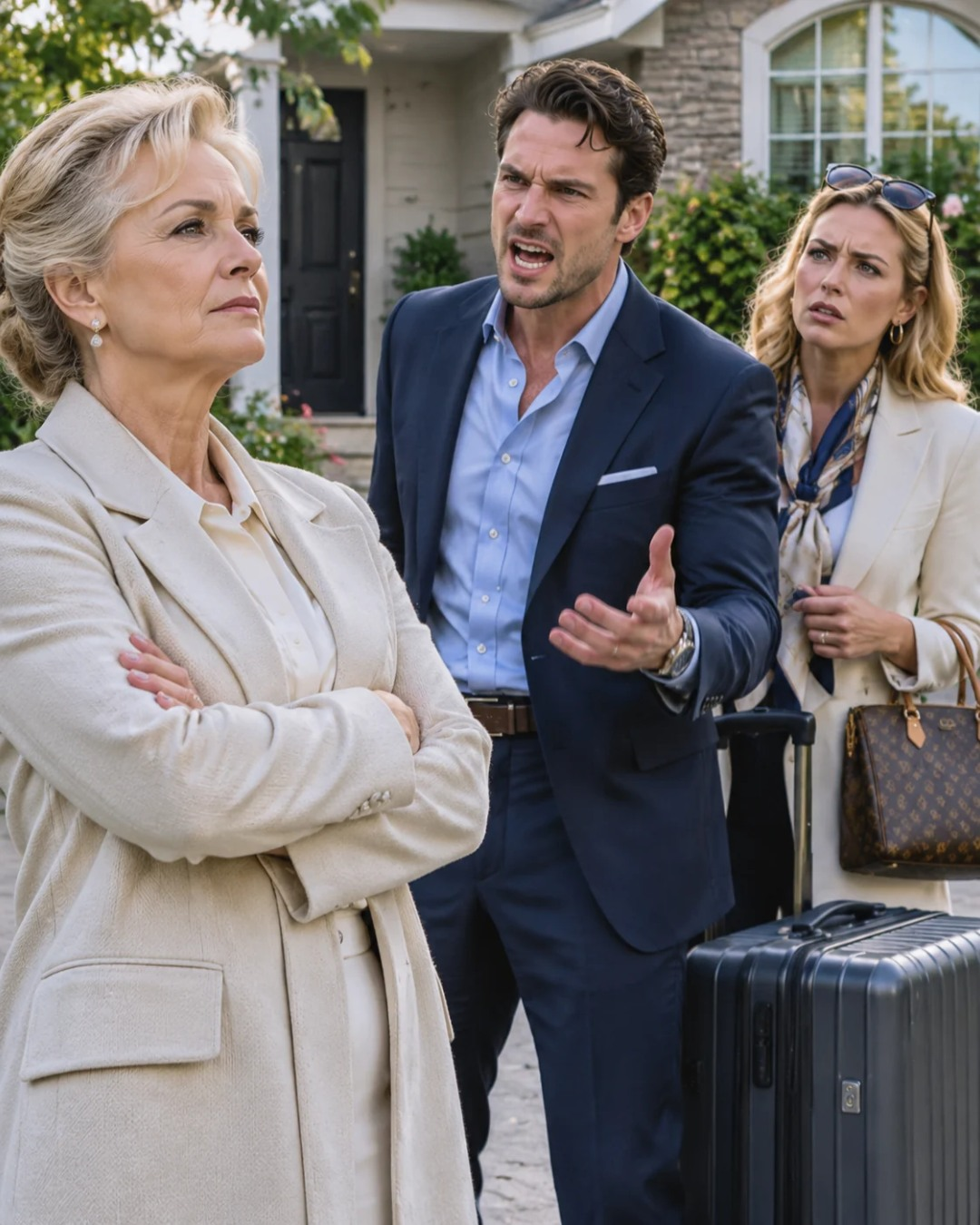
The attorney's warning stayed with me as I looked at the home Frank and I had built our lives around.
Before anyone started talking about inheritance, the house had been a dream we could barely afford.
Frank and I were young when we first walked through its front door.
Daniel was still a little boy, and we had been searching for a place where he could grow up with a backyard, a safe neighborhood, and enough room to make memories.
The house was more expensive than we had planned.
I remember standing in the kitchen, staring at the cabinets and wondering whether we were making a terrible mistake.
Frank stood beside me.
"What do you think?" he asked.
"I think the mortgage might kill us."
He grinned.
"Well, then we'd better stop taking luxury vacations."
I laughed.
"Frank, we don't take luxury vacations."
"Perfect. We're already saving money."
That was Frank.
He could turn a frightening decision into something that felt possible.
We bought the house.
And for the next thirty-two years, we worked to keep it.
There were months when money was so tight that I calculated grocery expenses down to the last dollar.
Frank worked overtime whenever he could.
I took extra shifts.
We repaired what we could ourselves and postponed anything that wasn't essential.
Frank learned how to fix gutters.
I learned how to paint walls without leaving streaks.
We replaced damaged cabinets one at a time.
When a window leaked, Frank spent an entire weekend repairing the frame.
When the washing machine broke, we washed clothes at a laundromat until we could afford another one.
None of it was glamorous.
But it was ours.
And every payment brought us closer to owning the house outright.
Daniel grew up surrounded by that effort.
He saw his father come home exhausted.
He saw me balancing bills at the kitchen table.
He watched us sacrifice things we wanted so he could have things he needed.
We never expected him to repay us.
Parents shouldn't raise children as an investment.
But I had hoped he would remember.
When Daniel was eight, Frank built him a wooden treehouse in the backyard.
It wasn't perfect.
One wall leaned slightly.
The ladder creaked.
But Daniel loved it.
He spent entire summers pretending it was a pirate ship, a secret fort, or a spaceship.
Frank would stand beneath the tree and call up to him.
"Captain Daniel, permission to come aboard?"
"Denied!" Daniel would shout.
Frank would clutch his chest dramatically.
"Mutiny in my own backyard!"
Those were the years I remembered most clearly.
The years when Daniel still ran toward us instead of away from us.
The years when his laughter filled the house.
The years when I believed love would always be enough to keep our family close.
As Daniel grew older, things changed.
That was natural.
Children become teenagers.
Teenagers become adults.
They develop their own ambitions and opinions.
I understood that.
What I didn't understand was how easily ambition could turn into entitlement.
Daniel did well in school.
He was intelligent, confident, and determined to succeed.
Frank was proud of him.
So was I.
When Daniel left for college, I cried in the driveway after his car disappeared around the corner.
Frank wrapped his arm around my shoulders.
"He's going to be fine."
"I know."
"Then why are you crying?"
"Because I'm going to miss him."
Frank kissed my forehead.
"That's what happens when you do a good job raising somebody. Eventually, they leave."
For a while, Daniel called every Sunday.
He told us about classes, friends, professors, and plans.
Then the calls became less frequent.
After graduation, he moved into a demanding career.
He met Melissa.
They married.
We were happy for them.
Melissa was charming when we first met her.
She remembered birthdays.
She brought thoughtful gifts.
She complimented my cooking.
Frank liked her.
"She keeps him on his toes," he said after one family dinner.
I agreed.
At the time, I believed they made a wonderful couple.
And perhaps they did.
But over the years, I noticed that both Daniel and Melissa measured success in ways Frank and I never had.
They admired expensive cars.
Luxury hotels.
Designer clothing.
Large houses.
Prestigious addresses.
There was nothing wrong with enjoying beautiful things.
Frank and I had dreamed of nice things too.
The difference was that we had never believed someone else's possessions should automatically become ours.
Daniel and Melissa seemed to think differently.
At first, their comments were harmless.
"This neighborhood has really appreciated."
"Your house must be worth a fortune now."
"Have you thought about renovating the kitchen before selling someday?"
I answered politely.
I didn't think much of it.
Then Frank became ill.
Cancer entered our lives quietly.
A doctor's appointment.
A test.
Another appointment.
Then a diagnosis that made the world feel suddenly smaller.
Frank tried to stay cheerful.
Even during treatment, he found ways to make me laugh.
One afternoon, when he was exhausted and pale, I asked whether he wanted anything special for dinner.
"A steak," he said.
"Really?"
"And a winning lottery ticket."
I smiled through tears.
"I can probably manage the steak."
"Then we're halfway there."
But the illness progressed.
The man who had once climbed onto the roof to repair shingles eventually struggled to walk from the bedroom to the kitchen.
I cared for him as best I could.
I learned medication schedules.
I attended appointments.
I sat beside his hospital bed.
And on the hardest nights, I held his hand while he slept.
Daniel visited when he could.
Melissa came occasionally.
I never demanded more.
They had their own lives.
Their own responsibilities.
I understood.
But I remember one evening when Frank asked whether Daniel had called.
"Not today," I said.
Frank nodded.
"He's busy."
"Yes."
"Don't be hard on him."
I promised I wouldn't.
That promise followed me for years.
Even after Frank died.
Even when Daniel disappointed me.
Even when his words hurt.
I kept remembering Frank asking me not to be hard on our son.
Perhaps I took that promise too far.
After the funeral, the house became painfully quiet.
I left Frank's favorite chair beside the living-room window.
His coffee mug remained in the cupboard.
His winter coat hung in the closet for nearly a year.
Sometimes I woke in the night and reached toward the empty side of the bed.
Sometimes I heard a car in the driveway and instinctively thought Frank had come home.
Grief is strange that way.
Your mind understands something your heart keeps refusing to accept.
For months, I moved through the house like a visitor.
I cooked meals I barely ate.
I watched television programs I couldn't remember.
I watered the roses because Frank had loved them.
Eventually, the days became easier.
Not easy.
Just easier.
I began attending church regularly again.
I rejoined my weekly book club.
I had lunch with friends.
I learned to enjoy quiet afternoons without feeling guilty.
I hired a gardener for the heavier work.
I called professionals when something needed repairing.
And slowly, I rediscovered the woman I had been before grief swallowed so much of my life.
I was still Margaret.
Not just Frank's widow.
Not just Daniel's mother.
Margaret.
A woman who liked mystery novels, strong coffee, fresh flowers, and Sunday mornings when nobody expected anything from her.
I had friends.
I had interests.
I had a home.
I was content.
Then Daniel and Melissa began visiting more often.
At first, I welcomed it.
Daniel carried groceries.
Melissa brought soup.
They asked about the house.
They offered help.
I thought perhaps Frank's death had reminded Daniel how important family was.
I was grateful.
But gradually, their attention began to feel different.
They started asking questions that sounded less like concern and more like evaluation.
How much did I spend on maintenance?
Was I still comfortable driving?
Did I ever forget to take medication?
Was the staircase becoming difficult?
Had I considered downsizing?
Did I know the current market value of the property?
At first, I answered everything.
I had nothing to hide.
But the questions never stopped.
One afternoon, Melissa walked through the living room with a measuring tape.
I stared at her.
"What are you doing?"
She smiled.
"Just curious about the dimensions."
"Why?"
"Oh, Daniel and I were talking about how much brighter this room would look if that wall came down."
I looked at the wall.
Frank and I had painted it together.
"That wall isn't coming down."
Melissa laughed lightly.
"Of course not right now."
Right now.
Two words.
Such a small phrase.
But I noticed them.
A few weeks later, Daniel asked whether I had updated my will.
I told him my affairs were in order.
He seemed dissatisfied.
"Mom, you should really let me review everything."
"Why?"
"Because I'm your son."
"That doesn't mean you need to review my private documents."
He frowned.
"Why are you being difficult?"
I remember staring at him.
Difficult.
That was the word he used whenever I disagreed with him.
If I refused a suggestion, I was difficult.
If I wanted privacy, I was difficult.
If I made my own decisions, I was difficult.
The pattern became clearer with every visit.
And then came the afternoon in the rose garden.
The afternoon he called me a burden.
I had spent years believing that my son wanted to protect me.
But after hearing those words, I began wondering whether he had been protecting something else entirely.
His expectations.
His plans.
His imagined inheritance.
I didn't confront him that day.
I didn't argue.
I didn't cry in front of him.
I simply waited until he and Melissa left.
Then I went inside, made myself a cup of tea, and sat at the kitchen table.
For a long time, I stared at Frank's photograph.
"What would you do?" I whispered.
Of course, the photograph didn't answer.
But I remembered something Frank had said on the day we finally paid off the mortgage.
We had opened a cheap bottle of champagne in the kitchen.
Frank held me close.
"It's ours now, sweetheart," he whispered. "Nobody can take it away."
I had believed him.
And legally, he had been right.
The house belonged to us.
After his death, it belonged to me.
Not Daniel.
Not Melissa.
Me.
I sat straighter.
For the first time, I considered a possibility I had never allowed myself to imagine.
What if I sold the house?
Not because Daniel wanted me to.
Not because Melissa thought I was too old to manage it.
But because I wanted something different.
A smaller place.
Less maintenance.
More freedom.
A future that belonged to me.
The idea frightened me.
It also excited me.
I opened my laptop and began researching property values.
The numbers surprised me.
Our neighborhood had appreciated dramatically.
Similar houses were selling for amounts Frank and I could never have imagined.
I checked another listing.
Then another.
Then I found a recent sale on a nearby street.
I stared at the screen.
For years, Daniel had spoken about the house as though it were simply waiting to become his.
But he had never asked what I wanted to do with it.
That evening, I found the business card of a real estate attorney recommended by a friend.
I placed it beside the telephone.
I didn't call immediately.
I wanted to be certain.
I wanted to think clearly.
And I wanted to make this decision for myself.
The next morning, Daniel sent me a message.
Mom, Melissa and I are leaving for Europe soon. When we get back, we need to finalize your living arrangements.
I read it twice.
There was no question.
No invitation to discuss my wishes.
Just an announcement.
I typed a short reply.
Enjoy your trip.
Then I picked up the attorney's business card.
I was about to dial the number when another message appeared.
This one was from Melissa.
By the way, Margaret, please don't make any major decisions about the house while we're gone. Daniel has plans.
I stared at those words.
Daniel has plans.
Not Margaret.
Daniel.
I placed the phone on the table.
Then I dialed the attorney's number.
A receptionist answered.
"Good morning. How may I help you?"
I took a breath.
"I'd like to discuss selling my house."
The receptionist asked for my name.
I gave it.
Then she asked whether anyone else had an ownership interest in the property.
"No," I said. "I'm the sole owner."
There was a brief pause.
"All right, Mrs. Margaret. We can arrange a consultation."
I reached for my calendar.
And just as I opened it, I noticed something Daniel had left on the kitchen counter during his last visit.
A folded sheet of paper.
Across the top were three words.
MARGARET — TRANSITION PLAN.
Underneath was a date.
The day after Daniel and Melissa were scheduled to return from Europe.
I unfolded the page.
And the first line made my hands go cold.






Comments 0