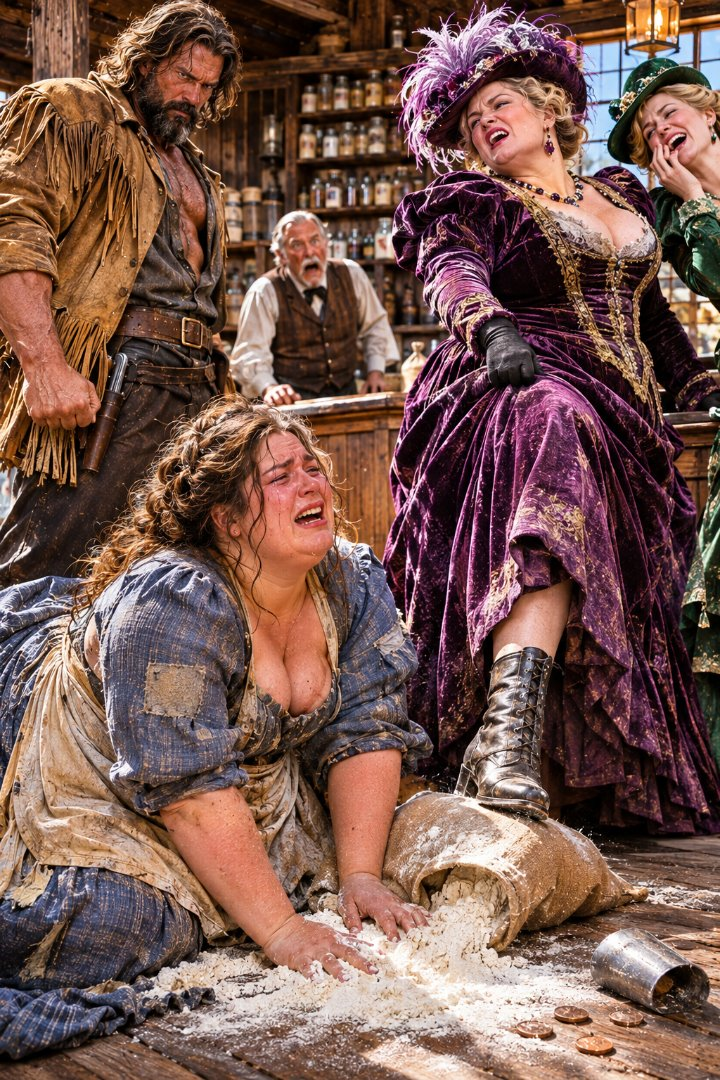
Abigail stood frozen with the notebook pressed against her chest.
The door handle moved again.
"Mrs. Trent," the voice outside called, "open this door."
Harlon raised one finger to his lips.
He moved silently toward the window.
Abigail could hear her own heartbeat.
She had known Sheriff Daniel Rusk for six years.
He had attended Thomas's funeral.
He had once helped her repair a broken fence after a storm.
His voice was deep, slow, and unmistakably Southern.
The man outside sounded nothing like him.
"Mrs. Trent!"
The handle rattled.
Harlon leaned toward the door.
"Who's asking?"
Silence.
Then the stranger replied, "Sheriff Rusk."
Harlon looked at Abigail.
She shook her head.
He nodded.
"Funny," he said through the door. "Sheriff Rusk was born in Georgia. You sound like you learned your manners in Philadelphia."
A pause.
Then footsteps.
Fast.
Moving away from the porch.
Harlon reached the window in time to see three men retreating toward horses tied near the road.
One wore a dark coat.
Another carried a short shotgun.
The third was Edwin Pike.
Abigail recognized him immediately.
Her breath caught.
"They followed us."
Harlon watched the men mount.
"Yes."
"Are they leaving?"
"For now."
The riders disappeared toward town.
Only then did Harlon turn.
Abigail was trembling so badly that the notebook shook in her hands.
He approached slowly.
"Mrs. Trent."
She looked at him.
"Sit down."
"I can't."
"Yes, you can."
He pulled out a chair.
She sank into it.
For several moments, neither spoke.
Then Abigail whispered, "Thomas didn't die in an accident, did he?"
Harlon looked at the notebook.
"I don't know."
"But you suspect."
"Yes."
She closed her eyes.
The room seemed to spin.
For two years, she had tried to accept the explanation given to her.
A mine explosion.
A tragic accident.
A dangerous occupation.
Thomas had known the risks.
That was what everyone told her.
The minister.
The superintendent.
The sheriff.
Even neighbors who had never set foot inside a mine.
They had repeated the same words until Abigail began repeating them herself.
Now a stranger had impersonated the sheriff to enter her home.
And all because of a notebook her husband had hidden.
She opened her eyes.
"Tell me everything you know."
Harlon pulled out the opposite chair.
He sat.
For the first time, Abigail saw how tired he looked.
Not physically.
Something deeper.
The exhaustion of a man who had carried a memory for too long.
"Elias Mercer came to my cabin in February of 1876," he began. "There was snow above the windows. He'd walked most of the way from Bitter Creek."
"Why?"
"He said he needed someone who didn't work for the mining company."
"Why you?"
"Because I lived outside their reach."
Harlon paused.
"Mercer was an accountant. Not a miner. He kept records for Blackstone Silver."
Abigail looked down at the notebook.
"Then he knew about the money."
"He knew more than he wanted to."
"What did he tell you?"
"That the company's official books didn't match what was coming out of the mountain."
Abigail frowned.
"Silver?"
"Silver. Supplies. Wages. Insurance payments."
"Insurance?"
Harlon nodded.
"He said men were being charged for equipment they never received. Their wages were being reduced for debts they never owed. Some were listed as borrowers when they'd never borrowed a cent."
Abigail stared.
"Like Thomas."
"Maybe."
She looked toward the door.
"And the crosses?"
Harlon's expression darkened.
"Mercer showed me a page with the same marks."
"What did they mean?"
"He wouldn't say. Only that the men whose names carried those marks were in danger."
Abigail's fingers tightened around the notebook.
"Did he tell you who was responsible?"
"He mentioned Walter Pritchard."
"The superintendent."
"Yes."
"Anyone else?"
Harlon hesitated.
"Josiah Gable."
Abigail felt a sickening chill.
The merchant.
The man who had humiliated her over five cents.
The man who claimed Thomas owed four hundred and eighty dollars.
She remembered the tiny cross beside her husband's name.
"Why would Gable be involved?"
"Because a company needs somewhere to move money without attracting attention."
"The store?"
"Possibly."
"And the bank?"
Harlon looked at her.
"Mercer mentioned the bank too."
Clara Higgins's husband.
Abigail felt suddenly nauseated.
All those months washing shirts for the banker's family.
All those times Clara had complained about a stiff collar or a missing button.
Had she known?
Had she laughed at Abigail because she believed the widow was helpless?
Or because she knew exactly why Abigail had become poor?
Harlon continued.
"Mercer left my cabin before dawn. He said he was going to meet a miner who could help him prove everything."
"Thomas."
"I believe so."
"Did you ever see Mercer again?"
"No."
"What happened to him?"
"His body was found near a ravine six weeks later."
Abigail stared.
"I thought you said he disappeared."
"He did. Until spring thaw uncovered him."
"Was he murdered?"
"The sheriff called it a fall."
Abigail gave a hollow laugh.
"Of course he did."
Harlon looked at her.
She shook her head.
"Thomas died in an accident. Mercer died in a fall. And everyone who asks questions is told to mind their business."
Her voice cracked.
"How many accidents does one town need before somebody starts asking why?"
Harlon said nothing.
He did not need to.
The answer was sitting between them.
Abigail looked at the notebook.
"Can you read all of this?"
"Some."
"Then we'll find someone who can."
Harlon studied her.
"We?"
She lifted her chin.
"Thomas was my husband."
"I know."
"He died with people calling him careless. They said he ignored safety rules. They said he caused the explosion."
Her eyes filled.
"I believed them."
"Mrs. Trent—"
"I believed them because I thought the company wouldn't lie about a dead man."
She wiped her cheeks.
"And because I didn't know how to fight people who had money."
Harlon leaned forward.
"Listen to me."
She looked up.
"Believing what you were told doesn't mean you failed him."
Abigail swallowed.
"He trusted me."
"And maybe that's why he left the notebook where you'd find it."
She looked at the worn leather cover.
For the first time, she considered that possibility.
Thomas had known she would repair the loose floorboard.
He knew she kept her sewing supplies beneath the bed.
He knew she would recognize his handwriting.
Perhaps he had not hidden the notebook from her.
Perhaps he had hidden it for her.
A knock sounded at the door.
Abigail flinched.
Harlon rose immediately.
"Stay here."
The knock came again.
Then a familiar voice called, "Abigail? It's Martha Bell."
Abigail released a shaky breath.
Martha was the widow who lived two cabins down.
She was sixty, sharp-tongued, and one of the few people in Bitter Creek who had never mocked Abigail.
Harlon opened the door cautiously.
Martha stood outside holding a basket.
Her expression changed when she saw him.
"Well, goodness."
Harlon stepped aside.
"Ma'am."
Martha looked past him.
"Abigail, are you all right?"
Abigail rose.
"Yes."
Martha's eyes narrowed.
"That's a lie."
She entered without waiting for permission.
Her gaze moved from Abigail's tear-streaked face to Harlon's imposing figure.
Then to the notebook on the table.
"I heard what happened at Gable's."
Abigail looked down.
Martha set the basket on the table.
"That miserable man ought to be ashamed."
She removed a loaf of bread wrapped in cloth.
"And his wife ought to have her tongue washed with lye soap."
Despite everything, Abigail almost smiled.
"Martha—"
"Don't Martha me. Half the town is talking."
Harlon crossed his arms.
"What are they saying?"
Martha looked him up and down.
"That a mountain giant walked into Gable's store and frightened Josiah so badly he nearly swallowed his own mustache."
Abigail let out a startled laugh.
Harlon's mouth twitched.
"That so?"
"That's the polite version."
Martha turned serious.
"There's more."
Abigail's smile disappeared.
"What?"
"Clara Higgins went straight to the bank after you left. Beatrice followed. Then Edwin Pike came riding in like the devil was chasing him."
Harlon exchanged a look with Abigail.
Martha noticed.
"What have you two gotten into?"
Abigail hesitated.
Then looked at Harlon.
He gave a small nod.
So she told Martha about the ledger.
About the debt.
About Thomas's notebook.
And about the men who had come to the cabin pretending to be the sheriff.
Martha listened without interrupting.
When Abigail finished, the older woman sat heavily.
"Lord preserve us."
Abigail looked at her.
"Do you believe me?"
Martha stared.
"Child, I've believed something was wrong with that mine since my brother died there."
Abigail froze.
"Your brother?"
Martha nodded.
"Samuel Bell. Worked the lower tunnels."
"I remember Samuel."
"He died three months before Thomas."
Abigail recalled the funeral.
A small gathering.
A closed coffin.
The company had said a support beam collapsed.
Martha looked toward the notebook.
"After Samuel died, the bank told me he owed eighty dollars."
Harlon went still.
"Did he?"
"Not a penny. My brother hated borrowing money."
"What happened?"
"They took his last wages. Said it covered part of the debt."
Abigail felt cold.
"Did his name have a cross beside it?"
Martha stared.
"What cross?"
Harlon opened the notebook.
He searched the pages.
Then stopped.
There it was.
SAMUEL BELL.
Beside the name stood a tiny cross.
And beneath it, an amount.
$80.00.
Martha leaned forward.
Her face drained of color.
"That's my brother's name."
Abigail reached for her hand.
Martha stared at the page.
Then whispered, "Those sons of—"
She stopped herself.
Harlon turned another page.
More names.
More amounts.
More crosses.
Some belonged to men who had died in the mines.
Others belonged to men who had disappeared.
Abigail recognized several.
Peter Walsh.
Henry Dalton.
Isaac Reed.
All miners.
All dead.
All listed as debtors.
She felt the truth beginning to form.
Not completely.
Not yet.
But enough to frighten her.
"What if Thomas found out they were stealing from dead men?" she whispered.
Harlon looked at her.
"Then he had a reason to keep records."
"And they had a reason to silence him."
No one answered.
Outside, the wind moved through the grass.
Martha reached into her basket.
She withdrew a folded piece of paper.
"I didn't come only to bring bread."
Abigail stared.
"What is that?"
Martha placed the paper on the table.
"A notice."
"From whom?"
"Mr. Gable's clerk brought it to my house. Said I should give it to you."
Abigail unfolded it.
The handwriting was formal.
The language was cold.
NOTICE OF OUTSTANDING DEBT.
Debtor: Thomas Trent, deceased.
Responsible party: Abigail Trent.
Amount due: $480.00.
Payment deadline: Seven days.
Failure to satisfy the debt would result in proceedings against the property at the eastern edge of Bitter Creek.
Abigail stared at the final line.
Her cabin.
The only home she had left.
"They're going to take my house."
Martha gripped her arm.
"Not if we can help it."
Abigail looked at Harlon.
He studied the notice.
"Seven days."
"That's impossible," Abigail whispered. "I couldn't earn that much in seven years."
Harlon examined the signature.
Josiah Gable.
Then the witness.
Charles Higgins.
The banker.
He looked at the date.
The notice had been prepared that morning.
Before Abigail entered the mercantile.
Before Harlon paid the missing nickel.
Before anyone mentioned the notebook.
Harlon's eyes narrowed.
"They were already planning this."
Abigail looked up.
"What?"
He pointed at the date.
"This wasn't written after the argument. They had it ready."
Martha's face hardened.
"Then the whole thing was arranged."
Abigail felt her stomach twist.
The missing five cents.
The public humiliation.
The supposed debt.
The sudden arrival of Edwin Pike.
It was beginning to feel less like cruelty and more like a trap.
But why?
If they wanted the notebook, why not simply search her cabin again?
Why wait two years?
Harlon turned the notice over.
There was something written faintly on the back.
A number.
And a short instruction.
He moved toward the window for better light.
Abigail followed.
"What does it say?"
Harlon held the paper at an angle.
The writing had been pressed through from another sheet.
He could barely make it out.
"Looks like a reference to a property transfer."
Martha frowned.
"Property transfer?"
Harlon nodded.
"Someone may have prepared papers to take this cabin before the debt was even presented."
Abigail stared.
"But why would they want my cabin?"
Martha looked toward the floorboard.
Then at the notebook.
"Maybe they thought something was hidden here."
Harlon shook his head.
"Maybe."
He studied the notice again.
"But there's another possibility."
Abigail waited.
He looked toward the mountains.
"What if they don't want the cabin because of what's inside it?"
She frowned.
"Then why?"
Harlon turned back.
"What if they want the land beneath it?"
A sudden sound came from the back of the cabin.
Wood scraping against wood.
Everyone froze.
Harlon moved toward the rear window.
He pulled the curtain aside.
A small figure stood outside near the fence.
A boy.
Perhaps twelve years old.
His clothes were dirty.
His face was pale.
He held a folded envelope in one hand.
When he saw Harlon, he raised both arms.
"Please don't shoot!"
Harlon opened the back door.
"Nobody's shooting."
The boy stumbled inside.
He was breathing hard.
Abigail recognized him.
"Tommy Walsh?"
The boy nodded.
His father, Peter Walsh, had died in the mine the same year as Thomas.
Tommy looked at Abigail.
"Ma'am, I was told to give you this."
He held out the envelope.
"Who told you?" Harlon asked.
The boy hesitated.
"A man."
"What man?"
"I don't know his name."
"What did he look like?"
Tommy swallowed.
"Old. Gray beard. Wore a black hat."
Harlon took the envelope.
There was no address.
Only Abigail's name.
Written in familiar handwriting.
Abigail felt the blood drain from her face.
She knew those letters.
The way the A leaned slightly right.
The way the T crossed too low.
The careful curve of the final t.
Her hands began trembling.
"That isn't possible."
Harlon looked at her.
"What?"
Abigail stared at the envelope.
Her voice was barely audible.
"That's Thomas's handwriting."
Martha covered her mouth.
Harlon slowly opened the envelope.
Inside was a single folded sheet.
He handed it to Abigail.
She unfolded it.
There were only three lines.
Abigail read the first.
Then the second.
By the third, her knees were shaking.
The message had been written by her husband.
And it was dated eleven days after the mine explosion that supposedly killed him.
The final line read:
"Abby, if they tell you I'm dead, don't believe them until you find—"






Comments 0