I didn't answer my sister immediately.
I stood in the middle of my grandfather's old kitchen, holding the phone against my ear while staring at the photograph hanging above the stove.
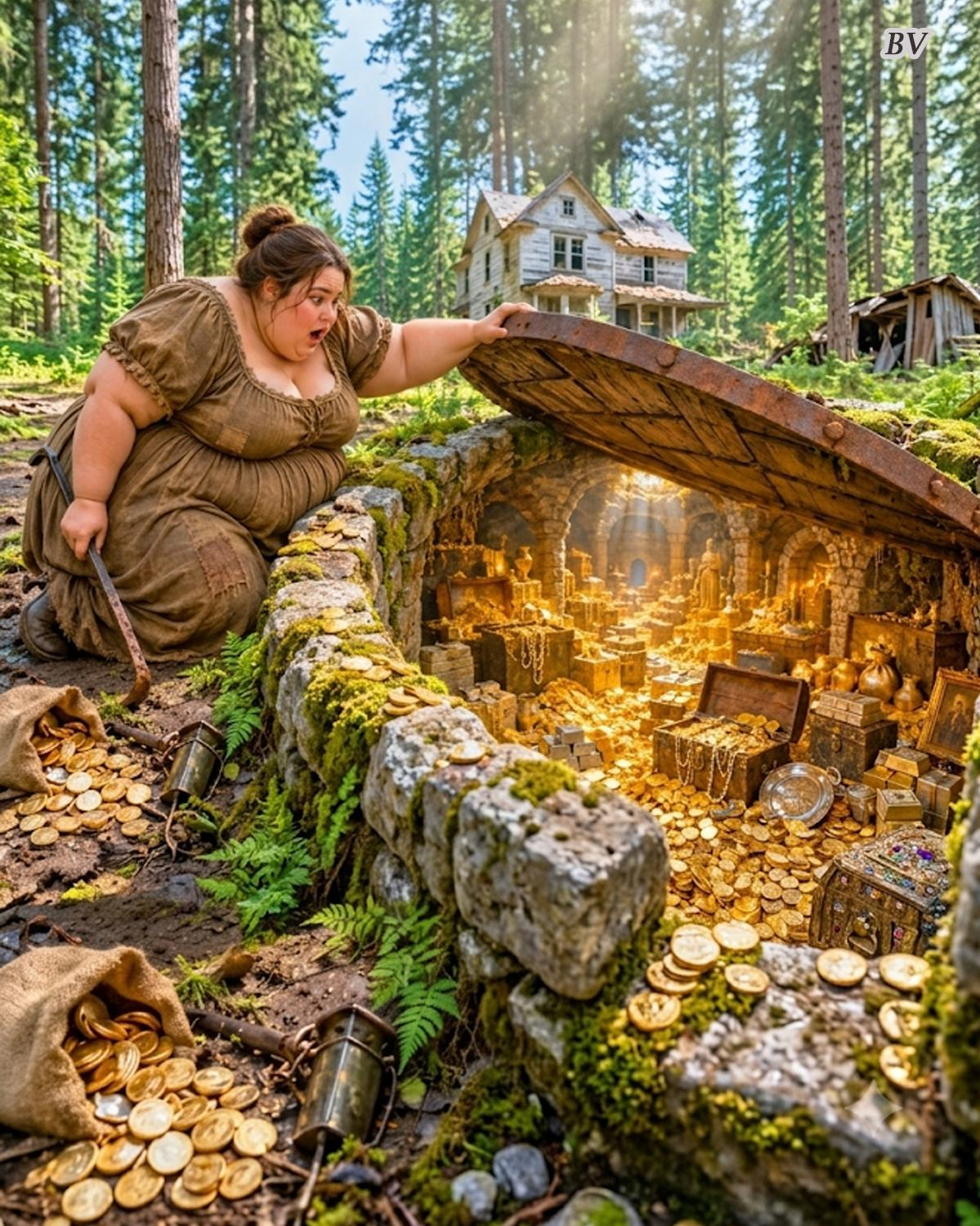
The circular stone structure in the picture suddenly seemed much more important than it had a few minutes earlier.
"Marlo?" Blythe repeated. "Are you still there?"
I forced myself to look away.
"Yes. I'm here."
"Did you hear what I said?"
"I heard you."
"Good. Graham and I have been discussing things, and we think we can come up with a much better arrangement. We'll pay the outstanding taxes, give you ten thousand dollars, and take the property off your hands."
I walked toward the kitchen window.
Outside, Buster was sleeping on the porch. His old golden fur moved gently in the evening breeze.
"That's generous," I said.
"It is. Especially considering what the property is worth."
I almost laughed.
Only a few days earlier, Graham had described the farm as a financial disaster. Now he was willing to pay the entire tax debt and offer me additional money.
Something had changed.
And I had a feeling it wasn't the condition of the land.
"Why the sudden interest?" I asked.
Blythe sighed.
"Marlo, must everything be an argument?"
"No. I'm simply asking why you want a worthless property."
"Because we're trying to help you."
"Then you won't mind if I keep it."
Silence.
I could hear faint movement on her end of the call.
Then Graham spoke.
His voice was closer now.
"Put me on speaker."
Blythe must have done it because his voice suddenly became clearer.
"Marlo, listen carefully. You have no idea what you're getting yourself into."
I tightened my grip on the phone.
"What exactly am I getting myself into?"
"An enormous financial responsibility. The property has been neglected for years. There are structural problems, unpaid taxes, and potentially dangerous old structures. You don't have the experience to manage it."
"I'll figure it out."
"That's precisely the problem. You think everything can be solved by working harder."
I looked at the photograph again.
My grandfather had stood beside that mysterious stone structure with one hand resting on a wooden post.
He was smiling.
I remembered him telling me that there were things in life that couldn't be measured by how much money they produced.
Graham continued.
"Take the offer. We'll handle the paperwork. You can return to Portland and find something more suitable."
I almost asked him why he was so determined to get me off the property.
Instead, I said something else.
"I'll think about it."
It was the first time I had deliberately lied to someone in my family.
Graham seemed satisfied.
"Good. I'll have my assistant prepare the revised agreement."
"I haven't accepted anything."
"Of course. Just consider it."
Blythe returned to the phone.
"Call me tomorrow, okay?"
"Maybe."
I ended the call.
For several seconds, I stood completely still.
Then I walked to the kitchen table and placed my phone beside the unopened letter.
The house was quiet.
The old refrigerator hummed.
Somewhere outside, a branch scraped against the farmhouse siding.
I sat down and unfolded my grandfather's letter.
The paper was yellowed, but the handwriting remained clear.
My dear Marlo,
If you are reading this, you have done what I hoped. You have come to the land.
I am proud of you in a way that does not need saying, but I am saying it anyway because you are the kind of woman who has not heard it enough.
My eyes blurred.
I stopped reading.
For seven years, I had waited for my father to say something like that.
He had occasionally thanked me for my work, but praise had never come easily to him. He had always been focused on the next delivery, the next contract, the next problem.
I had never thought much about it.
Now I wondered whether he had understood how much I needed to hear those words.
I wiped my eyes with the back of my hand and continued.
Find the old dry well beyond the western Douglas firs. At the base of its eastern wall is a stone marked with three horizontal cuts. I made them myself with a cold chisel in 1841.
Below the floor of that well is something I built for you before you were old enough to need it.
Do not go down alone. Take someone with you.
I read the paragraph twice.
Then I reached the final lines.
The land is not worthless. It has never been worthless.
What is in the well will show you why.
I lowered the letter.
The well.
Graham knew about the well.
I couldn't understand how.
Perhaps he had heard about it from my father. Perhaps he had discovered something while examining the property records. Perhaps the attorney had accidentally mentioned it.
But none of those possibilities explained why he had suddenly offered to pay nearly fifty thousand dollars for land he had dismissed as useless.
I folded the letter carefully and placed it inside my handbag.
I wasn't going to tell him what I had found.
Not yet.
The following morning, I woke before sunrise.
My back ached from sleeping on the old mattress, and my shoulders were sore from carrying boxes into the farmhouse.
For a moment, I forgot where I was.
Then I heard a familiar sound.
Buster was scratching at the bedroom door.
"All right," I murmured. "I'm coming."
He was waiting in the hallway.
His tail moved gently when I opened the door.
I rubbed his head and followed him toward the kitchen.
I had purchased a small bag of dog food at a grocery store the previous afternoon, along with coffee, bread, eggs, and a few basic supplies.
The farmhouse was still missing many necessities, but at least we could eat.
I made scrambled eggs and toasted bread.
Buster sat beside the kitchen table, watching me with the concentration of a dog who believed breakfast was a matter of national importance.
I gave him a small piece of egg.
He swallowed it immediately.
"You're not going to get spoiled around here," I told him.
His tail wagged.
After breakfast, I pulled on my work clothes.
I had brought a dark green shirt, charcoal-gray overalls, leather gloves, and sturdy boots.
I tied my copper-red hair into a loose braid and placed the grandfather's letter in a waterproof pocket inside my overalls.
Then I walked outside.
The morning air was cool.
Sunlight filtered through the Douglas fir trees, creating long patterns across the ground.
I stood on the porch and looked toward the western side of the property.
The land was larger than I had remembered.
Fifty acres sounded manageable when written on paper.
Standing there, surrounded by trees, uneven ground, and abandoned structures, it felt enormous.
I had no tractor.
No tools beyond a shovel, a hammer, and a few basic supplies.
I didn't even know where the property boundaries were.
But I had twenty days left before the foreclosure deadline.
I needed to understand what I owned.
And I needed to find that well.
The first person to arrive that morning was Mavis Thorne.
I heard her truck before I saw it.
An old blue pickup rolled through the gate and stopped beside the porch.
A woman with white hair pinned tightly at the back of her head stepped out carrying a covered cast-iron skillet.
"You're Everett's girl."
I turned.
"Marlo?"
"That's right."
She approached with a firm, measured walk.
"I'm Mavis Thorne. I live about a mile down the eastern road."
I recognized her name from my grandfather's letter, although I had never met her.
She held out the skillet.
"I brought breakfast. Figured you might not have much in that house."
I was surprised.
"That's incredibly kind of you."
"Don't thank me yet. It's cornbread, and I don't know whether you like it."
"I love cornbread."
"Good. Then we're starting well."
She looked past me toward the farmhouse.
"Lord, Everett should've done something about this place."
I wasn't sure what to say.
"Did you know my grandfather?"
Mavis looked at me.
"I knew Hollis very well."
She placed the skillet on the porch railing.
"Your grandfather helped my husband through a terrible harvest. We had lost nearly half our crop, and the bank was threatening to take the equipment. Hollis came over with supplies, helped us repair the irrigation system, and refused to accept payment."
She shook her head.
"Men like that don't come around often."
I smiled faintly.
"He used to tell me that helping someone wasn't supposed to come with an invoice."
Mavis laughed.
"That sounds exactly like him."
She followed me into the kitchen.
As she examined the old stove, her expression changed.
"Have you tried lighting this?"
"Not yet."
"Then let's see what we're dealing with."
For the next hour, she helped me inspect the chimney, clean the stove, and check the old gas connection.
She seemed to know every practical detail about maintaining a rural property.
I watched her work with admiration.
At sixty-seven, she moved with more confidence than I had seen in people half her age.
When we finished, she washed her hands and sat at the kitchen table.
"So," she said, pouring coffee into an old ceramic mug, "what are your plans?"
I hesitated.
"Honestly? I'm still figuring that out."
"Fair enough."
"I have twenty-one days to settle the property taxes."
Mavis stopped stirring her coffee.
"How much?"
"Thirty-eight thousand three hundred and twenty-two dollars."
She slowly lowered her spoon.
"That's a terrible amount of money to owe on a place nobody's been using."
"I know."
"Can you afford it?"
I shook my head.
"Not without selling everything I own."
Mavis looked at me for a long moment.
Then she asked, "Has anyone offered to buy the farm?"
I thought about Graham's call.
"Yes."
"Who?"
"My sister and her husband."
Mavis's expression changed.
"Your sister?"
"Yes. They offered fifteen thousand dollars initially. Last night, they increased the offer. They said they'd pay the taxes and give me another ten thousand."
Mavis placed her mug on the table.
"That's interesting."
"Why?"
She looked toward the window.
"Because Graham Sloan came through here about two months ago."
My stomach tightened.
"What?"
"He was driving a black SUV. Stopped at my gate and asked whether I knew who owned the old Whitcomb farm."
I leaned forward.
"What did you tell him?"
"That it belonged to Everett."
Mavis paused.
"He asked about the western boundary. Specifically, the trees beyond the old barn."
I felt a chill move down my back.
"Did he mention the well?"
"No. But he seemed particularly interested in that part of the property."
I looked toward the photograph hanging above the stove.
The circular stone structure.
The western Douglas firs.
Three horizontal marks.
Mavis noticed my expression.
"What is it?"
I hesitated.
Then I decided to tell her part of the truth.
"My grandfather left me a letter."
She nodded.
"What did it say?"
"It mentioned an old dry well somewhere beyond the western trees."
Mavis stared at me.
For several seconds, she didn't speak.
Then she leaned forward.
"Well, I'll be."
"You know where it is?"
"I know there used to be one. Haven't seen it in years."
"Where?"
"West of the old barn. Beyond the second line of fir trees. Your grandfather used to spend hours out there."
I swallowed.
"Doing what?"
Mavis shrugged.
"He never told me."
I looked down at my coffee.
My grandfather had spent hours near the well.
Graham had visited the property two months earlier.
And now my sister was desperate to buy the land.
The pieces were beginning to fit together, although I couldn't yet see the complete picture.
Mavis reached across the table and touched my hand.
"Whatever you're looking for, Marlo, don't go wandering around those trees alone."
I looked up.
"Why?"
"Because the land is old. There are unstable structures, hidden holes, and places where the ground can give way without warning."
She stood.
"I'll ask Roy Ellison to come over. He used to inspect wells and old irrigation systems. If there's something down there, he'll know how to make it safe."
I nodded.
"Thank you."
Mavis collected her empty mug.
"One more thing."
"What?"
She looked directly at me.
"Don't tell Graham anything."
I hadn't intended to.
But hearing someone else say it made the warning feel much more serious.
Around noon, a county vehicle pulled into the driveway.
The driver was Deputy Vernon Puit.
He was a middle-aged man with a broad face, a neatly trimmed mustache, and a uniform that looked too warm for the mild weather.
He stepped onto the porch carrying a folder.
"Marlo Whitcomb?"
"Yes."
"I'm Deputy Puit. I believe you're expecting me."
I nodded.
He handed me a document.
"Official foreclosure notice. The property is scheduled for auction if the outstanding taxes aren't resolved by the deadline."
I looked at the date.
Twenty-one days.
The same deadline Mr. Aldridge had mentioned.
"Is there any possibility of an extension?"
"Depends on the county office. You can submit a payment arrangement request, but I wouldn't count on approval."
I thanked him and signed the receipt.
Before leaving, he looked toward the barn.
"Be careful around that building. The western wall is unstable."
"I will."
He nodded and walked back to his vehicle.
I watched him drive away.
Then I returned to the kitchen and placed the notice beside my grandfather's letter.
Two pieces of paper.
One represented everything I might lose.
The other promised that something important was waiting beneath the ground.
I didn't know which one I trusted more.
That afternoon, Mavis returned with Roy Ellison.
Roy was a retired well contractor in his early seventies.
He had a weathered face, gray hair, and thick hands marked by decades of outdoor work.
He wore an old brown work jacket and carried a metal toolbox.
"You're the granddaughter," he said.
"Marlo."
He shook my hand.
"Mavis tells me you've found something interesting."
I showed him the letter.
He read it carefully.
When he reached the sentence about the well, he frowned.
"Your grandfather wrote 1841?"
"Yes."
Roy looked up.
"That doesn't make much sense."
"Why not?"
"Because Hollis wasn't alive in 1841."
I blinked.
"I know. I assumed it was a mistake."
Roy rubbed his chin.
"Maybe. Or perhaps he was referring to an older marking."
He returned the letter.
"Let's find this thing."
We walked west.
Buster followed us, occasionally stopping to sniff the roots of the trees.
The ground became uneven as we moved beyond the barn.
Moss covered the rocks.
Old branches lay scattered beneath the trees.
The forest grew denser, and the farmhouse gradually disappeared behind us.
I counted the rows of Douglas firs.
One.
Two.
Then I noticed a small clearing.
At its center stood a circular stone structure.
The old well.
I stopped.
It was almost completely concealed by vegetation.
Its stone rim was covered with moss, and a section of the wooden cover had collapsed inward.
Roy approached carefully.
"Well, I'll be."
He crouched beside the opening and examined the stones.
"That's older construction than I expected."
I walked around the rim.
My grandfather's instructions were precise.
The eastern wall.
Three horizontal cuts.
I moved slowly, brushing away moss with my gloved fingers.
Then I found them.
Three narrow horizontal lines carved into one of the stones.
My breath caught.
"Roy."
He looked up.
"What is it?"
I pointed.
He leaned closer.
For several seconds, he said nothing.
Then he took a small flashlight from his jacket.
He examined the markings from different angles.
"These are deliberate."
"Could they be the marks my grandfather made?"
"Possibly."
He ran his fingers along the cuts.
"They're old, but the stone around them looks different from the surrounding masonry."
"What does that mean?"
"It means somebody may have worked on this particular section."
I crouched beside him.
My heart was beating faster.
"Can we open it?"
Roy looked at the damaged wooden cover.
"Not today."
"Why not?"
"Because we don't know what's beneath it. The air inside could be dangerous, and the walls may not be stable."
He stood.
"I'll need proper equipment. A gas monitor, safety harness, secured ladder, and ventilation equipment."
I nodded.
"When can you come back?"
"Tomorrow morning."
He closed his toolbox.
"And Marlo?"
"Yes?"
"Don't try to climb down there by yourself."
I promised I wouldn't.
He seemed satisfied.
As we walked back toward the farmhouse, I glanced over my shoulder.
The well was almost invisible again beneath the trees.
But now I knew exactly where it was.
And I knew that something had been deliberately hidden there.
That evening, I received another phone call.
This time, it was Blythe.
I answered while preparing dinner.
"Hello."
"Marlo, I've been trying to reach you."
"I was busy."
"Have you thought about the offer?"
I looked at the tax notice on the table.
"I've thought about it."
"And?"
"I'm keeping the farm."
She exhaled sharply.
"Why are you being so stubborn?"
"Because it's mine."
"Marlo, you're making a terrible mistake."
"Maybe."
"Do you even understand what it will cost to repair that place?"
"I'll find out."
There was a pause.
Then her voice became quieter.
"Has anyone been there?"
I stopped cutting vegetables.
"What do you mean?"
"Have you had visitors?"
I looked toward the kitchen window.
"Why?"
"I'm just asking."
"Mavis came by."
"Who?"
"Mavis Thorne. She lives nearby."
Blythe didn't respond.
Then I mentioned Roy.
"He's coming tomorrow to inspect the old well."
The silence that followed was so complete that I thought the call had disconnected.
"Blythe?"
"Marlo, you shouldn't be doing that."
My knife remained motionless against the cutting board.
"Doing what?"
"Investigating old structures. The well could be dangerous."
"Roy knows what he's doing."
"Don't let him dig around down there."
I slowly put the knife down.
"Why?"
She didn't answer.
I heard a muffled conversation.
Then Graham's voice.
"Ask her whether she's opened the letter."
Blythe returned to the phone.
"Marlo, listen to me. Graham and I are willing to increase our offer again."
I felt my stomach tighten.
"How much?"
"Twenty-five thousand dollars, plus the taxes."
I stared at the old photograph.
Twenty-five thousand dollars.
They were now offering more than twice the amount of their original proposal.
For a farm they claimed was worthless.
I took a slow breath.
"No."
"Marlo!"
"I said no."
"You don't understand what you're risking."
"Then explain it to me."
Silence.
I waited.
Nothing.
Finally, Blythe spoke.
"Just stay away from that well."
My fingers tightened around the phone.
"Good night, Blythe."
I ended the call.
For a long time, I stood in the kitchen.
Then I noticed something.
The old photograph above the stove was no longer hanging straight.
It had tilted slightly to one side.
I approached it and carefully lifted it off the wall.
Behind the frame, someone had scratched a small inscription into the wooden backing.
Three horizontal lines.
And beneath them were two words.
NOT ALONE.
I stared at the inscription.
My grandfather's warning.
Do not go down alone. Take someone with you.
I turned the photograph over.
There was a small folded piece of paper wedged between the frame and its backing.
I carefully pulled it free.
The paper was brittle.
It had been folded several times.
I opened it.
A single sentence was written in my grandfather's handwriting.
If Graham has found the farm, the clock has already started.
My hands went cold.
I looked at the kitchen clock.
It was 8:47 p.m.
Then I heard a vehicle approaching the property.
Slowly.
Without headlights.
Buster lifted his head and began growling.
I moved toward the window.
A black SUV had stopped just beyond the wooden gate.
And someone inside was holding a flashlight pointed directly at my farmhouse door.






Comments 0