"She's already there."
Graham's voice came through the phone, followed by the sound of something hitting a table.
I stood inside the Milbrook County Records Office, staring at the sealed envelope bearing my grandfather's handwriting.
Blythe was still crying.
"Marlo, listen to me. Whatever happens, don't let Graham get that envelope."
I looked at Robert Gaines, the county archivist.
He had heard enough to understand that something was wrong.
"Who is with you?" I whispered.
"He's coming here."
"Where are you?"
She hesitated.
Then she said something I hadn't expected.
"I'm in my car outside the building."
I turned toward the glass entrance.
Across the street, a black SUV was parked beside the sidewalk.
Graham stood next to it, speaking on his phone.
He looked directly at the records office.
Our eyes met through the glass.
He lowered his phone.
And smiled.
For the first time, I understood that my grandfather's final warning had never been about gold.
It had been about the people who wanted it.
"Mr. Gaines," I said quietly, "I need you to secure that envelope."
The archivist immediately placed it inside a locked drawer.
"Miss Whitcomb, I think we should contact the sheriff."
"Please do."
Mavis moved beside me.
"Whatever happens, we're not leaving without the truth."
I nodded.
Outside, Graham began crossing the street.
Deputy Puit arrived within minutes.
He entered the building with another officer and spoke briefly with Robert.
When Graham reached the front entrance, the officers were already waiting.
He stopped.
His smile disappeared.
"What's going on?"
Deputy Puit stepped forward.
"Mr. Sloan, we'd like to ask you a few questions."
"About what?"
"Several incidents involving unauthorized access to private property, suspected document interference, and a vehicle connected to an ongoing investigation."
Graham looked toward me.
"Marlo, what have you told them?"
I didn't answer.
He turned back to the deputy.
"This is a family dispute. I have no idea why you're involving the police."
Daniel Mercer appeared behind him.
He was carrying the same black briefcase he had brought to the farmhouse.
The deputy recognized him.
"Mr. Mercer, we'd like to speak with you too."
Daniel stopped.
"On what grounds?"
"Questions concerning documents connected to the Whitcomb property."
Daniel looked at Graham.
For several seconds, neither man spoke.
Then Graham said, "You told me the original agreement was gone."
Daniel's expression hardened.
"Not here."
I heard him clearly.
And so did the deputy.
"Which agreement?" the officer asked.
Daniel closed his briefcase.
"I believe I should speak with my attorney."
Deputy Puit nodded.
"That's your right."
The officers separated the two men.
Graham was asked to accompany them for questioning.
Daniel remained in the lobby.
Before Graham left, he turned toward me.
"You have no idea what you've just done."
I looked at him.
"Actually, I think I'm finally beginning to understand."
He shook his head.
"You think that farm makes you powerful?"
"No."
I glanced at the locked drawer.
"I think the truth does."
For once, Graham had nothing to say.
Blythe entered the records office several minutes later.
Her face was pale.
She looked at Graham being escorted outside, then at me.
I didn't move toward her.
She approached slowly.
"Marlo."
I looked at my sister.
"Why did you sign that agreement?"
She closed her eyes.
"I was twenty-three."
"That's not an answer."
"I know."
She sat down.
For a long moment, she stared at her hands.
Then she began speaking.
Ten years earlier, she had been working part-time in the family business while studying business administration.
She had met Graham through a commercial property investor who regularly attended meetings with my father.
At first, he had been charming.
He knew how to make people feel important.
He remembered small details.
He spoke confidently about business opportunities and promised that he could expand the Whitcomb company beyond anything our father had imagined.
Blythe had been impressed.
She wanted our father to see her as someone capable of taking responsibility for the business.
Graham offered to help her prove herself.
He introduced her to several investors and arranged meetings involving commercial land.
One afternoon, he presented her with a document.
He described it as a preliminary agreement allowing the family to evaluate a potential development project.
He told her that signing it would not transfer ownership.
She believed him.
She signed.
Months later, my grandfather discovered that the document contained different provisions.
It authorized a private holding company to claim interests in several Whitcomb properties.
Hollis challenged the agreement.
My father refused to approve the transaction.
The dispute became increasingly bitter.
Blythe said she had tried to withdraw her signature, but Graham convinced her that the matter would disappear.
Then Hollis died.
Everett became ill.
And Graham began pressuring her again.
"He told me Dad had agreed to settle everything," she whispered.
"Did you believe him?"
"I wanted to."
She looked at me.
"By the time Dad died, I knew something was wrong. But I didn't know how much."
I remembered the inheritance reading.
Her laughter.
Graham's offer.
The way they had treated me as though the farm were a punishment.
"Why did you laugh when I inherited it?"
Blythe lowered her head.
"Because Graham told me the property was useless. He said you would sell it quickly, and we could finally recover the documents without involving the rest of the family."
I felt a deep sadness settle over me.
"Did you ever consider that I might want to keep it?"
She shook her head.
"No. I thought you would do what everyone expected you to do."
"And what was that?"
"Give in."
Her voice broke.
I looked away.
For years, my sister had treated my patience as weakness.
She had mistaken my willingness to work quietly for an inability to make decisions.
And Graham had used that misunderstanding.
But the worst part was that Blythe had allowed him to.
"Why did you come here today?" I asked.
She wiped her eyes.
"Because I found out what Graham was planning."
"What was he planning?"
"He wanted the ledger destroyed."
I stared at her.
"He said the original records would ruin him if they became public. He planned to enter the farm, recover everything, and make sure there was nothing left to connect him to the old agreement."
"How did you know?"
"Because I found his messages."
She reached into her handbag and removed a small folder.
Inside were printed emails, financial statements, and copies of conversations between Graham and Daniel.
I looked through them.
The messages revealed a plan to obtain the hidden records, pressure me into selling the farm, and use the documents to challenge the ownership of several commercial properties.
There were also references to Leonard Pike.
According to the messages, Pike had been hired to locate the hidden chamber.
He had discovered the entrance but suffered an injury during an unauthorized attempt to access it.
That explained the abandoned vehicle and the blood on the driver's door.
He had been taken to a hospital under another name.
The anonymous messages had been sent from a temporary phone used by someone working for Graham.
The person wanted to frighten me into abandoning the search.
Blythe looked at me.
"I should have told you sooner."
I closed the folder.
"Yes. You should have."
She began crying again.
I didn't hug her.
Not yet.
Some wounds needed more than an apology.
But I didn't turn away either.
Robert returned from the archive room carrying the sealed envelope.
He placed it on the table.
"The county attorney has approved its release under the conditions specified in the original filing."
I looked at the handwriting.
Hollis Whitcomb.
My grandfather.
I broke the seal.
Inside was a letter and a smaller document folded in half.
The letter began:
My dear Marlo,
If you are reading this, then the land has finally found its way into your hands.
I wish I could have explained everything while I was alive, but I knew there would come a time when words alone would not be enough.
Your father and I discovered that several properties belonging to our family had been improperly included in development agreements.
The agreements were presented as ordinary business arrangements. But the original records showed something different.
We discovered altered signatures, concealed payments, and unauthorized transfers.
Everett refused to let the truth disappear.
We placed the original documents beneath the well because it was the only location we believed would remain protected from those who wanted to destroy them.
I paused.
Then I continued.
The gold and silver are not stolen money. They are part of my family's legitimate holdings, collected over many decades and documented through independent records.
I placed them there as a reserve for whoever would one day need to protect the property.
The wealth is yours, Marlo, but it was never meant to make you superior to anyone.
It was meant to give you choices.
My eyes filled with tears.
I continued reading.
I chose you because you understand the value of something that cannot be measured by appearances.
You worked when nobody was watching.
You cared when nobody was thanking you.
And you never needed an audience to know what was right.
Your father loved you more than he knew how to express.
He wanted you to have the farm because he believed you would protect it.
Trust your judgment. Keep the records safe. And never allow another person to tell you that you are worth less than what you own.
I stopped reading.
For several seconds, I couldn't see the page clearly.
Mavis placed her hand gently on my shoulder.
I wiped my eyes and opened the smaller document.
It was a notarized inventory of the hidden chamber.
The gold coins, silver bars, antique currency, and other valuables had been carefully documented.
An independent appraisal attached to the inventory estimated their combined value at approximately forty million dollars.
I stared at the figure.
Forty million.
The farm my sister had laughed at was worth more than the entire inheritance she had received.
But the inventory wasn't the only important document.
Beneath it was a complete set of original property records.
And one final statement signed by my father.
I confirm that the documents contained in this chamber are authentic records of the Whitcomb family holdings. They are to be preserved and released to the rightful owner of the western property.
I folded the papers carefully.
For the first time since my father's death, I felt that I understood why he had made his decision.
He hadn't left me the farm because he thought I deserved less.
He had left me the one thing he believed could protect everything.
The following week, the sheriff's investigation expanded.
Daniel Mercer eventually agreed to cooperate after his attorney reviewed the evidence.
His records confirmed that Graham had been attempting to obtain the hidden documents for years.
Leonard Pike was interviewed at the hospital.
He admitted that he had been hired to locate the underground chamber and retrieve the contents without authorization.
He had also sent several threatening messages.
His cooperation helped investigators establish the full sequence of events.
Graham was charged in connection with the unlawful entry attempts, document-related offenses, and other conduct uncovered during the investigation.
The property dispute was referred to the appropriate legal authorities.
The original Whitcomb records were authenticated.
The fraudulent transfer agreement was declared unenforceable.
The affected commercial properties were protected through court proceedings.
Graham's company lost several major contracts after investors discovered the investigation.
Blythe separated from him.
She eventually filed for divorce and cooperated with the authorities, providing the original correspondence and financial records she had collected.
Her cooperation did not erase what she had done.
But it helped establish the truth.
As for the hidden chamber, Roy and Samuel returned with a specialist team.
This time, everything was properly documented.
The well was stabilized.
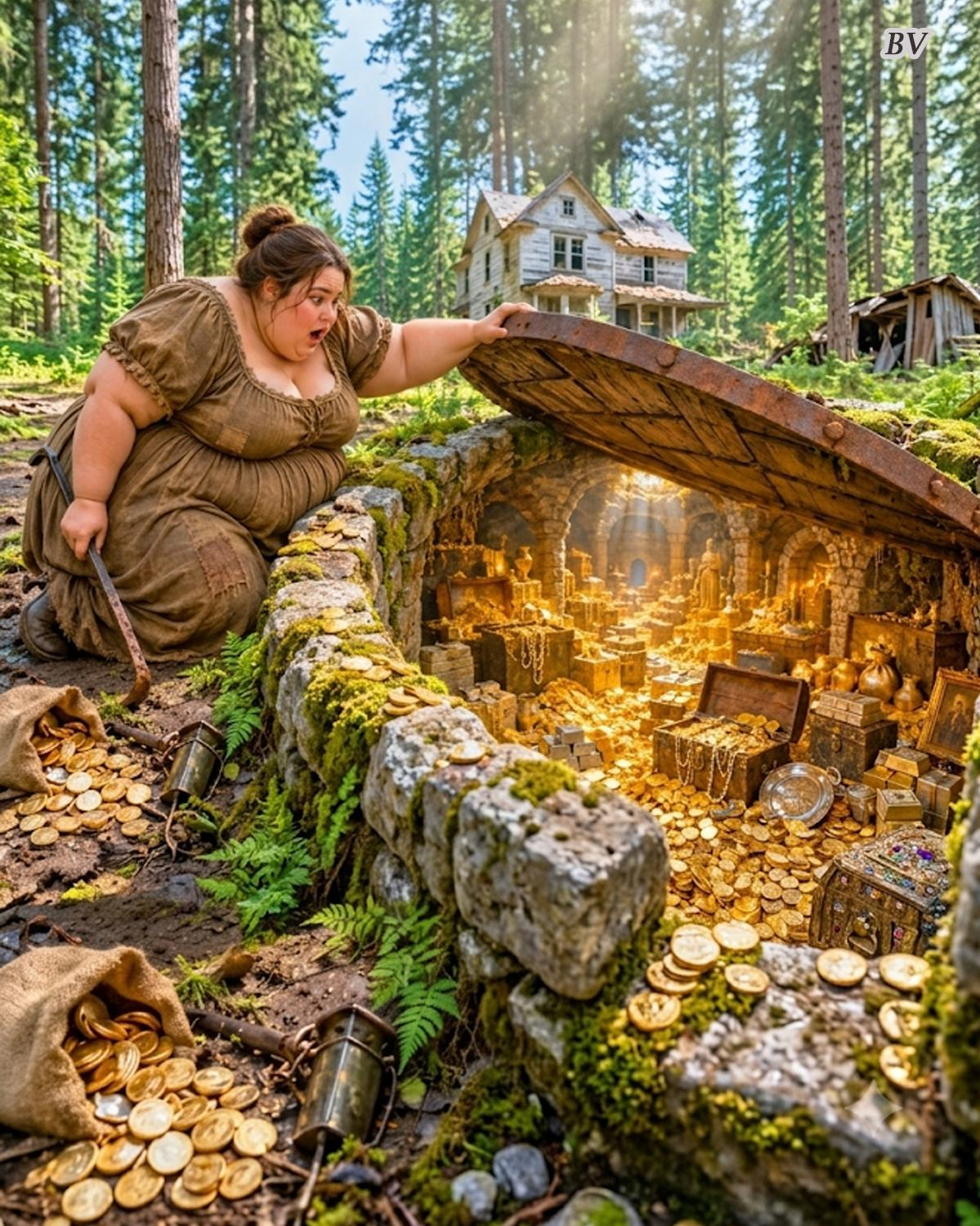
The concealed hatch was opened.
And the chamber was secured.
When I finally descended into it, I understood why my grandfather had insisted that someone accompany me.
It was much larger than the camera had suggested.
The cedar-lined walls were beautifully preserved.
Several wooden crates stood along one side.
The gold coins were arranged in sealed containers.
The silver bars had been carefully wrapped.
The document case rested on a stone shelf.
I found the leather-bound journal exactly where my grandfather had described it.
I held it against my chest.
For a moment, I imagined him standing beside me.
His enormous hands.
His gentle voice.
His familiar smile.
I wished I could tell him that I had found everything.
That I had understood.
That I had finally stopped believing the people who had spent years telling me I wasn't enough.
The next several months changed my life.
I paid the outstanding property taxes.
I hired experienced contractors to repair the farmhouse and stabilize the barn.
The roof was replaced.
The porch steps were rebuilt.
The windows were restored.
The old kitchen stove was repaired and cleaned.
I also invested in proper security and arranged for the property boundaries to be professionally surveyed.
I didn't sell the land.
Not a single acre.
Instead, I established a legal trust to preserve the original family records and protect the farm for future generations.
The gold and silver were independently valued and insured.
A portion was placed into a long-term investment fund.
Another portion was used to restore the property and create a small agricultural business.
I hired local workers.
I purchased equipment.
I planted fruit trees and established a small timber-management program under professional supervision.
Mavis helped me choose the first crops.
Roy oversaw the well restoration.
Samuel supervised the structural repairs.
Buster became the unofficial owner of the front porch.
He was getting older, but he seemed happier than ever.
Every morning, he followed me around the property.
Every evening, he slept beside the kitchen stove.
For the first time in years, I was building something that belonged entirely to me.
And I wasn't doing it to prove anything to anyone.
Blythe visited the farm four months after the investigation began.
She arrived alone.
No expensive SUV.
No Graham.
No Daniel Mercer.
Just my sister, standing beside the gate with a small overnight bag.
I was repairing a flower bed when I saw her.
She looked nervous.
"Hi, Marlo."
I put down the gardening tool.
"Hello."
She glanced toward the farmhouse.
"It looks different."
"It is."
She nodded.
"I've been meaning to come for weeks."
I waited.
She looked down at her hands.
"I know I can't undo what happened."
"No, you can't."
"I was wrong about you."
I looked at her.
She swallowed.
"I spent years thinking you were content with being the person who did everything for everyone else. I thought you didn't want anything for yourself."
I said nothing.
"Then Graham convinced me that the farm was a burden. And I believed him because it was easier than questioning what he wanted."
She looked toward the western trees.
"I should have protected you."
I took a slow breath.
"Yes. You should have."
She nodded.
"I don't expect you to forgive me immediately."
I studied her face.
For years, I had imagined having this conversation.
In those imagined conversations, I always said something sharp.
Something that made her understand exactly how much she had hurt me.
But standing there, looking at my sister, I realized that I didn't need to punish her to prove that I had been wronged.
"Trust takes time," I said.
"I know."
"But if you're willing to be honest, we can start there."
Her eyes filled.
She nodded.
Then she stepped forward and hugged me.
I allowed it.
It wasn't the same relationship we had shared when we were children.
It couldn't be.
But perhaps something better could grow from the truth.
One year after I inherited the farm, we held a small gathering beside the restored barn.
Mavis brought cornbread.
Roy brought a bottle of sparkling cider.
Samuel arrived with his wife.
Several local workers came with their families.
Blythe attended too.
She had moved into a smaller apartment and started working independently as a financial consultant.
She was no longer living beyond her means.
She had begun rebuilding her life without Graham.
I was wearing a simple dark green dress.
My copper-red hair fell loosely around my shoulders.
I stood on the porch and looked across the land.
The farmhouse had been restored.
The barn stood firmly against the mountain backdrop.
The trees were healthy.
The old well had been professionally secured and preserved as part of the property's history.
A small plaque beside the path carried my grandfather's words.
THE LAND IS NOT WORTHLESS. IT HAS NEVER BEEN WORTHLESS.
Buster lay in the sunlight near the steps.
His gray muzzle rested against his paws.
I walked over and knelt beside him.
"Well, old fellow," I whispered. "Looks like we figured it out."
He lifted his head and wagged his tail.
Mavis approached with two cups.
"Coffee?"
"Please."
She handed me one.
Then she looked across the property.
"Hollis would be proud."
I smiled.
"I hope so."
"He would."
We stood together quietly.
Then Blythe joined us.
She looked at the plaque.
"Did you ever think Dad knew how everything would turn out?"
I considered the question.
"I think he knew people would underestimate the farm."
"And you?"
I looked toward the western trees.
"I think he knew I wouldn't give up on it."
Blythe smiled faintly.
For a moment, neither of us spoke.
Then she said, "I'm glad you kept it."
I looked at her.
"So am I."
That evening, after everyone had left, I returned to the farmhouse.
I went into the study and opened the old wooden box.
The keys were still there.
The maps.
The photographs.
My grandfather's letters.
And my father's final note.
I placed the two brass keys beside one another.
For years, I had believed that my greatest responsibility was making sure everyone else was comfortable.
I had worked until I was exhausted.
I had accepted insults because I thought being useful would eventually make people appreciate me.
I had mistaken silence for peace.
But the farm had taught me something different.
I could be kind without being weak.
I could forgive without pretending that nothing had happened.
And I could build a life that didn't depend on anyone else's approval.
I returned the keys to the wooden box.
Then I opened my grandfather's journal to the final page.
There was one last handwritten message I had not noticed before.
To the person who found this:
If you have reached the end of this book, then you have already discovered what I wanted you to know.
Wealth is not the gold you hide.
It is the people you protect, the truth you preserve, and the life you choose to build.
I smiled.
Outside, the last light of the day settled across the Douglas firs.
The farm was no longer abandoned.
The family business was no longer controlled by someone who had tried to steal its history.
And the woman everyone had underestimated had finally found a place where she belonged.
I closed the journal.
Then I walked to the kitchen, where Buster was waiting beside the stove.
Tomorrow, there would be work to do.
There would be crops to tend, repairs to finish, and people to pay.
But for once, I wasn't afraid of what came next.
I had the land.
I had the truth.
I had a future that belonged to me.
And most importantly, I finally understood what my grandfather had meant when he told me to dig deeper.
The greatest fortune hadn't been buried beneath the well.
It had been waiting for me to discover my own worth.






Comments 0