A woman slammed her palm against the attorney's desk.
"You're giving her the farm? You've got to be joking!"
My sister, Blythe, was staring at the inheritance papers as if the attorney had just announced that I had inherited the White House.
Graham Sloan, her husband, sat beside her, slowly turning a silver cuff link between his fingers.
Then he looked directly at me.
"Marlo, that land is worth less than the furniture in this office."
I looked down at the deed.
Three words had been written beneath my grandfather's name on an old envelope sitting beside it.
GIVE IT TO MARLO.
For some reason, I felt that those words mattered more than anything my family had said that morning.
I was twenty-five years old when I learned that losing a father could reveal just how little a family thought of you.
My father's will was being read in a Portland law office on a Tuesday morning. I had arrived twenty minutes early, wearing the only navy-blue wool dress I considered appropriate for such an occasion.
It was slightly tight around my shoulders and hips.
I had considered buying something new, but I had spent the previous seven years saving money wherever I could. My father's medical bills had consumed most of what I earned, and I couldn't justify spending hundreds of dollars on a dress I would probably never wear again.
Besides, I had never been particularly interested in impressing people.
I had spent most of my life being the girl people overlooked.
I was broad-shouldered, full-figured, and had copper-red hair that refused to behave no matter how carefully I brushed it. My sister, on the other hand, had always seemed to know exactly how to enter a room and make everyone notice.
Blythe was three years older than me.
She had inherited our mother's delicate features, a slender figure, and a natural talent for making ordinary things look expensive.
I had inherited our father's sturdy build and his habit of working until everyone else had gone home.
For seven years, I had worked in the Whitcomb family hardware and timber business.
I opened the first store at six every morning. I checked deliveries, handled customer complaints, negotiated supply orders, and made sure the employees received their paychecks.
When one of the three stores needed extra help, I went there.
When a truck broke down, I found a mechanic.
When a supplier threatened to cancel a contract, I spent hours negotiating a solution.
And when my father became ill, I became his caregiver.
I drove him to appointments before sunrise. I organized his medications, prepared his meals, and stayed awake through nights when his breathing became difficult.
Blythe rarely visited.
She was busy with social events, charity dinners, and weekends away with Graham.
I never complained.
I believed that families were supposed to help one another.
I also believed that my father knew how much I had sacrificed.
That morning, I was about to discover how complicated inheritance could become when money entered the room.
The office door opened eleven minutes after the scheduled time.
Blythe walked in wearing an expensive camel-colored coat. Her blonde hair was perfectly styled, and her heels clicked sharply against the marble floor.
Graham followed her.
He was tall, athletic, and impeccably dressed in a charcoal suit. His dark hair was neatly combed, and his silver cuff links caught the light whenever he moved his hands.
He had the confident manner of a man who rarely heard the word no.
"Sorry we're late," Blythe said, without sounding particularly sorry.
She kissed the attorney on the cheek and took the chair opposite me.
She didn't greet me.
Graham glanced at my dress.
"Still shopping at discount stores, Marlo?"
I ignored him.
Mr. Aldridge, the attorney who had handled my father's legal affairs for nearly twenty years, adjusted his glasses.
"Now that everyone is present, we can begin."
He placed a thick folder on the desk.
My father's full name was printed across the front.
EVERETT WHITCOMB.
Seeing it made my throat tighten.
I had imagined this moment several times during the weeks following his death. In every version, I had somehow managed to remain composed.
But when the attorney opened the folder, I found myself staring at my father's signature.
It was familiar.
The same signature he had used on birthday cards, business contracts, and the notes he left on the kitchen counter.
Mr. Aldridge began reading.
Blythe inherited the family home on Burnside Avenue.
She also received ownership of all three hardware stores, the timber supply contracts, the commercial accounts, the savings, bonds, furniture, silverware, and several investment properties.
The attorney read through the list carefully.
It was a substantial inheritance.
I wasn't surprised.
Blythe had always been the daughter people expected to receive the family fortune.
Then Mr. Aldridge turned a page.
"To my younger daughter, Marlo Whitcomb, I leave the following property."
I sat a little straighter.
"Fifty acres of mountain land near Milbrook, Idaho, including the deteriorating farmhouse, the old barn, and all existing structures and fixtures on the property."
Silence followed.
I blinked.
That was it?
No savings account.
No business shares.
No explanation.
Just a farm.
A neglected piece of mountain property that I had visited only twice as a child.
Blythe looked at me.
For a second, she appeared confused.
Then her mouth curled into a smile.
A small laugh escaped her.
"Oh, Dad."
She shook her head.
Graham leaned back in his chair.
"A farm?"
He looked toward the attorney.
"Is that everything?"
"That is the complete property allocation specified in the will," Mr. Aldridge replied.
Graham let out a low chuckle.
"Well, congratulations, Marlo. You've inherited fifty acres of weeds."
Blythe covered her mouth.
"I'm sorry," she said, although her eyes were laughing. "I just didn't expect this."
I kept looking at the attorney.
"Is there anything else?"
Mr. Aldridge hesitated.
"There are outstanding property taxes."
"How much?"
He checked a document.
"Thirty-eight thousand, three hundred and twenty-two dollars."
My stomach tightened.
"How long do I have to pay?"
"The county has scheduled a foreclosure auction. You have twenty-one days to settle the outstanding balance or make an arrangement acceptable to the county."
Graham immediately leaned forward.
"That changes things."
I turned toward him.
"What changes things?"
He exchanged a glance with Blythe.
"We've discussed this possibility," he explained. "My wife and I would be willing to help you."
I waited.
"We'll give you fifteen thousand dollars for the deed. You can walk away with some money, avoid the taxes, and start over."
I stared at him.
"You just said the property was worthless."
"That's an exaggeration."
"Then why do you want it?"
His smile remained, but something in his eyes changed.
Blythe interrupted.
"Marlo, don't make this difficult. You don't have the money to pay those taxes. You don't even know how to manage fifty acres of land."
"I can learn."
"Learn what? Farming?"
She glanced at Graham.
He shrugged.
"There's no shame in accepting a reasonable offer. The land has been neglected for fourteen years. The buildings are falling apart. The soil probably isn't worth cultivating."
I felt the familiar heat rising into my face.
There it was again.
My condition.
My appearance.
My supposed limitations.
People had spent years explaining to me what I couldn't do.
I was too large to work outdoors.
Too ordinary to manage a business.
Too inexperienced to make important decisions.
Too quiet to be taken seriously.
I had heard every version of the same insult.
But I had also spent seven years keeping three profitable businesses operating while the people who mocked me enjoyed the money those businesses produced.
I looked at Graham.
"Why are you so interested in helping me get rid of it?"
His fingers stopped moving.
For a moment, the office was completely silent.
Then he smiled again.
"Because I'm trying to save you from making a mistake."
I turned toward my sister.
"Did Dad ever tell you why he left me that property?"
Blythe looked uncomfortable.
"No."
"Did he tell you anything about it?"
"No, Marlo. It was just an old farm."
I looked back at the attorney.
"Are there any restrictions on selling it?"
"None beyond the outstanding tax obligations and ordinary transfer requirements."
"Then I accept the inheritance."
Blythe's smile disappeared.
Graham sat forward.
"Think carefully."
"I have."
"You have twenty-one days."
"I heard you."
"You'll lose the property."
"Then I'll lose it after trying."
Mr. Aldridge quietly slid the deed toward me.
I picked up the pen.
My hand was steady when I signed.
Blythe watched in disbelief.
Graham's expression became unreadable.
I placed the pen down.
"I'll take the farm."
Neither of them congratulated me.
As I gathered my handbag, Mr. Aldridge asked if he could speak with me privately.
"Just a moment, Miss Whitcomb."
Graham stood.
"We'll wait outside."
Blythe followed him, although she looked back at me twice before the door closed.
The attorney waited until their footsteps disappeared.
Then he opened a drawer and removed a cream-colored envelope.
It was old, slightly yellowed around the edges, and sealed with dark red wax.
My name was written across the front.
Not my father's handwriting.
My grandfather's.
HOLLIS WHITCOMB.
I recognized it immediately.
He had died when I was a child, but I remembered his enormous hands, his gentle voice, and the way he used to sit with me on the porch whenever the other children made fun of me.
He had never told me to change.
He had simply told me that I was worth more than other people's opinions.
Mr. Aldridge placed the envelope in front of me.
"Your grandfather left this with me many years ago. He gave very specific instructions."
I touched the handwriting.
"What instructions?"
"He said it was to be delivered only to the granddaughter who accepted the farm without selling it."
I looked up.
"How long have you had this?"
"More than twenty years."
My heartbeat quickened.
"Why didn't you give it to my father?"
"Your grandfather specifically instructed me not to."
I turned the envelope over.
There was another line written beneath my name.
WHEN SHE FINALLY COMES HOME.
My throat tightened.
I carefully placed the envelope inside my handbag.
"Thank you, Mr. Aldridge."
He nodded.
"There's one more thing."
I stopped.
"Your grandfather once told me that the property was not what people believed it to be."
"What did he mean?"
The attorney looked toward the closed office door.
"I don't know. But I remember his exact words."
He paused.
"He said that one day, the right person would understand why he had kept it."
I drove away from the office with the deed on the passenger seat and the envelope tucked inside my handbag.
I didn't open it.
Not yet.
I needed time to think.
The drive to Idaho took two days.
I stopped at inexpensive motels, bought groceries at small roadside stores, and called the county office to confirm the amount owed on the property.
Every time I calculated the numbers, the situation looked worse.
Thirty-eight thousand dollars in taxes.
Almost no savings.
A farmhouse requiring major repairs.
A barn that might collapse.
No working equipment.
No livestock.
And no immediate source of income.
I had less than three weeks to save the inheritance.
On the second afternoon, I finally reached the property.
I parked beside the old wooden gate and stepped out.
For several seconds, I couldn't move.
The farmhouse stood in the distance.
Its white paint had peeled away in large patches. The eastern roof sagged, and several windows were covered with old boards.
The barn was worse.
Part of its western wall had collapsed, exposing the dark interior.
Tall Douglas firs surrounded the land.
Beyond them, mountains rose against the distant sky.
The property looked abandoned.
But it didn't look ugly.
It looked like something that had been waiting.
I walked toward the porch.
A golden-colored dog was sleeping beside the steps.
His muzzle had turned gray, and one ear drooped slightly.
When he noticed me, he lifted his head.
I stopped.
"Hello, there."
The dog slowly stood.
He approached without barking and pressed his muzzle against my knee.
I crouched and gently rubbed his head.
"Are you living here?"
His tail moved once.
I laughed quietly.
"Well, I suppose we're both homeless now."
He followed me onto the porch.
I checked the front door.
It was unlocked.
Inside, dust covered the furniture, but much of the house remained intact.
An old cast-iron stove stood in the kitchen.
There were faded photographs on the walls.
One showed my grandfather standing beside a younger version of my father.
Another showed the farm before the buildings had deteriorated.
I stared at that photograph for a long time.
My grandfather looked directly into the camera.
His expression was serious.
Behind him, several Douglas fir trees stood near what appeared to be a circular stone structure.
I couldn't identify it.
I turned the photograph over.
Nothing was written on the back.
The dog followed me into the kitchen and lay down beside the stove.
I decided to call him Buster.
It seemed like the sort of name my grandfather would have liked.
That evening, I sat at the kitchen table and finally examined the cream-colored envelope.
The wax seal was still intact.
I ran my thumb across my name.
Then I noticed something unusual.
The envelope had been reinforced with a second layer of paper.
Something thin and rectangular was hidden inside.
I carefully opened the seal.
A folded letter slid into my hand.
The handwriting was unmistakable.
My grandfather had written it.
But before I could unfold the paper, my phone began vibrating.
Blythe was calling.
I almost ignored it.
Then I answered.
"Hello?"
Her voice sounded different from the one I had heard in the attorney's office.
She sounded nervous.
"Marlo, where are you?"
"At the farm."
A pause.
"Have you opened the envelope?"
My fingers tightened around the letter.
I looked toward the dark window.
"Why are you asking?"
Blythe took a breath.
"Because Graham and I need to talk to you about something."
I waited.
Then she said something that made my stomach turn.
"We want to change our offer. We'll pay the entire tax debt and give you another ten thousand dollars."
I stared at the letter.
Three days earlier, they had laughed at my inheritance.
Now they wanted to pay more than the property was worth.
"Why?" I asked.
There was a long silence.
Then I heard Graham's voice in the background.
He was speaking quietly, but I recognized every word.
"Ask her whether she's found the well."
My blood went cold.
I slowly looked toward the photograph on the kitchen wall.
The circular stone structure.
The Douglas fir trees.
The hidden letter.
My grandfather's mysterious instructions.
Blythe was still speaking.
"Marlo? Are you there?"
I didn't answer immediately.
Because for the first time, I understood something.
My sister and her husband hadn't suddenly become generous.
They were afraid I might discover something.
And Graham had just told me exactly where to look.
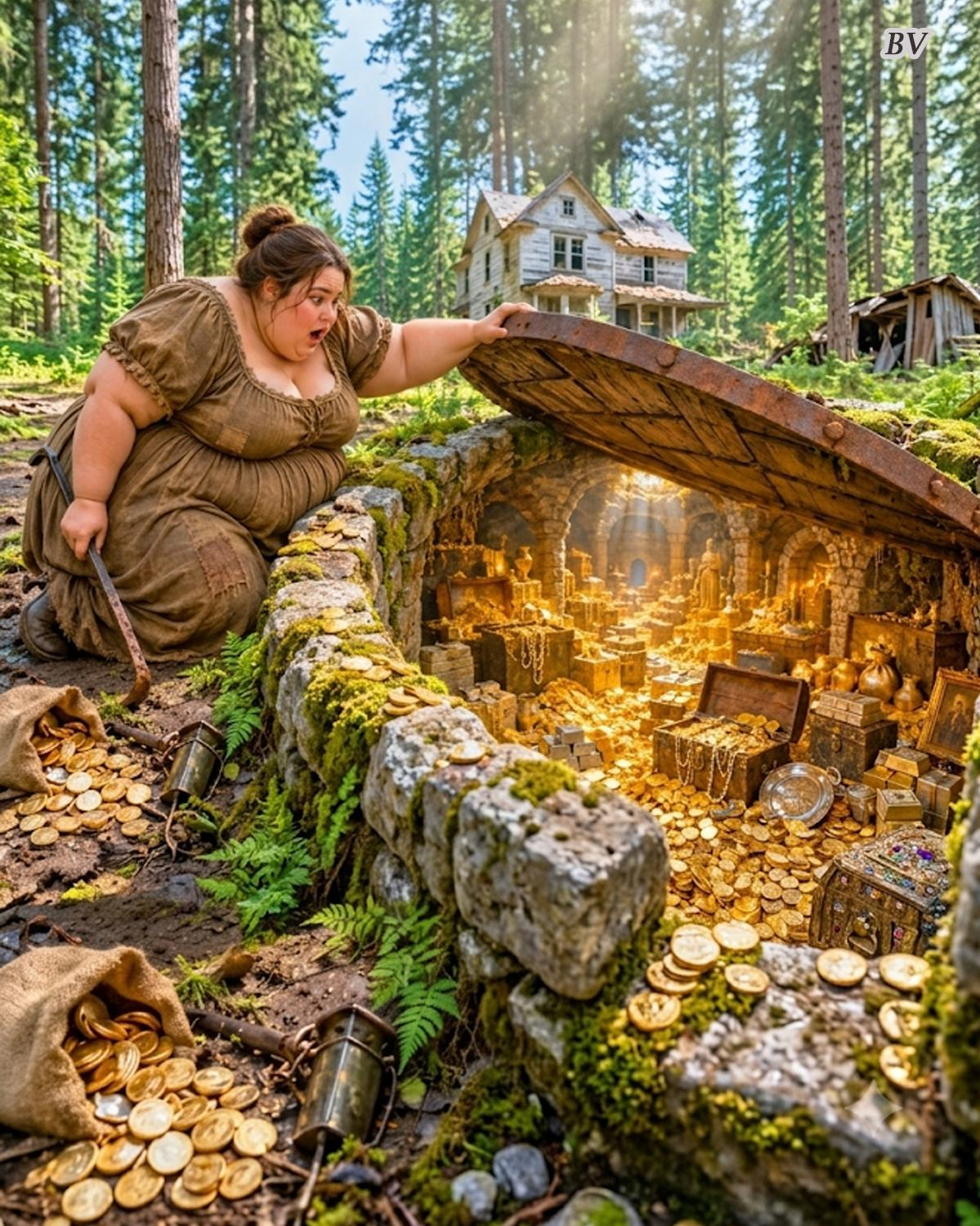
THE OLD WELL.
Chapter 1 đã hoàn thành. Câu chuyện được giữ nguyên các sự kiện cốt lõi, kể theo ngôi thứ nhất từ góc nhìn của Marlo, với phong cách American family drama, bí mật thừa kế và cliffhanger cuối chương.
Do giới hạn độ dài mỗi lượt trả lời, mình sẽ tiếp tục từ Chapter 2: Fifty Acres of Forgotten Secrets, không viết lại Chapter 1, giữ nguyên tên nhân vật, mạch truyện và diễn biến để bạn dễ ghép thành một truyện hoàn chỉnh.






Comments 0