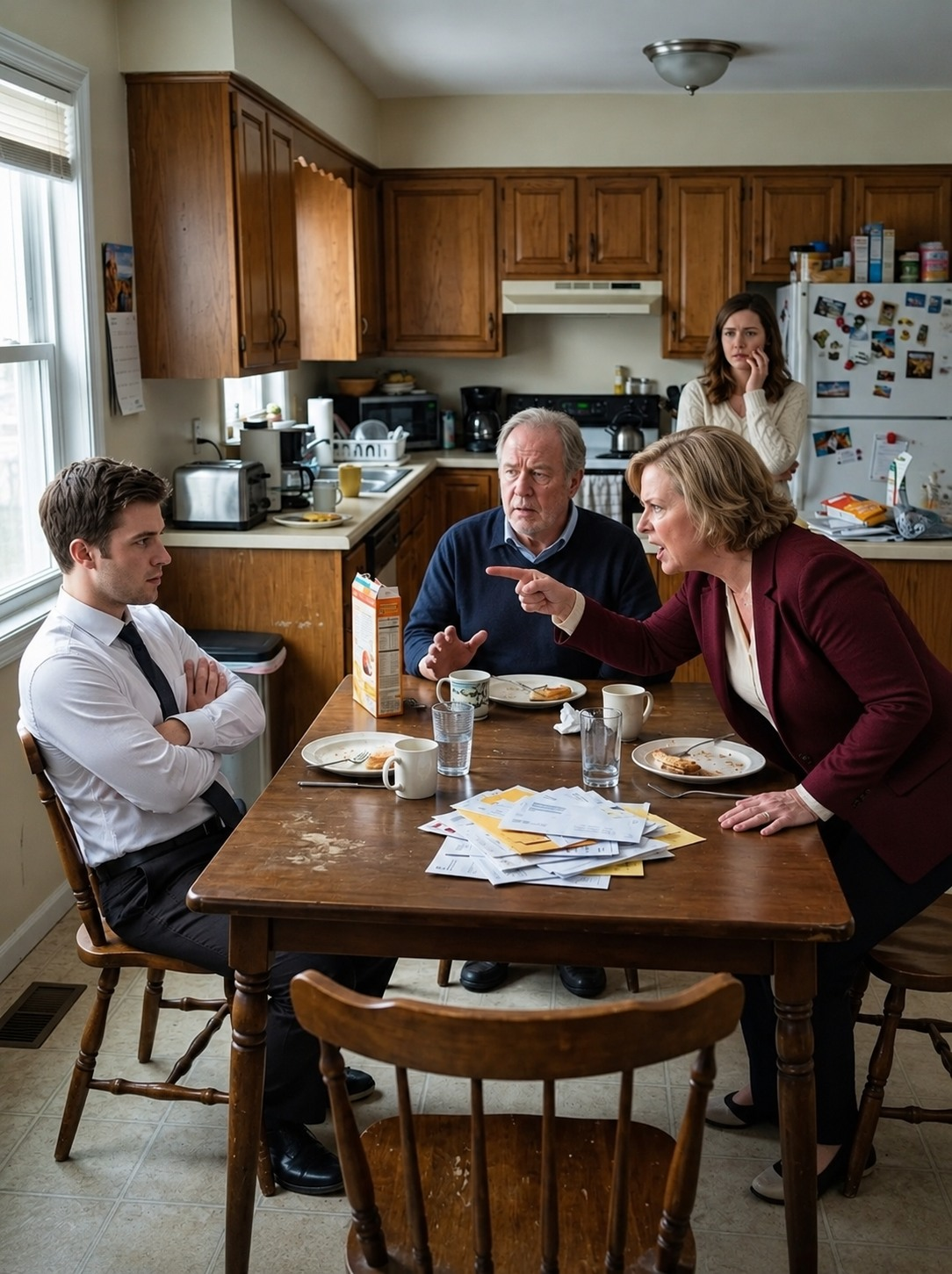
The number on my screen was $125,000.
I read it once.
Then again.
Then I looked at the signature beneath it.
Daniel Mercer.
My name.
My supposed agreement.
My financial responsibility.
Except I had never seen this document before.
I had never signed it.
And until five minutes earlier, I hadn't even known it existed.
My phone was still in my hand when another message arrived from the unknown sender.
Mr. Mercer, the person who submitted this document is requesting payment tomorrow morning.
I stared at the words.
Payment.
Tomorrow morning.
I looked back at the agreement.
It was four pages long, filled with language about financial obligations, guarantees, repayment conditions, and authorization.
At the top of the first page was the name of a company I didn't recognize.
Summit Ridge Capital Partners.
Below it was a business address in Denver.
The document described a private investment arrangement involving a proposed retail distribution business.
The supposed purpose was to provide working capital.
The guaranteed amount was $125,000.
And according to the document, I had agreed to become personally responsible for the obligation if the primary participants failed to meet certain conditions.
I felt my stomach tighten.
This wasn't a car loan.
This wasn't my parents' home equity line.
This was something else entirely.
Something much larger.
And somebody had put my name on it.
I enlarged the signature.
The letters were close enough to mine that a stranger might not notice anything unusual.
But I noticed.
The capital D was too narrow.
The M was too rounded.
And the final r ended with a long stroke I never used.
Someone had tried to imitate my handwriting.
I knew it immediately.
But knowing something and proving it were two different things.
I saved the attachment.
Then I saved the email.
Then I took screenshots of the message and the sender information.
I didn't reply.
Not yet.
I had no idea who was contacting me.
I didn't know whether the document was authentic.
I didn't know whether Summit Ridge Capital Partners was a legitimate company, a questionable investment operation, or simply a name someone had placed on a fabricated agreement.
And I wasn't going to make the mistake of trusting an unknown sender just because the information frightened me.
I opened a new document.
At the top, I typed:
Disputed Personal Guarantee — $125,000.
Then I wrote the time.
The sender.
The attachment name.
The exact wording of the message.
And one sentence that mattered more than anything else.
I have never authorized or signed this agreement.
I didn't sleep much that night.
At 1:20 a.m., I was still sitting at my kitchen table.
At 2:45, I was reviewing my credit reports.
At 3:30, I was searching through old financial records, trying to determine whether I had ever provided my signature to anyone connected with the supposed investment.
The answer was no.
Not knowingly.
I had never heard of Summit Ridge Capital Partners.
I had never discussed a $125,000 business guarantee.
And I had certainly never agreed to place my personal finances behind Britney's latest business idea.
But I couldn't stop thinking about the documents stored in my parents' basement.
Old employment records.
Tax paperwork.
Forms from my early military career.
Copies of identification.
Documents containing signatures.
Things I had left behind because I trusted the people living in that house.
I remembered my mother's admission.
Britney was going through some old boxes in the basement.
At the time, that had seemed like a possible explanation for the employment information submitted to the dealership.
Now it looked more serious.
If someone had copied my signature from an old document, how many times had they used it?
The car loan?
The investment agreement?
Something else?
I stood and walked to the kitchen sink.
I filled a glass with water.
Then I looked at my reflection in the dark window.
The burn on my cheek had begun to fade.
The skin was still tender, but the redness was less noticeable.
I should have been relieved.
Instead, I felt as though the physical injury had become the smallest part of what happened at my parents' breakfast table.
Britney had thrown coffee because I refused to give her my credit card.
At least, that was what I had believed.
Now I wondered whether she had been angry because my refusal threatened something she'd already arranged.
Something involving much more than a vehicle.
At 7:05 a.m., I called my bank.
I didn't give the representative the unknown sender's contact information or assume the agreement was valid.
I explained that I had received a document purporting to obligate me to a substantial private financial guarantee that I had never authorized.
The representative listened.
Then she transferred me to a specialist.
His name was Andrew.
He asked whether I had noticed unauthorized transactions.
"No."
"Any unfamiliar accounts?"
"Not on my current reports."
"Has anyone contacted you demanding payment?"
"An unknown sender claims someone is requesting payment tomorrow morning."
He paused.
"Have you verified the sender?"
"No. That's one reason I'm calling."
He nodded audibly.
"You're right to be cautious."
We reviewed the security measures already in place.
My passwords had been changed.
My credit was frozen.
My accounts had additional authentication.
I had preserved the documents.
Andrew explained that a private guarantee might not appear immediately on a consumer credit report, particularly if it was not a conventional consumer credit account.
That was not reassuring.
But it was useful.
"Should I pay anything to prevent a problem?" I asked.
"No," he said. "Don't send money based on an unsolicited message. Verify the organization independently and consider speaking with an attorney about the disputed document."
I thanked him.
Then I made another call.
This time, to a legal assistance office.
As an active-duty service member, I had access to certain legal assistance resources, though the scope of representation depended on the issue.
I explained the situation to the receptionist.
She scheduled a consultation.
It wasn't immediate.
But it was a start.
I wrote the appointment in my calendar.
Then I went to work.
Major Bennett noticed something was wrong before I said a word.
He looked up as I entered his office.
"Mercer."
"Sir."
"You look like you slept in your car."
"Not quite, sir."
He studied me.
"Family situation?"
"Yes, sir."
"Getting worse?"
I hesitated.
Then nodded.
"Potentially."
He gestured toward the chair.
I sat.
I didn't tell him every emotional detail.
He didn't need to know about my mother's tears or Britney's insults.
But I explained that I had discovered a disputed financial guarantee bearing my name and an apparent imitation of my signature.
His expression changed.
"How much?"
"One hundred twenty-five thousand dollars."
He sat back.
For several seconds, he said nothing.
Then he asked, "Have you reported it through the appropriate channels?"
"I'm working on that now, sir."
"Good."
He looked at me carefully.
"Are you certain you didn't sign anything connected to it?"
"Absolutely."
"Then keep your statements factual and your documentation organized."
"Yes, sir."
He leaned forward.
"And don't let anybody pressure you into acknowledging a debt you don't recognize just to make the problem go away."
I nodded.
That was exactly what I needed to hear.
Because I knew what my family would ask.
They wouldn't necessarily say it directly.
They might call it helping.
Or protecting the family.
Or preventing embarrassment.
But eventually, someone would suggest that I take responsibility for the agreement because I was the only person financially capable of doing so.
I could almost hear my mother saying it.
Just until everything gets straightened out.
I had heard those words before.
Too many times.
At 10:18 a.m., my father called.
I stepped into a quiet room before answering.
"Dad."
"Daniel."
His voice sounded exhausted.
"Did you get an email about the investment?"
I closed my eyes.
"Yes."
There was a long silence.
Then he whispered, "I'm sorry."
I sat down.
"For what?"
He didn't answer.
"Dad, I need you to be specific."
He took a shaky breath.
"Your mother and I didn't know they were using your name."
I stared at the wall.
"Who is they?"
Another pause.
"Britney and the people she was working with."
I felt my pulse quicken.
"What people?"
"The investment company."
"Summit Ridge Capital Partners?"
"Yes."
I looked down at my notes.
"How long have you known about them?"
He hesitated.
"Several months."
I closed my eyes.
Several months.
My parents had been involved with this company for months.
They had borrowed against their home.
They had given Britney twenty-six thousand dollars.
Then another five thousand.
And somehow, I was only learning the full story now.
"Dad, did you sign any agreements?"
"Some paperwork."
"What paperwork?"
"I don't remember everything."
I rubbed my forehead.
"Did you read it?"
He was silent.
That was answer enough.
I took a breath.
"Did Mom sign anything?"
"Yes."
"Did Britney?"
"Yes."
"And did anyone sign my name?"
He didn't answer.
"Dad."
His voice broke.
"Daniel, I swear I didn't."
I closed my eyes.
"I didn't ask whether you did."
He began breathing heavily.
"I don't know who signed it."
"Then why did you say you didn't know they were using my name?"
He was silent.
I waited.
Finally, he whispered, "Because your mother found out yesterday."
I sat upright.
"What?"
"She found a copy of the agreement."
"Where?"
"In Britney's things."
I stared at the wall.
"How?"
He hesitated.
"Britney left a folder on the kitchen table. Your mother looked inside."
I closed my eyes.
The kitchen table.
The same table where Britney had thrown coffee in my face.
The same table where my parents had sat silently while she demanded access to my credit.
Now another folder had appeared there.
And inside it was an agreement bearing my name.
"Dad, what else was in the folder?"
He didn't answer immediately.
Then he said, "There were receipts."
"What receipts?"
"Payments."
"To whom?"
"The investment company."
I rubbed my forehead.
"How much?"
He hesitated.
"More than we told you."
I stopped moving.
"How much more?"
He took a shaky breath.
"Daniel, please don't get angry."
I closed my eyes.
That sentence again.
As though anger was the problem.
As though the numbers would become less serious if I promised not to react.
"Dad, tell me."
He whispered, "Another twelve thousand."
I stared at the wall.
Twenty-six thousand.
Five thousand.
Another twelve thousand.
Forty-three thousand dollars.
And that was only what he had admitted.
I looked at the HELOC statements.
The transfers.
The withdrawals.
The missing explanations.
My stomach tightened.
"Dad, where did the twelve thousand come from?"
He was silent.
Then he said, "Your mother took money out of her retirement account."
I closed my eyes.
For a moment, I couldn't speak.
My mother had worked for decades.
She had saved carefully.
She had talked about that retirement account with pride.
And now she had withdrawn money to support Britney's investment.
An investment that apparently required additional payments to release earlier funds.
I felt sick.
"Dad, did anyone independently verify this company?"
He sighed.
"Britney said she did."
"Did you?"
"No."
"Did Mom?"
"No."
I rubbed my forehead.
"Then you need to stop sending money immediately."
"We have."
"Are you sure?"
"Yes."
I waited.
Then I asked, "Dad, is anyone demanding another payment?"
He was silent.
"Dad?"
Finally, he whispered, "They said the distribution would be released if we completed the guarantee."
My stomach dropped.
"What guarantee?"
"The one with your name."
I stared at the wall.
There it was.
The connection.
The $125,000 agreement wasn't simply an unrelated document.
It was apparently being used to support the supposed release of investment funds.
And someone had placed my name on it.
Without asking.
Without permission.
Without even telling me.
I took a slow breath.
"Dad, listen carefully. I did not sign that agreement. I will not accept responsibility for it. And nobody should send another dollar based on a promise that the money will be released."
He began crying.
Quietly.
I had never heard my father cry like that.
Not when his own father died.
Not when he retired.
Not when we buried the family dog.
But now, on the phone, he sounded like a man who had finally realized how badly things had gone wrong.
"Daniel," he whispered, "I think we've lost everything."
I closed my eyes.
For a moment, I wanted to tell him it would be okay.
That I would fix it.
That I would find the money.
That I would make the calls.
That I would protect the house.
But I couldn't promise any of those things.
So I told him the truth.
"Dad, I don't know what can be recovered. But sending more money isn't the answer."
He cried harder.
I waited.
Then I said, "You need to gather every document and speak with the bank about the transfers. You also need to report the suspected investment fraud through the appropriate channels."
He sniffed.
"Will you help us?"
I looked down at my notes.
"I'll help you understand the process. But I won't take responsibility for debts I didn't authorize."
There was a long silence.
Then he whispered, "Okay."
That afternoon, I received a call from the legal assistance office.
An attorney named Captain Laura Mitchell had reviewed my appointment request and wanted to clarify the situation before our meeting.
I explained the disputed guarantee.
The unknown company.
The apparent forged signature.
The family involvement.
The financing inquiry.
The documents.
She listened without interrupting.
Then she asked, "Have you acknowledged the guarantee to anyone?"
"No."
"Have you made any payments?"
"No."
"Have you signed anything connected to the company?"
"No."
"Good."
She paused.
"Do you know whether the company is legitimate?"
"Not yet."
"Then be careful about communicating with anyone claiming to represent it. Preserve the original messages and verify contacts independently."
I nodded.
"Understood."
She explained that the legal assistance office could help me understand my options and identify appropriate referrals, though representation in a complex private financial dispute might require outside counsel.
I understood.
I wasn't expecting someone to solve everything for me.
I wanted to make informed decisions.
Before ending the call, she said something that stayed with me.
"Mr. Mercer, if your signature was used without authorization, that's a serious matter. But don't let the emotional relationship between the parties interfere with documenting the facts."
I looked at the photograph of my parents' house on my phone.
"I won't."
At 4:32 p.m., Britney sent me a message.
Dad says you're making him report everything.
I stared at it.
Then another appeared.
Do you have any idea what happens if he does that?
I didn't answer.
A third message arrived.
You think you're protecting yourself, but you're destroying all of us.
I saved the messages.
Then I typed:
I did not authorize the use of my name or signature. I will not accept responsibility for the $125,000 agreement. Any legitimate financial concerns need to be addressed through the appropriate institutions.
I read it twice.
Then sent it.
Britney responded almost immediately.
You don't understand how this works.
I stared at the screen.
Then another message appeared.
The money is already approved.
I frowned.
Approved?
What money?
I typed:
What money?
She replied:
The distribution.
I sat upright.
Who approved it?
Three dots appeared.
Then disappeared.
Then another message arrived.
It doesn't matter. We just need one final confirmation.
I felt my stomach tighten.
From whom?
She didn't answer.
I waited.
Then she sent:
You.
I stared at the word.
One final confirmation.
From me.
I closed my eyes.
The entire situation was becoming painfully clear.
They needed me to acknowledge the agreement.
To confirm the signature.
To accept responsibility.
And once I did, someone would claim the money could be released.
I didn't know whether the promised distribution existed.
I didn't know whether Summit Ridge Capital Partners was a legitimate business being misrepresented by someone else or part of a larger scheme.
But I knew one thing.
I wasn't going to validate a document I had never signed.
I typed:
I will not confirm or authorize a false agreement.
Britney called immediately.
I let it ring.
Then she called again.
And again.
Finally, I answered.
"What?"
She was breathing hard.
"Daniel, you need to stop."
"Stop what?"
"Making everything worse."
I closed my eyes.
"Britney, I didn't sign that agreement."
"I know."
The words came out so quickly that I almost missed them.
I sat upright.
"What?"
She went silent.
"Britney, what did you just say?"
"I said I know you didn't sign it."
My stomach tightened.
"Then why is my signature on it?"
She didn't answer.
I waited.
Then she said, "It was just supposed to get us through the approval process."
I stared at the wall.
"Us?"
"Mom and Dad."
"And you?"
She sighed.
"Yes, me too."
I closed my eyes.
"Who signed my name?"
Silence.
"Britney."
She began crying.
Not loudly.
Just enough to make the conversation difficult.
I waited.
Then she whispered, "You don't understand what they told us."
"Who?"
"The people at Summit Ridge."
"What did they tell you?"
"That the money was already there."
I frowned.
"What money?"
"The investment returns."
I rubbed my forehead.
"Britney, did you ever actually receive any returns?"
She didn't answer.
"Did you?"
"No."
I closed my eyes.
"Then why did you keep sending them money?"
"Because they said we had to complete the verification!"
Her voice cracked.
"They said the account was flagged. They said the distribution couldn't be released until we proved we had enough financial backing."
I stared at the wall.
"And you used my name."
She began crying harder.
"I didn't know what else to do."
I took a slow breath.
"Britney, who signed the guarantee?"
She didn't answer.
"Was it you?"
Silence.
Then she whispered, "I didn't do it alone."
I stopped moving.
"What does that mean?"
She sniffed.
"Mom knew."
I closed my eyes.
"Mom knew what?"
"That we needed your information."
"Did she know the signature wasn't mine?"
Britney hesitated.
"I don't know."
I rubbed my forehead.
"Britney, I need the truth."
She sounded angry again.
"Why? So you can report us?"
"So I can understand what happened."
"You'll ruin everything."
I stared at the wall.
"Britney, the agreement is already false. Ignoring it won't make it legitimate."
She began crying again.
Then she said, "Dad was supposed to convince you."
I sat upright.
"Convince me of what?"
"To sign the real paperwork when you came home."
My stomach dropped.
I thought about breakfast.
The credit card demand.
My refusal.
The coffee.
The anger.
The way my parents had seemed desperate to keep me from leaving.
They hadn't simply wanted me to help Britney buy a car.
They had wanted me to agree to something much larger.
Something already in motion.
"Britney," I said slowly, "was the car loan supposed to be part of this?"
She went silent.
I waited.
Then she whispered, "They said the vehicle would help establish the business."
I closed my eyes.
The luxury SUV.
The inflated purchase price.
The financing application.
The forged documents.
The $125,000 guarantee.
It was all connected.
I didn't yet understand every detail.
But I understood enough to know that my sister had been trying to pull me into a financial arrangement without my permission.
And when I refused, she'd lost control.
"Britney, I need you to send me every message you have from Summit Ridge."
She laughed bitterly.
"Why would I do that?"
"Because if you've been deceived, those messages may help establish what happened."
She was silent.
Then she said, "You really think they're scammers?"
"I think there are serious warning signs."
She began breathing faster.
"But they have our money."
"I know."
"They promised we'd get it back."
"I know."
"Then what are we supposed to do?"
I closed my eyes.
"Stop sending money. Preserve the records. Contact the bank and appropriate reporting authorities."
She started crying again.
Then she whispered, "Mom's going to hate me."
I stared at the wall.
For a moment, I almost felt sorry for her.
Then I remembered the coffee.
The demands.
The lies.
The forged signature.
The way she'd tried to make me responsible for a debt I had never agreed to.
"Britney," I said quietly, "you need to tell the truth."
She didn't answer.
Then the call ended.
That evening, I received a message from my mother.
Britney says she told you everything.
I stared at it.
Then I replied:
She told me some things. I need you to be honest about what you knew.
My mother didn't answer immediately.
Then she wrote:
I never wanted your name used.
I closed my eyes.
Did you know it was being used?
A long pause.
Then:
I knew they wanted you to help.
I stared at the screen.
Did you know someone signed my name?
Three dots appeared.
Disappeared.
Appeared again.
Finally:
I didn't know until later.
I sat upright.
When did you find out?
She didn't answer.
I waited.
Then another message arrived.
The morning you came home.
I stopped moving.
The morning I came home.
Before breakfast.
Before Britney asked for my credit card.
Before the coffee.
I looked at the timeline.
Everything was beginning to align.
My mother had known about the false signature before the confrontation.
My father had apparently been expected to convince me to sign legitimate paperwork.
Britney had already submitted documents.
And when I refused to help, the entire plan began to unravel.
I typed:
Mom, why didn't you tell me?
Her reply came several minutes later.
Because Britney said if you found out before we explained, you'd leave.
I stared at the words.
She had been right.
I had left.
But not because they told me the truth.
Because they didn't.
The next morning, I met with Captain Mitchell.
I brought copies of everything.
The credit inquiry.
The dealership documents.
The disputed guarantee.
The messages.
The timeline.
The urgent care record.
The photographs.
She reviewed the materials carefully.
Then she looked at me.
"Mr. Mercer, you've done a good job preserving the records."
"Thank you."
"Have you contacted the company directly?"
"No. Only the unknown sender who contacted me has provided documents, and I haven't replied."
She nodded.
"That's sensible until you verify the source."
We discussed the available options.
Identity theft reporting.
Disputing inaccurate credit information.
Preserving evidence.
Contacting financial institutions through verified channels.
Potentially consulting a civilian attorney with experience in financial fraud and disputed guarantees.
She emphasized that I should avoid signing anything or making statements that could be interpreted as accepting the obligation.
I understood.
Then she asked something I hadn't expected.
"Has anyone threatened you?"
I thought about Britney's messages.
Her anger.
The coffee.
The warnings.
"Not directly," I said.
She looked at the photograph of my cheek.
"Your sister threw hot coffee at you."
"Yes."
"That's a physical act, Mr. Mercer."
I nodded.
"I know."
"Have you considered reporting it?"
I looked down.
"I've documented the injury."
"That's good. But documentation and reporting are different decisions."
I understood.
She wasn't telling me what to do.
She was reminding me that I had options.
I thanked her.
Before I left, she said, "One more thing."
I turned.
"Yes?"
"Don't assume the people contacting your family are who they claim to be."
I frowned.
"What do you mean?"
"Financial scams often involve layers of impersonation. A company name, a professional-looking agreement, or a convincing email doesn't prove legitimacy."
I nodded.
"Understood."
Then I left.
At 2:16 p.m., my father sent me a message.
We went to the bank.
I sat upright.
I replied:
What did they say?
He answered:
They opened a review of the transfers.
I exhaled.
That was good.
Then another message arrived.
They asked for the investment documents.
I typed:
Give them copies. Keep the originals.
He responded:
Okay.
Then:
Your mother is very upset.
I stared at the screen.
Why?
A long pause.
Then:
The bank asked whether anyone else had access to our accounts.
I closed my eyes.
I knew where this was going.
What did you tell them?
He didn't answer immediately.
Then:
We told them Britney helped us with online banking.
I nodded.
That was the truth.
Then another message arrived.
They asked whether she had permission to make transfers.
I sat upright.
Did she?
A long pause.
Then my father replied:
We thought she did.
I stared at the words.
Thought.
Not knew.
Not confirmed.
Thought.
I typed:
Dad, you need to tell the bank exactly what you authorized and what you didn't.
He responded:
I know.
Then another message arrived.
There's something else.
I felt my stomach tighten.
What?
He didn't answer.
Instead, my phone rang.
I answered immediately.
"Dad?"
His voice was shaking.
"Daniel, the bank found something."
I sat upright.
"What?"
He took a shaky breath.
"They said there were transfers we didn't recognize."
My stomach dropped.
"How many?"
"Several."
"How much?"
He hesitated.
"More than we thought."
I closed my eyes.
"Did they tell you where the money went?"
He was silent.
Then he whispered, "Some of it didn't go to Summit Ridge."
I sat completely still.
"Where did it go?"
He took a shaky breath.
"To an account with your sister's name on it."
I stared at the wall.
For several seconds, neither of us spoke.
Then I asked, "How much?"
He didn't answer.
"Dad."
His voice broke.
"Daniel, your mother is sitting right here. She wants to tell you herself."
I heard the phone being passed.
Then my mother's voice.
"Daniel?"
"Mom."
She was crying.
"I'm so sorry."
I closed my eyes.
"Tell me what happened."
She took a shaky breath.
Then whispered, "We found out Britney had been moving money without telling us."
I sat upright.
"How much?"
She began crying harder.
"Mom."
Her voice trembled.
"Nearly eighteen thousand dollars."
I stopped moving.
Eighteen thousand.
On top of everything else.
I looked at the timeline.
The home equity line.
The retirement withdrawal.
The emergency savings.
The investment payments.
The disputed guarantee.
And now another eighteen thousand dollars in transfers my parents said they hadn't authorized.
I took a slow breath.
"Mom, you need to preserve the bank's findings and follow their instructions."
She sniffed.
"I know."
"Don't confront Britney until you've spoken with the bank about how to protect the accounts."
She was silent.
Then she whispered, "It's too late."
My stomach tightened.
"What do you mean?"
"She knows."
I sat upright.
"How?"
My mother began crying again.
"She was with us at the bank."
I closed my eyes.
"Mom, why was she there?"
"She said she wanted to help explain everything."
I stared at the wall.
Of course she did.
Britney wanted to be present when the bank asked questions.
She wanted to control the explanation.
And now the bank had apparently identified transfers she couldn't explain.
"What happened?" I asked.
My mother took a shaky breath.
"She got angry."
I closed my eyes.
"Did she leave?"
"Yes."
"Where did she go?"
"I don't know."
Then my mother whispered something that made my stomach drop.
"Daniel, she took the folder."
I sat upright.
"What folder?"
"The one with all the investment paperwork."
I closed my eyes.
"Mom, do you have copies?"
"Some."
"Did she take the originals?"
"I think so."
I rubbed my forehead.
"Then tell the bank immediately. Preserve whatever copies you have."
She began crying again.
Then said, "Daniel, I'm scared."
I looked at the wall.
"Of what?"
She hesitated.
Then whispered, "Britney said if we kept talking to the bank, she'd make sure we all went down together."
I stopped moving.
"What exactly did she say?"
My mother repeated it.
Word for word.
I wrote it down.
Then I told her to preserve any messages and avoid further arguments.
She agreed.
We ended the call.
I sat at my desk for a long time.
The situation had changed.
Until now, I had been dealing with a disputed financing application and a suspicious investment agreement.
Now my parents were reporting transfers they hadn't authorized.
Britney had allegedly taken original documents.
And she'd made a statement that sounded like a threat.
I opened my timeline.
Added the new information.
Then I reviewed the unknown sender's email again.
The one containing the $125,000 guarantee.
I had been so focused on the document that I hadn't paid enough attention to the message itself.
Mr. Mercer, your sister is not the only person whose name appears on these records.
Whoever sent it knew about my family.
They knew about the agreement.
They knew the payment request was coming.
And they had chosen to contact me directly.
Why?
I examined the email address.
It used a domain I didn't recognize.
Not a common free email service.
Not the same domain listed on the Summit Ridge document.
I searched the domain through public records.
The results were limited.
Then I noticed something.
The domain had been registered recently.
Very recently.
I frowned.
That didn't prove anything by itself.
But it was another reason not to trust the sender.
I opened the email headers and saved them.
Then I wrote down the discrepancy.
The company named in the document and the sender's domain didn't match.
I needed independent verification before treating any of the material as authentic.
I was about to close the laptop when another email arrived.
Same sender.
Subject:
Final Notice — Mercer Guarantee
I stared at it.
The message was short.
Mr. Mercer, we have been informed that your family is attempting to withdraw from the arrangement. Before any further action is taken, you should review the attached transaction history.
There was another PDF.
I didn't open it immediately.
Instead, I saved the message and scanned the attachment through my usual security precautions.
Then I opened a copy in a protected viewer.
The document contained a list of transactions.
Dates.
Amounts.
Reference numbers.
Several matched the transfers my father had described.
Others didn't.
I scrolled slowly.
Then I noticed a payment entry dated the morning of the coffee incident.
The amount was $2,500.
The description read:
Verification Processing Fee.
I frowned.
My parents hadn't mentioned that payment.
I checked the sender's note.
There was a line beneath the transaction.
Payment authorized by household representative.
I stared at the words.
Household representative.
Who?
My father?
My mother?
Britney?
I scrolled farther.
The document listed a contact number.
I recognized it immediately.
It was my mother's cell phone.
I sat back.
Then I checked the date again.
The morning I came home.
Before breakfast.
Before the argument.
Before the coffee.
My mother had apparently been listed as the contact for a payment associated with the supposed investment.
I felt my stomach tighten.
Had she authorized it?
Had Britney used her number?
Was the entire document fabricated?
I didn't know.
But I needed to find out.
I picked up my phone.
Then stopped.
My mother was already frightened.
My father was overwhelmed.
Britney was angry and apparently refusing to cooperate.
Calling them without more information would probably create another argument.
I needed to verify the transaction independently.
I made a note to ask my parents for the corresponding bank statement.
Then I closed the document.
At 6:47 p.m., Britney sent me a text.
You need to stop talking to Mom and Dad.
I stared at it.
Another message arrived.
They don't understand what they're doing.
I didn't answer.
Then:
The bank is going to freeze everything.
I typed:
If the bank has concerns about unauthorized transfers, your parents need to cooperate.
She replied immediately.
You think you're so smart.
I put the phone down.
Then it rang.
Britney.
I let it go to voicemail.
She called again.
Then again.
Finally, she left a message.
I listened.
Her voice was low.
Controlled.
Almost calm.
"Daniel, I know you think you're helping. But you're not. You're making people ask questions they don't need to ask. Mom and Dad are scared, and you're making it worse."
There was a pause.
Then she continued.
"You should have just given me the card."
I stopped moving.
I replayed the sentence.
You should have just given me the card.
Not an apology.
Not regret.
Not concern about the $125,000 guarantee.
She still believed the problem began when I refused her.
I saved the voicemail.
Then I sat quietly.
For the first time, I realized something that made me deeply sad.
Britney wasn't simply frightened of consequences.
She genuinely believed that my refusal was the cause of them.
As though the debt hadn't existed before breakfast.
As though the forged signature hadn't existed before I arrived.
As though my parents' missing money was somehow my responsibility because I wouldn't provide more.
I looked at the photograph of my burned cheek.
Then at the financing documents.
Then at the bank transfer records.
And I understood that I couldn't reason someone out of a position they were determined to protect.
The next morning, I received a call from Allison Grant.
"Mr. Mercer, I wanted to update you on the dealership application."
I sat upright.
"Okay."
"Our review has identified additional discrepancies."
"What kind?"
"The employment document and electronic authorization associated with your information remain disputed. We've also identified inconsistencies in the contact information provided during submission."
I nodded.
"Understood."
"The application will not proceed using your information while these issues remain unresolved."
I exhaled.
"Thank you."
She continued.
"We may need additional documentation from you, but at this stage, your written denial has been recorded."
"Good."
Then she paused.
"Mr. Mercer, there's something else."
I felt my stomach tighten.
"What?"
"We received a communication yesterday from someone claiming to represent your family."
I closed my eyes.
"Who?"
"I'm not able to identify the person without completing our review."
"What did they want?"
"They requested copies of the application materials."
I frowned.
"Why?"
"They said they were preparing to resolve the matter privately."
I stared at the wall.
"I haven't authorized anyone to represent me."
"I understand."
"Did you release anything?"
"No."
I exhaled.
"Thank you."
She hesitated.
"Mr. Mercer, the caller also made a statement about your military status."
My stomach tightened.
"What statement?"
"They claimed you were unavailable because you were being deployed."
I sat completely still.
"What?"
"They said you couldn't personally confirm the documents because you were leaving the country."
I stared at the wall.
That was a lie.
I wasn't deploying.
I hadn't told anyone I was deploying.
And nobody had permission to use my military status as an excuse for my absence.
"Allison," I said slowly, "that is false."
"I've documented your statement."
I closed my eyes.
"Please preserve that communication."
"We will."
We ended the call.
I sat quietly for several seconds.
Then I opened my timeline.
Added the new information.
And wrote one sentence in capital letters.
SOMEONE IS STILL CLAIMING TO SPEAK FOR ME.
At 11:26 a.m., my father called.
His voice was trembling.
"Daniel, the bank wants us to come back."
I sat upright.
"Why?"
"They found another account."
My stomach dropped.
"What account?"
"An account we didn't know about."
I closed my eyes.
"Whose name is on it?"
He hesitated.
"Your mother's."
I stared at the wall.
"Does she recognize it?"
"No."
I took a slow breath.
"Then she needs to tell the bank that."
"She did."
"Good."
He was silent.
Then he whispered, "Daniel, there's something else."
I felt my stomach tighten.
"What?"
"The account has been receiving transfers."
"From where?"
He hesitated.
"From the home equity line."
I closed my eyes.
"How much?"
He didn't answer.
"Dad."
His voice broke.
"More than we thought."
I rubbed my forehead.
"Did the bank give you a total?"
"Not yet."
I stared at the wall.
Then he said, "They want to know whether your mother authorized the account."
I took a slow breath.
"What did she say?"
"She said no."
I nodded.
"Then they need to investigate."
He was quiet.
Then he whispered, "Daniel, your mother is scared they're going to think she did something wrong."
I looked at the timeline.
The signatures.
The accounts.
The transfers.
The false guarantee.
The dealership application.
I felt exhausted.
"Dad, the best thing she can do is tell the truth and provide the records."
He sniffed.
"I know."
Then he said something that made me sit upright.
"Daniel, the bank asked about you."
I stopped moving.
"Me?"
"Yes."
"Why?"
He hesitated.
"They said your name appears in some of the account documentation."
My stomach dropped.
I stared at the wall.
"Did they say what documentation?"
"No."
I closed my eyes.
"Did they say whether I was listed as an account holder?"
He hesitated.
"They wouldn't tell us."
I took a slow breath.
"Dad, I need you to ask them to contact me directly if they need information from me. Don't try to answer questions on my behalf."
"Okay."
"And don't sign anything involving my name."
"Okay."
We ended the call.
I sat at my desk, staring at the screen.
Another account.
Another document.
Another appearance of my name.
I had spent days trying to protect myself from one unauthorized credit inquiry.
Now the problem seemed to be spreading through multiple financial records.
I opened my email.
There was a new message.
From my father.
Subject:
Bank Documents
I clicked it.
Three attachments.
The first was a statement.
The second was a transaction summary.
The third was a form.
I opened the form.
At the top was the name of a financial institution.
Below it was an account registration section.
The account holder was listed as Margaret Mercer.
The mailing address was my parents' house.
Then came a section labeled:
Authorized Account Access.
I scrolled down.
There were two names.
Margaret Mercer.
And Daniel Mercer.
My stomach tightened.
I looked at the authorization date.
It was from several months earlier.
Long before the dealership application.
Long before the coffee incident.
Long before I knew anything was wrong.
Then I noticed the signature field.
There was a signature beside my name.
Again.
I enlarged it.
The same narrow D.
The same rounded M.
The same unnatural final stroke.
The same imitation.
I stared at it.
Then my phone vibrated.
A message from an unfamiliar number.
Mr. Mercer, this is the bank's fraud review department. We need to verify whether you authorized access to an account associated with Margaret Mercer.
I didn't respond immediately.
I verified the bank's official number and called through its published contact channel.
After completing the required verification, I was transferred to a specialist.
Her name was Rachel.
"Mr. Mercer," she said, "thank you for contacting us."
"I understand my name appears on an account authorization."
"Yes."
"I did not authorize it."
She paused.
"All right. I'll document that."
I took a slow breath.
"Can you tell me when the account was opened?"
She checked the record.
"Several months ago."
"Was it opened in person?"
She hesitated.
"The initial application was submitted electronically."
I closed my eyes.
"From whose device?"
"That's part of our review."
I nodded.
"Understood."
Then she said, "Mr. Mercer, there's one additional matter."
I felt my stomach tighten.
"What?"
"The account has a linked external destination."
I frowned.
"What destination?"
"A receiving account used for transfers."
"Whose name is on it?"
She paused.
"I'm not able to disclose another customer's private account information through this call."
I understood.
But I could hear something in her voice.
Something careful.
Something serious.
Then she continued.
"However, I can tell you that the linked account information includes a contact detail associated with your identity."
My stomach dropped.
"What contact detail?"
She hesitated.
"An email address."
I sat upright.
"What email address?"
She read it.
I stopped breathing.
It was an old email address I hadn't used in years.
An address I'd created in college.
An address I'd forgotten existed.
And an address my sister had once helped me recover when I lost the password.
I stared at the wall.
Then Rachel said, "Mr. Mercer, I need to ask you a question."
"Go ahead."
"Have you ever given anyone permission to access that email account?"
I closed my eyes.
"No."
There was a pause.
Then she said, "We have reason to believe it was used during the account verification process."
My stomach tightened.
I opened my laptop.
Typed the old email address into the sign-in page.
And attempted to recover access.
A verification prompt appeared.
It offered to send a code to a recovery phone number.
I stared at the last four digits.
They weren't mine.
I knew whose number they were.
Britney's.
Then my phone rang.
It was my sister.
I answered.
"Britney."
She didn't say hello.
She didn't ask how I was.
She whispered, "Daniel, don't try to get into that email."
I sat completely still.
"Why?"
There was a long silence.
Then she said, "Because there's something in there that Mom and Dad were never supposed to see."
I stared at the recovery screen.
"Britney, what did you do?"
She began breathing faster.
Then whispered, "I didn't know they would use it like that."
"Who?"
She didn't answer.
"Britney."
Her voice cracked.
"The people who promised to help me."
I closed my eyes.
"Help you do what?"
She was silent for several seconds.
Then she said, "Get the money back."
I stared at the screen.
"Britney, what money?"
Her breathing became uneven.
Then she whispered, "Daniel, there's something you need to know about the $125,000."
I sat upright.
"What?"
She took a shaky breath.
Then said, "It wasn't supposed to be a guarantee."
My stomach dropped.
"What was it supposed to be?"
She didn't answer immediately.
Then she whispered, "A payment."
I stopped moving.
"A payment to whom?"
She began crying.
Then said, "Someone who has been using your name for months."
Before I could respond, the call disconnected.
I stared at my phone.
Then another notification appeared on my laptop.
The old email account recovery page had updated.
A new option was available.
Review Recent Account Activity.
I clicked it.
A list of sign-in attempts appeared.
Several were from unfamiliar locations.
Others were from Denver.
Then I saw a successful sign-in from the previous evening.
The same evening my parents had gone to the bank.
I opened the activity details.
There was a device name.
A timestamp.
And a recovery action.
The device name was familiar.
Too familiar.
It matched the name of a laptop my father had purchased for Britney two years earlier.
I stared at the screen.
Then a new email notification appeared in my primary inbox.
From the bank's fraud review department.
Subject:
Urgent — Additional Identity Verification Required
I opened it.
The message said the bank had located a second authorization record associated with my name.
It included a document reference number.
A date.
And a note requesting that I review the attached information through the bank's secure system.
I logged in through the verified portal.
The document appeared.
At the top was a heading.
BENEFICIAL OWNERSHIP DECLARATION.
I scrolled down.
My name was listed.
Then my mother's.
Then Britney's.
And beside the account description was a business name I had never seen before.
I leaned closer.
The name wasn't Summit Ridge Capital Partners.
It wasn't Front Range Auto Gallery.
It was something else.
Something that connected the investment, the car application, and the transfers.
I read the name twice.
Then I noticed the registration date.
It was almost a year old.
Nearly a year.
Someone had been using my identity long before the coffee incident.
Long before Britney asked for my credit card.
Long before my parents admitted they were in financial trouble.
I scrolled to the final page.
There was a section labeled:
Primary Controlling Individual.
The name was partially hidden.
Only the initials were visible.
B. M.
I stared at them.
Britney Mercer.
Then another field appeared beneath it.
Alternate Authorized Representative.
I scrolled down.
The page loaded slowly.
And when the name finally appeared, I felt every muscle in my body go rigid.
It wasn't my mother.
It wasn't my father.
It wasn't Britney.
It was someone I hadn't spoken to in more than five years.
And beside that person's name was a handwritten note.
Contact Daniel only after funds clear.






Comments 0