"Adah Quill."
Inspector Harrington repeated the name as though he expected the young dressmaker to recognize it as a crime.
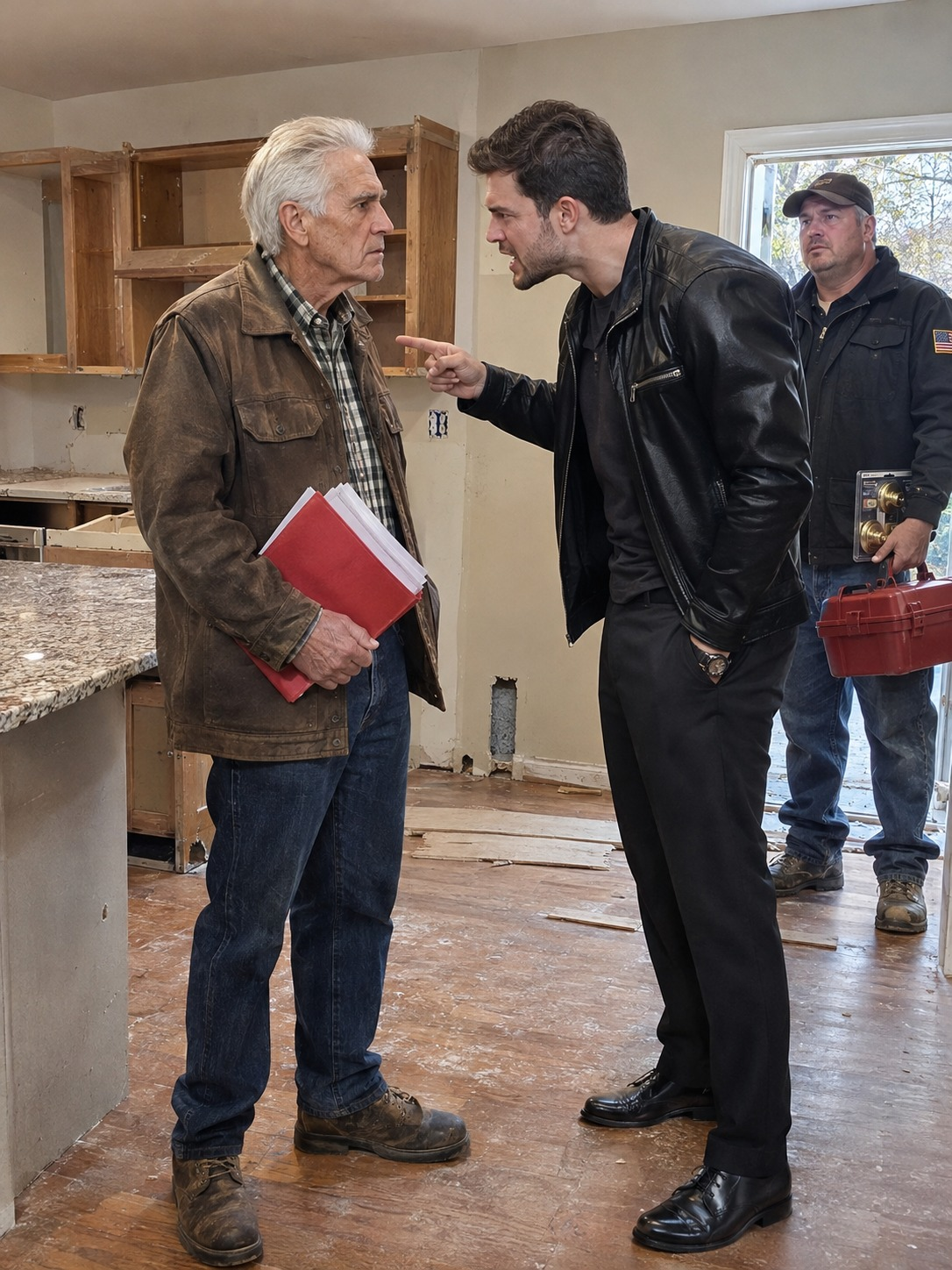
Thomas Ashworth stood between the inspector and the workroom entrance.
"You will explain yourself before you take another step."
The inspector removed his hat.
He was a heavyset man in his early fifties, with thinning gray hair, a carefully trimmed mustache, and tired eyes that seemed accustomed to delivering unpleasant news.
"I am not here to arrest anyone, Mr. Ashworth."
"Then why have you come?"
"Because a complaint has been made concerning a child registered under a false identity."
Adah felt the folded birth record inside her pocket.
Clara moved closer to her.
Samuel quietly closed the workroom door.
Inspector Harrington noticed the movement.
"I would appreciate everyone's cooperation."
Adah stepped forward.
"You said something about a missing child."
The inspector looked at her.
"Are you Adah Quill?"
"Yes."
"How old are you?"
"Twenty-four."
He opened a leather notebook.
"Your birth was registered in November 1874?"
Adah frowned.
"No. I was born in 1874."
"According to which record?"
"The record my mother kept."
"May I see it?"
"No."
The inspector raised his eyebrows.
"Miss Quill, I am investigating a matter involving your identity. Refusing to cooperate may complicate things."
"Then perhaps you should tell me what you believe happened."
He closed the notebook.
"A woman named Eleanor Ashworth gave birth to a daughter in November 1874. The child was subsequently registered under another woman's name."
Adah felt the room tilt.
November 1874.
She had been born in November.
Her mother's name was Margaret Quill.
But the birth record inside her pocket said Eleanor Ashworth.
Thomas stepped forward.
"That is impossible."
Inspector Harrington looked at him.
"Is it?"
"Eleanor disappeared in 1888. Adah is twenty-four. She was born fourteen years earlier."
The inspector nodded.
"Precisely."
Adah looked toward Clara.
The older woman appeared equally confused.
The inspector continued.
"The complaint suggests that the document discovered in this shop may have been altered. It also alleges that certain Ashworth family records were removed before the original estate investigation."
Thomas laughed bitterly.
"Who filed this complaint?"
"I cannot disclose that information."
"Frederick Vale?"
The inspector did not answer.
That was answer enough.
Adah removed the birth record from her pocket.
"I found this inside the lining of the wedding gown."
The inspector accepted it.
He examined the paper carefully.
Then he looked at her.
"Where did you find the document?"
"Inside a concealed seam."
"Who opened it?"
"I did."
"Was anyone else present?"
"No."
Thomas interrupted.
"This is an absurd investigation. The document was hidden by Honoria Slade. She intended it to be found by Adah."
The inspector looked at him.
"Then perhaps you can explain why the birth record names Eleanor Ashworth as the mother."
Thomas fell silent.
Adah watched the inspector turn the paper over.
There was another detail she had not noticed.
A handwritten number appeared in the lower corner.
1888.
The same year Eleanor disappeared.
But the birth itself had supposedly taken place fourteen years earlier.
"Inspector," Adah said carefully, "this record cannot prove what you think it proves."
"Why not?"
"Because it was hidden in a wedding gown made in 1888. Whoever placed it there may have wanted someone to find it."
The inspector considered her words.
"That is possible."
He returned the document.
"But I must ask you to come to the station tomorrow morning."
"Why?"
"Because the person who filed the complaint claims to possess additional evidence."
Thomas stepped between them.
"She is not going anywhere."
Adah looked at him.
"I can answer questions myself."
"Adah—"
"I can."
The inspector replaced his notebook inside his coat.
"Nine o'clock tomorrow."
He turned toward the entrance.
Before leaving, he looked at the bridal gown.
"One more thing."
Adah waited.
"Do not remove anything else from that dress until I have examined it."
He departed.
The door closed.
Thomas immediately turned toward Adah.
"You cannot go to the police station."
"Why not?"
"Because Frederick will be waiting."
"Then let him wait."
"You don't understand how dangerous these people are."
Adah looked at him steadily.
"Everyone keeps telling me that. Nobody explains why."
Clara approached the cutting table.
"Because the document may not be about Eleanor."
Adah turned.
"What do you mean?"
Clara pointed toward the birth record.
"The date is wrong."
"Yes. The child was supposedly born in November 1874."
"But Eleanor was only eight years old then."
Silence.
Adah looked at the document again.
The handwriting was unmistakably old.
The paper was genuine.
But the name could have been added later.
Someone had deliberately connected Eleanor to a child born fourteen years before her disappearance.
And someone had wanted that false connection hidden inside Honoria's gown.
Samuel picked up the ledger.
"Perhaps the child wasn't Eleanor's."
Thomas looked at him.
"Then whose was it?"
Nobody answered.
Adah suddenly remembered the sentence written on the back of the railway ticket.
If Adah ever asks, tell her the truth about the child.
She turned toward the old ledger.
There was another entry she had overlooked.
November 1874.
The date matched her birth.
She opened the book.
The writing was faint but readable.
Margaret arrived before dawn. She carried a child and refused to give the father's name. Honoria agreed to keep the matter private.
Adah stopped.
Her hands trembled.
"Read this."
Thomas leaned over her shoulder.
He read the entry twice.
"Margaret had a child?"
Adah looked at him.
"I was that child."
Clara shook her head.
"Then why does the birth record name Eleanor?"
Adah had no answer.
But another question was beginning to form.
If Eleanor had not been her mother, why had Honoria connected their names?
And why had Margaret written that she should eventually learn the truth?
That evening, Adah refused to leave the shop.
Thomas wanted her to stay at his house.
Samuel offered to keep watch outside.
Clara suggested that they hide the gown somewhere safer.
Adah rejected all three suggestions.
"The dress stays here."
"That is precisely what Mrs. Loach wants," Thomas said.
"Then she will have to come and take it herself."
Thomas looked at her with a mixture of admiration and concern.
"You sound like your mother."
Adah lowered her eyes.
"Did you know Margaret well?"
"Not particularly."
"Then how do you know?"
"Because Eleanor used to say the same thing about her."
Adah looked up.
"What did Eleanor say?"
Thomas smiled sadly.
"She said Margaret could make a room full of powerful men uncomfortable without raising her voice."
Adah almost smiled.
That sounded like her mother.
Thomas sat beside the stove.
"Your mother was not an ordinary seamstress."
"I know she was talented."
"That isn't what I mean."
He leaned forward.
"When my father was alive, Margaret occasionally visited Ashworth House. She never came through the main entrance. She used the servants' passage."
"Why?"
"I never knew."
Adah thought about the ribbon, the key, and the hidden document.
Perhaps her mother had been doing more than sewing.
Perhaps she had been carrying messages.
"Did she ever meet my father?"
Thomas shook his head.
"Not that I know."
Adah returned to the ledger.
Several pages had been removed.
The torn edges were old, but the damage appeared deliberate.
She examined the remaining entries.
Then she noticed something unusual.
A tiny symbol appeared beside several dates.
A needle crossed with a small circle.
The symbol had also been engraved on the silver key Samuel had given her.
She retrieved the key.
Beneath the initials M.Q. was the same tiny mark.
"Samuel."
He approached.
"Yes?"
"Do you recognize this?"
He examined it.
"That was Margaret's private mark."
"What did it mean?"
"She used it to identify things that belonged to her."
"Only that?"
Samuel hesitated.
"Not exactly."
He glanced toward Thomas.
"Your mother used to leave small marks on garments she altered. If a customer came to collect something, she could identify which pieces belonged to them without opening the package."
Adah examined the symbol.
"So the marks in the ledger indicate something belonging to Margaret?"
"Possibly."
She turned several pages.
The symbol appeared beside three dates.
November 1874.
October 1888.
March 1898.
Adah stared at the final date.
March 1898.
Her mother had died in the spring.
The last entry read:
The second copy has been returned. The daughter must never receive the first without the witness.
Adah looked at Samuel.
"What witness?"
He shook his head.
"I don't know."
Thomas stood.
"We need to find the original ledger."
"Where?"
"At Ashworth House."
Clara immediately objected.
"We cannot go there tonight."
Thomas looked at her.
"Why not?"
"Because Frederick has already been informed about the police investigation. He will be expecting us."
Samuel nodded.
"She's right."
Adah closed the ledger.
"Then we go somewhere else first."
"Where?" Thomas asked.
Adah thought about the locked cabinet, the brass key, and the old pattern books.
"Honoria's shop has another hiding place."
At midnight, the four of them began searching the workroom.
Samuel examined the walls.
Thomas checked the floorboards.
Clara went through the pattern books.
Adah returned to the cutting table.
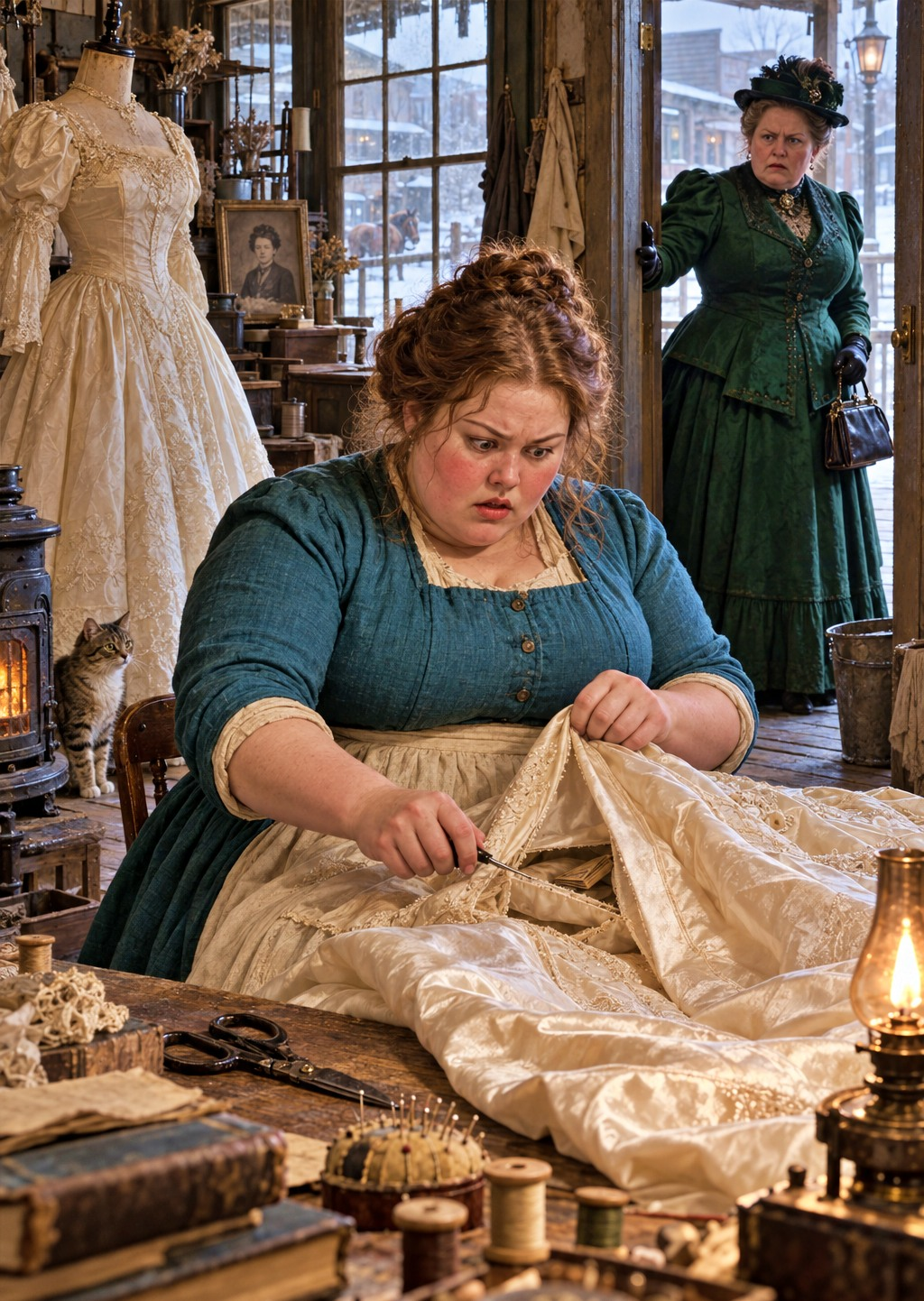
She lifted the bridal gown and examined the inside of its skirt.
The concealed hem had been opened only along a small section.
She carefully studied the remaining stitches.
Then she noticed something.
The hem had been sewn in three separate sections.
The first section was doubled.
The second was ordinary.
The third contained a narrow strip of silk that looked slightly darker than the rest.
Adah fetched her scissors.
"Don't," Clara warned.
"I think there is something else."
She examined the seam.
A tiny blue thread had been woven between two stitches.
The same color as the ribbon Margaret had left behind.
Adah carefully loosened the thread.
A small folded piece of paper emerged.
It was wrapped around a narrow strip of parchment.
She unfolded it.
The handwriting belonged to Honoria.
The first copy is not in the gown. The second is not in the house. The witness carries the truth.
Adah read the sentence aloud.
Thomas frowned.
"Who is the witness?"
Clara looked toward the photograph.
"Perhaps the person in the railway picture."
Samuel shook his head.
"No. The photograph was taken before Eleanor disappeared. The witness would have been someone who saw what happened afterward."
Adah turned the paper over.
There was a small drawing.
A railway station.
A clock.
And beneath it, a name.
St. Anne's Foundling Home.
Thomas stared.
"I know that place."
"Where is it?" Adah asked.
"Outside Marley. It closed years ago."
Clara approached.
"Why would Honoria mention a children's home?"
Adah looked at the date written beside the drawing.
November 1874.
The month of her birth.
Her heart began to pound.
Perhaps the secret was not simply about a missing heiress.
Perhaps the answer to her own identity had been hidden in that building.
Samuel took the parchment.
"We need to go there."
Thomas shook his head.
"Not tonight. The road is dangerous."
Adah looked at the bridal gown.
Her mother had spent years protecting this secret.
She could not stop now.
The next morning, Adah arrived at the police station alone.
Inspector Harrington was waiting in his office.
He offered her a chair.
"Thank you for coming."
"I said I would."
He placed a folder on the desk.
"Someone has submitted a birth certificate claiming that you were originally registered under the name Eleanor Ashworth."
Adah stared.
"That is impossible."
"Perhaps."
He opened the folder.
Inside was a document bearing a familiar seal.
The Ashworth family crest.
The inspector pointed to the signature.
"Do you recognize this?"
Adah examined it.
She did.
It was the signature of her mother.
Margaret Quill.
But the document was not a birth certificate.
It was a declaration of guardianship.
And beneath her mother's signature was another name.
The man who had supposedly witnessed her birth.
Captain James Whitmore.
Adah looked up.
"Where did you get this?"
Inspector Harrington closed the folder.
"It was delivered to my office yesterday."
"By whom?"
The inspector hesitated.
Then he reached for another envelope.
"This is the part I believe you should see."
He slid it across the desk.
Adah opened it.
Inside was a recent letter.
The handwriting was shaky but unmistakably feminine.
Inspector Harrington,
The girl at Honoria Slade's shop must not be allowed to discover the truth.
She is not Margaret Quill's daughter.
She is mine.
At the bottom was a name.
Eleanor Ashworth.
Adah stopped breathing.
Then Inspector Harrington quietly locked the office door and said:
"Miss Quill, the woman who wrote this letter is waiting outside..."
Comments 0