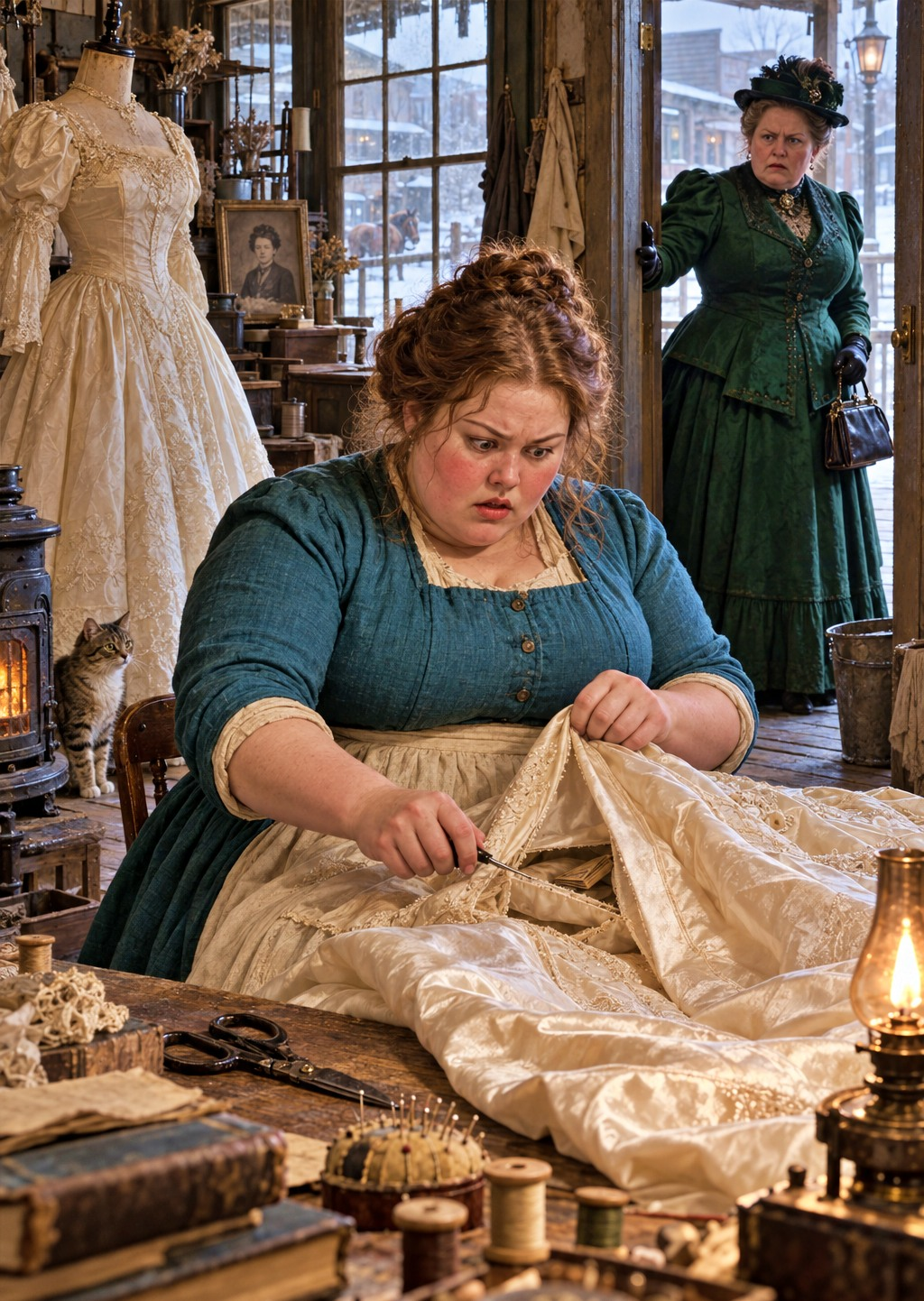
Adah Quill stood before the Ashworth family graves, holding the letter that had brought her there.
The morning was cold, and the grass was wet beneath her shoes. Thomas stood several steps behind her, while Eleanor waited beside the iron gate.
Somewhere beyond the cemetery walls, Marley was beginning another ordinary day.
But Adah's world had changed.
The warning had claimed that Agnes Bell knew what had happened to Margaret. It had suggested that the woman who had helped her uncover the truth might have been hiding something terrible.
Adah had refused to believe it without hearing Agnes herself.
Now she saw a familiar figure standing beside Daniel Ashworth's grave.
Agnes.
The elderly woman wore a dark coat and held a small bouquet of white flowers.
She turned when she heard Adah approach.
For a moment, neither spoke.
Then Agnes lowered her eyes.
"You came."
"You disappeared."
"I had to."
Adah stopped several feet away.
"Did you know what happened to my mother?"
Agnes looked toward Daniel's grave.
"Yes."
Thomas stepped forward.
"Then tell us."
Agnes placed the flowers against the gravestone.
"Your mother asked me to keep one final secret. I promised her I would."
Adah felt her stomach tighten.
"What secret?"
Agnes took a folded document from her coat.
"Margaret knew she was being poisoned. She discovered it several days before she died."
Adah stared at her.
"She knew?"
Agnes nodded.
"She recognized the symptoms. She had watched patients suffer similar reactions while helping the village physician. She suspected the medicine she was receiving."
"Why didn't she tell me?"
"Because she feared the people responsible would come after you."
Adah's eyes filled.
"Did you help her?"
"Yes. I tried to arrange another doctor, but Margaret refused to leave the shop. She believed the original ledger would be discovered if she disappeared."
Thomas looked at Agnes.
"Who was responsible?"
Agnes unfolded the document.
"Dr. Charles Wren admitted that he altered Margaret's medication under instructions from Prudence Loach. But there was another person who knew what was happening."
Adah waited.
Agnes looked directly at her.
"Edwin Bell."
Thomas closed his eyes.
His older brother had known.
He had allowed Margaret to die because he feared losing the position he had finally gained in the Ashworth family.
"Why didn't you expose him?" Adah asked.
Agnes's voice broke.
"Because Edwin threatened my children. I was a coward, Miss Quill. I told myself I was protecting my family. Margaret knew the truth, and she forgave me."
Adah looked at her for a long moment.
"Did my mother ask you to forgive yourself?"
Agnes nodded.
"She did."
Adah lowered her eyes.
For years, Agnes had been both a protector and a frightened witness. She had helped Margaret preserve the truth, but she had also remained silent when Margaret needed her most.
Adah could not pretend that the silence had caused no harm.
But she could understand why it had happened.
"Come with us," she said. "Tell the authorities everything."
Agnes nodded.
"I will."
And together, they left the burial ground.
The investigation lasted several weeks.
This time, the authorities had more than rumors and frightened witnesses.
They possessed Daniel's original ledger, the inheritance agreements, Margaret's letters, the railway records, and Agnes's testimony.
Dr. Charles Wren confessed to altering Margaret's medication and falsifying her medical records. He admitted that Prudence had paid him to keep the cause of her illness hidden.
Edwin Bell also confessed.
He acknowledged that he had known Margaret was being poisoned and had deliberately concealed the evidence.
He admitted that his involvement had begun long before Daniel's death, when Beatrice promised him recognition as her son in exchange for his cooperation.
But the promise had never been fulfilled.
The authorities also recovered correspondence proving that Frederick Vale had arranged the confrontation beside the river in 1873.
Peter Hale's testimony established that Daniel had survived the initial fall and had been denied medical assistance.
Thomas confirmed that he had reached his brother while he was still alive but had been threatened into silence.
The evidence connected every major part of the conspiracy.
Frederick Vale was convicted of fraud, conspiracy, and his involvement in Daniel's death.
Prudence Loach was found guilty of participating in the poisoning and concealing evidence.
Dr. Wren lost his medical license and was sentenced for his crimes.
Edwin Bell received a separate sentence for falsifying legal records and obstructing the investigation.
Beatrice Ashworth was convicted of financial fraud and her role in the events that had led to Daniel's death.
Her confession, combined with the original documents, finally ended the family's long deception.
For the first time, nobody could buy silence or bury the evidence.
And Adah no longer had to wonder whether her father's death had been an accident.
It had been a crime.
A crime that had finally been answered.
The inheritance was settled the following spring.
The original agreements established Adah as Daniel's lawful daughter and principal beneficiary of the portion of the estate he had intended to leave her.
Peter Hale was also recognized as an Ashworth descendant and received the share Daniel had reserved for him.
Thomas retained his own lawful inheritance but voluntarily surrendered a substantial portion of his holdings to restore money stolen from the estate's workers.
He also helped establish a fund for the families who had suffered under the fraudulent accounts.
Adah could have sold everything.
She could have moved to London and lived comfortably for the rest of her life.
Instead, she made a decision that surprised the solicitors.
She kept Honoria Slade's shop.
She used part of her inheritance to repair the roof, replace the damaged windows, restore the cutting tables, and purchase new sewing machines.
She also bought the neighboring premises and turned them into a small training room for young women who wanted to learn dressmaking.
No one would ever again be forced to work without receiving credit for their skill.
The shop became known as Quill and Slade.
Above the entrance, Adah placed a simple sign:
HONEST WORK. FAIR PRICES. EVERY WOMAN'S NAME ON HER WORK.
People came from surrounding villages.
Some wanted alterations.
Others wanted wedding dresses.
A few simply came to see the place where the mysterious bridal gown had once hung.
Adah never sold that gown.
She restored it carefully, preserving the original stitches and the hidden compartments.
It remained in the workroom as a reminder of the women who had protected one another when powerful people tried to silence them.
One afternoon, a young girl entered carrying a torn dress.
She was perhaps sixteen and looked embarrassed.
"Miss Quill, I don't have enough money to pay for this."
Adah examined the torn seam.
"Then perhaps you can help me sort some thread."
The girl smiled.
And Adah realized that she was building something her mother had wanted all along.
A place where nobody needed wealth or family connections to be treated with dignity.
Eleanor began visiting regularly.
At first, she came once a week.
Then twice.
Eventually, she became part of the shop's daily life.
She helped with customers, organized fabrics, and occasionally sat beside Adah while they worked on complicated garments.
Their relationship did not become perfect overnight.
There were difficult conversations.
There were questions about the years they had lost.
There were moments when Adah felt anger toward the woman who had been unable to protect her during childhood.
But Eleanor never demanded forgiveness.
She listened.
She apologized.
And she remained.
One evening, while they were closing the shop, Eleanor brought out a small wooden box.
"I found this among my belongings," she said.
Adah opened it.
Inside were fourteen birthday letters Margaret had written to Eleanor.
Each envelope contained a small note about Adah's childhood.
Her first steps.
Her first words.
Her first successful dress.
The day she had cut her own hair with sewing scissors.
Adah laughed through her tears.
"Mother never told me about that."
Eleanor smiled.
"She said you were very proud of your work."
Adah examined the final letter.
It was dated just weeks before Margaret died.
Inside, her mother had written:
She is beginning to understand that the world can be cruel. I hope she also learns that kindness is stronger than cruelty when people choose to stand together.
Adah folded the letter carefully.
For the first time, she felt that the two women who had loved her most were no longer separated by the secret that had defined their lives.
She had Margaret's love.
And now she had the chance to know Eleanor.
That was enough to begin again.
Thomas changed as well.
He no longer lived in the shadow of his father's reputation.
He visited Peter frequently, and the two men gradually developed the relationship Daniel had once hoped they would share.
Peter moved into a modest house near the river.
He used part of his inheritance to repair the old mill and employed several former workers who had lost their livelihoods because of the Ashworth fraud.
He also gave Adah something she had never expected.
Daniel's personal sketchbook.
It contained drawings of houses, furniture, gardens, and several designs for a small dressmaking workshop.
On the final page was a drawing of a young woman standing beside a sewing machine.
Underneath, Daniel had written:
For my daughter, who will make something beautiful from whatever life gives her.
Adah kept the sketchbook beside her mother's letters.
Thomas visited every Sunday.
Sometimes he brought Peter.
Sometimes Eleanor joined them.
They shared meals, discussed the investigation, and remembered Daniel without fear.
One afternoon, Thomas gave Adah the silver watch.
"I think this belongs with you now."
She opened it.
The initials P.H. were still engraved inside.
"Shouldn't Peter have it?"
Thomas smiled.
"He has his own memories of Daniel. This was always meant to bring you together."
Adah closed the watch.
"Then we'll keep it in the shop."
And that was where it remained, beside the photograph of her father.
A year after the truth had been uncovered, Marley held a small ceremony honoring the families who had suffered under the Ashworth fraud.
The restored assembly rooms were filled with former mill workers, local business owners, and residents who had once believed the official story.
Adah attended wearing a simple ivory dress she had made herself.
Eleanor sat beside her.
Thomas stood near Peter.
Agnes was also present.
She had given her testimony, accepted responsibility for her silence, and spent the months since the trial helping restore the records of the children once registered at St. Anne's.
Adah had not forgotten what Agnes had concealed.
But she had accepted her apology.
When Adah was invited to speak, she approached the front of the room.
She looked at the faces before her.
"I used to believe that my life had been decided by people whose names I would never know."
The room became quiet.
"I thought my mother's shop was all I had inherited. I thought my father had abandoned us. I thought the people who told me to accept my place in the world knew more than I did."
She paused.
"They were wrong."
Adah glanced toward Eleanor.
"My mother Margaret taught me how to sew. Honoria Slade taught me that even the smallest stitch can preserve something important. My father Daniel left me the courage to question what is wrong. And the people who stood beside me taught me that truth is not something we should keep for ourselves."
She looked toward Thomas and Peter.
"Family is not simply a name on a document. It is what we choose to protect, what we choose to repair, and how we treat one another when nobody is watching."
The applause began slowly.
Then the entire room rose.
Adah returned to her seat.
Eleanor took her hand.
Neither woman needed to say anything.
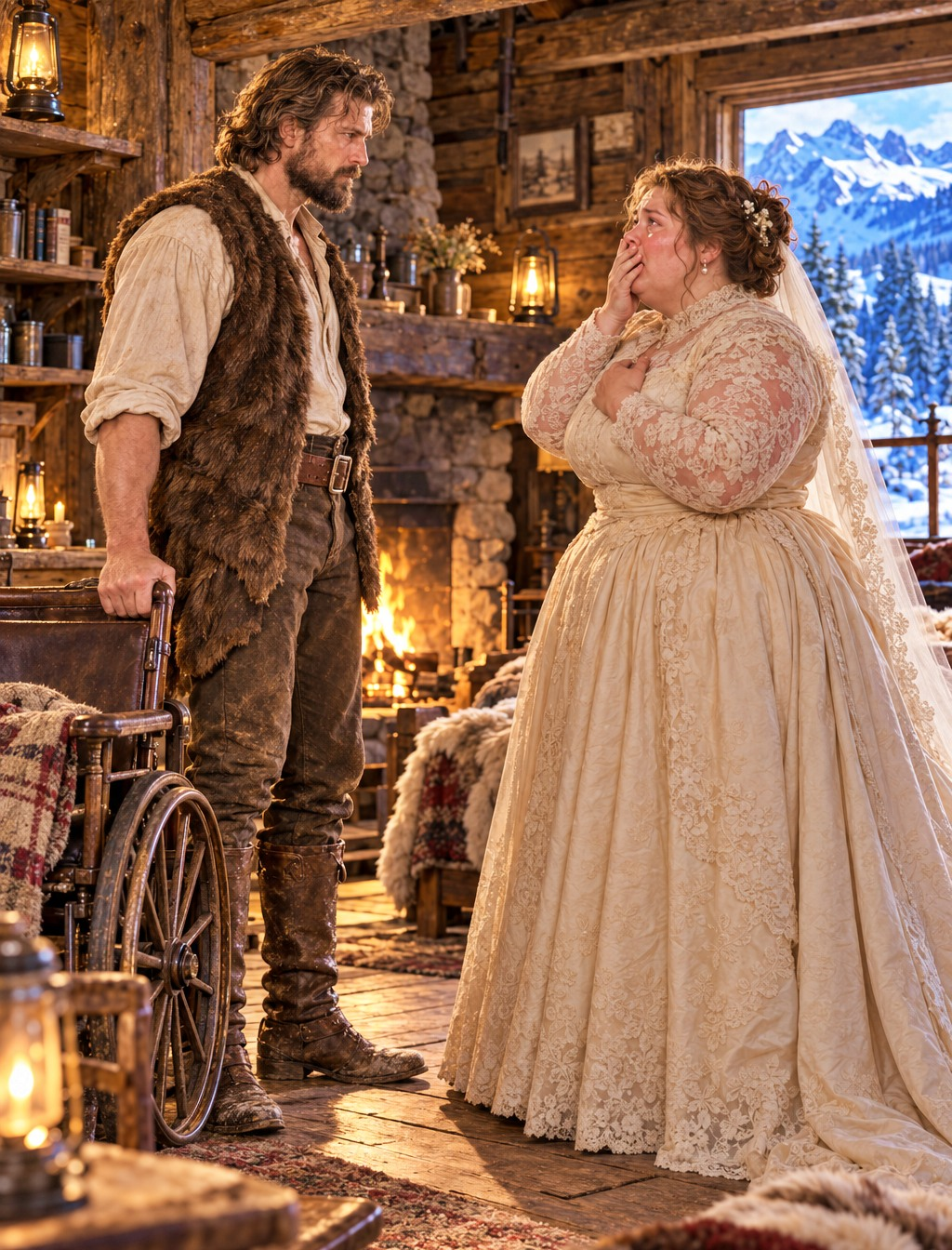
That winter, Adah finally completed the bridal gown.
She replaced the damaged lining, repaired the hem, and carefully preserved the original pocket.
The seam that had once concealed the secret was now neatly finished.
She hung the gown in the front window of Quill and Slade.
A small card rested beside it.
Made with love. Preserved with courage. Never again to be hidden.
On the anniversary of Margaret's death, Adah visited her mother's grave.
She brought white roses.
Daniel's grave was beside it, and Honoria's was only a short walk away.
She placed the flowers between the stones and sat quietly.
"I found everything," she whispered.
She told them about the trials.
About Peter.
About Thomas.
About Eleanor.
About the young women learning to sew in the neighboring room.
She told them that the shop was thriving and that nobody had forgotten the people who had worked there.
Then she placed the silver watch beside her mother's photograph.
"I wish you could have seen it."
A gentle breeze moved through the trees.
For the first time, the cemetery did not feel like a place filled with unanswered questions.
It felt like a place where she could remember the people she loved without carrying their secrets.
Several months later, Quill and Slade received its largest commission.
A young woman named Clara wanted a wedding dress.
She had little money but a great deal of enthusiasm.
Adah spent weeks helping her choose the fabric, designing the sleeves, and fitting the bodice.
On the morning of the final fitting, Clara stood before the mirror.
Her eyes filled.
"It's beautiful."
Adah adjusted the shoulder seam.
"It belongs to you."
Clara turned.
"How much do I owe?"
Adah smiled.
"Whatever we agreed."
Clara laughed.
Then she noticed the old ivory gown displayed in the adjoining room.
"Was that your wedding dress?"
Adah looked at it.
"No. It belonged to someone whose story was hidden for a very long time."
"Did she ever get to wear it?"
Adah gently touched the fabric.
"Not in the way she was supposed to."
Clara looked thoughtful.
"That's sad."
"It was. But the truth survived."
Clara returned to the mirror.
Adah watched her smile.
And she realized that the gown had finally become what Honoria had intended it to be.
Not a hiding place.
Not evidence.
Not a warning.
A beautiful piece of work, preserved for the right reasons.
On the first anniversary of the shop's reopening, Adah closed the doors early.
Thomas, Eleanor, Peter, Samuel, and Clara gathered in the workroom.
Agnes brought a cake.
The old cutting table had been polished, the stove burned warmly, and the front window glowed with evening light.
They ate together.
They laughed.
They spoke about the future.
Eleanor proposed taking a short trip to the coast.
Peter offered to repair the garden behind the shop.
Thomas promised to help Adah expand the training room.
Samuel joked that the family had finally become too large for one dining table.
Adah looked around the room.
For years, powerful people had tried to determine who belonged in the Ashworth family and who deserved to inherit its wealth.
Now none of that mattered.
She had found something better than a title or a fortune.
She had found people who chose to stay.
Before everyone left, Adah walked to the front window.
The bridal gown stood beneath the warm light.
Its ivory silk was clean.
Its seams were perfect.
The once-hidden pocket rested naturally against the skirt.
She thought of Margaret's hands, Honoria's patience, Daniel's unfinished dreams, and the courage of everyone who had finally spoken.
Then she turned off the workroom lamp.
Outside, Marley was quiet.
Tomorrow, there would be customers, unfinished garments, bills to pay, and young women waiting to learn their trade.
There would be ordinary problems.
Ordinary joys.
An ordinary life.
And that was exactly what Adah had spent so many years fighting to have.
She locked the front door and slipped the key into her pocket.
For the first time, nothing was hidden behind it.
Comments 0