The first time my mother packed a suitcase without including my clothes, I thought she had made a mistake.
I was twelve.
My thirteenth birthday was less than two weeks away, and my parents had been fighting almost every evening for months.
Our house in Dayton wasn't particularly large, but it had once felt enormous to me. There were three bedrooms upstairs, a narrow hallway, a kitchen with yellow curtains, and a backyard where Lucas had taught Nora how to ride a bicycle.
I had believed those walls meant something permanent.
Children often mistake familiarity for security.
I learned the difference on a Saturday afternoon.
Mom stood beside her bedroom closet, folding Lucas's shirts into a blue suitcase.
“Where are we going?” I asked.
She didn't turn around.
“Lucas and I are going to stay somewhere else.”
“What about me?”
She continued folding.
“Your father and I are working things out.”
“Can I pack my stuff?”
“Not now, Emily.”
I stood there until she finally looked at me.
Her expression wasn't angry.
It was worse.
She looked exhausted by my existence.
“Please don't start crying.”
I hadn't been crying.
But after she said that, I did.
Lucas was seventeen, handsome, athletic, and effortlessly good at almost everything my mother considered important.
He played baseball.
He earned respectable grades without much apparent effort.
Adults enjoyed talking to him.
When he entered a room, my mother brightened.
When I entered, she often asked what was wrong.
Nora was nine. She was cheerful, affectionate, and especially close to our father.
He called her his little princess.
I was the child in the middle.
The one whose homework took too long.
The one who struggled to read aloud.
The one who sometimes confused letters and needed instructions repeated.
Nobody had formally evaluated my learning difficulties at that point.
My parents simply believed I wasn't trying hard enough.
“Your brother never had these problems,” Mom would say.
“Your sister is younger than you, and she reads better,” Dad would add.
Eventually, I stopped asking for help.
I became remarkably good at pretending I understood things.
That skill followed me into adulthood, where I eventually had to unlearn it.
But at twelve, pretending was how I survived dinner.
The day Mom left, Lucas carried two suitcases downstairs.
I followed him.
“Are you coming back?”
He looked toward the front door.
“I don't know.”
“Can I come with you?”
His face tightened.
“Ask Mom.”
“I already did.”
He looked uncomfortable.
Then he said something I remembered for years.
“She knows what's best.”
He carried the suitcases outside.
I stood on the porch and watched my mother's car disappear.
She didn't wave.
For eleven days, I lived with Dad and Nora.
Dad barely spoke to me.
He spent his evenings making phone calls, sorting financial documents, and discussing arrangements with attorneys.
Whenever I asked about Mom, he told me not to interfere.
On my thirteenth birthday, Nora made me a card using construction paper and purple markers.
She drew three children holding hands.
Above them, she wrote:
WE WILL ALWAYS BE SISTERS.
I kept that card beneath my pillow.
Dad bought a supermarket cake.
Mom didn't call.
Lucas didn't call.
Uncle Jack arrived after dinner carrying a badly wrapped package and wearing his usual brown work jacket.
“Happy birthday, kiddo.”
Inside the package was a small wooden toolbox.
It contained a measuring tape, pencils, a ruler, and several inexpensive hand tools.
“Every good builder needs somewhere to start,” he told me.
Dad laughed from the kitchen.
“She can barely finish her math homework.”
Jack looked at him.
“Then we'll find a different way to teach her.”
It was the first time I remembered an adult defending me without immediately adding something I needed to improve.
Jack was my mother's older brother.
He had never married, and he had no children.
He owned a small precision machine shop on the industrial side of Dayton. His business employed seven people, and judging by the condition of his pickup truck, it wasn't making him wealthy.
He smelled faintly of coffee, laundry detergent, and metalworking oil.
He was the sort of man who fixed things rather than replaced them.
Broken lawn mowers.
Loose cabinet hinges.
Old radios.
And eventually, a little girl who had been taught to believe she was too much trouble.
The custody arrangements were discussed several weeks after my birthday.
I remember sitting at the kitchen table while Dad and Mom argued.
Lucas was outside.
Nora was upstairs.
I was supposed to be doing homework, but I couldn't concentrate.
“I'm taking Lucas,” Mom said.
“And I'm taking Nora,” Dad replied.
“What about Emily?”
Dad looked at her.
“I told you I can't manage her school situation.”
Mom crossed her arms.
“Neither can I.”
I stopped writing.
My pencil remained pressed against the paper.
They continued talking.
There were discussions about housing, work schedules, money, transportation, and responsibilities.
My name appeared repeatedly.
Never as someone they loved.
Always as a complication.
Finally, I spoke.
“I can be good.”
They both turned toward me.
“I can do my homework faster. I won't cry anymore.”
My mother's expression softened for perhaps half a second.
Then she looked away.
“Emily, this isn't about being good.”
“Then what is it about?”
Neither answered.
The doorbell rang.
Dad opened the front door, and Uncle Jack walked inside.
He had come to collect some tools Dad had borrowed.
He immediately noticed my face.
“What happened?”
“Nothing,” Mom said.
Jack looked at me.
I couldn't speak.
He turned toward my parents.
“What's going on?”
Dad explained their arrangements.
Jack listened without interrupting.
When Dad finished, Jack asked one question.
“Where is Emily going?”
Silence.
Mom folded her arms.
“We're still discussing that.”
“Discussing what?”
“Her needs.”
Jack stared at her.
“She's your daughter.”
“She's difficult, Jack.”
“She is thirteen.”
“You don't understand what it's like.”
“No,” he said. “Apparently, I don't.”
Dad pushed his chair back.
“If you're so concerned, why don't you take her?”
He said it sarcastically.
As though the suggestion were ridiculous.
Jack looked at me.
Then he looked at my father.
“All right.”
Nobody moved.
Mom laughed.
“You're serious?”
“Completely.”
“You have a business.”
“And a spare bedroom.”
“You don't know anything about raising a teenage girl.”
“I know she deserves somewhere she isn't treated like a burden.”
My father looked offended.
My mother looked relieved.
That relief hurt more than anything else.
Jack crouched beside my chair.
“Would you like to come stay with me, kiddo?”
I looked at Mom.
Then Dad.
Neither protested.
Neither said they would miss me.
“Would I have to leave if I got bad grades?” I whispered.
Jack's expression changed.
“No.”
“What if I cry?”
“Then we'll figure out why you're crying.”
“What if I'm too much trouble?”
He took my hand.
“You're not trouble, Emily.”
I started sobbing.
He didn't tell me to stop.
The following days passed in a blur.
There were meetings, legal documents, discussions with an attorney, and arrangements concerning my guardianship.
My parents signed the necessary consent papers.
Jack completed the formal process to become my legal guardian.
He never described the situation as a favor.
He never asked me to repay him.
He simply arrived one afternoon with his old pickup truck and helped me load my belongings.
Everything I owned fit inside two cardboard boxes, a suitcase, and a plastic laundry basket.
Before leaving, I went upstairs to find Nora.
She was sitting on her bed.
“Are you going away?” she asked.
“Just to Uncle Jack's.”
“Can I visit?”
“Of course.”
She hugged me so tightly that my ribs hurt.
I promised to call.
I promised to write.
I promised that nothing would change between us.
I didn't know how little control children have over promises adults refuse to honor.
Lucas was standing beside Mom's car when I came downstairs.
He had returned to collect some remaining belongings.
“Take care, Em.”
I wanted him to hug me.
He didn't.
Mom stood near the front door.
“Listen to your uncle.”
I nodded.
“And try not to make things difficult for him.”
Jack heard her.
He set down the box he was carrying.
“Diane, that's enough.”
She rolled her eyes.
“I was only giving her advice.”
He picked up the box again.
“Keep it.”
We drove away shortly afterward.
I watched our house disappear through the passenger-side window.
Jack didn't force me to talk.
He turned the radio down and stopped at a diner where he bought me pancakes despite it being almost dinner time.
“New house rule,” he said.
“What?”
“Sometimes pancakes are dinner.”
I smiled.
It felt strange.
Almost disloyal.
As though enjoying anything meant I had accepted being abandoned.
Jack's house was modest, with a small porch, an overgrown garden, and a spare bedroom painted pale blue.
There was a new comforter on the bed.
A lamp beside it.
A desk near the window.
And an empty bookshelf.
“I wasn't sure what books you'd like,” he said.
“I don't really like reading.”
“That's okay. We'll find something you like.”
He showed me where the towels were, how the thermostat worked, and which kitchen cabinet contained snacks.
Then he left me alone to unpack.
I placed Nora's birthday card beside my bed.
That evening, I overheard Jack speaking on the telephone downstairs.
His voice was unusually tense.
“You signed the guardianship papers, Diane. That doesn't mean I'm agreeing to everything else.”
A pause followed.
“No. Absolutely not.”
I crept toward the staircase.
“She's a child, not a transaction.”
Another pause.
Then Jack said something I didn't understand.
“If you ever come back asking for that money, I will show her exactly what you signed.”
I heard the telephone click.
I hurried back to my bedroom.
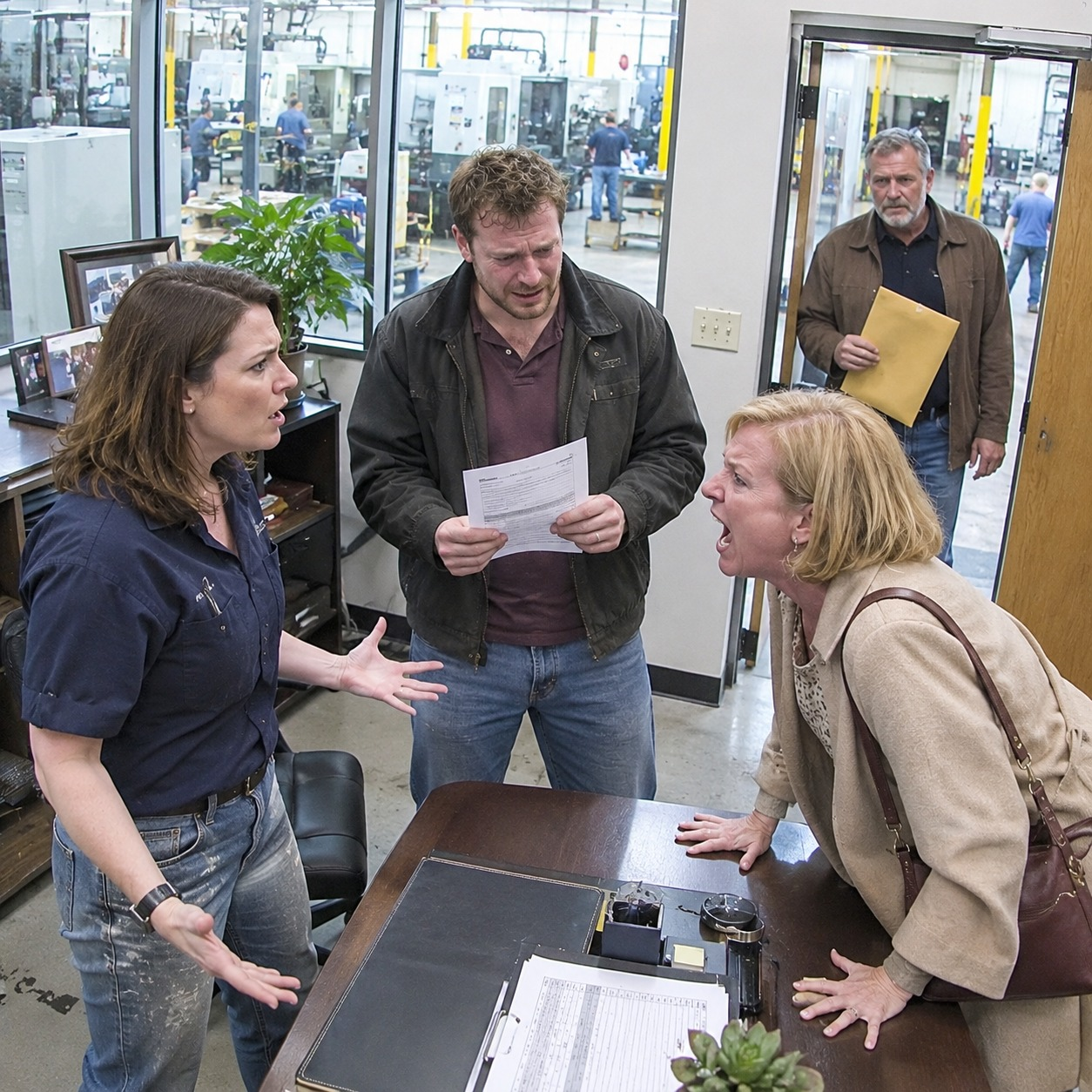
A few minutes later, Jack walked past my open door carrying a yellow manila envelope.
He entered his bedroom.
I heard a drawer open.
Then the unmistakable sound of a key turning in a lock.






Comments 0