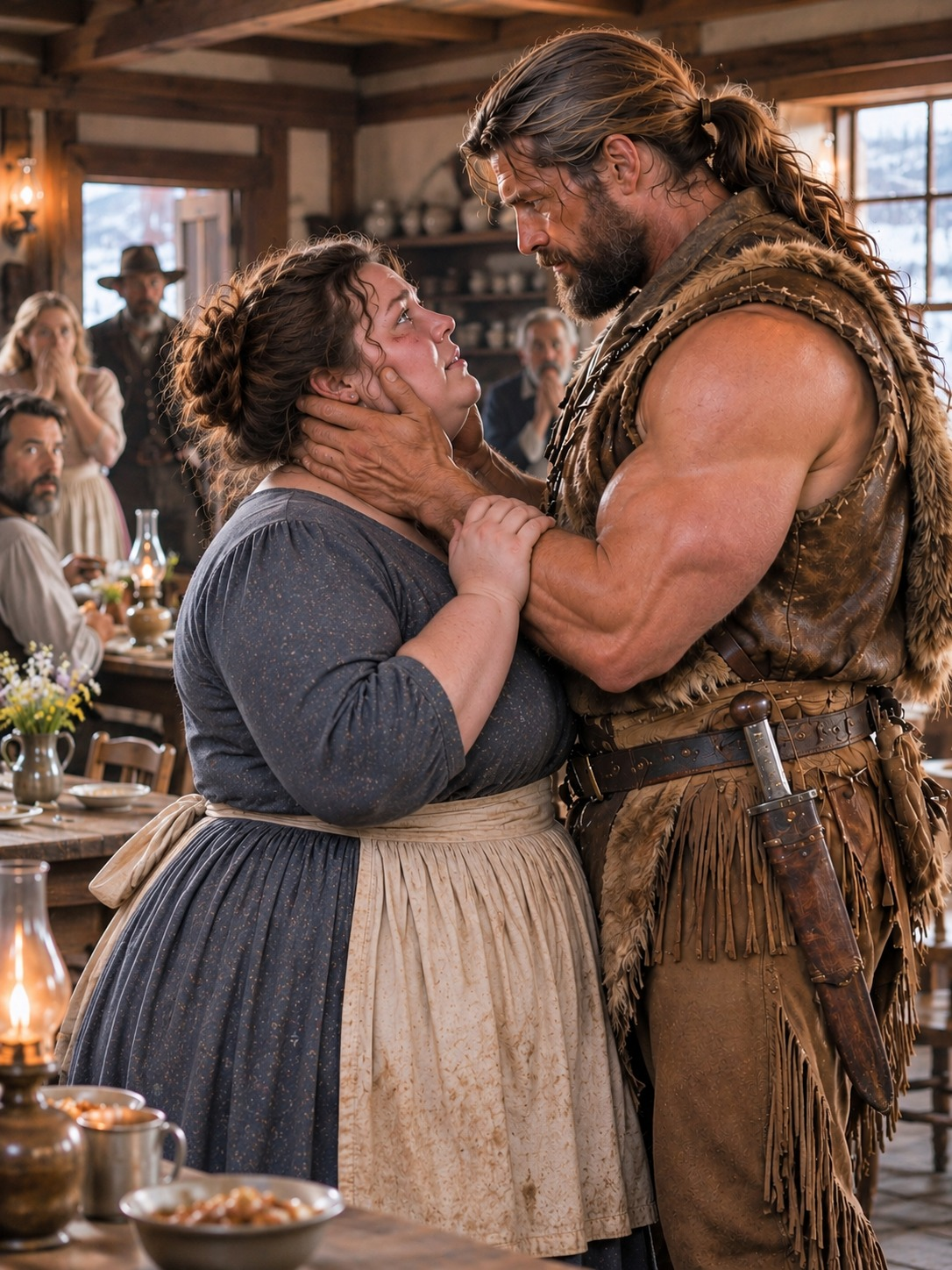
"The real heir is not the daughter you think."
Silas Rourke read the words aloud, then looked at me with a smile that made my stomach tighten.
He stood beside my father's writing desk, holding the old family Bible in one hand and the folded paper in the other.
I had never seen him look so pleased.
"Put that down," I said.
He glanced at the Bible.
"Your father certainly knew how to make things interesting."
"That book belongs to me."
"Does it?"
His eyes moved toward the paper.
"Perhaps not."
I stepped closer.
"Give it back."
Silas slipped the paper into his coat pocket.
"You're an intelligent woman, Hattie. I suggest you begin behaving like one."
I looked at Clara, who stood near the kitchen entrance.
Her face was pale.
"Go upstairs," I told her.
Silas chuckled.
"Why? Afraid she'll hear something unpleasant?"
"I'm afraid she'll have to listen to another man who believes he can walk into my house and tell me what to do."
His smile disappeared.
For several seconds, we stared at each other.
Then he placed the Bible on the desk.
"Your father left behind a complicated inheritance. I have spent years trying to make certain it was handled properly."
"By stealing it?"
"By protecting it."
I almost laughed.
"From whom?"
"From people who don't understand its value."
I looked at the Bible.
"Give me the paper."
Silas shook his head.
"Not until you understand what it means."
"Then explain it."
He walked toward the window and adjusted his gloves.
"Thomas Whitcomb had two daughters. Everyone knows that."
"Ruth and me."
"Yes. But there was another child."
I felt my stomach tighten.
"Another child?"
Silas turned.
"Your father had a son."
The room went silent.
I stared at him.
"My father never had a son."
"That is what he wanted you to believe."
"You're lying."
"Perhaps. But your father's handwriting is difficult to dispute."
He tapped his pocket.
"That little note is only the beginning."
I moved toward him.
"Who was the child?"
Silas smiled faintly.
"That is something I believe you should discover yourself."
"Why would you tell me any of this?"
"Because I want you to understand that the property may not belong to you."
I looked at the Bible.
"You're trying to frighten me into selling."
"No, Hattie. I'm trying to save you from a very expensive mistake."
He picked up his hat.
"Think about the offer."
"I've already answered."
"Then I suppose we'll have to let the courts decide."
He walked toward the entrance.
Before leaving, he paused.
"One more thing."
I didn't answer.
"Your mountain man has been released, but that doesn't mean he's safe. There are people who remember what happened fourteen years ago. Some of them would be very interested in learning that he has returned."
He opened the door.
"And some of them would prefer he never speak again."
Then he left.
I stood motionless.
The old Bible remained on the desk.
I opened it carefully.
The folded note was gone.
But several pages near the back had been loosened.
Someone had removed something.
I ran my fingers along the binding.
There was a narrow opening between the leather cover and the final pages.
I pressed gently.
A small piece of paper slid out.
It was another letter.
This one was addressed to me.
My dearest Hattie,
If you are reading this, then someone has finally discovered the truth about the Whitcomb inheritance.
Do not believe the first person who tells you who your family is.
Blood is not always what makes someone a daughter, and a name is not always proof of belonging.
There are three people who know where the original agreement is hidden.
One is your mother.
One is Caleb Mercer.
The third is the child I was never permitted to raise.
I stopped reading.
The child I was never permitted to raise.
I lowered the letter.
My father had not written about a son.
He had written about a child.
A child whose identity he had deliberately concealed.
I read the final paragraph.
If you find yourself choosing between the truth and the safety of someone you love, remember that the truth may be the only thing capable of keeping them alive.
I folded the letter.
Then I heard the front door open.
"Hattie?"
It was Caleb.
I turned.
He stood in the doorway, leaning slightly to protect his injured side.
His coat was dusty, his hair disheveled, and his face looked more exhausted than it had in the jail.
But he was free.
For one brief moment, I forgot everything else.
"You're out."
He nodded.
"The sheriff released me."
I wanted to ask whether he was all right.
I wanted to touch his arm.
Instead, I remembered the marriage agreement.
I remembered his confession.
And I remembered how easily everyone had allowed me to believe that my life was my own.
"Did you come here to explain the arrangement?"
Caleb looked at the Bible.
"Did Silas take something?"
I held up the letter.
"He took the first note."
His expression hardened.
"Then he knows."
"Knows what?"
Caleb closed the door.
"That Thomas hid the truth in the Bible."
I stared at him.
"What truth?"
He looked at the letter in my hand.
"Your father had another child."
"Silas says it was a son."
Caleb shook his head.
"He doesn't know."
"Then who was it?"
He hesitated.
I took a step toward him.
"Caleb, I am tired of being the last person to know anything about my own family."
He looked at me.
"I understand."
"Do you?"
"Yes."
"Then tell me."
He removed his hat.
"Your father had a child before he married your mother."
I felt my breath catch.
"Before?"
Caleb nodded.
"Thomas was young. He was working near St. Louis when he met a woman named Abigail."
"Who was she?"
"Someone he loved."
I looked at him.
"Why didn't he marry her?"
"Her family refused to accept him. They considered him poor, uneducated, and unsuitable."
I thought of my father.
He had never been a wealthy man.
He had worked with his hands all his life.
Caleb continued.
"Abigail became pregnant. Her family sent her away before Thomas could make arrangements. He was told the baby had died."
"Was that true?"
"No."
I stared at him.
"Then where is the child?"
Caleb looked toward the window.
"Your father found out years later that the baby had survived."
My fingers tightened around the letter.
"Did he find the child?"
"He tried."
"Who was it?"
Caleb took a slow breath.
"That's what your father wanted me to help him discover."
I felt a chill.
"You're telling me you don't know?"
"I know the name Abigail used. I know she moved west. But I never found the child."
"Then why did my father write that three people knew where the agreement was hidden?"
"Because he believed the child had eventually returned to Dakota."
I stared at him.
A child.
A missing heir.
A family secret buried beneath fourteen years of silence.
"Does Ruth know?"
"I don't believe so."
"Eleanor?"
"She may have suspected."
I looked down at the letter.
"Why would Silas want this information?"
"Because if the child is alive, the inheritance could pass to someone outside the family Thomas recognized in his original agreement."
I shook my head.
"You're speaking as though people are pieces on a board."
Caleb looked at me.
"That's exactly how Rourke sees them."
I walked to the desk and placed the letter beside the Bible.
"There's something else."
I showed him the final paragraph.
He read it slowly.
When he reached the words about the third person, his expression changed.
"Who is the child I was never permitted to raise?" I asked.
Caleb looked up.
"I don't know."
"You're sure?"
He nodded.
I studied his face.
He wasn't hiding something this time.
Or at least, I couldn't tell.
Ruth entered the room shortly afterward.
She had been upstairs with Eleanor and had heard the voices.
"Caleb."
He nodded.
"Ruth."
She looked at his bandaged side.
"You're hurt."
"It's nothing."
"That's what men say when they don't want anyone asking questions."
I almost smiled.
She turned toward me.
"Mother wants to see the letter."
I handed it to her.
Ruth read the words carefully.
When she reached the passage about the child, her face went pale.
"Another brother or sister?"
"That's what it seems."
She looked at Caleb.
"Did you know?"
"I knew Thomas had another child somewhere. I didn't know whether the child was alive."
Ruth sat down.
"How many secrets can one family have?"
I looked at her.
"Apparently enough to fill every room in this house."
Eleanor appeared in the doorway.
She had heard the last sentence.
"What have you found?"
I handed her the letter.
She read it.
Her fingers began to tremble.
"Thomas," she whispered.
I watched her expression.
"Mother, did you know about the child?"
She lowered the paper.
"Yes."
The answer was so quiet that I almost didn't hear it.
Ruth stood.
"You knew?"
Eleanor nodded.
"Your father told me shortly after we married."
"Why didn't you tell us?"
"Because he believed the child had been taken away permanently. He didn't want either of you growing up feeling that you had been replaced."
I looked at her.
"Did you know the child's name?"
She hesitated.
Then she shook her head.
"No. Thomas never told me."
Ruth paced the room.
"So we have another sibling, a missing deed, a murdered father, and a man trying to buy our home."
Caleb gave a faint smile.
"When you put it that way, it sounds complicated."
Ruth looked at him.
"It is complicated."
For a moment, I almost laughed.
Then Eleanor touched my shoulder.
"There's something I should tell you."
I turned.
"What?"
"Your father left a second instruction for Caleb."
Caleb looked up sharply.
"What instruction?"
Eleanor met his eyes.
"He told me that if Hattie ever learned about the marriage agreement, I was to remind you both that the agreement was never intended to force anyone into marriage."
I stared at her.
Caleb said nothing.
Eleanor continued.
"Thomas wanted you to have a choice. He believed that if you chose each other freely, the property would be safer because nobody could use either of you as a bargaining tool."
I looked at Caleb.
He lowered his eyes.
"Why didn't you tell me that in the jail?"
"Because I was ashamed."
"Of what?"
"Of allowing you to believe I had come here expecting something from you."
I crossed my arms.
"Did you?"
He looked directly at me.
"When I first arrived, I came because of your father."
I waited.
"But after you helped me, after I watched you stand up to Josiah, after I saw the way you treated people who had nothing to offer you, I began to want something different."
My throat tightened.
"What?"
He hesitated.
"A chance to know you."
The room became very quiet.
I looked away.
I had spent years telling myself that I no longer cared about being chosen.
It was easier to believe that than to admit how deeply I wanted it.
But I wasn't ready to trust him.
Not yet.
"Knowing someone and asking them to marry you are different things."
"I know."
"And I won't marry a man because my father wrote his name on a piece of paper."
Caleb nodded.
"I wouldn't ask you to."
I studied him.
For once, he wasn't trying to persuade me.
He was simply standing there, waiting.
I didn't know what to do with that kind of patience.
That evening, Silas sent another visitor.
This time, it was a young clerk from the county office.
He carried a sealed envelope.
"Miss Whitcomb?"
"Yes."
"These papers are for you."
I accepted them.
The clerk looked uncomfortable.
"Mr. Rourke requested that you sign the acknowledgment before tomorrow morning."
"What acknowledgment?"
He pointed toward the envelope.
I opened it.
Inside was a notice informing me that a hearing had been scheduled regarding ownership of the boarding house.
The date was the following Monday.
Beneath it was a statement claiming that the property had been improperly transferred to me after my father's death.
I read the document carefully.
There was a second page.
It contained a list of witnesses.
Josiah Pike.
Sheriff Amos Bell.
Silas Rourke.
And one name I had never expected to see.
Eleanor Whitcomb.
I looked up.
"Why is my mother's name on this?"
The clerk shifted his weight.
"She has been listed as a witness for the opposing party."
I turned toward Eleanor.
She looked genuinely shocked.
"I never agreed to testify."
The clerk shrugged.
"That's what the papers say."
Caleb took the document from my hand.
He examined the signature.
Then his expression hardened.
"This is forged."
The clerk frowned.
"Sir, I only deliver the documents."
Caleb pointed toward the bottom of the page.
"Look at the signature."
I examined it.
The handwriting was supposed to be Eleanor's.
But the final letter was wrong.
My mother had always signed her name with a long downward stroke.
This signature ended abruptly.
Someone had copied it.
I looked at the clerk.
"Who gave you these papers?"
"Mr. Rourke's office."
"Did you see him sign them?"
"No."
"Then you should tell him I won't sign anything."
The clerk nodded and hurried away.
Ruth took the document.
"They're trying to use Mother against us."
Eleanor shook her head.
"Silas knows I won't help him."
Caleb looked at the window.
"That may not matter."
I turned.
"What do you mean?"
"If he's willing to forge her signature, he may already have someone prepared to testify in her name."
I looked at the list of witnesses.
Josiah.
The sheriff.
Eleanor.
Three people who could help take my home away.
And one of them might not even know she had been included.
Later that night, I found Caleb sitting on the back porch.
He was looking toward the northern ridge.
The moonlight caught the scars along his cheek.
I stood beside him.
"Does your wound hurt?"
"Sometimes."
"You should be resting."
"So should you."
I leaned against the railing.
For several minutes, neither of us spoke.
Then I asked, "Why did you come alone?"
He looked at me.
"To the boarding house?"
"Yes."
"Because I didn't want anyone else involved."
"That was a foolish decision."
"I've made a few."
I glanced at his face.
"Did you really think I would accept a marriage arranged by my father?"
"No."
"Then why carry the agreement?"
"Because I wanted you to know it existed. I didn't want another man using it against you."
I considered his answer.
"Did you ever intend to marry?"
He looked toward the mountains.
"I thought I might never be able to offer a woman anything worth having."
"Because of your scars?"
He nodded.
I looked at his face.
The old burns were severe.
But they were not the first thing I noticed anymore.
I noticed the way he listened.
The way he never interrupted.
The way he had accepted my anger without demanding forgiveness.
"Do you think your scars make you unworthy of love?"
He looked at me.
"I used to."
"And now?"
He was quiet.
"Now I'm not certain."
I reached for the railing.
"Neither am I."
He looked down at my hand.
For a moment, I thought he might take it.
He didn't.
And I was strangely grateful.
We needed time.
Not promises.
Not arrangements.
Time.
The following morning, Clara brought me a small package.
"It was left outside the door."
The wrapping was brown paper, tied with a thin piece of string.
There was no name.
I opened it carefully.
Inside was a silver bracelet.
The same one I had seen in the photograph.
Beneath it was a folded note.
I recognized the handwriting immediately.
It belonged to the woman who had called herself Margaret Vale.
Hattie,
You have been asking the wrong question.
The child Thomas was searching for was not the child he lost.
It was the child he gave away.
Do not trust the woman who claims to be your mother until you know what happened in St. Louis.
Ask Eleanor about the winter of 1845.
And ask Caleb why he never told you who brought him to your father's house.
I read the message twice.
Then a third time.
Ruth came downstairs.
"What's wrong?"
I handed her the note.
She read it.
Her face changed.
"Winter of 1845?"
Eleanor appeared behind her.
She looked at the bracelet.
Then at the handwriting.
And for the first time since she had returned to my life, she looked terrified.
"Where did this come from?"
"Someone left it outside."
Eleanor sat down.
I moved closer.
"Mother, what happened in St. Louis?"
She didn't answer.
"Mother?"
Her eyes filled.
Then she looked toward Caleb.
He had entered the dining room silently.
His face was pale.
I held up the note.
"Who brought you to my father?"
Caleb stopped.
I stepped toward him.
"Why does this woman believe you know something about St. Louis?"
He looked at Eleanor.
She shook her head slightly.
But I had already seen enough.
"Caleb."
He removed his hat.
Then he said something that made every sound in the boarding house seem to disappear.
"Because I wasn't the man your father thought he was saving."
I stared at him.
"What does that mean?"
He looked at the silver bracelet.
Then at the note.
Finally, he met my eyes.
"Before I became Caleb Mercer, I had another name."
He reached inside his coat.
And pulled out an old birth certificate.
The name written across the top was not Mercer.
It was Whitcomb.






Comments 0