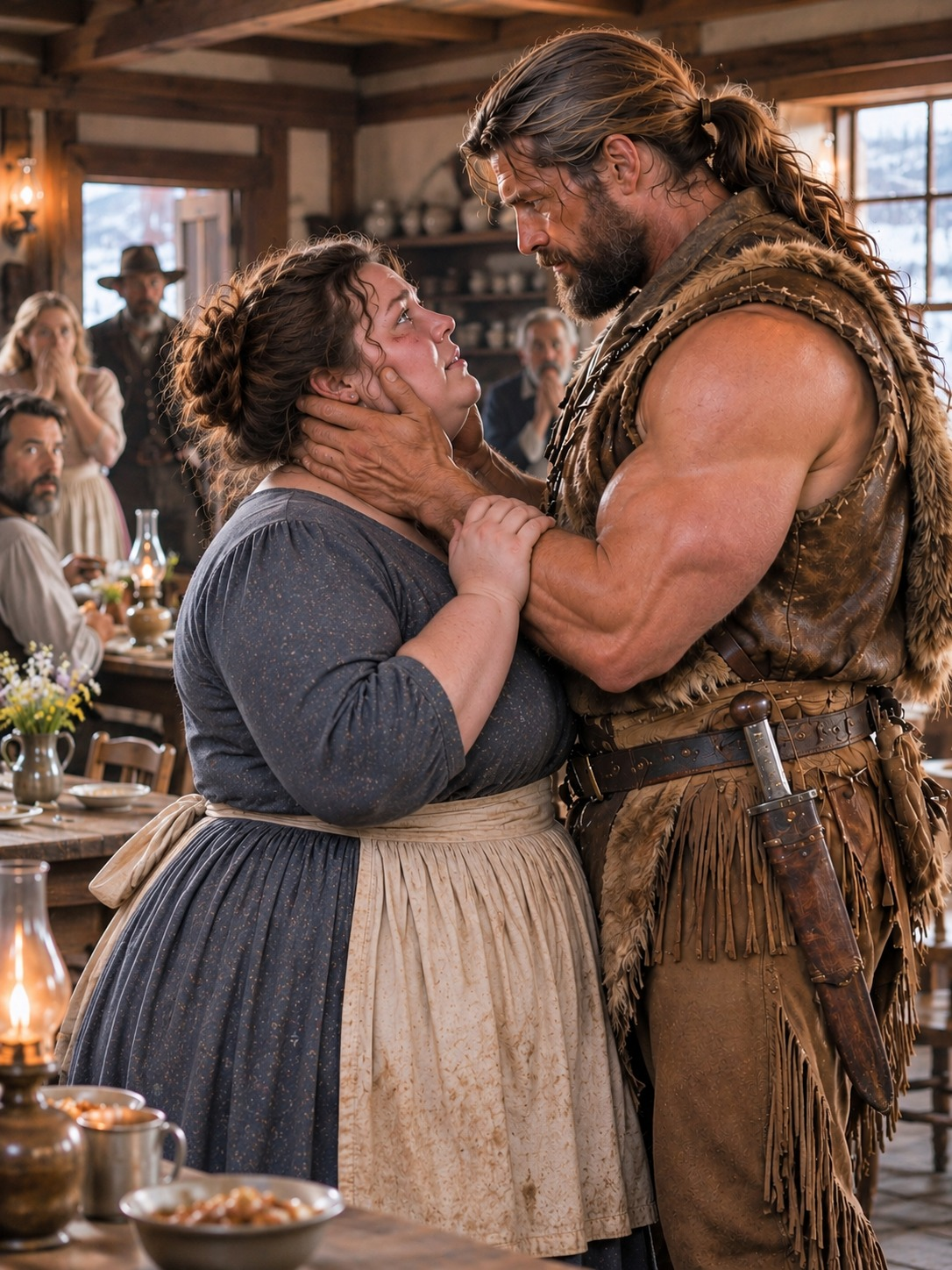
The woman had disappeared before I could reach the front door.
I stood in the middle of the dining room, staring through the window at the empty street. The silver bracelet she had held was still burned into my memory.
I knew that bracelet.
I had seen it inside my father's locked wooden box.
And I had seen it in the photograph of the woman standing beside him.
"Miss Hattie?"
Clara's voice came from behind me.
I turned.
"Bring me my coat."
She looked toward the window.
"You're going after her?"
"Yes."
"But it's getting dark."
"Then we shouldn't waste time."
Clara hesitated.
"Should I tell someone?"
I thought of Josiah.
I thought of the sheriff.
I thought of Caleb being dragged away in chains while a man who might have murdered my father walked freely through town.
"No," I said. "Don't tell anyone."
I went upstairs and changed into my dark brown traveling coat. I wrapped a wool scarf around my neck, slipped the old iron key into my pocket, and tucked the newspaper clipping inside my dress.
Before leaving, I returned to the parlor.
The photograph remained on the writing desk.
I picked it up once more.
My father stood beside the mysterious woman, holding a baby.
I looked closely at his expression.
He was smiling.
Not the tired, polite smile I remembered from my childhood.
This was different.
He looked happy.
Beside him, the woman rested one hand against his arm.
There was something familiar about her face, something that made my chest ache.
I turned the photograph over.
Hattie, the day everything changed.
I wondered whether the words had been written before or after the woman disappeared.
I wondered whether my father had spent his final years hoping she would return.
Most of all, I wondered whether he had known that I would one day discover the truth.
I slipped the photograph into my coat.
Then I went downstairs.
Clara was waiting beside the door with a lantern.
"I'll go with you," she said.
"No."
"Miss Hattie—"
"You're needed here."
She frowned.
"I can take care of the house."
"I know you can."
"Then let me come."
I looked at her for a moment.
Clara was young enough to believe that courage meant walking directly toward danger.
I had lived long enough to understand that sometimes courage meant knowing when to stay behind.
"If I'm not back within two hours, go to Doctor Bell. Tell him I need help."
She nodded reluctantly.
I opened the door.
The cold air struck my face.
The street was nearly empty, and the last daylight had begun disappearing behind the rooftops.
I headed north.
The abandoned church stood beyond the edge of Bitter Creek, near the beginning of the pine forest. It had been built before the town became a proper settlement, when the only people living in the valley were ranchers, hunters, and families trying to escape the crowded eastern territories.
My father had taken me there every Sunday until I was about twelve.
Then he stopped.
He never explained why.
I had asked him once whether the church had become unsafe.
He had only answered, "Some places hold memories that are better left alone."
At the time, I had thought he meant the old graveyard.
Now I wasn't so sure.
I walked along the muddy road, keeping the lantern low.
The wind moved through the trees.
Every few minutes, I stopped and listened.
There were no footsteps behind me.
No horse.
No voices.
Still, I couldn't shake the feeling that someone was watching.
When I reached the edge of the forest, I saw a faint light between the trees.
Someone was there.
I extinguished my lantern and continued carefully.
The woman stood beneath a large pine tree.
Her blue traveling cloak was pulled tightly around her shoulders. A small leather case rested at her feet.
She was older than I had first realized.
Perhaps in her late fifties.
Her hair was dark beneath the bonnet, though several silver strands escaped near her temples.
When she heard me approach, she turned.
For several seconds, neither of us spoke.
Then she raised the silver bracelet.
"You came."
I stopped several feet away.
"Who are you?"
She looked at me as though the question hurt.
"My name is Eleanor."
The world seemed to stop.
I had read that name in the newspaper.
Eleanor Whitcomb.
The woman my father had supposedly lost in a fire twenty-one years earlier.
I stared at her.
"You're my mother."
Her eyes filled with tears.
She looked down at the bracelet.
"Yes."
I couldn't move.
I had imagined meeting my mother many times over the years.
When I was a little girl, I used to picture her walking through the door with a basket of flowers.
When I became a teenager, I imagined her arriving in town and explaining that she had been forced to leave.
As I grew older, those dreams became embarrassing.
Eventually, I stopped having them.
Now the woman standing before me was telling me that every story I had invented might have been wrong.
I wanted to embrace her.
I wanted to slap her.
I wanted to ask why she had abandoned me.
Instead, I heard myself say, "Why didn't you come home?"
Eleanor closed her eyes.
"I tried."
"Fourteen years ago?"
"Long before that."
"Then why didn't I see you?"
She looked toward the church.
"Because I was told you were dead."
I stared at her.
"What?"
"Your father sent word that you had died in an illness. I received the message from a man who claimed to be working for him."
I shook my head.
"My father never told me that."
"He wouldn't have."
"Why?"
Eleanor took a step closer.
"Because Thomas believed someone was watching the house. He was afraid that if you knew I was alive, you would become a target."
I felt anger rising.
"He could have told me."
"You were young."
"I was twenty-five when he died."
"I know."
"Old enough to know whether my mother was alive."
Her eyes lowered.
"I know, Hattie."
The simplicity of her answer made me angrier.
I had spent thirty-nine years believing I was unwanted.
Thirty-nine years wondering why other women had mothers who sent them letters, knitted them scarves, and worried about their marriages.
I had nobody.
And now someone stood before me claiming that she had been alive all along.
"Where were you?" I asked.
Eleanor looked toward the northern ridge.
"Living under another name."
"Why?"
"Because the men who wanted your father's land believed I had died. They wanted the original property agreements, and they believed I knew where Thomas had hidden them."
I thought of the wooden box.
The map.
The key.
The newspaper clipping.
"Josiah?"
Eleanor nodded.
"Josiah was one of them."
I swallowed.
"Did he kill my father?"
She looked at me for a long moment.
"I believe he helped arrange it."
The words landed heavily.
I turned away.
For years, I had believed that grief was something I had already finished carrying.
Now I discovered that I had been carrying only part of it.
"Why did you come today?"
Eleanor reached into her coat and removed a folded letter.
"Because I heard Caleb had returned."
I looked at her sharply.
"You know Caleb?"
She nodded.
"He saved my life."
I stared at her.
"When?"
"Twenty-one years ago."
I waited.
Eleanor sat on a fallen tree and placed the letter beside her.
"Your father and I were living near the northern ridge when the first trouble began. A group of men came to the settlement claiming they had purchased the land. They carried documents with official seals, but Thomas knew the signatures were false."
"Why didn't he go to the authorities?"
"He did. The sheriff at the time refused to investigate. A week later, our cabin caught fire."
I looked toward the church.
"What happened to you?"
Eleanor's fingers tightened around the letter.
"I was carrying your sister."
My breath caught.
"Your sister?"
She nodded.
"Her name was Ruth."
The name sounded strange.
A name that should have been familiar.
A name that should have belonged to someone I had known all my life.
"Was she the baby in the photograph?"
"Yes."
"What happened to her?"
Eleanor looked away.
"I don't know."
My stomach tightened.
"You don't know?"
"The night of the fire, Thomas carried you out through the back window. I was trying to reach Ruth when part of the roof collapsed."
She paused.
"When I woke, I was in a small cabin several miles away. Caleb had found me."
I stared at her.
"Caleb?"
"He had been helping your father move the property records. He found me unconscious near the creek and brought me to safety."
"Where was Ruth?"
Eleanor shook her head.
"Nobody knew."
I looked down at the silver bracelet.
"Was this hers?"
"Yes."
"Then why do you have it?"
"Because I found it years later."
"Where?"
Eleanor took a slow breath.
"In a room belonging to a woman who claimed she had raised an orphaned child."
My heart began beating faster.
"Where is that woman?"
"Dead."
I stepped closer.
"And the child?"
Eleanor looked at me.
"That's what I've been trying to discover."
For a moment, I couldn't speak.
I had spent the entire afternoon believing that my mother had returned to explain my past.
Instead, she had brought another mystery.
My missing sister might still be alive.
"Why didn't Caleb tell me?"
"Because he promised your father he would protect the truth until he could find Ruth."
"That's not protection. That's keeping me ignorant."
Eleanor nodded.
"Your father made mistakes."
I looked at her.
"Did he know you were alive?"
"Yes."
The answer was immediate.
I felt something inside me break.
"He knew?"
Eleanor's voice trembled.
"He visited me twice after the fire. The last time was the winter before he died."
I closed my eyes.
My father had been sitting across from me at the breakfast table.
He had been helping me repair the kitchen roof.
He had been asking whether I was eating enough.
And all that time, he knew my mother was alive.
"Why didn't he bring you home?"
"Because someone was threatening to take you away."
"Who?"
Eleanor looked directly at me.
"Silas Rourke."
The name Caleb had mentioned.
The land speculator.
I remembered the property documents and Josiah's offer.
"Why does he want the boarding house?"
"Because the original agreements are connected to the land beneath it. Your father placed the documents in your name when you were still a child."
I frowned.
"But why?"
"Because you were the only person he trusted to keep them safe."
I thought of the mortgage.
The strange figures.
The pressure to sell.
Josiah had not been offering to help me.
He had been trying to take something.
Something that could be worth far more than the building itself.
Eleanor reached for my hand.
I pulled away instinctively.
She stopped.
"I understand if you don't want to forgive me."
I looked at her.
"I don't even know you."
Her expression crumpled.
"You're right."
The words were quiet.
"I don't expect you to."
For a moment, I saw something in her face that I recognized.
The same exhaustion I saw in my own reflection every morning.
The same look of someone who had spent too many years carrying a burden alone.
I looked away.
"Did my father love you?"
Eleanor smiled sadly.
"More than anything."
"Then why did he let me believe I was alone?"
"Because he believed he was protecting you."
I shook my head.
"Everyone keeps telling me that. Protecting me. Keeping me safe. Making decisions for me."
I looked at her.
"What about what I wanted?"
Eleanor said nothing.
I turned toward the church.
Its windows were dark, and the wooden door hung slightly crooked on its hinges.
A memory came back to me.
My father carrying me up those steps.
The smell of old pine.
A small wooden box beneath the pulpit.
I had once asked him what was inside.
He had told me it was something that belonged to the families who had settled in Bitter Creek.
I had forgotten about it.
Now I remembered.
"Does the church have anything to do with the property papers?"
Eleanor nodded.
"Your father hid something there."
"What?"
"The final agreement."
I looked at her.
"Then why didn't you retrieve it?"
"Because the church was watched."
I glanced through the trees.
"By whom?"
"Josiah's men."
A distant sound interrupted us.
A horse.
Then another.
Eleanor stood immediately.
"Someone is coming."
I extinguished the lantern completely.
We moved behind the large pine tree.
Through the branches, I saw two riders approaching the church.
One carried a lantern.
The other had a rifle strapped across his saddle.
They dismounted.
One of them walked toward the entrance.
The second remained near the horses.
I recognized the first man.
It was the deputy with the scar beneath his chin.
The one who had helped arrest Caleb.
He looked around before opening the church door.
"Search the place," he said.
The second man frowned.
"What are we looking for?"
"The papers."
"Which papers?"
"The ones Thomas left."
The deputy paused.
Then added something that made my blood turn cold.
"Rourke wants them before the girl finds out who her sister really is."
I turned toward Eleanor.
She was staring at the church.
Her hand had moved to her mouth.
I whispered, "Who is Ruth?"
Eleanor shook her head.
"I don't know."
"Then why did he say—"
A sudden crash came from inside the church.
The deputy shouted.
"Found it!"
I looked through the branches.
He emerged carrying a small wooden box.
He opened it beneath the lantern.
Then his face changed.
He looked at the second rider.
"It's empty."
The second man dismounted.
"Are you certain?"
The deputy turned the box upside down.
A single piece of paper fell into the mud.
He picked it up.
Read it.
Then laughed.
"What does it say?" the other man asked.
The deputy held the paper toward the lantern.
His expression became unreadable.
"She's already got it."
I felt Eleanor's hand close around mine.
The second rider suddenly looked toward the trees.
"Who's there?"
Neither of us moved.
He stepped away from his horse.
Slowly.
His boots crunched against the pine needles.
Then he raised his rifle.
"Come out."
Eleanor pulled me behind the tree.
I held my breath.
The man walked closer.
One step.
Then another.
He stopped only a few feet away.
And through the darkness, I heard him whisper a name.
Not mine.
Not Eleanor's.
A name I had never heard before.
"Ruth?"
Eleanor's grip tightened around my hand.
Because from somewhere behind us, a woman's voice answered.
"I'm here."






Comments 0