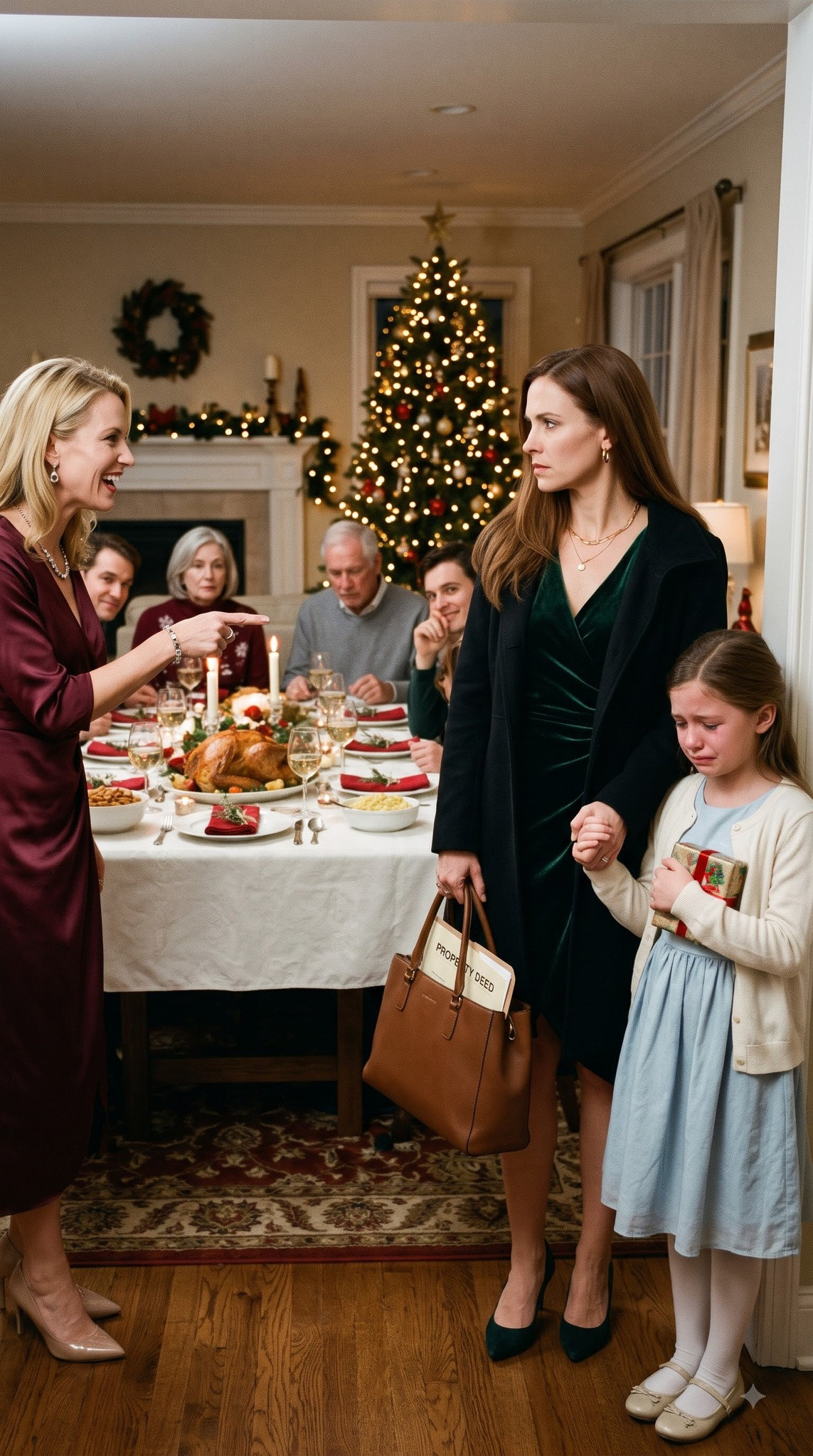
"Vanessa must never be allowed to turn your kindness into a debt you owe her."
I read the sentence three times.
My grandfather had underlined it so heavily that the pen had nearly torn through the paper.
Across from me, my mother began crying harder.
My father stood beside the fireplace, staring at the letter as though he wished he could make it disappear.
I looked up.
"Grandpa wrote this?"
Neither answered.
I held the paper higher.
"Five years ago, he wrote this about Vanessa, and you kept it from me?"
My father rubbed his forehead.
"Emily, you need to understand the circumstances."
"No. I need you to explain why my grandfather warned me about my own sister."
My mother reached toward the letter.
"Please, sweetheart. Let us explain before you read the rest."
I pulled it away.
For thirty-eight years, I had listened to my parents explain why Vanessa deserved another chance.
Another loan.
Another favor.
Another excuse.
But this time, I wasn't going to let them decide which parts of the truth I was allowed to hear.
I unfolded the second page.
And I kept reading.
My dear Emily,
If you are reading this, I hope you have already learned something I spent too many years trying to teach your mother.
Being generous does not mean giving people permission to take advantage of you.
You have always been the child who notices when someone else needs help. You give before anyone asks. You forgive before anyone apologizes. Those are beautiful qualities, but they can become dangerous when the people around you begin treating them as obligations.
I love both of my granddaughters. Nothing will ever change that.
But Vanessa has spent too much of her life believing that wanting something is the same as deserving it.
I stopped.
My throat tightened.
Grandpa had never spoken cruelly about Vanessa.
He had corrected her when she was wrong, but he had never mocked her or made her feel worthless.
He had loved her.
He had simply refused to pretend that her behavior was acceptable.
I remembered one afternoon when I was seventeen.
Vanessa had borrowed money from Grandpa to repair her car.
Three months later, she bought herself an expensive handbag.
When Grandpa asked about the loan, she accused him of caring more about money than family.
He had looked at her for a long moment.
Then he said, "No, sweetheart. I care about keeping promises."
She hadn't spoken to him for two weeks.
I hadn't thought about that incident in years.
Now, holding his letter, I wondered how many similar conversations had taken place without my knowledge.
I continued reading.
I have made arrangements for my estate according to what I believe is fair. Fair does not always mean equal, especially when people have already received different kinds of help.
Your mother knows that I have helped Vanessa financially more than once. I have kept records, not because I wanted to punish her, but because I wanted the truth to remain clear after I was gone.
If Vanessa ever tells you that you owe her something because you received an inheritance, remember that you are not responsible for balancing accounts that have already been settled.
Then came the sentence he had underlined.
Vanessa must never be allowed to turn your kindness into a debt you owe her.
Below it was another paragraph.
Whatever you build with what I leave you belongs to you. Not to your parents. Not to your sister. Not to anyone who believes family gives them the right to claim the work of your hands.
My vision blurred.
I lowered the letter.
For five years, I had been paying the mortgage on a house I didn't live in.
For five years, I had allowed my sister to enjoy the security of a beautiful home while I raised my daughter in a modest apartment.
For five years, I had convinced myself that Grandpa would have wanted me to help her.
And perhaps he would have.
But he would never have wanted me to surrender my judgment along with my generosity.
I looked at my father.
"You knew."
He didn't answer.
"You knew Grandpa warned me about Vanessa."
"Emily—"
"And you let me buy that house for her."
My mother wiped her cheeks.
"We didn't make you buy it."
I turned toward her.
"No. You didn't."
I folded the letter carefully.
"But you watched me do it. You watched me pay for everything. And every time I tried to discuss rent, you told me Vanessa needed more time."
"She did need help."
"Five years, Mom."
My voice remained quiet.
"Five years."
My father stepped forward.
"That house has nothing to do with your grandfather's letter."
I stared at him.
"Then why did you tell me there were things about his estate I didn't understand?"
He glanced at my mother.
She looked away.
Something passed between them.
A silent exchange.
The kind that happens when two people know the same secret and are trying to decide which one will admit it.
I felt my stomach tighten.
"What else are you hiding?"
My father exhaled.
"Sit down, Emily."
"No."
"Please."
"I've spent my entire life sitting down while you explain why Vanessa deserves whatever she wants."
His face hardened.
"That's unfair."
"Then tell me the truth."
He looked at the envelope in my hand.
Finally, he said, "Your grandfather gave Vanessa money before he died."
I frowned.
"I know he helped her."
"More than you realize."
"How much?"
My mother began shaking her head.
"Richard, don't."
I looked between them.
"How much?"
My father swallowed.
"Seventy-five thousand dollars."
For a moment, I thought I had misheard him.
"Seventy-five thousand?"
He nodded.
I stared at my mother.
"Grandpa gave Vanessa seventy-five thousand dollars?"
"It wasn't a gift," she whispered.
My father closed his eyes.
My pulse quickened.
"What do you mean?"
My mother looked toward the fireplace.
"He helped her with a business investment."
"Which business?"
Neither answered.
I remembered Vanessa talking about starting a boutique years earlier.
But that had happened after Grandpa died.
Before that, she had tried several things.
A jewelry business.
An online clothing store.
A partnership selling imported furniture.
Most lasted less than a year.
"Mom."
She looked at me.
"Which business?"
"The furniture company."
I remembered it immediately.
Vanessa had called it Collins Home Collection.
She had rented a small warehouse.
She had promised everyone that she was about to become wealthy.
Then, less than eighteen months later, the business disappeared.
Whenever I asked what happened, she said the market had changed.
I had believed her.
"Grandpa invested in that?"
My father nodded.
"She told him she had a guaranteed contract."
"Did she?"
"No."
The answer was barely audible.
I stared at him.
"What happened to the money?"
My mother began crying again.
"Emily, it was a difficult time."
"What happened?"
My father looked down.
"Most of it was lost."
I felt a strange pressure behind my eyes.
Grandpa had worked his entire life.
He had saved carefully.
He had repaired his own appliances rather than replace them.
He had driven the same truck for sixteen years.
And Vanessa had taken seventy-five thousand dollars from him for a business that failed.
"Did she pay him back?"
Silence.
I already knew the answer.
"Did she even try?"
My father looked at me.
"She was struggling."
There it was again.
The same explanation.
The same excuse.
The same endless protection.
I laughed once.
A short, humorless sound.
"Of course she was."
My mother stood.
"Emily, your grandfather forgave her."
"Did he?"
"Yes."
"Then why did he write this letter?"
Neither answered.
I looked down at the pages.
At the underlined warning.
At the careful handwriting of a man who had known me better than my own parents seemed to.
Then I noticed something near the bottom.
A reference to an attached accounting.
I turned the page.
There was no attachment.
I looked inside the envelope.
Empty.
I raised my eyes.
"Where's the accounting?"
My father frowned.
"What?"
"Grandpa says he kept records of the money he gave Vanessa. Where are they?"
My mother sat down again.
"Those papers aren't important."
I stared at her.
"Then you won't mind giving them to me."
"Emily—"
"Where are they?"
My father walked toward the window.
"I don't know."
I didn't believe him.
Not anymore.
I sat in my parents' living room with my grandfather's letter in my lap and tried to understand how much of my life had been shaped by things they had chosen not to tell me.
The inheritance I received after Grandpa died had seemed generous.
It had helped me purchase the house.
But I had never compared my share to Vanessa's.
I didn't want to.
I had loved my grandfather, and the last thing I wanted was to turn his death into a competition over money.
Vanessa, however, had never stopped talking about it.
Whenever we argued, she reminded me that Grandpa had favored me.
Whenever I made a financial decision she disliked, she suggested that I had been lucky.
Whenever I refused to lend her money, she mentioned the inheritance.
I had spent years feeling vaguely guilty.
Now I wondered whether that guilt had been carefully encouraged.
"Did Vanessa know about the letter?" I asked.
My mother looked at my father.
He answered.
"She knew your grandfather had concerns."
"That's not what I asked."
He sighed.
"Yes. She knew there was a letter."
I stared at him.
"She read it?"
"Not all of it."
"How much?"
My mother spoke quietly.
"Enough."
I looked down at the pages.
So Vanessa knew.
She knew Grandpa had warned me about her.
She knew he had kept records of the money he had given her.
And she knew I had never received his letter.
For five years, she had allowed me to believe that my inheritance came with some unspoken obligation to help her.
I felt sick.
"Why didn't you give me this after the funeral?"
My mother twisted her hands together.
"Because Vanessa was already devastated."
"By Grandpa's death?"
"By everything."
I waited.
"She was upset about the will."
"Why?"
My father answered.
"She believed she should have received more."
I stared at him.
"Even after Grandpa gave her seventy-five thousand dollars?"
"He considered that when he divided the estate."
I looked at the letter again.
Fair does not always mean equal.
Now I understood.
Grandpa had accounted for the financial help he had already given Vanessa.
He hadn't punished her.
He had simply refused to pretend that the earlier money didn't exist.
But Vanessa had apparently viewed the decision as an injustice.
And my parents had allowed that belief to grow.
"How much did she receive from the estate?" I asked.
My father hesitated.
"About twelve thousand dollars, along with the items listed in the will."
I thought about the money I had received.
Just over ninety thousand.
A substantial difference.
But when I added the earlier seventy-five thousand dollars, the totals looked very different.
Grandpa hadn't been trying to favor me.
He had been trying to balance what each granddaughter had already received.
"Did Vanessa know he counted the business money?"
My mother nodded.
"She didn't agree with it."
I closed my eyes.
Of course she didn't.
"She said the business money was a loan," my father explained. "She thought it shouldn't affect her inheritance."
"Did she repay the loan?"
"No."
"Then why should Grandpa have ignored it?"
My father said nothing.
I stood.
"I want copies of the accounting."
My mother looked frightened.
"Emily, please. This is all in the past."
"No. It isn't."
I held up the letter.
"Because someone is using Grandpa's estate to claim ownership of a house I bought after he died."
My father's expression changed.
"That's not what Vanessa is doing."
I looked directly at him.
"Then explain the affidavit."
He rubbed his forehead.
"Your sister believes she has an equitable interest because she's lived there for years and improved the property."
"She lived there because I allowed her to."
"She made it her home."
"That doesn't make her the owner."
He sighed.
"You're looking at this too narrowly."
I almost laughed.
"Legally?"
"Emotionally."
I stared at him.
"Dad, someone signed my name to a document I never authorized."
He looked away.
I stepped closer.
"Do you understand how serious that is?"
"Nobody intended to hurt you."
"That's not an answer."
My mother stood.
"Vanessa was afraid."
"Of what?"
"Of losing her home."
I looked at her.
"Why would she lose it?"
My mother hesitated.
Then said, "Because you never promised she could stay forever."
I felt something settle inside me.
There it was.
The truth beneath five years of excuses.
Vanessa hadn't been satisfied with free housing.
She wanted a guarantee.
And instead of asking me to discuss a long-term arrangement, she had apparently decided to create one without my permission.
"Mom," I said quietly, "you could have asked me."
My mother looked down.
"You would have said no."
I stared at her.
"To giving away my house?"
She didn't answer.
I shook my head.
"You knew I'd say no because you knew it wasn't yours to give."
My father stepped between us.
"Emily, let's not turn this into something ugly."
I looked at him.
"It's already ugly."
I left my parents' house at 8:14 p.m.
I took Grandpa's letter with me.
My mother had asked me to leave it.
I refused.
It had been addressed to me.
It belonged to me.
And I wasn't going to let anyone hide it again.
Before I reached my car, my father followed me onto the porch.
"Emily."
I stopped.
He closed the door behind him.
For a moment, he looked tired rather than angry.
"Your mother is upset."
"I know."
"She's afraid this is going to destroy the family."
I looked at him.
"Dad, Vanessa tried to claim my property."
"Allegedly."
The word surprised me.
"Allegedly?"
He sighed.
"I'm just saying we don't know everything."
I stared at him.
"You signed the affidavit."
"Yes."
"Did you read it?"
He hesitated.
"Most of it."
"Did you know it claimed I had agreed to an ownership arrangement?"
He looked toward the street.
"Dad."
He swallowed.
"Vanessa told us you had discussed it."
I felt my heart sink.
"And you believed her?"
"She's your sister."
"That's not an answer."
He looked at me.
"She said you were planning to transfer the house eventually."
"I never said that."
"Then there was a misunderstanding."
I stared at him.
"A misunderstanding doesn't explain my signature appearing on a document I never signed."
His expression tightened.
"Your mother and I didn't sign your name."
"Then who did?"
"I don't know."
I studied his face.
For once, I believed that part.
He looked genuinely uncomfortable.
But discomfort wasn't the same as innocence.
He had signed a sworn statement supporting a claim involving my property without verifying that I agreed.
And now he wanted me to treat it as a family disagreement.
"Did Vanessa tell you about the second deed?" I asked.
He blinked.
"What second deed?"
I watched him carefully.
"The one transferring the house into her name."
His face lost color.
For several seconds, he said nothing.
Then he whispered, "She wasn't supposed to do that."
I froze.
"What?"
He looked toward the front door.
Then back at me.
"Emily, listen."
I stepped closer.
"She wasn't supposed to do what?"
He rubbed his mouth.
"Your sister was only supposed to establish that she had contributed to the property."
"Only?"
"We thought it would protect her."
"From what?"
He didn't answer.
I stared at him.
"Dad, what did you agree to?"
His eyes filled with something I had rarely seen.
Regret.
"We agreed to help her document her position."
"By signing the affidavit?"
"Yes."
"Did you know she planned to transfer ownership?"
"No."
"Are you telling me the truth?"
He looked directly at me.
"Yes."
I wanted to believe him.
But I had wanted to believe him about too many things.
I took out my phone.
"I'm going to tell Rebecca everything you just said."
His expression changed.
"Emily, please don't involve lawyers in this conversation."
"Someone already involved legal documents."
"That's different."
"No, Dad. It isn't."
I opened my car door.
He reached toward me but stopped before touching my arm.
"Emily."
I looked back.
He lowered his voice.
"Whatever happens, don't let Vanessa know you have that letter."
I froze.
"Why?"
He glanced toward the house.
"Because she believes your grandfather left something else."
My pulse quickened.
"What something else?"
He shook his head.
"I don't know."
"Then how do you know she believes it?"
He hesitated.
"She asked your mother about it last month."
"What did she ask?"
My father looked exhausted.
"She wanted to know whether there were any documents Grandpa kept outside the estate file."
I stared at him.
"Why?"
"I don't know."
I thought about Mark's description of the locked folder in Vanessa's desk.
The folder labeled with Grandpa Arthur's name.
The missing accounting.
The letter my parents had hidden.
Suddenly, the pieces seemed connected.
But I couldn't yet see how.
I got into my car.
"Dad, if you know anything else, tell Rebecca."
He looked at me for a long moment.
Then stepped back.
I closed the door.
And drove away.
Claire was waiting when I returned home.
Lily was asleep.
The apartment smelled like cinnamon and sugar.
I placed my handbag on the kitchen counter and took out Grandpa's letter.
Claire read it slowly.
When she reached the underlined sentence about Vanessa, she looked up.
"Your grandfather knew."
I nodded.
"He knew what she was like."
Claire continued reading.
Then she sat down.
"Emily, this changes everything."
"Not legally. At least, I don't think so."
"Maybe not. But it explains why Vanessa keeps acting like you owe her."
I pulled out a chair.
"Grandpa gave her seventy-five thousand dollars before he died."
Claire's eyebrows rose.
"What?"
"For a business that failed."
"And she still complained about your inheritance?"
"Apparently."
Claire shook her head.
"Unbelievable."
I looked at the letter.
"My parents hid this because they didn't want Vanessa upset."
Claire was quiet.
Then she asked, "Did they know about the second deed?"
"My father says no."
"Do you believe him?"
I thought about his face when I mentioned it.
"I think he knew about the affidavit. I think he believed he was helping Vanessa establish some kind of claim. But I don't think he knew she was trying to transfer the house outright."
Claire leaned back.
"That's not exactly reassuring."
"No."
She studied me.
"What are you going to do now?"
I looked toward Lily's bedroom.
"I'm going to protect what belongs to us."
Claire nodded.
"Good."
I took out my phone and photographed every page of Grandpa's letter.
Then I sent the images to Rebecca with a short explanation.
I included what my parents had admitted.
The seventy-five-thousand-dollar advance.
The missing accounting.
The hidden letter.
My father's statement that Vanessa wasn't supposed to prepare a transfer deed.
I also told Rebecca about the locked folder Mark had mentioned.
A few minutes later, she replied.
Rebecca: Thank you. Preserve the original letter and envelope. Do not write on either. We'll review these materials tomorrow.
Then another message arrived.
Rebecca: I also want to examine the probate records independently. There may be documents your family has not provided.
I stared at the screen.
There may be documents your family has not provided.
I thought about Grandpa's careful handwriting.
The way he had always kept receipts.
The way he labeled boxes in his workshop.
The way he believed that important things should be documented.
If he had kept an accounting of the money he gave Vanessa, it probably existed somewhere.
And if Vanessa had a locked folder bearing his name, she might already know where it was.
I looked at Claire.
"I need to find out what happened to Grandpa's records."
She nodded.
"Then start with the attorney who handled his estate."
I frowned.
"He's retired."
"Do you know his name?"
"Thomas Whitaker."
"Then find out whether his firm still has the file."
I opened my laptop.
Whitaker & Bell Legal Services.
The firm's website was still active.
Thomas Whitaker had retired two years earlier, but his former partner remained.
I found the office number and saved it.
Then I looked at the estate letter again.
Near the bottom was a sentence I hadn't paid much attention to.
I have kept records, not because I wanted to punish her, but because I wanted the truth to remain clear after I was gone.
I read it aloud.
Claire looked at me.
"That sounds deliberate."
"It does."
"Maybe he knew Vanessa would argue about the money."
"Maybe."
I turned the page.
At the bottom, beneath Grandpa's signature, was a handwritten note.
Emily, if questions arise, speak to Thomas. He knows where I kept the original records.
My heart began pounding.
I looked at Claire.
"Thomas Whitaker."
She leaned closer.
"What?"
"Grandpa told me to speak to him."
I pointed to the note.
Claire read it.
Then looked at me.
"Call him tomorrow."
I nodded.
For the first time since Christmas dinner, I felt like I had a direction.
Not revenge.
Not an argument.
A way to find the truth.
The next morning, I called Whitaker & Bell as soon as the office opened.
A receptionist answered.
I explained that I was Arthur Bennett's granddaughter and wanted to speak with someone about his estate records.
She placed me on hold.
After several minutes, a man answered.
"Ms. Carter? This is David Bell."
I sat straighter.
"Thank you for taking my call."
"Of course. I understand you're asking about your grandfather's estate."
"Yes."
"That matter was handled by Thomas Whitaker before his retirement."
"I know."
"May I ask what information you're looking for?"
I took a breath.
"My grandfather left me a personal letter. I only received it two days ago."
There was a pause.
"Two days ago?"
"Yes."
"That's unusual."
"I know."
I explained that the letter referred to financial records and instructed me to speak with Thomas.
David listened carefully.
When I finished, he said, "I can review the archived file to determine what records we still maintain. But I should explain that some communications may be subject to confidentiality restrictions, and I can't promise access to everything."
"I understand."
"Do you have a copy of the letter?"
"Yes."
"Please send it to me."
I emailed the photographs while we were on the phone.
He opened them.
For several seconds, he said nothing.
Then he asked, "Ms. Carter, do you know whether your grandfather maintained a separate ledger?"
I felt my pulse quicken.
"No."
"Did he keep records at his home?"
"Yes. He had a workshop."
"Do you know what happened to its contents?"
I frowned.
"My parents cleared it out after he died."
"All of it?"
"I think so."
He was quiet.
Then said, "I need to check something."
I waited.
I heard papers moving.
A keyboard clicking.
Then David spoke again.
"There's a reference in the archived index to a supplemental accounting prepared shortly before your grandfather's death."
My heart began pounding.
"An accounting?"
"Yes."
"Can you tell me what it says?"
"Not until I've reviewed the file and confirmed what can be released."
I gripped the phone.
"Does it involve Vanessa?"
A pause.
"Her name appears in the index."
I closed my eyes.
There it was.
The missing accounting existed.
At least, it had existed when the estate was handled.
"Mr. Bell, I need to know whether my sister has been using my grandfather's estate to make claims about property I purchased after his death."
His voice became more serious.
"That sounds like a separate legal matter."
"It is."
"Are you represented?"
"Yes. Rebecca Shaw."
"Then I'd prefer to coordinate with her."
I nodded.
"Of course."
He took Rebecca's contact information.
Then said, "Ms. Carter, one more question."
"Yes?"
"Did your grandfather ever mention a property-related arrangement involving your sister?"
I stared at the wall.
"No."
"Not even informally?"
"No. He died before I bought the house."
There was a long pause.
Then David said, "I see."
Something in his voice made me sit straighter.
"Why?"
"I don't want to speculate before reviewing the documents."
"Mr. Bell, please."
He hesitated.
Then said, "The index references a family financial arrangement. But it doesn't appear to identify any specific real estate."
I swallowed.
"So someone may be misrepresenting it?"
"That's a possibility your attorney should evaluate."
I thanked him.
We ended the call.
Then I immediately forwarded the information to Rebecca.
She replied within minutes.
Rebecca: I'll contact him today. This may help us establish the origin of the claims in the affidavit.
I set the phone down.
And tried to breathe.
At noon, Mark sent another message.
Mark: Vanessa is furious. She knows you met with a lawyer.
I stared at the screen.
Then another appeared.
Mark: She says you're trying to destroy her family.
I didn't respond.
A third message arrived.
Mark: She has been calling someone named Mercer all morning.
My stomach tightened.
I typed:
Did you hear what they discussed?
He replied:
Mark: Only part of it. She said the paperwork needed to be fixed before you could challenge it.
I forwarded the message to Rebecca.
Then I wrote back to Mark.
Please don't try to get more information if it puts you in danger or requires accessing anything you're not allowed to access.
He replied:
Mark: I understand. But there's something you should know.
I waited.
Mark: Vanessa told Madison the house would officially be hers soon.
I stared at the words.
Madison.
The same teenager who had laughed at Lily's shoes.
The same girl who had watched her mother humiliate my daughter.
Vanessa had apparently been telling her child that the house would soon belong to them.
I thought about Lily sitting on the floor of our apartment, building a little house out of blocks.
I thought about how carefully she had chosen her Christmas dress.
How she had asked whether Grandma would like it.
How she had whispered that she wanted to go home.
And I realized something.
Vanessa wasn't simply teaching Madison to mock people who had less.
She was teaching her that appearances mattered more than truth.
That expensive things proved superiority.
That someone else's generosity could be treated as an entitlement.
I didn't want Madison punished for her mother's choices.
But I couldn't allow Vanessa's behavior to continue simply because her children had grown accustomed to the benefits.
I typed:
Thank you, Mark. Please take care of yourself.
Then I put the phone away.
That afternoon, I drove past the house.
I hadn't planned to.
I was on my way to the grocery store when I found myself turning onto the familiar street.
The Christmas decorations were still hanging.
The wreath was still on the front door.
The lights along the roofline were still glowing faintly in the gray afternoon.
A dark SUV sat in the driveway.
Vanessa's car.
Mark's sedan was gone.
I slowed down.
The house looked exactly as it had on Christmas night.
Beautiful.
Comfortable.
Expensive.
The kind of place people drove past and admired.
I remembered standing in the empty living room five years earlier, holding the keys.
The walls had needed paint.
The kitchen cabinets were outdated.
The backyard fence was falling apart.
But I had seen potential.
I had imagined renting it someday.
Perhaps selling it when Lily was ready for college.
Perhaps keeping it as a long-term investment that could help us build security.
Instead, I had handed the keys to Vanessa.
She had cried.
She had hugged me.
She had promised she would never forget what I had done.
I sat at the curb for a moment.
Then I noticed movement behind the front window.
Vanessa.
She was standing in the living room with a man I didn't recognize.
He wore a gray coat.
Dark hair.
Tall.
Around fifty.
My heart began pounding.
Mercer.
It had to be.
He was holding a folder.
Vanessa was gesturing toward it.
Her expression was angry.
I couldn't hear anything through the glass.
I didn't try.
I took one photograph from my car, documenting the man's presence without approaching the house.
Then I drove away.
I wasn't going to confront them.
I wasn't going to give Vanessa an excuse to accuse me of harassment.
But I wanted Rebecca to know that the man Mark had described might be meeting with Vanessa again.
I sent the photograph.
A few minutes later, Rebecca called.
"Emily, where are you?"
"Driving."
"Are you near the property?"
"I just passed it."
"Don't go back."
"I wasn't planning to."
"Good. I want you to come to my office."
My pulse quickened.
"Why?"
"We received a response from Hartwell Title."
I gripped the steering wheel.
"What did they say?"
Rebecca paused.
"They've suspended processing on the file pending review."
I exhaled.
"That's good, right?"
"Yes. But there's more."
My stomach tightened.
"What?"
"The transaction file included a document that wasn't in the photographs Mark sent."
I stared at the road.
"What document?"
"A sworn statement concerning your grandfather's estate."
My heart began pounding.
"From who?"
Rebecca's voice became very serious.
"Your mother."
I felt cold.
"What did she say?"
"I'd rather show you the document."
"Rebecca."
"Emily, come to the office."
I swallowed.
"Okay."
"And bring your grandfather's letter."
"I have it."
"Good."
I ended the call.
Then I turned toward downtown.
Rebecca was waiting when I arrived.
She led me into her office and closed the door.
A document lay on her desk.
She didn't waste time.
"Hartwell's legal department provided this after receiving our notice. They confirmed that it was submitted as part of the proposed transaction."
I sat down.
Rebecca slid the paper toward me.
At the top were the words:
DECLARATION REGARDING FAMILY ESTATE ARRANGEMENT.
Below was my mother's name.
Margaret Bennett Carter.
I read the first paragraph.
Then the second.
My stomach tightened.
The declaration claimed that Grandpa Arthur had intended his estate to benefit both granddaughters equally.
It described the earlier seventy-five-thousand-dollar payment to Vanessa as a business loan rather than an advance considered in the estate distribution.
Then it claimed that my later purchase of the five-bedroom house had been understood within the family as a way to compensate Vanessa for the unequal inheritance.
I stared at the words.
That was absurd.
Grandpa had died before I bought the house.
There had been no agreement.
No compensation arrangement.
No promise.
But my mother had signed a statement suggesting otherwise.
I looked at Rebecca.
"She lied."
Rebecca nodded carefully.
"The declaration contains claims that conflict with what you've told me and with the documents we've reviewed."
I read farther.
Then stopped.
Near the bottom was a sentence that made my hands go cold.
Emily Carter acknowledged that the property would ultimately be transferred to Vanessa Collins once the family's financial arrangements were complete.
I looked up.
"I never acknowledged that."
"I understand."
"Not once."
Rebecca leaned forward.
"Emily, I believe you. But we need to establish exactly how this statement was prepared and whether your mother understood what she was signing."
I stared at the signature.
My mother's handwriting.
I knew it.
I had seen it on birthday cards, school forms, and Christmas checks my entire life.
There was no question.
She had signed this.
I thought about the previous evening.
Her tears.
Her pleas.
Her insistence that everything was in the past.
And I realized that while she was crying about family unity, she had already signed a document that could be used to undermine my ownership.
I felt something inside me harden.
"Rebecca, I want to protect the house."
"We're taking steps to do that."
"And I want to know who forged my signature."
"That's part of the investigation."
"And I want my parents to stop pretending this is a misunderstanding."
Rebecca studied me.
"That may require accepting that they won't respond the way you hope."
I looked down at the declaration.
"I think I'm starting to understand that."
She opened another folder.
"There's one more issue."
I looked up.
"What?"
"The document references an exhibit."
"An exhibit?"
"Yes. Supposedly a written acknowledgment signed by you several years ago."
My pulse quickened.
"I never signed anything."
"That's what we need to verify."
She turned a page toward me.
It contained a scanned copy of a short letter.
The heading read:
FAMILY PROPERTY ACKNOWLEDGMENT.
My name appeared at the bottom.
Again.
But this signature was different.
It looked much closer to my real handwriting.
I stared at it.
Then I noticed the date.
Five years earlier.
Three weeks after Vanessa moved into the house.
I remembered that period clearly.
Lily had been six.
I had been working long hours.
Vanessa had called constantly about repairs, furniture, and moving arrangements.
I had signed dozens of legitimate documents related to the property.
Contractor approvals.
Insurance forms.
Utility authorizations.
But I had never signed a letter promising to transfer ownership.
I read the acknowledgment.
It claimed that I recognized Vanessa's long-term beneficial interest in the property.
It claimed that the arrangement was intended to become permanent.
It claimed that I would execute further documents when requested.
I felt sick.
"Rebecca, I didn't sign this."
She nodded.
"Then we'll treat it as disputed."
I stared at the page.
Something about the signature bothered me.
Not because it was obviously fake.
Because it looked familiar.
Very familiar.
I leaned closer.
Then I realized why.
The signature had a distinctive loop in the capital E.
A loop I used years ago.
Before I changed the way I signed my name.
I looked at the date again.
Three weeks after the closing.
Then I remembered a document Vanessa had asked me to sign that summer.
A simple authorization allowing her to communicate with the homeowners association about landscaping.
She had brought it to my apartment.
I had signed it at the kitchen table.
She had taken it with her.
I remembered because Lily had spilled orange juice on the corner of the page.
I leaned closer to the scanned acknowledgment.
Near the bottom, just beside the signature, was a faint irregular mark.
A stain.
Pale orange.
My heart began pounding.
"Rebecca."
She looked up.
"I think I know where this signature came from."
I pointed to the mark.
"Five years ago, I signed an HOA authorization for Vanessa. Lily spilled orange juice on it."
Rebecca leaned closer.
I continued.
"The signature looked exactly like that."
She studied the page.
"Are you saying someone may have reused an image of your signature?"
"Yes."
"Do you still have a copy of the original authorization?"
I thought quickly.
"Maybe. I kept most of the property paperwork."
Rebecca nodded.
"Find it. If the marks and signature match, that could be important evidence."
I stared at the scanned page.
For five years, Vanessa had possessed a document bearing my genuine signature.
A document I had given her because I trusted her.
And now a nearly identical signature appeared on a letter I had never authorized.
I felt cold.
Rebecca closed the folder.
"Emily, we need to preserve this and have the documents examined appropriately."
I nodded.
Then my phone vibrated.
A message from Claire.
Claire: Call me when you can. Something strange happened.
I frowned.
I typed:
What happened? Is Lily okay?
Her reply came immediately.
Claire: Lily is fine. But someone came to your apartment asking about the house.
My heart began pounding.
Who?
Three dots appeared.
Then disappeared.
Then appeared again.
Finally, Claire sent:
Claire: A man in a gray coat. He said he was there to deliver paperwork.
I looked at Rebecca.
"Something's wrong."
She leaned forward.
"What happened?"
I showed her the message.
Her expression changed.
"Did Claire let him inside?"
I typed quickly.
Did you let him in?
Claire replied:
Claire: No. I told him you weren't home. He left an envelope.
I exhaled.
Then another message appeared.
Claire: Emily, there's something written on the envelope.
I stared at the screen.
What?
Claire sent a photograph.
It showed a large white envelope lying on my kitchen counter.
My name was printed across the front.
Below it were four words written in black ink.
FINAL NOTICE BEFORE TRANSFER.
I felt my stomach drop.
Rebecca stood.
"Emily, don't have Claire open it. Ask her to photograph both sides and keep it safe."
I nodded and began typing.
Before I could send the message, my phone rang.
Claire.
I answered immediately.
"Claire?"
Her voice was tense.
"Emily, I need you to listen."
"Is Lily okay?"
"Yes. She's in her room."
"What happened?"
"The man came back."
My heart stopped.
"What?"
"He's outside the building."
I stood so quickly my chair scraped against the floor.
"Don't open the door."
"I haven't."
"Call the police if he threatens you or tries to get inside."
"Emily, that's not why I'm calling."
I froze.
"What do you mean?"
Claire lowered her voice.
"He isn't alone."
I gripped the phone.
"Who is with him?"
There was a pause.
Then Claire whispered, "Your sister."
I stared at Rebecca.
Vanessa.
At my apartment.
With the man in the gray coat.
While Lily was inside.
"Claire, keep the door locked."
"I am."
"Don't let them near Lily."
"I won't."
I grabbed my handbag.
Rebecca was already reaching for her phone.
Then Claire spoke again.
"Emily?"
"What?"
"Vanessa is holding something."
My stomach tightened.
"What is it?"
"A folder."
I closed my eyes.
"What kind of folder?"
Claire's voice trembled.
"It's old. Brown. And there's a name written across the front."
I felt the blood drain from my face.
"Whose name?"
She hesitated.
Then whispered:
"Arthur Bennett."
My grandfather.
The folder Mark had told me about.
The one Vanessa kept locked in her desk.
I stood completely still.
Then Claire said, "Emily, Vanessa is telling the man to give it to Lily."
My heart began pounding.
"What?"
"She's saying Lily needs to know what her mother did."
I felt the room spin.
"Claire, do not let them speak to my daughter."
"I won't."
Then I heard a loud knock through the phone.
Three sharp blows.
Claire stopped speaking.
A man's voice came from the other side of her apartment door.
"Mrs. Carter needs to receive these documents immediately."
I grabbed my keys.
Rebecca was already standing beside me.
Then Vanessa's voice cut through the silence.
Loud.
Cold.
Familiar.
"Tell Emily I know what Grandpa really left her."
I froze.
Claire whispered, "Emily, she's putting something under the door."
I heard paper scraping against the floor.
Then Claire gasped.
"What is it?" I demanded.
She didn't answer.
"Claire!"
Her breathing became uneven.
"Emily, there's a photograph attached."
My mouth went dry.
"A photograph of what?"
Claire was silent for several seconds.
Then she whispered, "It's your grandfather."
I gripped the phone.
"And he's standing beside someone."
My heart began pounding.
"Who?"
Claire didn't answer immediately.
I heard her pick up the photograph.
Then she said, in a voice I barely recognized:
"Emily, the person standing beside him is holding a document with your name on it."
I froze.
"Claire, tell me who it is."
She took a shaky breath.
Then whispered:
"It's someone you told me was dead."






Comments 0