The plaintiff's name was Lily Carter.
My eleven-year-old daughter.
I stared at the court document on Rebecca Shaw's computer screen.
For several seconds, I couldn't understand what I was seeing.
Then I read the name again.
LILY CARTER, A MINOR, BY HER PURPORTED NEXT FRIEND, MARGARET CARTER.
My mother.
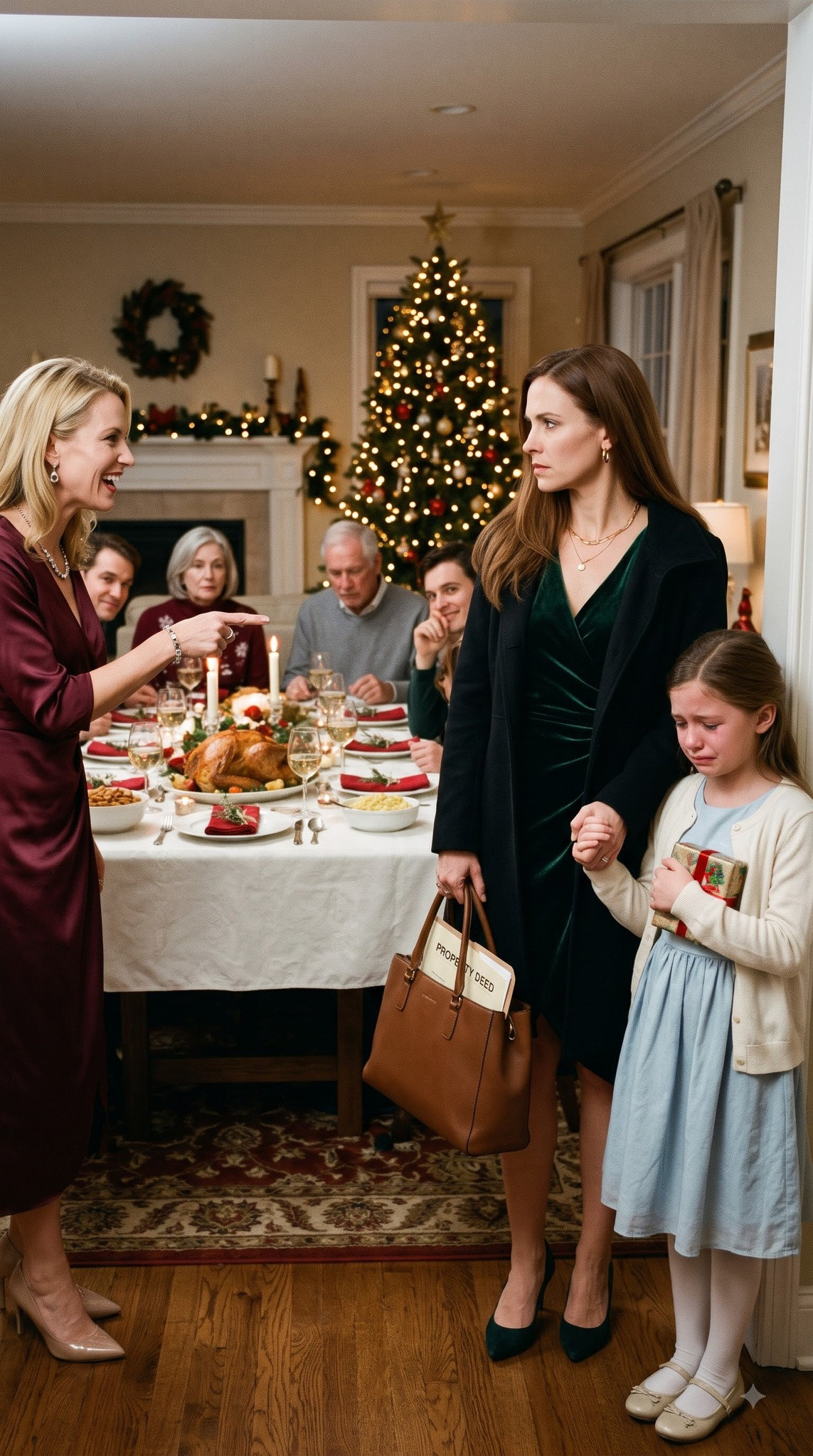
The woman who had watched silently while Vanessa humiliated Lily at Christmas dinner.
The woman who had hidden my grandfather's letter for five years.
The woman who had signed a declaration claiming I promised to give my house to my sister.
And now she was trying to use my daughter's name in a lawsuit against me.
"No," I whispered.
Rebecca didn't speak.
Claire leaned closer to the screen.
"Emily, what is this?"
I pointed at the document.
"That's Lily."
My voice sounded strange.
Distant.
"That's my daughter's name."
Rebecca moved the laptop slightly so we could all see.
The complaint alleged that the property I owned was subject to an unresolved family financial arrangement.
It claimed that my grandfather's estate had created obligations intended to benefit his descendants.
And it suggested that Lily, as his great-granddaughter, had an interest that required protection.
I read the paragraph twice.
Then a third time.
It didn't make sense.
Grandpa had left money to me.
I had used part of that inheritance, my own savings, and a mortgage to purchase the house.
Lily had never owned the property.
She had never been promised ownership.
And she certainly hadn't authorized anyone to sue her mother.
I looked at Rebecca.
"Can my mother do this?"
Rebecca's expression was serious.
"She can attempt to file a complaint. That doesn't mean she has the authority to represent Lily or that the claims have merit."
"But Lily is eleven."
"I know."
"She doesn't even know this is happening."
"That's one of the issues we'll raise."
I stared at the screen.
My mother's name appeared beneath Lily's.
Not as a witness.
Not as a concerned relative.
As the person claiming to act on her behalf.
I felt something cold settle in my chest.
"Rebecca, my mother is using my child."
Rebecca nodded carefully.
"That's what the filing appears to attempt."
Claire covered her mouth.
"Oh my God."
I looked down at my hands.
They were shaking.
Not because I was afraid of losing the house.
Not anymore.
I was angry because the people who had already hurt Lily were now trying to turn her into a legal weapon.
And they had done it without telling me.
Without asking.
Without considering what would happen if Lily found out that her own grandmother had placed her name on a lawsuit against her mother.
I looked back at Rebecca.
"How do we stop this?"
She opened another document.
"First, we verify the filing with the court. Then we challenge the claimed authority to act for Lily and the legal basis for the property claim. We'll also ask the court to address the recorded notice affecting your title."
I swallowed.
"Can they take the house while we're doing that?"
"Nothing we've seen suggests ownership has transferred. The recorded notice can complicate transactions involving the property, but it doesn't itself transfer title."
I nodded slowly.
Rebecca continued.
"Emily, I need you to remain calm."
I looked at her.
"I am calm."
She studied my face.
Then nodded.
"All right."
I leaned forward.
"But I want one thing understood."
"What?"
"Nobody gets to drag Lily into this and pretend they're protecting her."
Rebecca closed the folder.
"I understand."
I looked at the name on the screen one more time.
Lily Carter.
My little girl.
The child who had spent weeks choosing a Christmas dress.
The child who had asked whether Grandma still liked her.
The child who had trusted every adult at that dinner table.
And now her name was attached to a lawsuit she knew nothing about.
I picked up my phone.
For one terrible moment, I wanted to call my mother and scream.
Instead, I took a screenshot of the filing information Rebecca had shown me.
Then I placed the phone facedown.
I wasn't going to give my family another emotional reaction they could use against me.
Not this time.
Rebecca spent the next hour reviewing the complaint.
Claire sat beside me, occasionally squeezing my hand.
The more we read, the more disturbing the situation became.
The complaint didn't simply claim that Lily had some vague interest in the house.
It alleged that I had failed to honor a family agreement.
It claimed that my grandfather's estate had been distributed under circumstances that required later reconciliation.
And it suggested that my ownership of the property was inconsistent with promises supposedly made among family members.
But there was something important missing.
Evidence.
No signed agreement from me.
No valid deed transferring ownership.
No document showing that Lily possessed any legal interest in the property.
Instead, the complaint relied heavily on declarations from my parents.
My mother claimed she was acting to protect Lily's future.
My father claimed there had been a longstanding family understanding.
And Vanessa had supplied a statement describing the house as the family residence she had occupied for five years.
I read her statement carefully.
She described herself as the person responsible for maintaining the home.
She mentioned renovations.
Landscaping.
Furniture.
Household expenses.
She even claimed that she and Mark had invested substantial money into improving the property.
But she didn't mention the mortgage payments I had made.
She didn't mention the property taxes.
She didn't mention the insurance.
She didn't mention the roof replacement.
And she certainly didn't mention that she had lived there without paying rent.
I looked at Rebecca.
"She makes it sound like I abandoned the house and she rescued it."
Rebecca nodded.
"That's the narrative she's presenting."
"But it's not true."
"Then we'll document the actual financial history."
I opened my property folder.
"I have every payment."
"Good."
I took out the mortgage statements.
The insurance renewals.
The tax records.
The contractor invoices.
Rebecca examined them.
Then she looked at the complaint again.
"Emily, there's a significant difference between living in a property and owning it. The documents you've provided support your ownership and your ongoing financial responsibilities."
I exhaled.
Claire leaned forward.
"Then why would anyone file something like this?"
Rebecca considered the question.
"Sometimes a lawsuit is filed because someone genuinely believes they have a claim. Sometimes it's used to create leverage. We need to establish the facts rather than assume the motive."
I looked at my mother's signature.
"I know her motive."
Rebecca waited.
I swallowed.
"She wants Vanessa to have the house."
Neither woman answered.
I continued.
"And she thinks if she uses Lily's name, I'll be too frightened to fight."
Rebecca looked at me carefully.
"That may be part of the strategy. But we need evidence before making that accusation in court."
I nodded.
I understood.
But I also knew my mother.
I knew the way she spoke when she wanted me to surrender something.
Think about the children.
Don't make things difficult.
Your sister needs stability.
Family should come first.
For years, those phrases had worked.
Now they had been turned into legal language.
And my daughter was trapped in the middle.
At eleven-forty, Rebecca's assistant knocked on the conference room door.
"Rebecca? There's a call for you."
Rebecca looked up.
"From whom?"
"An attorney named Charles Mercer."
My stomach dropped.
Claire turned toward me.
Mercer.
The man in the gray coat.
The man who had accompanied Vanessa to my apartment.
The man who had delivered the threatening envelope.
Rebecca's expression didn't change.
"Please put him through."
She picked up the phone.
"Rebecca Shaw."
I watched her carefully.
"Yes, Mr. Mercer. I'm aware of the filing."
A pause.
"No. My client has not authorized any transfer."
Another pause.
Rebecca's voice became firmer.
"Your client's allegations are disputed, and I expect all relevant documents to be preserved."
She listened.
Then said, "I don't believe an informal conversation would be productive without a clear explanation of your authority and the relief you're seeking."
My heart pounded.
She glanced at me.
"Yes. You may send your proposal in writing."
Another pause.
"No, Mr. Mercer. My client will not be pressured into signing documents based on threats involving her family."
She ended the call.
For several seconds, nobody spoke.
Then I asked, "What did he want?"
Rebecca placed the phone on the desk.
"He says he represents your mother in the property dispute."
I stared at her.
"My mother?"
"Yes."
"Not Vanessa?"
"He said his client is Margaret Carter."
I felt cold.
The man I had seen standing beside Vanessa.
The man who had come to my apartment.
The man who had delivered the threatening letter.
Was now claiming to represent my mother.
"Did he explain why he went to my apartment?"
"He described it as an attempt to deliver documents."
I almost laughed.
"With Vanessa shouting through the door?"
Rebecca nodded.
"I told him that conduct was inappropriate and that future communications should go through counsel."
I looked down.
"What proposal?"
"He says your family wants to resolve the dispute without prolonged litigation."
My stomach tightened.
"By doing what?"
Rebecca looked at her notes.
"He suggested you could transfer the house to a family trust."
I stared at her.
"A trust?"
"Yes."
"For whose benefit?"
"He didn't provide full terms."
I knew the answer before she finished.
Vanessa.
It would always come back to Vanessa.
I leaned back.
"So they want me to give up control of my house."
"That's what the proposal may amount to, depending on the terms."
I shook my head.
"No."
Rebecca nodded.
"We won't agree to anything without reviewing it."
"No, Rebecca. I mean absolutely not."
She studied me.
Then said, "Understood."
I looked toward the window.
For five years, I had made excuses for my sister.
I had told myself she was struggling.
That her children needed stability.
That family helped family.
But now she was using my own daughter to pressure me into surrendering the property.
And somehow, my parents were helping her.
I thought about Grandpa's handwritten words.
No obligation shall be imposed on Emily or Lily.
He had written those words years earlier.
He had known someone might try to make us responsible for debts we didn't owe.
And now, five years after his death, the exact thing he feared was happening.
I returned home shortly after one.
Claire drove because I didn't trust myself to concentrate on traffic.
Lily was sitting at the kitchen table with a coloring book when we arrived.
She looked up.
"Mom!"
I smiled.
"Hey, sweetheart."
She held up a drawing.
It showed a house.
A small yellow house with a red roof.
Two stick figures stood in front.
One tall.
One short.
Both smiling.
"That's us," she said.
I felt my throat tighten.
"It's beautiful."
She pointed to the roof.
"I made it yellow because yellow is happy."
I sat beside her.
"That makes sense."
She studied my face.
"Are you sad?"
I hesitated.
"A little tired."
She nodded.
Then she reached across the table and took my hand.
"You can have my cookie."
I laughed softly.
"That's a very generous offer."
"It's the last chocolate one."
I looked at her.
She was serious.
Completely sincere.
My daughter was offering me the last cookie because she thought I needed cheering up.
And somewhere across town, her grandmother was using her name to claim a house.
I pulled Lily into my arms.
"Keep your cookie, sweetheart."
"Are you sure?"
"Very sure."
She hugged me.
Then whispered, "I love you, Mommy."
I closed my eyes.
"I love you more than anything."
For a moment, I wanted to tell her everything.
I wanted to explain why I had been gone so much.
Why Grandma hadn't called.
Why Aunt Vanessa was angry.
But she was eleven.
She deserved information that helped her feel safe, not adult accusations she couldn't possibly resolve.
So I kissed her forehead and asked whether she wanted to watch a movie that evening.
She smiled.
"Can we make popcorn?"
"Absolutely."
She grinned.
And for a few minutes, the world felt normal again.
At two-thirty, Daniel called.
I stepped into my bedroom.
"Hi."
"Emily, I spoke with Rebecca."
I sat down.
"Thank you."
"She explained the lawsuit."
I closed my eyes.
"Then you know."
"Your mother filed something using Lily's name?"
"Yes."
Daniel swore quietly.
"That's unbelievable."
I stared at the wall.
"Apparently, it's not unbelievable enough."
He was silent for a moment.
Then said, "I'm coming to Chicago."
My stomach tightened.
"Daniel—"
"I know."
"You can't just appear and expect Lily to be comfortable."
"I'm not asking to see her without talking to you first."
I exhaled.
"Okay."
"I want to help with the documents."
I looked toward the bedroom door.
"Why now?"
He was quiet.
Then said, "Because I should have told you what I knew years ago."
I didn't answer.
He continued.
"Emily, I made a lot of mistakes. Leaving you and Lily was the worst of them."
My chest tightened.
I had waited years to hear those words.
And now that he was saying them, they didn't bring the relief I once imagined.
They simply reminded me of everything Lily had missed.
"Daniel, this isn't about our marriage."
"I know."
"Or about fixing what happened."
"I know."
"It's about protecting Lily."
His voice softened.
"That's why I'm coming."
I closed my eyes.
"Then coordinate with Rebecca."
"I will."
He hesitated.
"Emily, there's something else."
My pulse quickened.
"What?"
"Rebecca asked me about the documents your grandfather gave me."
"Okay."
"I told her everything I remembered."
"And?"
He took a breath.
"I remembered one more thing."
I sat straighter.
"What?"
"Your grandfather had a meeting with Mercer."
My stomach dropped.
"Charles Mercer?"
"I don't know his first name. But the surname was Mercer."
I stared at the wall.
"When?"
"A few months before he died."
My heart began pounding.
"What was the meeting about?"
"Your grandfather wanted help reviewing some financial records."
I frowned.
"Was Mercer an attorney?"
"That's what I thought."
I swallowed.
"Did Grandpa hire him?"
"I don't know."
Daniel paused.
"But I remember your grandfather was angry after the meeting."
"Why?"
"He said Mercer had misunderstood what he wanted."
I gripped the phone.
"What did he want?"
Daniel hesitated.
Then said, "He wanted to protect you."
I closed my eyes.
"From Vanessa?"
"From anyone trying to make you responsible for the missing money."
I felt cold.
"And Mercer?"
"Your grandfather said Mercer kept suggesting a family settlement."
I stared at the wall.
A family settlement.
A family reconciliation agreement.
A family trust.
The same language kept appearing.
Different documents.
Different years.
The same idea.
Make the problem disappear by convincing me to give something up.
"Daniel, did Grandpa trust Mercer?"
A pause.
"No."
I felt my stomach tighten.
"Why not?"
"Because Mercer kept asking about your inheritance."
I stared at the wall.
"My inheritance?"
"Yes."
"But Grandpa was still alive."
"I know."
I swallowed.
"Why would Mercer care about money I hadn't received yet?"
Daniel was quiet.
Then said, "That's what your grandfather wanted to know."
At four-fifteen, Rebecca sent me a copy of the proposal Mercer had promised.
It was six pages long.
I opened it on my laptop.
The heading read:
PROPOSED FAMILY PROPERTY RESOLUTION AGREEMENT.
The first page described the dispute as an unfortunate misunderstanding.
The second page proposed that I acknowledge the family's longstanding interest in the property.
The third page contained the actual demand.
I was to transfer title to a newly created trust.
My mother would serve as trustee.
Vanessa and her children would be designated as beneficiaries of the right to occupy the property.
And I would receive a release from the claims asserted in the lawsuit.
I read the paragraph twice.
Then I called Rebecca.
"Have you seen this?"
"Yes."
"They want me to transfer the house to a trust controlled by my mother."
"That's what the draft proposes."
"And Vanessa gets to live there."
"Yes."
"For how long?"
"The language appears to permit long-term occupancy."
I stared at the screen.
"Rebecca, this isn't a compromise."
"No."
"It's a demand that I give them the house."
"That's a reasonable characterization of the practical effect."
I looked at the next page.
Then stopped.
"Wait."
Rebecca was quiet.
"What is it?"
"There's a paragraph about costs."
I read it slowly.
The agreement proposed that I remain responsible for certain outstanding mortgage obligations until the transfer could be completed or the lender approved another arrangement.
My stomach dropped.
"They want me to give up the house and keep paying the mortgage?"
Rebecca answered carefully.
"The proposal doesn't adequately address your mortgage liability. A title transfer wouldn't automatically release you from the loan."
I stared at the screen.
I almost couldn't believe it.
Vanessa wanted the house.
My mother wanted control.
And they apparently expected me to continue carrying financial responsibility while they enjoyed the benefits.
I thought about every mortgage payment.
Every repair.
Every tax bill.
Every month I had adjusted my budget so Lily could have what she needed while Vanessa lived in a five-bedroom house.
I had believed I was helping my sister recover.
But the more I learned, the clearer it became.
Vanessa didn't want to recover.
She wanted me to remain responsible forever.
"Rebecca," I said quietly, "I'm not signing this."
"I didn't expect you to."
"Not now. Not later. Not after another family meeting."
"Understood."
I looked at the document.
"And I want the court to know that Lily never authorized this."
Rebecca nodded.
"We'll address that through the proper filings."
I exhaled.
Then asked, "Can we do anything about Mercer?"
"We can examine his role, challenge the documents, and report misconduct to the appropriate authorities if the evidence supports it."
I nodded.
"Good."
I ended the call.
Then I printed the proposal.
Six pages.
Six pages of legal language designed to make surrender sound reasonable.
I placed them in the blue folder.
And wrote one word across a sticky note.
REJECTED.
At five-thirty, my father called.
I almost ignored it.
But something told me to answer.
"Hello?"
"Emily."
His voice sounded strained.
"Dad."
"Your mother is very upset."
I closed my eyes.
"Then she shouldn't have filed a lawsuit using Lily's name."
He was silent.
"Did you know?"
A pause.
"Emily, it's complicated."
"No. It's a yes-or-no question."
He sighed.
"I knew Mercer was preparing something."
My stomach tightened.
"Did you know he was naming Lily?"
"No."
I stared at the wall.
"Do you expect me to believe that?"
"Yes."
I listened to his breathing.
Then asked, "Why did you sign the affidavit?"
He was quiet.
"We thought it would help Vanessa."
"By taking my property?"
"By giving her security."
I felt anger rise.
"Dad, she already had security. I gave her a place to live for five years."
"She has children."
"So do I."
He sighed.
"Emily, please don't make this a competition."
I almost laughed.
"You're the one who keeps acting like Vanessa's children matter more than mine."
"That's not true."
"Then why is Lily's name on a lawsuit against me?"
Silence.
I waited.
Finally, my father said, "Your mother believed it would make the court take the family arrangement seriously."
I closed my eyes.
There it was.
Not a misunderstanding.
Not confusion.
A strategy.
My mother had allowed my daughter's name to be used because she believed it would strengthen the pressure against me.
I felt something inside me go still.
"Dad."
"Yes?"
"Tell Mom she is not to contact Lily about this."
"Emily—"
"I'm serious."
"She's her grandmother."
"Then she should behave like one."
He didn't answer.
I continued.
"And tell Vanessa to stop coming to my apartment."
"She was only trying to talk."
"She brought a man who delivered threatening documents while my daughter was home."
"Mercer is an attorney."
"That doesn't make the behavior acceptable."
My father sighed.
"Emily, this is getting out of hand."
I stared at the wall.
"It got out of hand when someone started signing my name."
He was quiet.
Then said, "There's something you don't understand about the money."
My heart began pounding.
"What money?"
"Your grandfather's accounts."
I sat straighter.
"Then explain it."
He hesitated.
"Not over the phone."
I closed my eyes.
"Dad, I'm done with secret meetings."
"Emily—"
"If you have information, give it to Rebecca."
He sighed.
"Your mother won't like that."
"Mom doesn't have to like it."
I waited.
Then asked, "Did you know Grandpa suspected someone was signing documents in his name?"
The silence was immediate.
My pulse quickened.
"Dad?"
He didn't answer.
I leaned forward.
"Did you know?"
Finally, he whispered, "Yes."
I closed my eyes.
"Who did he suspect?"
My father took a shaky breath.
"Emily, please."
"Who?"
He was silent for several seconds.
Then said, "Your grandfather believed someone close to him was using his signature."
I felt cold.
"Vanessa?"
Another pause.
"I don't know."
I didn't believe him.
Not completely.
But his voice sounded frightened.
And for the first time, I wondered whether my father was afraid of someone in our family.
Not simply afraid of conflict.
Afraid of what might happen if the truth came out.
"Dad, you need to tell Rebecca everything."
He sighed.
"I'll think about it."
"No."
My voice was firm.
"You've had five years to think about it."
I ended the call.
That night, Lily and I made popcorn.
We watched a Christmas movie.
Claire stayed for dinner.
For two hours, I put my phone on silent.
I laughed when Lily laughed.
I helped her choose pajamas.
I listened while she told me about a friend at school.
And when she asked whether we could bake gingerbread cookies the next day, I said yes.
I wanted her to remember this holiday for something other than humiliation.
After Claire left, Lily climbed into bed.
I tucked the blanket around her.
She looked at me.
"Mom?"
"Yes, sweetheart?"
"Are we still going to have Christmas next year?"
I smiled.
"Of course."
"Even if Aunt Vanessa is mad?"
"Even then."
She considered that.
Then whispered, "I don't want to go back to her house."
My chest tightened.
"You don't have to."
She looked relieved.
Then asked, "Can we have our own house someday?"
I felt my throat close.
I looked around her small bedroom.
The bookshelves.
The stuffed animals.
The drawings taped to the wall.
She wasn't asking for luxury.
She wasn't asking for five bedrooms.
She just wanted a place that felt safe.
I brushed her hair away from her forehead.
"Yes, Lily."
Her eyes widened.
"Really?"
"Really."
She smiled.
"Can it have a yellow door?"
I laughed softly.
"If that's what you want."
She grinned.
"Yellow is happy."
I kissed her forehead.
"Then yellow it is."
She closed her eyes.
And within minutes, she was asleep.
I stayed beside her for a while.
Listening to her breathing.
Thinking about the house I owned.
The house Vanessa had claimed.
The house my parents wanted me to surrender.
For five years, I had treated it as an investment for Lily's future.
And now Lily was asking whether we could have a house of our own.
The irony was almost unbearable.
I already owned one.
I simply couldn't live in it.
Not while Vanessa occupied it.
Not while the title dispute remained unresolved.
Not while my family treated my generosity as a permanent obligation.
I stood quietly.
Turned off the lamp.
And went into the kitchen.
At 10:47 p.m., Rebecca sent another email.
The subject line read:
URGENT — ADDITIONAL COURT FILING
My stomach tightened.
I opened it.
The message was short.
Emily, opposing counsel has submitted a request for temporary relief. We will review the filing and respond promptly. Please do not contact your family about it tonight.
Attached was a document.
I opened it.
The first page identified the same lawsuit.
Lily Carter, by Margaret Carter.
Against Emily Carter.
But the new filing asked the court to restrict certain actions involving the property while the dispute continued.
I read the requested relief.
It included language seeking to prevent me from selling, transferring, or otherwise disposing of the property.
I stared at the screen.
They weren't satisfied with trying to claim the house.
They wanted to restrict what I could do with it.
I called Rebecca.
She answered immediately.
"I was about to call you."
"Rebecca, what is this?"
"A request for temporary injunctive relief."
"Can they stop me from using my own property?"
"Not automatically. A request is not an order. The court would need to consider the legal requirements and evidence."
I exhaled.
"Okay."
"We'll oppose it."
I nodded.
Then she said, "Emily, there's another development."
My pulse quickened.
"What?"
"David Bell found an additional document in the archived estate file."
I sat straighter.
"What document?"
"A memorandum written by your grandfather."
My heart began pounding.
"About what?"
"His concerns regarding the disputed transfers."
I swallowed.
"Does it name anyone?"
Rebecca hesitated.
"Yes."
I gripped the phone.
"Who?"
She took a slow breath.
"Emily, I want to be careful. The memorandum contains allegations your grandfather was investigating, not findings that have been proven."
"I understand."
"It identifies a person he believed may have had access to his financial documents."
My mouth went dry.
"Vanessa?"
Rebecca was silent.
Then said, "No."
I froze.
"Then who?"
She paused.
"Your father."
I stared at the wall.
Richard Carter.
My father.
The man who had watched silently while Lily was humiliated.
The man who had signed the affidavit.
The man who warned me not to contact the recorder's office.
The man who had just admitted Grandpa suspected someone of using his signature.
I felt cold.
"Rebecca, are you saying Grandpa thought my father stole from him?"
"I'm saying the memorandum identifies your father as someone whose access and actions required investigation."
I closed my eyes.
My father.
I thought about his nervous expression.
His warnings.
His insistence on private meetings.
His reluctance to explain the money.
And suddenly, I understood why he had sounded frightened.
He wasn't simply protecting Vanessa.
He might have been protecting himself.
Rebecca continued.
"There's more."
I opened my eyes.
"What?"
"The memorandum mentions a document your grandfather believed had been altered."
My pulse quickened.
"What document?"
"A financial authorization."
I stared at the wall.
"Was it signed by Grandpa?"
"According to the memorandum, yes."
I swallowed.
"And?"
"He believed the signature had been copied from an older document."
I felt sick.
Just like mine.
Just like the HOA authorization.
Someone had apparently been using the same method years earlier.
I thought about the faint orange stain beside my signature.
The old document.
The copied handwriting.
The forged-looking acknowledgment.
And now Grandpa's memorandum.
The pattern was becoming impossible to ignore.
"Rebecca, could it be the same person?"
"It's possible. We need the documents examined."
I nodded.
Then asked, "What do we do next?"
"I've arranged a meeting with David Bell tomorrow morning. I'd like you to attend."
"Of course."
"And Emily?"
"Yes?"
"Bring the original HOA authorization if you can find it."
"I will."
We ended the call.
I sat at the kitchen table for several minutes.
Then I opened the blue folder.
I began searching through the old property documents.
Insurance forms.
Contractor agreements.
Mortgage statements.
HOA correspondence.
I checked every page.
Then I found it.
A yellowed sheet.
Five years old.
HOMEOWNERS ASSOCIATION COMMUNICATION AUTHORIZATION.
My signature appeared at the bottom.
Beside it was a faint orange stain.
I stared at it.
Then I opened the scanned family property acknowledgment on my laptop.
I placed the two documents side by side.
The signatures were nearly identical.
The loop in the E.
The angle of the final stroke.
The spacing between my first and last names.
Even the faint orange mark appeared in the same position.
My heart began pounding.
I took photographs.
Then sent them to Rebecca.
A minute later, she replied.
Rebecca: This is important. Preserve the original. We'll have the documents compared by an appropriate examiner.
I stared at the two signatures.
One genuine.
One appearing on a document I had never signed.
And for the first time, I felt certain that someone had deliberately reused my handwriting.
Not because they misunderstood me.
Not because they believed I had promised something.
Because they needed a signature.
And they thought they could make one.
The next morning, I arrived at Rebecca's office at nine.
David Bell was already there.
He was a tall man in his late fifties with silver hair and a serious expression.
He shook my hand.
"Ms. Carter."
"Thank you for meeting with me."
"Of course."
Rebecca led us into the conference room.
On the table were several folders.
A laptop.
And a sealed archival envelope.
David sat across from me.
"I reviewed your grandfather's records again last night," he said.
I nodded.
"And?"
He looked at Rebecca.
Then back at me.
"Arthur was concerned that someone had been using his financial information without authorization."
My heart began pounding.
"I know."
"He also believed certain documents had been altered."
I swallowed.
"Rebecca told me."
David nodded.
"But there's something neither of us understood until we compared the archived records with the documents recently submitted concerning your house."
I leaned forward.
"What?"
He opened the envelope.
Inside was a photocopy of a financial authorization.
The document was dated nine years earlier.
My grandfather's signature appeared at the bottom.
David placed another page beside it.
An older document.
A legitimate bank authorization.
I stared at the signatures.
They looked almost identical.
Just like mine.
David pointed to a small mark beside Grandpa's name.
A faint blue line.
It appeared on both documents.
I felt cold.
"The same mark."
David nodded.
"Yes."
Rebecca leaned forward.
"That's one of the reasons we believe the documents should be examined."
I looked at David.
"Who prepared the disputed authorization?"
He hesitated.
"That's what Arthur was trying to determine."
I swallowed.
"Did he suspect my father?"
"Yes."
I closed my eyes.
David continued.
"But the records also indicate that another person had access to the documents."
My heart began pounding.
"Who?"
He looked down at the file.
"Someone who worked closely with your grandfather during the final months of his life."
I thought about Daniel.
The workshop.
The photographs.
The brown folder.
My stomach tightened.
"Daniel?"
David shook his head.
"No."
I stared at him.
"Then who?"
He opened another page.
It was a visitor log from Grandpa's financial adviser's office.
Several names appeared.
Arthur Bennett.
Richard Carter.
Margaret Carter.
And one more.
I leaned closer.
The name was familiar.
Too familiar.
I had seen it on legal documents.
On the proposed trust agreement.
On the letter delivered to my apartment.
Charles Mercer.
My heart stopped.
"Mercer?"
David nodded.
"He attended at least two meetings involving your grandfather's financial records."
I stared at the page.
The man in the gray coat.
The man helping Vanessa.
The man claiming to represent my mother.
Had been involved with Grandpa's financial affairs years before the current dispute.
I looked at Rebecca.
"He's been part of this the entire time."
She studied the document.
"We need to establish exactly what his involvement was."
I turned back to David.
"Did Grandpa know him?"
"Yes."
"Did he trust him?"
David hesitated.
"Initially."
My stomach tightened.
"And later?"
David looked at the sealed envelope.
"Later, Arthur instructed Thomas Whitaker to stop sharing documents with him."
I felt cold.
"Why?"
David took a slow breath.
"Because Arthur believed confidential information had been disclosed to someone who wasn't authorized to receive it."
I stared at him.
"Who?"
He didn't answer immediately.
Instead, he opened the final folder.
Inside was a letter.
Typed.
Dated three weeks before Grandpa died.
At the bottom was his signature.
David slid it toward me.
"Arthur asked Thomas to preserve this."
I looked down.
The heading read:
CONFIDENTIAL NOTICE REGARDING UNAUTHORIZED ACCESS.
My heart began pounding.
I began reading.
The letter described concerns about altered financial records.
It identified several transactions requiring investigation.
It mentioned Charles Mercer.
Then it referred to a person who had allegedly received copies of private documents.
I stopped.
My eyes moved to the next line.
And I felt the room tilt.
Because the person Grandpa believed had received those documents wasn't Vanessa.
It wasn't my mother.
It wasn't my father.
It was someone I had trusted with my daughter.
Someone who had been inside my home.
Someone who knew my schedule.
Someone who had helped me through the worst years of my life.
I looked up at Rebecca.
She was staring at the same name.
Her face had gone pale.
"Emily," she said quietly, "before you react, we need to verify what this means."
I couldn't speak.
David reached for another page.
"There's a second document."
I stared at him.
"What?"
He placed a photograph on the table.
It showed Grandpa Arthur standing outside his workshop.
Beside him was Charles Mercer.
And between them stood a woman.
A woman whose face I recognized immediately.
My hands began shaking.
I looked at the name printed beneath the photograph.
Then at Rebecca.
Then back at the image.
Because the woman standing between my grandfather and Charles Mercer was—






Comments 0