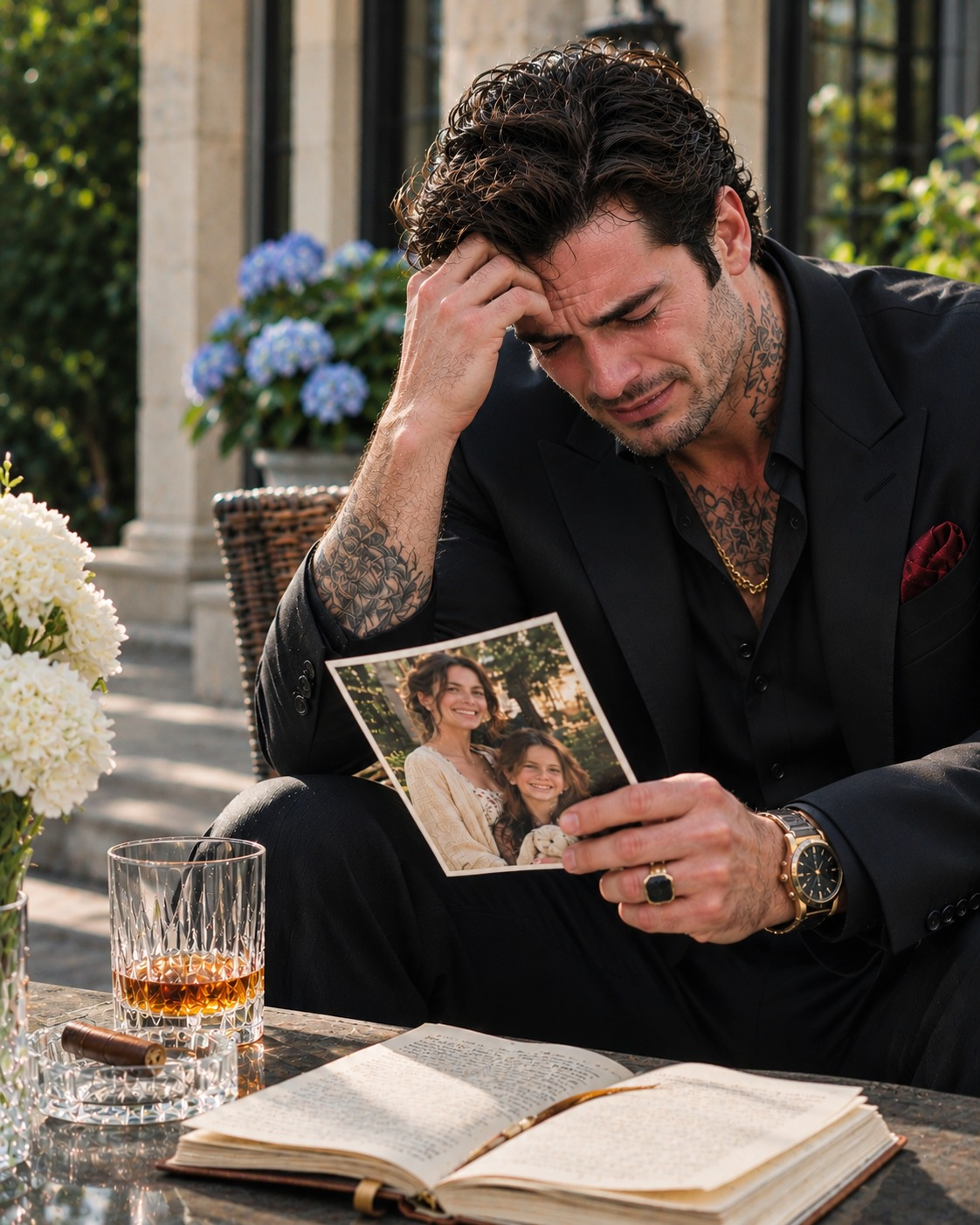
Please do not contact my husband until I am conscious and able to speak for myself.
I read the sentence three times.
Then I looked at the date.
Three months earlier.
The night I had been in Paris with Celeste.
The night my daughter had called me seven times.
The night I had silenced my phone because I didn't want to be interrupted.
My hands shook as I turned the page.
Emergency Department Admission.
Patient: Bianca Bellini.
Presenting symptoms: Chest pain, dizziness, shortness of breath, and loss of consciousness.
I felt my stomach drop.
There were medical terms I didn't understand.
Blood tests.
Cardiac monitoring.
Neurological observations.
A note describing an episode of acute stress accompanied by a dangerous spike in blood pressure.
Then a physician's assessment.
No heart attack.
No stroke.
No evidence of permanent damage.
The doctors had stabilized her and kept her overnight for observation.
She had survived.
She had recovered.
But she had been frightened enough to ask that I not be contacted until she could speak for herself.
I stared at the report.
My wife had collapsed.
My daughter had watched.
And I had been laughing over dinner with another woman.
I reached for my phone.
Teresa was still in my recent calls.
I pressed her name.
She answered immediately.
"Mr. Bellini?"
"Tell me what happened."
Her voice trembled.
"Sir, perhaps we should speak tomorrow."
"No."
I swallowed.
"Please, Teresa. I need to know."
A long silence followed.
Then she said, "I'll come downstairs."
I frowned.
"You're still here?"
"Yes, sir."
I had forgotten that Teresa lived in the small staff apartment beyond the east wing.
For eleven years, she had cared for our home.
And, I was beginning to understand, for the people inside it.
"Meet me in the kitchen," I said.
I ended the call.
Then I looked at Bianca's empty side of the bed.
Her pillow was gone.
Her favorite books had disappeared from the nightstand.
Even the small ceramic dish where she kept her earrings had been removed.
She hadn't left in a moment of anger.
She had dismantled her life carefully.
Piece by piece.
While I was busy making plans for a future she no longer believed in.
Teresa was waiting in the kitchen when I arrived.
She wore a gray cardigan over her nightdress.
Her silver-streaked hair was tied loosely behind her head.
She looked smaller than I remembered.
Perhaps because I had never really looked at her before.
"Sit down, Teresa," I said.
She hesitated.
"Sir, I can make you some tea."
"No. Please sit."
She lowered herself into a chair.
I sat opposite her.
Between us stood the kitchen island where Bianca had once prepared my coffee every morning.
I placed the medical report on the counter.
"Three months ago," I said, "Bianca was taken to the hospital."
Teresa nodded.
"Yes."
"Gia called me seven times."
"Yes."
"And nobody told me afterward."
Teresa looked down.
"Mrs. Bellini asked us not to."
I felt anger rise.
Then I remembered the diary.
The missed birthdays.
The promises.
The countless times Bianca had tried to reach me.
I forced myself to ask the question differently.
"Why didn't she want me to know?"
Teresa folded her hands.
"Because she didn't want to beg for your attention anymore."
I stared at her.
"Beg?"
She looked up.
"Mr. Bellini, your wife had been asking you to come home for years."
"I know that now."
"No, sir."
Her voice remained respectful.
But something in it had changed.
"You know what she wrote in a letter. You don't know what it looked like from inside this house."
I said nothing.
Teresa took a breath.
"May I speak freely?"
"Please."
"Even if you don't like what I say?"
I looked at her.
"Especially then."
She nodded slowly.
"Very well."
The night Bianca collapsed, Gia had been practicing a song for school.
She wanted to sing it at a family gathering the following weekend.
Bianca was sitting at the kitchen table helping her with the lyrics.
According to Teresa, everything had seemed ordinary.
Bianca had been tired.
She had complained of a headache.
But she smiled when Gia made a mistake and began the song again.
At approximately 8:40 p.m., Bianca stood to get a glass of water.
She stopped beside the counter.
Her hand moved to her chest.
"Mom?" Gia asked.
Bianca tried to answer.
Then her knees buckled.
She collapsed before Teresa could reach her.
Gia screamed.
Teresa called emergency services.
The ambulance arrived within minutes.
But Gia had already found Bianca's phone.
She called me.
Once.
Twice.
Three times.
No answer.
She called again.
And again.
And again.
Seven times.
I had been sitting in a restaurant in Paris.
Celeste was across from me.
We were discussing a weekend trip.
My phone had vibrated.
I remember glancing at it.
Gia.
I turned it facedown.
Celeste asked, "Everything all right?"
I smiled.
"Just my daughter."
Then I silenced the phone.
Teresa stopped speaking.
I stared at her.
"What did Gia do when I didn't answer?"
Teresa's eyes filled with tears.
"She asked whether your phone was broken."
I closed my eyes.
"I told her perhaps you were in a meeting."
Teresa swallowed.
"Then she asked me to call your office."
My chest tightened.
"Did you?"
"Yes."
"Who answered?"
"Your night secretary."
I remembered the arrangement.
My office staff had instructions not to interrupt me during private evenings unless there was a major business emergency.
"She said you were unavailable," Teresa continued.
I looked away.
"Did you tell her it was a medical emergency?"
"Yes."
"What did she say?"
"She said she would try to reach you."
I felt sick.
"And?"
"She called back twenty minutes later."
"What did she say?"
"That you couldn't be reached."
I stared at the report.
Bianca had been lying in an ambulance.
Gia had been crying.
Teresa had been trying to find me.
And I had been discussing a holiday with Celeste.
"Why didn't someone come to Paris?" I whispered.
Teresa looked at me sadly.
"Sir, by the time we knew Mrs. Bellini was stable, there was no longer an immediate emergency."
I nodded.
It was a reasonable explanation.
But it didn't make the memory easier to bear.
"Gia went to the hospital?"
"Yes."
"With you?"
"And Mrs. Bellini's friend Sofia."
I remembered Sofia.
Bianca's closest friend.
A woman I had always considered overly protective.
Now I understood why.
"Was Gia frightened?"
Teresa looked at me.
"Very."
I swallowed.
"What did she say?"
Teresa hesitated.
"Sir..."
"Please."
She wiped her eyes.
"She asked whether her mother was going to die."
I pressed my hand against my mouth.
"And when I told her the doctors were helping, she asked why her father wasn't coming."
I looked down.
"Then she said something I will never forget."
My throat tightened.
"What?"
Teresa's voice broke.
"She said, 'Maybe Papa doesn't know we're his family when he's far away.'"
I bent forward.
For a moment, I couldn't breathe.
My daughter had been terrified that her mother might die.
And instead of feeling protected by the knowledge that her father would come, she had tried to explain why he wasn't there.
"Did Bianca ask for me?" I whispered.
Teresa nodded.
"When she woke up."
I looked up.
"What did she say?"
"She asked whether you had called."
I closed my eyes.
"What did you tell her?"
"The truth."
I waited.
"That we hadn't been able to reach you."
Teresa looked down.
"She was quiet for a long time."
"And then?"
"She asked whether Gia was all right."
I stared at the table.
"She didn't ask again about me?"
"No."
The answer hurt.
Not because Bianca had stopped caring.
Because she had finally learned that asking about me would not change anything.
Teresa continued.
"The following morning, Mrs. Bellini asked the doctor whether stress could have contributed to what happened."
"What did he say?"
"That prolonged stress can affect the body, and that she needed rest and follow-up care."
I nodded.
The report supported that.
It didn't say I had caused her collapse.
But it described a woman who had been carrying more strain than I had bothered to notice.
"Did she recover completely?"
"Her follow-up examinations were reassuring. She was advised to manage her stress and continue regular checkups."
I released a breath I hadn't realized I was holding.
"Thank God."
Teresa nodded.
"Yes, sir."
I looked at her.
"Why didn't she tell me when I returned?"
Teresa's expression changed.
"She tried."
I went still.
"What?"
"Two days later. You were having breakfast."
I searched my memory.
I remembered returning from Paris.
Bianca had been sitting at the kitchen island.
She looked pale.
I had asked whether she was tired.
She said she hadn't been feeling well.
I told her to take a few days off from her charity work.
Then I checked my phone.
Teresa watched my face.
"You remember?"
I nodded slowly.
"She told you she'd had a difficult night," Teresa said.
I closed my eyes.
"And I told her to rest."
"Yes."
I remembered something else.
Bianca had reached for my hand.
I had moved it away to answer a call.
A small gesture.
Almost nothing.
But I could see it now.
Her hand remaining on the counter.
Empty.
Teresa stood and poured two cups of tea.
She placed one in front of me.
I thanked her.
For the first time in years, I meant those words without thinking about anything else.
"Teresa," I said, "why didn't you ever tell me how bad things had become?"
She sat down.
"I tried."
I looked at her.
"When?"
"Many times."
She began counting on her fingers.
"After Gia's school concert. After Mrs. Bellini's birthday. After the Christmas holiday. After the hospital."
I remembered those conversations.
Or fragments of them.
Teresa standing near my office door.
Asking whether I had a moment.
Mentioning that Gia seemed sad.
Saying Bianca was tired.
I had always responded the same way.
"Tell Bianca I'll call."
"Ask Elena to arrange something."
"Not now, Teresa."
I stared at her.
"You were trying to warn me."
"Yes, sir."
"And I thought you were complaining."
She didn't deny it.
I looked down.
"Why did you stay?"
Teresa seemed surprised.
"Because I love your family."
The answer was immediate.
Simple.
Uncomplicated.
I thought of the salary I paid her.
The generous bonuses.
The apartment.
The car.
I had believed those things guaranteed loyalty.
But Teresa hadn't stayed because of money.
She had stayed because Gia needed someone to help her feel safe.
And Bianca needed someone who would listen.
"Did you help them leave?" I asked.
Teresa nodded.
"Yes."
"Did Luca?"
She hesitated.
"Yes."
My jaw tightened.
"What did he do?"
"He arranged transport. Helped with the paperwork. Made sure Mrs. Bellini could leave without a crowd of staff or reporters discovering where she was going."
I looked away.
"Did he tell her to leave me?"
"No."
"Are you sure?"
"Very."
"How can you be?"
Teresa leaned forward.
"Because I heard Mrs. Bellini ask him for help."
I looked at her.
"What did she say?"
"She said, 'Luca, I can't keep teaching Gia to wait for someone who doesn't come.'"
I closed my eyes.
"And what did he say?"
"He asked whether she'd spoken to you."
I looked up.
"He did?"
"Yes."
"What did Bianca say?"
"That she had been speaking to you for years."
I stared at the table.
Teresa continued.
"Mr. Moretti didn't encourage her to punish you. He encouraged her to get independent advice and make decisions she could live with."
I wanted to believe her.
But the photograph remained in my mind.
Luca standing beside Bianca.
His hand on Gia's shoulder.
The strange messages.
The missing agreement.
The impossible signature.
"Teresa, did Luca ever tell you about the founding documents?"
Her expression changed.
"Only once."
My pulse quickened.
"What did he say?"
"That there were old papers Mrs. Bellini needed to understand before making any decisions."
"Did he explain why?"
"No."
"Did he mention Alessandro Vitale?"
Teresa looked startled.
"Yes."
I leaned forward.
"What did he say?"
"He asked whether Mrs. Bellini still had the wooden box her godfather gave her."
I frowned.
"What wooden box?"
"A small one. Dark wood. Brass clasp."
My heartbeat quickened.
The box containing our old Friday letters.
I remembered Bianca keeping it through every move.
"Why would Luca want that?"
"I don't know."
"Did Bianca give it to him?"
"No."
"Where is it now?"
"She took it with her."
I looked down.
The old letters.
Alessandro's name.
The founding agreement.
The pieces seemed connected.
But I couldn't yet understand how.
"There's something else you should know," Teresa said.
I looked up.
"What?"
"Mrs. Bellini didn't leave because she wanted to destroy your marriage."
"I know."
"She left because she wanted to know whether she could still be herself without it."
I stared at her.
"She said that?"
"Yes."
Teresa looked toward the kitchen window.
"One evening, she told me she couldn't remember the last time she'd made a decision without wondering how it would affect your schedule."
I thought of the seaside house.
The school transfer.
The careful planning.
Bianca had spent six months building a life in which she could make choices without asking permission.
"Did she ever say she wanted a divorce?" I asked.
Teresa hesitated.
"She said she needed space."
"That's not the same thing."
"No."
I looked at her.
"Do you think she'll come back?"
Teresa's eyes softened.
"I don't know, sir."
I nodded.
It was the only honest answer anyone could give.
"Did Gia want to leave?"
Teresa took a breath.
"At first, she was frightened."
"Of the move?"
"Of hurting you."
I closed my eyes.
"She thought you would be sad."
"I am."
"I know."
Teresa reached across the table and placed her hand over mine.
It was a gesture she had probably made a thousand times with Gia.
But never with me.
"Mr. Bellini, your daughter doesn't need you to suffer."
I looked at her.
"She needs you to change."
I swallowed.
"How?"
"Start by listening when someone tells you something you don't want to hear."
I stared at her.
Then nodded.
At 1:06 a.m., Teresa returned to her apartment.
I remained in the kitchen.
The house was silent.
I opened my phone and found the seven missed calls from three months earlier.
They were still in my call history.
Seven attempts.
Seven chances to answer.
Seven moments when my daughter had needed me.
I took a screenshot.
Not to punish myself.
But because I never wanted to forget what my absence had cost.
Then I opened Bianca's contact.
I typed a message.
I found the hospital report.
I stared at it.
Then continued.
Teresa told me what happened.
Another pause.
I'm sorry I wasn't there.
I almost added an explanation.
That I had been in Paris.
That I didn't know.
That my phone was silent.
But those explanations no longer mattered.
I deleted them.
Then wrote:
You needed me. Gia needed me. I didn't answer. I'm sorry.
I sent the message.
For several minutes, nothing happened.
Then the screen showed that Bianca had read it.
No reply.
I accepted the silence.
For once, I didn't demand an answer.
I walked upstairs and entered my study.
The founding agreement lay on the desk.
Beside it was the photograph of our first office.
I examined it again.
Bianca.
Me.
The champagne.
The cheap furniture.
The enormous hope.
Then I noticed something I hadn't seen before.
In the corner of the photograph stood Alessandro Vitale.
He was holding a folder.
A dark green folder with a gold emblem.
I remembered that folder.
Alessandro had brought it to our first investment meeting.
He told us it contained documents that would protect the company if anything happened to him.
I had never asked what was inside.
After his death, Luca handled the paperwork.
I trusted him.
I signed what he placed in front of me.
I assumed everything was in order.
Now I wondered whether that trust had been misplaced.
I picked up the phone.
Elena had sent me a copy of the suspicious amendment.
I enlarged Alessandro's signature.
Then compared it with a photograph of an older agreement.
The handwriting looked identical.
Too identical.
The same curve.
The same spacing.
The same unusual flourish beneath the final letter.
I wasn't a forensic expert.
But I knew enough to recognize that someone might have copied an authentic signature.
I called Elena.
She answered sleepily.
"Mr. Bellini?"
"I'm sorry to wake you."
"It's all right, sir."
"Did you locate Federico Rinaldi?"
"Not yet."
"Keep trying tomorrow."
"Of course."
"And Elena?"
"Yes?"
"Find out who handled Alessandro Vitale's estate."
She hesitated.
"Sir, I believe Mr. Moretti did."
I closed my eyes.
"Of course he did."
"Is something wrong?"
"I don't know."
I ended the call.
Then I sat at my desk.
For twenty-two years, Luca had been my closest friend.
I wanted to believe he had helped Bianca out of loyalty.
I wanted to believe the suspicious documents were a misunderstanding.
But I couldn't ignore the possibility that something had happened years ago.
Something involving Alessandro.
Bianca.
And the company we had built together.
I looked at the clock.
1:24 a.m.
Then my phone vibrated.
A message from Bianca.
Thank you for apologizing.
I stared at the words.
Another message followed.
Gia asked me something tonight.
My heart quickened.
What? I typed.
Bianca replied:
She asked whether you were reading her diary.
I swallowed.
I am.
A pause.
Then:
She said she hoped you would find the page with the blue ribbon.
I frowned.
The blue ribbon.
I remembered seeing one in the cardboard box beneath her nightstand.
But not inside the diary.
I stood and hurried to Gia's bedroom.
The room was dark.
I switched on the lamp.
Then opened the diary.
I turned the pages carefully.
Near the back, I found a narrow strip of blue ribbon tucked between two sheets.
I hadn't noticed it earlier.
The ribbon marked a page dated six months before Bianca left.
At the top, Gia had written:
The day Mom cried in the garden.
Below it was a drawing.
Three people.
Bianca.
Gia.
And a man.
Not me.
The man stood beside a car.
Gia had drawn him holding a folder.
A green folder.
My heartbeat accelerated.
I leaned closer.
Under the drawing, Gia had written:
Mom said the man knew Grandpa Alessandro.
I stared at the words.
Alessandro wasn't Gia's grandfather by blood.
But Bianca had always spoken of him as family.
I turned the page.
There was another drawing.
The same man.
The same green folder.
This time, Gia had written:
He told Mom something about Papa's company.
My mouth went dry.
I turned another page.
Only one sentence.
Mom said she wished she had known the truth before.
I felt a chill.
What truth?
I reached for my phone.
I was about to call Teresa when I noticed something written at the bottom of the page.
The handwriting was different.
Not Gia's.
An adult's.
Three words.
Ask about Rinaldi.
I froze.
Federico Rinaldi.
The lawyer who had prepared the suspicious amendment.
The man Elena was trying to locate.
I stared at the handwriting.
It looked familiar.
But I couldn't place it.
Then my phone vibrated.
An unknown number.
A message appeared.
Stop looking for Federico Rinaldi.
I stood.
Another message arrived.
He can't help you.
My heart hammered.
I typed:
Who is this?
The reply came immediately.
Someone who knows what happened to Alessandro Vitale.
I stared at the screen.
Then another message appeared.
If you want the truth, look inside the green folder.
I swallowed.
Where is it?
Three dots appeared.
Disappeared.
Then a final message arrived.
Your wife already found it.
I stared at the words.
Before I could respond, the bedroom door creaked.
I turned.
The hallway was dark.
Someone was standing just beyond the threshold.
I reached for the lamp.
And the figure whispered my name.






Comments 0