"Papa, please don't forget us," my daughter whispered in the recording.
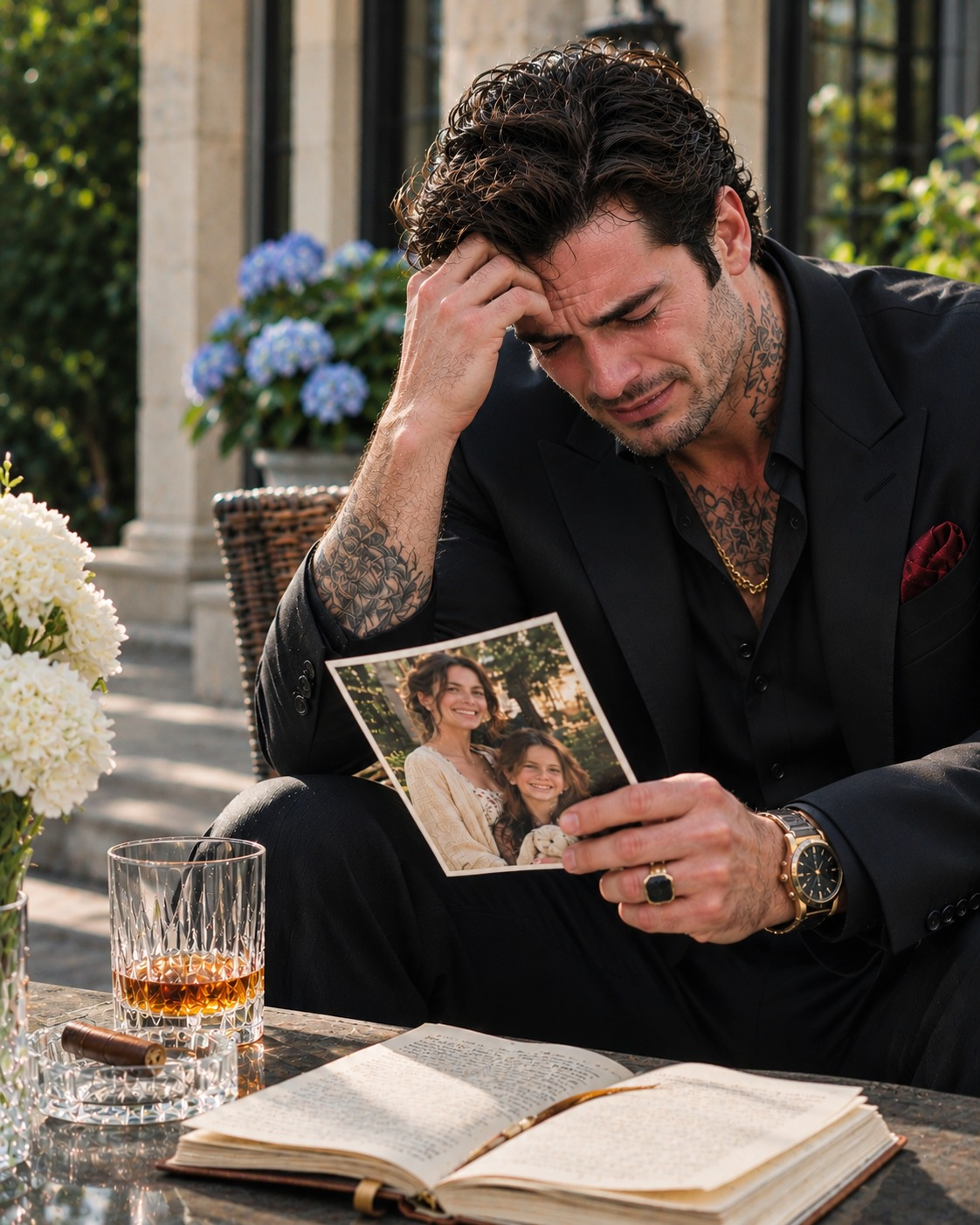
I stood beside my terrace table, holding her blue diary.
On the last page, beneath a drawing of three people, she had written four words.
"Papa wasn't there again."
That was when I understood.
My family hadn't disappeared overnight.
They had disappeared while I was watching.
My name is Matteo Bellini.
At fifty-two years old, I was worth more than fourteen billion dollars.
I owned a global investment and technology company employing forty thousand people. I had residences in Milan, New York, London, and Monaco. My private jet could carry me across the Atlantic without stopping, and my personal assistant could arrange almost anything with a single telephone call.
Almost anything.
Because on the evening my wife and daughter vanished, I discovered there was one thing my money could not purchase.
Another chance to notice them before they were gone.
It began at 4:17 on a Thursday afternoon.
I was sitting in my executive office overlooking Milan when Celeste Laurent called for the third time.
I watched her name illuminate my phone.
For eleven months, that name had meant excitement.
Escape.
The pleasant illusion that someone finally understood me.
But that afternoon, it meant something else.
Exhaustion.
"Matteo," she said when I answered, "we need to discuss what happens next."
"There is no next, Celeste."
Silence.
Then a small, disbelieving laugh.
"You're joking."
"I'm ending this."
"After everything?"
I looked at the framed photograph on my desk.
Bianca and Gia.
My wife and daughter.
The photograph had been taken three summers earlier, on a family holiday I barely remembered because I had spent most of it negotiating an acquisition.
Gia was smiling with a missing front tooth.
Bianca had one arm around her.
I was not in the picture.
I had been on the telephone.
"Matteo?"
Celeste's voice pulled me back.
"I said it's over."
She took a breath.
"Does Bianca know?"
"No."
"Then you're not ending anything. You're just choosing which woman gets lied to next."
I should have been angry.
Instead, I felt the uncomfortable weight of recognition.
For months, Celeste had demanded more time, more attention, more commitment.
The very things Bianca had once asked me for.
The difference was that I had listened to Celeste.
And punished Bianca for asking.
"I need to go home," I said.
"To your wife?"
"To my family."
Celeste was quiet for several seconds.
Then she whispered, "I wonder whether they're still waiting for you."
The call ended.
I sat motionless.
Something about those words disturbed me.
But I dismissed the feeling.
I had made a decision.
I was going to save my marriage.
And because I was Matteo Bellini, I approached that decision the same way I approached every business crisis.
I made arrangements.
First, I canceled three meetings.
One involved a potential $600 million acquisition.
Another involved investors flying in from Zurich.
The third was a dinner with a government minister.
My assistant, Elena, stared at me when I told her.
"All three, sir?"
"All three."
"Is everything all right?"
I hesitated.
Then I said something I had not said in years.
"I need to spend time with my wife."
Elena's expression changed.
Not dramatically.
Just enough.
A brief lowering of her eyes.
A pause before she answered.
"Of course, Mr. Bellini."
I should have noticed.
I didn't.
I called Bianca's favorite restaurant.
The owner personally answered.
"Signor Bellini! What a pleasure."
"I need a table for two tonight."
"Certainly. Eight o'clock?"
"Perfect."
"And Mrs. Bellini?"
"Yes. It's a surprise."
There was a silence.
Then the owner said, "We look forward to seeing you."
I drove to a jewelry boutique where Bianca had once admired a delicate necklace.
It was not particularly expensive.
Not by my standards.
A small platinum pendant with a single sapphire.
I remembered her standing outside the window almost two years earlier.
She had pointed toward it.
"That's beautiful."
I had barely looked up from my phone.
"Buy it if you want."
She had smiled faintly.
"That's not why I showed you."
I had never understood what she meant.
Now I thought I did.
I bought the necklace myself.
No assistant.
No courier.
No corporate credit card.
Then I stopped at a flower shop.
The florist asked what occasion I was celebrating.
"My wife," I said.
She smiled.
"Anniversary?"
"No."
"Birthday?"
"No."
"Then what's the occasion?"
I looked at the flowers.
White roses.
Bianca's favorite.
Or at least, they had been when we married.
"I've been a terrible husband," I admitted.
The florist's smile softened.
"Then perhaps you should tell her that before you give her these."
I almost laughed.
It was such a simple suggestion.
And yet I could not remember the last time I had sincerely apologized to my wife.
At 6:14 p.m., I arrived home.
Our mansion stood behind iron gates and carefully maintained gardens.
It had twenty-three rooms, an indoor pool, a private cinema, and a garage large enough to hold sixteen cars.
I had purchased it because I believed Bianca deserved the best.
I never considered that she might have preferred something smaller.
Something where she could hear her husband coming home.
I entered through the main doors.
"Bianca?"
My voice echoed through the entrance hall.
No answer.
I placed the flowers on a marble console.
"Gia?"
Silence.
I checked the kitchen.
Empty.
The dining room.
Empty.
The sitting room.
Empty.
I glanced at my watch.
6:19.
Perhaps Bianca had taken Gia shopping.
Perhaps they were visiting friends.
Perhaps they were simply running late.
I called Bianca.
A recorded message informed me that the number was no longer in service.
I frowned.
That made no sense.
I tried again.
Same message.
Then I called Gia's phone.
Straight to voicemail.
I sent a message.
Papa is home early. Where are my girls?
The message did not deliver.
A strange uneasiness began spreading through my chest.
I went upstairs.
Our bedroom door was open.
At first, everything looked normal.
The enormous bed.
The silk curtains.
The framed wedding photograph.
Then I noticed Bianca's dressing table.
The jewelry boxes were gone.
Her favorite perfume was missing.
The small ceramic dish where she kept her wedding ring was empty.
I opened her wardrobe.
Half the clothes were gone.
Not scattered.
Not hurriedly removed.
Gone with deliberate care.
The hangers had been spaced evenly.
The shelves had been wiped clean.
I stared at the empty space.
"Bianca?"
I said her name quietly this time.
As though she might be hiding somewhere nearby.
I walked into the bathroom.
Her toothbrush was gone.
Her skincare products.
Her hairbrush.
The pale lavender robe she wore every morning.
Gone.
My heartbeat quickened.
I crossed the hallway to Gia's bedroom.
The door was closed.
I knocked.
"Princess?"
No answer.
I opened it.
And stopped.
Her bed was made.
Her desk was cleared.
The bookshelf was nearly empty.
The framed drawings that once covered the walls had disappeared.
But one absence struck me harder than everything else.
Her stuffed rabbit.
A worn white toy named Oliver.
Bianca had bought it for her when she was three.
Gia slept with it every night.
Even when she insisted she was too old for stuffed animals, Oliver remained tucked beneath her pillow.
Now he was gone.
I sat on the edge of her bed.
For several seconds, I could not move.
Then I noticed something beneath the desk.
A blue notebook.
Its cover was decorated with tiny silver stars.
Gia's diary.
I knew it was hers because her name was written across the front in uneven handwriting.
I reached for it.
Then stopped.
Bianca had always insisted we respect Gia's privacy.
"Even children deserve a place for their thoughts," she used to say.
I had agreed.
Mostly because I had not been paying attention.
But now my daughter was missing.
And I was terrified.
I opened the diary.
The first pages contained ordinary things.
School.
Friends.
A drawing of Oliver.
A complaint about vegetables.
Then I found an entry dated six months earlier.
Mom cried in the laundry room today.
I stared at the words.
She thought I couldn't hear her.
Another entry.
Papa missed my school concert again. Mom said he was busy making sure we have a good life.
I turned the page.
I think a good life would be Papa sitting in the front row.
My throat tightened.
I kept reading.
Mom told me we might move someday.
Then:
I asked if Papa would come.
She didn't answer.
I felt something shift inside me.
Not anger.
Not yet.
Something worse.
The beginning of understanding.
I turned toward the final pages.
The last entry was dated sixteen days earlier.
Mom says we're moving somewhere she won't have to wait for Papa anymore.
Below it, Gia had drawn a small house beside the ocean.
Two stick figures stood outside.
One tall.
One small.
I searched the drawing for a third figure.
There wasn't one.
Then I read the next sentence.
I don't think Papa will notice we're gone until nobody is home waiting for him.
My vision blurred.
I read it again.
And again.
I had spent fourteen billion dollars building a life for my daughter.
But somewhere along the way, she had decided I would not notice if she disappeared.
I pressed the diary against my chest.
For the first time in years, I cried.
Not loudly.
Not dramatically.
Just a few silent tears that I could not stop.
I remembered the night Gia was born.
Bianca had been exhausted.
We were still poor then.
My first company was barely surviving.
I had held our daughter in my arms and promised her something.
"Papa will always be here."
I had meant it.
God help me, I had meant every word.
But promises are not measured by how sincerely we make them.
They are measured by what we do afterward.
And I had broken mine a thousand ordinary times.
A missed breakfast.
A forgotten birthday.
An unanswered call.
A school concert.
A bedtime story.
A dinner where my chair remained empty.
I looked around Gia's room.
The silence was unbearable.
I reached for my phone and called the school.
After several transfers, the administrative director answered.
"Mr. Bellini?"
"Where is my daughter?"
There was a pause.
"Sir?"
"Gia. Has she been attending school?"
"I'm afraid Gia was withdrawn two weeks ago."
My blood turned cold.
"Withdrawn?"
"Yes, sir."
"By whom?"
"Her mother."
"Where did they go?"
"I'm sorry, Mr. Bellini. I can't disclose private forwarding information."
"I'm her father."
"I understand."
"Then tell me where my daughter is!"
My voice rose.
The woman remained professional.
"Mr. Bellini, your wife completed the appropriate paperwork. There was nothing irregular about the withdrawal."
I ended the call.
Two weeks.
My daughter had left school two weeks earlier.
And I had not known.
I called my security director.
"Find Bianca and Gia."
"Sir?"
"Immediately."
"Are they in danger?"
I opened my mouth.
Then closed it.
Were they?
I did not know.
"Just find them."
I called our family lawyer.
Then Bianca's sister.
Then three of her friends.
Nobody would tell me anything.
Some claimed not to know.
Others refused to answer.
One friend, Sofia, finally said something that made my stomach twist.
"Matteo, did you really think she would wait forever?"
The line went dead.
I stood in the middle of Gia's room.
For the first time in my adult life, I had no idea what to do.
At 8:06 p.m., I went downstairs.
Our longtime housekeeper, Teresa, was standing near the kitchen.
She had worked for our family for twelve years.
She had watched Gia grow up.
And now she could barely look at me.
"Teresa."
"Yes, sir?"
"Where are they?"
She lowered her eyes.
"I don't know their present address."
"Did you know they were leaving?"
Her silence answered before her words did.
"Mrs. Bellini has been preparing for six months, sir."
Six months.
I gripped the back of a chair.
"Six months?"
"Yes."
"And nobody told me?"
Teresa looked at me.
Her eyes were wet.
"Sir, Mrs. Bellini tried to tell you."
"When?"
"Many times."
I shook my head.
"No. She never said she was leaving."
"She said she was lonely."
"That's different."
"She said Gia was unhappy."
"Children go through phases."
"She asked you to come home."
"I was working."
Teresa took a slow breath.
Then she said five words I would never forget.
"You never asked, Mr. Bellini."
I stared at her.
She continued quietly.
"Mrs. Bellini stopped asking you to stay because she finally believed you wouldn't."
I wanted to defend myself.
I wanted to explain the pressure.
The company.
The employees.
The responsibility.
But standing there, I realized something humiliating.
I could explain every financial decision I had made during the past thirteen years.
I could justify every acquisition.
Every investment.
Every hour spent in the office.
But I could not explain why I had never asked my daughter whether she was happy.
Or why my wife had cried alone in the laundry room.
Teresa excused herself.
I did not stop her.
I carried Gia's diary to the outdoor terrace.
The evening had grown quiet.
I sat beside the stone table where Bianca and I once drank coffee together.
I placed the diary beside an untouched glass of whiskey.
Then I took out the family photograph I kept in my wallet.
Bianca.
Gia.
Both smiling.
I studied their faces.
I wondered when those smiles had stopped being meant for me.
At 9:42 p.m., my phone vibrated.
For one desperate second, I thought it was Bianca.
It wasn't.
It was Celeste.
Her message contained only one sentence.
I thought you knew Bianca met me seven months ago.
I stared at the screen.
My heartbeat accelerated.
Bianca had met Celeste?
Seven months ago?
I called immediately.
Celeste answered on the second ring.
"Matteo."
"What are you talking about?"
She said nothing.
"Celeste. What do you mean Bianca met you?"
A long silence followed.
Then she whispered, "There are things about your wife you don't know."
I stood.
"What things?"
"Matteo, before I tell you, you need to understand something."
"Tell me."
Celeste took a shaky breath.
"Bianca didn't come to threaten me."
"Then why did she come?"
"She came to ask me one question."
I tightened my grip on the phone.
"What question?"
Celeste hesitated.
Then she said, "She wanted to know whether you'd ever told me what she sacrificed to make you rich."
I could hear my own breathing.
"Why would she ask that?"
"Because she already knew the answer."
I looked toward the open diary.
Celeste continued.
"And Matteo, that wasn't the only reason she came."
I went completely still.
"What else?"
Her voice dropped.
"She showed me something."
"What?"
Another silence.
Then Celeste whispered:
"A photograph."
I stared into the darkness.
"Of what?"
Celeste began to answer.
And the first name she spoke was—






Comments 0