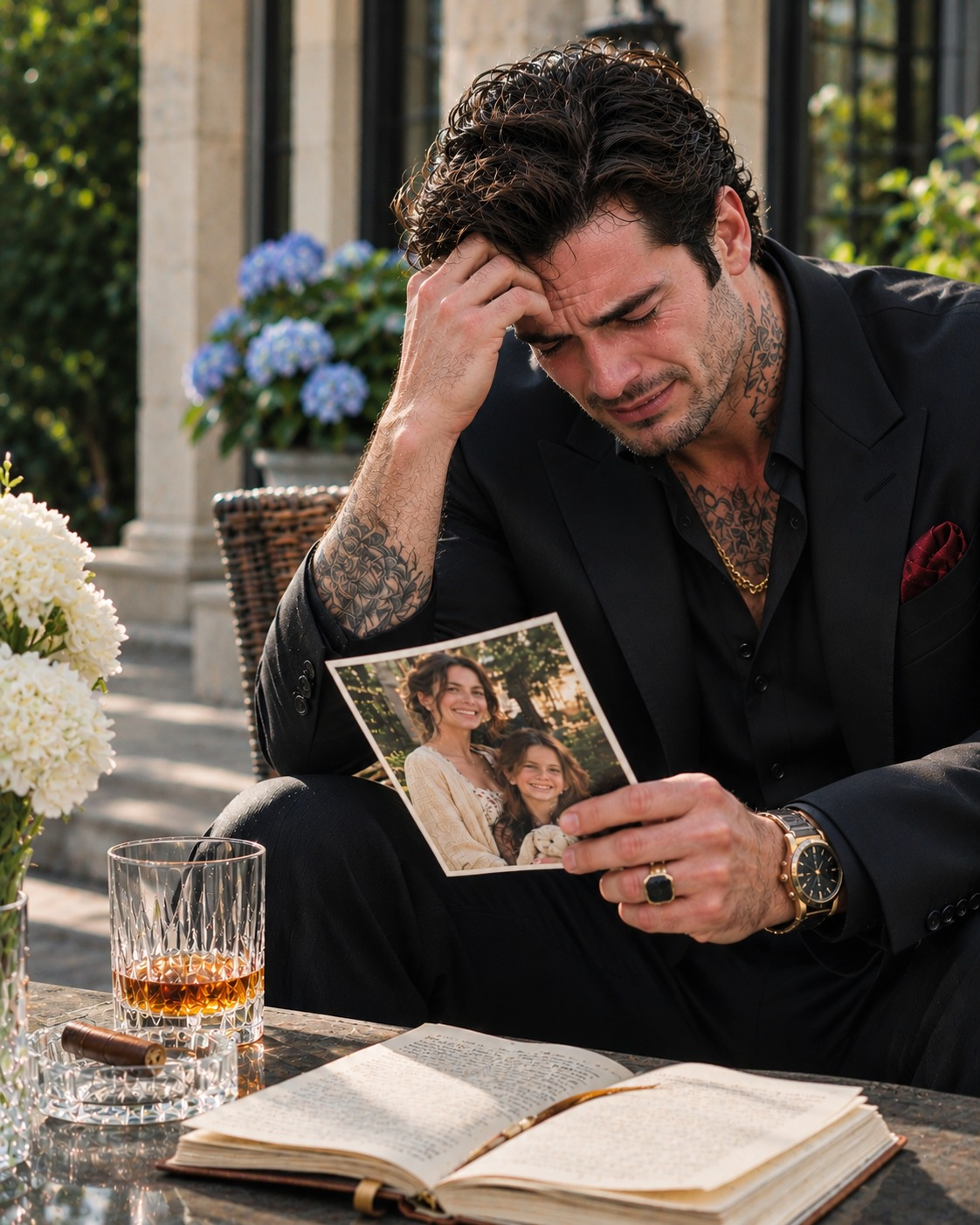
"The delivery address belongs to a private residence registered under your wife's name," Elena whispered.
I stood motionless on the terrace.
"What residence?"
"A property near the Ligurian coast, sir."
I gripped the phone.
"Bianca owns a house by the sea?"
"According to the records, yes."
"Since when?"
Elena hesitated.
"Four months ago."
I looked toward the dark windows of my mansion.
My wife had purchased a house without telling me.
The woman who once asked my opinion before buying curtains had quietly acquired an entire property.
And somehow, my best friend's signature appeared on a document connected to the purchase.
"Elena, why is Luca involved?"
"I don't know, sir."
"Then find out."
"There's something else."
My stomach tightened.
"What?"
"The bracelet wasn't delivered to that house."
I frowned.
"Then what was?"
"A sealed package. The jeweler's office used the original bracelet transaction as a reference for the private delivery."
"What's inside the package?"
"I haven't been able to confirm."
"Who authorized it?"
"Luca Moretti."
I closed my eyes.
For twenty-two years, Luca had been the one person I trusted without hesitation.
He had stood beside me when my first company nearly collapsed.
He had been there when Gia was born.
He was the godfather I had chosen for my daughter.
And now his name was appearing in places I didn't understand.
"Send me everything," I said.
"Yes, sir."
"Elena?"
"Sir?"
"Don't mention this to anyone."
A pause.
"Not even Mr. Moretti?"
"Especially not Luca."
I ended the call.
For several seconds, I stood beside the table, listening to the distant sound of water moving through the garden fountain.
Then I looked at my wedding ring.
I had spent years assuming I knew everything important about my wife's life.
Her favorite restaurant.
Her birthday.
Her clothing size.
The charities she supported.
I knew which flowers she liked.
I knew which perfume she wore.
I knew the names of her closest friends.
Or at least, I thought I did.
But I didn't know she had bought a house.
I didn't know she had spent six months preparing to leave.
And I didn't know what role my closest friend had played in helping her.
I sat down slowly.
Then I remembered something Celeste had said during our final argument.
You don't understand what it feels like to be someone's second choice.
At the time, I had dismissed her words.
Now they sounded painfully familiar.
Because Bianca had been saying the same thing for years.
Only she had said it much more gently.
I met Celeste Laurent at a charity dinner in Paris.
It was eleven months before Bianca disappeared.
The event was held in a historic hotel overlooking the Seine.
I had flown in that afternoon, attended two meetings, and planned to leave before dessert.
I wasn't looking for an affair.
That was what I told myself afterward.
But I was looking for something.
Attention.
Admiration.
The feeling of being interesting to someone who didn't already know all my flaws.
Celeste was seated beside me.
She was elegant, intelligent, and unusually attentive.
She asked about my company.
Not the usual questions about money or market valuation.
She wanted to know what I had dreamed of becoming before I became successful.
I laughed.
"Nobody asks me that anymore."
"Then perhaps you're surrounded by the wrong people."
I liked that answer.
Too much.
We talked through dinner.
She listened as I described my first business.
The sleepless nights.
The risk.
The fear of failure.
She seemed fascinated.
When I mentioned that I had once worked out of a tiny rented office, she leaned forward.
"That must have been difficult."
"It was."
"Did you ever think about giving up?"
"Every week."
"What kept you going?"
I paused.
The truthful answer would have been Bianca.
Bianca sitting beside me while I reviewed accounts.
Bianca bringing sandwiches when we couldn't afford dinner.
Bianca calling potential investors while pregnant with Gia.
But I said something else.
"I believed in what I was building."
Celeste smiled.
"That's extraordinary."
I accepted the compliment.
I didn't correct the story.
That was how it began.
Not with a kiss.
Not with a hotel room.
With a small omission.
A missing name.
A woman erased from a story she had helped create.
After dinner, Celeste asked whether I liked jazz.
I told her I did.
She named an obscure pianist whose recordings I had collected for years.
I was surprised.
"How did you know?"
"I pay attention."
Three simple words.
They stayed with me.
Because I had begun to believe nobody paid attention to me anymore.
At home, Bianca rarely asked about my favorite music.
She didn't ask which whiskey I preferred.
She didn't seem impressed by the restaurants I visited.
I interpreted her familiarity as indifference.
What I failed to understand was that Bianca had already learned those things.
She had known them for years.
She knew I preferred my coffee without sugar when I was stressed.
She knew I listened to jazz when I needed to think.
She knew I disliked expensive whiskey served with ice.
She knew I rubbed my left wrist when I was anxious.
She knew I became quiet before making difficult decisions.
She knew all of it.
But because she no longer reacted with surprise, I assumed she had stopped caring.
Celeste made everything feel new.
And I confused novelty with understanding.
Three weeks after Paris, Celeste called me.
She had found a recording of the pianist we'd discussed.
"I thought of you," she said.
I smiled.
It was such a small gesture.
Yet I remembered it all day.
That evening, Bianca asked whether I wanted to watch a film with her.
I said I was tired.
She suggested we sit outside with a glass of wine.
I told her I had emails to answer.
She nodded.
Then she went upstairs.
An hour later, I called Celeste.
We talked for forty-seven minutes.
I remember the exact duration because I checked my call history later.
I don't remember what Bianca did that evening.
That difference should have frightened me.
It didn't.
Over the following months, Celeste became part of my daily routine.
Morning messages.
Afternoon calls.
Late-night conversations.
I told her about business problems before telling Bianca.
I shared good news with her first.
I asked her opinion about decisions that affected my family.
And every time Bianca tried to reach me, I found myself irritated.
One evening, I was sitting in my office when Bianca called.
"Matteo, Gia has something she wants to show you."
"I'm busy."
"It will only take a minute."
"Bianca, I'm in the middle of something."
There was a pause.
Then Gia's voice came through the phone.
"Papa?"
My expression softened.
"Hello, princess."
"I made something at school."
"That's wonderful."
"Can I show you?"
"Tomorrow, sweetheart."
"But it's for you."
"I promise I'll look tomorrow."
She was quiet.
Then she whispered, "Okay."
I ended the call.
Celeste, who was sitting across from me, looked up.
"Your daughter?"
"Yes."
"How old is she?"
"Nine."
"She sounds sweet."
"She is."
"What did she make?"
I shrugged.
"Something at school."
Celeste smiled.
"Children always want attention."
I laughed.
"Constantly."
Then we returned to our conversation.
I didn't think about Gia again that evening.
Not until much later.
Not until I found the drawing folded inside her diary.
It showed a man standing beside a large office building.
Above him was a speech bubble.
Papa is busy.
Beside the building stood a little girl holding a red balloon.
She had drawn herself with a smile.
But the smile had been crossed out.
I looked down at the diary.
The drawing was still there.
My fingers moved carefully over the paper.
I remembered promising to look at it.
I never had.
A strange pressure built behind my ribs.
I reached for my whiskey.
Then stopped.
The glass remained untouched.
For years, I had used work to escape uncomfortable feelings.
When Bianca was upset, I stayed late at the office.
When Gia was disappointed, I bought her something.
When I felt guilty, I made another financial promise.
A holiday.
A new car.
A larger house.
A better future.
But sitting alone on that terrace, there was nowhere left to escape.
My family was gone.
And every memory I examined seemed to contain another moment when I had chosen something else.
My phone vibrated.
A message from Celeste.
Did you receive the photograph?
I typed:
Yes.
A moment later:
Matteo, there's something I need to tell you about the book.
I frowned.
What book?
The one you gave me for my birthday.
I stared at the screen.
Then I called her.
She answered immediately.
"Celeste."
"Did you ever wonder why I mentioned that particular novel?"
"No."
"Not even once?"
I felt irritated.
"Why would I?"
She sighed.
"Because it was out of print. Almost impossible to find."
"I know. I spent three hours driving to get it."
"I remember."
"Then what's your point?"
"Matteo, I told you about that book because I wanted to see whether you would remember."
I said nothing.
She continued.
"I mentioned it once. Just once. And three weeks later, you appeared with a first edition."
I looked toward the flowers.
"You seemed happy."
"I was."
"Then why are we discussing this?"
"Because Bianca saw the photograph I posted."
I closed my eyes.
The photograph.
Celeste holding the book.
My handwritten dedication visible on the first page.
I remembered writing it.
For Celeste, who reminds me that the most beautiful stories are the ones worth searching for.
I had spent nearly twenty minutes choosing those words.
For Bianca's birthday card, I had spent none.
"Bianca recognized your handwriting," Celeste said.
"I know."
"No, Matteo. You don't understand."
"Then explain it."
"She didn't recognize the words because they were romantic."
My throat tightened.
"Then why?"
"Because you used to write things like that to her."
I looked away.
Celeste continued quietly.
"She told me you once wrote her a letter every Friday."
The memory struck me unexpectedly.
Friday letters.
I had almost forgotten them.
When Bianca and I first married, I worked six days a week.
Sometimes seven.
I couldn't afford expensive gifts.
So every Friday, I wrote her a letter.
Nothing elaborate.
A page.
Sometimes only a few sentences.
I wrote about our future.
Our dreams.
The home we wanted.
The children we hoped to have.
Bianca kept every letter in a wooden box.
I remembered the box.
Dark walnut.
A brass clasp.
She had carried it through every move.
Even after we became wealthy, she refused to replace it.
"She still has them?" I whispered.
"She did when we spoke."
I swallowed.
"Did she show you?"
"No."
"Then how do you know?"
"She told me she read them whenever she wanted to remember the man she married."
I lowered my head.
For a long moment, neither of us spoke.
Then Celeste said, "Matteo, I need to ask you something."
"What?"
"Did you ever love me?"
I stared at the dark garden.
The question should have been simple.
But it wasn't.
I had enjoyed Celeste's attention.
I had admired her intelligence.
I had looked forward to her calls.
I had made her feel important.
But had I loved her?
Or had I loved the version of myself reflected in her eyes?
"I cared about you," I said.
"That's not what I asked."
I closed my eyes.
"No."
The word felt cruel.
But it was honest.
Celeste was silent.
Then she whispered, "I think I knew that."
"I'm sorry."
"I know."
Another pause.
"Matteo, you didn't want another woman. You wanted to feel like the man you were before you stopped paying attention to your own life."
I didn't answer.
Because she was right.
And because the truth had arrived too late.
The first time Bianca confronted me about Celeste, we were in our bedroom.
It was nearly midnight.
I had just returned from a business trip.
Bianca was sitting beside the window.
She wasn't crying.
She wasn't angry.
She looked tired.
"Matteo, are you seeing Celeste Laurent?"
I stopped removing my watch.
"What?"
"You heard me."
I laughed.
It was a defensive laugh.
An ugly one.
"Where is this coming from?"
"Please answer."
"She's a friend."
Bianca nodded slowly.
"A friend."
"Yes."
"Do you talk to her every day?"
I hesitated.
"Sometimes."
"Do you tell her things you don't tell me?"
"Bianca—"
"Do you look forward to hearing from her more than you look forward to coming home?"
I felt cornered.
And instead of listening, I attacked.
"I've never slept with her. What more do you want?"
Bianca's eyes filled with tears.
She looked at me for several seconds.
Then she said the words that should have changed everything.
"That's the worst part, Matteo."
I frowned.
"What?"
"You haven't given her your body."
Her voice trembled.
"You've given her everything else."
I stared at her.
She continued.
"Your attention. Your excitement. Your patience. Your curiosity."
I looked away.
"You're exaggerating."
"Am I?"
"Celeste understands the pressure I'm under."
Bianca gave a small, broken laugh.
"I understood it before she ever knew your name."
I said nothing.
"I was there when you couldn't pay your employees."
"That was years ago."
"I know."
"I've built something extraordinary."
"We built something extraordinary."
I turned toward her.
"Don't start."
She went still.
I saw the hurt in her face.
But I was too proud to apologize.
Bianca stood.
She walked toward the wardrobe.
Then she stopped.
"Do you remember what you promised me when we got married?"
I sighed.
"Bianca, it's late."
"You promised that no matter how successful you became, we would never become strangers."
I rubbed my forehead.
"We're not strangers."
She looked at me.
"Then tell me one thing about my life that has nothing to do with you."
I opened my mouth.
Nothing came out.
She waited.
I searched my memory.
Her charity work.
Her friends.
Her hobbies.
I knew the names.
But not the details.
I couldn't remember the last book she had read.
I didn't know what frightened her.
I didn't know what she dreamed about anymore.
I couldn't even remember the last time she had laughed without forcing herself.
Bianca watched me struggle.
Then she nodded.
"That's what I thought."
She turned off the lamp.
And went to sleep.
I stood in the darkness, furious that she had made me feel inadequate.
It never occurred to me that she had been feeling inadequate for years.
"Matteo?"
Celeste's voice pulled me back.
I realized I had been silent for nearly a minute.
"I'm here."
"Are you all right?"
"No."
It was the first honest answer I had given anyone that evening.
Celeste exhaled.
"Bianca loved you, Matteo."
I closed my eyes.
"I know."
"No. You knew she would stay. That's different."
The words struck harder than an accusation.
I looked toward the open diary.
"Do you think she'll come back?"
Celeste hesitated.
"I don't know."
"Did she tell you where she was going?"
"No."
"Did she mention Luca?"
Another pause.
"Matteo, why do you keep asking about Luca?"
I looked at the documents Elena had sent.
"Because his name is connected to a property Bianca purchased."
Celeste went silent.
"Celeste?"
"Are you certain?"
"Yes."
"Matteo, I think you need to speak with Luca."
"Why?"
"Because there may be something you don't understand."
My pulse quickened.
"What do you know?"
"I don't know enough to accuse anyone."
"Accuse anyone of what?"
She didn't answer.
I stood.
"Celeste, if you know something about my family, tell me."
Her breathing changed.
"Bianca told me something during our second meeting."
"What?"
"She said she had finally found someone who would help her do what she couldn't do alone."
I felt cold.
"Who?"
"She didn't say."
"Was it Luca?"
"I don't know."
"Celeste."
"Matteo, listen to me. Bianca wasn't planning to hurt you."
"Then why all the secrecy?"
"Maybe because she was afraid you would stop her."
I looked at the mansion.
The gates.
The security cameras.
The employees.
The enormous financial power I had always considered protection.
For the first time, I wondered how those things might have looked to someone trying to leave me.
"Did she think I would hurt her?" I asked.
"Not physically."
"Then what?"
Celeste hesitated.
"She thought you would use everything you owned to convince her she couldn't survive without you."
I sat down slowly.
I wanted to deny it.
But I remembered arguments where I had reminded Bianca how much I provided.
How fortunate she was.
How difficult life would be without the resources I had built.
I had never considered those statements threats.
Perhaps she had.
"Matteo," Celeste said gently, "there's something else."
I closed my eyes.
"What now?"
"Bianca asked me to make her a promise."
"What promise?"
"That if you ever came looking for answers, I wouldn't lie to you."
I swallowed.
"Then don't."
Celeste was quiet.
Finally, she said, "I can't tell you everything over the phone."
"Why not?"
"Because some of it isn't my story to tell."
I looked at the clock.
10:57 p.m.
"Where are you?"
"At home."
"I'm coming over."
"No, Matteo."
"Celeste—"
"There's someone you need to speak with first."
"Who?"
She hesitated.
Then whispered, "Your assistant."
I frowned.
"Elena?"
"Yes."
"Why?"
"Ask her what Bianca requested six months ago."
The call ended.
I stared at the screen.
Then I called Elena.
She answered immediately.
"Mr. Bellini?"
"Elena, I need you to tell me something."
"Of course."
"Six months ago, did Bianca contact you?"
A long silence followed.
"Yes, sir."
My heartbeat accelerated.
"What did she want?"
Elena took a shaky breath.
"She asked me for copies of several documents."
"What documents?"
"Your original company records."
I closed my eyes.
"Why?"
"She said she needed to understand what legally belonged to her."
I felt the air leave my lungs.
"Did you give them to her?"
"Yes."
"Without telling me?"
"Mrs. Bellini was authorized to access them."
I pressed my hand against the table.
"What else?"
Elena hesitated.
"She asked about the early partnership agreements."
"Which agreements?"
"The ones signed before Bellini Global existed."
I looked toward the garden.
Those documents had been locked away for years.
They belonged to a time when I had almost nothing.
When Bianca and I had built our future together.
And when Luca Moretti had first joined us.
"Elena," I whispered, "what did she find?"
There was a sound on the other end of the line.
Papers moving.
A drawer opening.
Then Elena spoke.
"Mr. Bellini, there's an amendment attached to the original agreement."
"What amendment?"
"It was signed thirteen years ago."
I frowned.
"Thirteen years?"
"Yes."
The year Gia was born.
The year our company received its first major investment.
The year everything changed.
"Who signed it?"
Elena hesitated.
Then said, "You did, sir."
I went still.
"I don't remember signing any amendment."
"Your signature is on the document."
"Who else signed?"
She took a breath.
"Mrs. Bellini."
My heart pounded.
"And?"
Elena's voice dropped.
"Luca Moretti."
I stared at the darkness.
"What does the amendment say?"
Elena was silent.
"Read it."
"Sir, I think you should see it yourself."
"Elena."
Her voice trembled.
"There's a clause concerning ownership rights if your marriage ends."
I gripped the phone.
"What rights?"
She turned a page.
Then stopped.
"Mr. Bellini..."
"What?"
"There's another signature."
My blood ran cold.
"Whose?"
Elena didn't answer immediately.
Then I heard her whisper:
"That's impossible."
"Elena, whose signature is it?"
A long silence.
Then she said, "Sir, the fourth signature belongs to someone who was supposed to be dead."
I stopped breathing.
"Who?"
Elena slowly read the name.
And the moment she did, I realized—






Comments 0